Unit 1 - Introduction to Earth Science
 Call Kai
 Learn
Learn Practice Test
 Spaced Repetition
 Match
Match Flashcards
 Knowt Play
1/108

Earn XP
Description and Tags
Astronomy, Earth Layers, Etc
Name | Mastery | Learn | Test | Matching | Spaced | Call with Kai | Chat |
|---|
No analytics yet
Send a link to your students to track their progress
109 Terms
What is the scientific method used for?
observations, evidence, testing, and reasoning.
What is a hypothesis?
A testable explanation for an observation.
What is a theory?
A well-supported explanation backed by lots of evidence.
What is a scientific law?
A statement that describes a consistent pattern or relationship in nature.
What does the Big Bang model describe?
The universe began in an extremely hot, dense state and expanded.
What is inflation?
A period of extremely rapid expansion of the early universe.
What is nucleosynthesis?
The formation of new atomic nuclei/elements through nuclear processes.
What elements were formed in the early universe?
Mainly the lightest elements, especially hydrogen and helium.
Where are heavier elements made?
Inside stars and during events such as stellar explosions.
What is the solar nebula theory?
The solar system formed from a cloud of gas and dust that collapsed, spun into a disk, and formed the Sun and planets.
What is a protoplanetary disk?
A disk of material around a young star where planets can form.
How did the Moon form according to the impact hypothesis?
A bolide struck early Earth, ejecting material that came together to form the Moon
What part of Earth supplied much of the material that formed the Moon?
The crustal.
What is a bolide?
A large object that impacts a planetary body
What is a star?
A huge, hot ball of gas/plasma held together by gravity.
What makes stars shine?
Nuclear fusion.
What happens during hydrogen fusion?
Hydrogen nuclei combine to form helium and release energy.
What is the main factor that determines a star’s life cycle?
Its mass.
Which stars live longer: massive or low-mass stars?
Low-mass stars.
Why do massive stars have shorter lives?
They use their fuel much faster.
What happens to a massive star after the main sequence?
It can become a supergiant.
What is a supergiant?
A very large, bright massive star in a late stage of its life.
What is a supernova?
A powerful explosion associated with the death of a massive star.
What can be left behind after a supernova?
A neutron star or black hole.
What is a neutron star?
An extremely dense leftover core of a massive star.
What is a black hole?
An object formed by extreme gravitational collapse, with gravity strong enough that light cannot escape from within its event horizon.
What is a protostar?
A young forming star before it becomes a stable main-sequence star
What happens during the main-sequence stage?
The star fuses hydrogen into helium in its core.
What happens to a Sun-like star after the main sequence?
It becomes a red giant.
What is a red giant?
A later stage when a Sun-like star expands greatly.
What is a planetary nebula?
Material released from the outer layers of a dying Sun-like star.
What is a white dwarf?
The hot, dense leftover core of a Sun-like star.
What is the life cycle of a SUN-LIKE star?
Nebula, Protostar, Main Sequence, Red Giant, Planetary Nebula, White Dwarf
What is a geocentric model?
A model with Earth at the center.
What is a heliocentric model?
A model with the Sun at the center.
Who is associated with the heliocentric model?
Nicolaus Copernicus.
What did Galileo contribute?
Telescope observations that provided evidence against the geocentric model.
What were some of the observations that Galileo made?
Moons around Jupiter
Phases of Venus
Epicycles
How did Earth form?
Material from the early solar system came together under gravity, forming the young Earth.
What happened to early Earth as it developed?
It became hot, materials separated into layers, and the surface eventually cooled.
What are the terrestrial planets?
Mercury, Venus, Earth, and Mars
What are terrestrial planets like?
Rocky, relatively small, rigid
What are the Jovian planets?
Jupiter, Saturn, Uranus, and Neptune.
What are Jovian planets like?
Large outer planets made mostly of gas/volatile materials.
What is a dwarf planet?
A small planetary body that meets some, but not all, of the criteria for being a full planet
Which planet group is farther from the Sun: terrestrial or Jovian?
Jovian
What is the Kuiper Belt/ How did it form?
Leftover material of icy objects/dwarf planets
What is the Oort Cloud?/How did it form?
A huge distant cloud full of icy objects./Gravity from the planets pushed icy objects.
What is the Heliopause?
The boundary of the Sun where Sun’s solar wind become to weak to affect anything around it.
Why do the planets closest to the sun stay small vs the bigger/outer ones?
The sun’s heat makes the inner planets small/rocky, while the colder area allows the planets to grow and collect gas and ice.
Helium Fusion Stage is also known as the…?
Red giant
Tectonic Plates are pieces from what?
The lithosphere
Mesosphere is the most..?
strongest and deepest part of the Earth’s mantle
What is a star system?
A system of stars and other objects held together by gravity.
What is a galaxy?
A huge system containing stars, gas, dust, and other matter.
What is a galaxy cluster?
A group of galaxies held together by gravity.
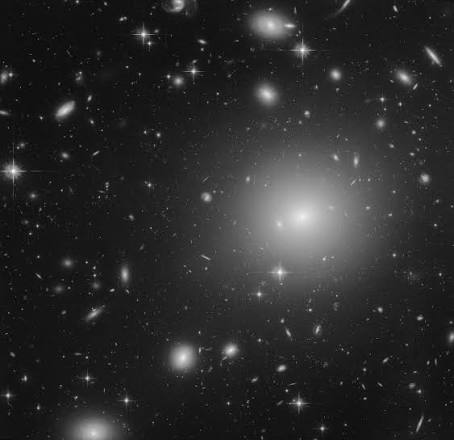
What is a supercluster?
A very large collection of galaxy clusters and groups.

What are nodes and filaments?
Large-scale structures that form part of the cosmic web.

What are galactic walls?
Very large concentrations of galaxies forming large-scale structures.

What is a Nebula structure?
A big structure (cloud) of gas and dust.

What is a spiral galaxy?
A galaxy with a disk and spiral arms.

What is a barred spiral galaxy?
A spiral galaxy with a line of stars through its center.

What is an elliptical galaxy?
A smooth, rounded/oval-shaped galaxy. (Egg)

What is an irregular galaxy?
A galaxy without a regular, organized shape.
What’s the difference between Compositional vs. Behavioral?
Compositional: What it’s made of
Behavioral: How it acts/moves
What are the Compositional Layers?
Crust, Mantle, Core
What are the Behavioral Layers?
Lithosphere, Asthenosphere, Mesosphere, Outer core, Inner core
Continental vs. Oceanic Crust, How are they different?
Continental: Thicker & less dense
Oceanic: Thinner & more dense
What is isostasy?
The crust floats in balance on the mantle.
What is the Lithosphere?
Solid/rigid outer layer of Earth (Made up of crust)
What is the asthenosphere?
A soft layer underneath the lithosphere that slowly flows.
What is the difference between Conduction & Convection?
Conduction: heat by contact
Convention: heat by movement
What creates Earth’s magnetic field?
Moving liquid metal in the outer core.
What causes Auroras?
Particles from the sun that interacts with Earth’s Atmosphere.
What did Alfred Wegener propose?
Continental drift - continents were once together (Pangaea)
Wegener’s Evidence (What evidence?)
Matching continents, fossils, rocks, and mountains
What did Arthur Holmes suggest?
Mantle convection could help move continents.
What did Harry Hess propose?
Seafloor spreading
What is a magnetic reversal?
When Earth’s magnetic North and South switch.
What is paleomagnetism?
Old magnetic information in rocks.
What are the 3 plate boundaries?
Divergent = Apart
Convergent = Together
Transform = Slide
What are the 3 Convergent Types & what do they do?
Continental + Continental = mountains
Oceanic + Continental = subduction
Oceanic + Oceanic = subduction + volcanic islands
What is a hot spot?
A very hot area inside Earth that can create volcanoes as plates move over it.
What are the three main types of stress?
Tension, Compression, and shear
Tension
Normal (Pulls apart)
Compression
Reverse/thrust (Squeezes together)
Shear
Strike-slip (Slide past)
What is strain?
The change in rock due to stress.
What is a fault?
A fracture in a rock where the rocks on opposite sides have moved.
What are the three types of rock deformation?
Elastic(temporary change), ductile(bend/changes permanently), and brittle (breaks)
What is an oblique-slip fault?
Sideways and up/down
What are folds?
Bends in rock layers
What is an earthquake?
Sudden movement along a fault that releases energy (seismic waves)
What are the focus and epicenter?
Focus: earthquake starts underground
Epicenter: a point directly above the focus
What are P and S waves?
P: Fast waves & travels through solids/liquids
S: Slow waves & can not travel through liquids
Difference between Magnitude and Intensity?
Magnitude: How large
Intensity:How strong
What is a topographic map?
Shows elevation/shape of the land.
What are contour lines?
Lines on a map that connect points with the same elevation.
What does it mean when contour lines are close together?
It’s steep.
What does it mean when contour lines are far from eachother?
It’s flat.