Applied Ecology
 Call Kai
 Learn
Learn Practice Test
 Spaced Repetition
 Match
Match Flashcards
 Knowt Play
1/8

There's no tags or description
Looks like no tags are added yet.
Name | Mastery | Learn | Test | Matching | Spaced | Call with Kai | Chat |
|---|
No analytics yet
Send a link to your students to track their progress
9 Terms
What is integrated pest management (IMP)?
A pest management system
using suitable techniques to maintain the pest population levels below those causing economic harm
What is a pest?
Anything we don’t want in our environment
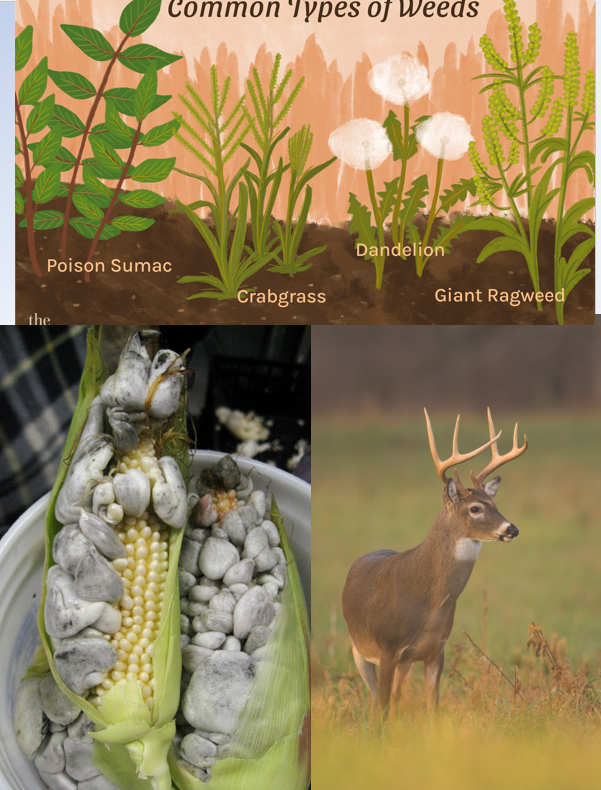
In field crops, pests are weeds, pathogens, and herbivores.
Why should we use IMP( socio-economic part of definition)?
Money.
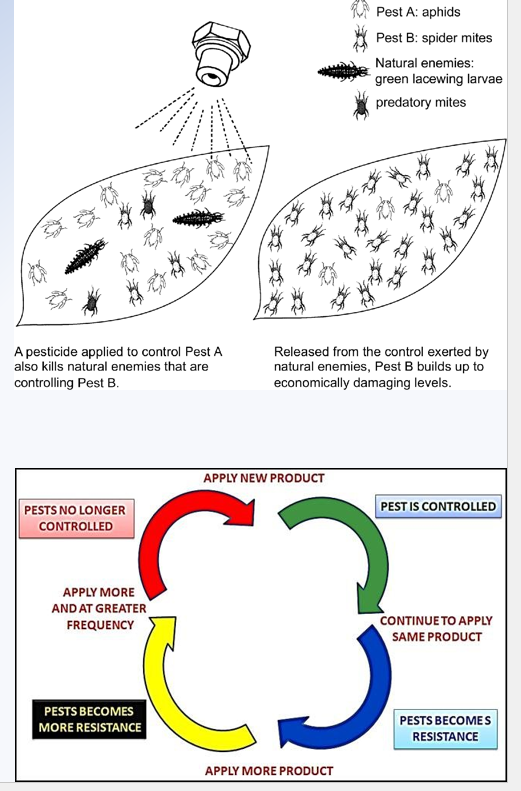
reduces impact on non-target species
reduces risk or resurgence,> can allow lesser competitors to resurge
reduce selection for pesticide-resistant pests
Describe economic injury in pest management
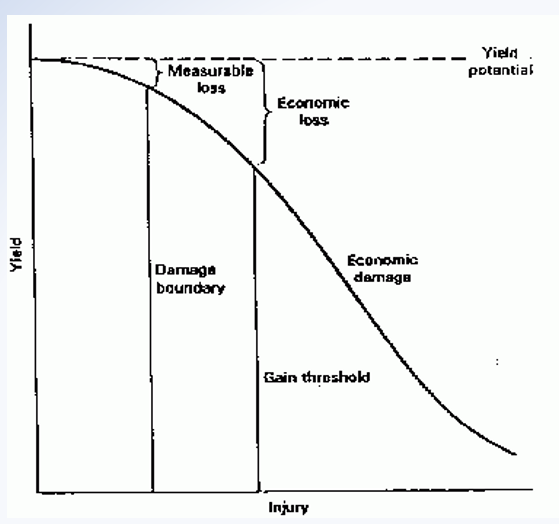
Damage = damage to the plant
injury = economic loss
Correlated, but not always 1 to 1
Economic injury calculated with yield, pest damage, and cost of treatment
Economic injury level- amount of damage that causes sufficient economic loss
What is the action threshold
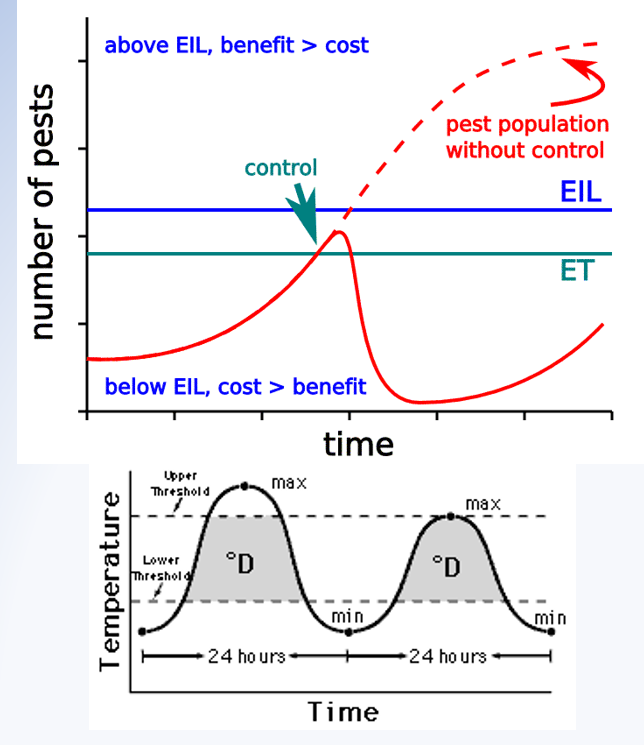
pest population at which treatment must begin to avoid economic injury
Calculated with pest population dynamics and pest life history
After finding the action threshold, you monitor pest populations.
AT is usually given as insects/sample> 12 flies per 25 sweeps
What are the techniques for pest management
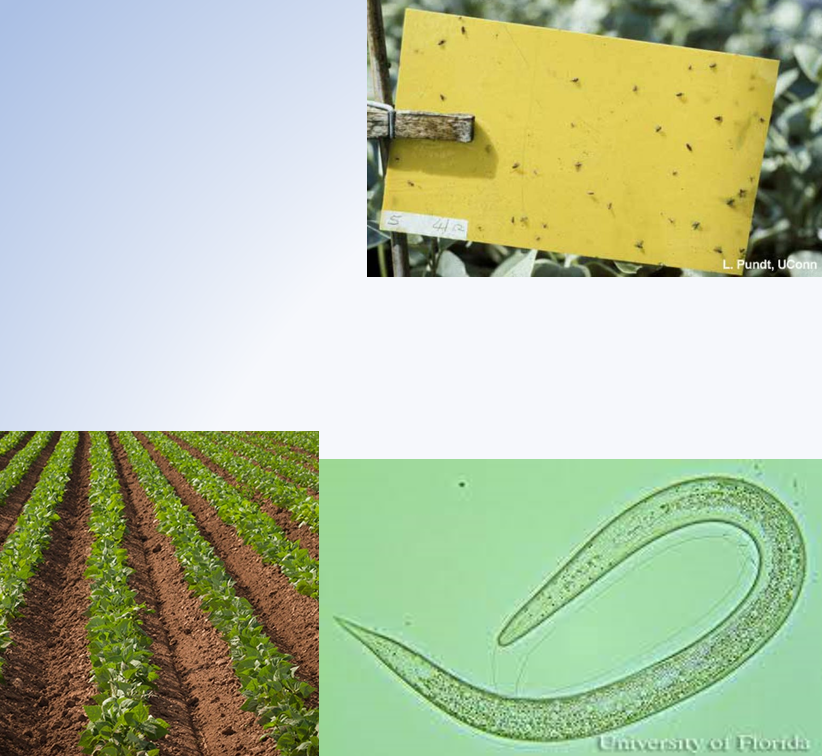
Mechanical- trapping, weeding, roguing-removing infected plants
biological
cultural
chemical
chemical and biological control are usually not compatible with other techniques
Describe biological control of pests
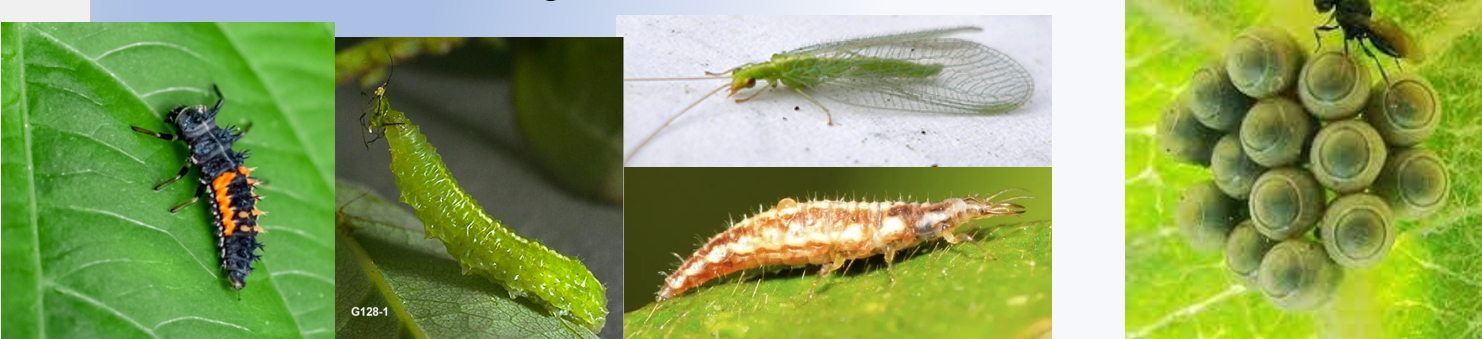
Exploits predators/pathogens to control pests
3 types: classical, augmentation, and conservation biological control
Classical, using an invasive pest to attack the pest
Augmentation- release of natural predators(predators, parasites, pathogens) to attack the pest
Conservation biological control- building a refuge for the pest, usually outside of the system
Describe (argi)cultural control
Control of pests via farming practices:
Crop rotations- pests that feed on one crop don’t always feed on others. Pests that move back in will not have anything to feed on. Also increases soil health
cover crops- plant some plants to cover the ground
trap crops-planting plants that are attractive to the pests
plating date- plant early to avoid late season pests. plant late to avoid early-season pests.
plant variety- vertical resistance - pathogen resistance
and horizontal resistance
proper fertilization and irrigation
removing refugia.