Week 14: History Of Life And Human Evolution
 Studied by 0 people
 Call Kai
 Learn
Learn Practice Test
 Spaced Repetition
 Match
Match Flashcards
 Knowt Play
1/35

There's no tags or description
Looks like no tags are added yet.
Name | Mastery | Learn | Test | Matching | Spaced |
|---|
No study sessions yet.
36 Terms
Fossil
Any preserved remains, impression, or trace of any once-living thing from a past geological age.
Ex: bones, shells, exoskeletons, imprints of animals or microbes
Formed when: Organisms buried quickly, during rock formation, hard parts of organisms replaced by minerals
Vast majority of fossils are NOT the organisms themselves. Rather, impressions or trace of once-living organism
Hybridization
The crossing of two genetically different plant species, varieties, or genera to produce hybrid offspring.
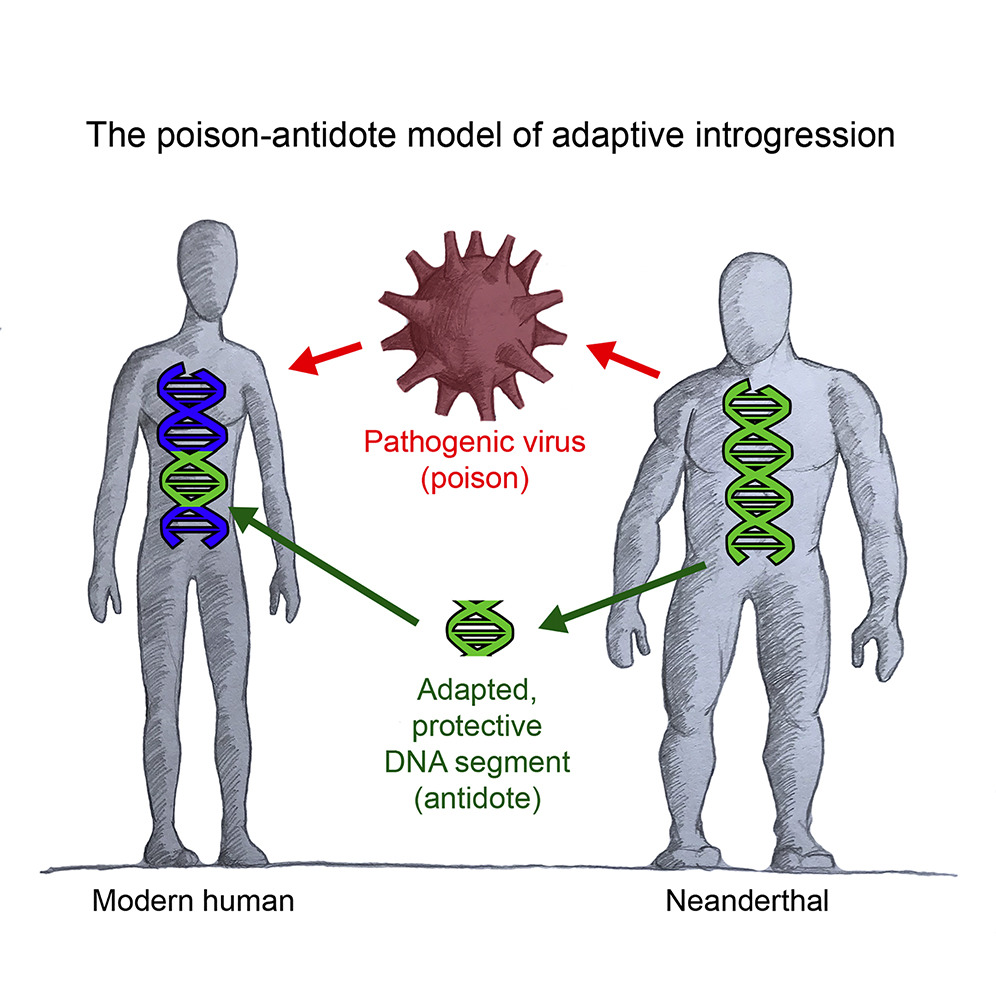
Ex: Hybridization between ancient humans and Neanderthals
Neanderthal and Denisovian DNA in genomes of modern humans
Neanderthal and Denisovian DNA affects human health
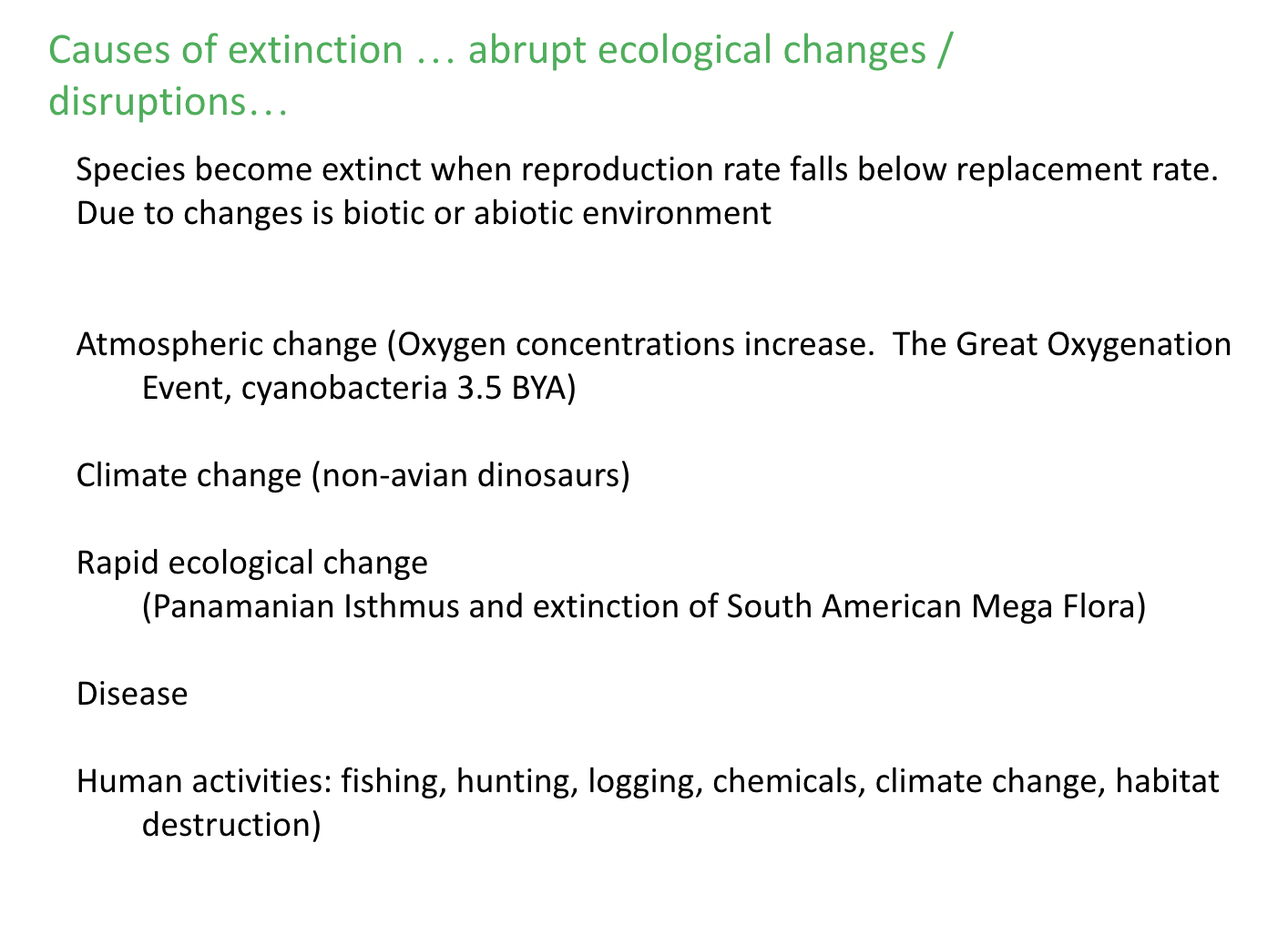
Mass extinction
A mass extinction event is when species vanish much faster than they are replaced. This is usually defined as about 75% of the world's species being lost in a short period of geological time
Local adaptation
Different traits are selected for in different parts of a species range.
How do you know? genes with different alleles in different populations
Examples of local adaptation in humans:
Lactase persistence (populations with dairy animals)
Skin color (closer to equator protection against UV,
maintain vitamin D synthesis in higher latitudes)
Many examples of local adaptation to pathogens (e.g. malaria).
High altitudes
Adaptive introgression
The transfer of genetic material between distantly related lineages through gene flow increases the fitness of the recipient lineage.
~ 3% of DNA in Icelandic genomes is from Denisovans – perhaps via Neanderthal introgression (Nature, 2020)
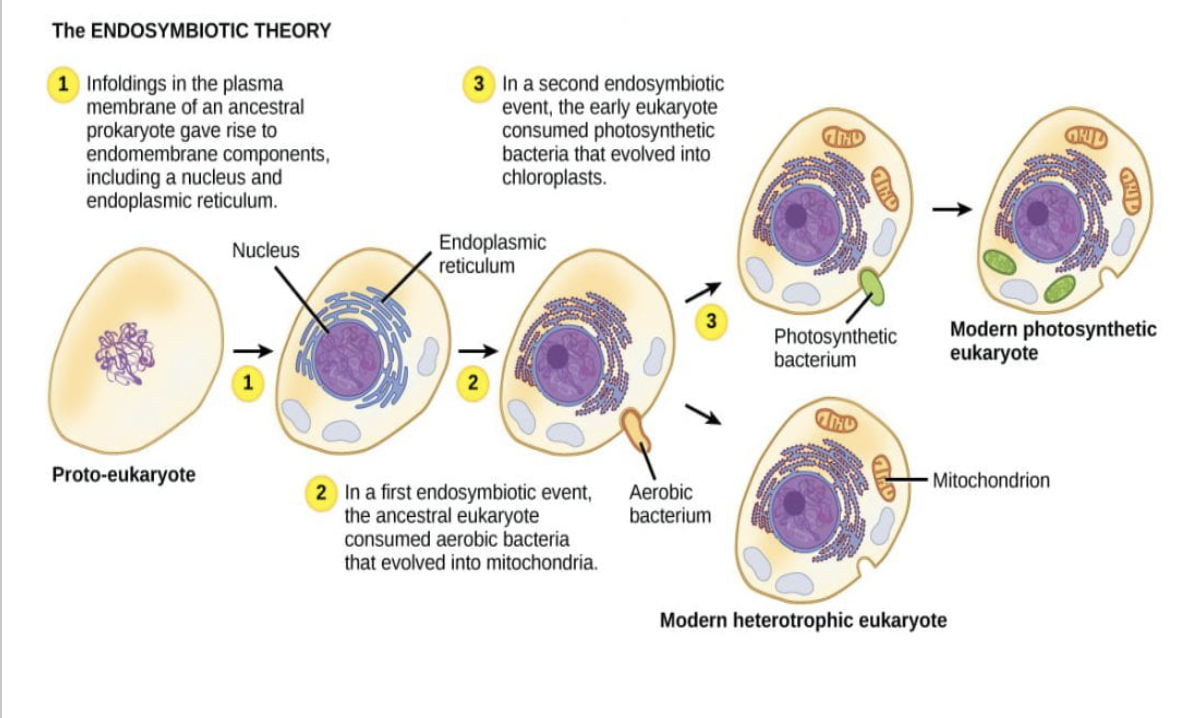
Endosymbiosis Theory
some of the organelles in eukaryotic cells were once prokaryotic microbes. Mitochondria and chloroplasts are the same size as prokaryotic cells and divide by binary fission. Mitochondria and chloroplasts have their own DNA which is circular, not linear.
Eukaryotic Cell, perhaps the greatest evolutionary innovation
appeared ~ 1.8 BYA
Transitional form/feature
A fossil that shows an intermediate state between an ancestral trait and that of its later descendants
Radiometric dating
Calculates an age in years for geologic materials by measuring the presence of a short-life radioactive element, e.g., carbon-14, or a long-life radioactive element plus its decay product
Homo neanderthalensis
Neanderthals are an extinct group of archaic humans who inhabited Europe and Western and Central Asia during the Middle to Late Pleistocene. Neanderthal extinction occurred roughly 40,000 years ago
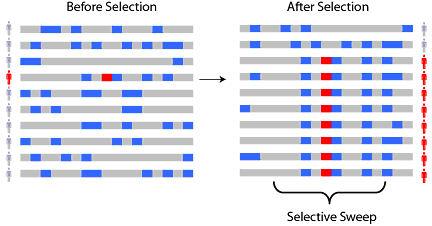
Selective sweep
A selective sweep is the process through which a new beneficial mutation that increases its frequency and becomes fixed (i.e., reaches a frequency of 1) in the population leads to the reduction or elimination of genetic variation among nucleotide sequences that are near the mutation
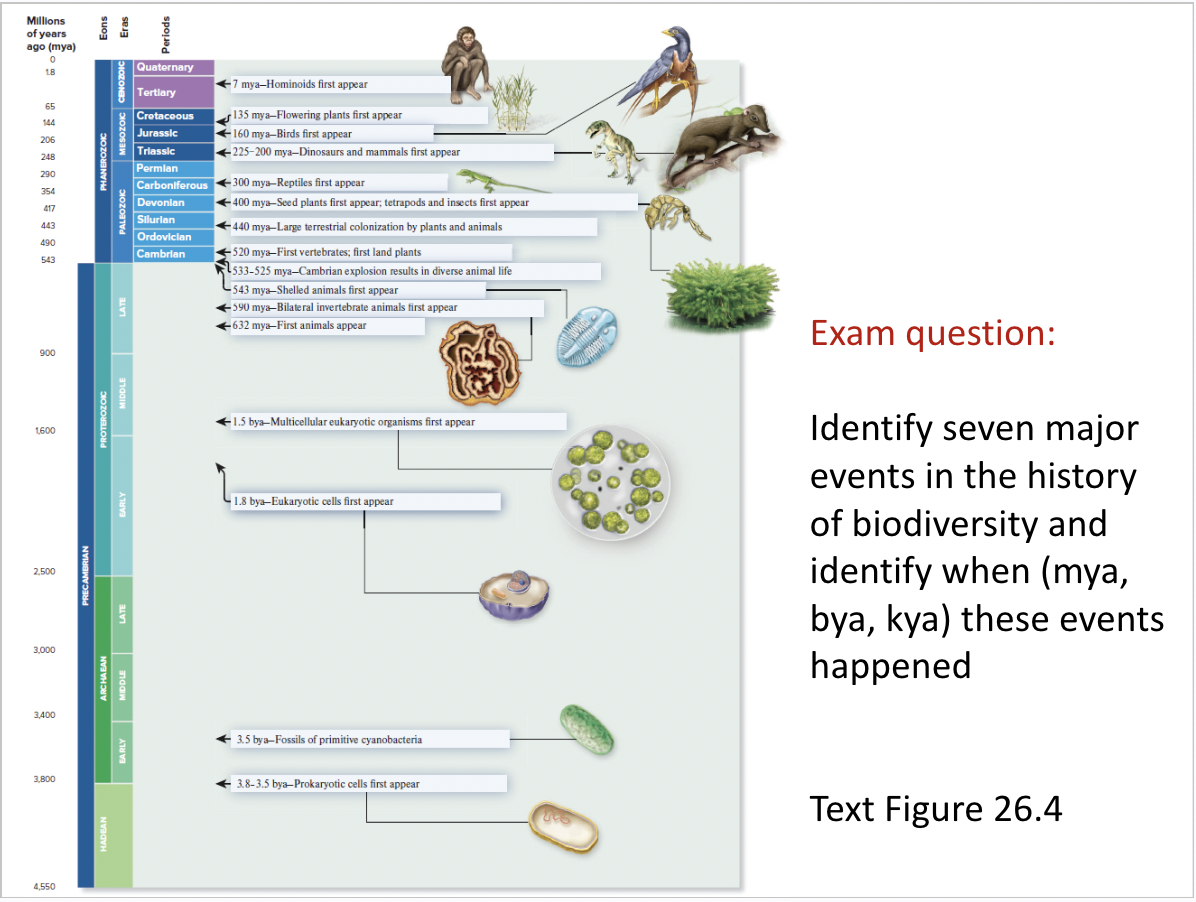
Exam question: Identify seven major events in the history of biodiversity and identify when (mya, bya, kya) these events happened
Text Figure 26.4
3.8-3.5 bya. single-celled microbial life (prokaryotes) is found in rocks
3.5 bya. Great Oxygenation Event (GOE): Cyanobacteria - oxygenic photosynthesis, leading to oxygen accumulation in the atmosphere
1.8 bya. Evolution of Complex Cells (Eukaryotes): Complex cells with a nucleus and specialized organelles (eukaryotic cells)
1.5 bya. Multi-celluar organisms began to appear
632 mya. first animals began to appear
533-525 Cambrian Explosion: A rapid diversification of life occurred during the Cambrian Period
?
Or based off ai cause yk
First Life Appears: The earliest undisputed evidence of simple, single-celled microbial life (prokaryotes) is found in rocks dating back at least 3.5 bya.
Great Oxygenation Event (GOE): Cyanobacteria began oxygenic photosynthesis, leading to oxygen accumulation in the atmosphere, starting around 2.4 bya. This event was toxic to many existing anaerobic life forms and fundamentally changed the planet's environment, setting the stage for future complex life.
Evolution of Complex Cells (Eukaryotes): Complex cells with a nucleus and specialized organelles (eukaryotic cells) appeared around 1.8 bya, a major step towards multicellularity.
Cambrian Explosion: A rapid diversification of life occurred during the Cambrian Period, starting around 541 mya, when nearly all major animal phyla (basic body plans) first appeared in the fossil record.
First Colonization of Land by Plants: Land plants evolved around 475 mya (Ordovician/Silurian periods), creating new habitats and food sources that allowed animals to eventually colonize land.
End-Permian Mass Extinction ("The Great Dying"): The largest mass extinction event in Earth's history occurred about 251 mya, wiping out approximately 96% of marine species and 70% of terrestrial vertebrate species and completely resetting the evolutionary trajectory of life.
End-Cretaceous Mass Extinction: A major extinction event, likely caused by an asteroid impact, occurred 66 mya, leading to the extinction of non-avian dinosaurs and paving the way for the rapid diversification and dominance of mammals.
The fossil record is incomplete. Which of the following are reasons for this incompleteness?
Fossils of larger organisms are more likely to be found than fossils of smaller organisms
Paleontologists are more interested in some species than others
Species with larger population sizes over larger geographic areas are more likely to be in the fossil record than species with small population sizes
All of the above
All of the above
Life on earth began approximately
3.7 billion years ago C. 2.7 billion years ago
300 million years ago D. 6,000 years ago
3.7 billion years ago
The endosymbiosis hypothesis explaining the evolution of eukaryotic cells is supported by:
the presence of DNA in mitochondria and chloroplasts
DNA-sequence analyses comparing bacterial genomes, mitochondrial genomes, and eukaryotic nuclear genomes
naturally occurring endosymbiotic relationships between bacterial and eukaryotic cells
All of the above
All the above
Fossils are usually dated by:
Analyses of radioisotopes of igneous rocks found near the fossil
Genome similarity between fossil DNA and modern DNA
Timing of continental drift
Analyses of radioisotopes of the fossil
Analyses of radioisotopes of igneous rocks found near the fossil
The earth’s atmosphere today
has much higher levels of O2 (oxygen) than it did before the evolution of photosynthetic organisms
is very similar to what it has been for the past 4 billion years
is likely quite different than it was 4 billion years ago, but we do not know any of those differences
none of the above
has much higher levels of O2 (oxygen) than it did before the evolution of photosynthetic organisms
Prokaryotes
include both bacteria and archaea
evolved from single-celled eukaryotes
Include only bacteria
None of the above
include both bacteria and archaea
Prokaryotes lack a nucleus
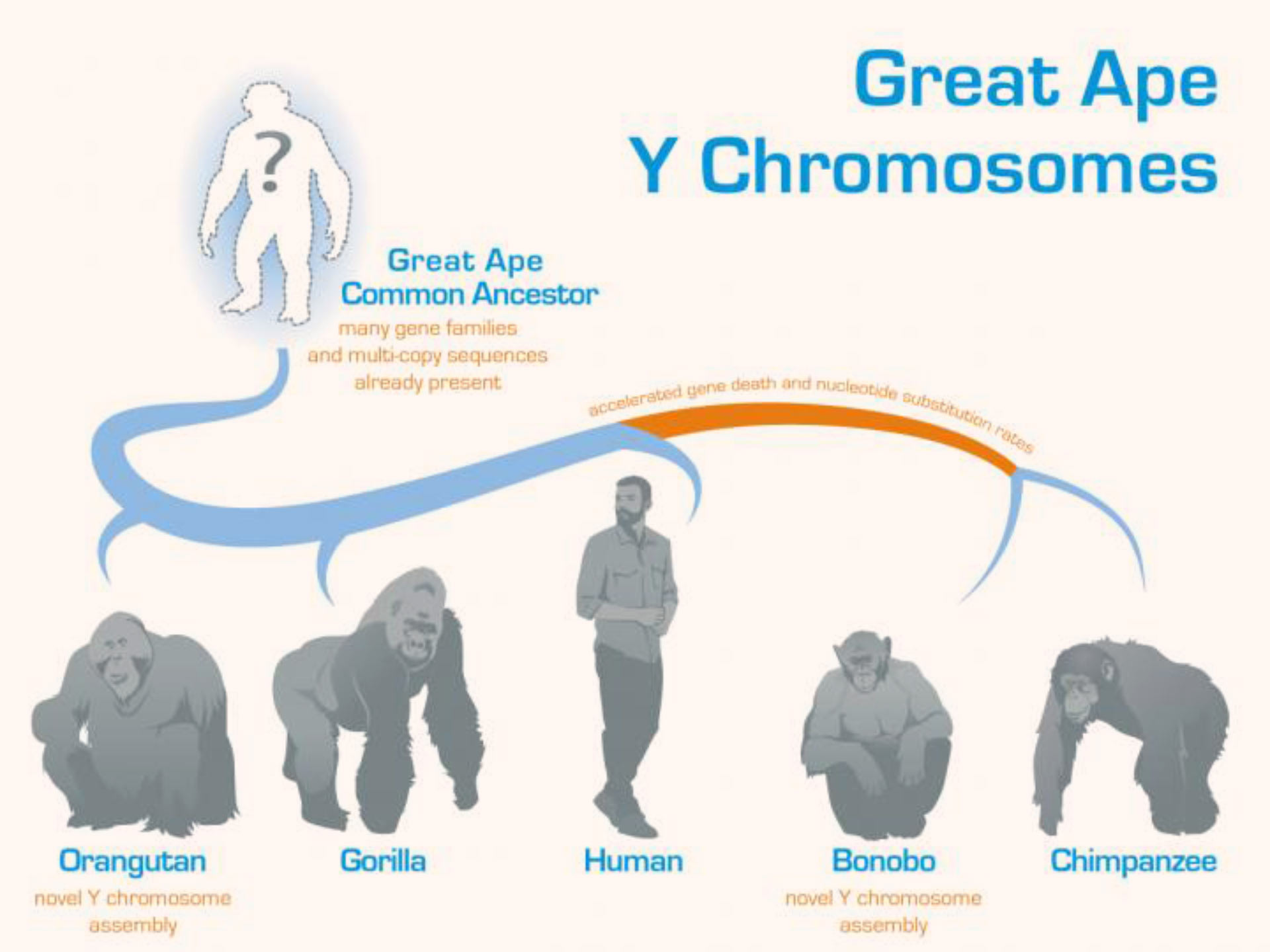
Which of the following is correct?
Humans are more closely related to Orangutans than they are to Monkeys
Humans are more closely related to Monkeys than they are to Gorillas
Humans are more closely related to Orangutans than they are to Gorillas
Humans are more closely related to Gorillas than they are to Chimpanzees
Humans are more closely related to Orangutans than they are to Monkeys
Primates evolved from small arboreal insect-eating mammals
About 10 MYA
At about the same time that terrestrial plants evolved
Before dinosaurs went extinct
All of the above
Before dinosaurs went extinct
Humans last shared a common ancestor with their most closely related extant primate relative approximately
200,000 years ago B. 3 MYA C. 7 MYA D. 10 MYA
C. 7 MYA
Data support which of the following:
humans interbred with both Homo neanderthalensis and Denisovans
humans (H.sapiens) did not interbred with any other hominid species
humans interbred with H. neanderthalensis, but not other hominid lineages
the human genome is a mix of at least 5 now extinct hominid lineages
humans (Homo sapiens) interbred with both H. neanderthalensis and Denisovans
Homo sapiens originated in the part of the world that we refer to as:
Africa C. Europe
Asia D. North America
Africa
The movement of landmasses that has changed their positions, shapes, and association with other landmasses is called
plate tectonics C. Pangea
glaciation D. biogeography
plate tectonics
Which of the following evolutionary innovations was advantageous for survival in a terrestrial environment?
The amniotic egg in animals C. The seed in plants
Both of the above D. None of the these.
Both of the above
he earth is approximately how old?
450 million years C. 1.5 million years
4.5 billion years D. 6.0 billion years
4.5 billion years
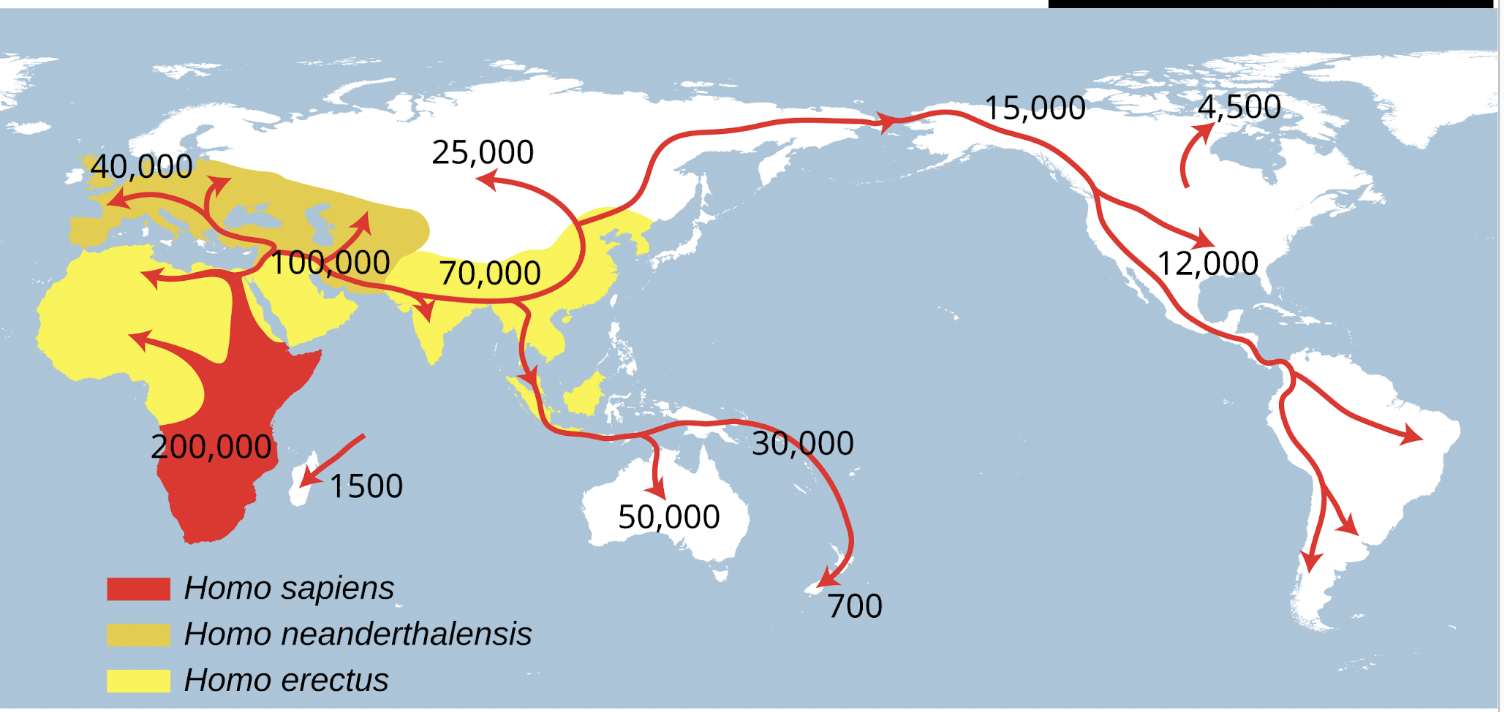
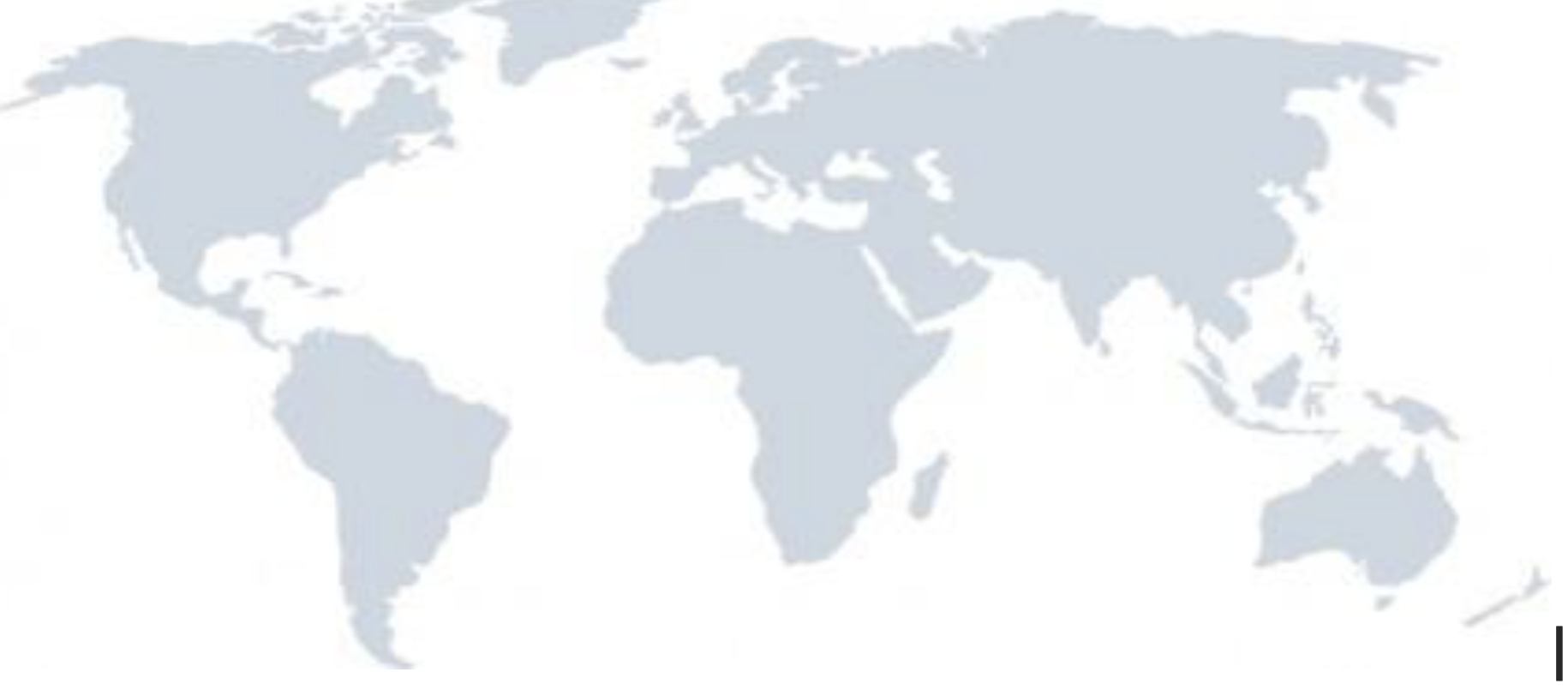
On the map below, draw the major historical migrations of Homo sapiens (i.e. the migrations that resulted in the spread of H. sapiens across the world). Provide approximate times (years before present) of four of those migrations.
Homo neanderthalensis was determined to be distinct from H. sapiens (humans) based on fossilized bones. H. denisovan was identified as a species using ancient DNA. Analyses of human genomes and ancient DNA from H. neanderthalensis and H. denisovan, reveal that hybrids between any of these three species produced viable and fertile offspring. Based on this information, answer the following:
By what species concepts are H. sapiens and H. neanderthalensis distinct species?
Biological Morphological Phylogenetic
By what species concepts are H. sapiens and H. denisovan distinct species?
Biological Morphological Phylogenetic
By what species concepts are H. neanderthalensis and H. denisovan distinct species?
Biological Morphological Phylogenetic
By what species concepts are H. sapiens and H. neanderthalensis distinct species?
Biological Morphological Phylogenetic
By what species concepts are H. sapiens and H. denisovan distinct species?
Biological Morphological Phylogenetic
By what species concepts are H. neanderthalensis and H. denisovan distinct species?
Biological Morphological Phylogenetic
Which of the following processes contribute to the evolutionary divergence of populations?
Allopatry
Sympatry
Hybridization
Selection
Gene flow
Genetic drift
Mutation
Pleiotropy
Selection
Genetic drift
Mutation
The fossil record is incomplete. This is not surprising. Identify four factors that contribute to the probability a species is found in the fossil record.
Organisms size
Paleontologists’ interest
Population size
Habitat in which organism lived
Age
Identify when seven of the events below are estimated to have happened (note, “first appear” means “first appear in the fossil record”)..
______ Cambrian explosion
______ Homo sapiens first appear
______ First fossils of cyanobacteria
______ Flowering plants first appear
______ Hominids first appear
______ Seed plants first appear
______ Dinosaurs go extinct
______ Birds first appear
______ First Animals appear
______ Large-scale colonization of land by plants
______ Shelled animals appear
______ Dinosaurs first appear
______ Multicellular eukaryotic organism appear
______ Eukaryotic cells first appear
______ Prokaryotic cells first appear
______ Mammals first appear
______ Reptiles first appear
______ Large-scale terrestrial colonization by
animals
______ First vertebrates
______ First land plants
______ other ______________________
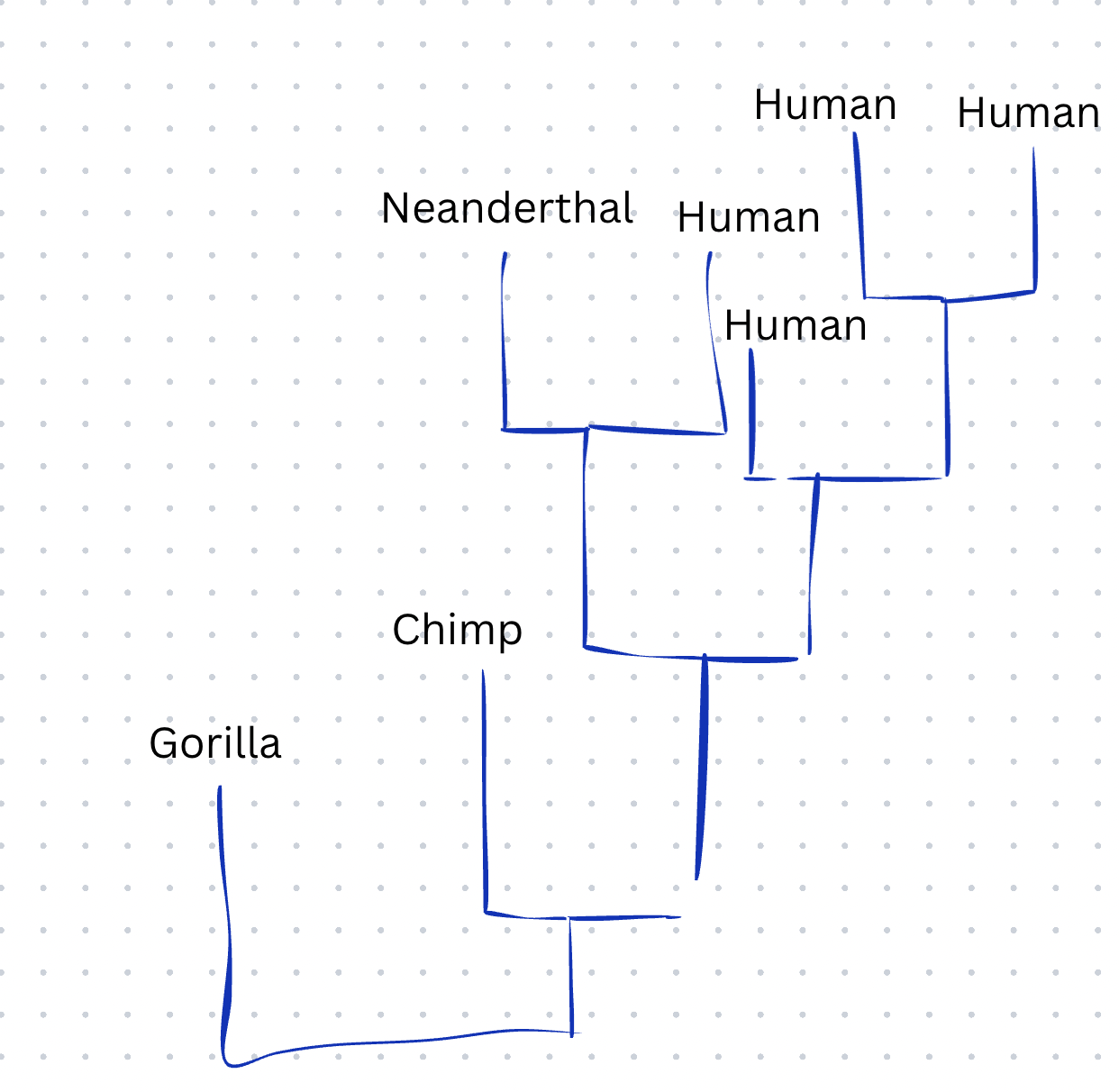
Draw two trees. The first should show the correct relationships among gene 7 gene sequences, one sampled from a gorilla, one from a Neanderthal, one from a chimpanzee, and four from humans.
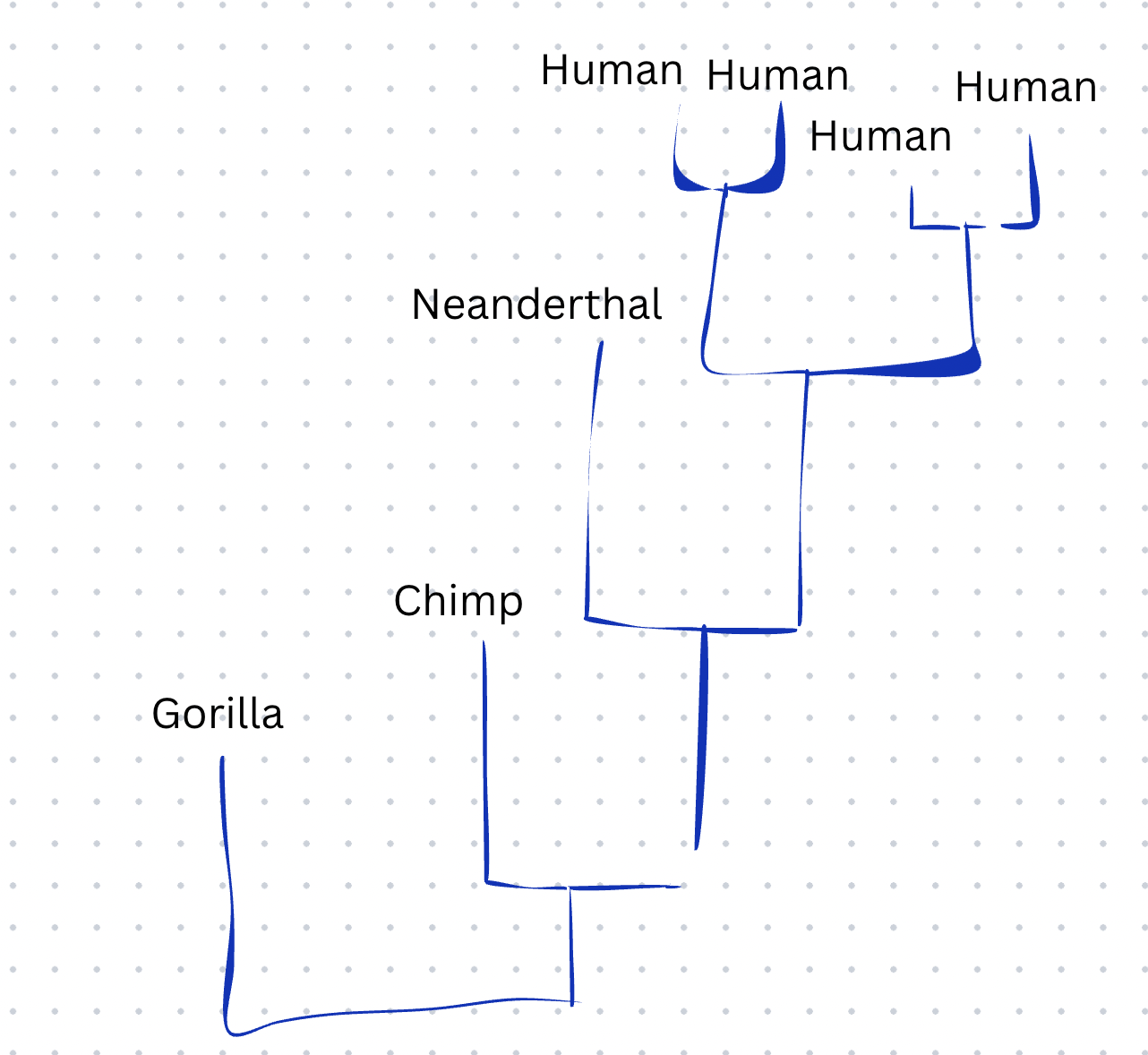
The second tree should show the correct relationships among gene 7 gene sequences, one sampled from a gorilla, one from a Neanderthal, one from a chimpanzee, and four from humans – with one of the alleles that was sampled from a human was derived from a Neanderthal. Label where each sequence is on the tree.

For each of the following, what can you infer about selection?
a. The DNA sequences of a chimp and human protein coding gene are identical.
b. A comparison of DNA sequences of a protein coding gene from chimp, gorilla, and human reveals 10 differences between human and gorilla, 30 differences between human and chimp, and 60 differences between gorilla and chimp.
c. The DNA sequences of a chimp and human protein coding gene differ at 16 nonsynonymous (replacement) sites and 2 synonymous (silent) sites.
d. In a sample of 40 human genomes, a 400,000 bp region has no polymorphic sites. (Based on genome-wide sequence data (i.e the sequence of the entire genome), one expects that the genomes of two randomly chosen humans will have approximately 1 polymorphic site every 1,000 bp.)
e. The genome of an individual living in Germany has a 300,000 bp region that is more similar to the homologous region of a Neanderthal genome than it is to the same region of most modern human genomes.
f. A comparison of DNA sequences of a protein coding gene from chimp, gorilla, and human reveals 30 differences between human and gorilla, 10 differences between human and chimp, and 30 differences between gorilla and chimp.
g. A DNA region from gorilla encodes a 1400 amino acid long protein. A mRNA from this DNA region is found when one sequences the transcriptome from gorilla stomach lining. The homologous DNA region in humans and chimps appear to encode an amino acid sequence that is < 100 amino acids, and there is no evidence for that gene being expressed in either of these species.
a. Selection acts against new alleles (against mutations), i.e. purifying selection. The current protein must be better than alternative forms.
b.
8. What good is the analysis of ancient DNA?
Migration & Ancestry:Traces ancient human movements
Interbreeding: Shows genetic traces of archaic humans (Neanderthals, Denisovans) in modern populations, detailing past interactions
Disease & Adaptation: Links past genomic changes to environmental or lifestyle shifts, revealing how diseases and adaptations evolved in human populations.
Identify two strengths and two limitations of using A. fossils and B. genomic analyses to understand relationships among species and evolutionary history.
1.paths of migration
genetic targets of selection
insights that are not seen in fossils
estimates of time
estimates of strength of selection
Direct physical evidence and timeline: Fossils offer concrete physical evidence of past life forms (e.g., bones, footprints) and help establish an absolute or relative timeline for evolutionary events using geological dating methods.
Evidence of extinct species and unique morphology: They preserve the morphology (physical structure) of ancient, extinct organisms, allowing scientists to study features, behaviors, and evolutionary transitions that are not observable in present-day species.
Detailed and quantifiable data: Genetic and genomic data offer a vast number of characters (DNA sequences) for comparison, which can resolve fine-scale relationships and fill gaps in evolutionary trees, especially for recent divergences.
Insight into molecular evolution and function: Genomics helps understand the molecular basis of adaptation, gene flow, and the timing of divergence through molecular clocks, providing information about processes that are invisible in the fossil record.
The fossil record is incomplete
Preservation and identification bias: The record is biased toward organisms with hard parts (bones, shells)
Data availability for ancient species: DNA is a fragile molecule that degrades over time, so it is generally not available for species that lived millions of years ago. This limits the application of genomics to relatively recent evolutionary history, typically the last few hundred thousand years.
Inability to provide direct context for extinct forms: Genomic data alone cannot provide direct physical evidence of extinct species' morphology, environment, or specific behaviors, which are primarily informed by fossils. They also do not provide a physical timeline unless calibrated with fossil evidence.
Identify four steps that are thought to have been necessary in order for life to form.
Nucleotides and amino acids (organic molecules) produced
Nucleotides become polymerized (RNA, DNA)
amino acids become polymerized proteins
Polymers enclosed in membranes
Membrane-enclosed polymers acquire cellular properties
Two challenges:
need to concentrate molecules
AND
stabilize polymers