Intro To Epidemiology (IPHY 3490) Exam 1
 Call Kai
 Learn
Learn Practice Test
 Spaced Repetition
 Match
Match Flashcards
 Knowt Play
1/323

There's no tags or description
Looks like no tags are added yet.
Name | Mastery | Learn | Test | Matching | Spaced | Call with Kai | Chat |
|---|
No analytics yet
Send a link to your students to track their progress
324 Terms
Epidemiology
The study of the distribution and determinants of health-related phenomena in human populations and the application of this study to control health problems. (The study of what befalls the population)
Public Health
- A multidisciplinary field whose goal is to promote the health of the population through organized community efforts
- Focuses on preventing disease and promoting health
How does public health relate to epidemiology?
- There are many subfields of public health, including epidemiology, biostatistics, and
health services.
- Because of its central role in public health, epidemiology is commonly referred to as the foundation of public health.
Distribution
It refers to analyzing the patterns of disease occurrence across populations in terms of person, place, and time to understand and control health problems.
What does "distribution by person" mean?
It looks at who is affected by a disease, considering factors like age, sex, race, occupation, or other population subgroups.
EX: Firearm death rates by age group (e.g., higher rates in young adults compared to children).
What does "distribution by place" mean?
It examines where a disease or health condition occurs, geographic patterns, regions, urban vs rural areas, etc.
EX: U.S. map showing firearm death rates by state (with higher rates in the South and West compared to the Northeast).
What does "distribution by time" mean?
It studies when a disease occurs and tracks changes over time, short-term, seasonal, long-term trends, or outbreaks.
EX: Firearm death rates compared between 2007 and 2017 across different age groups.
Determinants
They are the factors or events that cause or influence changes in health phenomena. (also called exposures)
Why are determinants important in epidemiology?
Identifying them helps understand causes of health problems and guides prevention and control strategies.
What are examples of determinants?
- Environment (air, water, housing)
- Infectious agents (bacteria, viruses)
- Medical care (access, quality, availability)
- Genetics (hereditary traits, predispositions)
- Social factors (income, education, culture)
- Lifestyle choices (diet, exercise, smoking)
Health-related phenomena
The health outcomes or events studied in populations, including diseases, conditions, and factors that affect health.
What types of health outcomes are included in health-related phenomena?
- Infectious diseases (e.g., flu, COVID-19)
- Chronic diseases (e.g., diabetes, cancer)
- Disability, injury, or limitation of activity
- Active life expectancy (quality + length of life)
- Mental illness, suicide, drug addiction
- Morbidity and mortality
Morbidity
Illness due to a specific disease or health condition (sickness).
Mortality
Deaths from various causes.
How are morbidity and mortality usually measured?
They are defined for specific types of morbidity (illnesses) or causes of death.
Population
the group of people among whom disease occurrence is studied, not just individuals.
- epidemiology is often referred to as population medicine
Applications of study
Using the study of distribution and determinants to control health problems.
- collecting and analyzing data is useless unless it is applied to prevent, reduce, or control health problems.
EX: Using data on smoking and lung cancer to develop public health campaigns, policies, or treatments to reduce smoking rates.
What term is best described here?:
Compare the frequency of acute radiation sickness among dental hygienists with the frequency in the general population
Determinants
2 multiple choice options
Outbreak
- a localized disease epidemic
- the occurrence of more cases of a disease than expected in a specific area or group of people over a short time
Example of an outbreak
- In a town or a health care facility
- A norovirus outbreak on a cruise ship where dozens of passengers suddenly get sick with vomiting and diarrhea.
Epidemic
- The occurrence in a community or region of cases of an illness, specific health-related behavior, or other health-related events clearly in excess of normal expectancy
- Disease occurs in excess of expectancy
Epidemic examples
Yellow fever, smallpox, measles, polio, ebola,
Infectious (communicable) disease
An illness caused by an infectious agent that can be potentially transmitted from one person to another
EX: diseases in wildlife can cross over to people - ex ebola
Non-infectious (noncommunicable) diseases
An illness caused by a non-infectious agent
Example of non-infectious diseases
- autoimmune diseases
- diabetes
- addiction (opioid epidemic)
- Cardiovacular disease
- bullying in schools
- lung injury (vaping)
- obesity epidemic
Endemic
Disease exists in a steady state with a population
endemic examples
The flu, common cold, etc.
Sporadic
Disease occurs infrequently and irregularly
Sporadic examples
tetanus, rabies, plague, small pox, etc.
Pandemic
An epidemic on a worldwide scale
Pandemic examples
HIV/AIDS, Covid-19, etc.
What type of disease is for this situation:
"About 60 cases of gonorrhea are usually reported in this region per week, slightly less than the national average"
endemic disease
3 multiple choice options
What type of disease is for this situation:
"Twenty-two cases of legionellosis occurred within 3 weeks among residents of a particular neighborhood (usually 0 to 1 per year)"
epidemic disease
3 multiple choice options
What type of disease is for this situation:
"Single case of histoplasmosis (a common fungal infection) is diagnosed in a community"
sporadic disease
3 multiple choice options
What type of disease is for this situation:
"1.1 million people worldwide died from influenza A (H2N2) in 1957-1958"
pandemic disease
3 multiple choice options
What are the methods for assessment of epidemic frequency of a disease?
Surveillance and epidemic threshold
Surveillance
1. The systematic collection of data pertaining to the occurrence of specific diseases
2. Analysis and interpretation of these data
3. Dissemination of disease-related information
Surveillance examples
Common activities include monitoring food borne disease outbreaks and tracking influenza
Epidemic Threshold
The minimum number of cases (or deaths) that would support the conclusion that an epidemic was underway
(based on statistical projections)
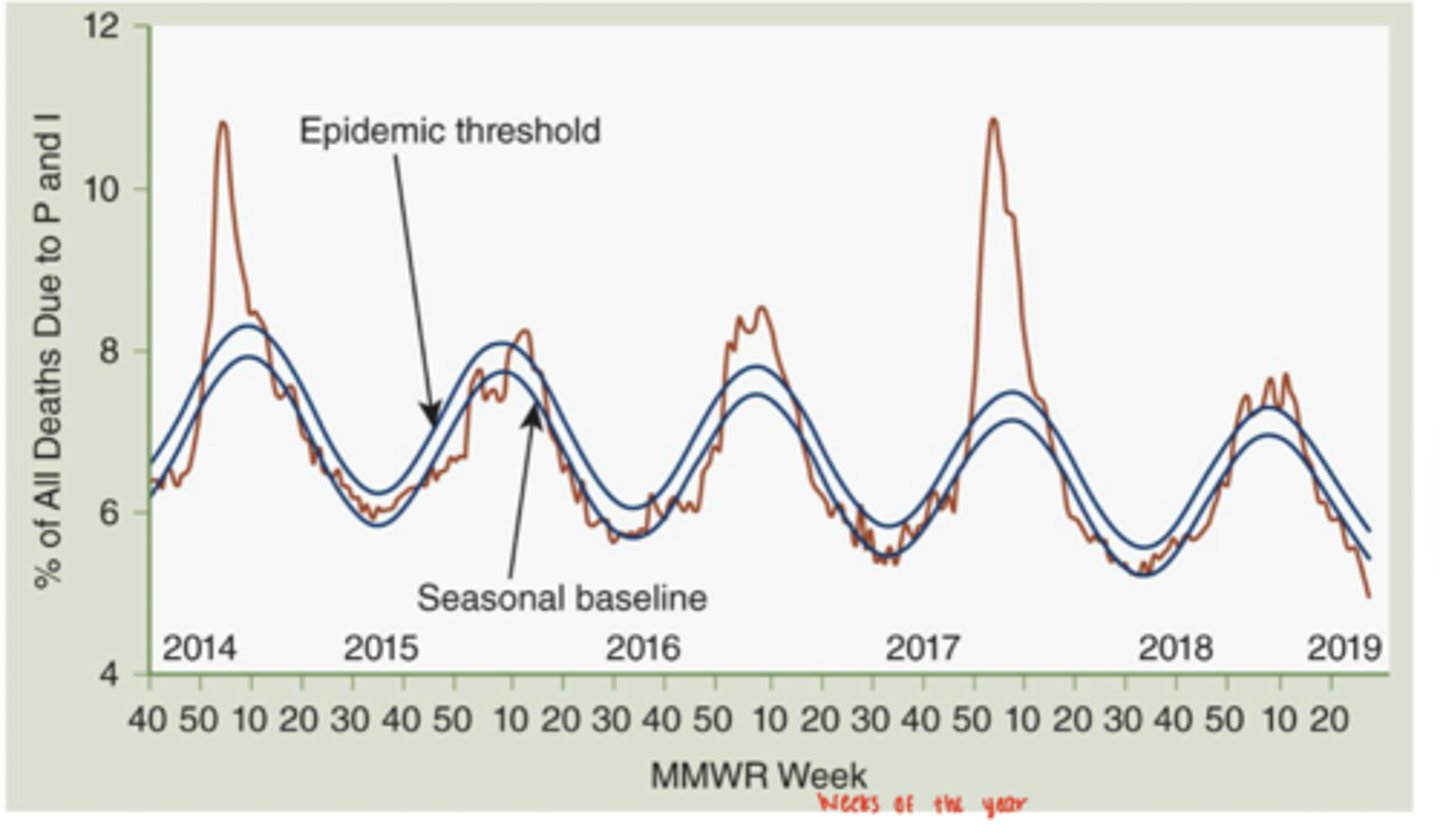
Epidemic Threshold Example
If a city usually reports 5 flu cases per week, but suddenly reports 20 cases in one week, that number may cross the epidemic threshold—showing that the rise is greater than expected and an epidemic is underway.
Who is John Snow?
- John Snow was an
English physician and
anesthesiologist.
- He investigated a
cholera outbreak that
occurred during the
mid-19th century in
Broad Street, Golden
Square, London.
What was John Snow's hypothesis about cholera transmission?
Snow reasoned that because symptoms were gastrointestinal, cholera was likely transmitted by water or food, not by "bad air."
John Snow's natural experiment
He compared cholera death rates among people served by different water companies in London.
--> Some used cleaner water, others used polluted water.
What method did John Snow use to test his hypothesis?
He collected data systematically:
- Created a spot map of cholera cases.
- Tabulated deaths and compared groups based on water source.
What did John Snow find in his natural experiment?
- Houses supplied by Southwark & Vauxhall (polluted water) had 315 deaths per 10,000 houses.
- Houses supplied by Lambeth (cleaner water) had only 37 deaths per 10,000 houses.
**This showed contaminated water was the source.
Why is John Snow's cholera study considered a natural experiment?
Because he did not assign exposure, the water companies had already created different "exposure groups" by where they sourced water. Snow simply observed and compared outcomes.
The seven uses of epidemiology
1. To study the history of the health of populations
2. To diagnose the health of the community
3. To examine the working of health services
4. To estimate the individual risks and chances
5. To identify syndromes
6. To complete the clinical picture
7. To search for causes
London water supply
- Two different water companies supplied water from the Thames River to houses in the same area.
- In 1852, the Lambeth Company relocated its sources of water to a less polluted portion of the river.
Of the seven uses of epidemiology, which are health status and health services?
1. To study the history of the health of populations
2. To diagnose the health of the community
3. To examine the working of health services
Of the seven uses of epidemiology, which are disease etiology?
1. To estimate the individual risks and chances
2. To identify syndromes
3. To complete the clinical picture
4. To search for causes
Historical Trends
The study of past and future trends in health and illness
Four trends in disorders
1. disappearing
2. residual
3. persisting
4. new epidemic
Disappearing Disorders
- conditions that were once common but are no longer present in epidemic form
- Brought under control by: immunizations, improvement in sanitary conditions, and use of antibiotics and other medications
Examples of disappearing disorders
- Smallpox (eradicated)
- Polio
- Measles (2019 resurgence)
Residual Disorders
- conditions for which the key contributing factors are largely known
- methods of control not implemented effectively
Examples of residual disorders
- Sexually transmitted infections
- Tobacco use
- Infant mortality
Persisting Disorders
Diseases for which there is no effective method of prevention or no known cure
Examples of persisting disorders
- cancer
- mental disorders
- cerebrovascular diseases
New Epidemic Disorders
- Diseases that are increasing in frequency
- The emergence of new epidemics of diseases may be a result of increased life expectancy of the population, new environmental exposures, or changes in lifestyle, diet, and other practices.
Examples of new epidemic disorders
- Lung cancer
- Alzheimer's disease
- Obesity
- HIV/AIDS
- heart disease
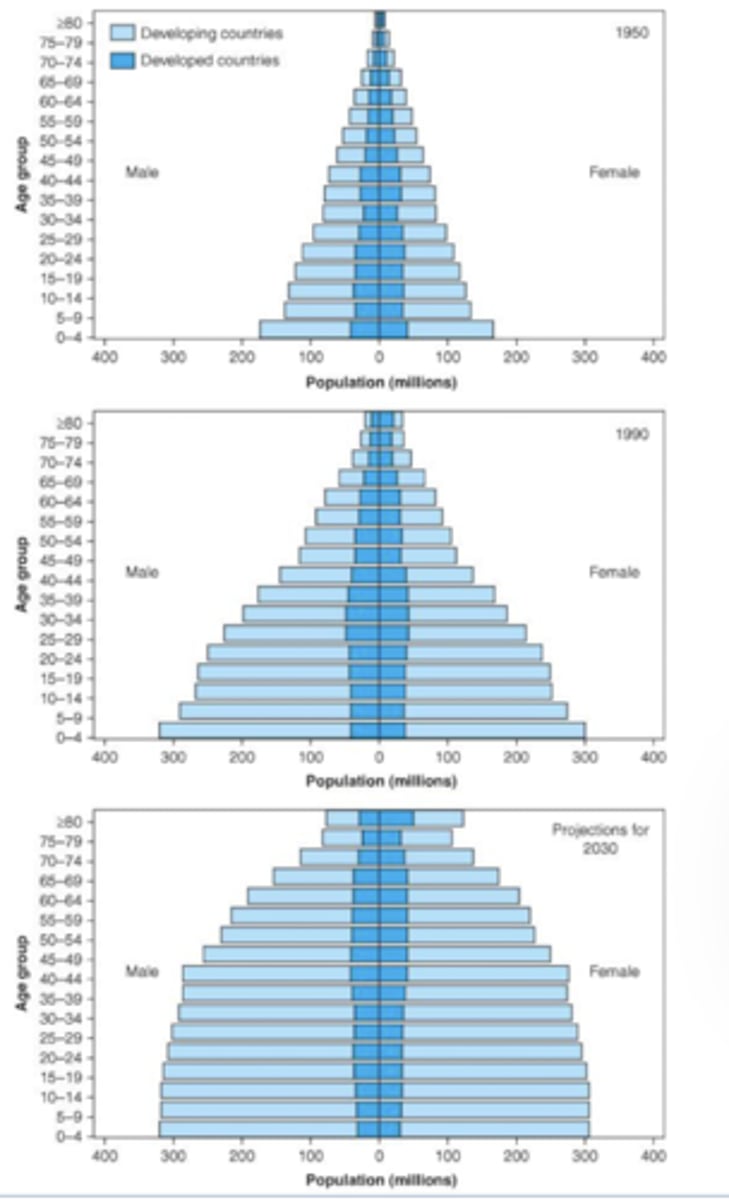
Population Pyramid
- Represents the age and sex composition of the population of an area or country at a point in time
- By examining the distribution of a population by age and sex, one may view the impact of mortality from acute and chronic conditions
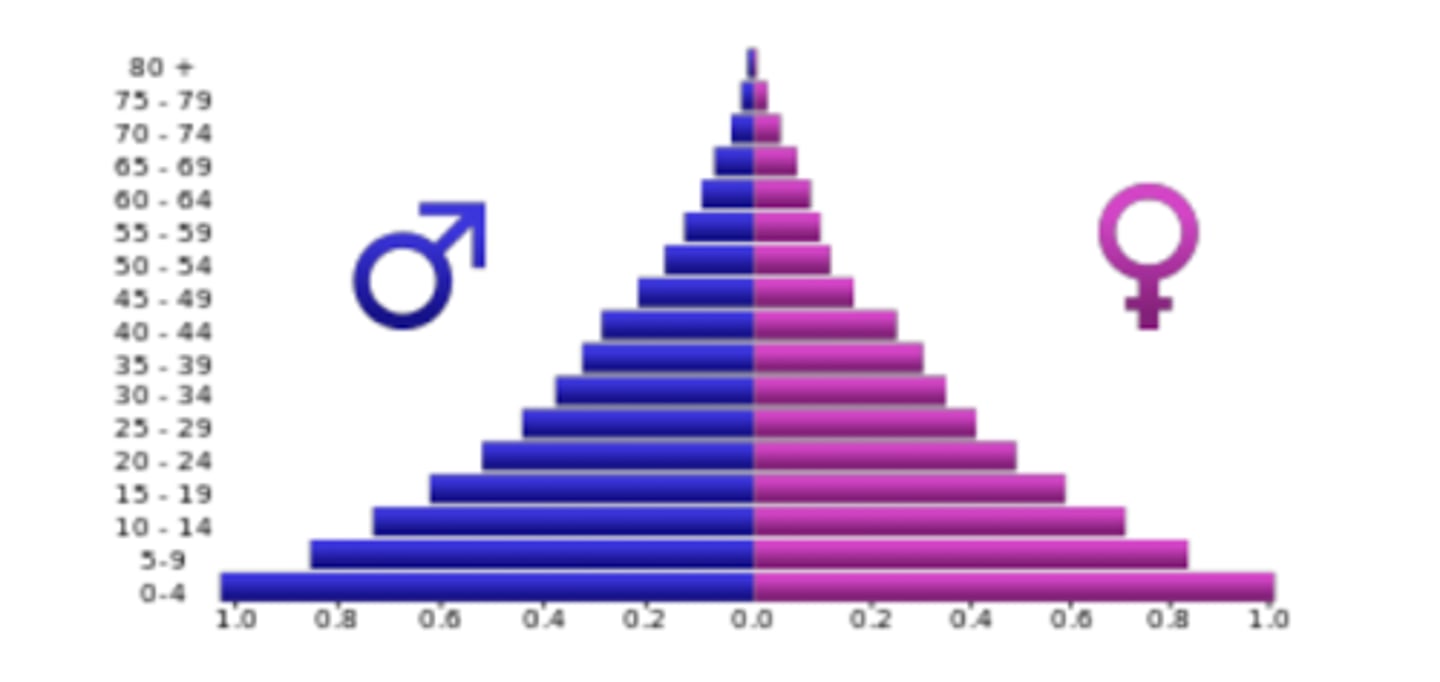
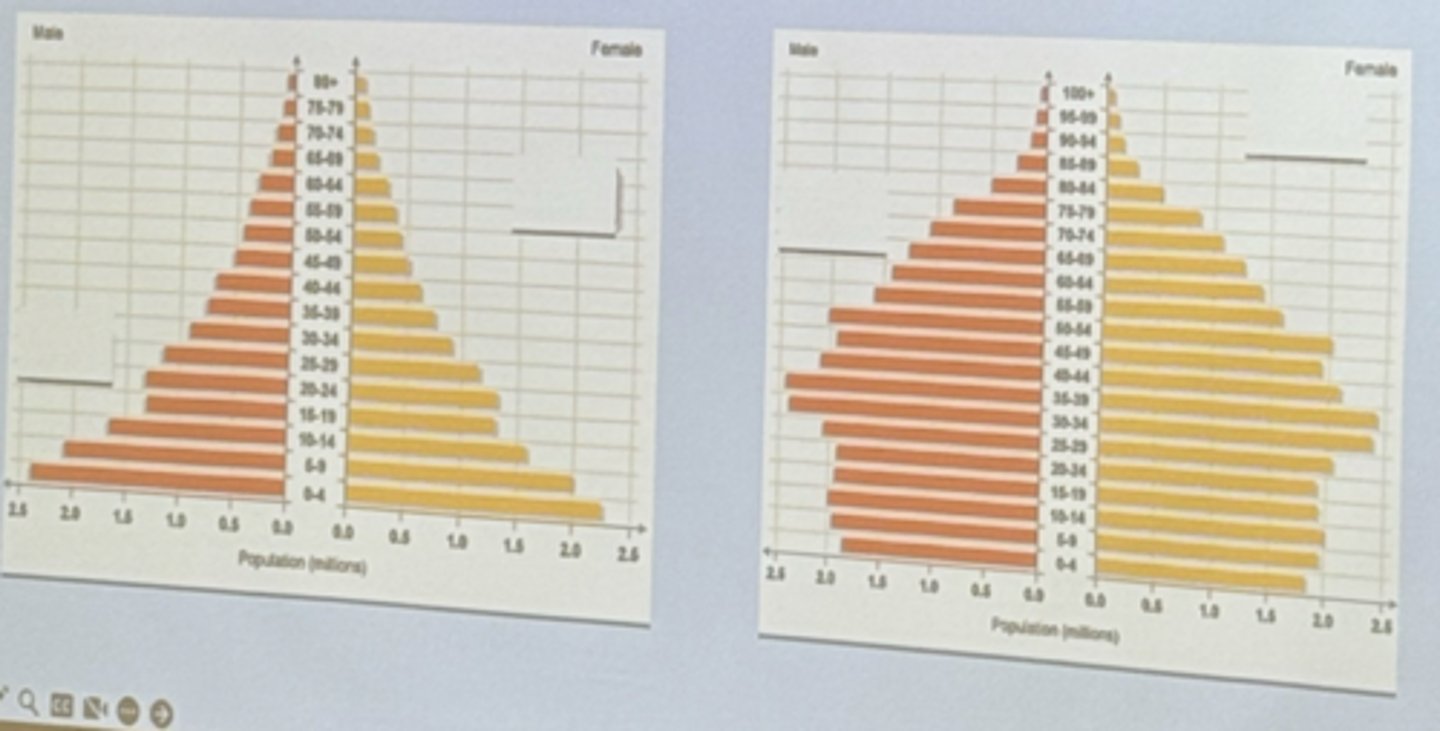
Trends in the Age and Sex Distributions
Population age distribution for developing and developed countries by age group and sex worldwide, 1950,1990, and 203
Influences on Population Size: Demographic Transitions
Shift from high birth and death rates found in developing countries to much lower birth and death rates found in developed countries.
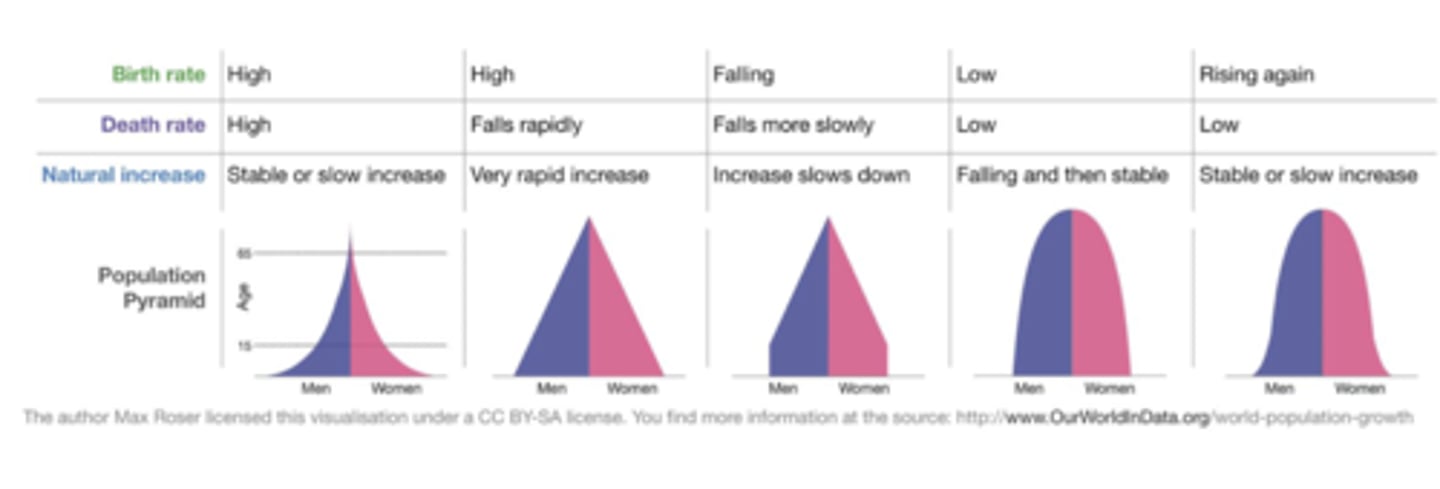
Which of the following is the age distribution of a country with a high birth rate and high maternal mortality? Pyramid #1 or Pyramid #2?
Pyramid #1
What type of population describes people who live in Williams Village? Fixed or Dynamic?
Dynamic
What type of population describes children who were vaccinated against polio in 1955? Fixed or Dynamic?
Fixed
What type of population describes women who are practicing physicians? Fixed or Dynamic?
Dynamic
What type of population describes men who had coronary bypass surgery in 2011? Fixed or Dynamic?
Fixed
Influences on Population Size: Epidemiologic Transitions
Shift in the patterns of morbidity and mortality from infectious and communicable diseases to chronic, degenerative diseases.
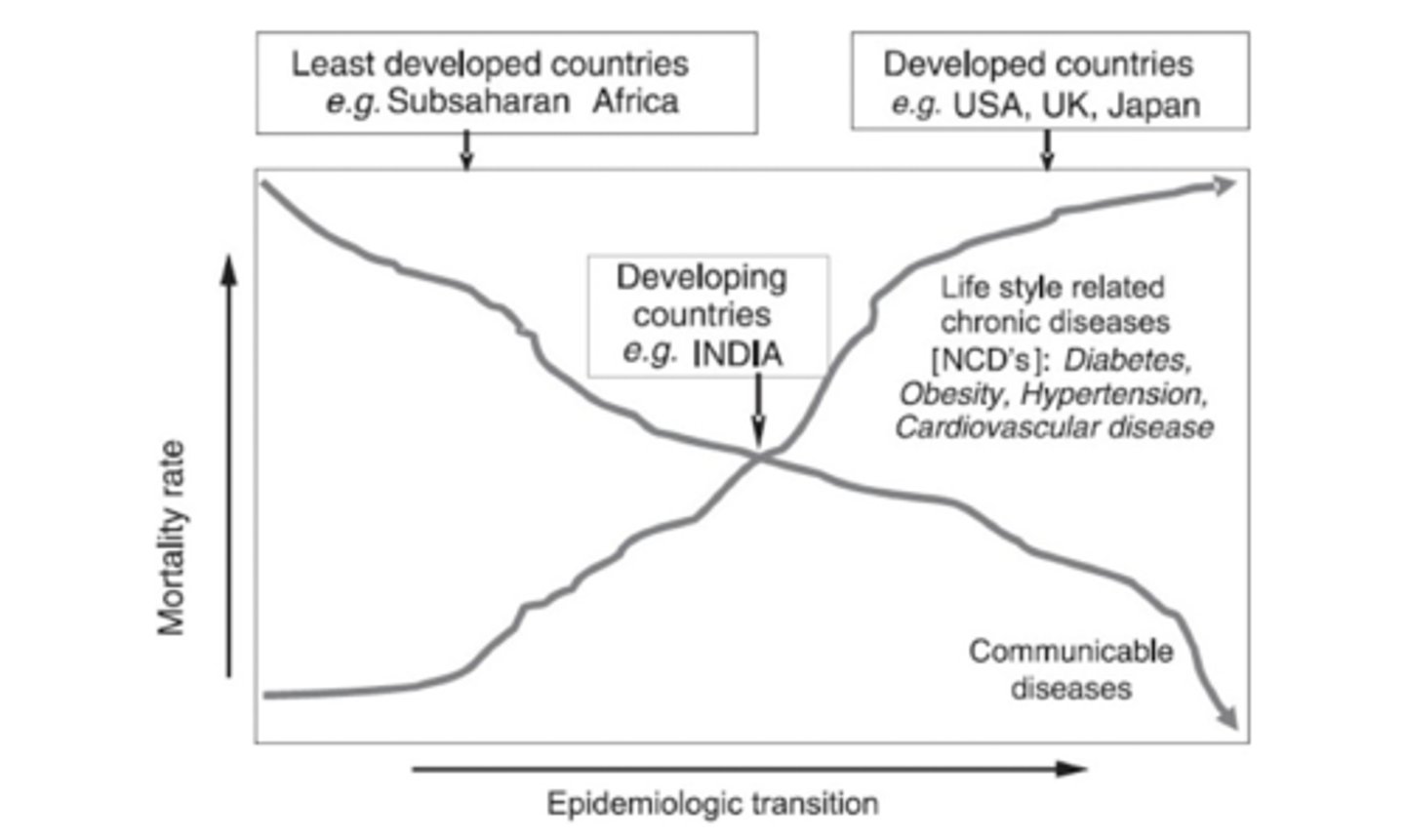
What is the difference between demographic and epidemiologic transitions in morbidity and mortality over time?
Demographic Transition → Changes in birth & death rates as societies develop.
Stage 1: High birth & death rates.
Stage 2–3: Death rate falls (better sanitation, medicine), birth rate eventually falls.
Stage 4–5: Low birth & death rates, population stabilizes/ages.👉 Focus = population size structure.
Epidemiologic Transition → Changes in main causes of death/disease.
Early: Infectious/communicable diseases dominate (plagues, cholera, TB).
Later: Chronic, degenerative diseases dominate (heart disease, cancer, diabetes).👉 Focus = types of diseases causing morbidity & mortality.
Fixed Population
- Membership is permanent and defined by an event
- Adds no new members; population decreases in size due to deaths only
Fixed population examples
- Survivors of the 9/11 terrorist attack in New York
- Residents of New Orleans during Hurricane Katrina
Dynamic Population
- membership is transient
- Adds new members through immigration and births, or loses members through emigration and deaths
Health of the community
To describe the overall health of a particular community
- Provide a key to the types of problems that require attention
- Accentuate the need for specific health services
Policy Evaluation
To study the working of health services with a view to their improvement
- What services are needed in the community?
- What services are duplicated unnecessarily?
Cost-benefit analyses
Causality in Epidemiologic Research
To search for causes of health and disease by computing the experience of groups defined by their composition, inheritance, and experience, their behavior and environments
Study of Risks to Individuals
To estimate from the group experience what are the individual risks, on average of disease, accident and defect, and the chances of avoiding them.
Risk assessment
A methodology used to provide quantitative measurements of risk to health
Risk factor
an exposure that is associated with disease, morbidity, mortality, or adverse health outcome.
Examples of risk factors
- Smoking (lung cancer)
- Sedentary behavior (cardiovascular disease)
- Family history (genetic)
- Lack of exercise (behavioral)
- Unhealthy eating (behavioral)
- Overweight (behavioral)
Identify Syndromes
To identify syndromes by describing the distribution and association of clinical phenomena in the population. Typically, identify a group of symptoms that characterize a disease or disorder.
Identifying symptoms examples
Fetal alcohol syndrome and carpal tunnel syndrome
Clinical Picture of Disease
To complete the clinical picture of chronic diseases and describe their natural history
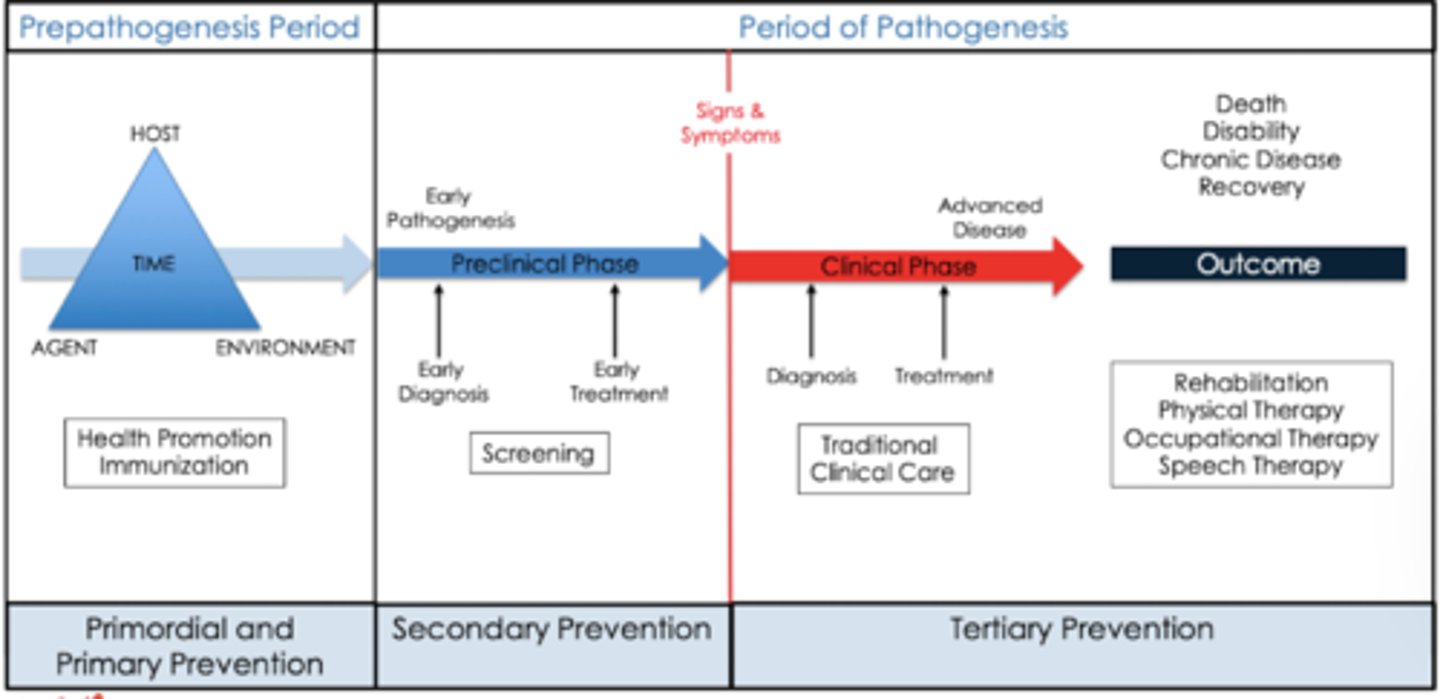
What are the main stages in the clinical picture of disease and how do prevention methods fit in?
Prepathogenesis Period - Before you get sick (host, agent, environment interact).
--> Prevention: Primordial & Primary (health promotion, immunization).
Pathogenesis Period - Disease process starts.
Preclinical Phase - Early disease, no symptoms yet.
--> Prevention: Secondary (screening, early diagnosis, early treatment).
Clinical Phase - Signs & symptoms appear, disease progresses.
--> Traditional clinical care.
Outcome - Recovery, chronic disease, disability, or death.
--> Prevention: Tertiary (rehab, therapy, support).
Primary prevention
Keeps the disease progress from becoming established by eliminating or reducing causes of disease or by increasing resistance to disease (lower the occurrence of disease)
Prevention before the occurrence of disease during prepathogenesis
- primordial prevention
- specific prevention
Primordial Prevention
Avoid the development of risk factors in the first place, early in life (minimizing health hazards in general)
Examples of primordial prevention
- Health promotion (health education programs in general, marriage counseling, sex education)
- Improvement of: economic conditions, social conditions, behavioral conditions
Primary prevention active
Necessitates behavior change on the part of the subject
Examples: Vaccinations and wearing protective devices to prevent occupational injuries
Primary prevention passive
Does not require any behavior change
Examples: Fluoridation of public water and vitamin fortifications of milk and bread products
Secondary prevention
The disease already exists in the person. Interrupts the disease process before it becomes symptomatic (early diagnosis and prompt treatment)
Secondary prevention example
Screening programs
- cancer screening- Cancer already present; the goal is to
detect the cancer before clinical symptoms arise to
improve prognosis and prevent conditions from progressing and from spreading
Tertiary prevention
The disease has already occurred
- limits the physical and social consequences of symptoms (rehabilitation)
- Rehabilitation programs for those affected by the late sequelae of disease
tertiary prevention examples
- Physical therapy for stroke patients
- Halfway houses for alcohol abuse recovery
- Fitness programs for heart attack patients
- Shelter homes for the developmentally disabled
- Occupational therapy among workers recovering from injuries
Prepathogenesis and pathogenesis periods of natural history EX: COVID
Primary/primordial:
- vaccines (prevent)
- quarantine from others who may already be infected
Secondary:
- at-home covid test
- testing if aware of a possible exposure
tertiary:
- talking to a healthcare provider for symptom relif
- drugs that provide relief from symptoms and prevent death
- vaccine to prevent rom getting the disease again
- ventilators
What level of prevention is this?
Screening for HIV in those who have been infected for 2 months
Secondary prevention
3 multiple choice options
What level of prevention is this?
An urban community implements access to safe sidewalks to promote physical activity
Primordial prevention
3 multiple choice options
What level of prevention is this?
Use of anti-fungal medications to treat thrush (oral candidiasis) in patients with HIV/AIDS for 2+ years
Tertiary prevention
3 multiple choice options
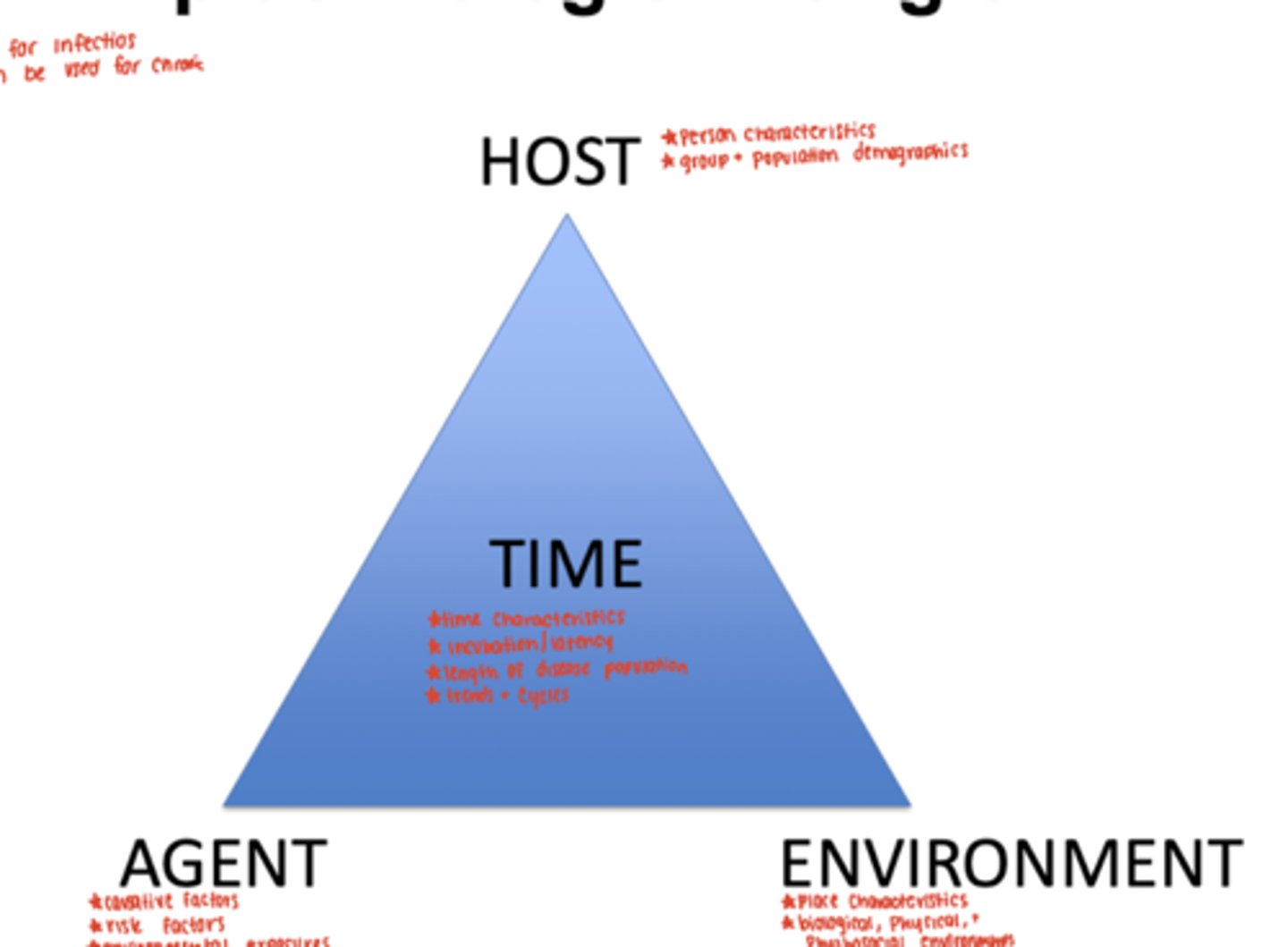
Epidemiologic Triangle
agent
- Causative factors
- risk factors
- environmental factors
host
- person characteristics
- group + population demographics
environment
- place characteristics
- biological, physical, + psychological environment
time
- time characteristics
- incubation/latency
- length of disease
- trends and cycles
Big Data
Vast electronic storehouses of information (internet search transactions, social media activities, data from health insurance programs, electronic medical records from receipt of healthcare services)
Three V's of the Big Data
Volume (amount), Variety (different formats), Velocity (speed/frequency).