Advanced Diagnostic Techniques
 Call Kai
 Learn
Learn Practice Test
 Spaced Repetition
 Match
Match Flashcards
 Knowt Play
1/24

There's no tags or description
Looks like no tags are added yet.
Name | Mastery | Learn | Test | Matching | Spaced | Call with Kai | Chat |
|---|
No analytics yet
Send a link to your students to track their progress
25 Terms
tear osmolarity
measure of the concentration of solutes in tears. This value changes secondary to increases or decreases in aqueous volume, not tear film components.
hyperosmolarity, evaporation, secretion
When tear osmolarity increases _____ results and is a trigger in the dry eye cycle by stimulation of cell apoptosis and inflammation. This may occur due to increased ____ or decreased _____
285-295 mOsm/L
normal osmolarity of blood
296-302 mOsm/L
normal osmolarity of the tear film
TearLab
the only current FDA approved device for testing tear osmolarity. A single use test card collects 50 nL of tears from the lower tear meniscus then displays tear osmolarity. Must be performed before any testing involving drops or tear stimulation.
>308
The TearLab device suggests that the cut off value of tear osmolarity for diagnosis of dry eye should be ____ mOsm/L
>8
A difference of ____ mOsm/L between two eyes is highly suggestive of tear film instability and hyperosmolarity
reduce
Non-invasive TBUT involves evaluation of tear film stability by observation of mires. This is useful as fluorescein tends to ____ tear breakup time
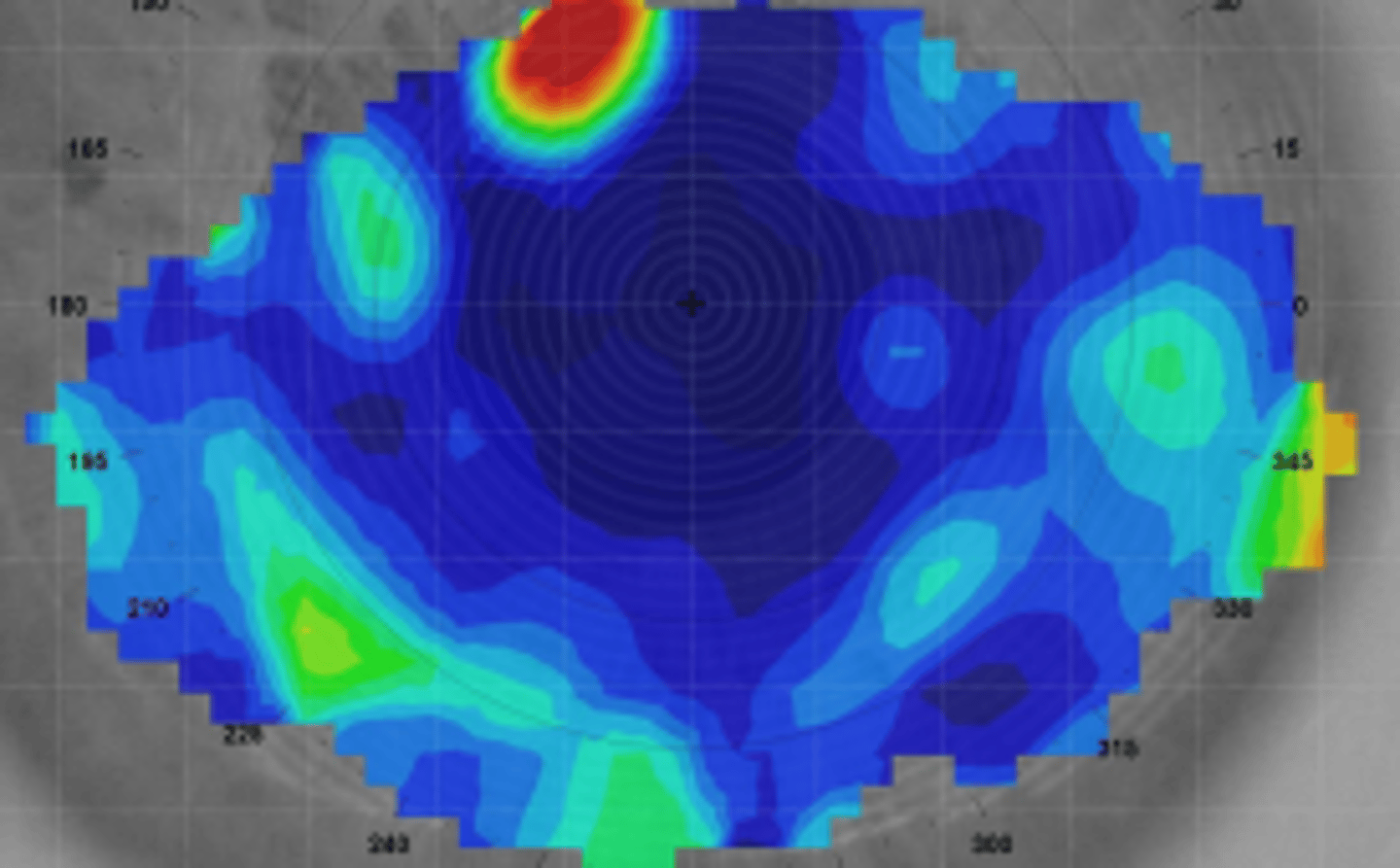
medmont e300
what is this non-invasive tear film evaluation device?
Keratograph 5M NIKBUT
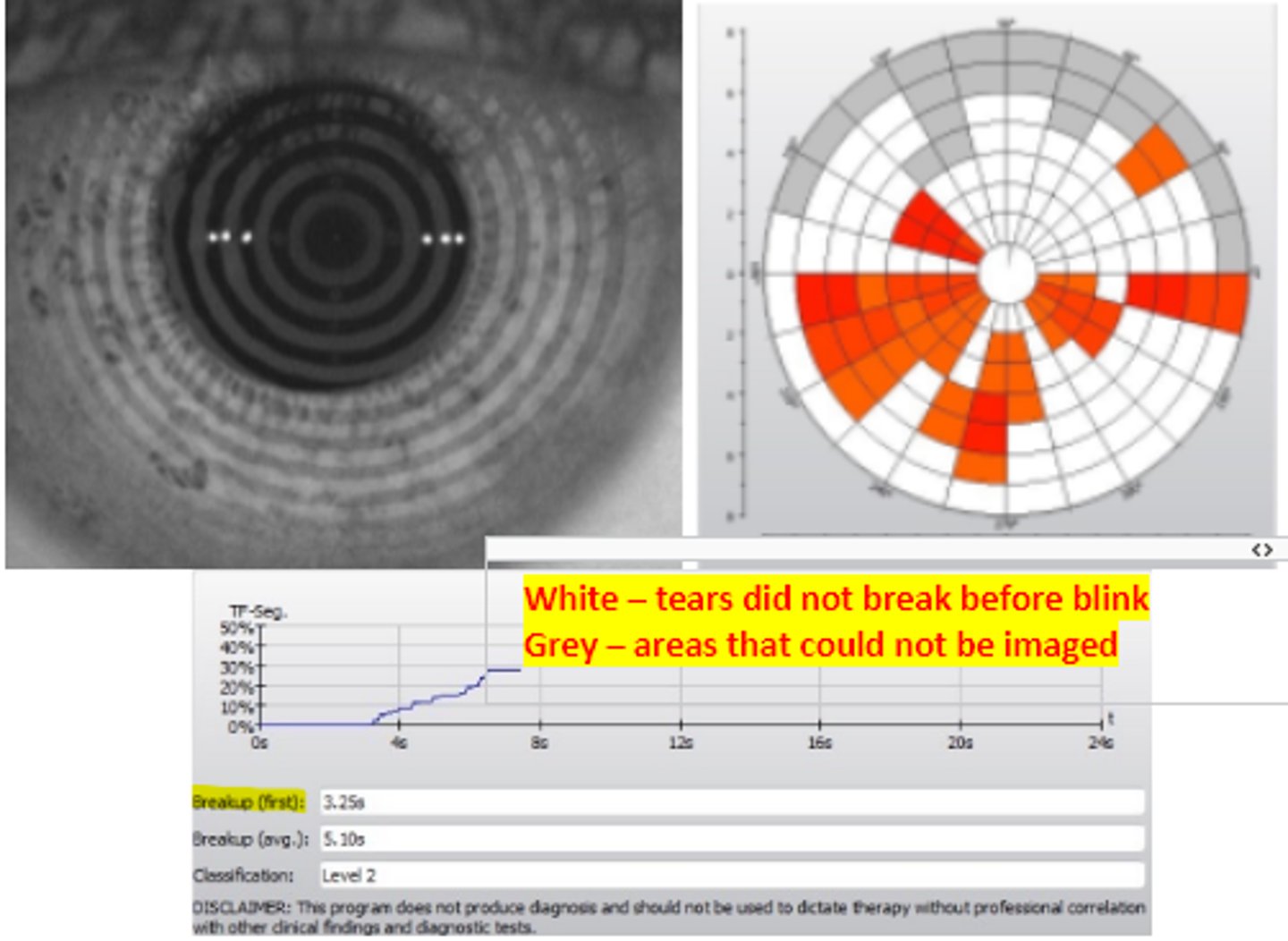
device that images the cornea with infrared light to reduce reflex tearing and stimulation of early blink due to brightness discomfort. Recording of the mires begins after two blinks then stops after the third while the patient focuses straight ahead.
Matrix metalloproteinases (MMPs)
enzymes produced by inflammatory and wound cells playing a crucial role in wound healing by degrading proteins such as collagen, gelatin, and proteoglycan. Are released in their inactive form triggered by inflammatory cytokines (IL 1, IL 6, TNF alpha) and are then activated by other proteinases.
MMP 9
MMP that is produced by corneal epithelial cells under hyperosmotic stress. This MMP then signals the same stress cells to produce inflammatory cytokines. This results in the degradation of corneal epithelial tight junctions and basement membrane proteins.
5.6
Levels of MMP 9 are ___x higher in patients having allergic eye disease
5.3
Levels of MMP 9 are ____x higher in patients having conjunctivochalasis
4.1
Levels of MMP 9 are ____x higher in patients having dry eye
2.5
Levels of MMP 9 are ____x higher in patients having blepharitis
InflammaDry (Quidel)
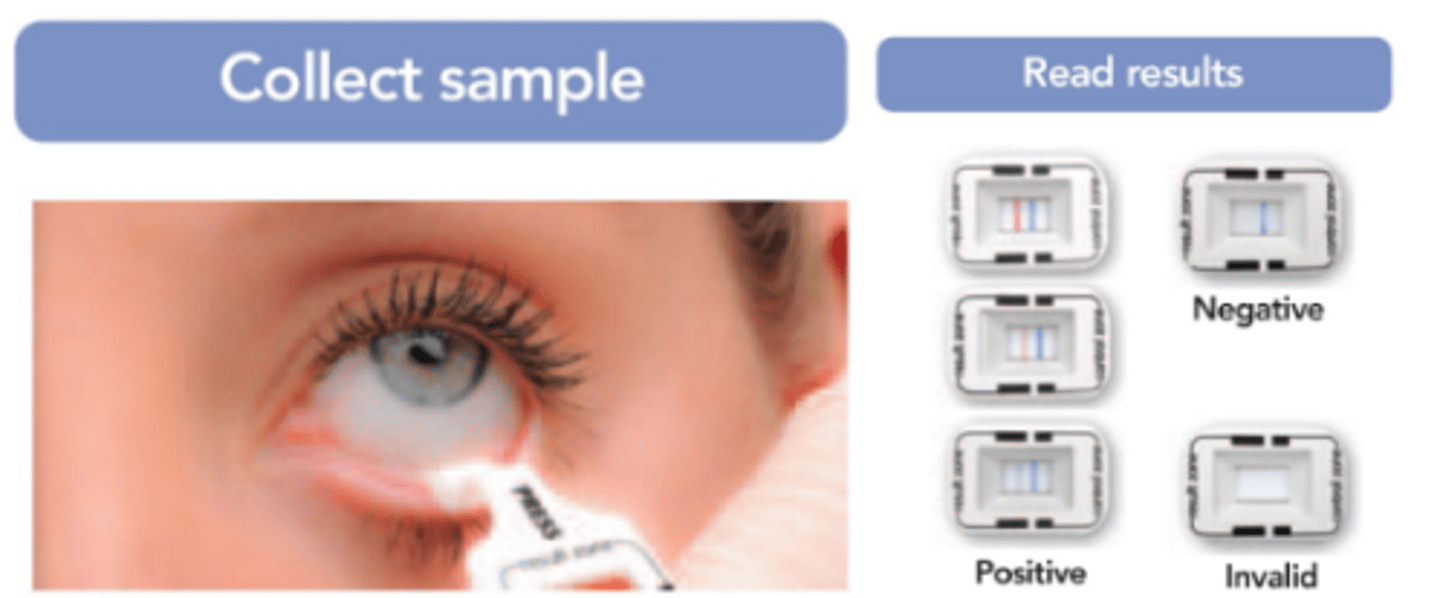
10 minute diagnostic test that quantitatively measures MMP 9 activity by taking a sample from the lower palpebral conjunctiva. Will produce a positive test result when MMP 9 levels are >40.
Lipid layer thickness
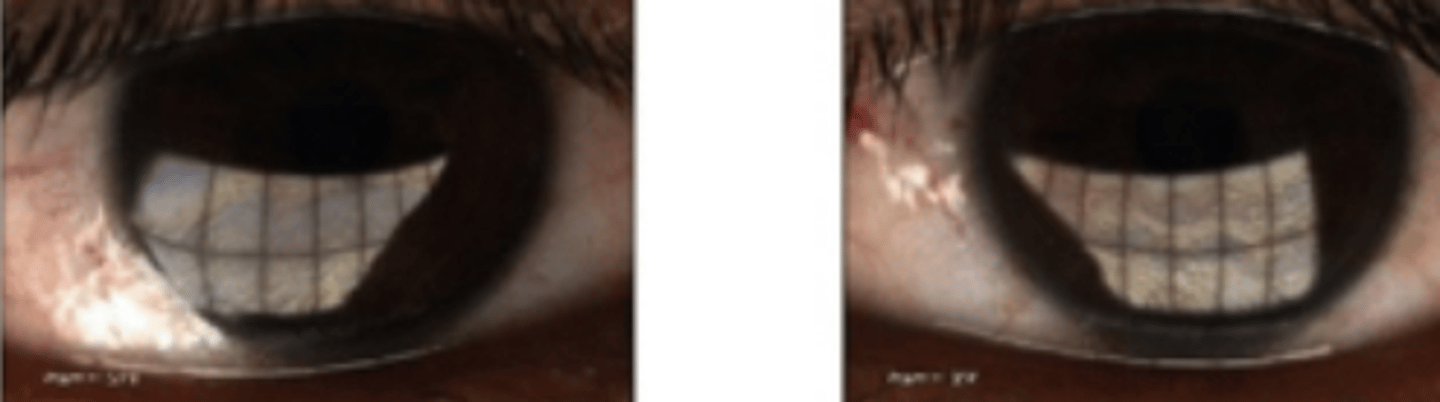
____ is attempted to be quantified by analyzing the pattern of interference fringes generated by a light source
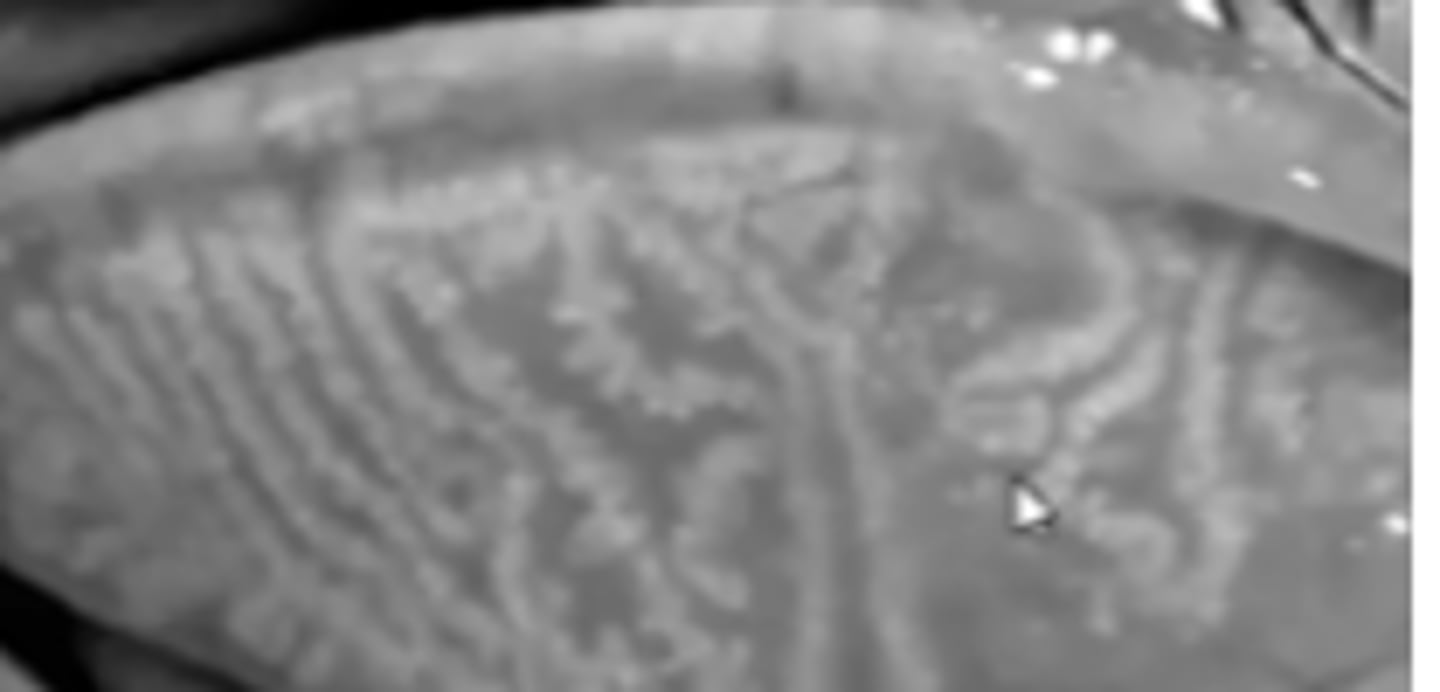
meibography
infrared light imaging of meibomian glands in-situ. Observe the number of intact glands, length of the glands, distortion of the glands, central ductule dilation, and orifice plugging of both the upper and lower lids. Some gland loss is normal with age. Classification of findings is not well established.
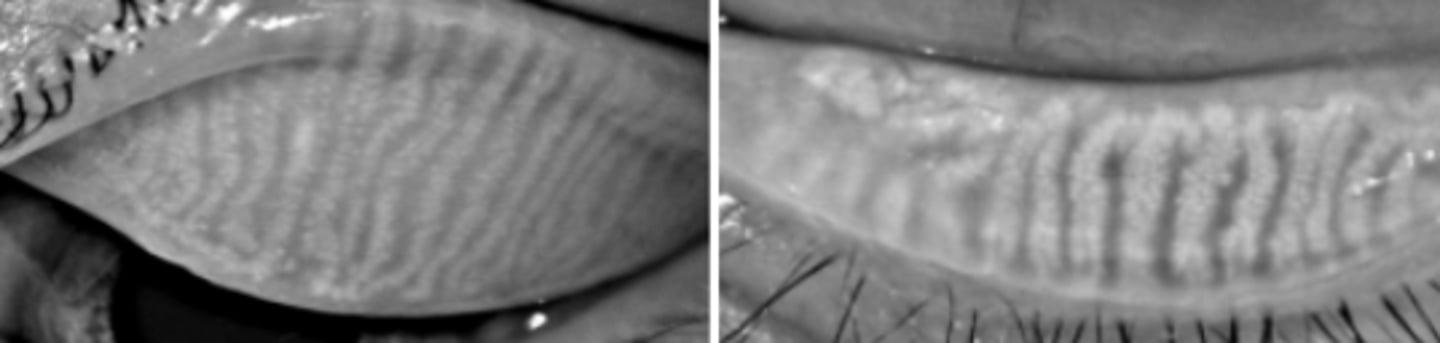
10
Some degree of meibomian gland distortion will be observed in about ____% of otherwise normal eyes
shortening, lower
CL use will result in initial _____ of ____ meibomian glands that does not progress with lens use
distortion, upper
Allergic conjunctivitis can result in ____ of ____ meibomian glands
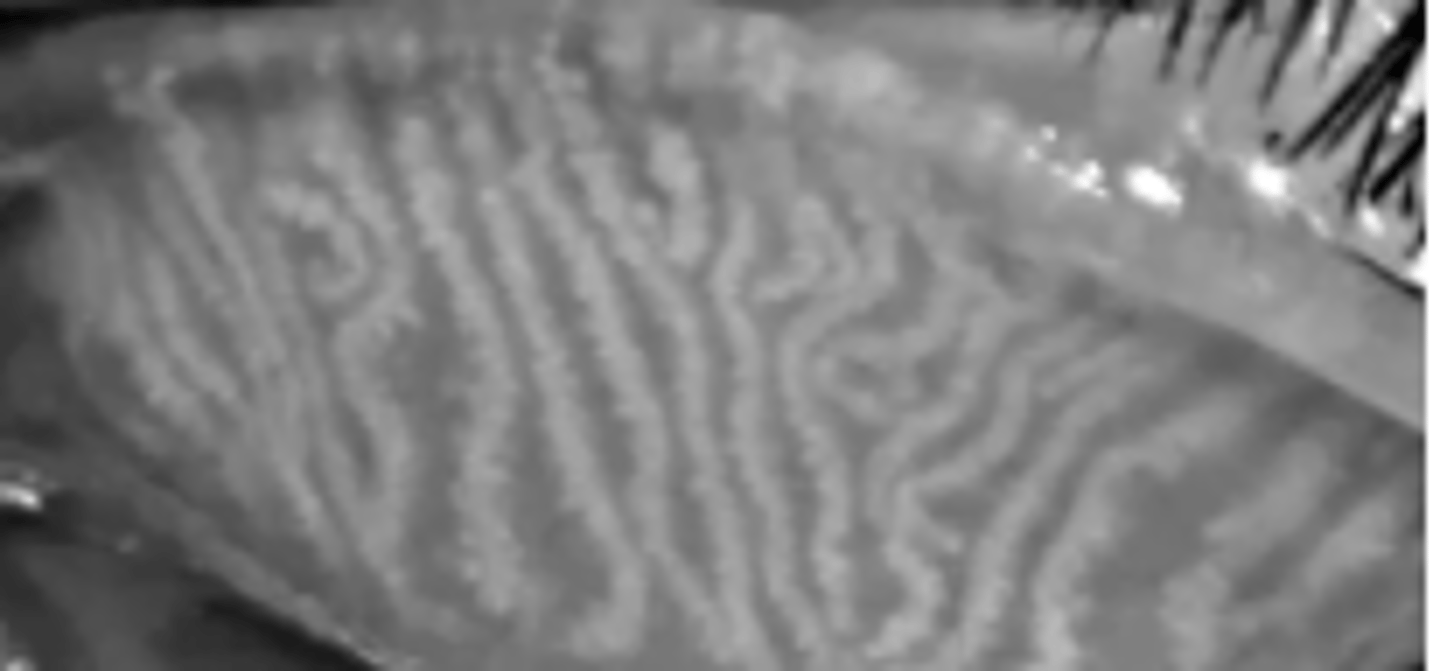
destruction
Chalazia can result in _____ of meibomian glands
superior thinning
Corneal epithelial thickness mapping of a cornea having dry eye may show _____ positively correlating with the severity of the dry eye. This is thought to be cause by increased friction between the upper lid and cornea during blinking. Has no correlation with TBUT, Schirmer testing, or severity of meibomian gland alteration.
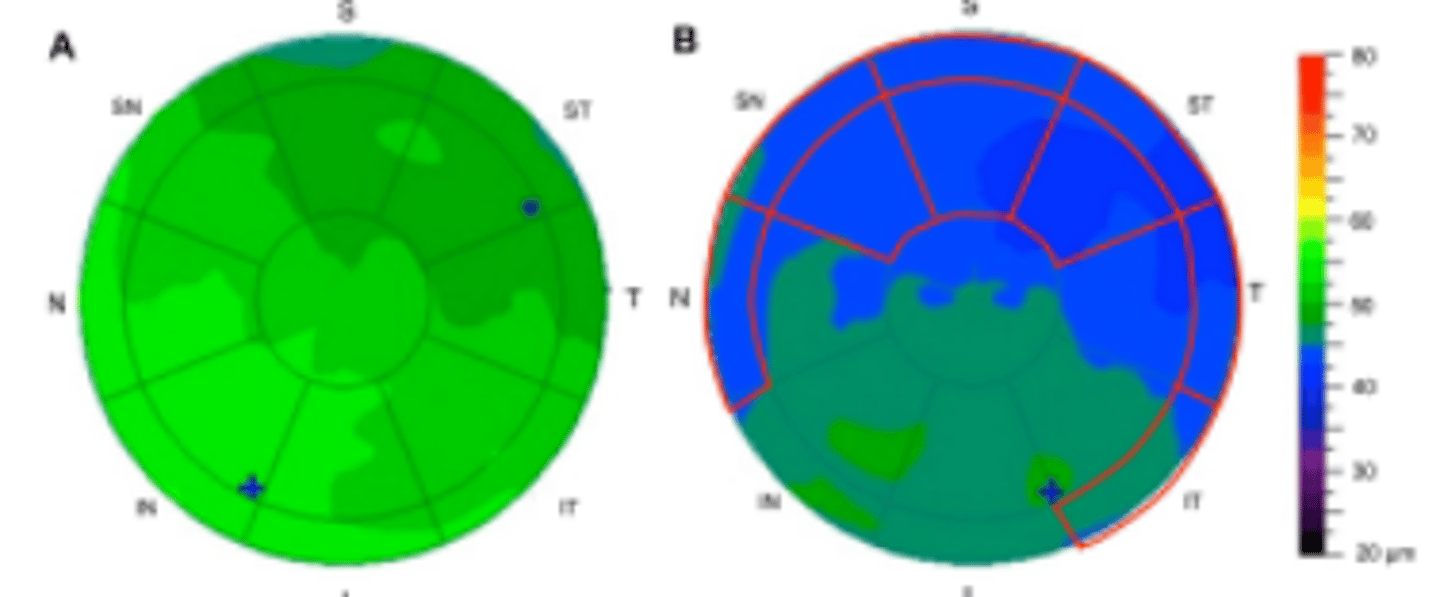
<50
Superior thinning of the cornea ____ microns is diagnostic for dry eye