BUS-P 370 Module 1: Strategy Process/Analysis
 Call Kai
 Learn
Learn Practice Test
 Spaced Repetition
 Match
Match Flashcards
 Knowt Play
1/77

There's no tags or description
Looks like no tags are added yet.
Name | Mastery | Learn | Test | Matching | Spaced | Call with Kai | Chat |
|---|
No analytics yet
Send a link to your students to track their progress
78 Terms
___________________ is defined as the design, operation, and improvement of the systems that create and deliver the firm's primary products and services.
Operations and supply chain management
______________ refers to manufacturing and service processes used to transform the resources employed by a firm into products desired by customers.
Operations
An example of a ________________ produces a physical product, such as an automobile or a computer.
manufacturing process
A ________________ process would produce an intangible product, such as a call center that provides information to customers on the highway or a hospital that treats accident victims in an emergency room.
service
______________ refers to processes that move information and material to and firm the manufacturing and service processes of the firm.
Supply chain
T/F: The field of operations and supply chain management is ever-changing due to the dynamic nature of competing in global business and the constant evolution of information technology.
True
What are the four categories of operations and supply chain processes?
Making, sourcing, planning, delivering, and returning
_____________ consists of the processes needed to operate an existing supply chain strategically.
Planning
______________ involves the selection of suppliers that will deliver the goods and services needed to create the firm's product.
Sourcing
____________ is where the major product is produced or the service is provided.
Making
______________ is also referred to as the logistics process involving the movement of products to warehouses and customers.
Delivering
________________ also involves processes for receiving worn-out, defective, and excess products from customers and support for customers who have problems with delivered products.
Returning
____________ is an intangible process that cannot be weighed or measured.
Service
A ___________ is a tangible output of a process that has physical dimensions.
good
T/F: A company with a new concept must expand rapidly before competitors copy its procedures.
True
A service requires some degree of ________________ with the customer to be classified as a service.
interaction
T/F: services are heterogeneous-- meaning they vary from day to day and even hour to hour as a function of the attitudes of customers and the servers.
True
____________ businesses can be categorized into four main types: (1) businesses that impact human bodies, (2) businesses that are directed at physical products, (3) businesses that are directed at people's minds, and (4) businesses that are directed at risk and money management.
Service
Some examples of _____________ are food products, chemicals, and mining products.s
pure goods
Some examples of _____________ are appliances, automobiles, and data storage systems.
core goods
Some examples of _______________ are hotels, airlines, internet services, and providers.
core services
_________________ refers to a company building service activities into its product offering for its customers.
Product service bundling
OSCM jobs are ______________, focusing on delivering the goods on time and at a low cost.
people-oriented
Plant manager, hospital administrator, supply chain manager, purchasing manager, and logistics manager are all examples of operations and supply chain management ______________.
jobs
The _________________ emphasizes how a factory's capabilities could be used strategically to gain an advantage over a competing company.
manufacturing strategy
_____________ manufacturing is an integrated set of activities designed to achieve high-volume production using minimal inventories of parts that arrive exactly when they are needed.
Just-in-time
_______________ philosophy aggressively seeks to eliminate causes of production defects.
Total quality control
_____________ focuses on managing the entire organization so that it excels in all dimensions of products and services important to the customer.
Total quality management
The ___________________ approach seeks to make revolutionary changes as opposed to evolutionary changes by taking a fresh look at what the organization is trying to do in all its business processes, and then eliminating the non-value-added steps and computerizing the remaining ones to achieve the desired outcome.
business process reengineering
____________ was originally developed in the 1980s as part of total quality management.
Six sigma
Trends such as outsourcing and ________________ are forcing companies to find flexible ways to meet customer demands.
mass customization
______________ refers to the use of the Internet as an essential element of business activity.
Electronic commerce
_______________ involves the analysis of data to better solve business problems.
Business analytics
______________ means doing something at the lowest possible cost.
Efficiency
The goal of an ___________ process is to produce a good or service by using the smallest input of resources.
efficient
______________ means doing the right thing to create the most value for the company.
Effectiveness
An ____________ is a criterion, or possibly a set of criteria, that that differentiates the products or services of one firm from those of another.
order winner
An _______________ is a screening criterion that permits a firm's products to even be considered as possible candidates for purchase.
order qualifier
An _____________ shows how a company's strategy is delivered through a set of tailored activities.
activity-system map
Technological advances will lead to an increase in ____________.
value
What are the three components of the triple bottom line?
Economic prosperity, environmental stewardship, and social responsibility
(output/labor+capital+energy) and (output/labor+capital+materials) can be classified as ______________ measures of productivity
multifactor
______________________ is the design, operation, and improvement of the systems that create and deliver the firm's primary products and services.
Operations and Supply Chain Management (OSCM)
_______________ comprise the manufacturing and service processes used to transform resources into products.
Operations
__________________ involves the processes that move information and material to and from the firm.
Supply Chain Management
______________ reflects a company's ideas about how to execute processes differently (i.e., provide products and services that are more valuable and appealing to customers).
Strategy
______________ are building blocks designed and executed to implement a firm's strategy. Processes occur at both the company level (within the firm) and the overall supply chain level (outside the firm).
Processes
Operations focuses on how to execute processes ___________ (i.e., do things more efficiently to deliver value at a lower cost).
better
_____________ enable OSCM professionals to perform their jobs effectively by utilizing data to make informed, insightful, and evidence-based decisions
Analytics
_________________ refers to a company building service activities into its product offerings for its customers.
Product-service bundling
_____________ is a ratio of the actual output of a process relative to some standard. Also, being "efficient" means doing something at the lowest possible cost.
efficiency
_______________ is doing the things that will create the most value for the customer.
effectiveness
The attractiveness of a product relative to its price is ______________.
value
_______________ is the amount of time jobs spend in the system from beginning to end.
Flow time
_____________ is the rate at which a system releases successive completed jobs.s
Cycle time
_____________ is the rate at which jobs "come and go" through a system
Throughput
_____________ is the maximum sustainable throughput
Capacity
___________- is the count of work-in-process jobs in a system, either being worked on or waiting in a queue. eue
Inventory
_____________ is the amount of time resources are working divided by their available time to work.
Utilization
productivity=
output/input
total measure of productivity=
total output/total input
a ___________ measure of productivity compares output to a group of inputs (ex total output/labor+materials)
multifactor
A _____________ measure of productivity compares output to a single input (ex total output/energy)
partial
Individuals or companies that legally own one or more shares of a stock in the company are _____________.
shareholders
Individuals or organizations who are directly or indirectly influenced by the actions of the firm are ______________.
stakeholders
_____________ pertains to fair and beneficial business practices toward labor, the community, and the region in which a firm conducts its business.
Social responsibility
__________ means that the firm is obligated to compensate shareholders who provide capital.
Economic prosperity
____________ refers to the firm's impact on the environment.
Environmental stewardship
In a flow chart, what does an arrow represent?
flows
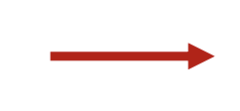
In a flow chart, what does an upside-down triangle represent?
buffers

In a flow chart, what does a rectangle represent?
activities

Are flows typically value adding?
no
Are buffers typically value adding?
No
If μ > λ, jobs exit the system at rate ________
If μ > λ, jobs exit the system at rate λ
If μ < λ, jobs exit the system at rate _________, and inventory builds
μ
Jobs arrive at a rate ____________ (in units per time; e.g., widgets/hour, batches/day, customers/shift)
λ
A _____________ is the workstation cycle time or resource that constrains the maximum sustainable throughput (capacity) of a system
bottleneck
Within a __________blank framework, the economic dimension of the triple bottom line concept goes beyond just profit for the firm but also provides lasting economic benefit to society.
sustainability