PSIO 303 Block 3 Exam
 Studied by 0 people
 Call Kai
 Learn
Learn Practice Test
 Spaced Repetition
 Match
Match Flashcards
 Knowt Play
1/99

There's no tags or description
Looks like no tags are added yet.
Name | Mastery | Learn | Test | Matching | Spaced |
|---|
No study sessions yet.
100 Terms
When it comes to essential hypertension in Metabolic Syndrome, it is suggested that __________ and __________ may be responsible for the development of this core component by increasing central sympathetic outflow, causing peripheral vasoconstriction, and more.
Question options:
glucose intolerance and insulin resistance
insulin resistance; hyperinsulinemia
dyslipidemia and hyperinsulinemia
dyslipidemia and glucose intolerance
insulin resistance; hyperinsulinemia
The tissue type primarily responsible for peripheral glucose disposal and for whole-body insulin resistance is:
Question options:
skeletal muscle
smooth muscle
the liver
neural tissue (e.g. brain)
cardiac muscle
skeletal muscle
Which of the following is neither a core component nor an additional component of Metabolic Syndrome?
Question options:
Microalbuminuria
Hyperinsulinemia
Hyperkeratosis
Adipocyte dysfunction
Dyslipidemia
Hyperkeratosis
Which of the following statements about Metabolic Syndrome is false?
Question options:
The onset of symptoms is typically very rapid.
It is a cluster of pathologies that increases the risk for cardiovascular disease.
It is also know as Syndrome X and Insulin Resistance Syndrome.
Excess visceral fat is a greater risk factor than excess subcutaneous fat for Metabolic Syndrome.
The onset of symptoms is typically very rapid.
Of the following pairs of components, which are the earliest that arise with Metabolic Syndrome?
Question options:
dyslipidemia and hyperinsulinemia.
impaired glucose tolerance and dyslipidemia.
insulin resistance and hypertension.
hyperinsulinemia and insulin resistance
hyperinsulinemia and insulin resistance
Individuals with a 2-hour glucose level above 200 mg/dL during an OGTT can be diagnosed with type 2 diabetes.
Question options:
True
False
True
Skeletal muscle is a major organ for both the removal of glucose from the bloodstream and the delivery of glucose into the bloodstream following glycogen breakdown.
Question options:
True
False
False
Reactive oxygen species cause cellular dysfunction and do not play a role in normal growth and metabolism.
Question options:
True
False
False
Glucose that enters the bloodstream from the intestines is first processed and detected by the pancreas.
Question options:
True
False
False
Release of adiponectin from fat cells would promote the development of cardiovascular associated defects and impairments in Metabolic Syndrome.
Question options:
True
False
False
A chemical messenger secreted by one cell and acting on the same cell in the same tissue is an example of paracrine communication.
Question options:
True
False
False
Which of the following statements regarding signal transduction is FALSE?
Question options:
Signal transduction is used by the body to change the function of cells.
Phosphorylation of proteins is a critical (and quite common) component of signal transduction in cells.
Signal transduction relies exclusively on cell surface receptors in order to change cellular behavior.
The use of second messengers allows for signal transduction events to be amplified in the cell.
Signal transduction relies exclusively on cell surface receptors in order to change cellular behavior.
Phosphorylation events become less common throughout the subsequent stages of cellular signal transduction.
Question options:
True
False
False
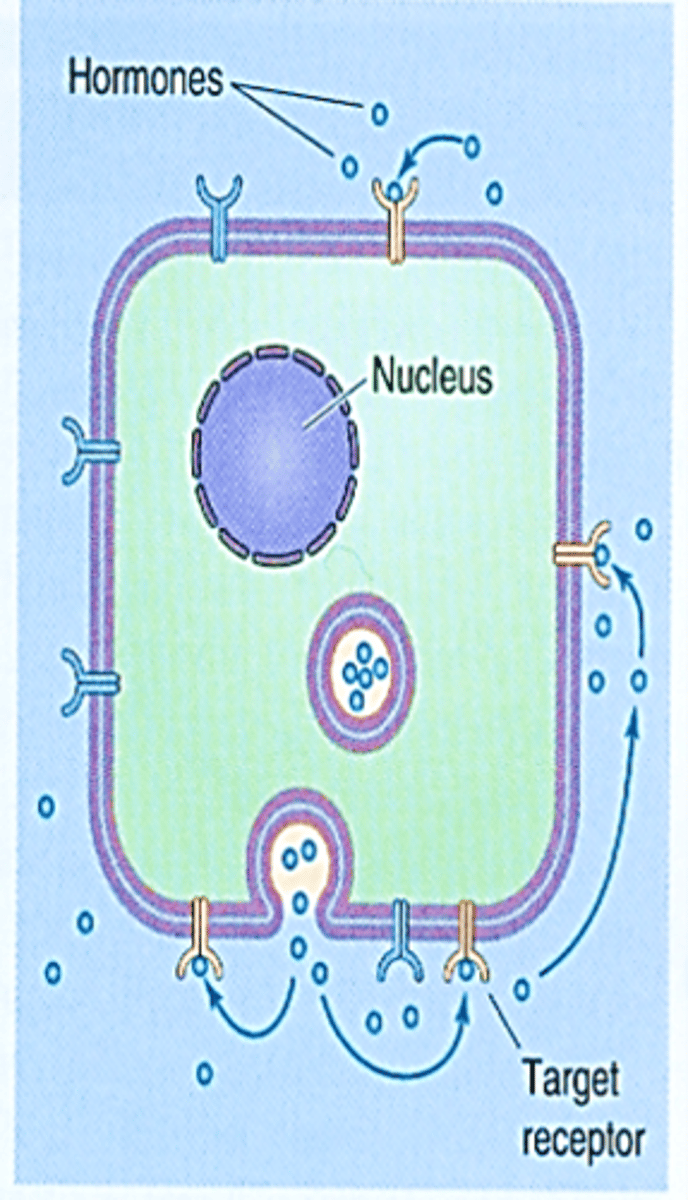
Which mechanism of cell-cell communication is illustrated by the figure below?
Question options:
Paracrine
Endocrine
Autocrine
Paracrine
Enzymes which remove phosphates from cellular proteins are called __________, whereas enzymes which add phosphates to cellular proteins are called __________.
Question options:
kinases; phosphodiesterases
phosphatases; kinases
phosphatases; phosphodiesterases
kinases; phosphatases
phosphatases; kinases
ACh receptors are ligand-gated ion channels that permit the movement of what ion when ACh binds?
Question options:
K+
Na+
Ca2+
Cl-
Na+
When a ligand binds to a GPCR, the activated GPCR becomes capable to doing what for G proteins?
Question options:
It can now enable a new GTP molecule from the cytoplasm to replace the old GDP molecule bound to the α subunit of the G protein.
It can now promote the GTP hydrolysis activity of the βγ subunit of the G protein so that GDP is produced.
It can now greatly promote GTP hydrolysis by the α subunit of the G protein.
It can now enable the α subunit of the G protein to re-associate with a nearby βγ subunit of the G protein.
It can now enable a new GTP molecule from the cytoplasm to replace the old GDP molecule bound to the α subunit of the G protein.
Adenylate cyclase uses the substrate _____ to form the second messenger chemical _____, and the increase in this second messenger chemical causes the activation of the enzyme named _____.
Question options:
GTP; cGMP; PKG
GTP; m7G; PLC
ATP; cADPR; PLC
ATP; cAMP; PKA
ATP; cAMP; PKA
The α subunits of the _____ subfamily of G proteins interact with (and stimulate) adenylate cyclase when activated.
Question options:
Gs
Gi
G12,13
Gq,11
Gs
The α subunits of the _____ subfamily of G proteins interact with phospholipase C (PLC) when activated.
Question options:
Gi
Gq,11
G12,13
Gs
Gq,11
The insulin receptor is an integral part of the insulin signaling cascade. Which of the following statements is true regarding the insulin receptor?
Question options:
The insulin receptor can only phosphorylate itself to stimulate a signal downstream.
The insuline receptor is a monomer, consisting of 2 extracellular alpha-subunits that bind the hormone and two trasmembrane beta-subunits.
The insulin receptor is a tyrosine phosphatase. Insulin binds to the cystein rich domains of the beta-subunits, thereby enhancing, via a specific conformation change, the tyrosine kinase activity of the alpha-subunits.
The insulin receptor is a heterotetramer, consisting of 2 extracellular alpha-subunits that bind the hormone and 2 transmembrane beta-subunits.
The insulin receptor is a heterotetramer, consisting of 2 extracellular alpha-subunits that bind the hormone and 2 transmembrane beta-subunits.
Which of the following statements about IRS proteins is FALSE:
Question options:
Tyrosine phosphorylation of IRS increases the enzymatic activity of the IRS protein.
Tyrosine-phosphorylated IRS acts as a docking protein to regulated downstream signaling factors.
Tyrosine-phosphorylated IRS can propogate signaling to modulate numerous aspects of cell metabolism, such as glucose transport, glycogen synthesis, lipid synthesis, and protein synthesis.
IRS proteins are phosphorylated on tyrosine residues by the activated insulin receptor.
Tyrosine phosphorylation of IRS increases the enzymatic activity of the IRS protein.
The Km of GLUT4 is lower than the Km of GLUT2, which means that glucose transport via GLUT4 will saturate...?
Question options:
at a lower glucose concentration than GLUT2.
at the same glucose concentration as GLUT2.
at a higher glucose concentration than GLUT2.
Not enough information (Km only refers to enzyme kinetics)
at a lower glucose concentration than GLUT2.
Which of the following statements about the transport of glucose across the endothelium of capillaries in skeletal muscle is/are FALSE?
Question options:
This transendothelial glucose transport is mediated by the GLUT-1 isoform.
How much glucose is delivered across the endothelium to the skeletal muscle cells can influence the rate glucose transport by the muscle cells.
This transendothelial glucose transport can be directly increased by insulin.
Increased blood flow to the capillary can increase glucose transport to the extracellular space.
This transendothelial glucose transport can be directly increased by insulin.
Insulin increases glucose transport into skeletal muscle cells by:
Question options:
Activation of AMPK.
Increasing the synthesis of new GLUT-4 molecules.
Increasing the transport capacity of each individual GLUT-4 molecule.
Increasing translocation of GLUT-4-containing vesicles to the plasma membrane.
Increasing translocation of GLUT-4-containing vesicles to the plasma membrane.
Only IRS-1 is affected by the up-regulation of PKCtheta activity caused by free fatty acids (FFAs).
Question options:
True
False
False
Serine phosphorylation is known to impair the functionality of insulin signaling. Which of the following kinases cannot initiate this effect?
Question options:
JNK
GSK-3beta
PI3K
p38 MAPK
PI3K
Glucose delivery to skeletal muscle tissue is reduced in the Metabolic Syndrome due to all of the following mechanisms EXCEPT:
Question options:
Reduced NO-stimulated vasodilation of arterioles
Decreased transendothelial glucose transport via GLUT-1
Impaired insulin stimulation of eNOS in smooth muscle cells
Less blood flow to the capillaries perfusing the muscle
Impaired insulin stimulation of eNOS in smooth muscle cells
An inhibitor of the serine kinase GSK-3beta will have all of the following effects on insulin-resistant skeletal muscle except:
Question options:
Cause reduced serine kinase activity of GSK-3beta.
Cause increased insulin-stimulated glucose transport.
Cause decreased serine phosphorylation of IRS-1 in the presence of insulin.
Cause decreased serine phosphorylation of IRS-1 in the presence of insulin.
Which of the following is the main site of dysfunction in the myocyte insulin signaling cascade?
Question options:
PDK1
PIP2
IRS-1
PKB/AKT
IRS-1
When glucose levels in the blood rise, the resulting increase in ATP concentration within β cells __________ the closing of ATP-sensitive K+ channels in the plasma membrane.
Question options:
increases/promotes
decreases/prevents
has no effect on
increases/promotes
Exercise results in increased sympathetic nerve activity to the pancreas which is associated with decreased insulin secretion by the Beta cells. Which of the following is NOT involved in that process?
Question options:
cAMP
Gq
Norepinephrine
PKA
G-protein coupled receptors
Gq
Which of the following is not a cell type expressed in the Islet of Langerhans?
Question options:
Gamma
Delta
Alpha
F
Gamma
High levels of glucose will have all of the following effects on the Alpha cell EXCEPT?
Question options:
Inhibition of glucagon release.
Increased glucose entry via transport using GLUT-1.
Lack of the opening of Ca2+ channels and no change in intracellular Ca2+ levels.
Activation of Na+ channels and membrane repolarization.
Activation of Na+ channels and membrane repolarization.
Which second messenger chemical is a major player in the signal transduction pathway through which glucose stimulates release of insulin by β cells of the endocrine pancreas?
Question options:
cAMP
PIP2
DAG
Ca2+
Ca2+
For Metabolic Syndrome, the increase in insulin resistance happens simultaneously with both the increase in secretion of insulin and the elevation of fasting plasma glucose.
Question options:
True
False
False
The onset of the phase of β cell failure coincides with the transition from a state of impaired glucose tolerance to overt type 2 diabetes.
Question options:
True
False
True
Based on our limited body of knowledge regarding the details of Alpha cell regulation during the development of type 2 diabetes, which the following is FALSE?
Question options:
Preserved function of α-cells in the absence of sufficient insulin secretion by β-cells can exacerbate hyperglycemia.
Just like β-cells, under oxidative stress α-cells are targeted by the apoptotic activity of caspases.
Glucagon release by α-cells can increase as local insulin levels decrease due to a removal of inhibition.
SNS overactivity will affect α-adrenergic receptors on the α-cell, increasing glucagon release.
Just like β-cells, under oxidative stress α-cells are targeted by the apoptotic activity of caspases.
Which of the following is associated with the short-term (acute) effects of a rise in plasma FFA's?
Question options:
β-cell apoptosis
More insulin release by the β cell
Mitochondrial dysfunction
Decreased mitochondrial production of ATP
More insulin release by the β cell
Sulfonylureas were developed to help overcome insulin resistance and prevent/control hyperglycemia. These drugs do the job of _____ by binding to and closing a ______.
Question options:
Potassium, Ca2+ channel
ATP, K+channel
Glucose, mitochondria
ATP, Na+ channel
ATP, K+channel
Metabolic syndrome develops over the course of many years. An increase in __________ likely initiates the condition, with early subsequent defects being __________ and __________. Other core components develop thereafter, resulting in a progressively increasing risk of heart attack or stroke.
Question options:
central adiposity; insulin resistance; compensatory hyperinsulinemia
dyslipidemia; essential hypertension; impared glucose tolerance (IGT)
impared glucose tolerance (IGT); essential hypertension; dyslipidemia
insulin resistance; central adiposity; compensatory hyperinsulinemia
central adiposity; insulin resistance; compensatory hyperinsulinemia
Which of the following is a correct statement about the liver and glucose homeostasis?
Question options:
It is able to process nutrients from the intestines via the hepatic-portal circulation, but only after those nutrients are first sensed by endocrine pancreas.
It stores glucose carbons primarily as fat in its hepatocytes.
It breaks down stored glycogen to glucose in a process called gluconeogenesis.
It modulates gluconeogenesis and glycogenolysis in response to insulin and glucagon.
It modulates gluconeogenesis and glycogenolysis in response to insulin and glucagon.
For the signal transduction process, the "transmission and modulation" steps specifically involve
Question options:
Binding of the ligand to the plasma membrane receptor.
The activation of the plasma membrane receptor and then production and action of a second messenger.
The amplification of intracellular signaling due to multiple steps, for example by the phosphorylation of effector proteins or enzymes.
The modification of cellular function in highly specific ways.
The amplification of intracellular signaling due to multiple steps, for example by the phosphorylation of effector proteins or enzymes.
Which organ/tissue is the major one responsible for peripheral disposal of glucose in response to the glucose level rise caused by consumption of a carbohydrate-containing meal?
Question options:
adipose tissue
the hypothalamus
the liver
skeletal muscle
skeletal muscle
Which of statement about protein phosphorylation is true?
Question options:
It occurs on serine, threonine and tyrosine amino acid residues.
It can be reversed by phosphodiesterases.
It requires inorganic phosphate in addition to ATP for the enzymatic reaction.
It can only increase the catalytic activity of enzymes.
It occurs on serine, threonine and tyrosine amino acid residues.
Which component (core or additional) of Metabolic Syndrome can be defined as the inability to properly manage an increase in blood glucose levels?
Question options:
impaired glucose tolerance (IGT)
essential hypertension
dyslipidemia
hepatic steatosis
IGT
To modulate the function of target cells, successful cell-cell communication involves receptor-ligand binding, __________, and __________.
Question options:
receptors which act as transcription factors; modifications to existing proteins as well as modification to gene expression in order to change cell function.
signal transduction via second messengers; modifications to existing proteins as well as modification to gene expression in order to change cell function.
receptors which act as transcription factors; modification of gene expression in order to make any change to cell function.
signal transduction via second messengers; modification of gene expression in order to make any change to cell function.
signal transduction via second messengers; modifications to existing proteins as well as modification to gene expression in order to change cell function.
The synthesis and secretion of insulin and glucagon takes place in the exocrine pancreas.
Question options:
True
False
False
From the list below, identify the adipokine which can positively affect insulin action in a variety of cell types, including myocytes.
Question options:
adiponectin
TNF-α
resistin
angiotensinogen
adiponectin
In Metabolic Syndrome, which of the following characteristics of cardiovascular disease (CVD) begins to develop before the deterioration of insulin secretory function (and thus before any transition to a diabetic state)?
Question options:
microvascular complications such as retinopathy and nephropathy
elevated fasting blood glucose levels
atherogenesis
elevated hepatic glucose production (HGP)
atherogenesis
Which of the following events turns a G protein "off" in that it prevents the Gα subunit from interacting with effectors?
Question options:
GTP is hydrolyzed to GDP on the α-subunit.
The bound GDP molecule is exchanged for a new GTP molecule within the α-subunit.
The G-protein dissociates from the receptor.
The α-subunit of the G-protein dissociates from the βγ-subunit.
GTP is hydrolyzed to GDP on the α-subunit.
Which of the following influences is clearly not involved in the activation of stress kinases which increase insulin resistance in skeletal muscle?
Question options:
decreased activity of eNOS in response to insulin binding in endothelial cells
increased concentration of free fatty acids in the blood
hyperglycemia
increased concentration of inflammatory factors in the blood
decreased activity of eNOS in response to insulin binding in endothelial cells
Which of the following kinases is activated by an increase in plasma FFAs?
Question options:
p38 MAPK
PKCθ
IKKβ
JNK
PKCθ
The insulin receptor is which type of catalytic receptor?
Question options:
a receptor guanylate cyclase
a receptor tyrosine phosphatases
a receptor serine/threonine kinase
a receptor tyrosine kinase
a receptor tyrosine kinase
Which chemical second messenger is produced by activated phospholipase C (PLC)?
Question options:
cAMP
both DAG and IP3
ceramide
PIP3
both DAG and IP3
Which of the following enzymes involved in insulin signaling adds phosphates to phospholipids in order to create interaction partners for other proteins to bind to?
Question options:
PI3K
GSK-3β
PDK
PKB/Akt
PI3K
Phosphorylation of which amino acid results in negative modulation of insulin receptor signaling activity when insulin is bound?
Question options:
tyrosine
alanine
lysine
serine
serine
Reducing the concentration of FFAs in the bloodstream will lead to less __________ phosphorylation of __________ by PKCθ.
Question options:
serine; both IR and IRS
tyrosine; both IR and IRS
tyrosine; IRS alone
serine; IRS alone
serine; both IR and IRS
Phosphorylation of glycogen synthase kinase 3 (GSK-3) by __________ during insulin signaling in skeletal muscle, prevents phosphorylation of glycogen synthase (GS) by GSK-3. This results in __________ of glycogen synthesis.
Question options:
PDK; inhibition
PDK; stimulation
PKB/Akt; inhibition
PKB/Akt; stimulation
PKB/Akt; stimulation
Insulin can bind to receptors on the smooth muscle cells of arterioles which supply blood to the capillary beds of the skeletal muscle tissue. In doing so, insulin will activate nitric oxide synthase (eNOS) in those smooth muscle cells, leading to nitric oxide production and vasodilation.
Question options:
True
False
False
Pancreatic beta cells are able to sense elevations in blood glucose levels because of increased GLUT-4 translocation to the plasma membrane.
Question options:
True
False
False
Sulfonylureas have beneficial effects on β-cells by binding to __________ and causing them to __________.
Question options:
KATP channels ; close
GLUT-1 carriers ; open
GIRK channels ; close
GLUT-2 carriers ; open
KATP channels ; close
Hormones secreted from the respective cells in the pancreas are delivered to the hepatic-portal circulation by the pancreatic duct.
Question options:
True
False
False
Low levels of glucose, as seen by the pancreas, will result in all of the following, EXCEPT
Question options:
Beta cell depolarization
Quiescent Beta cells
Glucagon release
Sodium channel activation in the Alpha cell
Beta cell depolarization
Parasympathetic signaling to β-cells involves the binding of ACh to muscarinic receptors. These receptors are GPCRs that are coupled to a subfamily of G proteins which causes downstream elevations of Ca2+ in the cytoplasm. Given this information, with which subfamily of G proteins must these GPCRs be coupling?
Question options:
Gq
G12,13
Gi
Gs
Gq
Which phase of dysfunction in the secretory capacity of pancreatic β-cells in the Metabolic Syndrome is the direct result of acute exposure of these cells to high levels of FFAs and/or glucose in the bloodstream?
Question options:
the decompensatory hypoinsulinemia phase
the relative β-cell hyperplasia phase
the compensatory hyperinsulinemia phase
the relative β-cell failure phase
the compensatory hyperinsulinemia phase
Sympathetic signaling to α-cells involves the binding of NE to α1-adrenergic receptors. These receptors are GPCRs that are coupled to a subfamily of G proteins which causes downstream elevations of Ca2+ in the cytoplasm. Given this information, with which subfamily of G proteins must these GPCRs be coupling?
Question options:
G12,13
Gi
Gs
Gq
Gq
Which phase of dysfunction in the secretory capacity of pancreatic β-cells in the Metabolic Syndrome is the result of the loss of β-cell mass?
Question options:
the decompensatory hypoinsulinemia phase
the compensatory hyperinsulinemia phase
the relative β-cell hyperplasia phase
the relative β-cell failure phase
the relative β-cell failure phase
In the face of long-term elevations in FFAs and/or glucose, the mitochondrial dysfunction evident in β-cells during the relative β-cell failure phase leads to __________ in ATP production and a corresponding __________ in the release of insulin.
Question options:
an increase; decrease
an increase; increase
a decrease; increase
a decrease; decrease
a decrease; decrease
There is a genuine dysfunction in the glucagon secretory mechanism of α-cells of the pancreas in the Metabolic Syndrome.
Question options:
True
False
False
GSK-3 and GS are inactive when phosphorylated.
Question options:
True
False
True
Glucagon stimulates glycogenolysis and gluconeogenesis in the liver.
Question Options:
True
False
True
Which of the following proteins is an enzyme which catalyzes one of the rate-limiting steps for gluconeogenesis in liver cells?
Question Options:
GSK-3β
PEPCK
glycogen phosphorylase a
hexokinase
PEPCK
When activated by the insulin signaling pathway, PP1G will increase the activity of ______ and decrease the activity of ______.
Question Options:
PI3K, Akt
p38 MAPK, PEPCK
Glycogen synthase, glycogen phosphorylase a
GSK-3, glycogen synthase
Glycogen synthase, glycogen phosphorylase a
The movement of glucose into or out of the hepatocyte depends on the hormone-mediated availability of GLUT-2 transporters. Specifically, GLUT-2 is inserted into the plasma membrane, or removed from it, depending on the presence, or absence, of insulin.
Question Options:
True
False
False
When does HGP normally become elevated in the course of the development of the Metabolic Syndrome and type 2 diabetes?
Question Options:
Elevated HGP develops in parallel with compensatory hyperinsulinemia.
Elevated HGP begins to develop once Beta cell failure starts.
Elevated HGP precedes the development of insulin resistance.
Elevated HGP develops soon after the transition to overt type 2 diabetes.
Elevated HGP begins to develop once Beta cell failure starts.
While the glucagon:insulin ratio is enhanced in the Metabolic Syndrome, it underestimates the elevation of HGP because it doesn't take into account insulin resistance.
Question Options:
True
False
True
In the transition from a state of impaired glucose tolerance to overt Type 2 diabetes, the individual will experience _____________ insulin secretion and ______________ plasma glucose levels in response to a carbohydrate-containing meal.
Question Options:
increased, increased
increased, decreased
decreased, decreased
decreased, increased
decreased, increased
Excess SNS signaling to pancreatic α-cells will result in enhanced glucagon secretion. This simulatory effect requires which of the following cell signaling events?
Question Options:
It requires the production of the second messenger PIP3, which opens Ca2+ channels in the plasma membrane.
It requires an increase in intracellular Ca2+ levels, causing enhanced exocytosis of glucagon-containing vesicles.
It requires the binding of the neurotransmitter norepinephrine to α-adrenergic receptors coupled to Gs.
It requires increased synthesis of glucagon and more dense packaging of glucagon into secretory vesicles.
It requires an increase in intracellular Ca2+ levels, causing enhanced exocytosis of glucagon-containing vesicles.
The primary impact of insulin acting on hepatocytes is the ___________ of glycogen synthesis and the _____________ of both glycogen breakdown and gluconeogenesis. Thus overall, insulin leads to a(n) ___________ in hepatic glucose production (HGP).
Question Options:
inhibition; suppression; increase
stimulation; suppression; decrease
stimulation; stimulation; decrease
stimulation; suppression; increase
stimulation; suppression; decrease
As visceral adiposity begins to increase, there is a parallel increase in the secretion and action of adiponectin.
Question Options:
True
False
False
Which of the following statements about adiponectin is false?
Question Options:
Adiponectin can exist in the plasma as high molecular weight forms, low molecular weight forms, and globular forms.
The primary form of adiponectin in the plasma is the globular form.
The globular form of adiponectin has biological action.
Adiponectin is secreted primarily by white fat cells.
The primary form of adiponectin in the plasma is the globular form.
Which of the following is an accurate statement about adiponectin and its relationship to insulin sensitivity?
Question Options:
Circulating adiponectin levels are positively correlated with % body fat.
Circulating adiponectin levels are positively correlated with whole-body insulin sensitivity.
Adiponectin levels are higher in insulin-resistant subjects compared to insulin-sensitive subjects.
Circulating adiponectin levels are positively correlated with fasting insulin levels.
Circulating adiponectin levels are positively correlated with whole-body insulin sensitivity.
Which of the following is not considered to be an adipokine?
Question Options:
FFAs
Adiponectin
Resistin
PAI-1
Angiotensinogen
FFAs
APPL1 increases glucose transport in skeletal muscle cells by interacting directly with the insulin receptor.
Question Options:
True
False
False
The pharmacological inhibition of ACE would lead to an increase in blood pressure.
Question Options:
True
False
False
With increasing resting blood pressure, there are generally increases in fasting plasma insulin and in whole-body insulin sensitivity.
Question Options:
True
False
False
Renin acts to cleave __________ to form __________. This peptide is then cleaved by __________ to form the bioactive peptide __________.
Question Options:
angiotensinogen, ANG I, ACE, ANG II
angiotensinogen, ANG II, ACE, ANG I
ANG I, aldosterone, ACE, ANG II
ANG I, ANG II, aldosterone, ACE
angiotensinogen, ANG I, ACE, ANG II
Most of the individuals who have some degree of hypertension also have signs of impaired glucose tolerance and insulin resistance
Question Options:
True
False
True
Increased SNS activity in the Metabolic Syndrome is associated with enhanced renal release of the peptidase renin.
Question Options:
True
False
True
When activated by the insulin signaling pathway, PP1 will increase the activity of ______ and decrease the activity of ______.
Question Options:
Glycogen synthase, glycogen phosphorylase.
GSK-3, PI3K.
GSK-3, glycogen synthase.
phosphorylase kinase, PEPCK.
Glycogen synthase, glycogen phosphorylase.
Hormone-mediated effects on HGP occur most rapidly through cellular adjustments to gluconeogenesis, whereas the modulation of glycogenolysis and glycogenesis takes much longer.
Question Options:
True
False
False
Which of the following statements about HGP in the Metabolic Syndrome is true?
Question Options:
An increase in HGP is observed in all individuals with the Metabolic Syndrome.
One adaptation contributing to elevated HGP is a greater parasympathetic activation of the α-cells.
One adaptation contributing to elevated HGP is an increase in lipolysis
An increase in HGP precedes the phase of compensatory hyperinsulinemia.
One adaptation contributing to elevated HGP is an increase in lipolysis
A person with the Metabolic Syndrome will very likely end up with a reduced level of insulin secretion by beta-cells. This will almost certainly lead to:
Question options:
less inhibition of glucagon secretion from alpha-cells in the pancreas
a decrease in gluconeogenesis
a decrease in the production of glucagon from pancreatic alpha-cell
a decrease in pancreatic alpha-cell secretion of somatostatin
less inhibition of glucagon secretion from alpha-cells in the pancreas
GSK-3 can disrupt insulin signaling in two ways. It can do so by phosphorylating serine residues on IRS-1, and it can also do so by phosphorylating and inhibiting glycogen synthase.
Question options:
True
False
True
The transcription of the genes for the enzymes PEPCK and G6Pase is the major mechanism for the regulation of gluconeogenesis. Which of the following proteins is not involved in their downregulation (in the reduction of the expression of those genes)?
Question options:
activated insulin receptor
activated PKA
Ser-phosphorylated GSK-3
Tyr-phosphorylated IRS-1
activated PKA
Excess serine phosphorylation of IR and IRS in hepatocytes will be associated with all of the the following EXCEPT:
Question Options:
Diminished suppression of gluconeogensis by insulin.
Increased glycogen synthesis in response to insulin.
Increased insulin-dependent tyrosine phosphorylation of IR and IRS.
Diminished suppression of glycogenolysis by insulin.
Increased insulin-dependent tyrosine phosphorylation of IR and IRS.
For hepatocytes, which of the following events will not occur in response to excessive serine phosphorylation of IR and IRS?
Question Options:
diminished HGP
decreased insulin-dependent tyrosine phosphorylation of IR and IRS
diminished suppression of gluconeogensis by insulin
diminished suppression of glycogenolysis by insulin
diminished HGP
In hepatocytes, decreased tyrosine phosphorylation of the IR and IRS-1 will result in decreased HGP.
Question Options:
True
False
False
Control of the level of gene transcription for the enzymes PEPCK and G6Pase is the major mechanism for regulation of gluconeogenesis. Which of the following signaling proteins are NOT involved in the DOWN-regulation of gene expression for PEPCK and G6Pase?
Question Options:
IRS-1
p38 kinase
PLC
PKB/Akt
PLC