Rome Ren Final
 Call Kai
 Learn
Learn Practice Test
 Spaced Repetition
 Match
Match Flashcards
 Knowt Play
1/13

There's no tags or description
Looks like no tags are added yet.
Name | Mastery | Learn | Test | Matching | Spaced | Call with Kai | Chat |
|---|
No analytics yet
Send a link to your students to track their progress
14 Terms
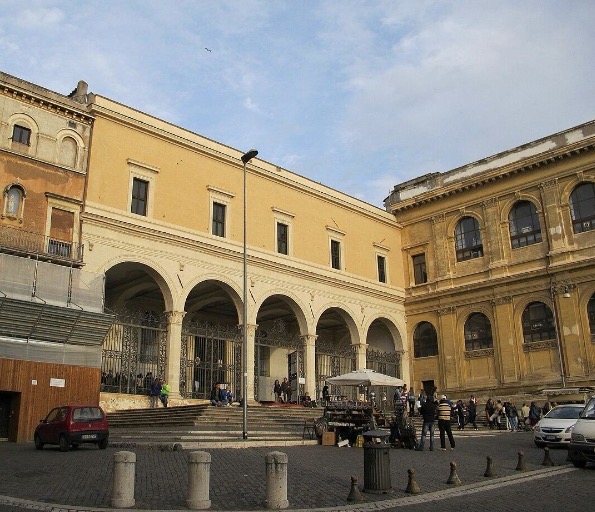
Site Visit: San Pietro in Vincoli
5th ,15th, 19th Century
The current church was created to keep the relic of the chains of St. Peter from when he was imprisoned in Jerusalem
Prior to this church being created there was already a previous much older foundation. It has gone multiple renovations under various popes (mainly Pope Julius)
Houses the original Michaelangelo design for Pope Julius’ tomb (the project he dropped to work on the Sistine chapel)
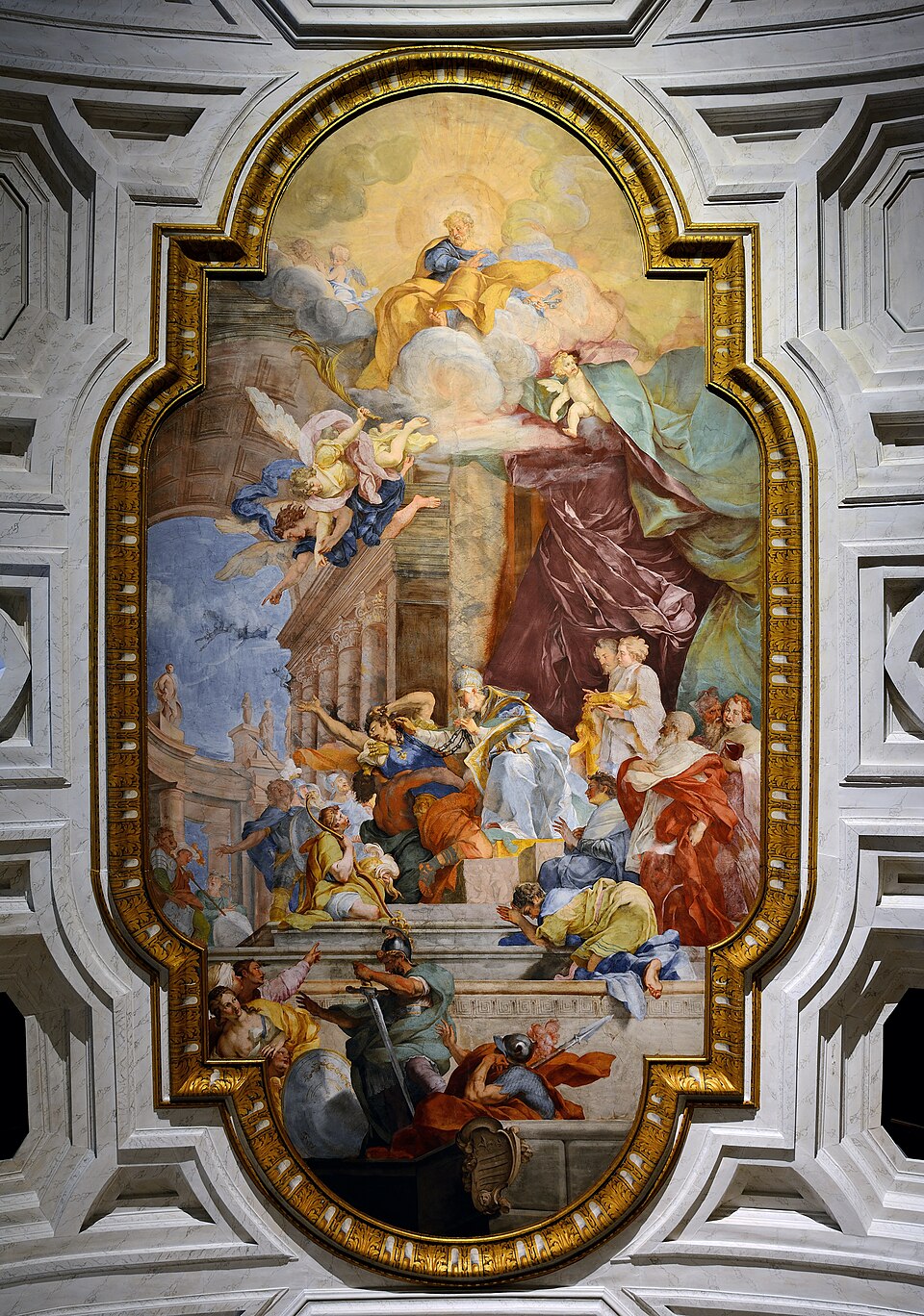
San Pietro In Vincoli: Fresco
The Miracle of The Chains
Giovanni Batista
18th Century
Depicts Pope Alexander using the chains as a healing item
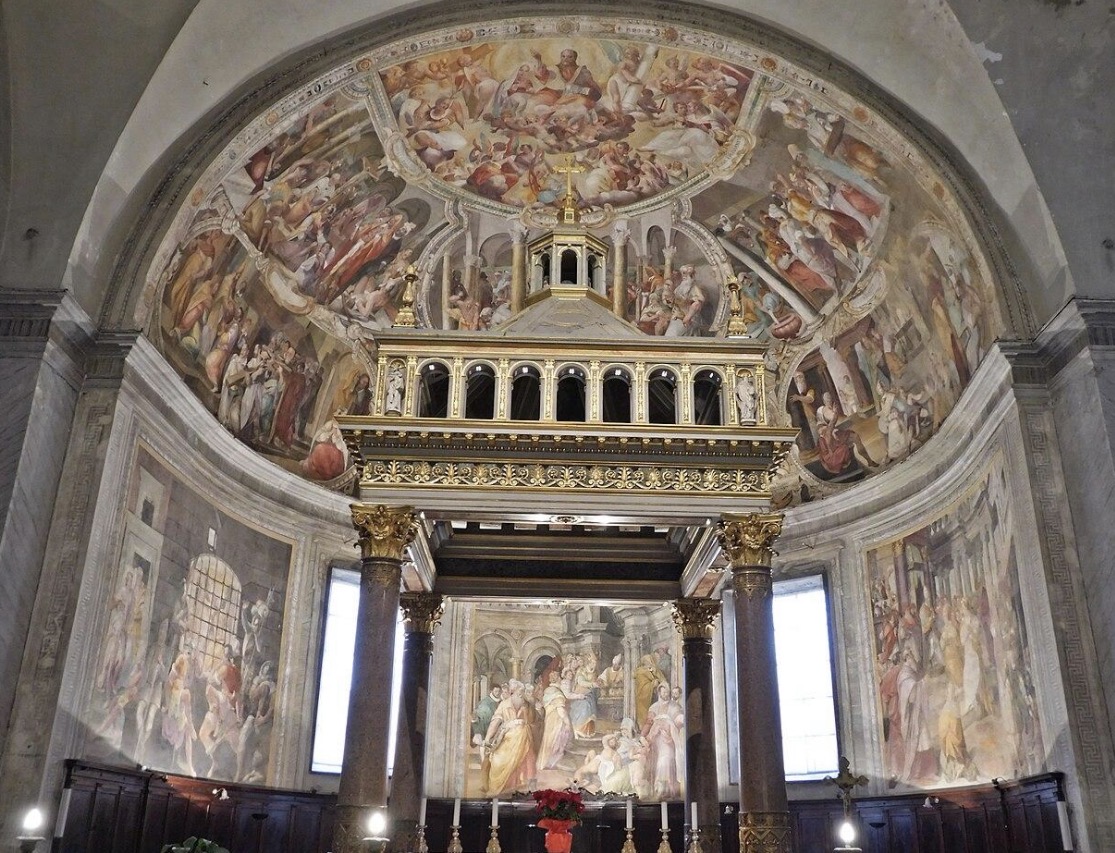
San Pietro In Vincoli: Fresco
The Miracle of The Chains
Giovanni Batista
18th Century
Depicts Pope Alexander using the chains as a healing item
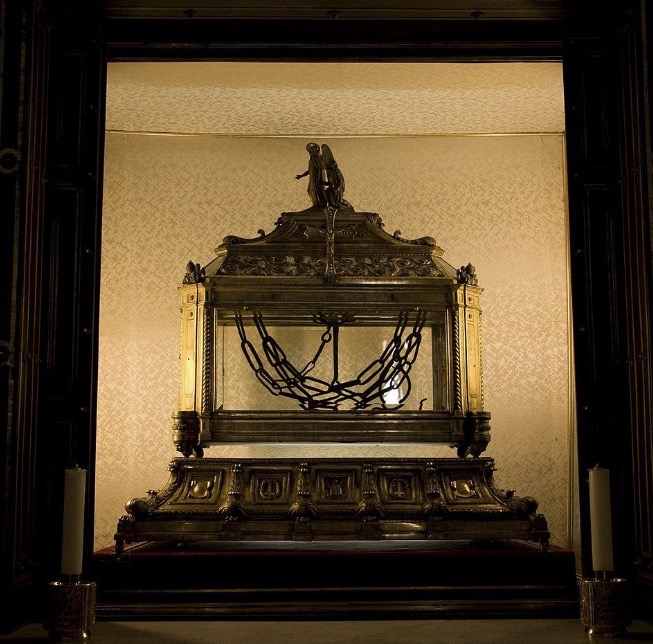
San Pietro in Vincoli: Relic
Said to have been obtained for the church by Empress Eudoxia a s a gift from her mother
The chains were said to have miraculously fused, they were from two times that Peter was imprisoned.
Housed in St. Pietro in Vincoli
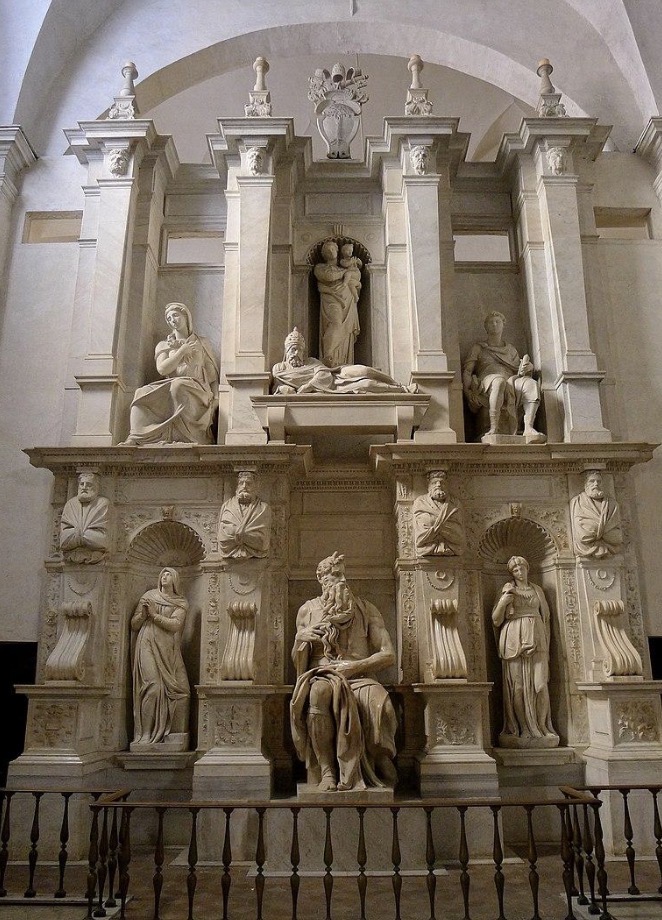
San Pietro in Vincoli: Sculpture
The Tomb of Pope Julius
Michaelangelo
16rh Century (Never fully finished)
Michaelangelo had been commissioned by Pope Julius to create a grand tomb.
In this design there were also figures included that were referred to as “slaves” (not in the traditional sense)
These slaves were meant to represent the arts and how they were to be imprisoned after their greatest patron was no longer there.
Michaelangelo was forced to abandon this project (lack of funds & focus on the Sistine chapel)
There were figures added afterwards that were not necessarily considered Michaelangelo’s work. Including the portrait of Pope Julius
(a depiction he would most likely not agreed with)
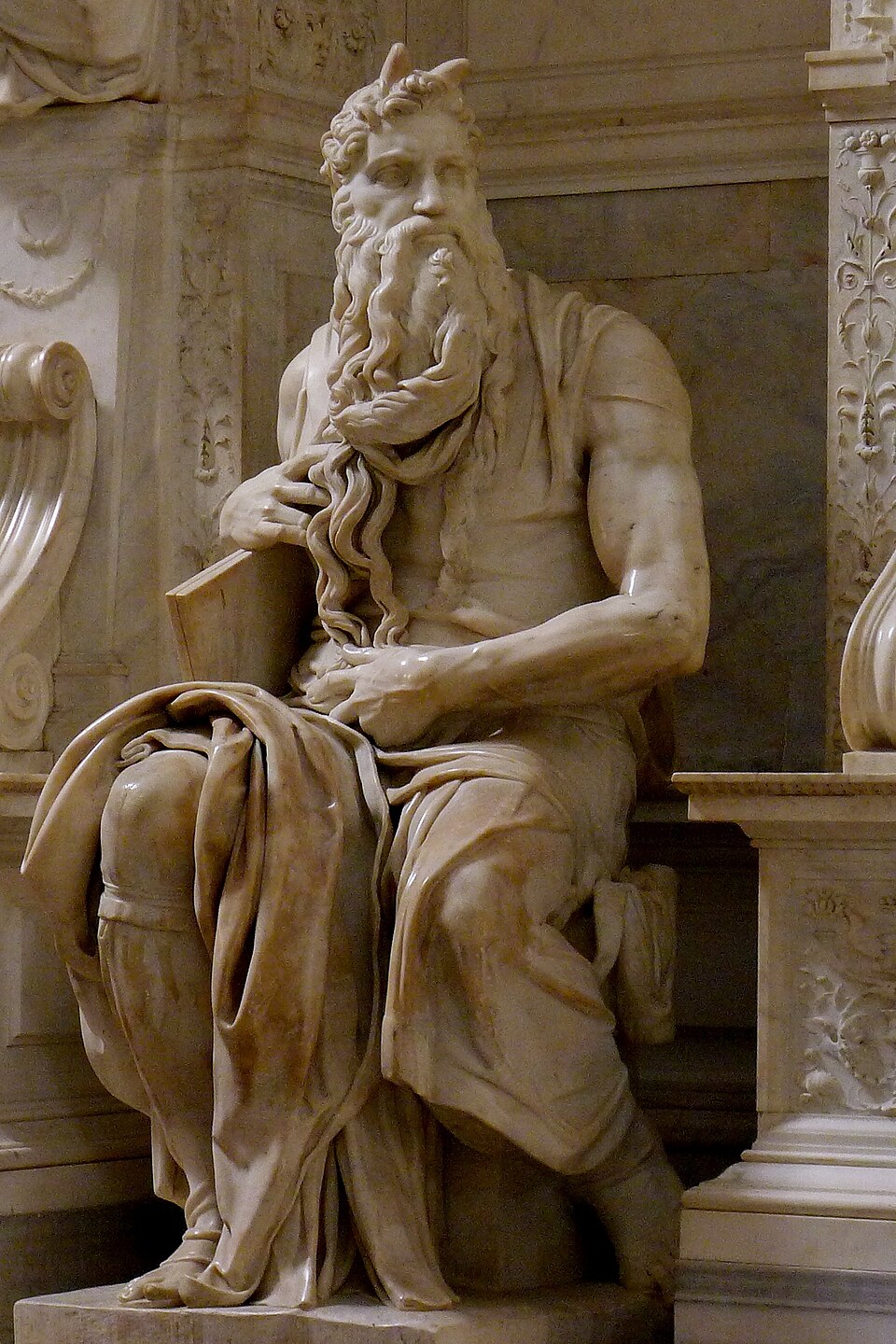
San Pietro in Vincoli: Sculpture
Statue of Moses
Michaelangelo
16th Centuy
This statue depicts Moses, including his “horns” which were supposedly granted to him after he spoke to God
(some believe it was a mistranslation and it was meant to be rays, not horns)
It is debated what moment it depicts but it is believed to be the moment before Moses goes down to Israel and scolds them for praising a gold calf (a false idol) as well as breaking the tablets of 10 commandents.
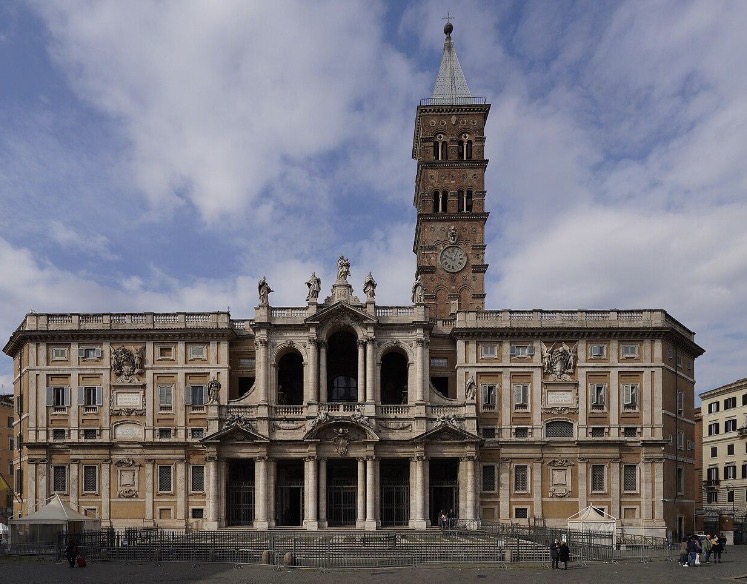
Santa Maria in Maggiore
5th-1th
Sometimes referred to as our lady of the snow. Commemorates the aug 5th date from when there was snowfall in rome
One of four major basilicas in Rome
Known for holding the holy cradle
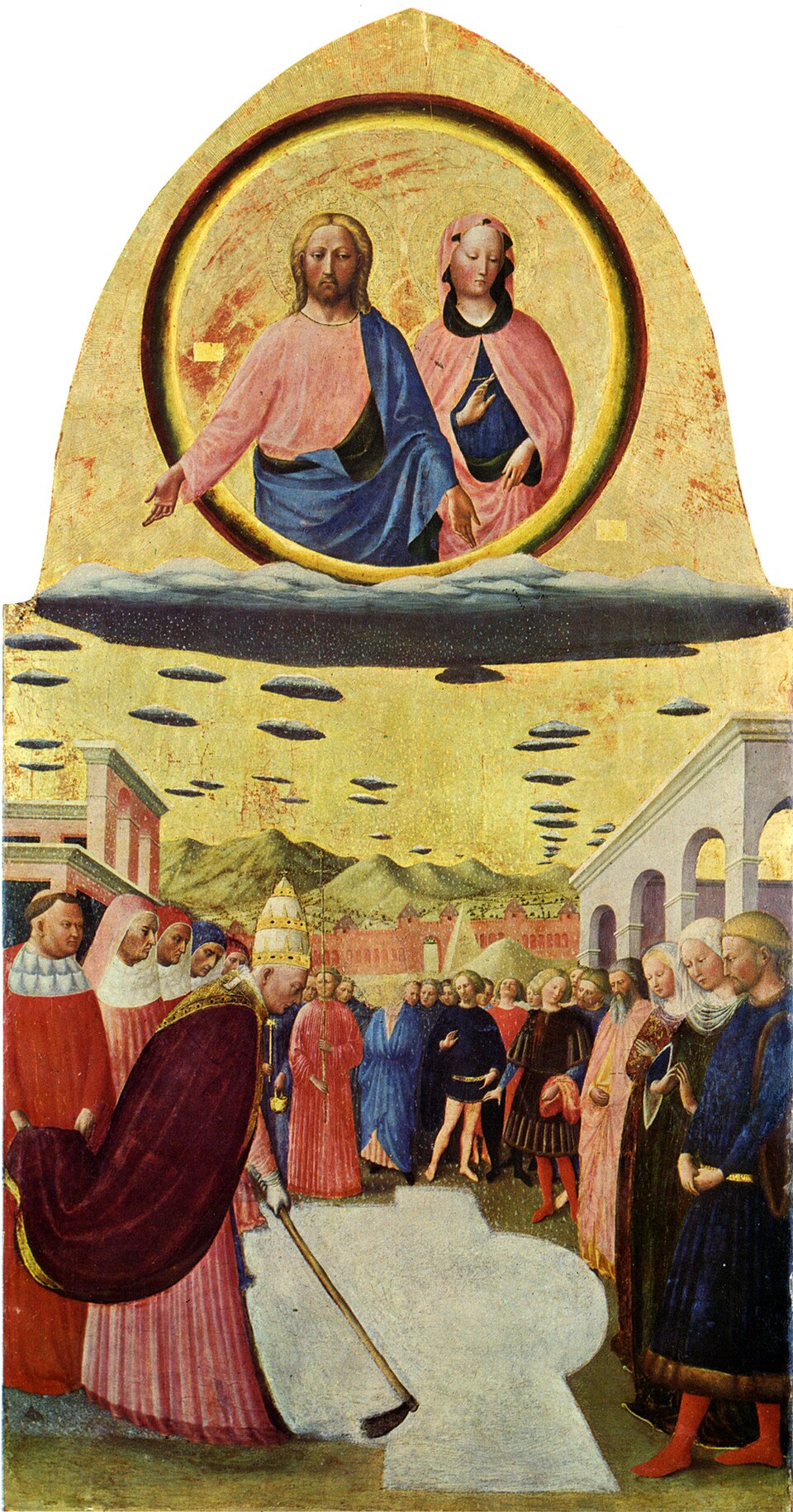
Santa Maria Maggiore: Painting
Miracle of the Snow
Panicale
15th Century
Depicts the outlining on snow of the Basilica as sent by the Virgin Mary to pope Liberius.
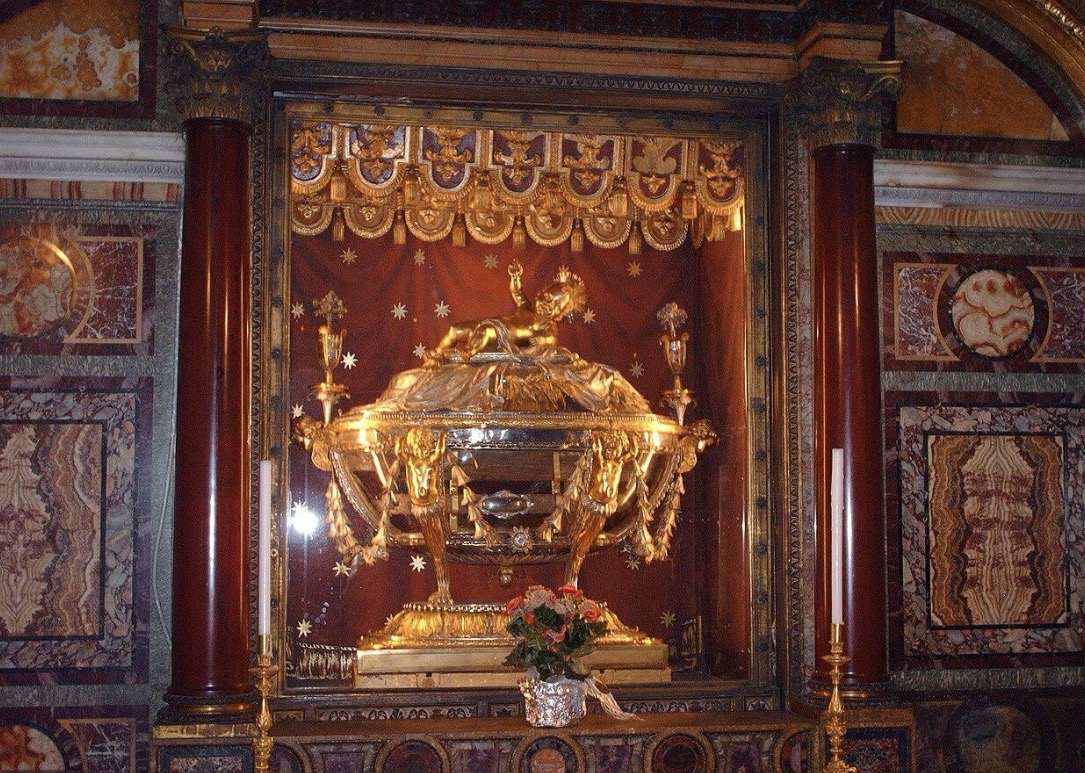
Santa Maria Maggiore: Relic
The Holy Cradle
Commissioned by Pope Pius in the mid 19th Century
Said to hold wood pieces from the cradle in which baby Jesus was laid after his birth
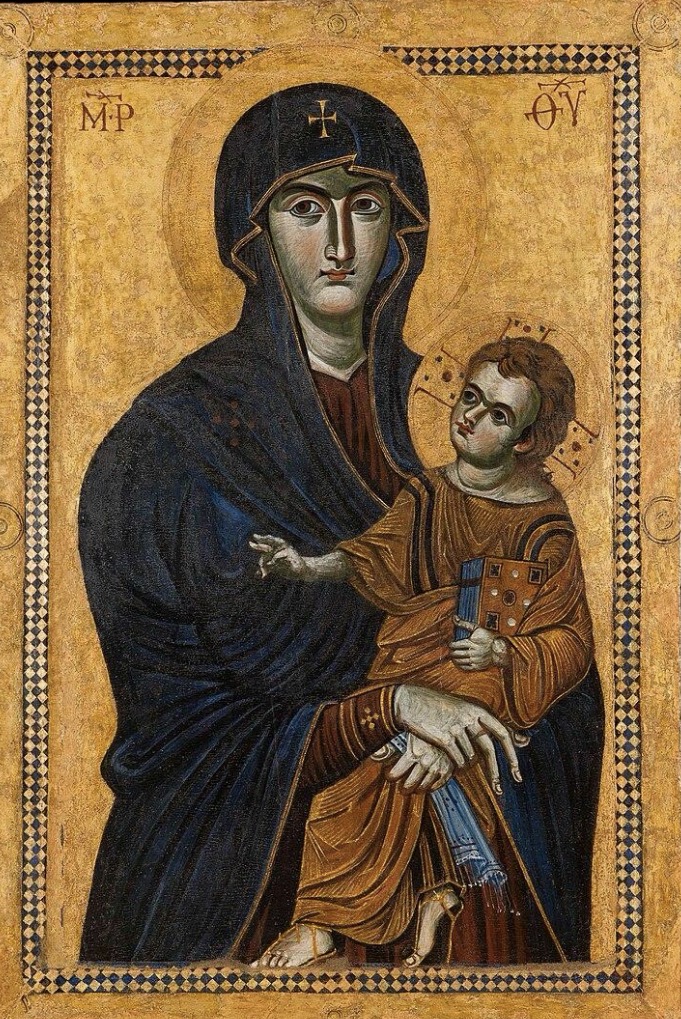
Santa Maria Maggiore: Icon
Virgin Mary as a protector of the Roman people
Kept in Borghese Chapel
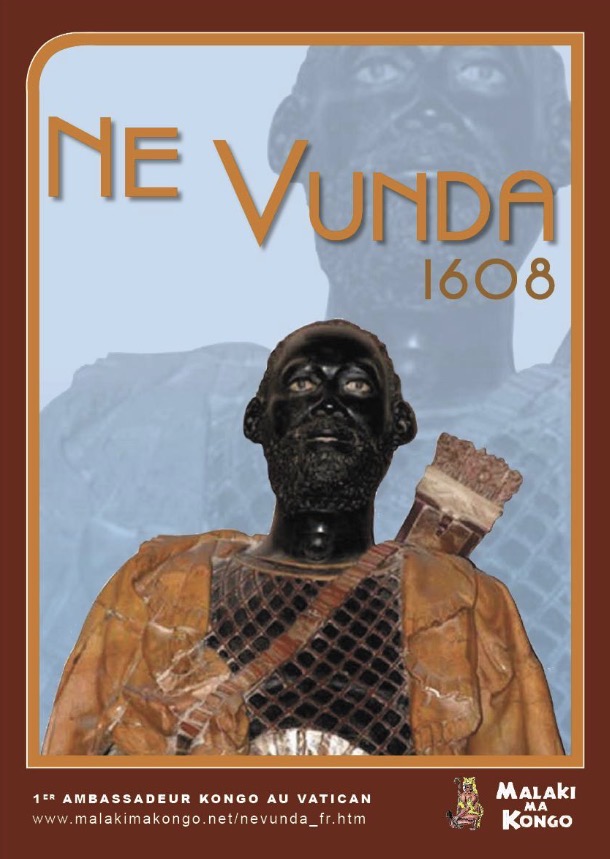
Santa Maria Maggiore: Sculpture
Portrait of Ne Vunda, a missionary from the Kongo who sought
His bust was commissioned by pope Paul V
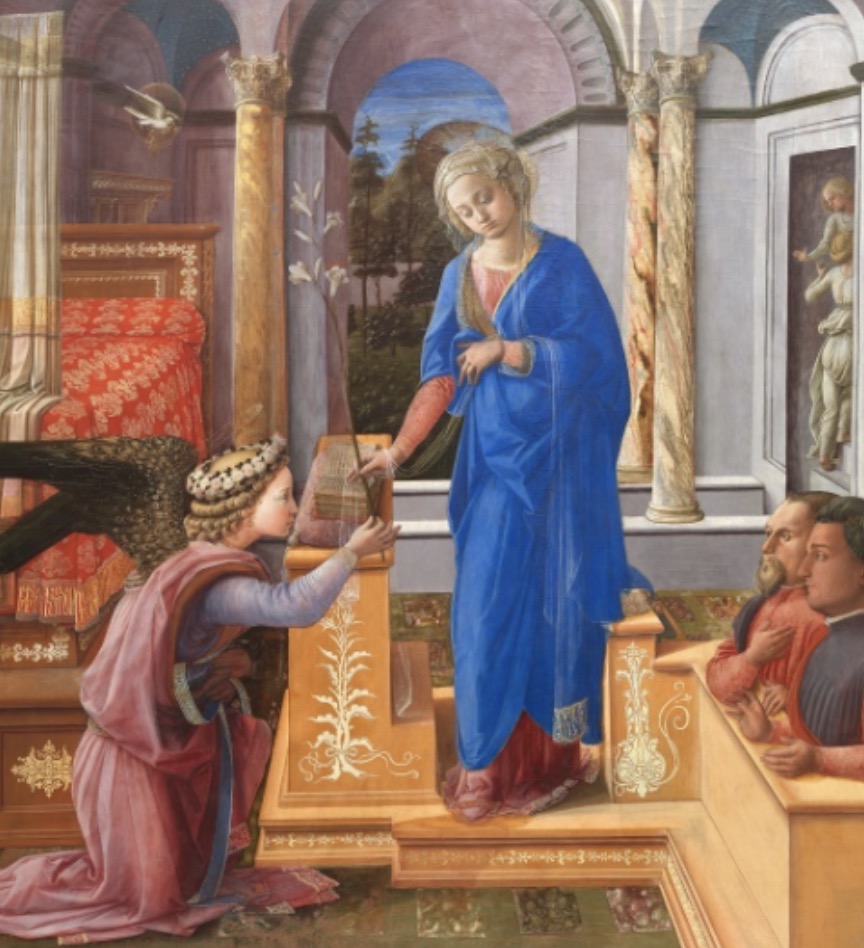
Paintings
Annunciation
Filipino Lippi
1440
Showcases the moment that an angel tells the virgin that she will give birth to Jesus.
Garden behind Mary showcases the shame of the garden of Eden and how Mary is the redemption to the first sin committed. How she helps to redeem humanity
The patrons on the right are showcased to be witnesses to this.
Bakkground is a combination of a private space and a holy space
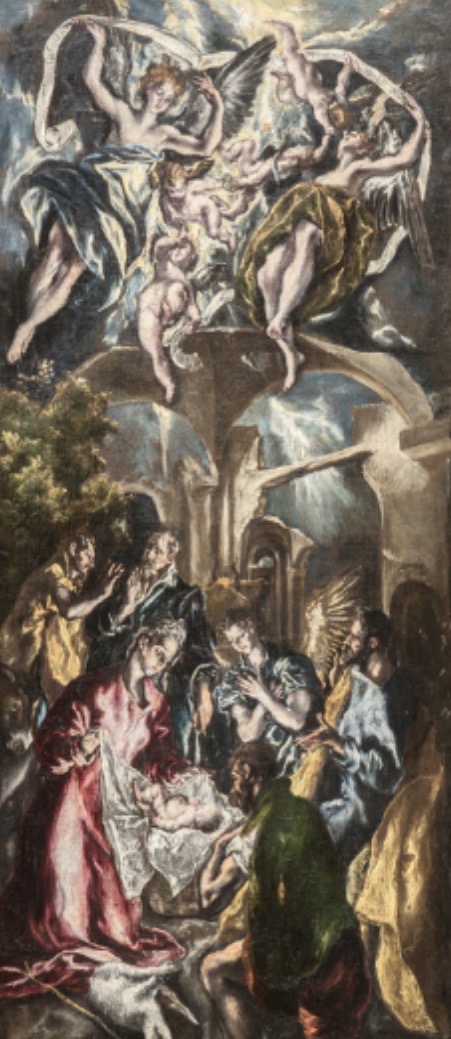
Paintings
Adoration of The Shepherds
El Greco
17th century
Known for Mannerism. Proportions are not prioritized but instead are exaggerated to give a more dramatic
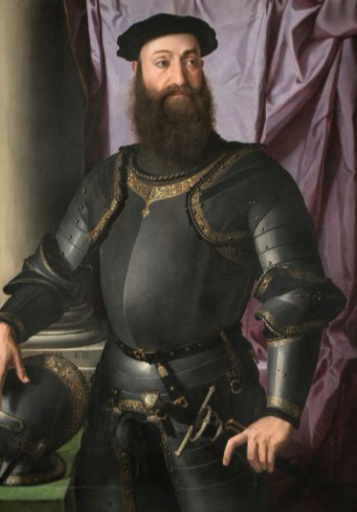
Painting Barberini
Bronzino
1546
portrait of stefano IV Colona
Mercenary and