Reproductive disorders
 Call Kai
 Learn
Learn Practice Test
 Spaced Repetition
 Match
Match Flashcards
 Knowt Play
1/94

There's no tags or description
Looks like no tags are added yet.
Name | Mastery | Learn | Test | Matching | Spaced | Call with Kai | Chat |
|---|
No analytics yet
Send a link to your students to track their progress
95 Terms
History and PE of the Female dog
Overall health
Diabetes mellitus
Cushings
Hypothyroid
Reproductive status
Are they intact
Are they pregnant
Have they ever had a litter of puppies
Brucella canis statis
Zoonotic disease
Vaginal cytology
Cheap and easy to do
Progesterone
Run off of serum
Red top tube
Brucellosis (Brucella canis)
Negative within the last 6 months
Screening: rapid card or tube aggluntination test
95-99% accurate for negative results
Negative - true negative OR early exposure (<8weeks)
Confirmation: AGID (Cornell)
Diseases seen with this: Late term abortions (7-9 weeks), orchitis, diskospondylitis, uveitis
Shed in urine, semen, saliva, mucous
Ingestion or inhalation
ZOONOTIC
Treatment is usually unrewarding
Neuter
Tetracyclines +/- streptomycin
Relapse is common
Isolate animal from the pregnant, young or old
Immunocompromised animals
Becomes an outdoors only animal
Is brucellosis zoonotic
yes!
Screening for brucellosis
rapid card or tube aggluntination test
95-99% accurate for negative results
Negative - true negative OR early exposure (<8weeks)
Confirmation: AGID (Cornell)
Diseases seen with brucellosis
Late term abortions (7-9 weeks)
orchitis
diskospondylitis
uveitis
Herpesvirus
Isolation is critical
3 weeks pre/post whelping
Transmission: aerosol, venereal, in utero
Diseases seen: abortion, premature birth, stillbirths, neonatal death
Exposure of young females to older animals prior to breeding as precautionary measure
Average length of Proestrus and Estrus
9 days but can range from 3-21 days
Average length of Diestrus
65 days but can range from 50-80 days
Average length of Anestrus
135 days but can range from 60-180 days
Estrous Cycle stages
Proestrus
Estrus
Diestrus
Anestrus
Proestrus
~ 9 days
Serosanguinous discharge
Parabasal cells, intermediate cells, transitioned into a few anuclear cells, many RBCs, WBCs
Starting to come into heat

Estrus
~ 9 days
Vaginal cytology: 70-80% anuclear superficial cells
Receptive to the male

Diestrus
~ 65 days
Reappearance of parabasal, WBC

Anestrus
Image of cells

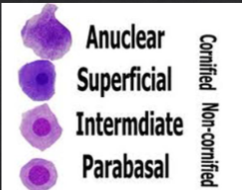
Vaginal Cytology
Remember PISA
% cornified vs. non-cornified
Other cells - RBCs and PMN's
Cytological estrus
Cytological diestrus
use a long cotton swab and insert it up and over the brim of the pelvis to that you do not go into the urethra
Tools to determine timing of ovulation
Witness LH Test
Progesterone
Progesterone testing
Every 2-3 days
ELISA
Target (Synbiotics)
Subjective (have to interpret color and gives range according to color
Faint blue
Light blue
Bright Blue
RIA
Local Lab or Antech
Precise Number
Magic Numbers
2ng/mL = LH surge
5 (4-10 ng/mL) = Ovulation
Simple Truths
Ovulation occurs 2-3 days after LH surge
Oocyte maturation and ability to fertilize occurs 4-6 days after LH surge
Typically breed 2-4 days after ovulation
Pregnancy typically occurs
65 days from LH surge
63 days from ovulation
57 days from day one of diestrus
Ultrasound to determine pregnancy
Usually wait until day 30 so that you can hear heartbeat
Radiographs to determine prenancy
Day 45 is the first time you can do them but typically not until day 54
typically with do a puppy count as well with this modality
Stage I Parturition
Uterine contractions leading to cervical dilation
6-12 hours
Restless, panting, shivering, +/- vomiting
Stage II Parturition
Cervis dilated, puppies moving through birth canal
Ferguson reflex --> oxytocin --> abdominal press
May take 2-6 hours (up to 24 but highly variable)
30 minutes - 1 hours between puppies
60% pups born cranial longitudinal, forelimbs extended
40% pups born caudal longitudinal, hind limbs extended
Stage III Parturition
Fetal membranes expelled
Usually pass quickly with puppy or between puppies
Involution complete by 3 months post-partum
Lochia
This is normal in birth
AKA uteroverdin
Greenish-black in color, non-odorous
Normally seen just prior to 1st puppy
** if lochia is seen and no pup within 1 hour - potential dystocia
Indication of placental separation
Normally passed up to 3 weeks post-partum
Abnormalities of the female cycle
Prolonged interestrous interval
Shortened interestrous interval
Prolonged Estrus
Prolonged inter-estrous interval causes
Primary anestrus
Lack of estrous for 24 months
Previous OHE
Silent heat
Ovarian activity with no outward clinical signs
Abnormalities of sexual differentiation
Drug induced anestrus
Anabolic drugs, androgens, progesterone, or glucocorticoids
Hypothyroidism
Lead to anestrus, prolonged proestrus or irregular inter-estrous intervals
Progesterone-secreting ovarian cysts
Ovarian aplasia
Rare congenital anomaly
Born without ovaries
Immune-mediated oophoritis
Autoimmune destruction of ovary
Hyperprolaktinameia
Prolonged pseudopregnancy
High prolactin level
Shortened inter-estrous interval
Split estrus
Pubertal females
They come into heat and kind of go into proestrus and then all the sudden they regress
Anovulatory cycle
Serum progesterone never rises above 3.5ng/mL
Hypoluteoidism
Short anestrus syndrome
Breed dependent (German Shepherd)
Embryonal death/resorption
Prolonged estrus causes
Ovarian cysts
Follicular cysts
Producing estrogen all the time
Can be treated with GnRH
Ovarian Tumors
Granulosa cell tumors
Pathological liver function
Metabolism of estrogens is reduced
Exogenous estrogens
Hormone replacement in clients
Clinical signs associated with vulvar discharge
Excessive licking
Pruritis
Stranguria
Hematuria
Dysuria
Pollakiuria
Incontinence
Polyuria
Polydipsia
Vulvar discharge
Infection (bacterial or viral)
Chemical irritation from urine or other instilled substance
Foreign bodies
Neoplasia (vaginal, cervical, or uterine)
Pyometra or stump pyometra
Ovarian remnant syndrome
Congenital anomalies and trauma
Treatment and Diagnosis of vulvar discharge
Vaginal cytology
Vaginoscopy
Antibiotics
Vaginal Neoplasia
Vaginal leiomyomas are among the most common
Canine transmissible venereal tumor
Tropical/developing countries
Vaginal prolapse
Vaginal wall extends through the vulvar opening
Occurs around parturition when estrogen rises
Graded I-III
Grade I vaginal prolapse
Swelling and elevation of the vaginal folds may develop immediately cranial to the urethral orifice
May kind of look like a cherry tomato and go in and out
Grade II vaginal prolapse
Vaginal fold becomes large enough to protrude outside the vulva
Grade 3 vaginal prolapse
Full protrusion of the vaginal circumference through the vulva "donut shaped"
Pseudopregnancy
1-3 months after estrus
Development of signs and behaviors associated with end of luteal phase
Mammary gland development and galactorrhea
Mammary gland development and galactorrhea
Nesting behaviors and adoption of stuffed animals
No treatment necessary
Can use dopamine agonists in severe cases
Pyometra
One of the most common disease of the uterus
PU/PD, Leukopenic, may be systemically ill
Closed or Open
Closed pyometra treatment
Antibiotics
Fluid therapy
Spay
Open pyometra treatment
Estrumate/Lutalyse
Antibiotics
Fluid therapy
Reasons for abortions
Bacterial
Viral
Hypoluteidoism
Abortions
Green vaginal discharge or red mucopurulent
If bacterial or viral cause
Unlikely to save puppies
Support dam as she continues to abort
Puppies to diagnostic lab --> do not FREEZE
If hypoluteidoism or premature labor
Fetal heartbeat checks
Like them to be around 180bpm
Tocolytics
Progesterone therapy
Length of gestation for dogs
57-72 days
Tools to predict parturition
Temperature drop
Progesterone levels
Radiographs
Ultrasound
Physical indications
Temp drop when prediction parturition
Monitor 2-3x per day
Delines 1 full degree (often <99 F)
Begin to whelp within 24 hours
Progestrone levels for prediciting parturition
Declines to <1ng/ml 24-48 hours prior to whelping
Radiographs for prediciting parturition
45 days after LH surge (first mineralization)
Puppy count best done later rather than earlier (55-60 days post LH surge)
Teeth visible 3-8 days prior to whelping
Technique
Digital radiography
Not sufficient for time elective c-section
Ultrasound for prediciting parturition
Never use for puppy count
Primary use is assessment of fetal viability
Fetal HR should be 2-2.5x HR of dam
~170bmp or greater
Fetal HR consistently <170 = Fetal distress
Fetal HR consistent < 150 = CUT
Physical signs for prediciting parturition
Lactation, lochia, nesting, etc.
Dystocia
Recognize and intervene
Assess dam first
Stabilize/supportive care
Rule out obstructive dystocia by digital exam per vagina +/- rads
Cleanliness, gentleness, and lubrication
If see strong visible that do not produce a pup in 30 minutes --> INTERVENE
Fetal causes
Fetal causes of dystocia
Anasarca
Have a lot of water in them
Multiple limbs
Hydrocephalus
Gestation length in cats
65-66days
Parturition in felines
Gestation = 65-66 days
Usually timed from breeding … why?
Dystocia's are uncommon
Maternal and fetal causes similar to canine
Partial expulsion of fetus more common in queens
Cleanliness, gentleness, and lubrication usually successful
Uterine torsions can happen
Hemorrhage postpartum
Excessive blood loss
Uterine rupture
Female may appear pale, lethargic, painful
Subinvolution of placental sites
Occurs when involution process is delayed
Trophoblastic cells do not degenerate and continue to invade
Hemorrhagic discharge not odiferous
Uterine swellings may be palpated
Spontaneous remission may occur
Retention of pup or placenta
Greenish-black discharge
Systemically ill --> toxic
Ultrasound/Radiographs
Caesarian section
Postpartum metritis
Usually due to whelping in un-hygenic conditions
Dirty obstetrical procedures
Fever, depression, foul-smelling vaginal discharge from purulent to sanguine-purulent
CBC/Chem
Fluid therapy, antibiotics based on sensitivity
Hypocalcemia
Clinical signs:
Anxiety
Apprehension
Disorientation
Hypersalivation
Shivering
Muscle tremors
Clonic-tonic seizures
Calcium administration: calcium glunconate
Supplement calcium after
Supplement puppies may have to early wean puppies
Mammary disorders
Agalactia
Mastitis
Agalactia
Failure to provide mild to neonates
Premature parturition, severe stress, malnutrition, debility, metritis, or mastitis
Continue to allow neonates to suck but supplement
Oxytocin +/- metoclopramide (dopamine antagonist)
Mastitis
Septic inflammation of the mammary gland, may be acute or chronic
Coliforms, staph and strep are most commonly isolated
Milk is commonly discolored
Cephalosporins and beta lactamase resistant penicillin are recommended as safe in neonates
Opioids for analgesics
Warm compresses
Uterine Neoplasia
Rarely reported in the female
0.3-0.4% of all tumors
Most commonly Leiomyomas
Ovarian Remnant syndrome
Retention of active ovarian tissue
Most commonly due to improper clamping ovarian pedicle in OVH
Iatrogenic condition
Clinical signs of Ovarian Remnant syndrome
Vaginal bleeding
Swelling of vulva
Attraction of males
Diagnosis of Ovarian Remnant syndrome
Clinical history
Clinical symptoms
Routine vaginal cytologic examinations
Ultrasound
Treatment of Ovarian Remnant syndrome
surgical excision of the remnant of tissue
Stump pyometra
Result of incomplete OHE
Clinical Signs similar to pyometra
Depression, anorexia, fever, inappetence, vomiting, abdominal pain or distention
Leukocytosis, monocytosis, azotemia
May present with urinary signs
Surgical removal of stump
Male dog history and physical exam
History
Vaccinations, sired litters, last seam evaluation
Complete PE
Evaluation of reproductive system
Scrotum
Testes
Epididymis
Spermatic cord
Penis
Prepuce
Prostate gland
Brucella status
Semen evaluation
Manual collection
Separate 3 fractions
Sperm free fraction
Sperm-rich fraction
Prostate fraction
Semen motility
70% progressively motile
Semen morphology
70% normal sperm
Total sperm
500 million to 1 billion
Primary infertility
Never been fertile
Ex. Testicular hypoplasia
Acquired infertility
Secondary to inciting cause
Trauma, fever, age, orchitis, Brucellosi, epididymitis, hormonal disturbance
Conditions of the penis
Posthitis
Canine transmissible venereal tumor
Paraphimosis
Priapism
Phimosis
Preputial foreign body
Penile and preputial trauma and ulceration
Fracture of the os penis
Posthitis
Non-specific balanoposthitis
Small lesions or mild hyperemia
Small amount of purulent discharge from the orifice of the prepuce
Canine transmissible venereal tumor
Neoplastic round cells
Transferred from one host to the next
Size can vary considerably from small to large fungating masses that cause preputial swelling
Friable, ulcerated and bleed
Diagnosis
Histological evaluation and differentiation from other round tumor
Paraphimosis
Protrusion of the nonerect penis with an inability to retract the penis back into the prepuce
Idiopathic
Becomes dry, traumatized and may swell with edema, eventually become necrotic
Priapism
Persistent erection of the penis without sexual stimulation
Become dry, traumatized, and may become necrotic
Trauma, neoplasia, inflammation, or vascular anomaly, or idiopathic
Phimosis
Inability to extrude the penis
Stenosis of the orifice is most common
Congenital or acquired
Preputial foreign body
Hemorrhage from the prepuce or voluminous purulent discharge
Foreign material lacerates the penile mucosa and causes inflammation
Foreign body is removed
Healing occurs
Penile and preputial trauma and ulceration
Ulceration or laceration of the penis and prepuce have similar origins
Erect penis is subsequently traumatized
Foreign body in prepuce
Breeding through wire fence
Forced separation of tie during breeding
Healing with granulation tissue
Adhesions may occur between penis and prepuce
Fractured os penis
Well recognized condition that occurs with local trauma
Pathologic fracture secondary to neoplasia is rare
Conditions of the Prostate
Benign prostatic hyperplasia
Prostatitis and prostatic abscess
Prostatic neoplasia
Prostatic and paraprostatic cysts
Benign prostatic hyperplasia
Disease of intact male dogs, usually older but not always
Disorder consists of both cellular hyperplasia and hypertrophy
Some with disease may show no clinical signs
Others will
Sanguineous prostatic fluid
Hemospermia
Hematuria
Dysuria
Constipation and tenesmus
Treatment: Castration of finasteride
Prostatitis and prostatic abscess
Occurs secondary to ascending infection
Organism travel from the penis and prepuce up the urethra to prostate
Can occur secondary to hematogenous spread with Brucella canis
Acute
Painful condition
Systemic illness
Chronic
Subclinical
Diagnosis
Prostatic wash, collection of prostate fluid during manual collection
Antibiotics
BPH treatment
Prostatic neoplasia
Adenocarcinomas or transitional cell carcinomas are the most common
Higher incidence in castrated males vs. intact
Highly aggressive and metastatic
Clinical signs
Mimic those of others
Dyschezia, dysuria
Pain associated with gait, back, or abdomen
Prostate is irregular on palpation and heterogenous on ultrasound
Treatment is palliative care
Prostatic and paraprostatic cysts
My be located with in the prostatic parenchyma on in paraprostatic position
Predispose to the development of abscessation
Removal is recommended
Conditions of the testis and epididymis
Testicular hypoplasia
Testicular degeneration
Orchitis
Epididymitis
Cryptorchidism
Interstitial cell tumor
Sertoli cell tumor
Seminoma
Testicular hypoplasia
Born with really small testicles
Orchitis
First thought should be Brucella
Very large and painful testicles
Interstitial cell tumor
Higher incidence in descended testicle
Increase in testosterone
Castration
Sertoli cell tumor
Excess secretion of estrogen --> feminization
Alopecia - flanks and over the back
Treatment: Castration
Seminoma
Rarely metastasize
Confined to affected testicle