Biology paper 1
 Call Kai
 Learn
Learn Practice Test
 Spaced Repetition
 Match
Match Flashcards
 Knowt Play
1/785

There's no tags or description
Looks like no tags are added yet.
Name | Mastery | Learn | Test | Matching | Spaced | Call with Kai |
|---|
No analytics yet
Send a link to your students to track their progress
786 Terms
What are the organelles of animal cells?
-nucleus
-cytoplasm
-cell membrane
-mitochondria
-ribosomes
-endoplasmic reticulum (ER)
-golgi body
-lysosomes
What is the function of the nucleus?
-controls the activity of the cell
-contains DNA
-surrounded by the nuclear membrane
What is the function of the nuclear membrane?
-acts as a barrier that separates the contents of the nucleus from the cytoplasm.
-controls movement of materials in and out of the nucleus
What is the function of the cytoplasm?
-it is a jelly-like substance where most of the cell's chemical reactions take place
-it contains enzymes that speed up these reactions
-provides a medium for organelles to stay suspended and function
What is the function of the cell membrane?
-controls what enters and leaves the cell (e.g, nutrients, mineral ions, glucose)
-maintains the cell's shape and protection
-semi-permable
What is the function of the mitochondria?
-where aerobic respiration takes place
-releases energy in the form of ATP
-cells that need more energy (e.g, muscle cells) have more mitochondria
What is the function of the ribosomes?
-where protein synthesis takes place
-they use instructions from the nucleus to build proteins, which are essential for growth and repair
-found either floating in the cytoplasm or attached to the endoplasmic reticulum
What are the two types of endoplasmic reticulum (ER)?
Rough ER and smooth ER
What is the function of the rough ER?
-studded with ribosomes
-involved in the synthesis and transportation of proteins
What is the function of the smooth ER?
-produces lipids
-dextoxifies toxic substances
What is the function of the Golgi body?
modifies, packages and transports proteins and lipids around the cell
What is the function of the lysosomes?
-breaks down waste materials and old organelles
-contains enzymes that digest unwanted substances
What organelles are found in plant cells?
-Cell wall
-cell membrane
-cytoplasm
-mitochondria
-ribosomes
-chloroplasts
-permanent vacuole
-nucleus
What organelles are found in all types of cells?
-ribosomes
-cytoplasm
-cell membrane
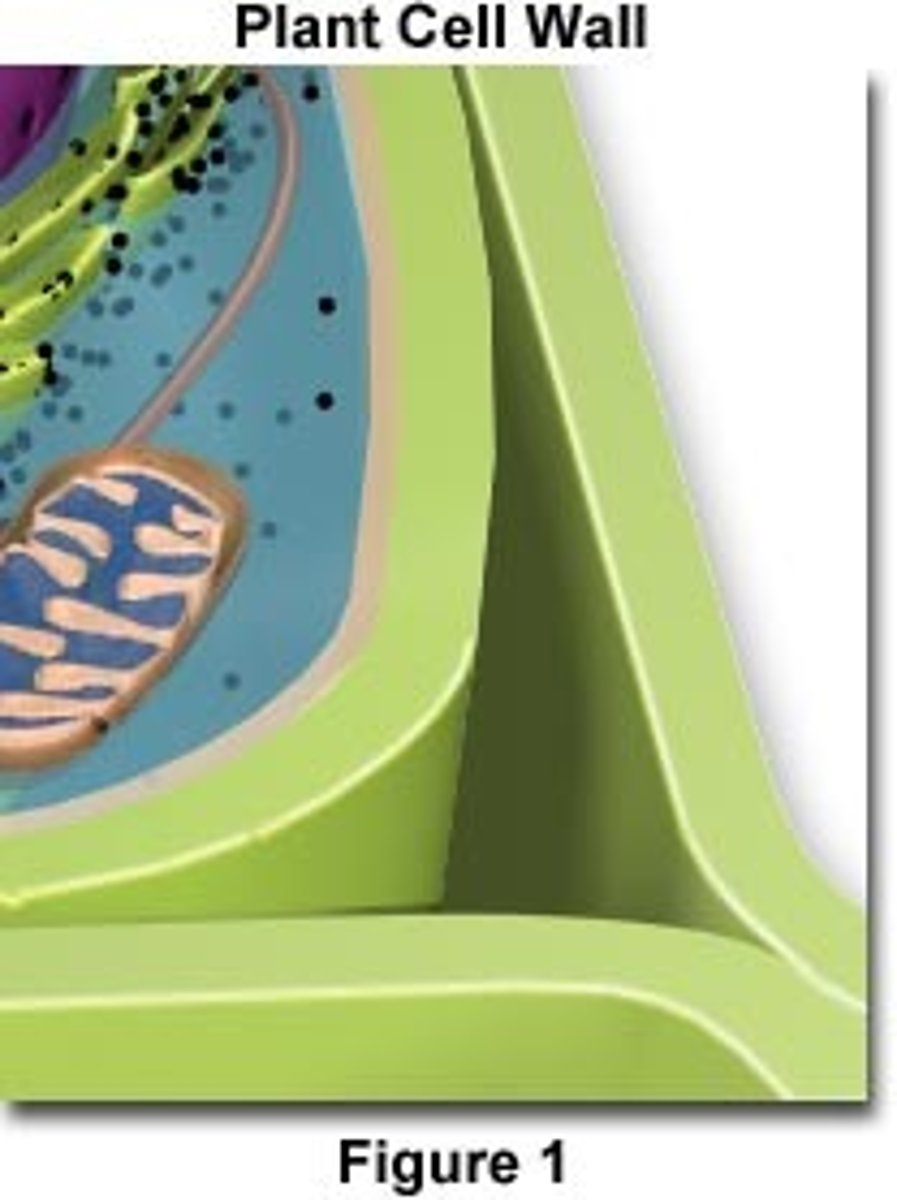
What is the function of the cell wall?
-a rigid layer that supports the cell and provides shape
-It prevents the cell from bursting when water enters
- they are freely permeable
What is the cell wall made from in plant cells?
cellulose
Where is the cell wall in plant cells?
outside the cell membrane
What is the function of chloroplasts?
-Site of photosynthesis
-contains chlorophyll
What is chlorophyll?
A green pigment found in the chloroplasts that absorbs light energy from the sun to make glucose through photosynthesis
What is the function of the permanent vacuole?
Filled with cell sap to help keep the cell turgid
What is cell sap made from?
A weak solution of sugar and salts
What is the function of plasmodesmata?
-small channels that connect plant cells
-they allow communication and the transfer of materials (like nutrients and water) between neighbouring cells
What does semi-permeable mean?
A barrier only allows certain substances to pass through it but not others
What does freely-permeable mean?
A barrier allows anything to pass through
What is diffusion?
The passive movement of particles (such as moleuces or ions) from an area of high concentration to an area of low concentration (down the concentration gradient)
When does diffusion stop?
-when a state of dynamic equilibrium is reached
-the substance is evenly spread out, and molecules move equally in both directions, resulting in no overall concentration change
is diffusion an active or passive process?
Passive - it requires no energy.
What does an active process mean?
it requires energy
What does a passive process mean?
It doesn't require energy
What factors affect diffusion?
-concentration gradient
-temperature
-surface area
-distance
How does concentration gradient affect the rate of diffusion?
The steeper the gradient (bigger difference in concentration) the faster diffusion occurs
Why does concentration affect the rate of diffusion?
-A larger concentration difference means more particles are crowded in the high-concentration area
-leading to more frequent random collisions and pushing more particles into the lower-concentration area to spread out
-achieving equilibrium faster
How does temperature affect the rate of diffusion?
The higher the temperature, the faster the rate of diffusion
Why does temperature affect the rate of diffusion
Higher temperatures give the particles more kinetic energy, so they move faster
How does surface area affect the rate of diffusion?
A larger surface area allows for more particles to diffuse at the same time, increasing the rate of photosynthesis
How does distance affect the rate of diffusion?
The shorter the distance, the faster diffusion occurs
Examples of diffusion
-gas exchange in the lungs
-absorption of nutrients in the small intestines
What is osmosis?
The movement of water molecules across a partially permeable membrane from a region of high water concentration (dilute) to a region of low water concentration (concentrated)
What is a partially permeable membrane?
A membrane that has very small holes that only small molecules such as water can pass through them and bigger molecules such as sugar molecules cant.
Is osmosis a passive or active process?
passive
What is a dilute solution?
one that contains a small amount of solute and a large amount of water
What is a concentrated solution?
a solution that contains a large amount of solute and a small amount of water
What would happen if a cell is in a more dilute solution?
Water would move into the cell, making it swell
What would happen if a cell is in a more concentrated solution?
Water will move out of the cell, causing it to shrink
What is a hypotonic solution?
A solution that has a lower solute concentration than the solution inside the cell
What is a hypertonic solution?
A solution that has a higher solute concentration than the solution inside the cell
What is an isotonic solution?
A solution with the same solute and water concentration as the solution inside the cell
What happens if you put a cell in a hypotonic solution?
Water enters the cell, causing it to swell
What happens if you put a cell in a hypertonic solution?
Water will move out of the cell, causing it to shrink
What happens if you put a cell in an isotonic solution?
Water moves in and out of the cell at the same rate. The cell maintains its normal size, shape, and volume, reaching a state of dynamic equilibrium
What happens if you put an animal cell in a hypotonic solution?
-water enters the cell through osmosis, causing it to swell
-because it lacks a rigid cell wall, it will eventually burst, leading to cell death
What is cytolysis?
when a cell bursts
What happens if you put an animal cell in a hypertonic solution?
water leaves the cell, and it becomes flaccid (shrivelled), killing the cell
What is crenation?
When a cell loses water via osmosis and shrivels up, resulting in a notched, spiky, or wrinkled appearance
What happens if you put an animal cell in an isotonic solution?
The cell stays the same size
What happens if you put a plant cell in a hypotonic solution?
water enters the cell, causing the vacuole to swell making the cell turgid (firm)
What does turgid mean?
when cell walls become rigid due to high water content
What happens if you put a plant cell in a hypertonic solution?
-water leaves the cell, causing it to shrink.
-the cell membrane pulls away from the cell wall
What is plasmolysis?
Shrinkage of a cell due to water being removed due to a hypertonic solution.
What happens if you put a plant cell in an isotonic solution?
there will be no net flow of water into or out of the cell, and the cell's volume will remain stable.
What does the solution around an animal cell need to be like?
it needs to be isotonic to maintain its normal shape and function
What does the solution around a plant cell need to be like?
it needs to be in a hypotonic solution so the plant cells stay turgid
Why do plant cells need to be turgid?
to provide structural support, keeping stems upright and leaves firm,
Why is osmosis important in plants?
maintains cell structure and supports photosynthesis by keeping the cell turgid
Why is osmosis important in animals?
regulates water balance in cell, preventing dehydration or over-swelling
Examples of osmosis
-absorption of water in the intestines
-rehydration in medical treatments (e.g, saline drip)
What is active transport?
The movement of particles across a membrane from an area of low concentration to an area of high concentration (against a concentration gradient) using energy transferred during respiration
Is active transport active or passive?
active
Why does active transport require energy?
Because it is going against the concentration gradient
What are carrier proteins?
special proteins in the cell membrane that help transport substances during active transport
How do carrier proteins work?
-The carrier protein binds to the particle (substrate) on one side of the cell membrane
-It then changes shape to move the molecule across, and then releasing it on the other side
Examples of active transport
- Root hair cells absorbing mineral ions
- glucose is absorbed into the blood from the small intestine
Why is active transport important?
-it allows cells to absorb nutrients even when they are in low concentration in the environment
-it enables cells to maintain proper internal conditions
-helps remove waste products against the concentration gradient
What are prokaryotes?
single-celled organisms that don't have a nucleus or other membrane-bound organelles
Examples of prokaryotes?
Bacteria and Archaea
What organelles do prokaryotes have?
-ribosomes
-nucleoid
-plasmids (optional)
-cell membrane
-cell wall
-cytoplasm
What organelles do bacteria have?
-ribosomes
-nucleoid
-plasmids
-cell membrane
-cell wall
-cytoplasm
optional
-plasmids
-flagella
-pilli
-capsule
How big are bacterial cells?
0.1-5 micrometers
How big are animal cells?
10-100 micrometers
How is DNA stored in prokaryotic cells?
it is found as a single strand floating in the cytoplasm (nuleoid)
Where do cell processes take place in prokaryotes?
in the cytoplasm
What are prokaryotic cell walls made from?
murein (peptidoglycan)
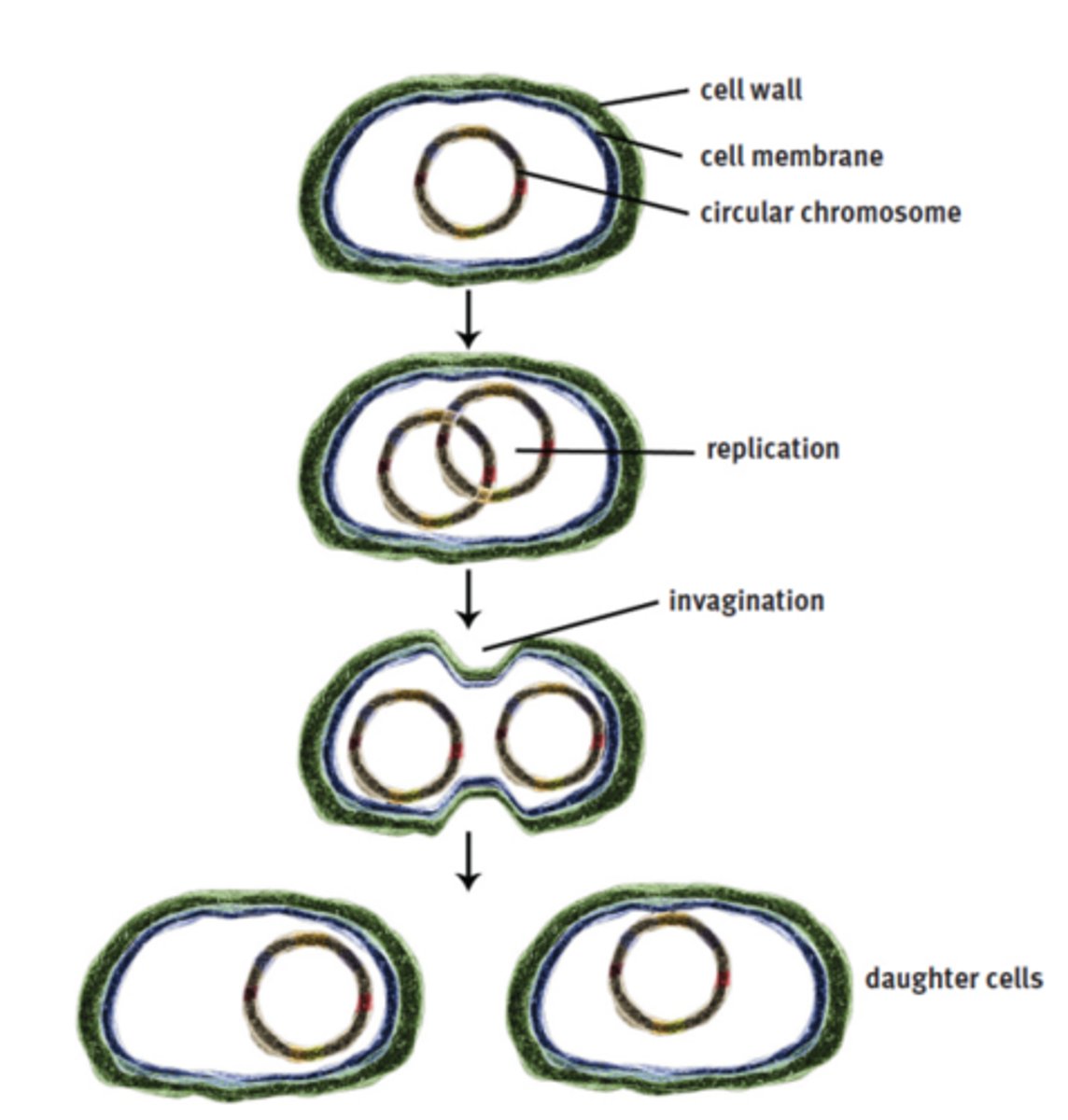
How do prokaryotes reproduce?
binary fission
How does binary fission work?
1. a cell replicates its DNA
2. each set of DNA attaches to a point on the membrane
3. more membrane is created between the 2 points until split into 2 cells
What are archaea?
A single celled organism that is prokaryotic and lives in extreme environments.
What are ribosomes like in prokaryotic cells?
they are alot smaller (70S)
What is the nucleoid?
The region where the cell's DNA is located
How is DNA found in prokaryotes?
-as a single, circular chromosome located in a region of the cytoplasm called the nucleoid
-it is not enclosed in a membrane
What are plasmids (optional)?
-small, circular extra DNA molecules separate from a cell's main chromosome that can replicate independently
-They often carry beneficial genes, such as for antibiotic resistance
-they can be transferred between cells
What is the flagella (optional)?
Long, thin whip-like structure that helps organisms move through moist or wet surroundings
What are pilli (optional)?
Short, hair-like protein structures that help bacteria to stick to surfaces or exchange genetic material (conjugation)
What is conjugation?
a process where genetic material (usually a plasmid) is transferred directly between two bacterial cells
What are capsules (optional)?
-a sticky outer layer found in some bacteria
-it provides extra protection and helps the cell attach to surfaces or evade the immune system
What are eukaryotes?
Eukaryotes are cells that have a nucleus and membrane-bound organelles
Examples of eukaryotes
animals, plants, fungi, protists
What are muscle cells?
specialized cells that contract to produce movement and force, forming muscle tissues throughout the body
What are the three types of muscle cells?
skeletal, cardiac, smooth
What are skeletal muscle cells?
long, cylindrical, multi-nucleated cells responsible for voluntary movement, found attached to bones
What are cardiac muscle cells?
specialized, involuntary, striated cells in the heart walls that contract to pump blood
What are smooth muscle cells?
involuntary, spindle-shaped cells with a single nucleus, lacking the striped (striated) appearance of skeletal muscle

