6. Anatomy of Flowering Plants
 Call Kai
 Learn
Learn Practice Test
 Spaced Repetition
 Match
Match Flashcards
 Knowt Play
1/214

Earn XP
Description and Tags
Almost every sentence from NCERT chapter. Suitable for studying for IAT, NEST, NEET probably. Do go over the chapter once, then come back for revision. Question mode: Flashcards only. Answer mode: Answer with definition. This deck doesn't contain anything from the old NCERT version, so it lacks cards on simple and complex tissue cells. I might make decks for those separately, or I might add it to this deck, because I feel like knowing this stuff is important and not all of us have the privilege of remembering what we studied in 10th. I gotchu fam (eventually). Good luck with exams!
Name | Mastery | Learn | Test | Matching | Spaced | Call with Kai | Chat |
|---|
No analytics yet
Send a link to your students to track their progress
215 Terms
What is the study of anatomy?
Study of internal structure of organisms
What is the basic unit of plants?
Cells
On the basis of their structure and location, there are three types of tissue systems in plants. What are these systems?
epidermal tissue system
ground or fundamental tissue system
vascular or conducting tissue system
Which part of a plant is composed of epidermal tissue system?
The epidermal tissue system forms the outer-most covering of the whole plant body.
What are the three types of cells found in the epidermal tissue system?
epidermal cells
stomata
epidermal appendages
The _________ is the outermost layer of the primary plant body.
The epidermis is the outermost layer of the primary plant body.
The epidermis is the outermost layer of the primary plant body. What type of cells is it made of?
It is made up of elongated, compactly arranged cells, which form a continuous layer.
How many layers of cells is an epidermis usually made of?
Epidermis is usually single-layered.
Epidermal cells are ______________.
(parenchymatous / collenchymatous / schlerenchymatous)
Epidermal cells are parenchymatous.
Epidermal cells are parenchymatous with a small amount of cytoplasm lining the cell wall and a _______ vacuole.
(small / large)
large
Epidermal cells are parenchymatous with a ______ amount of cytoplasm lining the cell wall and a large vacuole.
(small / large)
small
The outside of the epidermis is often covered with a waxy thick layer called the _______ which prevents the loss of water.
The outside of the epidermis is often covered with a waxy thick layer called the cuticle which prevents the loss of water.
The outside of the epidermis is often covered with a waxy thick layer called the cuticle. What is the role of this cuticle?
It prevents water loss.
Cuticle is _________ in roots.
(present / absent)
absent
Stomata are structures present in the epidermis of leaves.
What is their function?
Stomata regulate the process of transpiration and gaseous exchange.
Stomata are structures present in the epidermis of leaves.
What is the structure of each stoma?
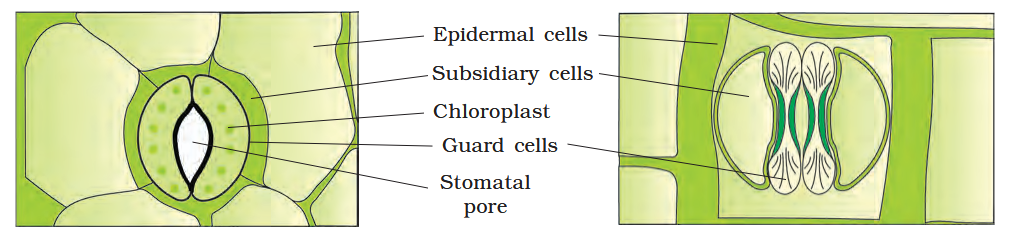
Each stoma is composed of two bean-shaped or dumbell-shaped cells known as guard cells which enclose stomatal pore.
In dicots, what is the shape of guard cells of stoma?
bean-shaped.
In monocots, what is the shape of guard cells of stoma?
dumbell-shaped.
In grasses, the guard cells in stoma are _________ shaped.
(bean / dumb-bell)
In grasses, the guard cells in stoma are dumb-bell shaped.
Comment on the cell walls of guard cells in stoma.
The outer walls of guard cells (away from the stomatal pore) are thin and the inner walls (towards the stomatal pore) are highly thickened.
Which part of guard cells in stoma have thin walls?
The outer walls away from the stomatal pore.
Which part of guard cells in stoma have thick walls?
The inner walls towards the stomatal pore.
What is the role of guard cells in stoma?
They regulate the opening and closing of stomata.
Do guard cells in stoma contain chloroplasts?
yes
Sometimes, a few epidermal cells, in the vicinity of the guard cells become specialised in their shape and size and are known as ______________.
Sometimes, a few epidermal cells, in the vicinity of the guard cells become specialised in their shape and size and are known as subsidiary cells.
What are subsidiary cells with regards to epidermal tissue system?
Sometimes, a few epidermal cells, in the vicinity of the guard cells become specialised in their shape and size and are known as subsidiary cells.
The stomatal aperture, guard cells and the surrounding subsidiary cells are together called __________________.
The stomatal aperture, guard cells and the surrounding subsidiary cells are together called stomatal apparatus.
What is the stomatal apparatus?
The stomatal aperture, guard cells and the surrounding subsidiary cells are together called stomatal apparatus.
The cells of epidermis bear a number of hairs. What are these hairs called in the root system and the shoot system?
Root system: root hairs
Shoot system: trichomes
What are root hairs?
The root hairs are unicellular elongations of the epidermal cells in roots.
What is the function of root hairs?
They help absorb water and minerals from the soil by increasing the surface area of roots.
Root hairs are unicellular or multicellular?
unicellular
What is the function of trichomes?
The trichomes help in preventing water loss due to transpiration.
What are trichomes?
Hair-like extensions of the epidermal tissue in the shoot system.
Trichomes are unicellular or multicellular?
multicellular.
Trichomes are hair-like extensions of the epidermal tissue in the shoot system.
They may be branched or unbranched and soft or stiff.
True or false?
True. lol.
Trichomes can be secretory. True or false?
True.
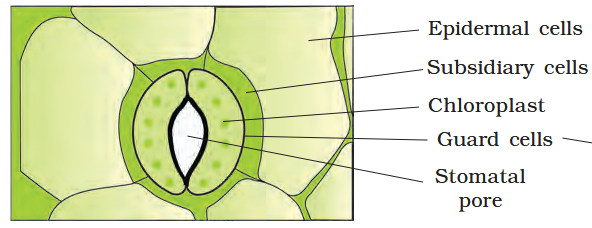
This sort of stomatal apparatus is present in monocots or dicots?
dicots
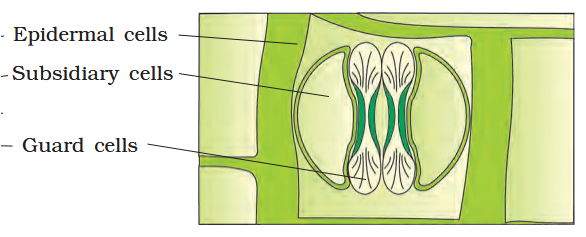
This sort of stomatal apparatus is present in monocots or dicots?
monocots
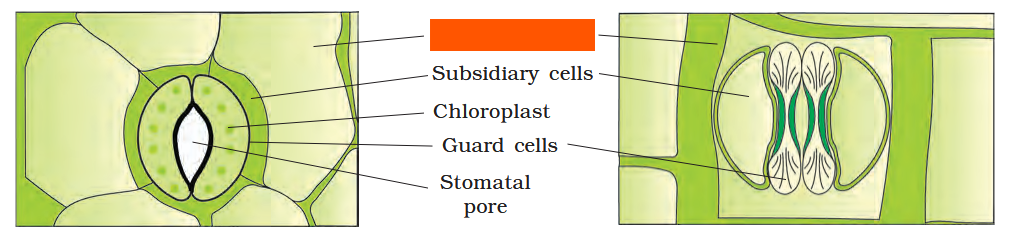
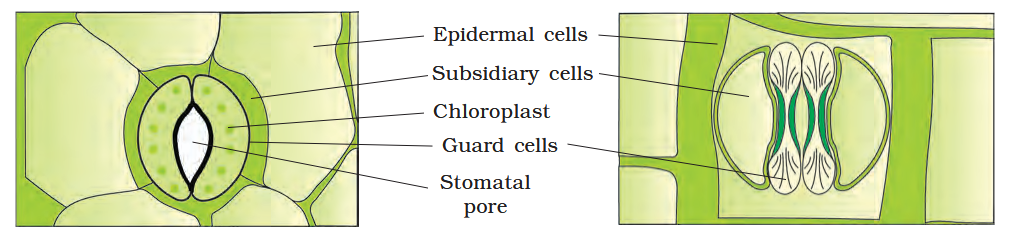
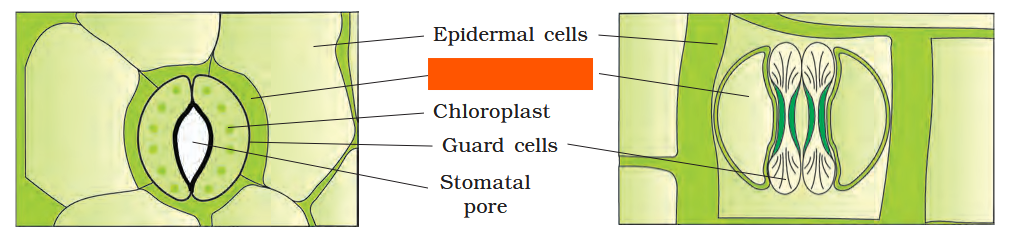
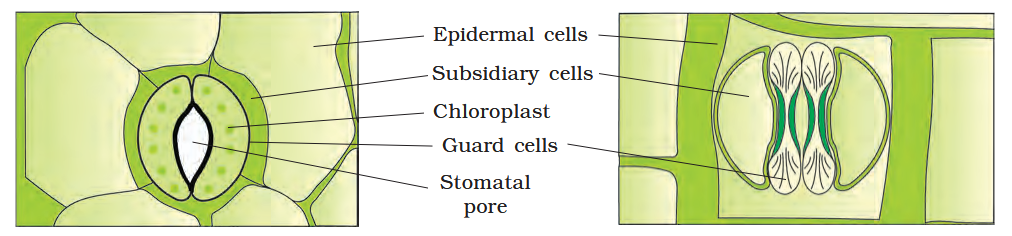
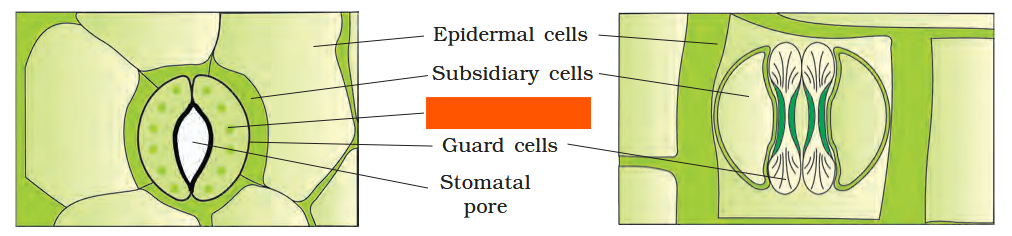
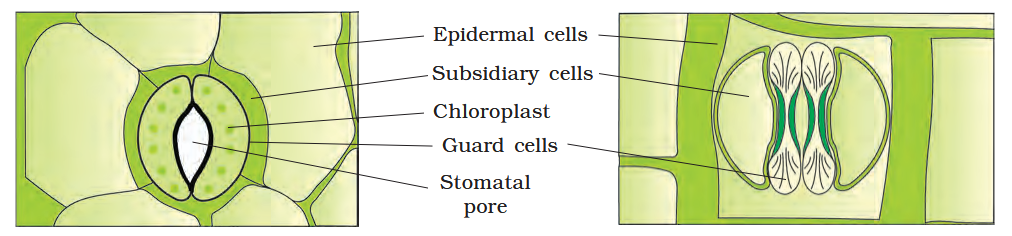
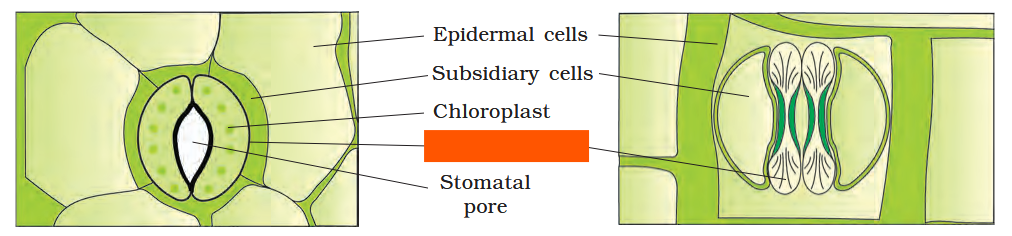
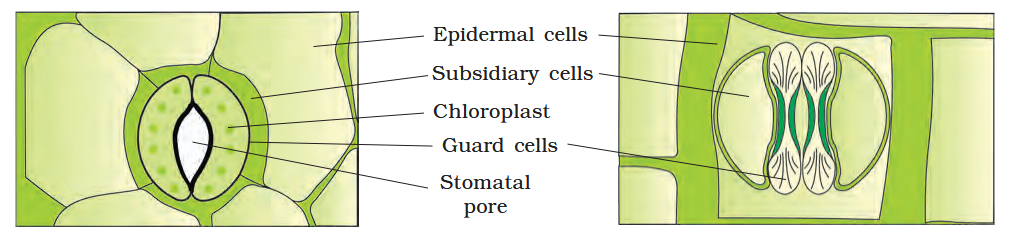
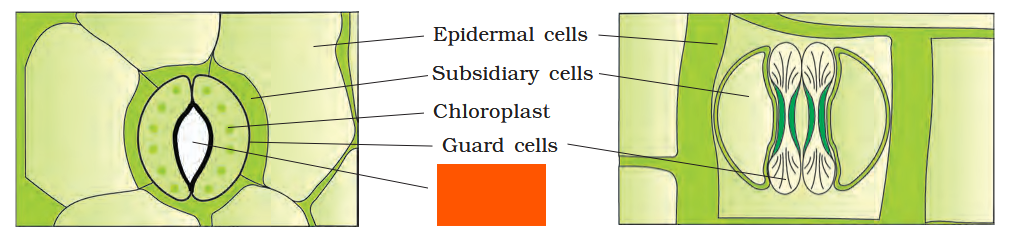
What is ground tissue?
All tissues except epidermis and vascular bundles constitute the ground tissue.
What are the three simple tissues that ground tissue in plants consists of?
Parenchyma
Collenchyma
Schlerenchyma
What are the six places in plants that you can usually find parenchymous cells?
Parenchymatous cells are usually present in:
cortex,
pericycle,
pith
medullary rays,
in the primary stems
roots.
What sort of cells does ground tissue consist of in leaves?
In leaves, the ground tissue consists of thin-walled chloroplast containing cells and is called mesophyll.
In leaves, the ground tissue consists of thin-walled chloroplast containing cells and is called __________.
In leaves, the ground tissue consists of thin-walled chloroplast containing cells and is called mesophyll.
What is mesophyll?
In leaves, the ground tissue consists of thin-walled chloroplast containing cells and is called mesophyll.
What are the complex tissues that comprise the vascular tissue system in plants?
xylem
phloem
What comprises a vascular bundle?
The xylem and phloem together constitute vascular bundles.
In dicots, what layer is present between the xylem and phloem in the vascular bundle?
cambium layer.
What is the significance of the cambium layer in the vascular bundle in dicots?
Such vascular bundles because of the presence of cambium possess the ability to form secondary xylem and phloem tissues.
What are open vascular bundles?
In dicotyledonous stems, cambium is present between phloem and xylem. Such vascular bundles because of the presence of cambium possess the ability to form secondary xylem and phloem tissues, and hence are called open vascular bundles.
In dicotyledonous stems, cambium is present between phloem and xylem. Such vascular bundles because of the presence of cambium possess the ability to form secondary xylem and phloem tissues, and hence are called ______________ bundles.
In dicotyledonous stems, cambium is present between phloem and xylem. Such vascular bundles because of the presence of cambium possess the ability to form secondary xylem and phloem tissues, and hence are called open vascular bundles.
What is the difference in the layers of vascular bundles in dicots and monocots?
dicots have a cambium layer between the xylem and phloem layers, monocots do not have this cambium layer.
What are close vascular bundles?
In the monocotyledons, the vascular bundles have no cambium present in them. Hence, since they do not form secondary tissues they are referred to as closed.
Why do vacular bundles in monocots not form secondary tissues?
In the monocotyledons, the vascular bundles have no cambium present in them. Hence, since they do not form secondary tissues.
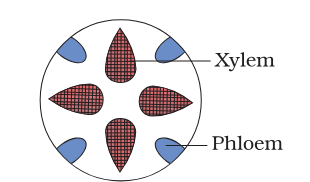
When xylem and phloem within a vascular bundle are arranged in an alternate manner along the different radii, the arrangement is called ______.
When xylem and phloem within a vascular bundle are arranged in an alternate manner along the different radii, the arrangement is called radial. (radial vascular bundle)
When xylem and phloem within a vascular bundle are arranged in an alternate manner along the different radii, the arrangement is called radial. Which plant parts are radial vascular bundles found in?
roots
What are conjoint type vascular bundles?
In conjoint type of vascular bundles, the xylem and phloem are jointly situated along the same radius of vascular bundles.
Where are conjoint vascular bundles usually found?
commonly found in stems and leaves
The conjoint vascular bundles usually have the phloem located only on the ______ side of xylem.
(inner / outer)
The conjoint vascular bundles usually have the phloem located only on the outer side of xylem.
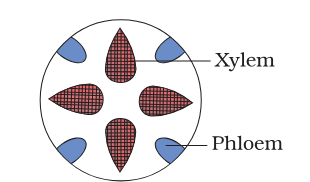
What sort of vascular bundle is this?
radial vascular bundle
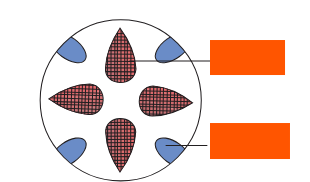
What are the censored parts on this radial vascular bundle?
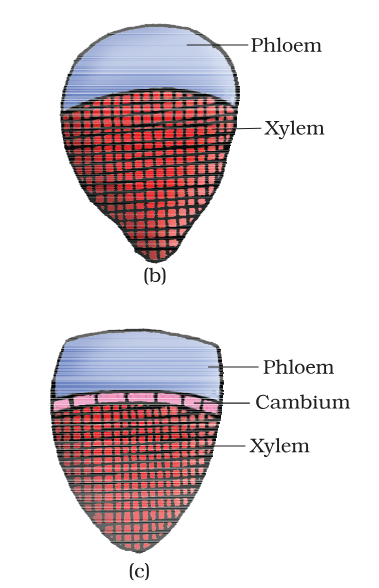
Which of these is a conjoint closed vascular bundle and which is a conjoint open vascular bundle?
The top one is closed
The bottom one is open
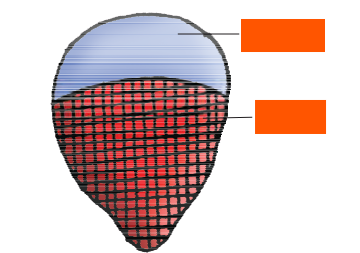
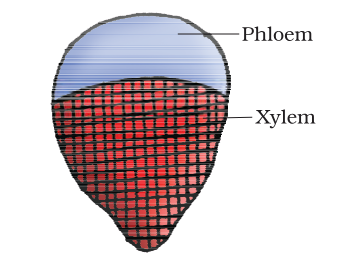
What are these labels on a conjoint closed vascular bundle?
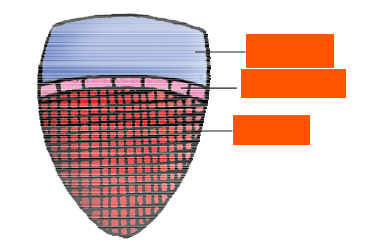
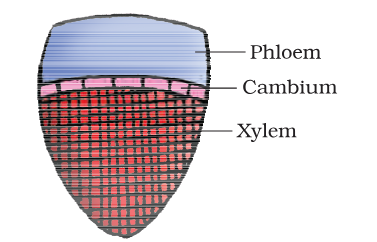
What are these labels on a conjoint open vascular bundle?
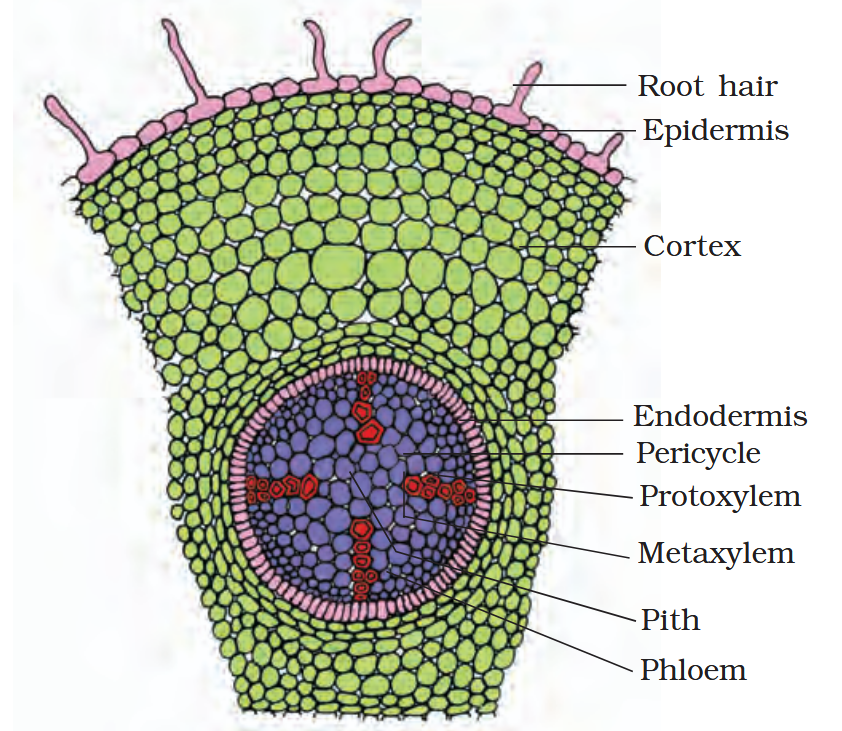
Is this transverse root section from a monocot or dicot?
dicot
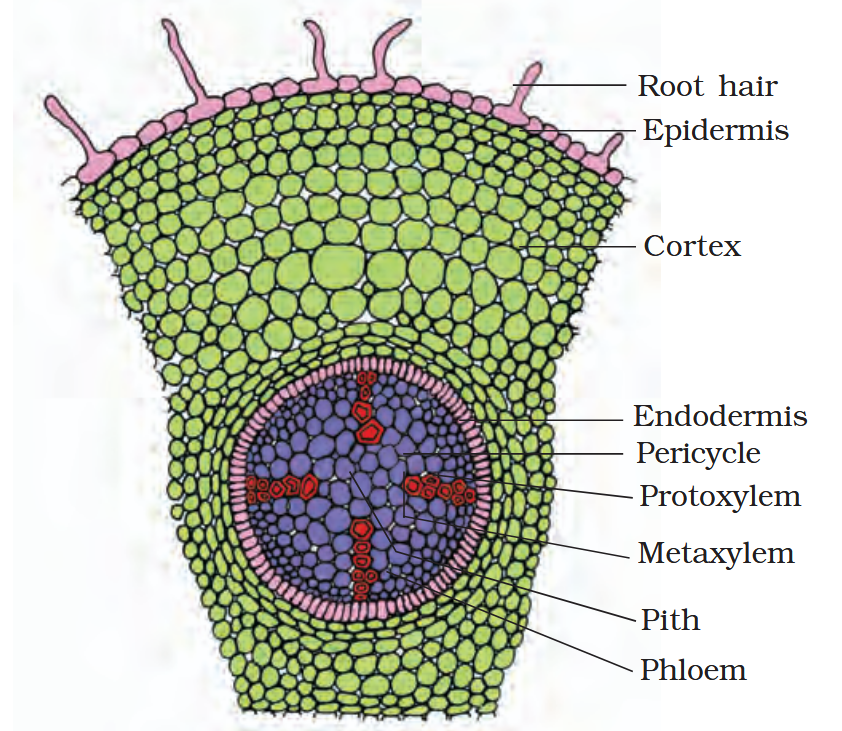
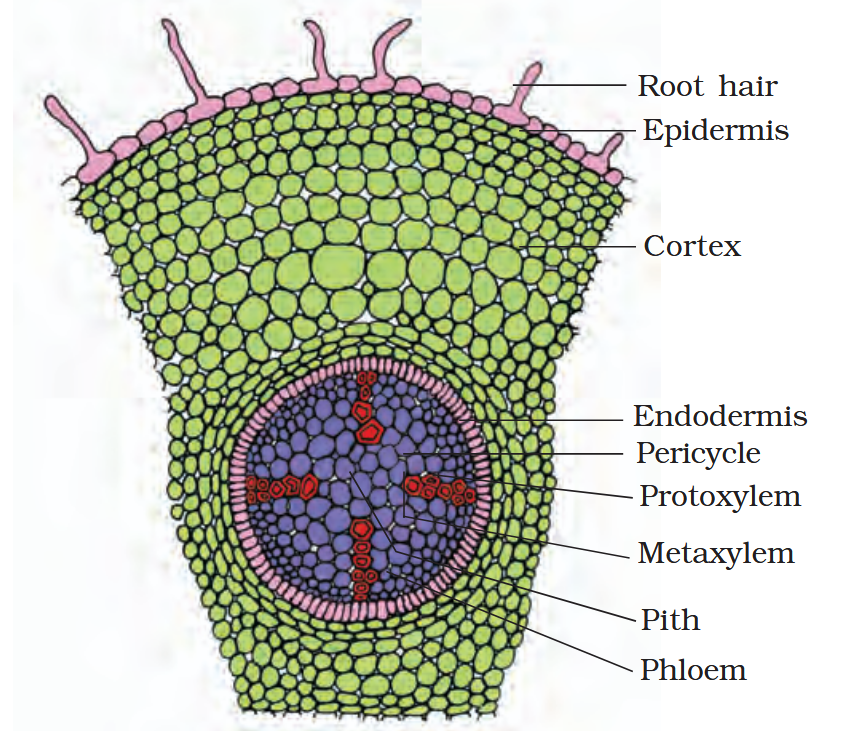
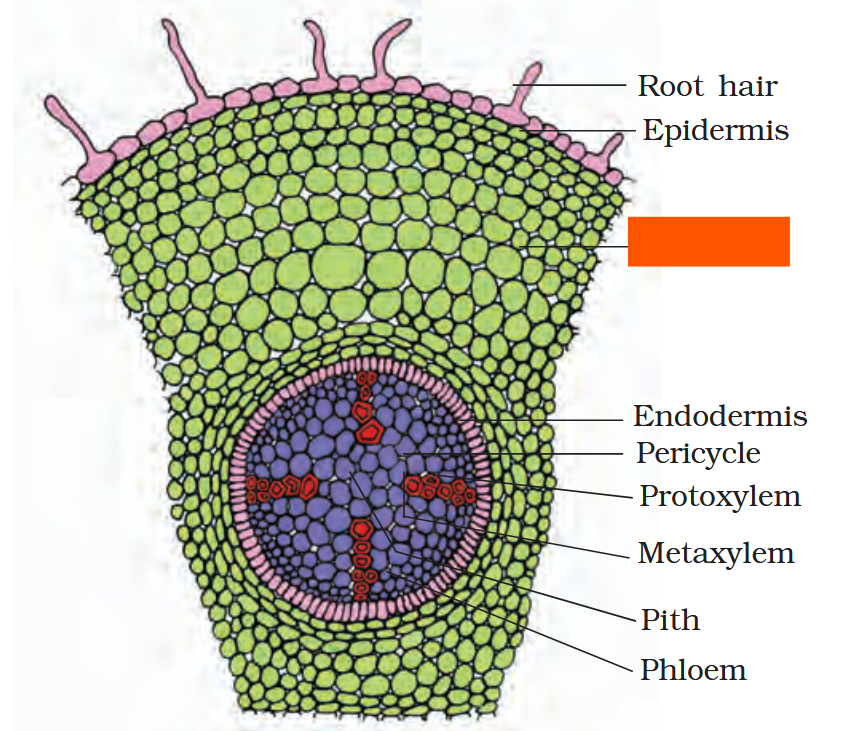
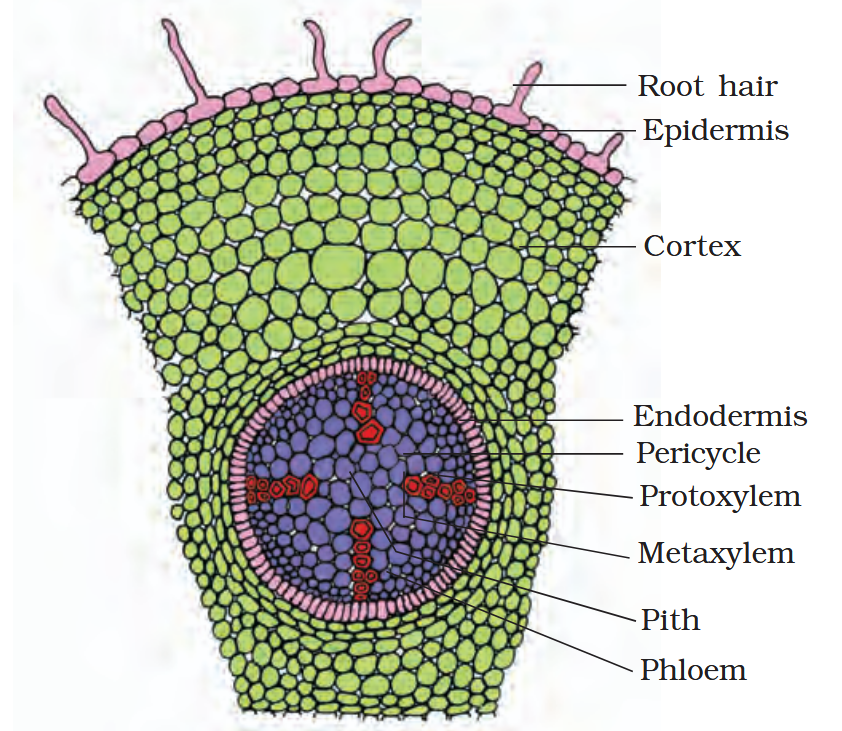
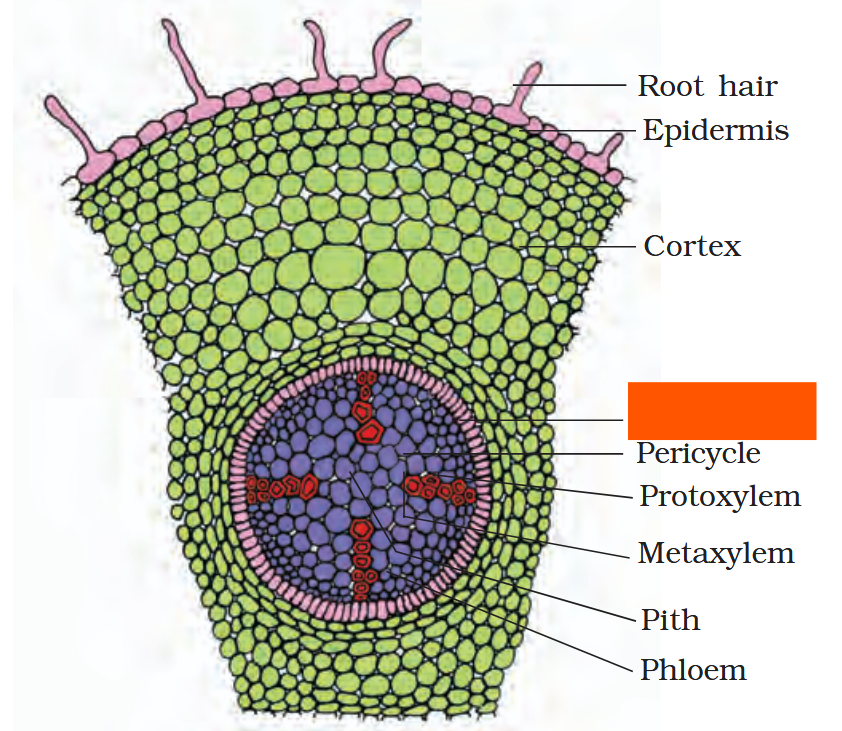
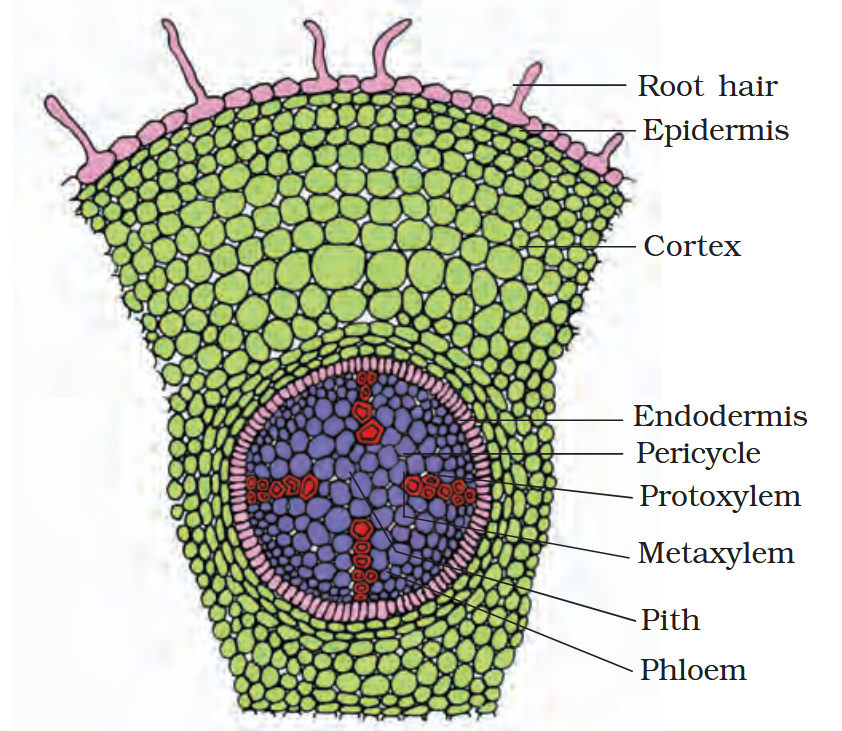
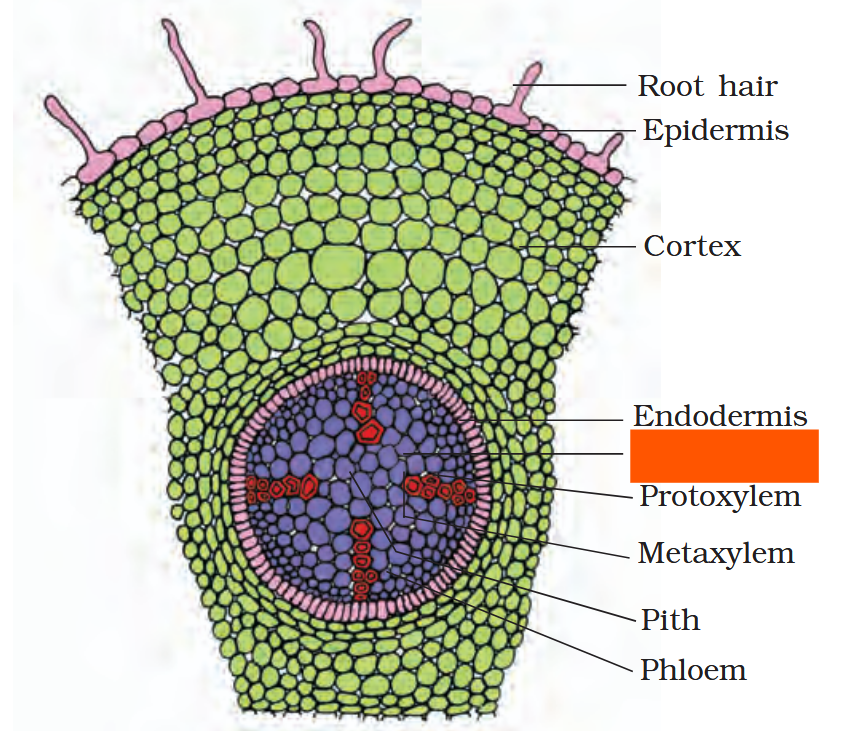
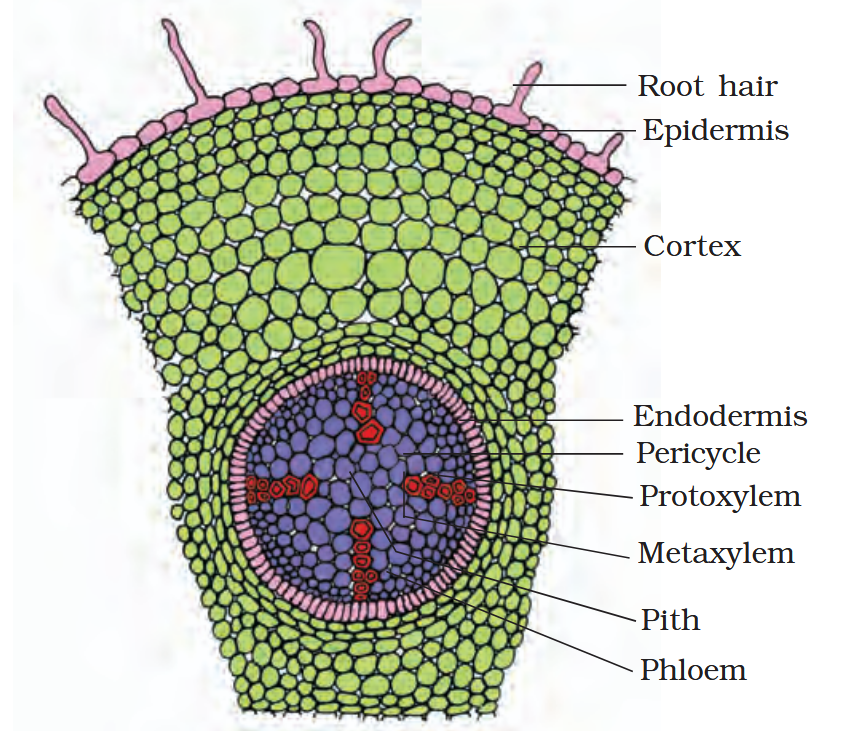
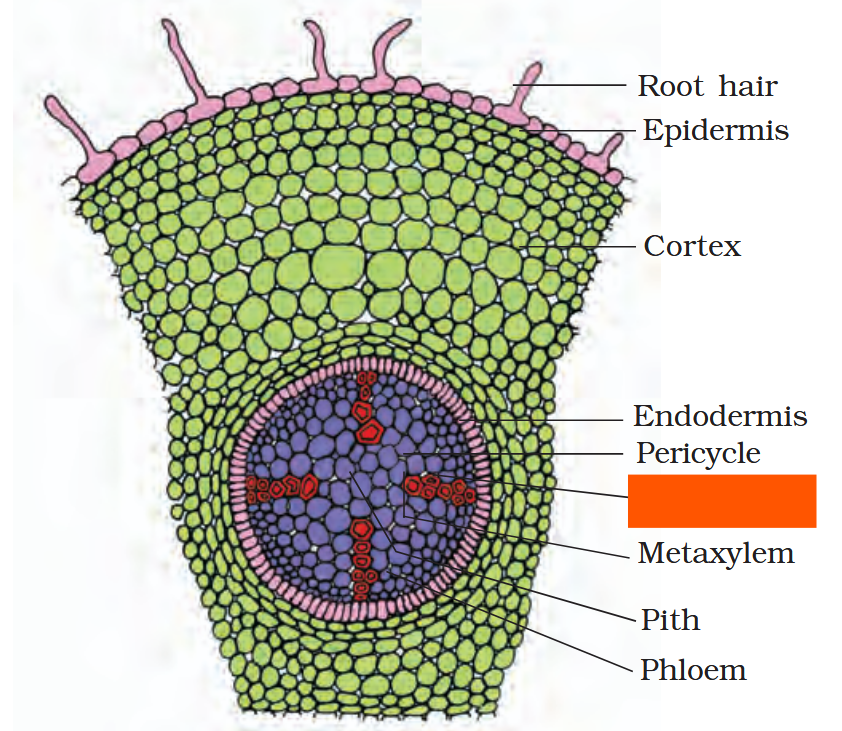
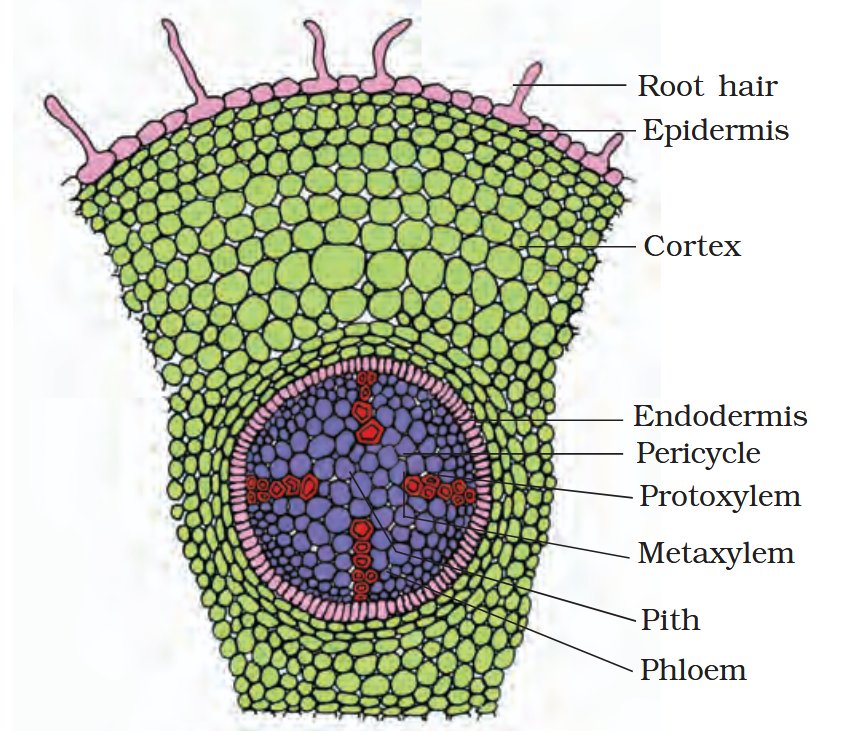
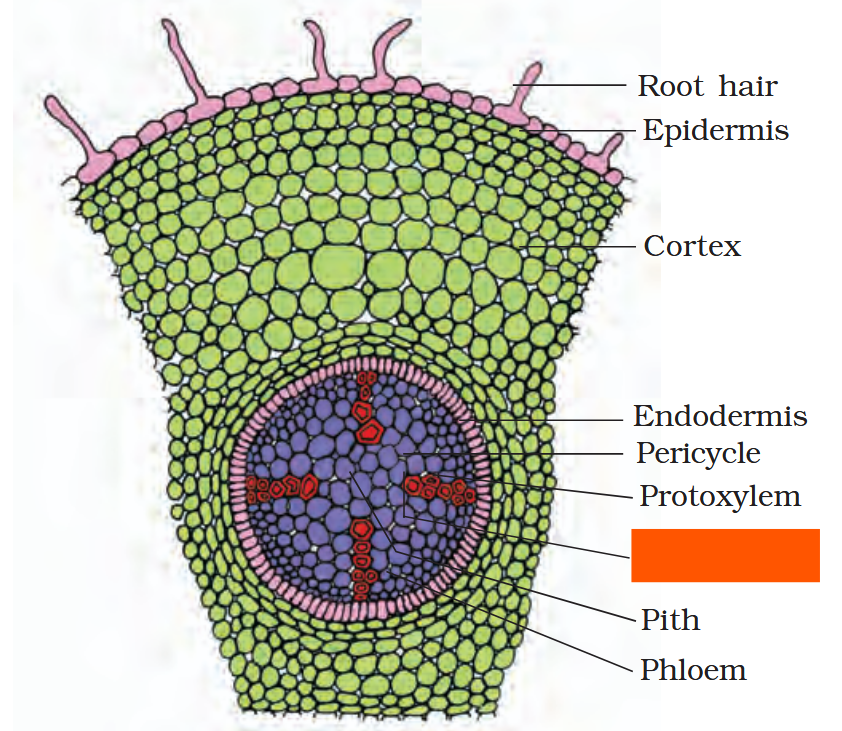
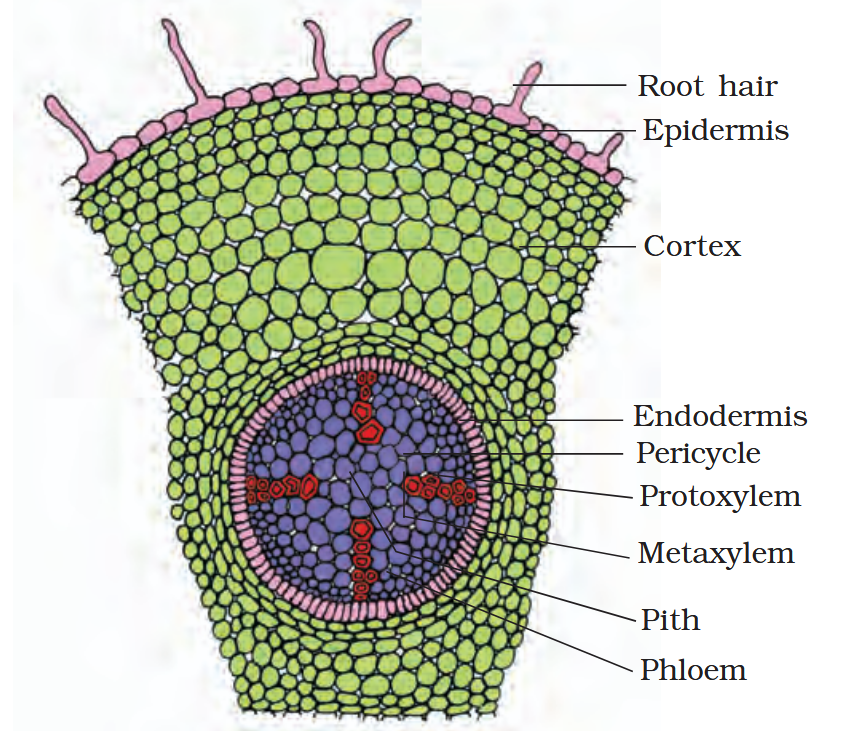
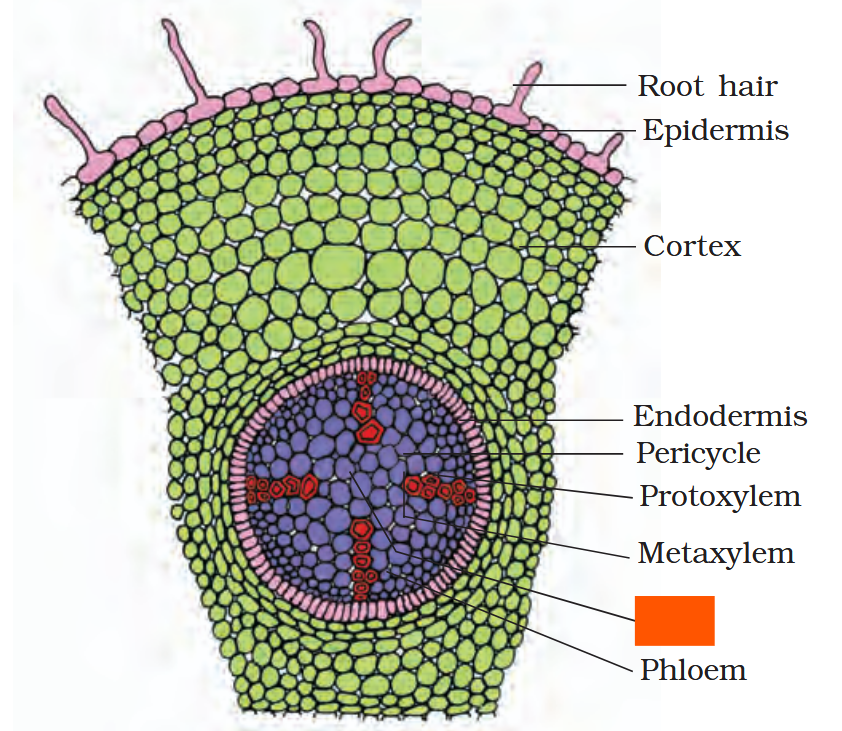
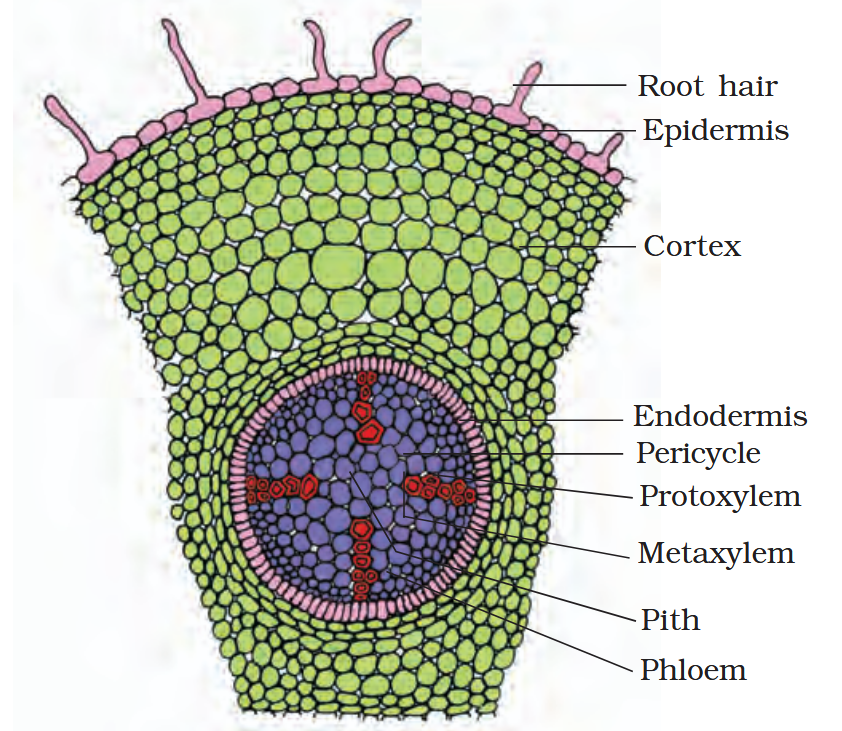
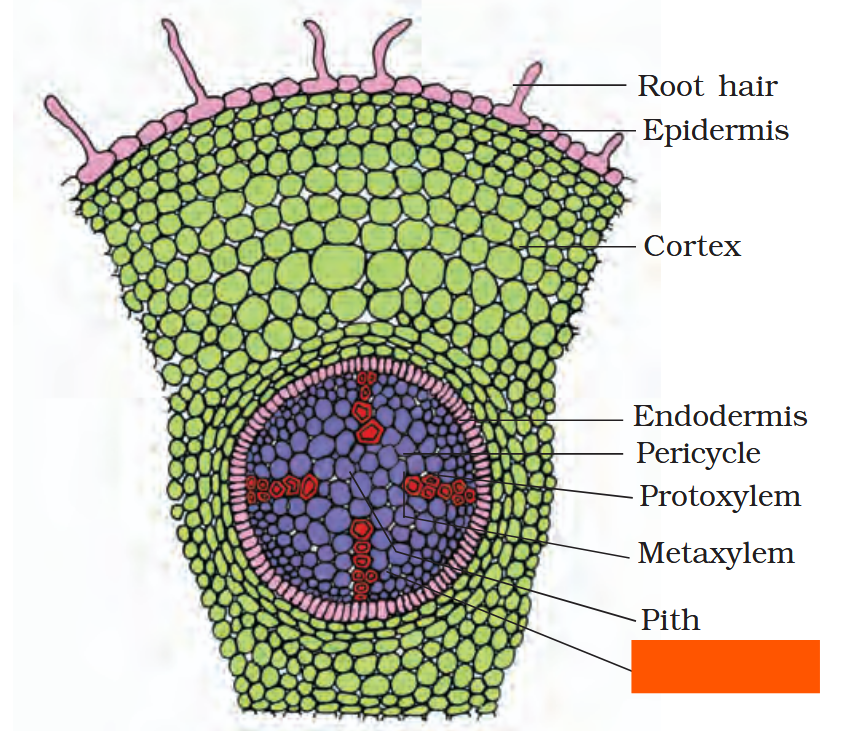
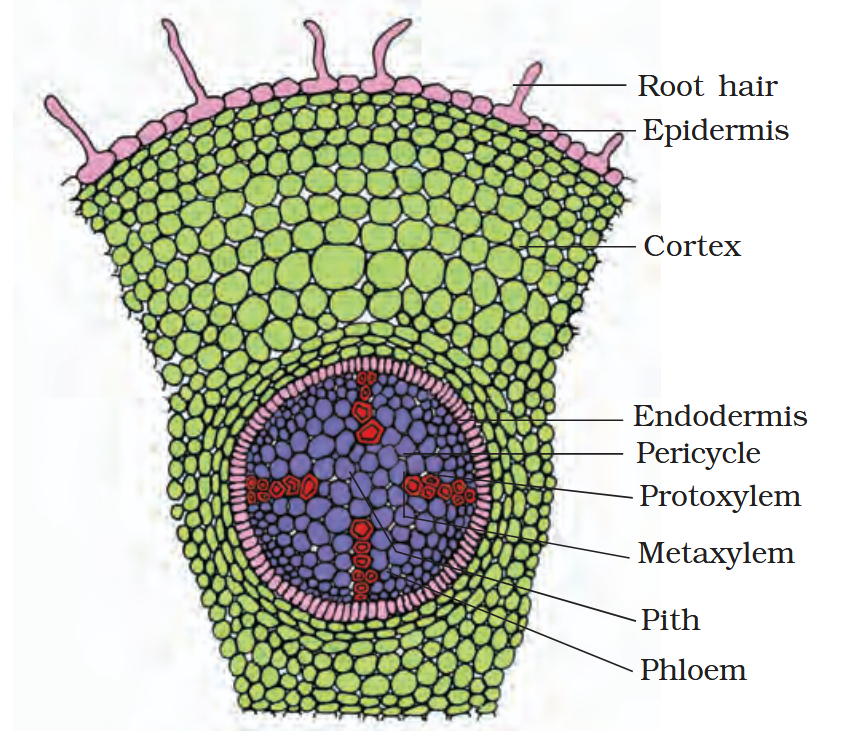
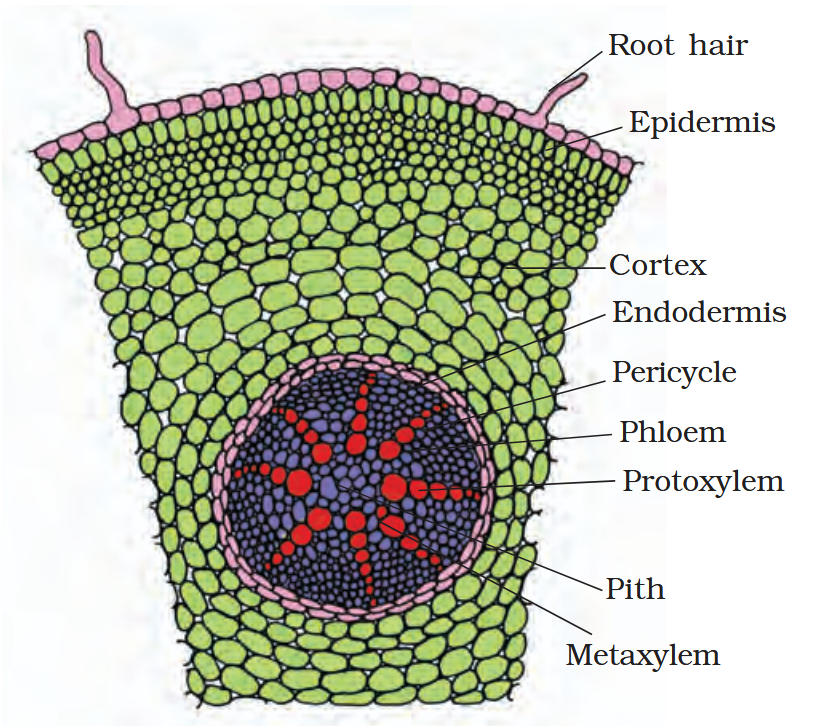
Is this transverse root section from a monocot or dicot?
monocot
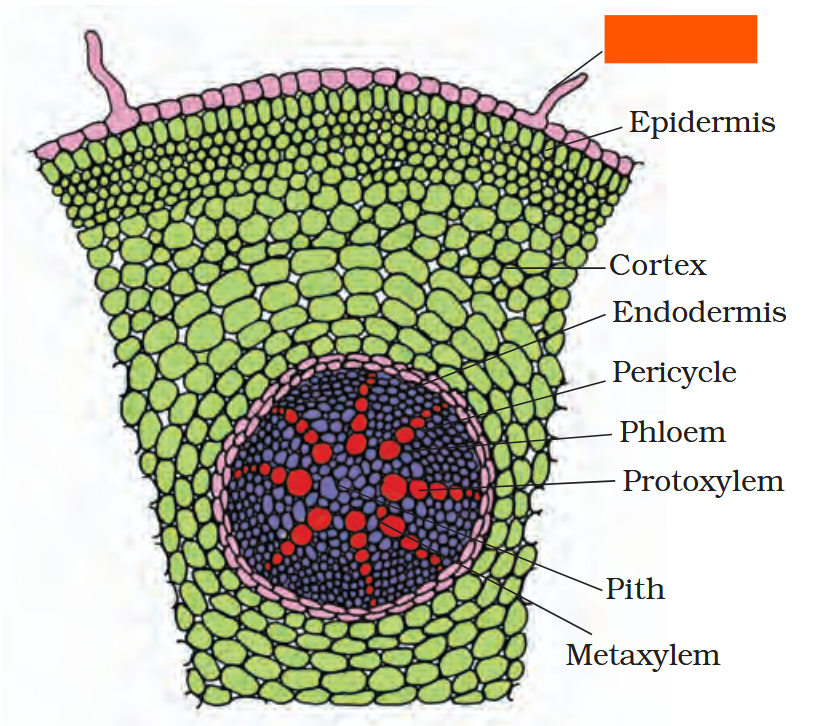
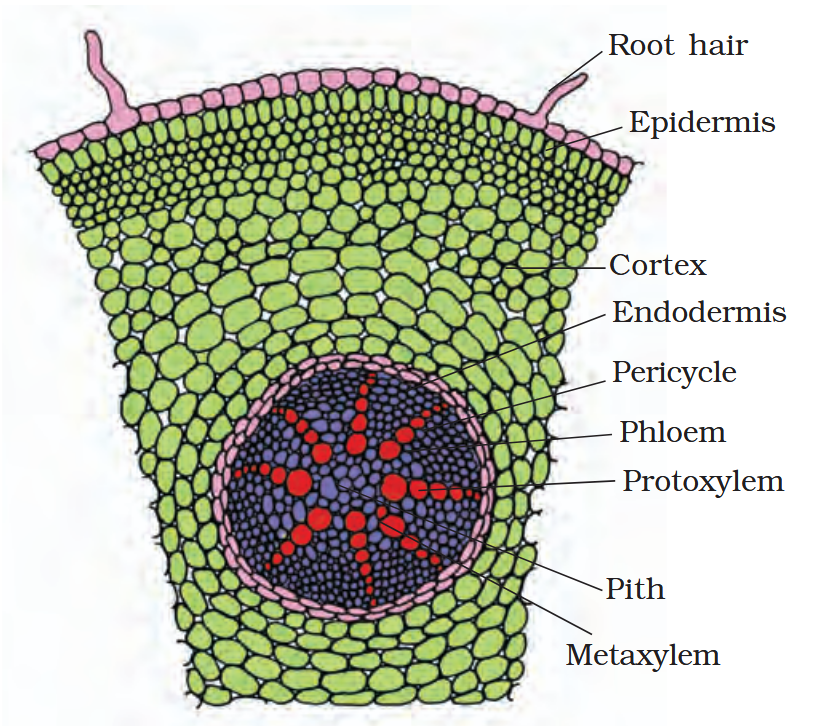
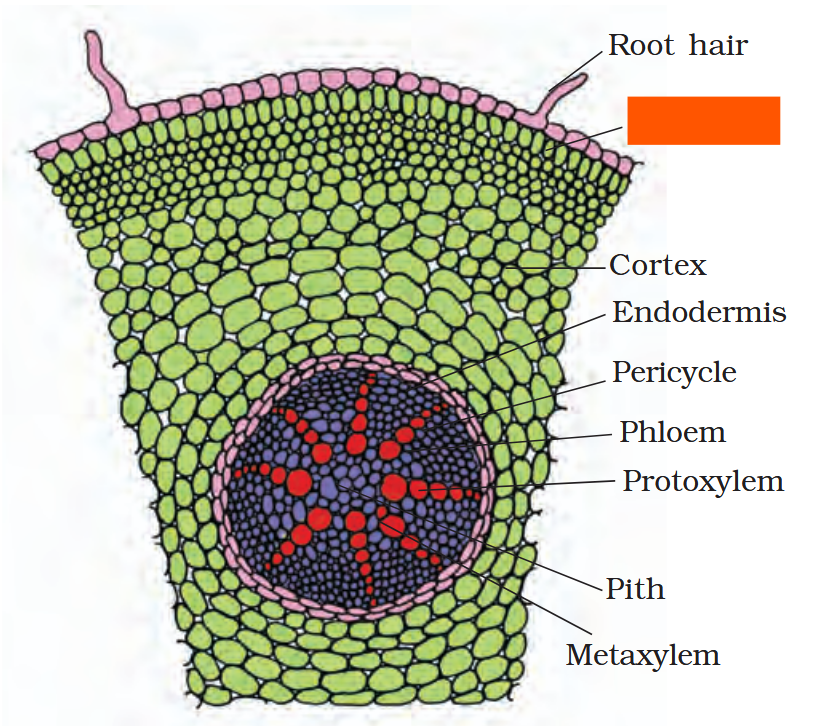
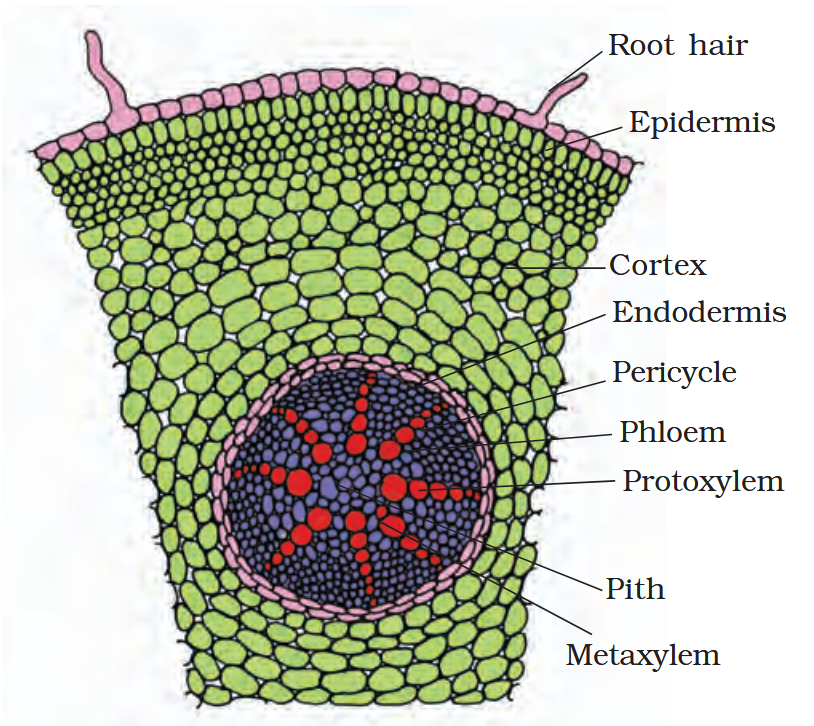
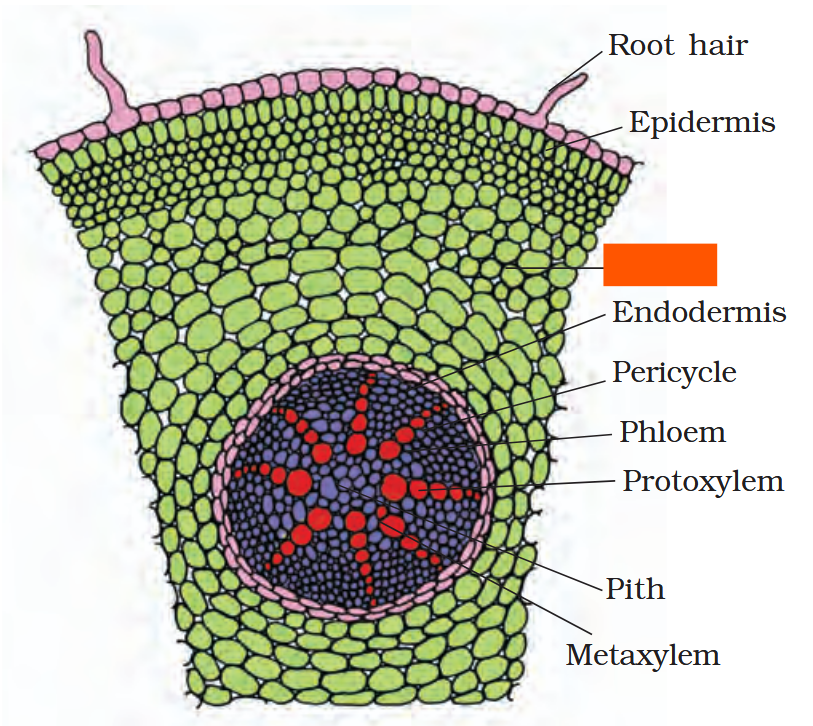
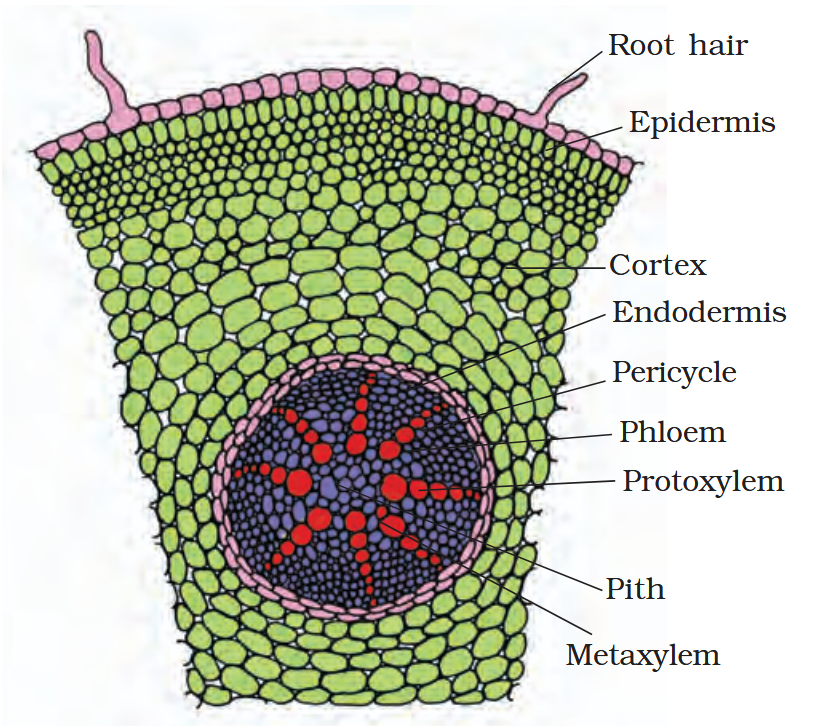
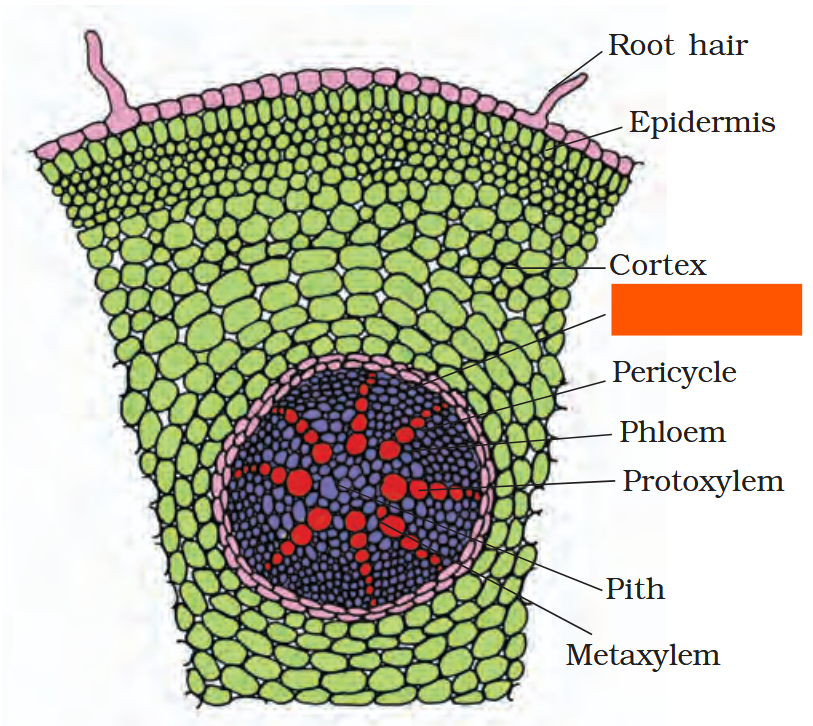
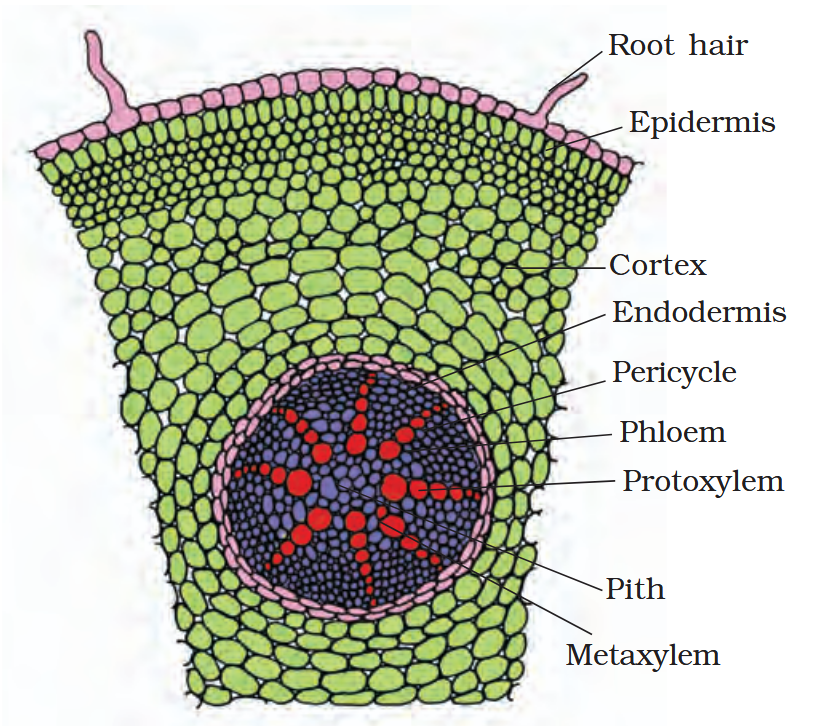
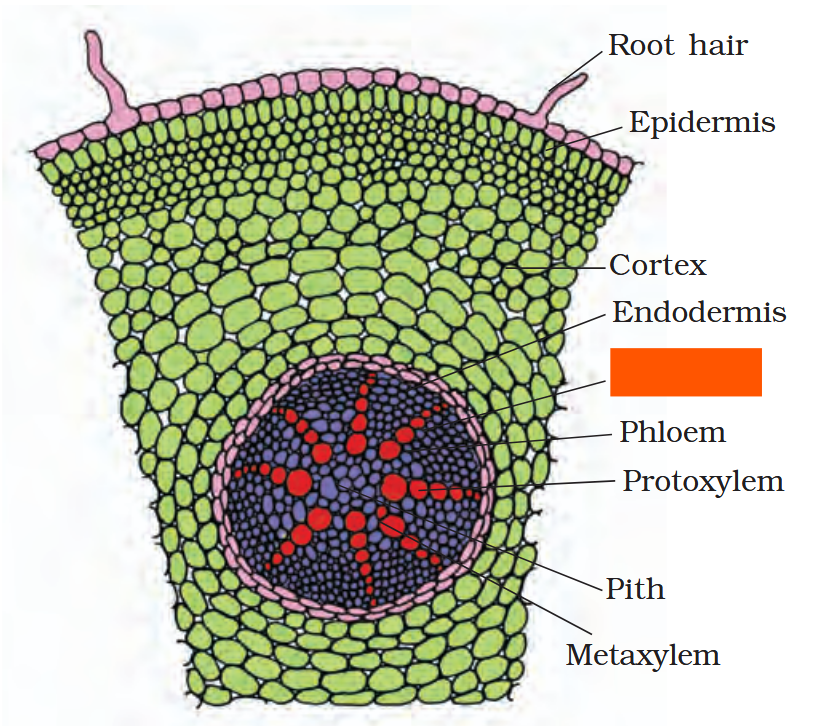
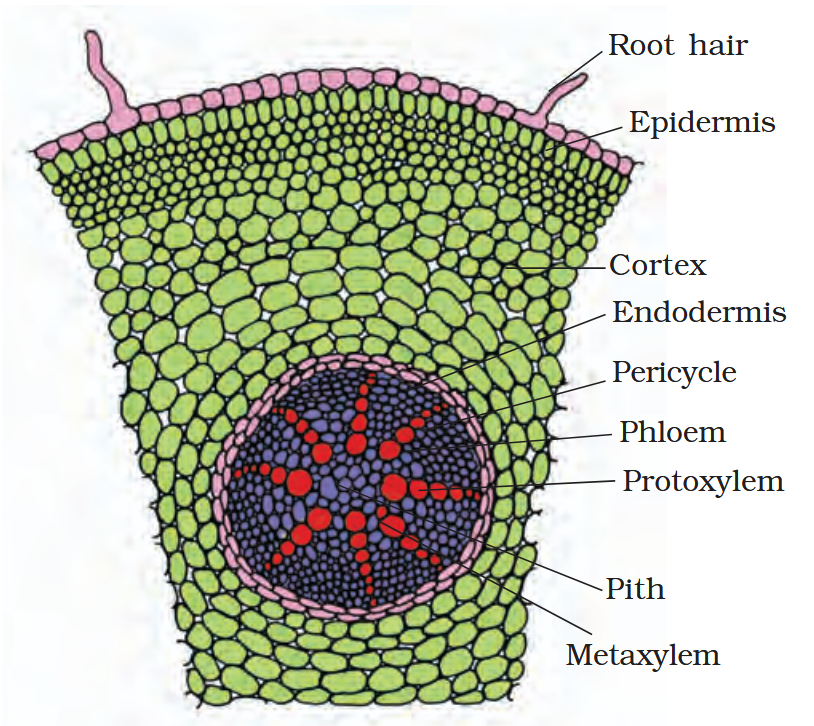
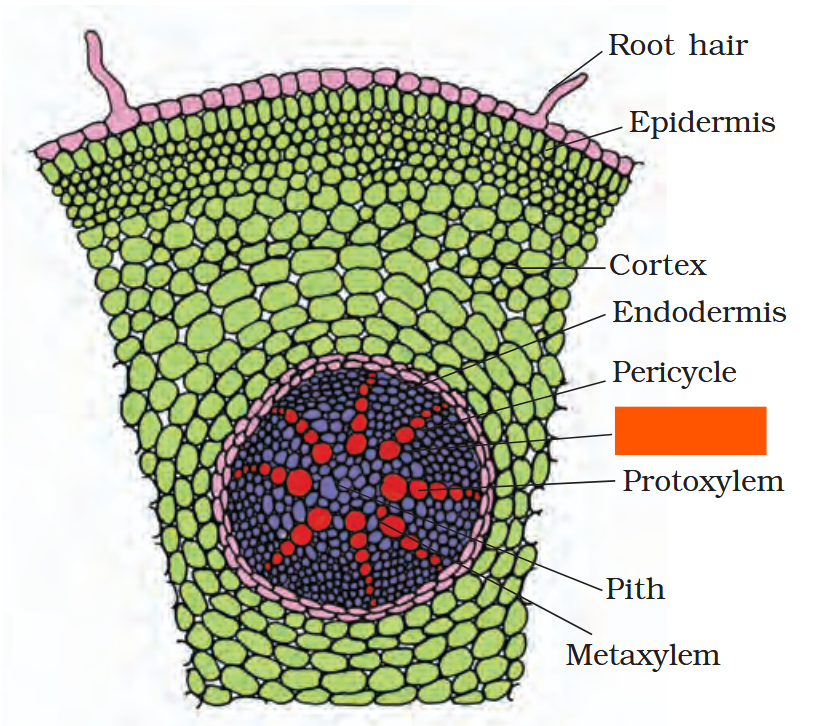
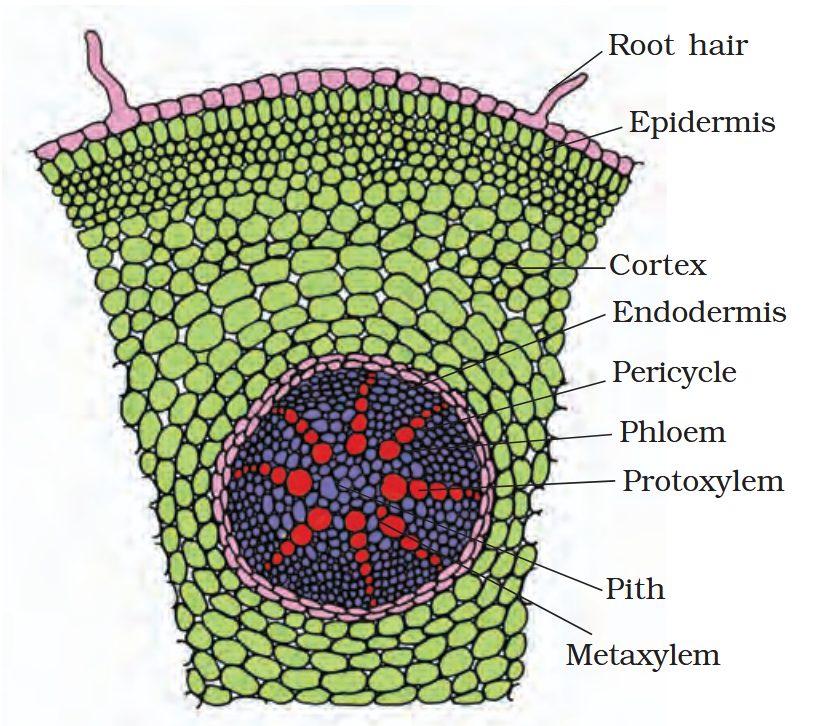
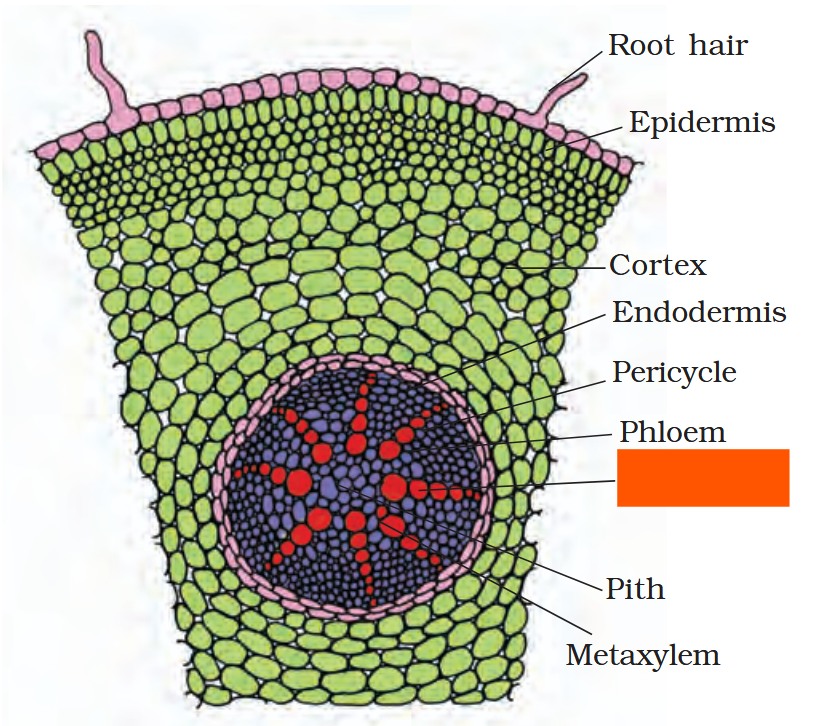
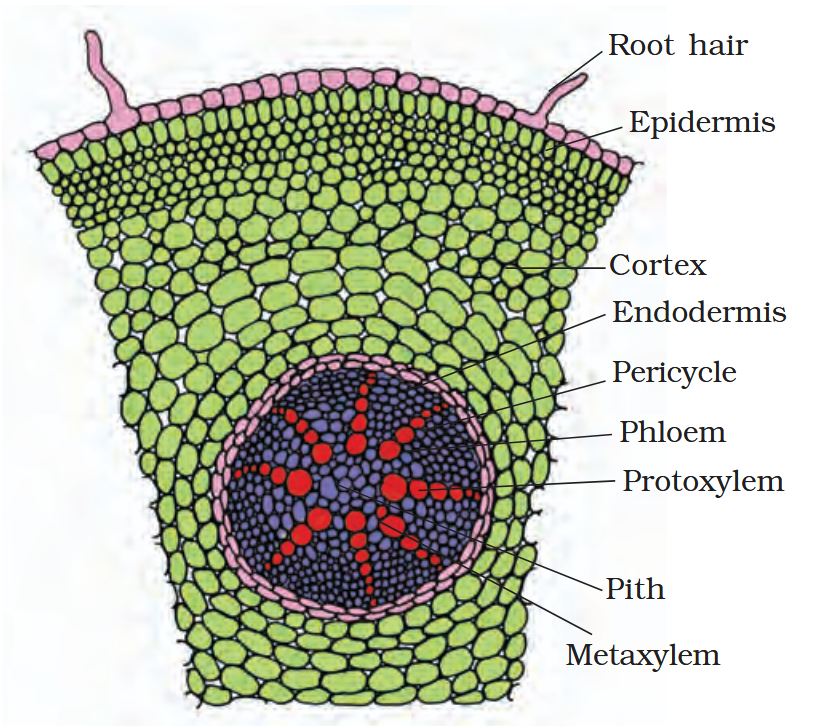
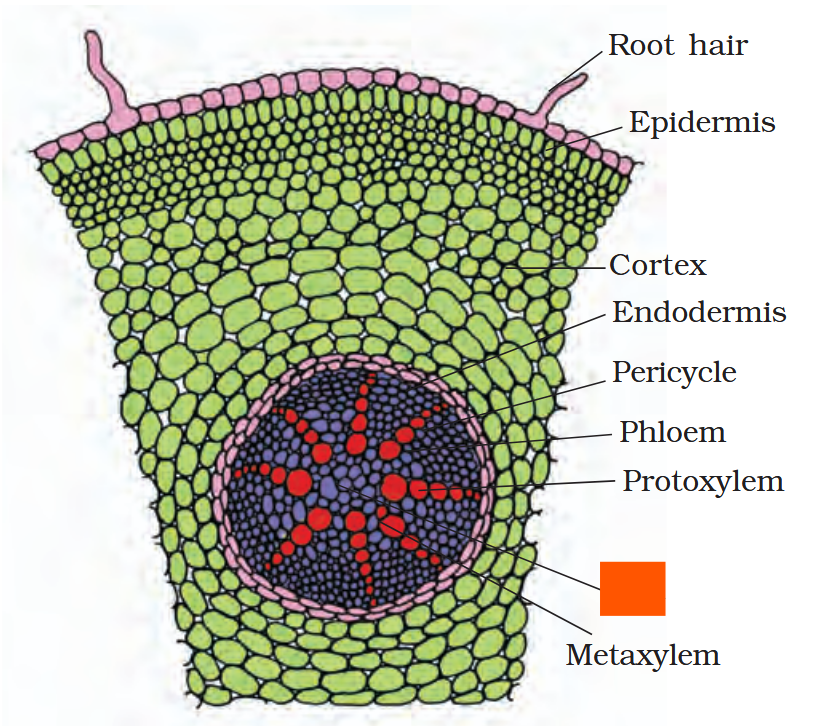
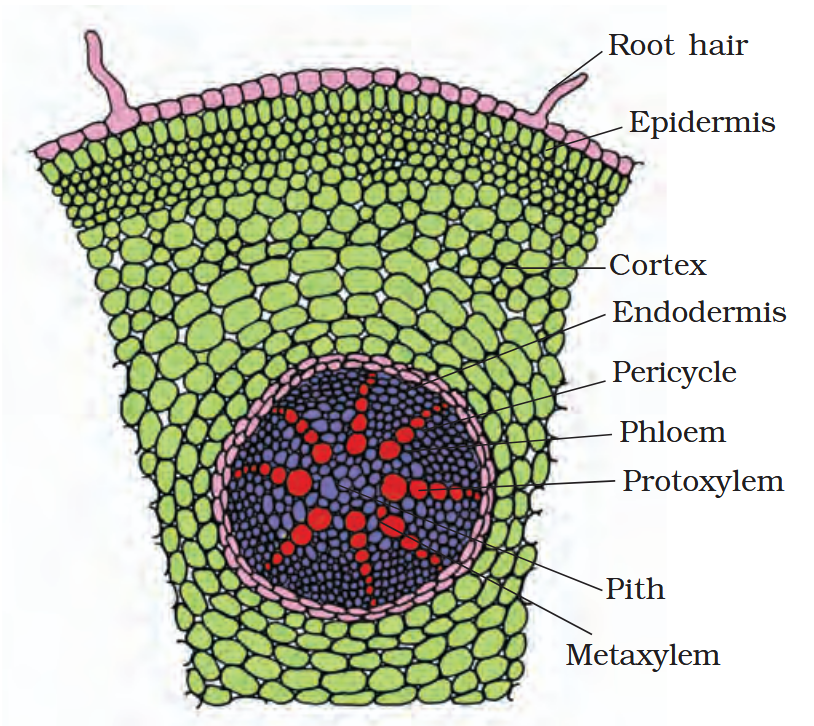
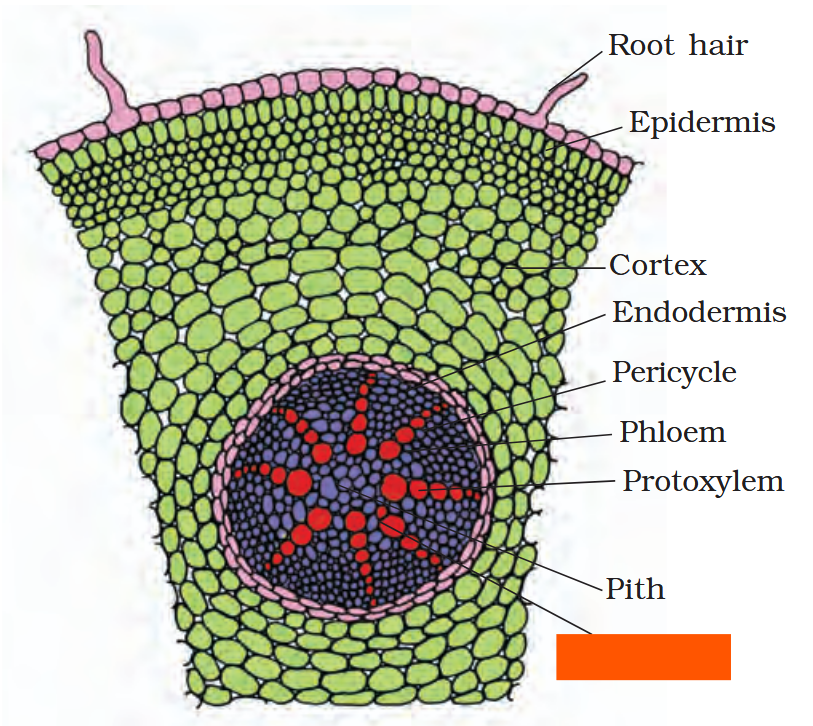
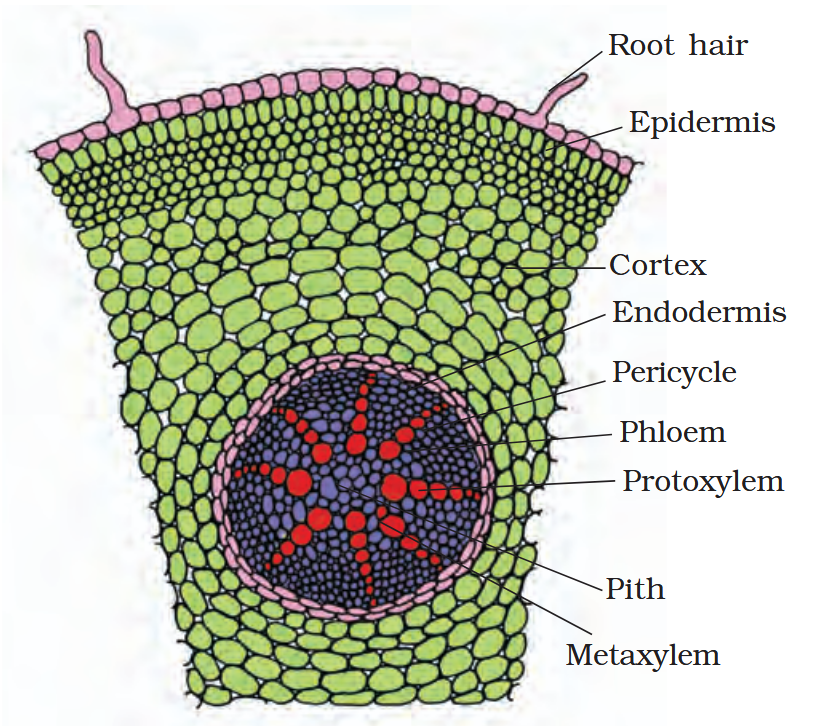
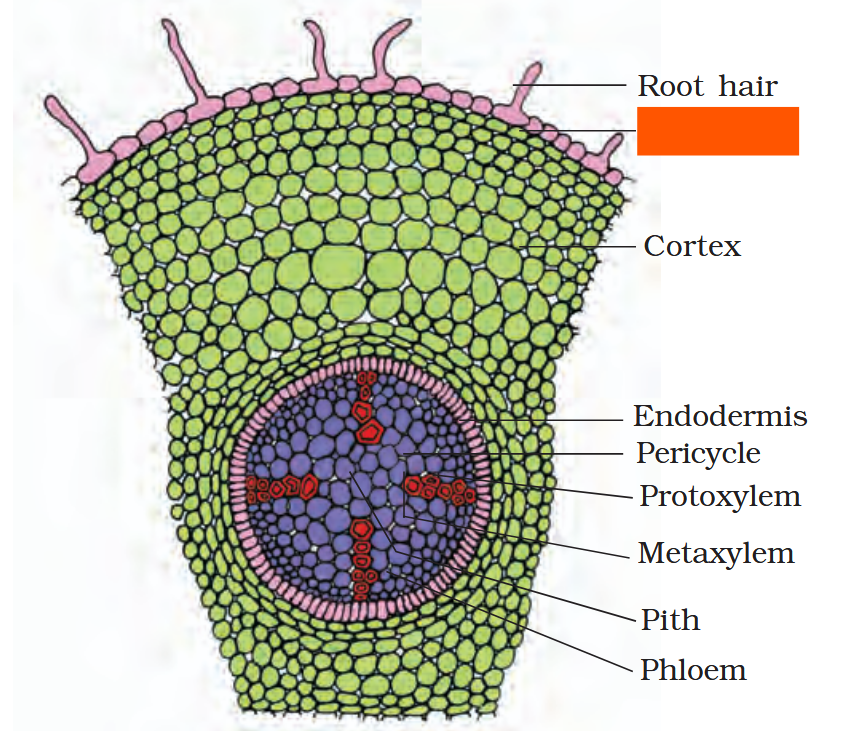
What is the outermost layer of a dicot root called?
epiblema.
What is an epiblema?
The outermost layer of a dicot root
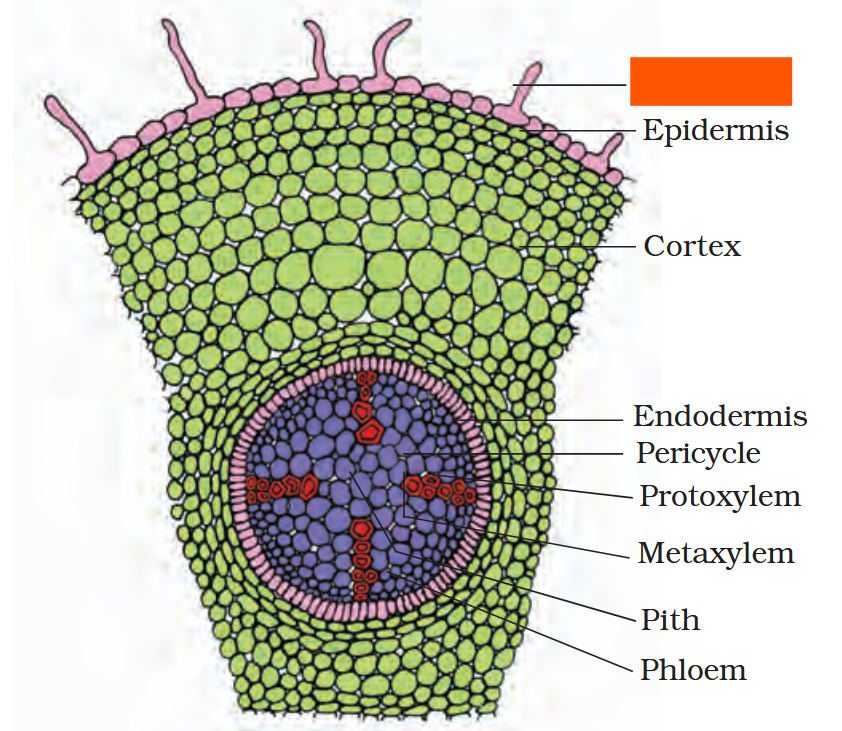
The outermost layer is epiblema. Many of the cells of epiblema protrude in the form of unicellular _________.
The outermost layer is epiblema. Many of the cells of epiblema protrude in the form of unicellular root hairs.
In a dicot root, what sort of cells does the cortex consist of? How many layers? Comment on intercellular spaces.
The cortex consists of several layers of thin-walled parenchyma cells with intercellular spaces.
In dicot roots, what is the innermost layer of the cortex called?
endodermis
In dicot roots, the innermost layer of the cortex is called endodermis.
What sort of cells comprise the endodermis? Comment on the intercellular spaces.
It comprises a single layer of barrel-shaped cells without any intercellular spaces.
The tangential as well as radial walls of the endodermal cells in dicot roots have a deposition of water-impermeable, waxy material _______.
The tangential as well as radial walls of the endodermal cells in dicot roots have a deposition of water-impermeable, waxy material suberin.
The tangential as well as radial walls of the endodermal cells in dicot roots have a deposition of water-impermeable, waxy material suberin in the form of ______________.
The tangential as well as radial walls of the endodermal cells in dicot roots have a deposition of water-impermeable, waxy material suberin in the form of casparian strips.
What is suberin?
The tangential as well as radial walls of the endodermal cells in dicot roots have a deposition of water-impermeable, waxy material suberin in the form of casparian strips.
What is the material that casparian strips are made of?
suberin
In dicot roots, next to endodermis lies a few layers of thick-walled parenchyomatous cells referred to as _________.
In dicot roots, next to endodermis lies a few layers of thick-walled parenchyomatous cells referred to as pericycle.