The resp system in the equine athlete
 Call Kai
 Learn
Learn Practice Test
 Spaced Repetition
 Match
Match Flashcards
 Knowt Play
1/29

There's no tags or description
Looks like no tags are added yet.
Name | Mastery | Learn | Test | Matching | Spaced | Call with Kai | Chat |
|---|
No analytics yet
Send a link to your students to track their progress
30 Terms
What factors contribute to successful performance?

How does equine performance rely on the oxygen pathway?
Relies mostly on aerobic (70% in 1000m sprint)
Inc distance inc aerobic capacity
Problem anywhere along pathway will affect O2 delivery and gas exchange
What factors can you measure to determine how effective the oxygen pathway is?
VO2 = volume of O2 absorption
VO2max= max rate of O2 consumption during exercise (aka max aerobic capacity)- speed of reaching this correlated to endurance- can change with training
Correlates with endurance ability so can assess these
How do you calculate minute ventilation?
Tidal volume x breaths/min
How are ventilation and perfusion interrelated in terms of equine performance?
If ventilation: perfusion ratio is mismatched then no matter how good the ventilation is there will be a 'limit'
(shunting —> reduced perfusion of poorly ventilated alveoli)
What effects the rate of perfusion in resp gas exchange?
Resistance
Pressure
Shunting
What factors does diffusion in respiratory gas exchange depend on?
Pressure gradient
Transit time
Alveolar-capillary barrier thickness
Species differences, disease (EIPH)
What can create resistance to airflow in the URT?
Proportional to radius4
Larynx has a high resistance (can get paralysis, diseases etc.)
Also nasal obstruction
most resistance from URT
By how much does minute ventilation increase in horses during exercise?
80L/min to 1800L/min
How can respiration be a limitation to exercise?
Resp related to stride pattern
CS see more frequently with exercise as exacerbated
Exercise induced hypoxaemia (normal during max performance in atheltic breeds)
Pulmonary vascular pressure is high bc of thick diffusion barrier
Obligate nasal breather so pulmonary resistance doubles during heavy exercise
What are the general resp changes that can cause poor performance?
Inc pulmonary resistance
e.g.- URT disorders, resistance, turbulence, small airways (hypersecretion, blood, inflm)
Dec alveolar/ pulmonary compliance
e.g.- oedema, hypertension, fibrosis, interstitial disease
thicker diffusion barrier
List some respiratory causes of poor performace
Dynamic airway collapse
Inflammatory airway disease
Tracheal collapse
Resp muscle/ chest wall disease
Decrease CO
Dec lung or tissue perfusion, V/Q inequality
Dec haemoglobin (chronic dz, anaemia)
(Unlikely to see muscle metabolism problems)
What is EIPH?
Equine induced pulmonary haemorrhage caused by 'capillary stress failure at intense exercise
Highly prevalent
Describe the pathogenesis of EIPH
CO and blood pressure inc
Negative pressure inc in dorsal lung during insp
Causes capillary wall rupture and haemorrhage (in caudo dorsal lung area)
Progressive and irreversible 'veno-occlusive remodelling'
more likely to reoccur
What are the risk factors identified for EIPH?
Speed
Light jockeys
Previous EIPH
Number of years in training
Hard ground/bar shoes
Cold external temperatures
Upper airway disorders
How is EIPH graded?
Grades 1-4
1 and 2 ass. with normal performance
3 and 4 ass. with poor performance
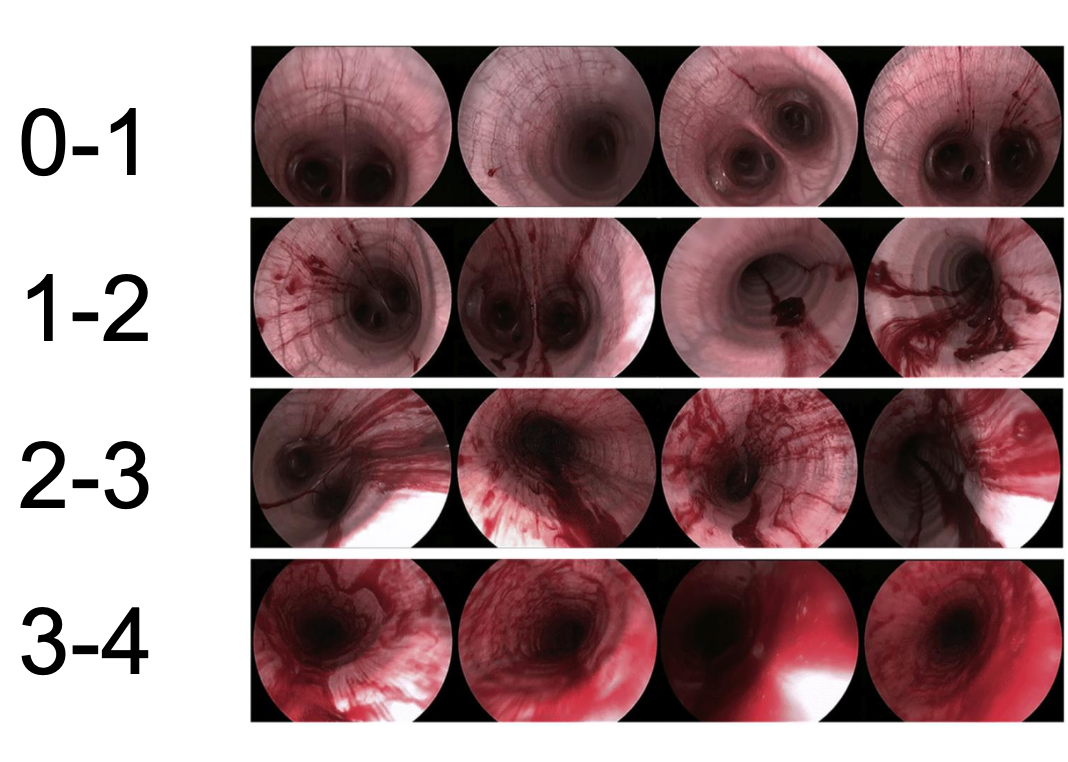
epistaxis = sign of severe EIPH
How does EIPH present clinically?
Typically within 4 hours of intense exercise
Bursts of speed +/- breath holding (show jumpers may breathhold while jumping)
Bilateral epistaxis
Poor performance
Caudo dorsal lungield
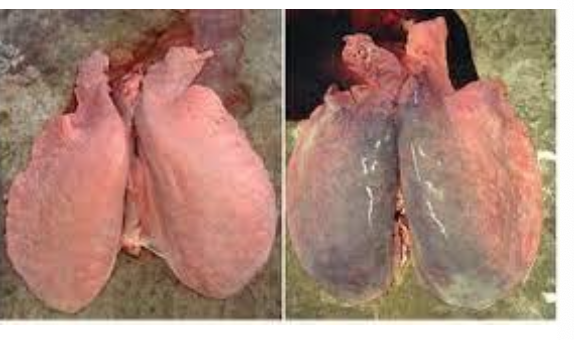
cranioventral = aspiration pneumonia
How do you diagnose EIPH?
CE
Tracheal endoscopy <2 hours post race
Presence of blood, grading
BAL <14 days post race
RBCs, haemosiderophages and low grade inflm
Imaging but rarely required
What are haemosiderophages?
specific macrophages that ingest RBCs + have iron pigmentation
How is EIPH treated?
Rest and supportive care
Anti inflammatories (NSAIDs)
If severe- blood transfusion (rarely required)
What are the consequences of EIPH?
Intrapulmonary blood provokes macrophage influx and activation. • The influx of inflammatory cells results in reversible disruption of the alveolar septal architecture.
The chronic macrophage activity coincides with the development of alveolar septal wall thickening and fibrosis.
Results in permanent alterations in alveolar blood-air barrier and pulmonary compliance
How is EIPH managed?
Rest after episode
Adjust training
No evidence to justify many attempted treatments (steroids, bronchodilators etc.)
Furosemide (diuretic) 4 hours prior to intense exercise (not in UK)
What are the 2 types of exertional rhabdomyolysis?
sporadic
chronic
When may you suspect exertional rhabdomyolysis?
history
sweating
stiffness/muscle soreness
colic
dark urine (more myoglobin)
poor performance
What would be seen on bloods and urinanalysis in a case of exertional rhabdomyolysis?
high CK + AST
can exercise + see if CK increase in response
urine will remain dark when centrifuge (where as if whole blood was present would seperate)
What is sporadic exertional rhabdomyolysis associated with?
Exercise (vs level of fitness)
Overexertion
High non-structural carbohydrates and low forage content
Electrolyte deficiencies
Low Selenium/Vitamin E
When is recurrent exertional rhabdomyolysis seen?
thoroughbreds
young nervous/stressed
fillies
hereditary
What is recurrent exertional rhabdomyolysis associated with?
excessive Ca release
(can use meds to decrease Ca release + manage by reduce triggers)
What is polysaccharide storage myopathy?
Excess polysaccharide storage in muscle leads to muscle damage
What are the different types of polysaccharide storage myopathy?
PSSM 1
genetic (GYS1 gene)
european draught ponies
high non-structural carbohydrates predispose
genetic testing or muscle biopsy to dx
PSSM 2
no genetic tests
myofibrillar myopathy
more common in warm bloods