Module 4.1.1 - Dyes and Pigments
 Call Kai
 Learn
Learn Practice Test
 Spaced Repetition
 Match
Match Flashcards
 Knowt Play
1/19

There's no tags or description
Looks like no tags are added yet.
Name | Mastery | Learn | Test | Matching | Spaced | Call with Kai | Chat |
|---|
No analytics yet
Send a link to your students to track their progress
20 Terms
On cosmetic labels, the colorants used are usually put at the [start/end] of the list and preceded by the symbols +-.
On cosmetic labels, the colorants used are usually put at the end of the list and preceded by the symbols +-.
T/F: Dyes and pigments are responsible for colors in cosmetics.
true! they are the colorants
Dyes vs pigments?
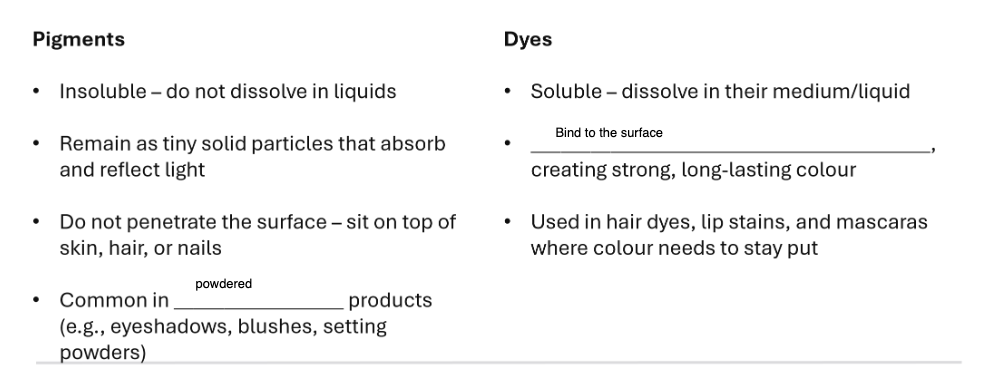
Dyes: SOLUBLE, stain or blend in, bind to surface to create strong long lasting color, used in cosmetics where color needs to stay
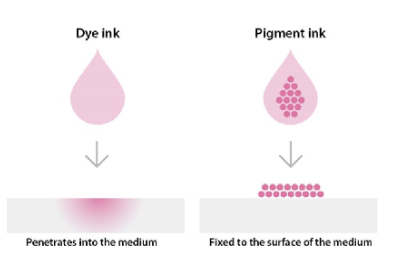
Pigments: INSOLUBLE, colored particles that sit on top of surface of application surface to absorb/reflect light, don’t penetrate surface, common in powdered products
What are the two classes of colorants?
Hint: chem terms
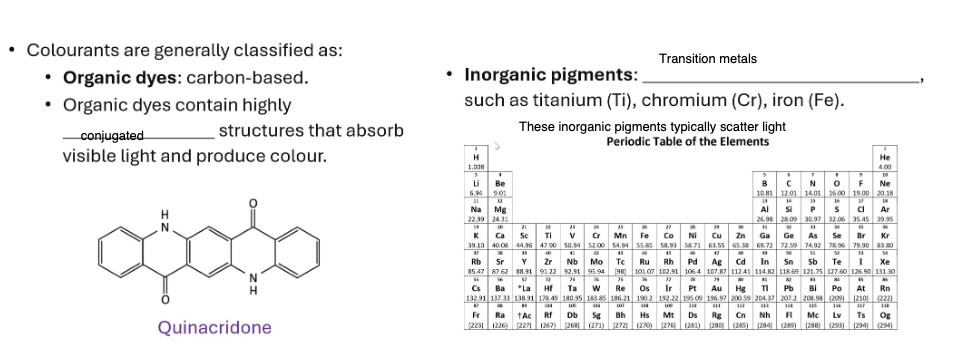
Organic dyes: contain Carbon and highly conjugated structures that absorb visible light and produce color
Inorganic pigments: transition metals like Titanium, Chromium, Iron, which just scatter light
Can dyes be inorganic?
no!
Can pigments be organic?
they can be, but we only learned about inorganic pigments lol
What is a conjugated system in chemistry?
simply put a conjugated system it’s typically molecules with alternating single and double bonds
What does a molecule being conjugated enable for its e-s?
the e-s aren’t locked into one bond, they can move about freely from single and double bonds.
this is called electron delocalization!
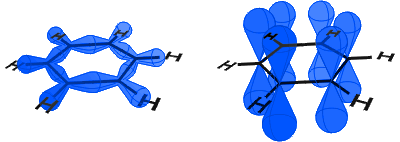
What does e- delocalization allow?
cuz e-s are spread over a large area, delocalized e-s form a large cloud that stabilizes the molecule!
incoming light shines on the molecule —> e- absorbs it —> it excites from lower energy to higher energy level
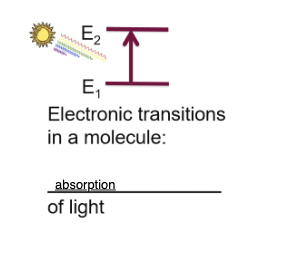
Why are conjugated systems important in many organic dyes?
Their delocalized electrons can absorb light energy, allowing the molecules to produce visible colours.
Why cant localized electrons (confided to a single bond) absorb wavelengths?
Localized electrons cannot absorb visible light because the energy gap between their ground state and excited state is too large, requiring high-energy ultraviolet (UV) light instead of lower-energy visible light.
Colorants make up a very small % of cosmetic composition but have the greatest ….
Colorants make up a very small % of cosmetic composition but have the greatest consumer and visual impact.
How many double bonds does it take for a conjugated system to be considered LARGE?
>= 8 double bonds
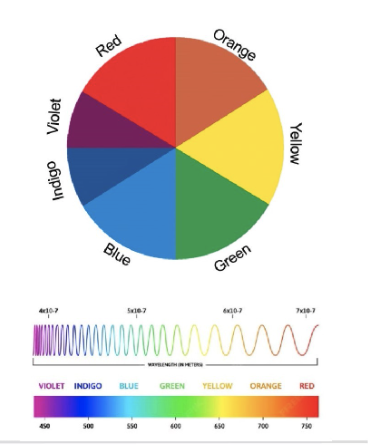
Large conjugated systems absorb strongly in the visible light spectrum (400-700 nm), producing…
intense color!
The molecule absorbs ONE wavelength (or color) from what kind of light?
white light! rem. white light is actually ALL the colors. so ROYGBIV is white.
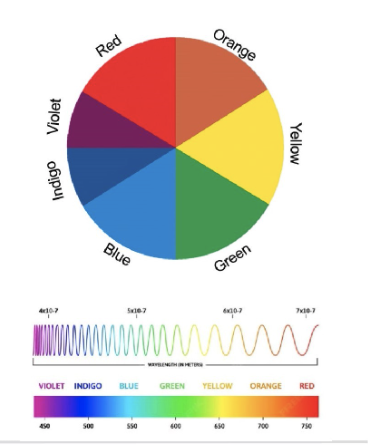
T/F: We see the complementary color to the color that is absorbed by the object.
true! luckily i know color theory so this is easy. all you need to know are the 3 primary colors (R B Y).
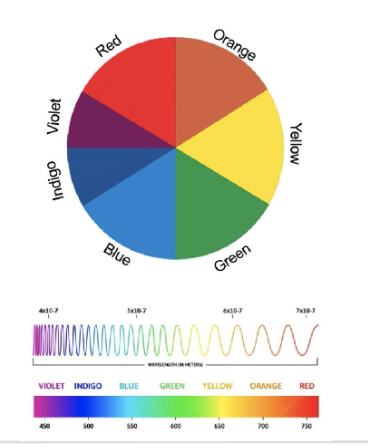
e.g. if a molecule absorbs BLUE, what will we SEE?
primary colors: R B Y
absorbs Blue
therefore reflects R + Y aka ORANGE
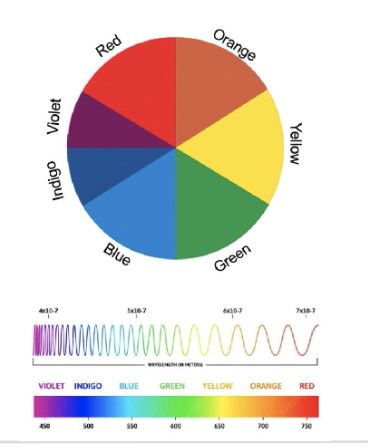
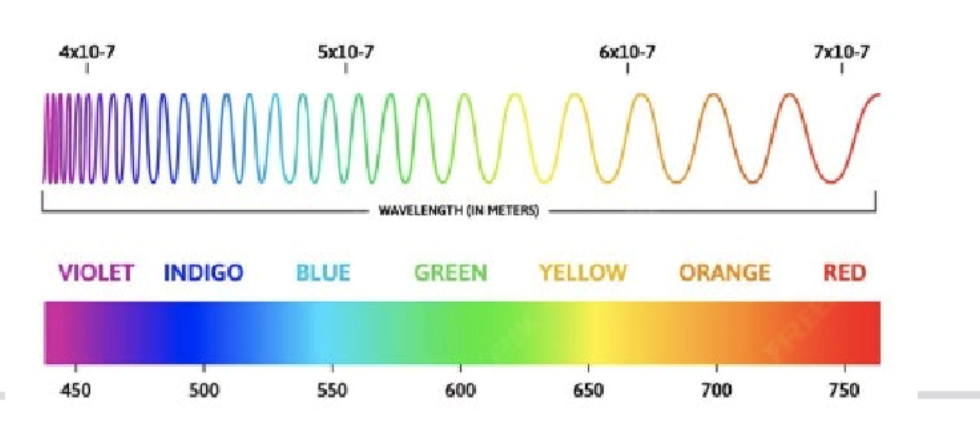
Memorize the wavelengths and corresponding colors:
…