micro chap 9 diseases
 Call Kai
 Learn
Learn Practice Test
 Spaced Repetition
 Match
Match Flashcards
 Knowt Play
1/42

There's no tags or description
Looks like no tags are added yet.
Name | Mastery | Learn | Test | Matching | Spaced | Call with Kai | Chat |
|---|
No analytics yet
Send a link to your students to track their progress
43 Terms
which disease causes meningitis and septicemia in elderly, immunocompromised, fetuses and neonates
Listeriosis/ Listeria monocytogenes (psychotroph)
what is another name for Listeria monocytogenes
Listeriosis (psychotroph)
what is the etiology of Listeriosis/Listeria monocytogenes (psychotroph)
a gram-positive rod
size ranges from coccbacilli to long filaments in palisade formation; has 1-4 flagella
resistant to cold, heat, salt, pH extremes, and bile
grows inside of host cells, moves directly from an infected cell to an adjacent healthy cell
what is the epidemiology of Listeriosis/Listeria monocytogenes (psychotroph)
1600 illnesses & 260 deaths annually
affects older adults, pregnant women, newborns, and adults with weakened immune systems
the bacteria can cross the placenta and kill the fetus
associated with contaminated dairy products, poultry, and meat
what are the symptoms of Listeriosis/ Listeria monocytogenes (psychotroph)
mild in healthy adults:
fever and non-specific symptoms like fatigue and aches
headache, stiffneck, confusions, loss of balance, and convulsions
CAUSES MENINGITIS AND SEPTICEMIA IN ELDERLY, IMMUNOCOMPROMISED, FETUSES, AND NEONATES
can affect the unborn baby in every way leading to death
what are the risk factors of Listeriosis/ Listeria monocytogenes (psychotroph)
14% of cases infection pregnant women
58% infection people 65+
people with weak immune systems
what are the testing and diagnosis for Listeriosis/ Listeria monocytogenes (psychotroph)
blood/spinal fluid test and amniotic fluid/placenta
stool samples are limited and not recommended
it can be isolated readily on routine media and take 1-2 days for growth
how can you treat Listeriosis/ Listeria monocytogenes (psychotroph)
treat with antibiotics
if no symptoms, no treatment needed
even with treatment, can still cause death oftenly in older people with complications
how can you prevent Listeriosis/Listeria monocytogenes (psychotroph)
clean and dry food before use
keep meats and vegetable separate
wash hands, knives, countertops, and cutting boards after handling and preparing uncooked foods
it can grow in refrigerated foods, keep fridge 40F or lower, and freezer 0F or lower
what is another name for Pseudomonas aeruginosa
swimmer’s ear (obligate aerobe)
what is the etiology of “Swimmer’s ear”/Pseudomonas aeruginosa (obligate aerobe)
CAUSES OTITIS EXTERNA; infection of outer ear
CAN LEAD TO OTITIS MEDIA; infection of inner ear
what is the epidemiology of swimmer’s ear/Pseudomonas aeruginosa (obligate aerobe)
infection can occur when water stays too long in the ear
found in pools and other water venues
cannot be spread from person to person
not communicable or contagious
what are the signs and symptoms of swimmer’s ear/Pseudomonas aeruginosa (obligate aerobe)
ear feeling full, loss of hearing
itchy inside the ear, redness and swelling
pain when tugged or when pressure is placed on it, and pus draining from it
infection can cause the eardrum to burst and cause more serious infections
how can u prevent and treat swimmer’s ear/Pseudomonas aeruginosa (obligate aerobe)
keep ears dry, especially after swimming or showering
don’t try to remove earwax
make sure pools are clean and have right pH
treat with antibiotic eardrops
what are two names for food poisoning
Bacillus cereus (facultative anaerobe)
Staphylococcus aureus (halo-tolerant microbe)
what is the etiology of food poisoning/Bacillus cereus (facultative anaerobe)
sporulating gram-positive bacterium that lives in the soil
emetic (vomiting) form tied to fried rice that’s been cooked and kept warm for long periods of time
diarrheal form tied to cooked meats or vegetable held at a warm temperature for long periods of time
what are the signs and symptoms for food poisoning/Bacillus cereus (facultative anaerobe)
nausea
vomiting
profuse watery diarrhea lasting 24 hours
abdominal pain and cramps
fever
usually lasts hours to days
what are the risk factors to food poisoning/Bacillus cereus (facultative anaerobe)
pregnant women
older adults
infants and kids
people with chronic diseases
even healthy adults are at risk
what is the diagnosis of food poisoning/Bacillus cereus (facultative anaerobe)
symptoms and specific foods eaten
blood test
stool culture
examination for parasite
how can you treat food poisoning/Bacillus cereus (facultative anaerobe)
can treat with replacement of lost fluids to prevent dehydration
antibiotics are given if the illness is severe or the patient is immunocompromised
how can you prevent and control food poisoning/Bacillus cereus (facultative anaerobe)
prevent by washing hands, utensils, and food services often
keep raw foods separate from ready-to-eat foods
cook foods to safe temp
refrigerate or freeze perishable foods promptly
what is another name for Clostridium perfringens
gas gangrene (obligate anaerobe)
what is the etiology of gas gangrene/Clostridium perfringens (obligate anaerobe)
endospores are found in soil, human skin, human intestine, and vagina
requires anaerobic conditions to manufacture and release endotoxins
alpha toxin causes red blood cell rupture, edema, tissue damage
ALSO KNOWN AS MYONECROSIS
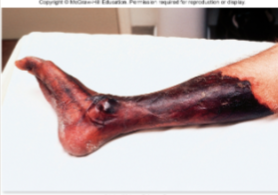
what are the signs and symptoms of gas gangrene/Clostridium perfringens (obligate anaerobe)
skin discoloration ranging from pale, blue, purple, black, bronze, red
a clear line between healthy and damaged skin
severe pain followed by a feeling of numbness
a foul-smelling discharge leaking from a sore
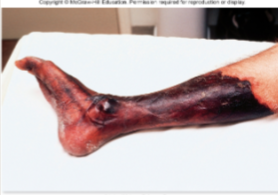
what are the risk factors for gas gangrene/Clostridium perfringens (obligate anaerobe)
anyone who has experienced trauma causing a break in the skin that gets contaminated with soil
diabetes
blood vessel disease
severe injury or surgery
smoking
obesity
immunosuppression
what are the complications of gas gangrene/Clostridium perfringens (obligate anaerobe)
can lead to scarring or the need for reconstructive surgery
may result in the removal of the afflicted body part
can spread quickly to other organs and may be fatal if left untreated
can lead to septic shock
what is the treatment for gas gangrene/Clostridium perfringens (obligate anaerobe)
surgery to remove the infected tissue and possible amputation
intravenous antibiotics
hyperbaric oxygen therapy
how can you prevent and control gas gangrene/Clostridium perfringens (obligate anaerobe)
washing wounds quickly and thoroughly
care for your diabetes
dont use tobacco
watch out when the temp drops as cold temps can lead to frostbite, inreasing chance for gangrene
what is another name for Helicobacter pylori
gastric/peptic ulcers (affects pH of host)
what is the etiology of gastric/peptic ulcers/Helicobacter pylori (affects pH of host)
infects half of the world’s population
possible that it can be transmitted by close contact
more common transmission is due to consumption of bacteria within food or drink
what are the signs and symptoms of gastric/peptic ulcers/Helicobacter pylori (affects pH of host)
sharp or burning pain emanating from the abdomen caused by lesions on the stomach or uppermost portion of the small intestine
vomiting of blood
dark blood in stools
unexplained weight loss and appetite changes
what are the risk factors of gastric/peptic ulcers/Helicobacter pylori (affects pH of host)
smoking can increase risk of ulcers
alcohol consumption because it errodes the mucous lining of your stomach and increases the amount of stomach acid produced
what are the complications of gastric/peptic ulcers/Helicobacter pylori (affects pH of host)
internal bleeding
increased risk of abdominal infections
peritonitis
scar tissue leading to increased likelihood of vomiting and weight loss even after infection is cleared
what is the treatment for gastric/peptic ulcers/Helicobacter pylori (affects pH of host)
Combination of amoxicillin followed by clarithromycin and tinidazole to kill the bacteria
Medications that block acid production and promote healing
Antacids that neutralize stomach acid
Medications that protect the lining of your stomach and small intestine
how can you prevent gastric/peptic ulcers/Helicobacter pylori (affects pH of host)
Protect yourself from infections
Use caution with pain relievers, especially when taking medications with meals
what is commonly member of the normal stomach biota but can also be considered a pathogen
H. pylori/gastric cancer
how does H. pylori/gastric cancer cause cancer
some strains have a protein that has a gene coding for protein CagA
this proteins is produced and injected into epithelial cells in the gastric lining by these bacterial cells
CagA then dysregulates the host cell cycle by activating oncogenes and inactivating tumor suppressor pathways such as p53
what is the 5th most common cancer and 3rd most leading cause of cancer-related deaths worldwide and affects half of the world’s population
H. pylori/gastric cancer; causes 75% of gastric cancer
what is the etiology of food poisoning/Staphylococcus aureus (halo-tolerant microbe)
Forms grape-like clusters
Highly salt tolerance
Enterotoxin is heat stable and induces symptoms
Produces exfoliative toxins, coagulase, hyaluronidase, staphylokinase, DNase, and lipases
what is the epidemiology of food poisoning/Staphylococcus aureus (halo-tolerant microbe)
Associated with custards, sauces, cream pastries, processed meats, chicken salad, or
hamMost often caused by ingestion of contaminated foods
what are the signs and symptoms of food poisoning/Staphylococcus aureus (halo-tolerant microbe)
Onset within 30 minutes to 6 hours after eating
Includes nausea, retching, vomiting, stomach cramps, and diarrhea
Recovery within 24 hours
Illness is not communicable
how can you treat food poisoning/Staphylococcus aureus (halo-tolerant microbe)
Self-limiting, antibiotics not warranted
Patient should rest, drink plenty of fluids, and take medicines to calm their stomachs
Intravenous therapy and care in a hospital may be necessary for the very young or
elderly
how can you prevent food poisoning/Staphylococcus aureus (halo-tolerant microbe)
Wash hands and under fingernails vigorously with soap and water before handling and preparing food
Do not prepare food if you have a nose or eye infection
Do not prepare or serve food for others if you have wounds or skin infections on your hands or wrists
Keep kitchens and food-serving areas clean and sanitized
If food is to be stored longer than two hours, keep hot foods hot (over 140°F) and cold foods cold (40°F or under)
Store cooked food in a wide, shallow container and refrigerate as soon as possible