Fastidious and Unusual Gram Negative Bacilli (Part 1)
 Call Kai
 Learn
Learn Practice Test
 Spaced Repetition
 Match
Match Flashcards
 Knowt Play
1/84

There's no tags or description
Looks like no tags are added yet.
Name | Mastery | Learn | Test | Matching | Spaced | Call with Kai | Chat |
|---|
No analytics yet
Send a link to your students to track their progress
85 Terms
most haemophilus species are part of the normal _____ flora.
upper respiratory tract
list 3 haemophilus species exceptions that are not part of the normal upper respiratory tract flora.
haemophilus influenzae; haemophilus aegypticus, haemophilus ducreyi
haemophilus serotypes are based on the organism’s polysaccharide _____.
capsule
what are the 6 types of haemophilus serotypes?
a, b, c, d, e, f
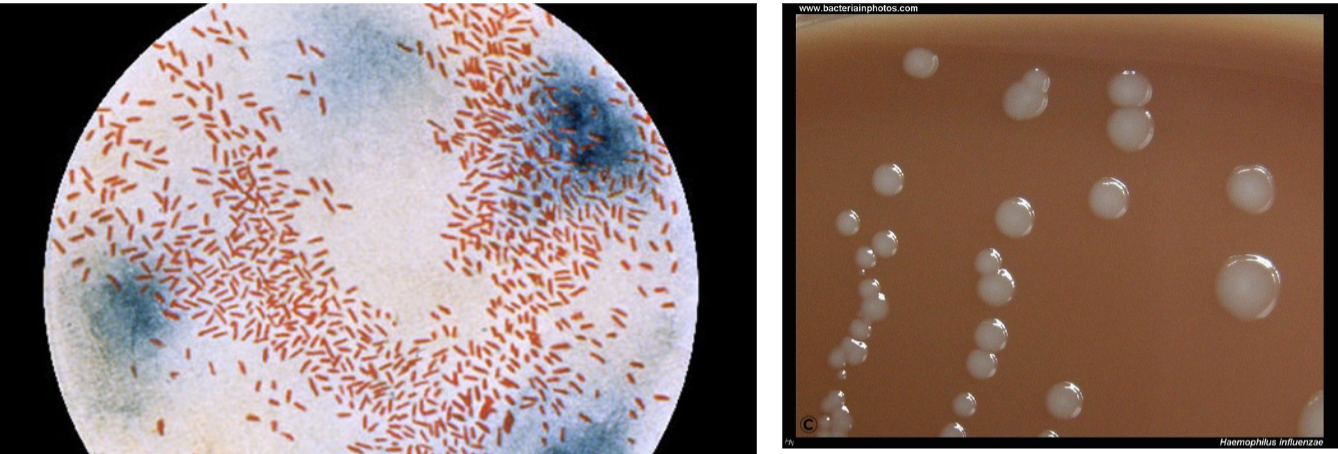
what bacterial genus gram stain is described below:
pleomorphic GNR
coccobacillary (usually) → filamentous
can stain faintly and be missed
haemophilus
acridine orange stain is more sensitive method for detecting _____ microscopically.
haemophilus
which haemophilus species does not require X factor or V factor or both?
haemophilus aphrophilus
which factor refers to “hemin”?
X factor
which factor refers to “nicotinamideadenine dinucleotide = NAD”?
V factor
factors X and V are found in ____.
RBCs
rabbit and horse blood agar supports the growth of haemophilus, but not _____ blood agar.
sheep
although haemophilus does not normally grow on sheep blood agar, if another organism is present that can supply factor V (NAD), V factor requiring haemophilus may grow as ____ colonies in the hemolytic zone of another organism.
satelliting
what agar contains both X and V factors?
CHOC
haemophilus is beta lactam _____.
resistant
which haemophilus is considered the most invasive?
haemophilus influenzae type b (Hib)
haemophilus biogroup aegypticus causes what condition?
pink eye
which bacteria was the leading cause of invasive disease (meningitis and bacteremia) in children <2 years?
haemophilus influenzae type b (Hib)
a vaccine (conjugate) dramatically reduced cases of haemophils influenzae type b (Hib) in the US. true or false?
true
which bacteria was linked to brazilian purpuric fever outbreaks in the 1980s?
haemophilus influenzae biogroup aegypticus
which bacteria may cause an STD that causes a chancroid or “soft chancre”?
haemophilus ducreyi
what bacteria causes the following symptoms:
painful genital ulcers
buboes (swollen lymph nodes containing pus) in the groin
haemophilus ducreyi
what bacteria often goes missed/misdiagnosed due to the similarities to herpes and syphilis?
haemophilus ducreyi
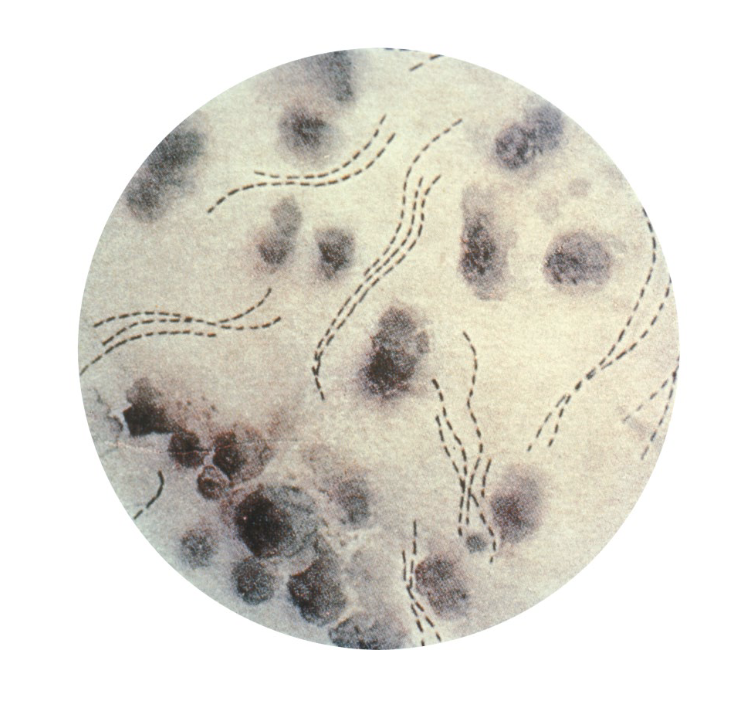
what bacteria’s gram stain and colonies characteristics best fit the following information:
colony: dome shaped and adherent
gram stain: groups of GNR
“school of fish” or “railroad tracks”
haemophilus ducreyi
other haemophilus species are usually nonpathogenic, but they are opportunistic pathogens and are associated with what condition?
endocarditis
which members of the HACEK group are associated with slowly progressive (subacute) bacterial endocarditis?
haemophilus
which haemophilus species is associated with the following results:
requires X factor
requires V factor
no hemolysis
haemophilus influenzae
which haemophilus species is associated with the following results:
does not require X factor
requires V factor
no hemolysis
haemophilus parainfluenzae
which haemophilus species is associated with the following results:
requires X factor
requires V factor
hemolytic
haemophilus haemolyticus
which haemophilus species is associated with the following results:
does not require X factor
requires V factor
hemolytic
haemophilus parahaemolyticus
which haemophilus species is associated with the following results:
variable requirements for X factor
does not require V factor
no hemolysis
haemophilus aphrophilus
which haemophilus species is associated with the following results:
requires X factor
does not require V factor
no hemolysis
haemophilus ducreyi
the following information describes _____
each section of a mueller hinton contains a different additive
horse blood: determines hemolytic activity
X factor (hemin) only
V factor only (NAD)
X and V factor
quadrant plate
what test determines if the isolate requires X factor (hemin)?
porphyrin test
what test is associated with the following information:
ALA → porphobilinogen → porphyrins → hemin
porphobilinogen + kovac’s reagent → red color (positive)
porphyrin + UV light (wood’s light) → red/orange fluorescent (postive)
porphyrin test
the 3 clinically significant species of bordatella include bordatella pertussis, bordatella parapertussis, and bordatella bronchiseptica and are all found in humans, but which of these 3 are often normal flora of a variety of animals (dogs, cats, swine, rabbits,…)?
bordatella bronchiseptica
which bacteria is the causative agent of whooping cough?
bordatella pertussis
what is another term for the condition of whooping cough?
pertussis
what refers to an infection of the tracheobronchial epithelium?
whooping cough
what is the major virulence factor of whooping cough?
pertussis toxin (PT)
what virulence factor causes histamine sensitization, promotion of lymphocytes, insulin secretion, and immune effector cell response?
pertussis toxin (PT)
bordatella pertussis requires special medium for isolation (fastidious) that contain the neutralizing substance _____ because this bacterium is inhibited by many substances.
charcoal
the bacteria ____ will grow on the following media because of the inclusion of charcoal:
BCYE
bordet-gengou (BG)
charcoal horse blood agar
jones kendrick charcoal agar
bordatella pertussis
bordatella pertussis is very susceptible to environmental changes and survives only briefly outside of the human respiratory tract. true or false?
true
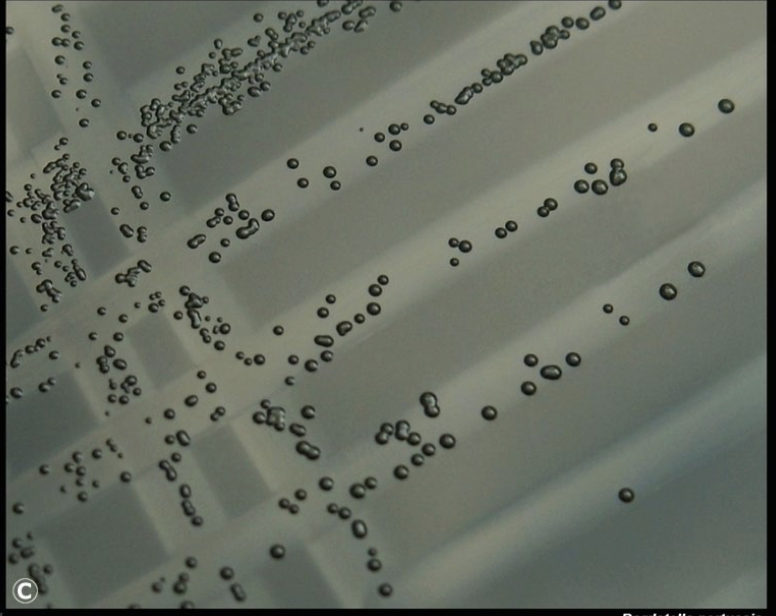
what bacteria is describe below:
tiny, glistening, compact
bisected pearls
mercury drops (silver colored)
may be beta-hemolytic on BG agar
bordatella pertussis
what condition is described below:
adheres to ciliated bronchial epithelium via filamentous hemagglutinin (Fha) = virulence factor
bacteria immobilizes the cilia and destroys the ciliated epithelial cells
bacteria does not directly invade the cells of the respiratory tract
whooping cough
a common complication of whooping cough is _____ (e.g., streptococcus pneumoniae).
superinfection
which stage of whooping cough/pertussis is described below:
profuse and mucoid rhinorrhea, persisting for 1-2 weeks
most infectious stage: large # organisms in nasopharynx and mucoid secretions
catarrhal
which stage of whooping cough/pertussis is described below:
persistent cough (the appearance of this marks the transition away from catarrhal)
coughing can occur up to 50x a day for 2-4 weeks
characteristic inspiratory whoop follows a series of coughs
vomiting frequently follows the whoop (when finally breathe air in)
exhaustion can occur → barely able to breathe
apnea may follow, particularly in infants
paroxysmal
the ____ stage of pertussis/whooping cough depict marked lymphocytosis (even up to 40,000/mm3).
paroxysmal
which stage of whooping cough/pertussis is described below:
frequency/severity of paroxysmal coughing and other features gradually fade
3-4 week stage
convalescent
a partially immune person and those <6 months old may not show all the typical features of the 3 stages of pertussis/whooping cough. true or false?
true
which vaccine is describe below:
TDaP
tetanus, diphtheria, acellular pertussis
5 doses: 2 months, 4 months, 6 months, 15-18 months, 4-6 years
childhood
which vaccine is describe below:
Tdap
necessary as vaccinated adolescents and adults can be carriers/spread infection
symptoms like common cold
adolescent/adult booster
herd immunity requires ____% of population be vaccinated.
93-95%
those most likely to die due to avoiding vaccinations are _____ (>70% of fatal cases).
infants
which bordatella species is described below:
causes a less severe pertussis-like illness
nasopharyngeal swab/aspirate preferred
fragile bacteria but less fastidious
usually isolated on bordatella pertussis media, but can grow on BAP and may grow on CHOC, MAC, and BCYE
bordatella parapertussis
which bordatella species is described below:
may cause a variety of infections
pneumoniae
bacteremia
wound infections
not fastidious
grows on BAP, CHOC, MAC, SS agars, BCYE, and bordatella media
bordatella bronchiseptica
what identification methods are preferred for bordatella pertussis and parapertussis because the are relatively inactive biochemically?
serologic
direct fluorescent antibody (DFA) can be performed on ____ specimens for the identification of bordatella.
nasopharyngeal
PCR for bordatella pertussis DNA should only test with the S and S of pertussis to avoid the risk of false _____ results.
positive
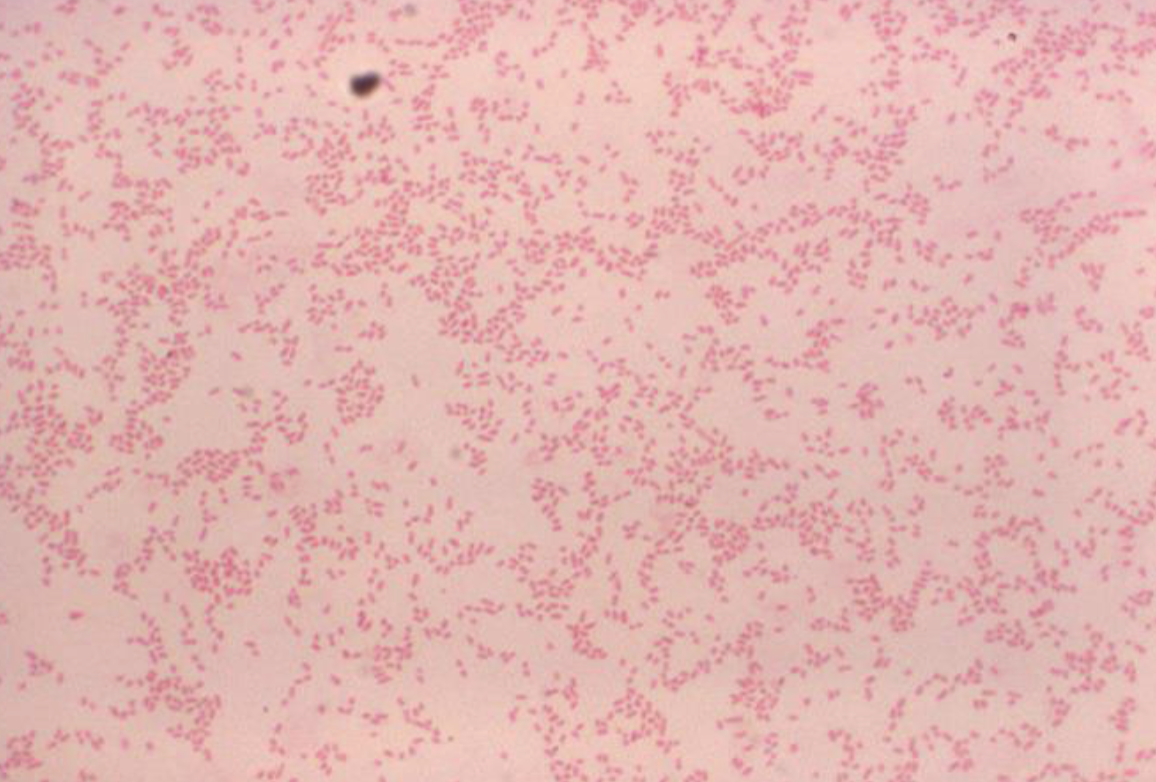
what bacterial genus is described below:
faintly staining gram negative coccobacilli
to enhance staining: substitute carbol fuchsin for safranin
extend counterstain time
nonmotile, non acid fast, non-spore forming
brucella
brucella is ____ for catalase, oxidase, and urease.
positive
brucella can be zoonotic. which species is associated with the normal flora of the genitourinary tract of cattle?
brucella abortus
brucella can be zoonotic. which species is associated with dogs?
brucella canis
brucella can be zoonotic. which species is associated with sheep and goat?
brucella melitensis
brucella can be zoonotic. which species is associated with pigs?
brucella suis
what bacteria is associated with being a cause for abortion, sterility, and decreased milk production in cattle, goats, and pigs?
brucella
brucella specimens of choice are blood and bone marrow. true or false?
true
what bacteria blood culture should be held in the system for 21-30 days and subcultured every 4-5 days?
brucella
which brucella species is associated with the following:
CO2 requirement: negative
H2S production: negative
growth in presence of:
thionin: positive
basic fuschin: positive
brucella melitensis
which brucella species is associated with the following:
CO2 requirement: positive
H2S production: positive
growth in presence of:
thionin: negative
basic fuschin: positive
brucella abortus
which brucella species is associated with the following:
CO2 requirement: negative
H2S production: variable
growth in presence of:
thionin: positive
basic fuschin: negative
brucella suis
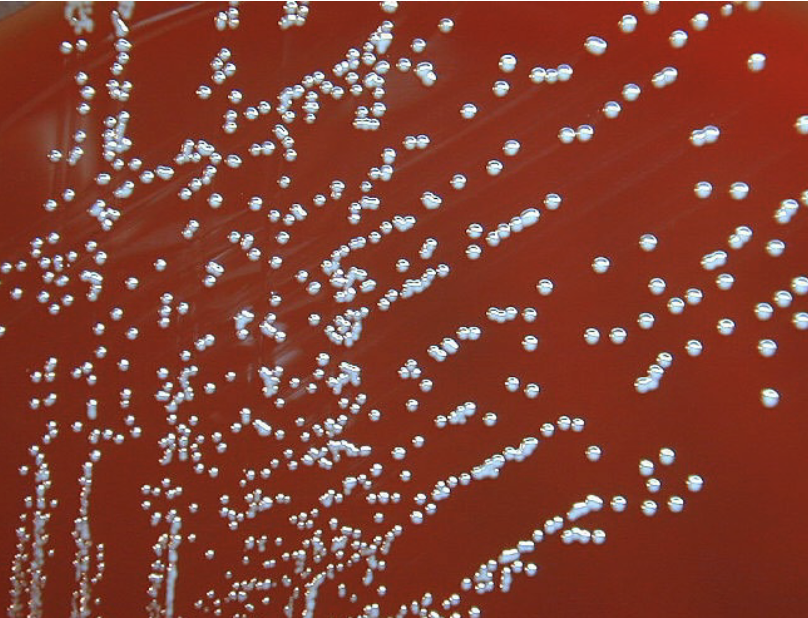
brucella species demonstrate a ____ colony form associated with the presence of small capsule and virulence
smooth
identifying to the genus level (e.g., brucella species) is not sufficient for patient care. true or false?
false
most brucella are catalase, oxidase, UREASE, and NITRATE _____.
positive
brucellosis can be diagnosed by detecting brucella species ____ in patient serum.
antibodies
a common agglutination test for detecting brucella species antibodies uses which species of brucella cells as an antigen to detect the following:
brucella abortus
brucella melitensis
brucella suis
brucella abortus
agglutination test for detecting brucella species antibodies do not detect antibodies to which species of brucella?
brucella canis
what condition refers to an undulant fever acquired through contact with animals or animal products?
brucellosis
what condition is associated with the following:
ingestion of raw meat of milk (about 10% of infections)
can enter the body through tiny cracks in the skin or through mucous membranes (e.g., GI tract)
inhalation infectious aerosols
brucellosis
cases of brucellosis attributed to brucella abortus cattle vaccine strain RB51 are resistant to ____, first line antibiotic used to treat human brucellosis.
rifampin
which BSL is required for culture brucella bacteria?
BSL3
BSL2 precautions do not suffice when handling patient samples containing brucella. true or false?
false
which condition is described below:
after penetration of skin/mucous membranes, organisms carried within PMNs through the lymph → systemic circulation via lymph nodes and thoracic duct
virulent strians can enter and multiply within macrophages in the liver, spleen, bone marrow
if not controlled locally, infection progresses with formation of small granulomas and with release of bacteria back into circulation
brucellosis
what condition is associated with recurrent bacteremic episodes: recurrent chills and fever?
brucellosis