3.1 (sept 3 slides aqua)
 Call Kai
 Learn
Learn Practice Test
 Spaced Repetition
 Match
Match Flashcards
 Knowt Play
1/19

There's no tags or description
Looks like no tags are added yet.
Name | Mastery | Learn | Test | Matching | Spaced | Call with Kai | Chat |
|---|
No analytics yet
Send a link to your students to track their progress
20 Terms
Explain how the density of water varies with temperature
warmer is less dense until temp decreased to maximum density of freshwater at 4 degrees then density decrease if cooler or hotter

Define water column and contrast the conditions that lead to stable (stratified) vs. unstable (mixing/ overturning) water columns
water column: a vertical shaft of water extending down from the surface
stable: The water column is resistant to vertical mixing if potential density increases with increasing depth. The water column is stratified and a thermocline is present
unstable: Surface water becomes more dense than the water below and will spontaneously mix vertically if slightly disturbed (overturn) Surface water sinks (downwelling) and displaces and mixes with the deeper water
how does stable vs unstable water column vary in fresh vs salt water
In the ocean, the temperature of a stable water column almost always decreases with increasing depth (although there are some exceptions)
In freshwater systems, things can be more complicate
Diagram the water column in a freshwater or marine system showing how temperature varies with depth.
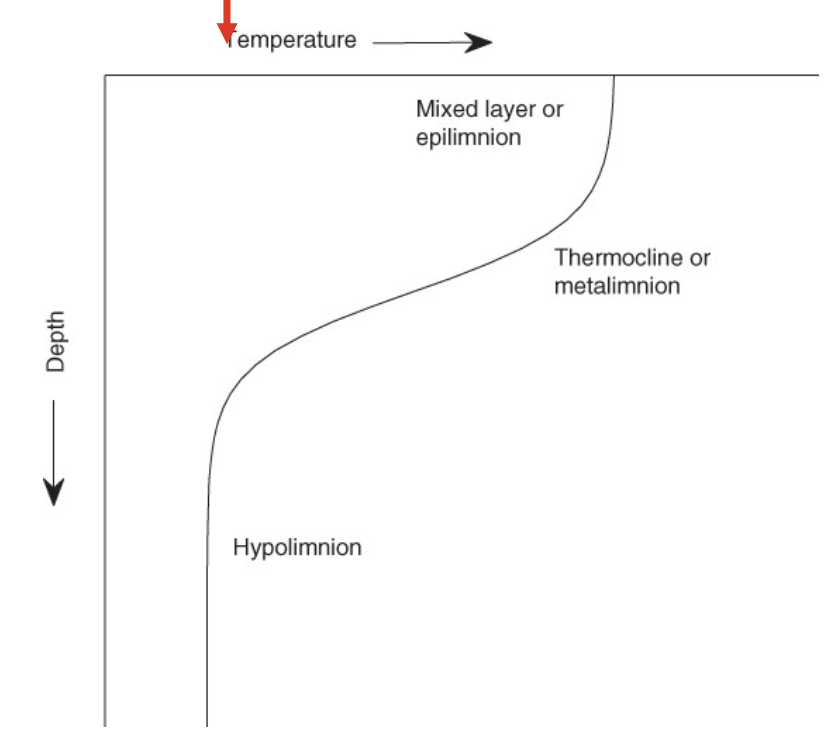
Indicate the thermocline of a diagram of a water column and explain why it forms.
Define hypolimnion, metalimnion, and epilimnion
Describe how and why seasonal cycles of overturn occur
Diagram the thermal structure of a lake or other body of water throughout the year
Define monomictic and dimictic
Explain when and why overturn occurs in warm water monomictic lakes, cold water monomictic lakes and in dimictic lakes
List the reasons why overturn is important
Describe qualitatively the seasonal patterns of primary production in temperate aquatic systems