Paracetamol, Penicillins
 Call Kai
 Learn
Learn Practice Test
 Spaced Repetition
 Match
Match Flashcards
 Knowt Play
1/55

There's no tags or description
Looks like no tags are added yet.
Name | Mastery | Learn | Test | Matching | Spaced | Call with Kai | Chat |
|---|
No analytics yet
Send a link to your students to track their progress
56 Terms
What are the common indications for paracetamol?
1) First-line analgesic for most forms of acute and chronic pain.
2) Also an antipyretic to that can reduce fever.
What is the MOA of paracetamol?
1) In the CNS, it reduces the substrate of COX-2 which interferes with pain signals between spinal cord and higher centres = reduces sensitivity to pain.
2) Reduces prostaglandin E (PGE2) concentration in the thermoregulatory region of the hypothalamus = reduces fever.
Why does paracetamol have little anti-inflammatory action in peripheral tissues?
Its effects are inhibited by peroxides- which concentrations are low in the CNS but high in peripheral tissues.
What serious adverse effect occurs during paracetamol overdose? Explain what happens in terms of pharacokinetics.
Liver failure.
It is metabolised in the liver by cytochrome P450 into a toxic metabolite (NAPQI), which sticks to glutathione before elimination.
In overdose, this elimination pathway is saturated and NAPQI accumulates causing hepatocellular necrosis.
What is given to prevent hepatotoxicity during paracetamol overdose?
Treatment with the glutathione precursor acetylcysteine.
In which 2 types of situation should paracetamol doses be reduced and give examples?
1) People at increased risk of liver toxicity: chronic excessive alcohol use.
2) People with reduced glutathione stores: malnutrition, low body weight (<50kg) and severe hepatic impairment.
Why does chronic excessive alcohol use increase the risk of paracetamol toxicity?
Chronic alcohol use induces CYP enzymes overtime. When this person takes paracetamol, it is metabolised very quickly into its toxic metabolite NAPQI.
Other than alcohol, what can interact with paracetamol?
Other CYP inducers such as phenytoin and carbamazepine can also increase the rate of NAPQI production.
Describe how paracetamol is infused.
1) Neat over 15 minutes.
2) Diluted in 0.9% sodium chloride or 5% glucose solution.
What blood tests should be done during a paracetamol overdose?
INR, serum alanine aminotransferase and creatinine concentration should be measured to check liver and renal damage.
Name an antipseudomonal penicillin?
Piperacillin (with tazobactam aka Piptaz)
When is Piptaz used?
It is reserved for severe infections, particularly where:
1) There is a broad spectrum potential of pathogens
2) Antibiotic resistance is likely
3) People have immunosuppression
Which specific infections does piptaz treat?
LRTI, UTI, intraabdominal, skin and soft tissue. (LUIS)
What is the MOA of penicillins?
They inhibit enzymes responsible for cross-linking peptidoglycans → weakens cell wall → cell swells → lysis → death.
Explain how the structure of piperacillin increases its spectrum of activity.
Piperacillin has long side chains attached to the β-lactam ring which improves its affinity to penicillin binding proteins.
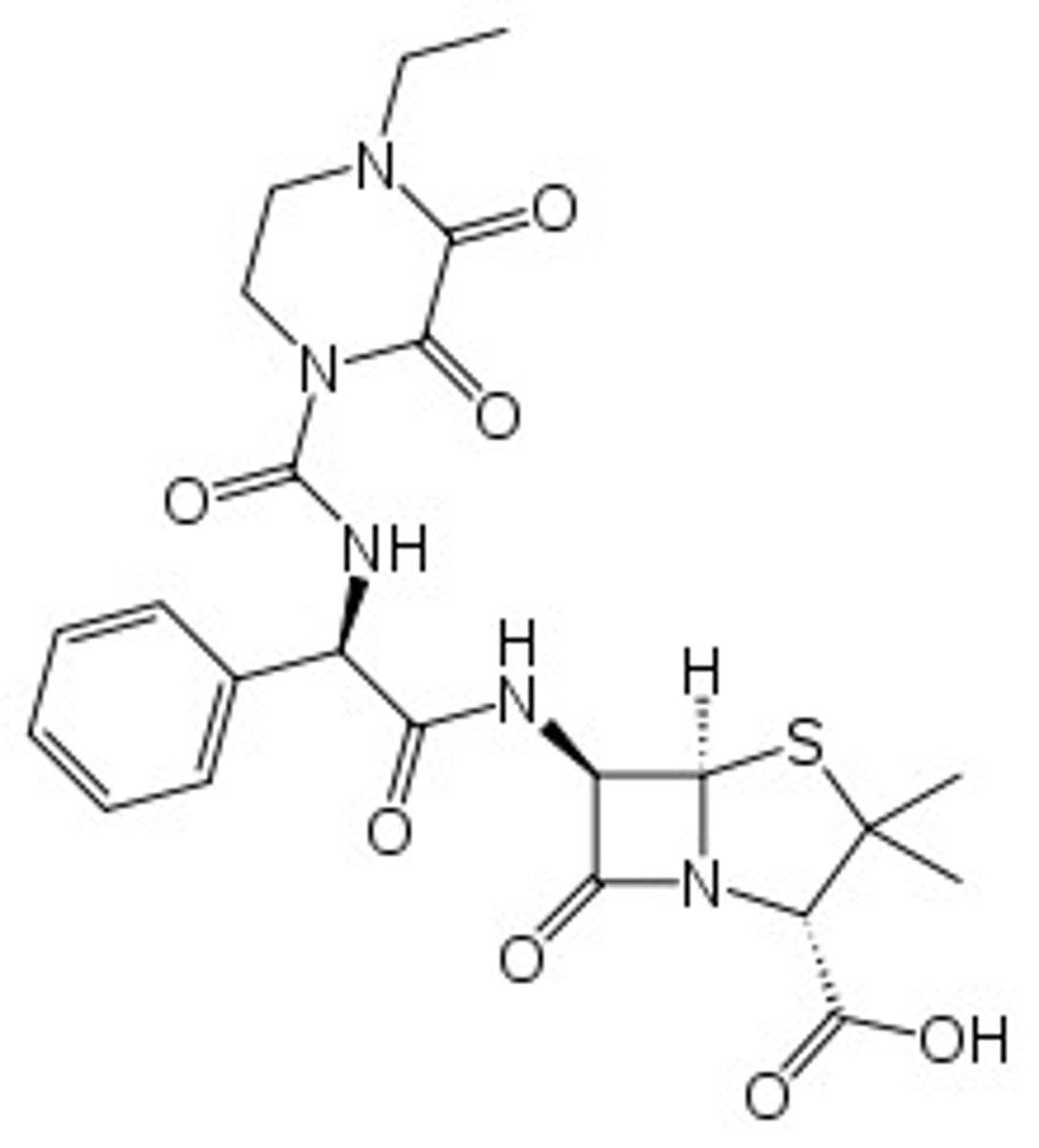
What is a common side effect of piperacillin with tazobactam?
GI upset
Antibiotic-associated colitis is an adverse effect (less frequent) with which class of medications?
Penicillins
When should the dose of antipseudomonal penicillins be reduced?
In moderate/severe renal impairment.
People who are a risk of which infection should antipseudomonal penicillins be cautioned in and why? And which demographic?
Those who are at risk of C. difficile infection, especially older people in hospital.
As it is broad spectrum it kills the normal GI flora, allowing the overgrowth of C.difficile (which is toxic producing).
People with hypersensitivity to penicillins may also react to which other class of antibiotics?
Cephalosporins and β-lactams.
Penicillins reduce the renal excretion of what other drug?
Methotrexate
Antipseudomonal penicillins can enhance the effect of what other drug? How?
They can enhance the anticoagulant effect of warfarin, by killing the normal GI flora that synthesises vitamin K.
Piperacillin-tazobactam is always given via which route of administration?
IV infusion
Piperacillin with tazobactam is formulated as a powder to be reconstituted in ...?
10mL of sterile water or 0.9% sodium chloride
which is further diluted in 50-150mL of 0.9% sodium chloride or 5% glucose.
How is the efficacy of penicillins monitored?
1) By the resolution of symptoms (pyrexia and lung crackles).
2) Blood markers (fall in CRP and WCC).
How long is the whole course of piptaz?
5-14 days.
Why might piptaz infusions not be suitable for people with heart failure or oedema?
High sodium content: each dose contains about 11 mmol Na+ and is infused in 50–150 mL fluid (which may contain more sodium).
Amoxicillin is used to treat which infections?
Sinusitis, otitis media, CAP, UTI and to eradicate H. pylori.
Which antibiotic is a common choice for severe, resistant and hospital acquired infections?
Co-amoxiclav
Co-amoxiclav is used to treat which infections?
Pneumonia, UTI, intraabdominal, cellulitis, bone and joint infections.
How co-amoxiclav is effective against more resistant strains?
Clavulanic acid is a β-lactamase inhibitor so restores activity against many amoxicillin resistant strains.
How does the structure of broad-spectrum penicillins allow activity against gram -ve bacteria?
By an addition of an amino group to the β-lactam ring side chains.
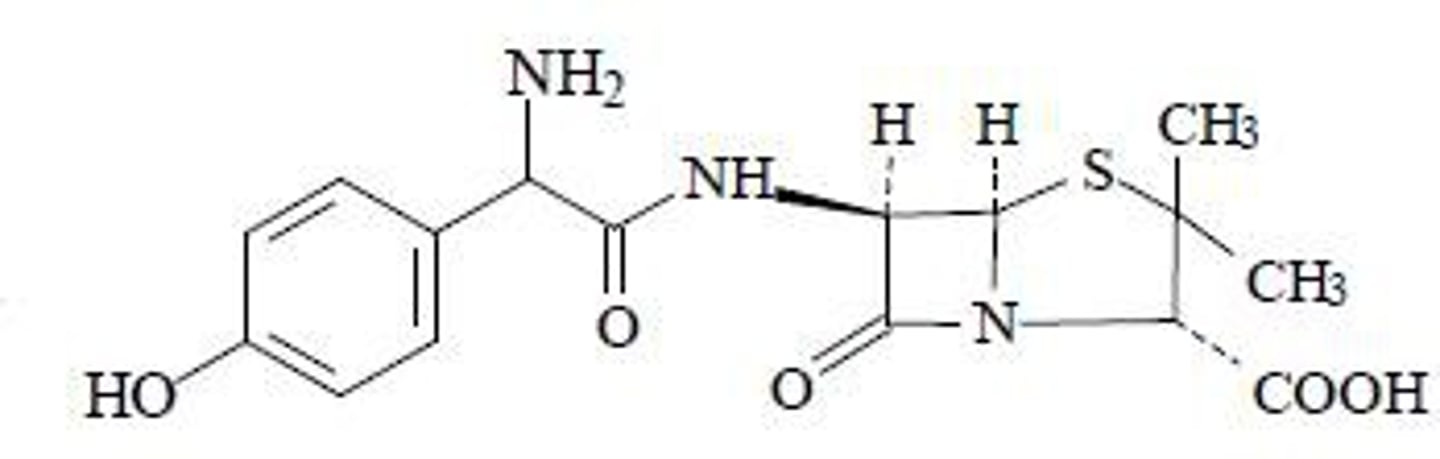
How does a penicillin allergy usually present as?
1) Skin rash 7-10 days after first exposure or 1-2 days after exposure (delayed IgG-mediated)
2) Anaphylaxis (immediate IgE-mediated)
Acute liver injury is an adverse effect that may develop after which antibiotic treatment?
Co-amoxiclav
What is the main contraindication of broad-spectrum penicillins?
Severe allergy to a β-lactam antibiotic
Who should avoid broad-spectrum penicillins? Why?
Young people with a sore throat- because they can cause a rash with a glandular fever (mislabelled as a penicillin allergy).
When are broad-spectrum penicillins cautioned?
1) Older/hospitalised people at risk of C.difficile.
2) Those with a history of penicillin-associated liver injury
When and why should the dose of broad-spectrum penicillins be reduced?
In severe renal impairment due to the risk of crystalluria.
Which antibiotic and preparation may cause dental staining?
Co-amoxiclav suspension.
Give an example of a narrow spectrum penicillin.
Flucloxacillin, benzylpenicillin, phenoxymethylpenicillin.
Which penicillin are indicated for streptococcal infections such as tonsillitis, and pneumonia?
Phenoxymethylpenicillin/benzylpenicillin.
Which antibiotics are indicated for meningitis?
Phenoxymethylpenicillin/ benzylpenicillin or cephalosporins (preferred in hospital setting).
Name a penicillinase-resistant penicillin.
Flucloxacillin
What are the common indications for flucloxacillin?
Staphylococcal infections including skin, soft tissue, bone and joint infections, otitis externa and endocarditis.
Describe the spectrum of activity of narrow-spectrum penicillins.
They are active against gram +ve organisms and gram -ve cocci and some anaerobes.
Describe how the chemical structure of flucloxacillin allows it be effective again β-lactamase-producing staphylococci.
It contains an acyl side chain that protects the β-lactam ring.
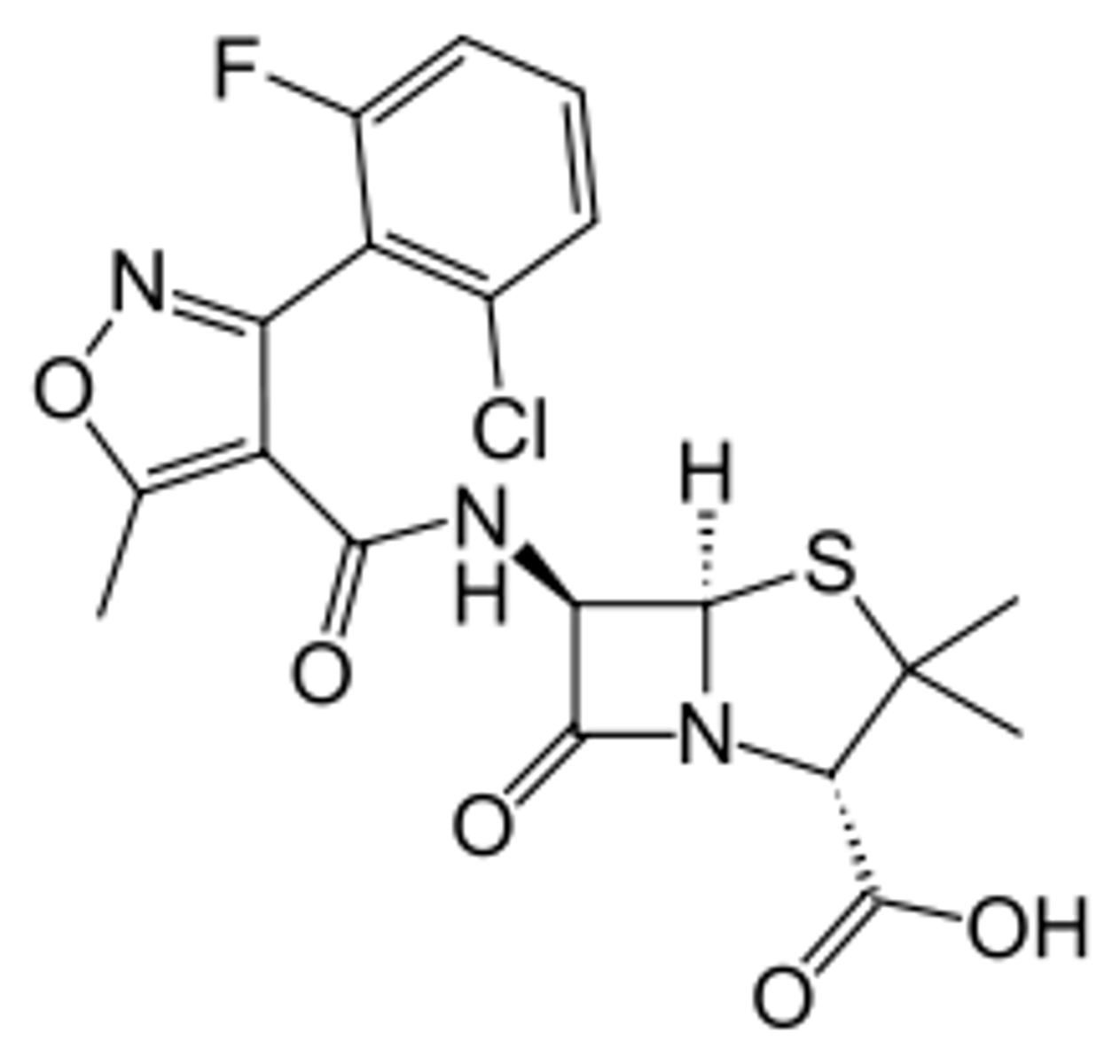
How does MRSA resist flucloxacillin?
By changes in its target enzyme to reduce penicillin-binding affinity
Neurological toxicity (including convulsions and coma) can occur at very high doses/toxic accumulation of which antibiotic in renal failure?
Narrow-spectrum penicillins.
What is a rare but severe adverse effect of flucloxacillin?
Liver toxicity
When are dose reductions of narrow-spectrum penicillins required?
In severe renal impairment.
Why shouldn't penicillin V (only available as oral) be used in severe infections?
It is less active than benzylpenicillin and GI absorption is unpredictable.
In terms of pharmacokinetics, describe the general dosing regime for penicillins.
1) Penicillins are rapidly excreted by the kidneys and have a short half life.
2) They need to be administered frequently (usually 4-6 hourly depending on the drug/formulation) to maintain therapeutic plasma levels.
What action should always be done when prescribing antibiotics?
Always set a stop or review date.
In general, what is the main advantage of narrow-spectrum over broad-spectrum antibiotics?
Less likely to give rise to antibiotic resistance.
Roughly how long after taking paracetamol should the effect should be felt?
Around 30 minutes.
What is the first line treatment for HAP with non-severe symptoms and no allergy?
Co-amoxiclav