Chapter 2: Terms Pertaining to the Body as a Whole
 Call Kai
 Learn
Learn Practice Test
 Spaced Repetition
 Match
Match Flashcards
 Knowt Play
1/153

There's no tags or description
Looks like no tags are added yet.
Name | Mastery | Learn | Test | Matching | Spaced | Call with Kai | Chat |
|---|
No analytics yet
Send a link to your students to track their progress
154 Terms
Structural organization of the body smallest to largest
cells → tissues → organs → systems
Cells
fundamental unit of all living things
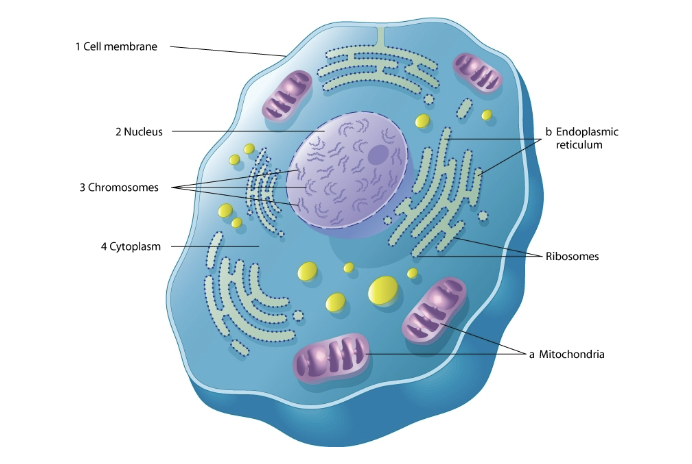
major parts of a cell include:
chromosomes
nucleus
cell membrane
cytoplasm
mitochondria
endoplasmic reticiulum
anabolism
process of building complex molecules from simpler ones; requires energy and is used for growth, repair, and tissue maintenance - ex. building proteins from amino acids
catabolism
process of breaking down complex molecules into simpler ones; releases energy that the body can use - ex. breaking down glucose during cellular respiration
cell membrane
thin, flexible outer layer that surrounds the cell and controls what enters and leaves the cell; it helps maintain the cell’s internal environment
chromosomes
thread-like structures found in the nucleus that contain DNA and genes; humans normally 46 chromosome; 23 pairs
cytoplasm
jelly-like fluid inside the cell that surrounds the organelles; many cellular reactions take place here
DNA (deoxyribonucleic acid)
molecule that contains the genetic instructions for building, functioning, growing, and reproducing an organism
endoplasmic reticulum (ER)
network of membranes inside the cell that helps make and transport proteins and lipids; rough and smooth
rough ER
has ribosomes and makes proteins
smooth ER
makes lipids and helps detoxify harmful substances
genes
segments of DNA that contain the instructions for making specific proteins and determining inherited traits
karyotype
an organized picture or display of a person’s chromosomes used to detect chromosome number and abnormalities
metabolism
the sum of all chemical reactions in the body, including both anabolism (building) and catabolism (breaking down)
mitochondria
organelles known as the “powerhouse of the cell”; they produce ATP (energy) through cellular respiration
nucleus
the cell’s control center; It contains the DNA and directs the cell’s activities, including growth, metabolism, and reproduction
cells are specialized to carry out
individual functions
types of cells include:
muscle cell
nerve cell
epithelial cell
fat cell
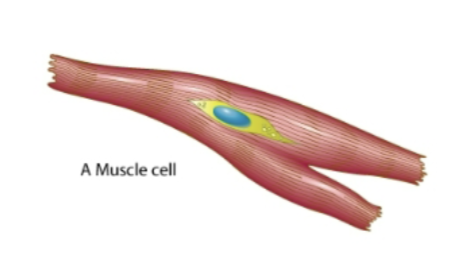
what cell
muscle cell
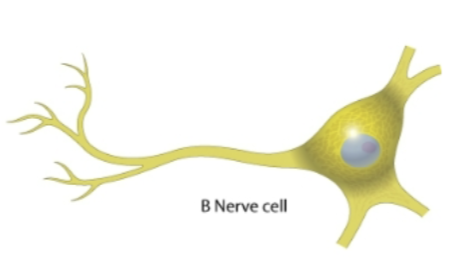
what cell
nerve cell
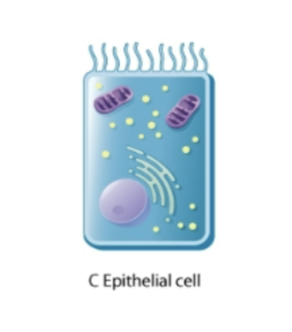
what cell
epithelial cell
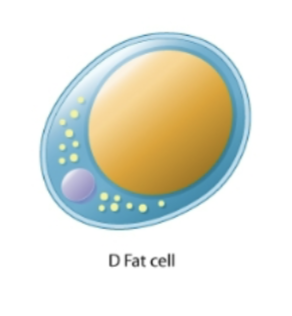
what cell
fat cell
tissues
a group of similar cells working together to do a specific job
organs
different types of tissue combine to form an organ
systems
groups of organs working together to perform complex functions
adipose tissue
connective tissue that stores fat (lipids); cushions organs, insulates the body, and serves as an energy reserve
cartilage
a strong, flexible connective tissue that supports the body and cushions joints; it is found in the nose, ears, trachea, and between bones
epithelial cells
cells that form epithelium, the tissue that covers body surfaces, lines organs and cavities, and forms glands; they protect the body and help with absorption and secretion
histologist
a scientist or healthcare of professional who studies the microscopic structure of tissues
larynx
the voice box, located between the pharynx and trachea; it contains the vocal cords and helps with breathing, speaking, and protecting the airway
pharynx
throat; a muscular passageway that carries air from the nose and mouth to the larynx and food to the esophagus
pituitary gland
a small gland at the base of the brain called the “master gland”; it produces hormones that regulate growth, reproduction, metabolism, and other glands t
thyroid gland
a butterfly-shaped gland in the neck that produces hormones regulating metabolism, growth, and development
trachea
windpipe, tube that carries air from the larynx to the bronchi and lungs
ureter
one of two tubes that carry urine from the kidneys to the bladder
urethra
the tube that carries urine from the bladder to the outside of the body; in males, it also carries semen
uterus
the womb, hollow, muscular group organ where a fertilized egg implants and a fetus develops during pregnancy
viscera
the internal organs, especially those located in the chest and abdominal cavities (such as heart, lungs, stomach, liver, and intestines)
body cavities
the spaces within the body that contain internal organs (viscera)
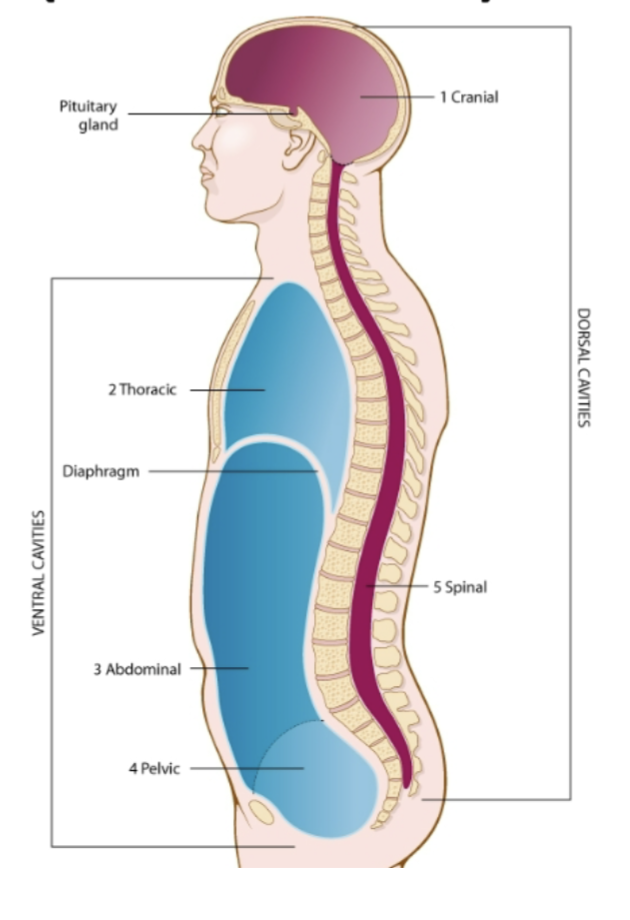
what are the body cavities
cranial
thoracic
abdominopelvic
spinal
cranial cavity
brain
thoracic cavity
lungs
heart
esophagus
trachea
bronchial tubes
thymus gland
aorta
abdominal cavity
stomach
small and large intestines
spleen
pancreas
liver
gall bladder
pelvic cavity
portions of the small and large intestine
bladder
rectum
urethra
ureters
uterus and vagina in female
spinal cavity
nerves of the spinal cord
which body cavity contains the pleural cavity and the mediastinum
thoracic cavity
which body cavity contains the peritoneum
abdominal cavity
lung
one of the two organs responsible for gas exchange, bringing oxygen into the blood and removing carbon dioxide
diaphragm
a large dome-shaped muscle below the lungs that is the primary muscle of breathing; when it contracts, you inhale
liver
body’s largest internal organ, it produces bile, detoxifies harmful substances, stores nutrients, and helps regulate metabolism
gallbladder
small sac beneath the liver that stores and concentrates bile, releasing it into the small intestine to help digest fats
pancreas
a gland that produces digestive enzymes and hormones like insulin and glucagon, which regulate blood sugar
colon (large intestine)
the longest part of the large intestine; it absorbs water and electrolytes and forms and stores feces
appendix
small, finger-like pouch attached to the beginning of the large intestine; it may play a role in immune function and gut bacteria
bladder (urinary bladder)
muscular sac that stores urine until it is excreted through the urethra
aorta
the largest artery in the body; it carries oxygen-rich blood from the left ventricle of the heart to the rest of the body
heart
muscular organ that pumps blood throughout the body, supplying oxygen and nutrients to tissues
spleen
an organ of the lymphatic system that filters blood, removes old red blood cells, stores platelets, and helps fight infection
stomach
muscular organ that stores food and begins digestion by mixing food with acid and digestive enzymes
small intestine
main site of digesting and nutrient absorption; consists if the duodenum, jejunum, and ileum
sigmoid colon
an s-shaped section of the large intestine that connects the descending colon to the rectum and stores feces before elimination
abdominal cavity
upper part of abdominopelvic cavity that contains the stomach, liver, gallbladder, spleen, pancreas, kidneys, and most of the intestines
cranial cavity
cavity within the skull that contains and protects the brain
dorsal (posterior)
back side of the body; dorsal body cavity includes the cranial and spinal cavities
mediastinum
central compartment of the thoracic cavity between the lungs; contains the heart, trachea, esophagus, thymus, and major blood vessels
pelvic cavity
lower portion of abdominopelvic cavity that contains urinary bladder, reproductive organs, and rectum
peritoneum
serous membrane that surrounds each lung and lines the inside of the chest wall
pleural cavity
thin, fluid-filled space between the two layers of the pleura surrounding each lung
spinal cavity (vertebral cavity)
cavity within the vertebral column that contains and protects spinal cord
thoracic cavity
chest cavity, it contains the lungs in the pleural cavities and the mediastinum which contains the heart, trachea, esophagus, and major blood vessels
ventral (anterior)
front side of the body; ventral body cavity includes the thoracic and abdominopelvic cavities
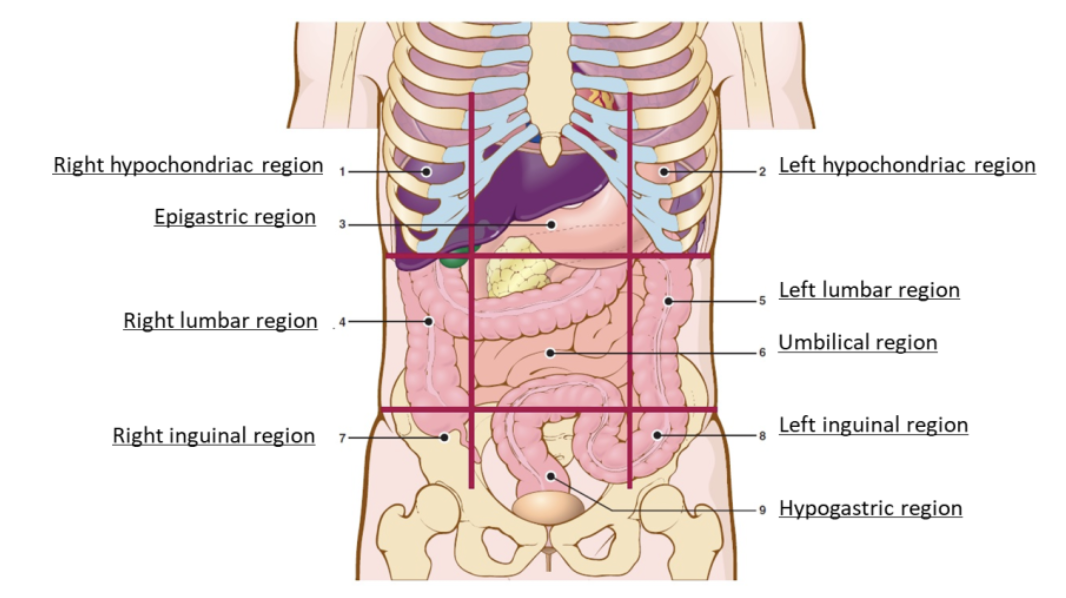
right hypochondriac region
upper right abdomen, below the ribs
right lobe of liver, gallbladder, upper right kidney,cpart of the small intestine
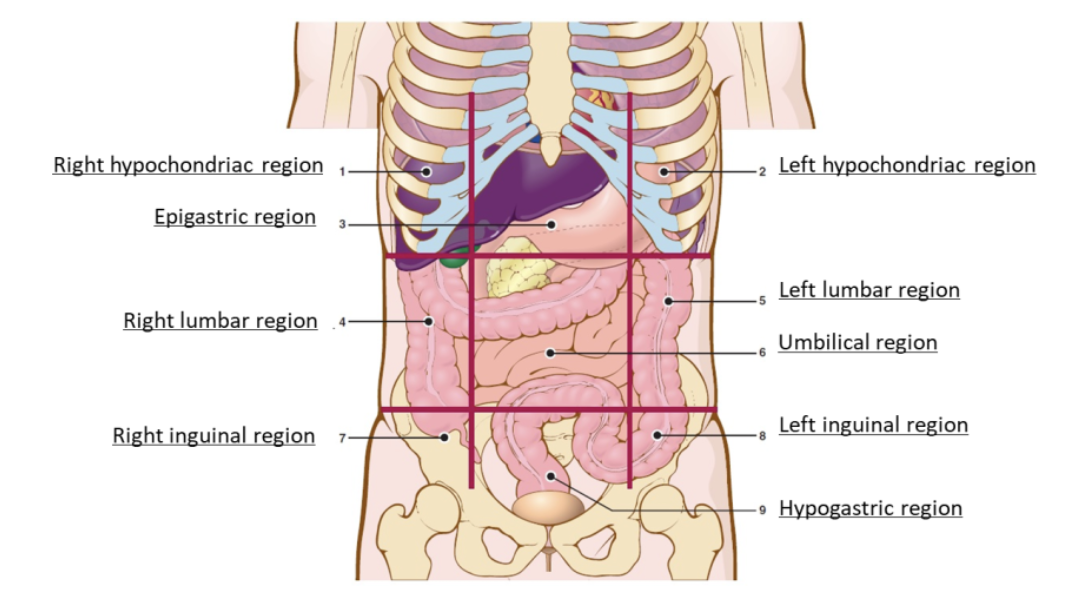
left hypochondriac region
upper left abdomen, below the ribs
spleen, upper left kidney, part of the stomach, tail of pancreas
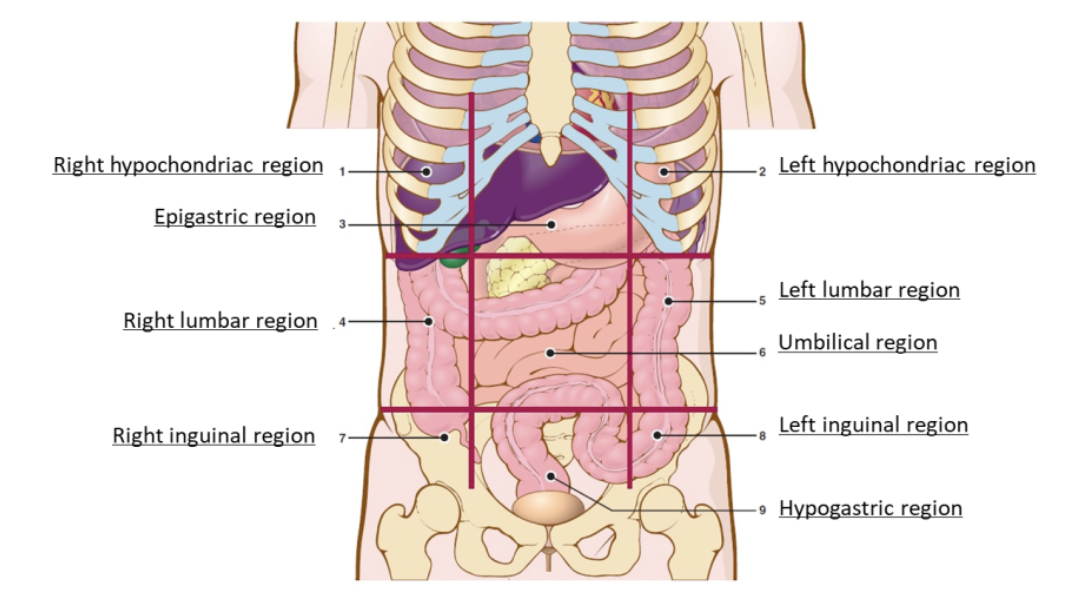
epigastric region
upper middle abdomen, above the stomach
stomach, part of the liver, pancreas, duodenum
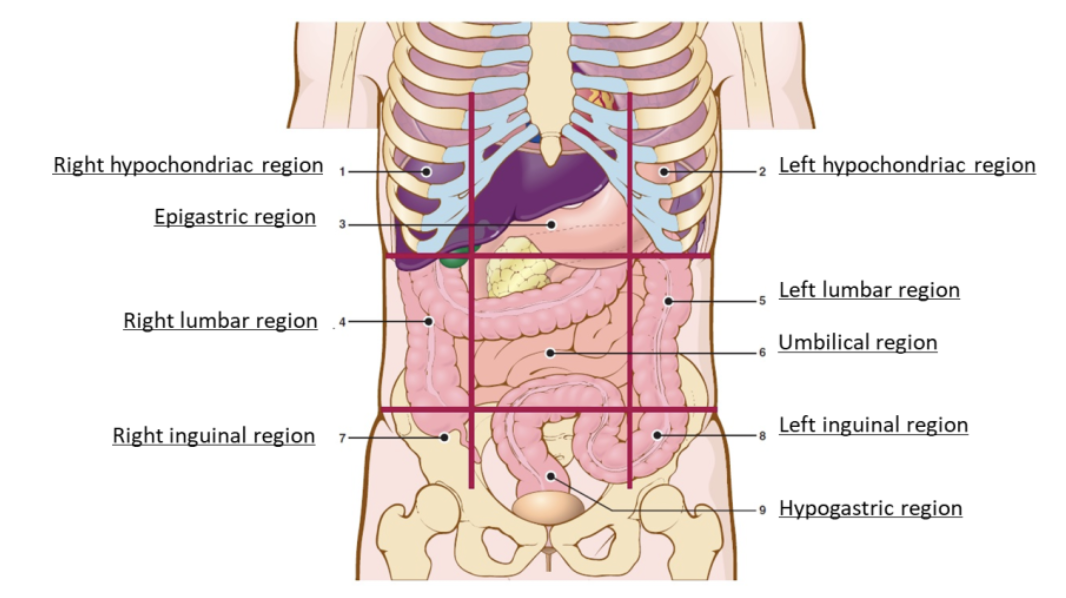
right lumbar region
middle right side of abdomen
ascending colon, right kidney, small intestine
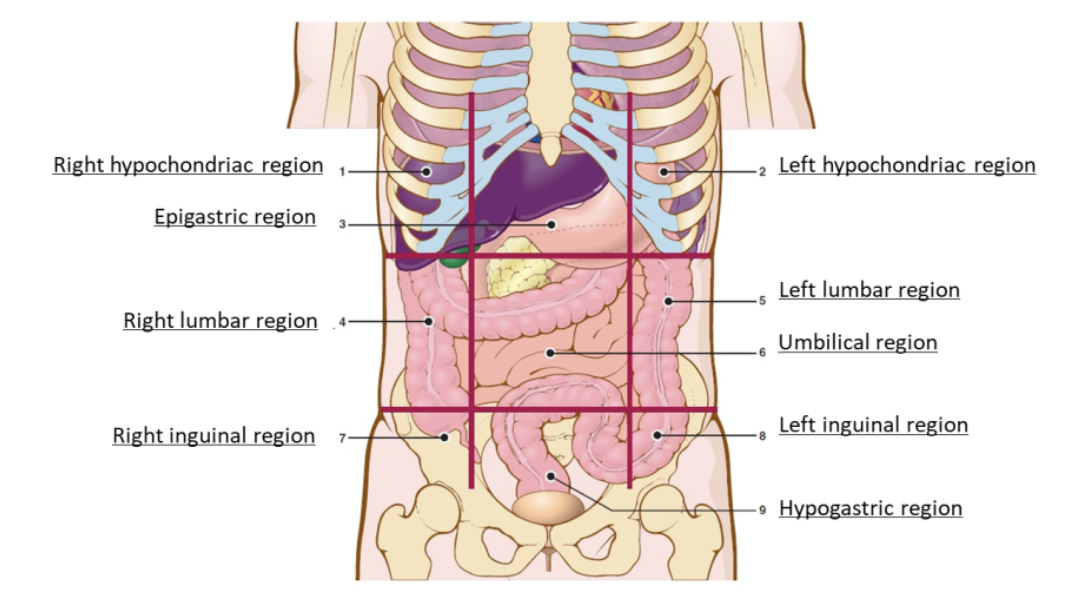
left lumbar region
middle left side of the abdomen
descending colon, left kidney, small intestine
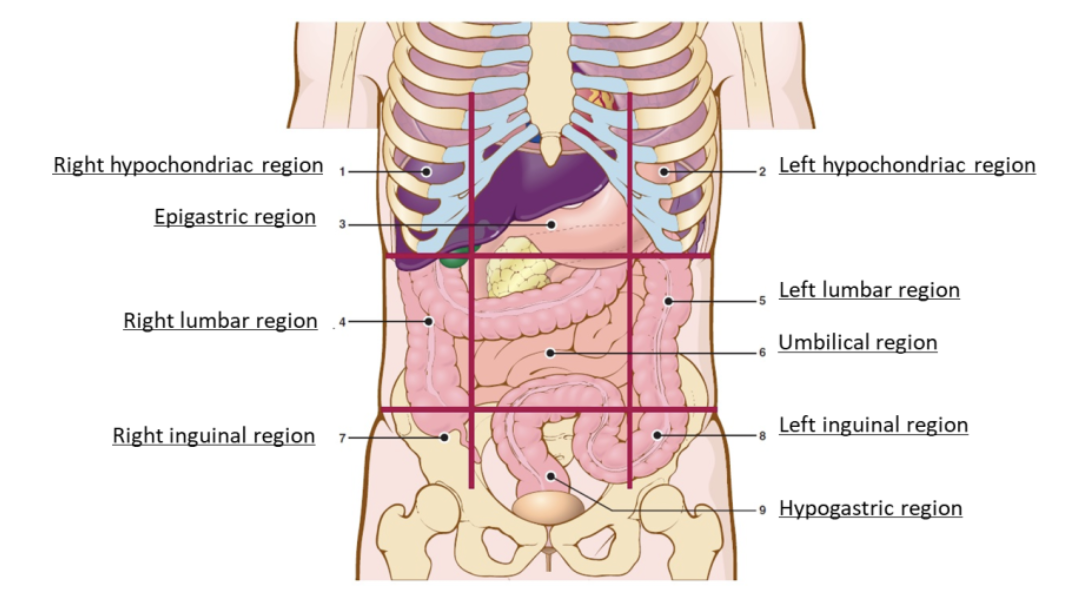
umbilical region
center of the abdomen, around belly button
small intestine, transverse colon
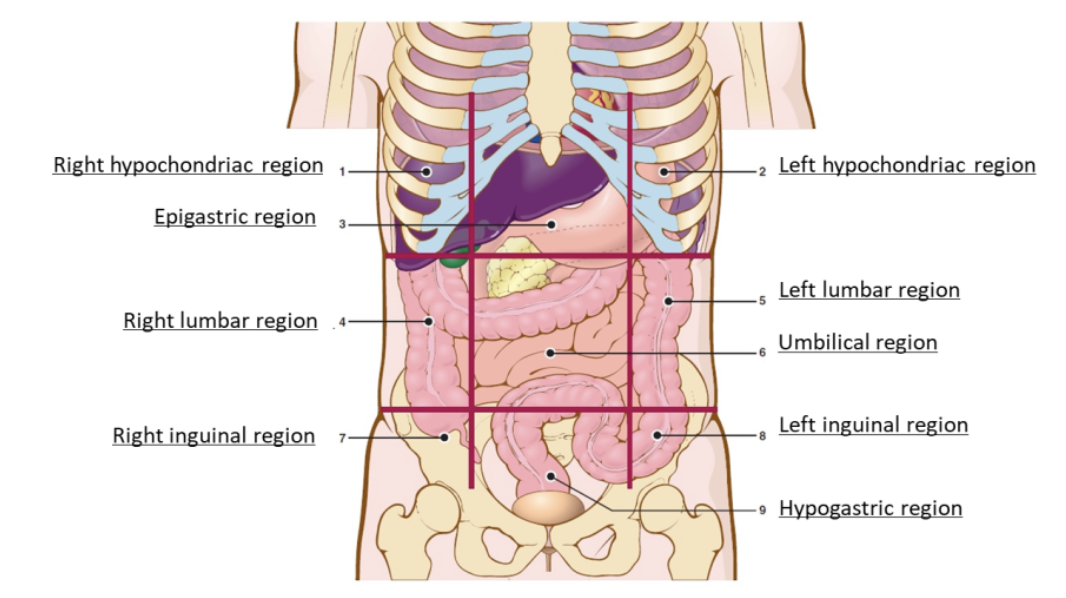
right inguinal (iliac) region
lower right abdomen
appendix, cecum, small intestine
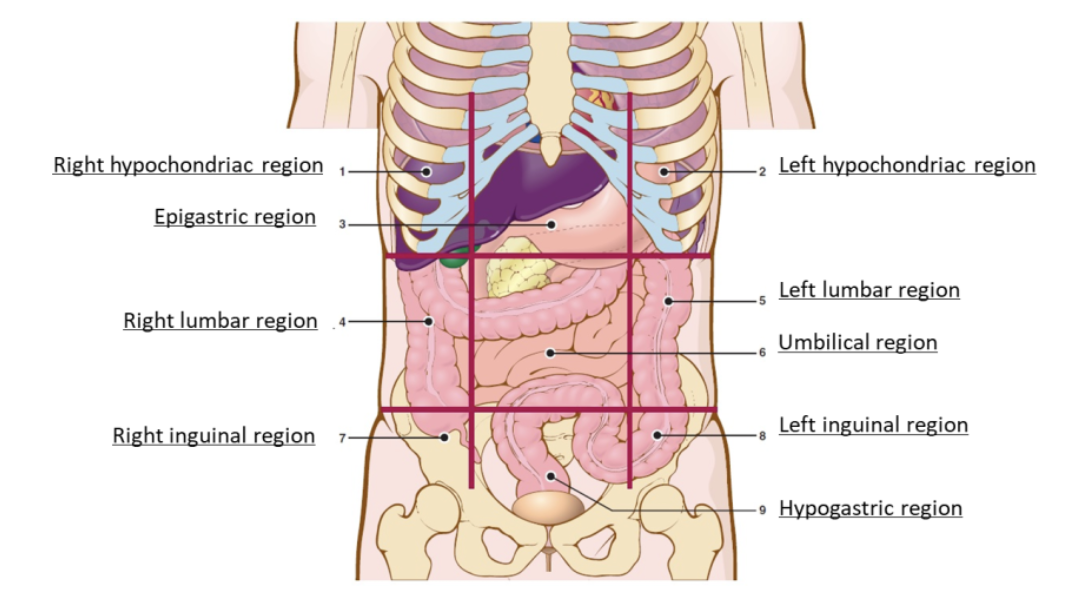
left inguinal (iliac) region
lower left abdomen
sigmoid colon, descending colon, small intestine
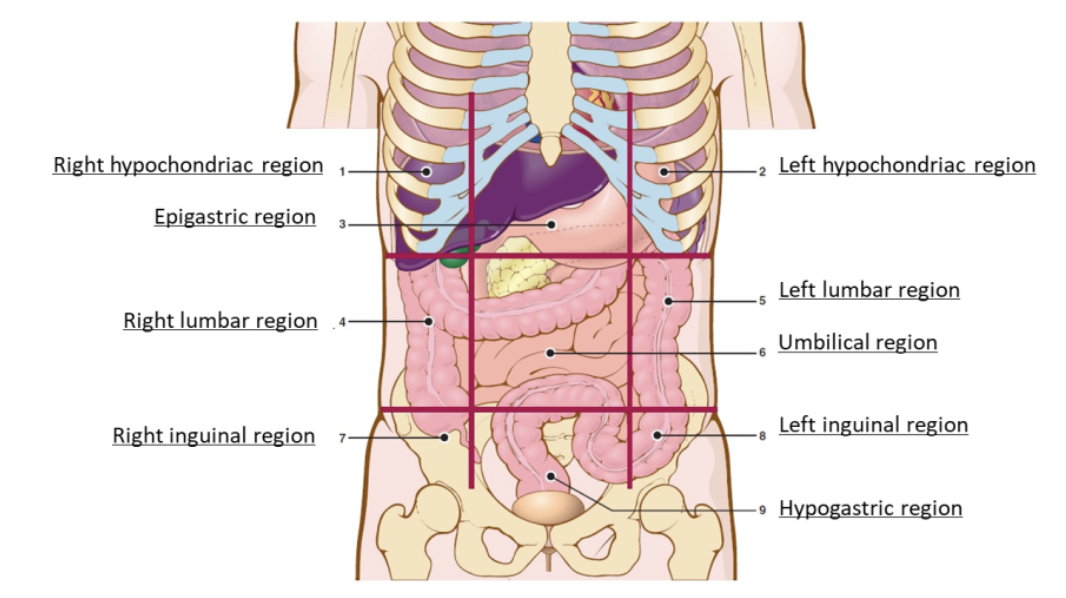
Hypogastric (pubic) region
lower middle abdomen, below umbilicus
urinary bladder, small intestine, reproductive organs (uterus in females), part of the sigmoid colon
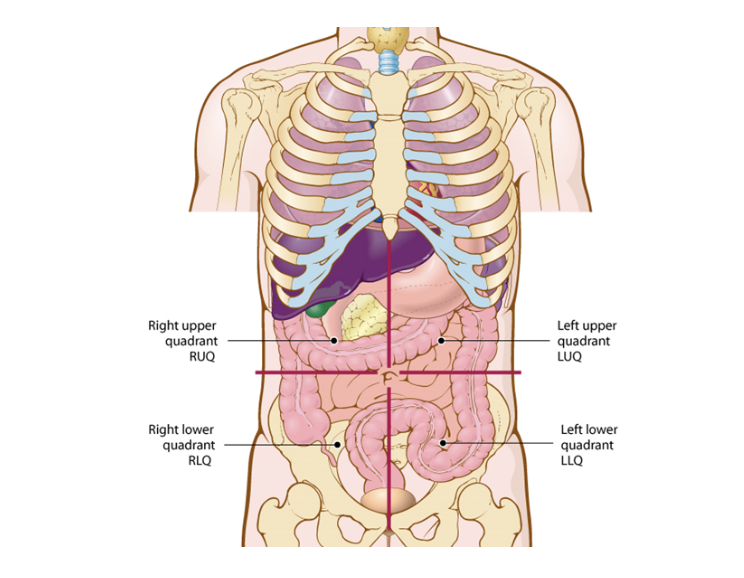
abdominopelvic quadrants
right upper quadrant (RUQ)
left upper quadrant (LUQ)
right lower quadrant (RLQ)
left lower quadrant (LLQ)
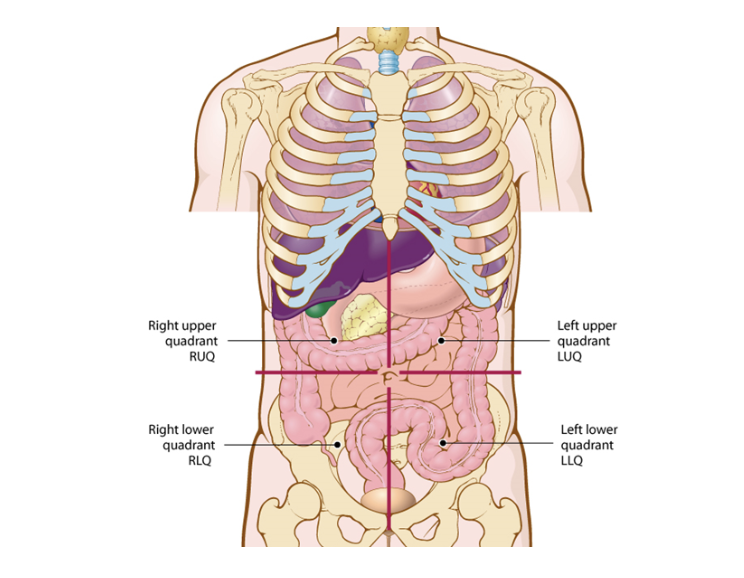
right upper quadrant (RUQ)
contains liver (right lobe), gallbladder, part of the pancreas, parts of small and large intestines
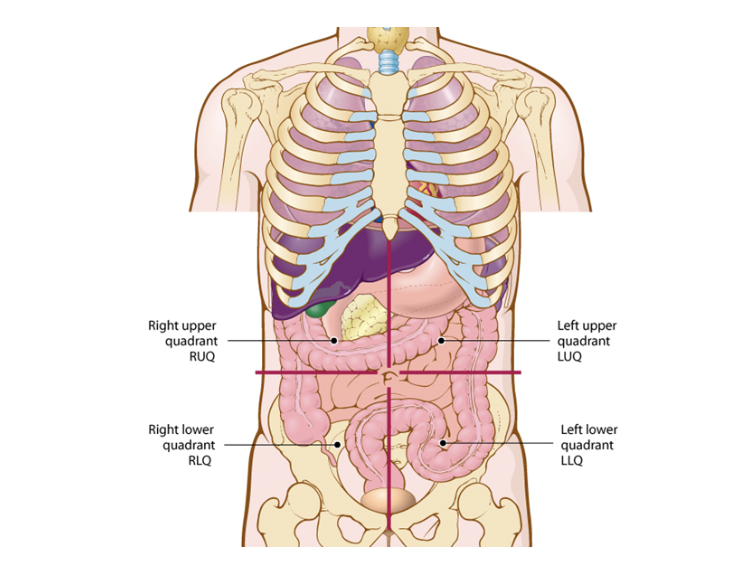
left upper quadrant (LUQ)
contains liver (left lobe), stomach, spleen, part of the pancreas, parts of small and large intestines
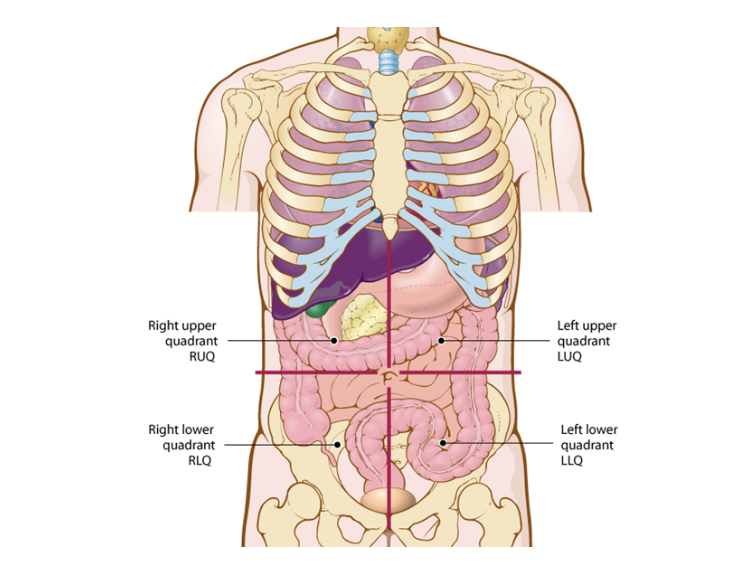
right lower quadrant (RLQ)
contains parts of small and large intestines, right ovary, right fallopian tube, appendix, right ureter
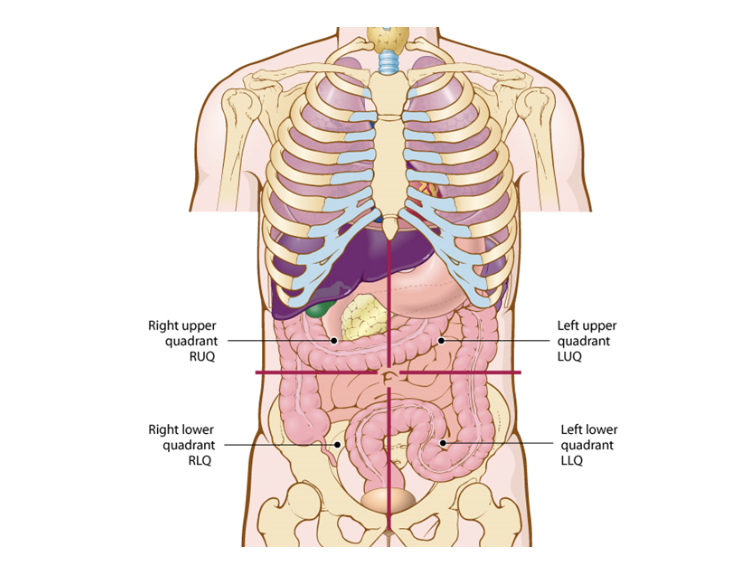
left lower quadrant (LLQ)
contains parts of small and large intestines, left ovary, left fallopian tube, left ureter
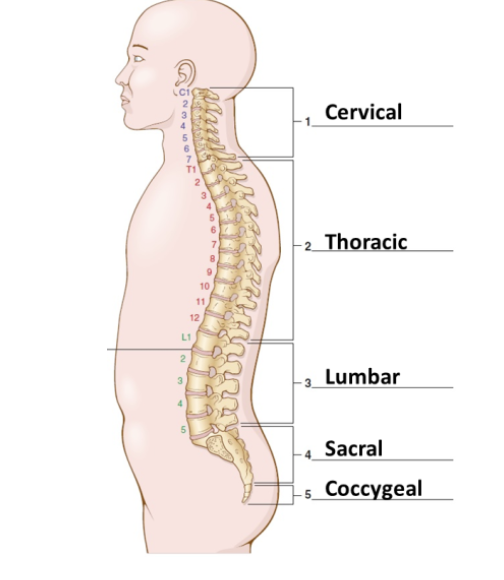
anatomical divisions of the back
cervical
thoracic
lumbar
sacral
coccygeal
cats think liars suck cock
vertebra
a single bone of the spine
vertebrae
plural of vertebra; there are 33 bones that make up spinal column
spinal column (vertebral column)
backbone
flexible column made of vertebrae that supports the body, protects the spinal cord, and allows movement
spinal cord
long bundle of nervous tissue that extends from the brain through the spinal canal
carries messages between brain and rest of the body
disc (intervertebral disc)
cushion of fibrocartilage located between adjacent vertebrae
absorbs shock, provides flexibility, and prevents the vertebrae from rubbing together
anterior
towards front of body
posterior
toward the back of the body
deep
further away from the body surface, more internal
superficial
closer to or on the body surface
proximal
closer to the point of attachment or origin
distal
farther from the point of attachment or origin
inferior
below; toward the feet
superior
above; toward the head