Biology 1113 Exam 1
 Call Kai
 Learn
Learn Practice Test
 Spaced Repetition
 Match
Match Flashcards
 Knowt Play
1/115

Earn XP
Description and Tags
Ch1-6
Name | Mastery | Learn | Test | Matching | Spaced | Call with Kai | Chat |
|---|
No analytics yet
Send a link to your students to track their progress
116 Terms
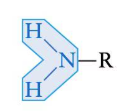
Amino Group
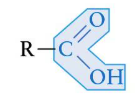
Carboxyl Group
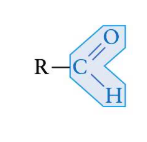
Carbonyl Group (Aldehyde)
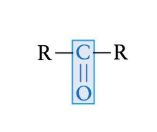
Carbonyl Group (Ketone)

Hydroxyl Group
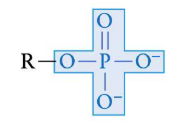
Phosphate Group
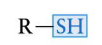
Sulfhydryl
Amino Group
Amines. Acts as a base - tends to gain a proton in solution and form NH3+
Carboxyl Group
Carboxylic Acids. Acts as an acid, tends to lose a proton in solution
Carbonyl Group
Aldehydes and Ketones. Can react with other compounds to form larger molecules
Hydroxyl Group
Alcohols. Highly polar, makes compounds more soluble through H interactions w/ water, can act as a weak acid and drop a proton
Phosphate Group
Organic Phosphates. Molecules with more than 1 phosphate linked together store large amounts of chemical energy.
Sulfhydryl Group
Thiols. In proteins, form disulfide bonds (S-S) that contribute to protein structure.
Question
Typically based on an observation
Hypothesis
Proposed, testable explanation for an observation
Null Hypothesis
The counterpart to a hypothesis, predicting no effect
Prediction
Specefic, testable outcomes. If-then statement
The Cell Theory
Robert Hooke and Anton van Leeuwenhoek. All organisms are made of cells, all cells come from preexisting cells
Robert Hooke
Coined the term Cell, cell theory
Anton van Leeuwenhoek
better microscope, animalcules, cell theory
Chromosomal Theory of Inheritance
Hereditary info is encoded in units called genes located on chromosomes. DNA is the hereditary material, genes are sections of DNA that code for cell products
Theory of Evolution by Natural Selection
Species are related by common ancestry. Characteristics of species can be modified from generation to generation.
evolution
a change in allele frequency in a population over time
Natural Selection
Individuals with specific heritable traits produce more surviving offspring, so those traits become more common
Fitness
An individual’s ability to produce surviving, fertile offspring relative to others in the population
Adaptation
A heritable trait that increases an individual’s fitness in a particular environment relative to individuals lacking that trait
Prokaryotes
Bacteria and Archaea, no nucleus or membrane bound organelles
Eukaryotes
contain a nucleus and membrane bound organelles
Genus
First part of the scientific name. Homo sapiens, genus is Homo
Species
Second part of scientific name, Homo sapiens, sapiens is species
5 Characteristics of Living Organisms
Cells, Replication, Information, Energy (acquire and use), Evolution (CRIEE)
The Central Dogma of Biology
DNA → RNA → Protein
Phylogenetic Tree
Diagram that shows evolutionary relationships
Dalton
unit of measurement (1Da = 1amu)
isotopes
Forms of an element with different amounts of neutrons
Covalent Bonds
two atoms share a pair of valence electrons
Electronegativity
How strongly an atom pulls shared electrons
Ionic Bonds
Electromagnetic attraction between oppositely charged ions (ex NaCl)
Hydrophobic Interactions
Clustering of nonpolar molecules in water
Hydrogen Bonds
The attraction between a hydrogen atom with a partial positive charge and another atom with a partial negative charge
Van der Waals Interactions
weak electrostatic forces of attraction or repulsion between neutral atoms or molecules that are close to each other
Polar
electrons are not shared equally
Nonpolar
Equal electron sharing
Solution
Solute + Solvent
Solute
A substance that gets dissolved
Solvent
What does the dissolving
Dissolve
when a substance (the solute) breaks down into individual molecules or ions and spreads evenly through a liquid (the solvent) to form a clear, uniform mixture called a solution
Cohesion
Water sticks to itself
Adhesion
Water sticks to other things
Surface Tension
Cohesive force caused by the attraction of surface molecules
Acid
A molecule that gives up a proton (H+) during a chemical rxn
Base
A molecule that acquires a proton (H+) during a chem rxn
Buffer
Reduces the impact of adding acids or bases to the overall pH
Potential Energy
Stored energy
Kinetic Energy
energy of motion
Chemical energy
potential energy “stored in bonds”
Thermal Energy
kinetic energy of molecular motion
Entropy
A measurement of the disorder/randomness of a system
Condensation Reaction
A reaction where water is given off as a product when two molecules bond together
Hydrolysis reaction
Water is used to break bonds
Catalysis
Increasing the speed of a rxn by adding a catalyst
Amino Acid
monomer of proteins. Amino grouup + alpha carbon + carboxyl group + R group + H
R Group/Side Chain
A unique set of atoms connected to the base of a molecule. Amino Acids are differentiated by their R Groups
Peptide Bonds
The C-N bond that holds amino acids together. Electron sharing between the N and C gives the peptide bond properties of a double bond
Polypeptide
Chain of Amino Acid residues
Primary Protein Structure
Order of amino acids
H-terminus
The end of the polypeptide with the Amino Group
N-terminus
The end of the polypeptide with the Carboxyl group
Secondary Protein Structure
alpha helices and beta pleated sheets. Formed by hydrogen bonds between the backbone atoms
Tertiary Protein Structure
The secondary structure gets twisty and folds. Caused by interactions between R groups. This is where disulfide bonds happen
Quaternary Protein Structure
Multiple polypeptides come together. Not all proteins have this
Denatureation
a process where proteins or nucleic acids lose their native three-dimensional structure and biological activity due to external stress. Common denaturants are heat, pH, high salt, and reducing agents that break structural bonds.
Residue
The term for an amino acid that is in a chain. Also used for carbohydrates and other structures
Enyzme
Special proteins that act as catalysts
Active Site
Where catalysis occurs
Substrates
Reactants in a catalyzed reaction
Nucleotide
Monomer of nucleic acids. Phosphate group, 5 carbon sugar, nitrogenous base
5 Nitrogenous Bases
Adenine + Guanine (Purines) and Cytosine + Uracil(RNA)/Thymine(DNA) (Pyrimidines)
Ribose
5 carbon sugar with an OH on the 2’ carbon
Deoxyribose
5 carbon sugar with H on the 2’ carbon
DNA
Nucleic acid with deoxyribose and thymine
RNA
nucleic acid with ribose and uracil
Phosphodiester Linkage
Polymerization of nucleic acids. 3’ carbon attaches to phosphate group of next nucleic acid. Condensation rxn
Nucleic Acid ‘Polarity’
Always write from the 5’ → 3’. Nucleic Acids form from the 5’ → 3’ end
Complimentary Base Pairing (aka Watson-Crick Pairing)
C→G, A→T/U
Secondary DNA Structure
Base Pairing + Double Helix
Primary DNA Structure
Order of Amino Acids
Activated Nucleotide
Nucleotide with extra phosphate groups. higher potential energy, good for energy storage (think ATP)
3 main types of RNA
Ribosomal RNA (rRNA)
Transfer RNA (tRNA)
Messenger RNA (mRNA)
Ribozyme
RNA enzyme. Catalyzes chemical rxns
RNA structure
Single strand. Versatile structure (loops, stems, etc) makes for extremely diverse functions
Complimentary Strand
A matching strand of RNA or DNA that forms with the original strand during replication.
3 Functions of Carbohydrates
Energy, Structure, Cell Identity
Monosaccharide
Monomer of a carbohydrate. lots of Cs and Hs with a Carbonyl Group
Aldose vs Ketose Monosaccharide
Depends on the placement of the Carbonyl group. Aldose is on the end, Ketose is in the middle
Isomer
Same chemical formula but different structure and therefore different function
Alpha vs Beta Monosaccharide Structure
Depends on the placement of the OH on the 1’ Carbon. Alpha = below, Beta = above
Glycosidic Linkage
Condensation Reaction, bonding of monosaccharides. Can form between a variety of Carbon locations. (ex a1-4, b1-6, etc)
Alpha vs Beta Glycosidic Linkages
Orientation of the simple sugars. Flipped = beta, same direction = alpha
Starch
Energy storage in plants a1-4 linkages. Can be Amylose (unbranched) or Amylopectin (branched every 30 residues w/ a1-6 linkage).