FINA UNIT 5 review
 Call Kai
 Learn
Learn Practice Test
 Spaced Repetition
 Match
Match Flashcards
 Knowt Play
1/25

There's no tags or description
Looks like no tags are added yet.
Name | Mastery | Learn | Test | Matching | Spaced | Call with Kai | Chat |
|---|
No analytics yet
Send a link to your students to track their progress
26 Terms
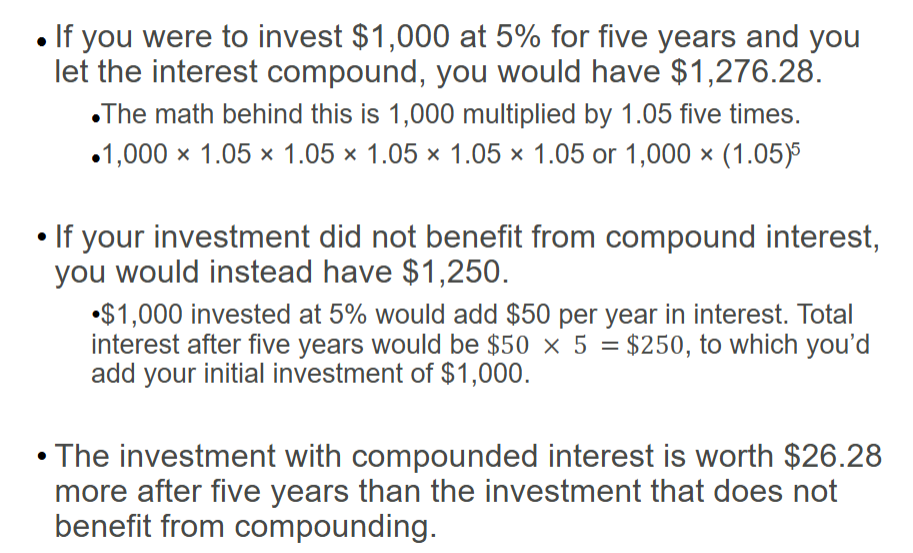
Explain how future dollar amounts are calculated using a single-period scenario
If you invest $1,000 for one year and that investment generates 5% interest, your investment will be worth $1,050 at the end of one year.
•Take $1,000 and multiply it by 1.05 = $1,050
Describe the impact of compounding
Explain how future dollar amounts are
calculated

Explain how future dollar amounts are
calculated

Explain how present dollar amounts
are calculated

Describe how discount rates are
calculated

Describe how growth rates are
calculated

Illustrate how periods of time for
specified growth are calculated.

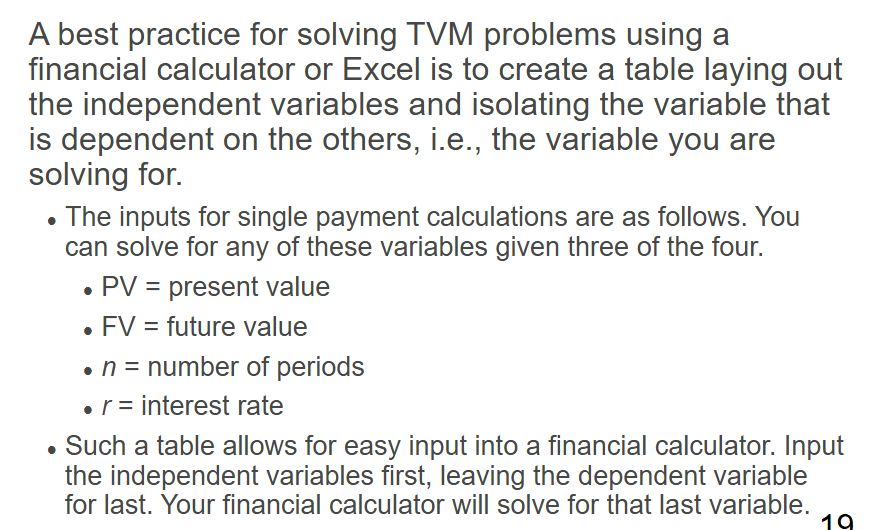
Use a financial calculator and Excel
to solve TVM problems
Use a financial calculator and Excel
to solve TVM problems

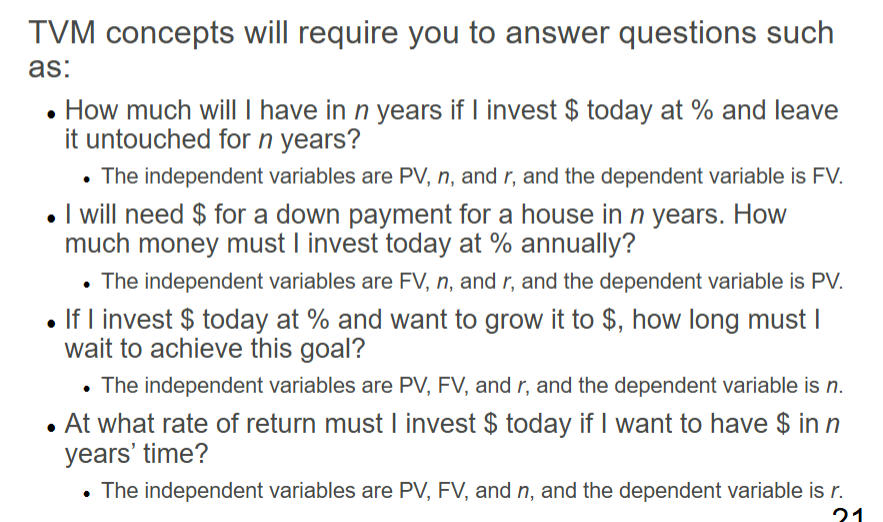
Explain how the time value of money
can impact your personal financial
goals
Explain how the time value of money
is related to inflation

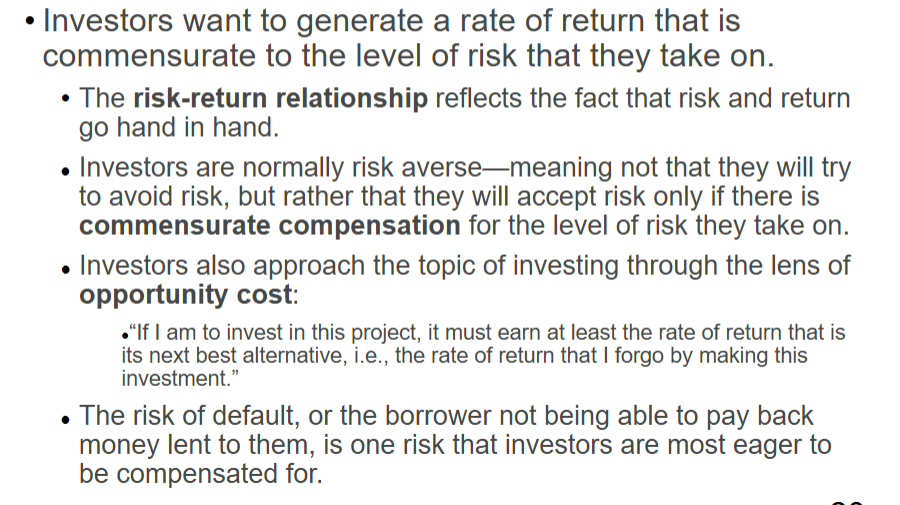
Explain how the time value of money
is related to financial risk
Explain how compounding period
frequency affects the time value of
money
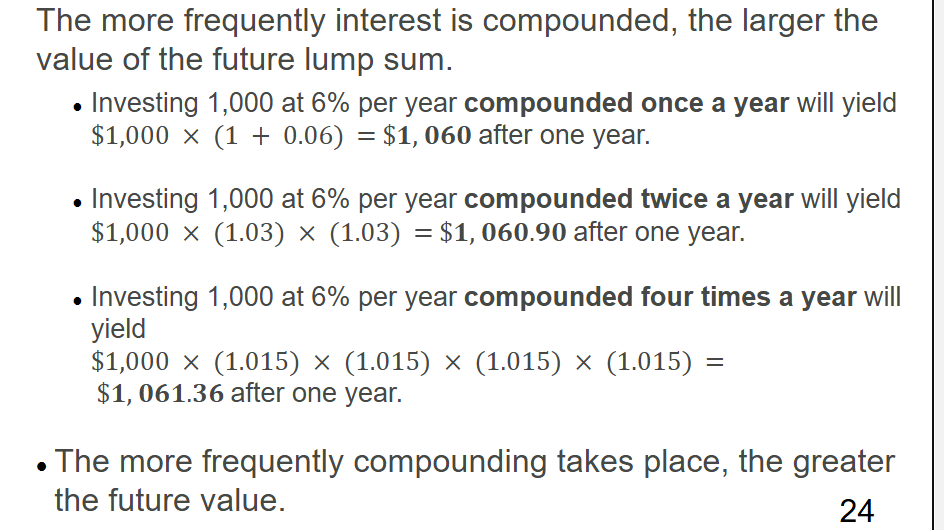
Explain how compounding period
frequency affects the time value of
money. (cont.)

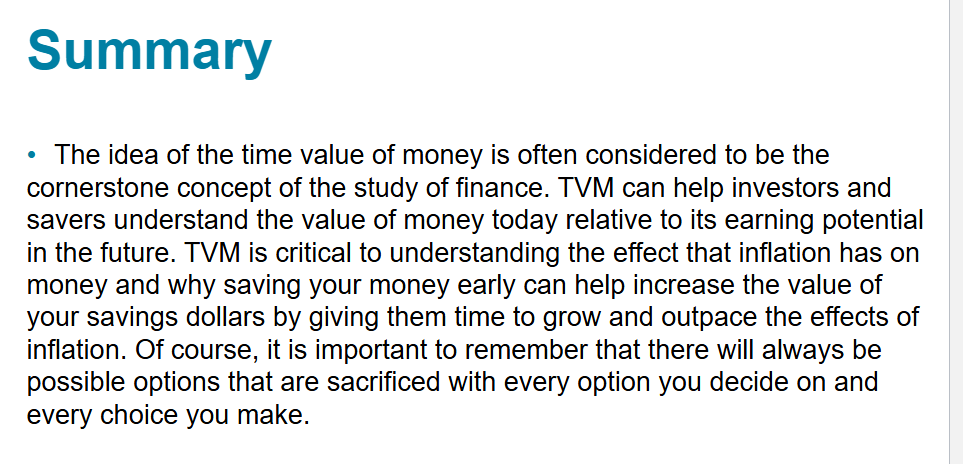
Summary

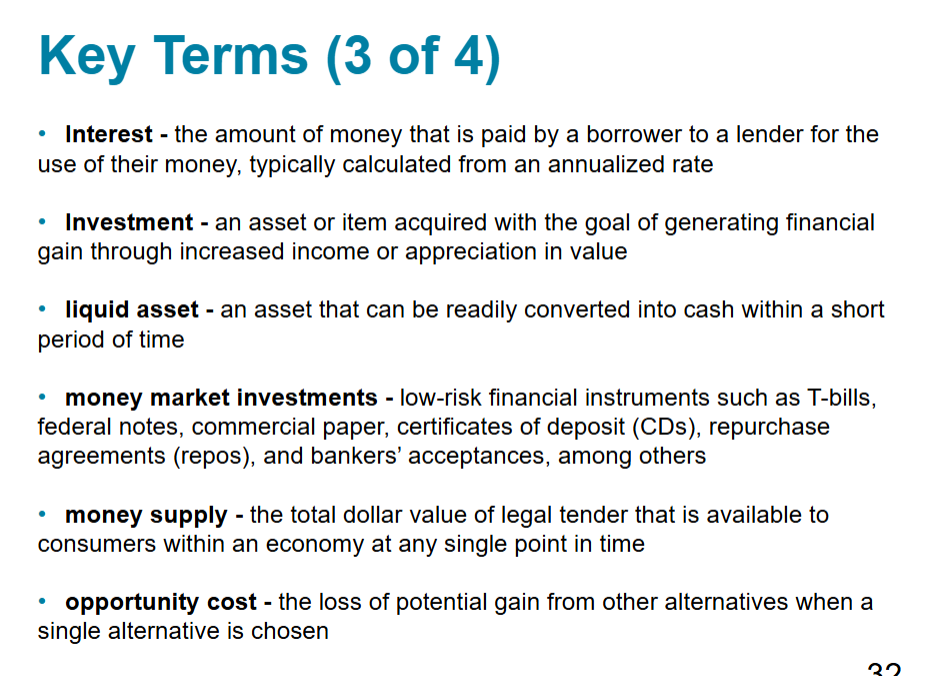
Key Terms



Review Questions
1. All other things being the same, would you prefer a bank account that
compounds interest quarterly or one that compounds interest semiannually?
You would prefer a bank account that compounds interest quarterly.
The more frequently interest is compounded, the larger the future value of your money. Quarterly compounding calculates and adds interest to your balance four times a year, whereas semiannual compounding only does so twice a year. Because you earn "interest on your past interest" more frequently with quarterly compounding, your total return will be higher.
2. Briefly describe the concept of future value within the context of the larger
overall concept of the time value of money.
Future value represents the exact amount a current sum of money will grow into over a specific period of time at a given interest rate.
Within the broader framework of the time value of money—the principle that a dollar today is worth more than a dollar tomorrow due to its earning capacity—future value is the calculation that measures this growth. It quantifies exactly how much your present money will be worth at a specific future date once compounding interest is applied.