BIO TEST UNIT 1
 Call Kai
 Learn
Learn Practice Test
 Spaced Repetition
 Match
Match Flashcards
 Knowt Play
1/163

There's no tags or description
Looks like no tags are added yet.
Name | Mastery | Learn | Test | Matching | Spaced | Call with Kai | Chat |
|---|
No analytics yet
Send a link to your students to track their progress
164 Terms
Reductionism
Reduces complex systems into simpler components that are more manageable.
Ex] Studying molecular structure of DNA that were extracted from cells. (James Watson and Francis Crick)
Emergent Properties
Unique things that a complex system develops when indivudial parts interact.
Ex] photosynthesis, bicycle.
Describe how structure is related to function, with examples
structure determines function. The shape, form, and composition dictate what job it can preform. Natural selection acts on these structure over generations, favoring variations that work best and helping the organism live.
Ex]Humming bird to flower→
The wings allows it to rotate
extend their beaks
tubular flower shapes
mutual benefit
Prokaryotic Cells
Nucleoid
Plasma Membrane
cytoplasm
ribosomes
cell wall
single celled
bacteria and archaea
smaller

Eukaryotic cell
Nucleus
Organelles
bigger
cholorplast

DNA is…
the genetic material and directs cell process
Library of genetic → genomes
mRNA→ transcription→ amino acids→ translation → protein → protein folding
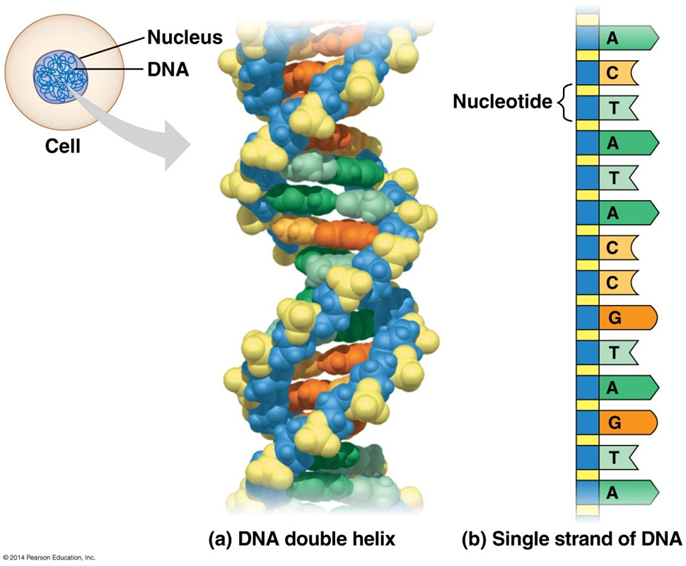
Double helix
A C T G
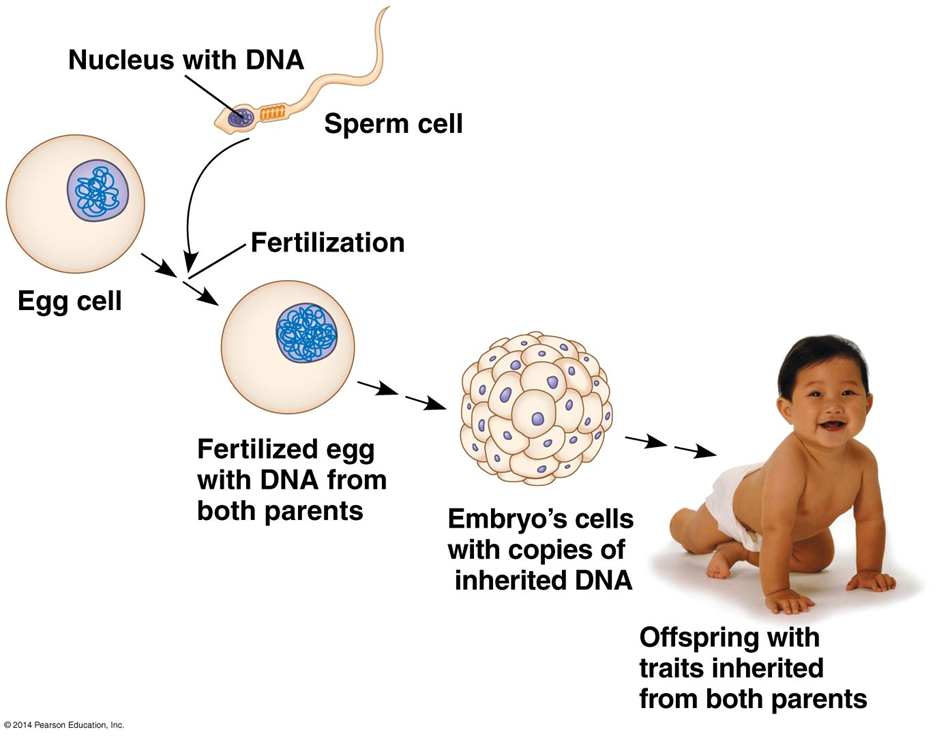
Nucleus with DNA + Sperm cell → egg cell→ fertilization→ egg with both parents DNA→ Embryo cells with copies of DNA→ offspring
Energy and matter…..
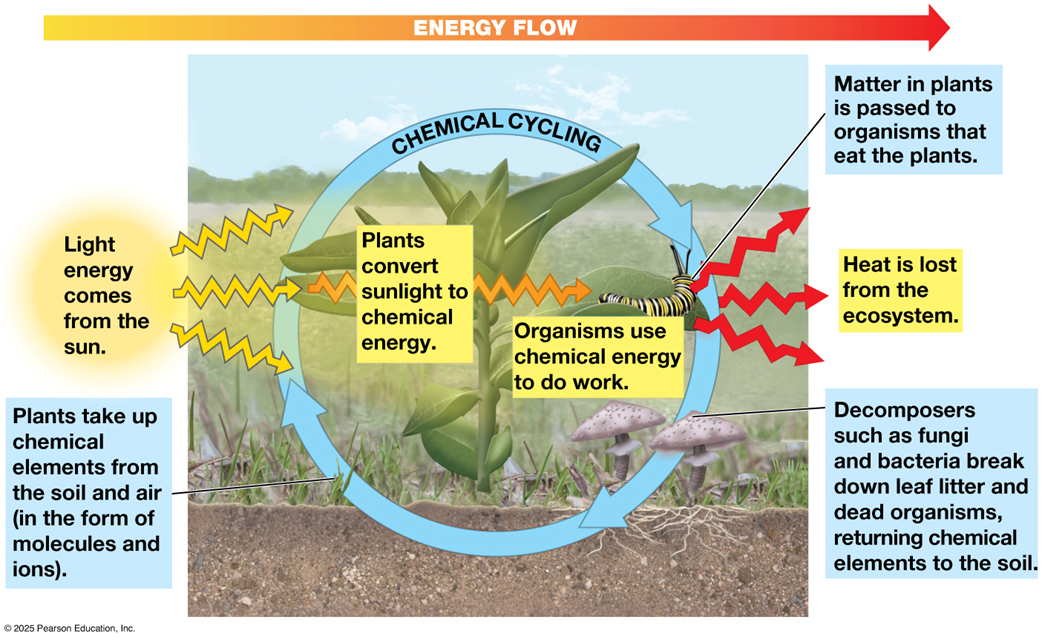
are transferred and transformed in the ecosystem
Chemical (CYCLE)
Energy (FLOW)
Plants take up chemical elements from the soil and air (molecules and ions)
Light energy comes from the sun
Matter in plants is passed to organisms that eat the plants.
Plants convert sunlight to chemical energy
Decomposers like fungi and bacteria break down until it return to the soil.
Organisms use chemical energy to do work
Heat is lost from the ecosystem
Organisms interact with… (list examples)
one another
Mutualism (+/+)
Commensalism (+/o)
Parasitism (+/-)
Predation (+/-)
Herbivory (+/-)
Competition (-/-)
Amensalism (-/o)
Neutralism (o/o)
Evolution accounts for….
uList an example of the unity of life:
uWhat, specifically, accounts for the unity of life?
uList an example of the diversity of life:
uWhat mechanism of evolution accounts for the diversity of life?
for the unity and diversity of life
UNITY OF LIFE:
Example: All organism, use DNA and RNA to store genetic information and the same 20 amino acids to build proteins.
Cause: Common Ancestry
DIVERSITY OF LIFE:
Example: Million of distinct species exist today, such as cacti that survive in dry deserts and whales swimming in cold oceans.
Cause: Natural selection acts on random genetic changes over long period of time, helping organisms adapt to their environments.


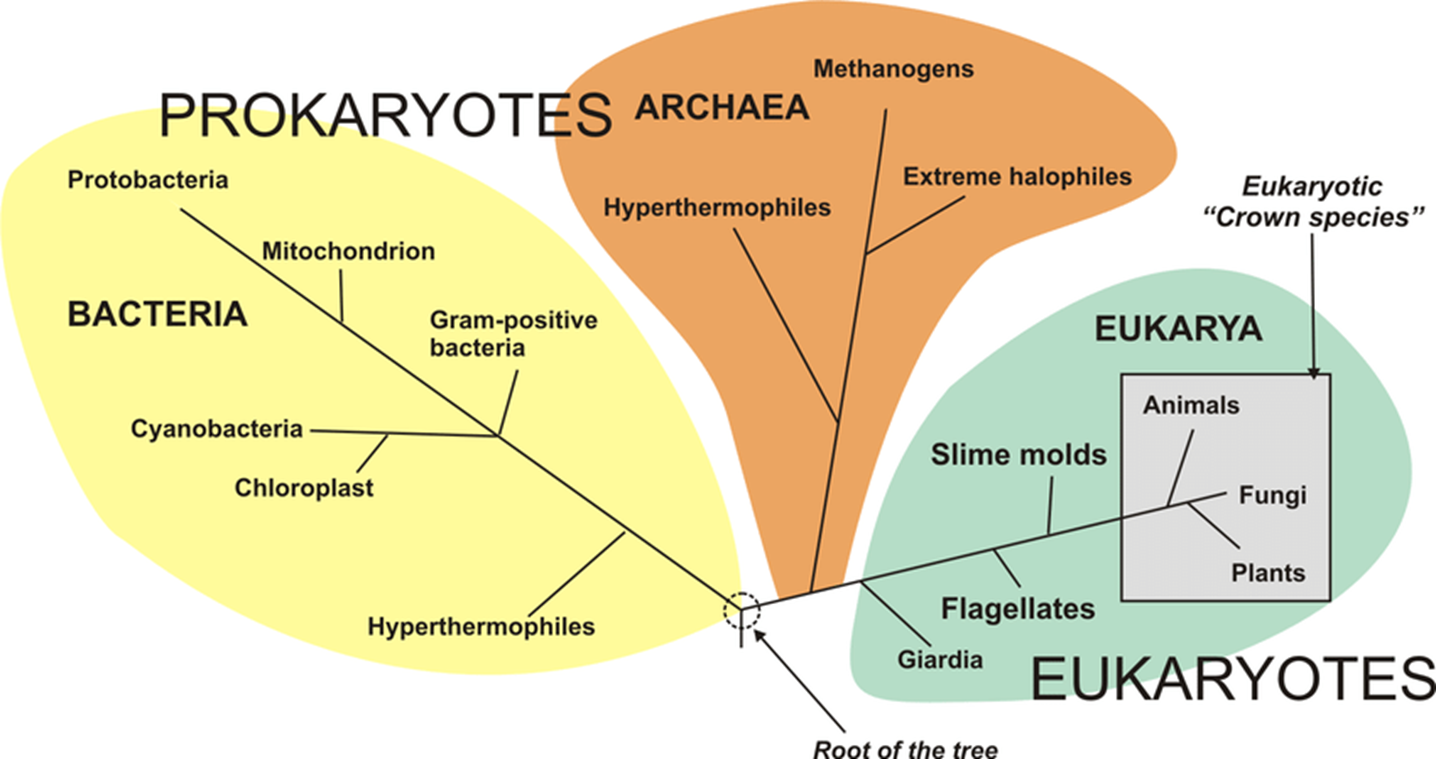
Three Domains of life
Bacteria
Single-celled and lack a nucleus (prokaryotic).
Most diverse and widespread group of prokaryotes
Examples: Escherichia coli, Streptococcus, and cyanobacteria
Archaea
Prokaryotic cells
Live in extreme environments on Earth
Examples: Thermophiles, Halophiles, Methanogens
Eukarya
Kingdom Plantae, Fungi, Animalia, Protists
Can be single-celled or multi-celled.
Examples: Humans, oak trees, yeast, and amoebas.
why is life classified into 3 domains?
Because of deep genetic and structural differences.
Different evolutionary paths
Core Differences
Bacteria: Single-celled prokaryotes with unique cell walls made of peptidoglycan and ester-linked membrane lipids.
Archaea: Single-celled prokaryotes that lack peptidoglycan, featuring distinct branched hydrocarbon cell membranes that often let them survive extreme environments.
Eukarya: Organisms with complex cells that store DNA inside a distinct membrane-bound nucleus, including plants, animals, and fungi.
Why aren’t protists grouped together in their own kingdom of life?
Protists are not grouped into a single true kingdom because they do not share a single common ancestor.
How does water react with everything else?
Experiment | What you see | Concept |
penny | Lots of drops stick toghther | cohesion/ surface tension |
balloon | water stream bends | polarity |
wax paper | water form droplets | cohesion + hydrophobic interactions |
soap | Droplet change | soap disrupts water interactions |
ethanol | Different than water | different molecular interactions |
water is polar because?
uneven distribution of charge (O-/H+)
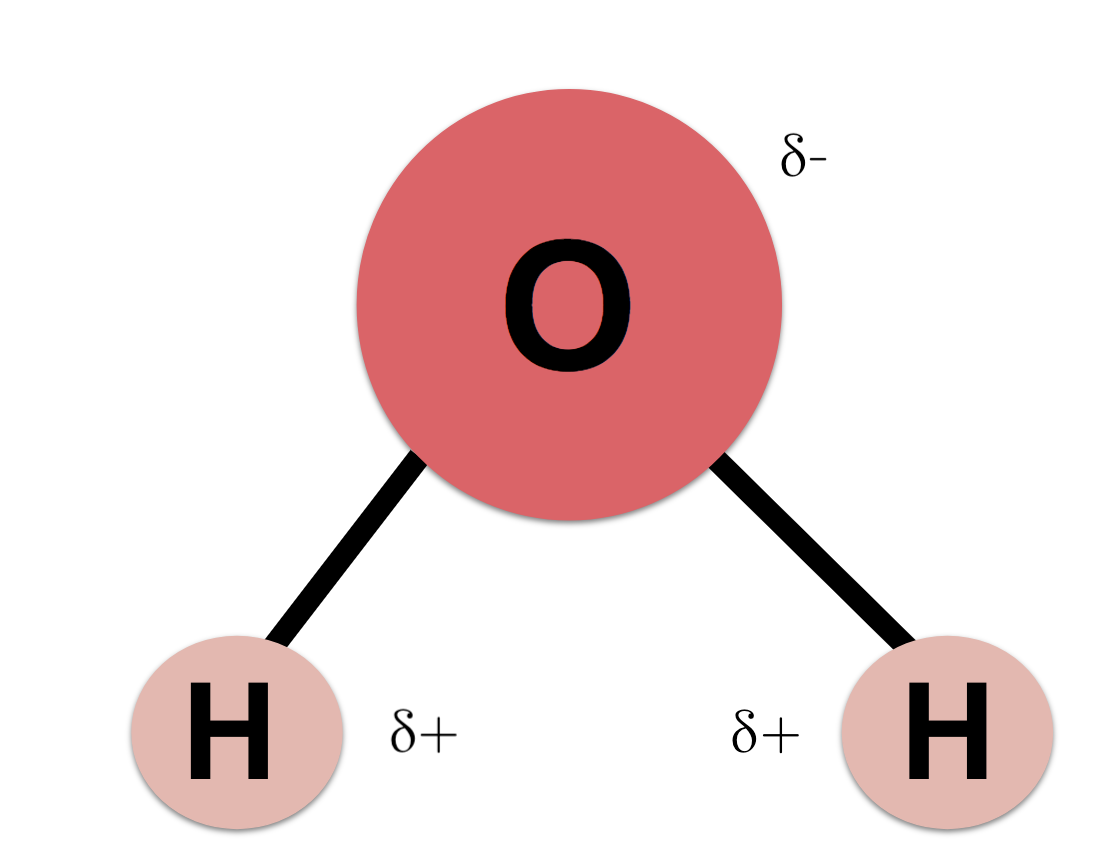
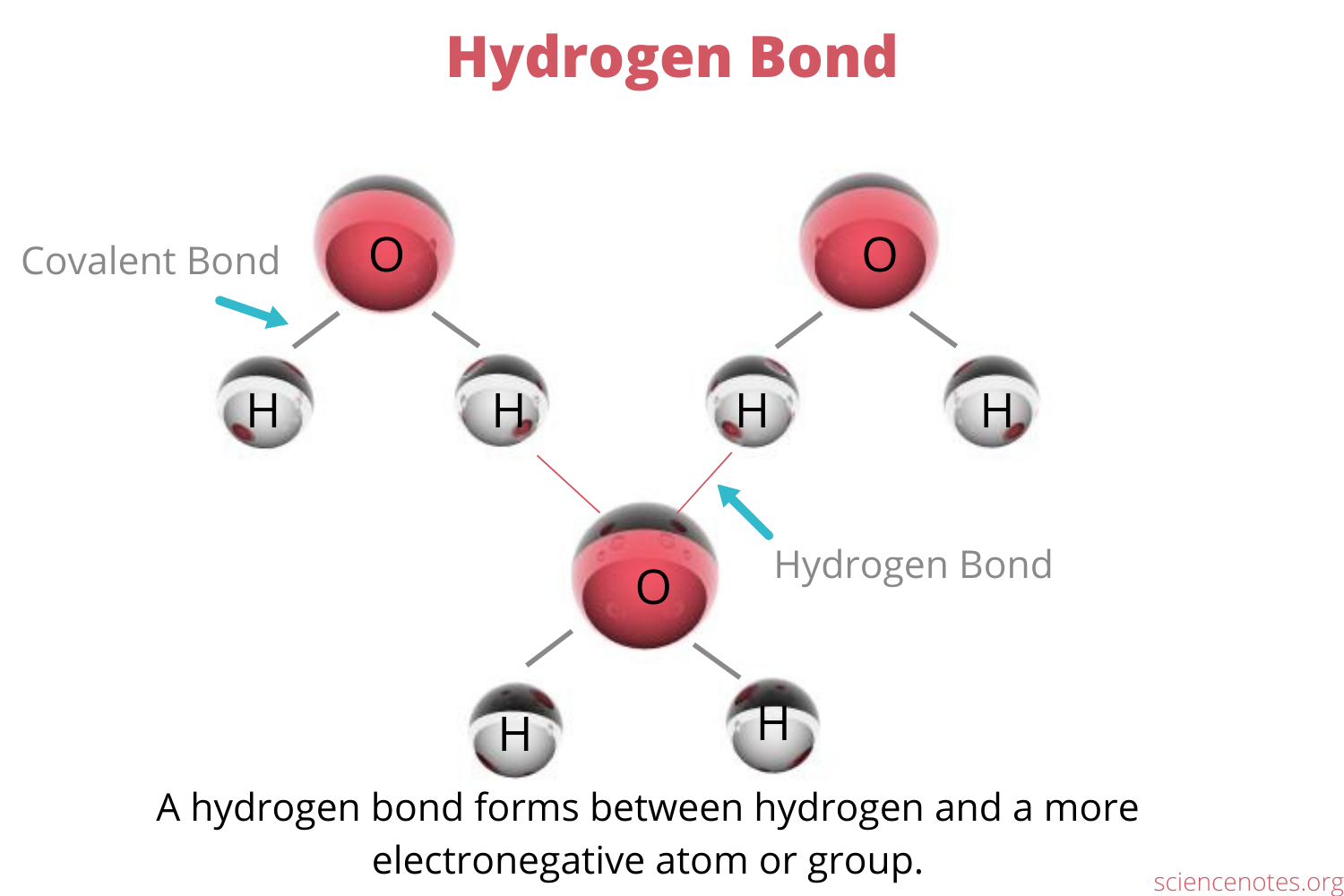
water molecules interact with eachother forming?
Hydrogen bonds BE ABLE TO DRAW
Why does the water stay on the penny?
the water attracts to each other due to hydrogen bonding. (cohesion and surface tension)
CHAIN: polar→ hydrogen bonds→ attraction→ cohesion→ surface tension → dome on penny
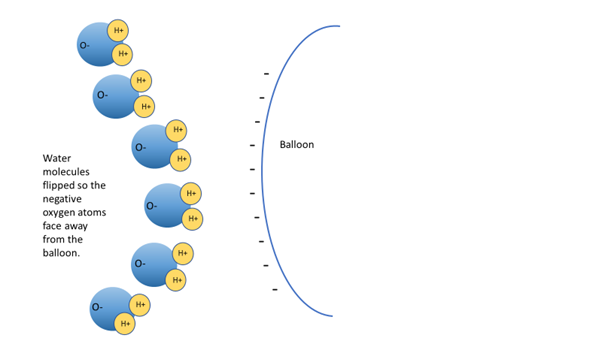
Why does the water bend against the balloon?
the positive side of the water is attracted to the negativly charged balloon.
Causes stream to bend towards the balloon.
CHAIN: polar→ +/- → interactions→ reorient → water bends
BE ABLE TO DRAW
How does the wax paper resist the water?
water is strongly attracted to itself.
wax paper doesn’t interact favorably with water because it’s hydrophobic
so instead of spreading out it form droplets
BE ABLE TO DRAW
How does soap interact with water?
Soap has two regions
a hydrophillic head and a hydrophobic tail.
the water molecules form tightly through hydrogen bonds to create surface tension.
soap slips between and weaken grip.
Lower tension → water spreads
H20 —- H20—- H20
H20—- SOAP —-H20
Soap molecules feature a hydrophilic (water-loving) head and a hydrophobic (water-fearing) tail. The tails push to the surface, breaking water cohesion. This allows water to spread, wet surfaces, and trap oils.
Why does ethanol react so different compared to water?
Ethanol has a non-polar carbon portion
very different from water
weaker overall cohesion and behave different on wax paper (spreads)
water map!
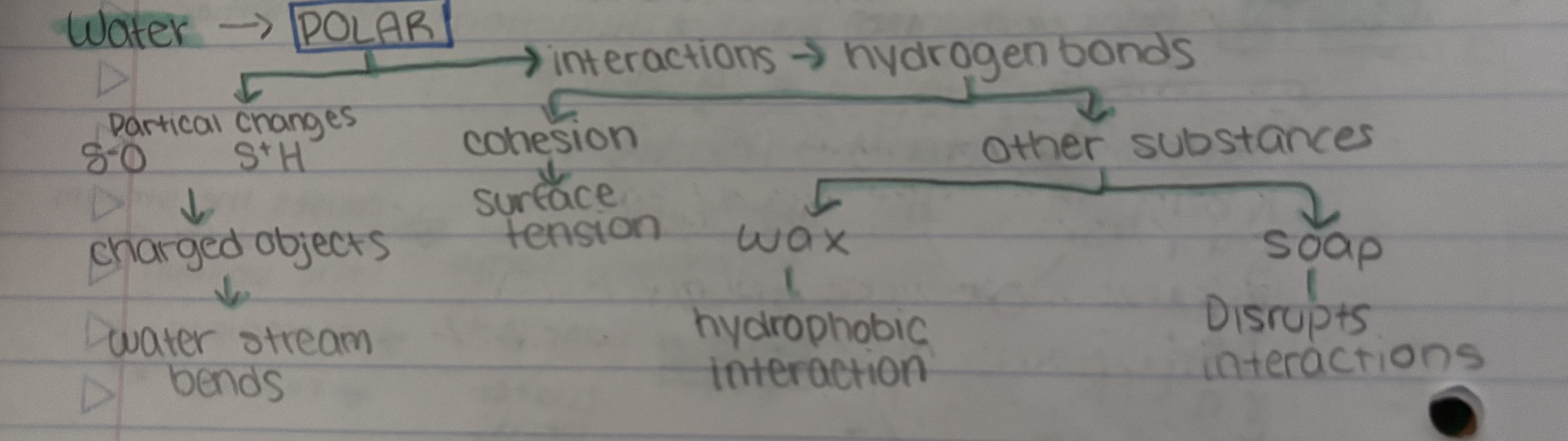
Cohesion? Surface tension?
Cohesion is the binding force between identical molecules caused by intermolecular attractions like hydrogen bonds.
Surface tension is the result of these inward cohesive forces at a liquid's surface, creating a tight boundary layer that resists external force.
EX] basilisk lizard running across water, water strider
What are 4 properties of water?
Cohesion and Adhesion
Resists temperture change
expands when it freezes
acts as solvent to life
All of these properties stem from the fact that the water molecule is polar.
Adhesion?
clinging of one substance to another
water molecules can clip to polar or charged surfaces
Transpiration?
Loss of water from a plant from the leaves as water vapor
LABELING COVALENT AND HYDROGEN BONDS
🙂
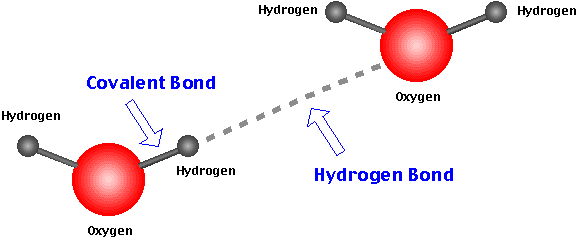
Be able to describe transpiration and the role adhesion and cohesion plays in the process of trees!
WATER must MOVE →
soil → roots → stem → leaves → outside air
WATER ENTERS THROUGHT THE SOIL: water is taken up from the soil through root hairs
WATER ENTERS THE XYLEM: the xylem contain xylem sap, which carries water through the plant
COHESION: Water molecules stick to one another through hydrogen bonds, which maintain the continous water movement.
ADHESION: stick to the walls of the xylem. This helps water remain attracted to the xylem walls as it moves upward.
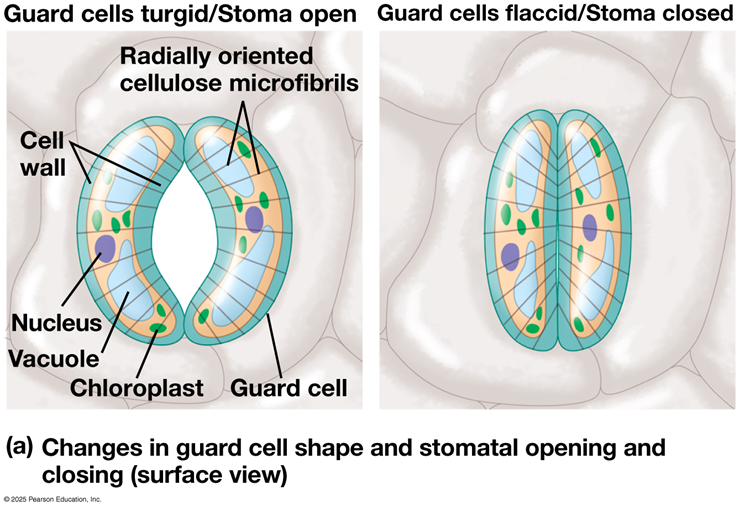
TRAINPIRATION: This loss helps pull more. The water eventually reaches the leaf and is lost through the stoma. The stoma are pore on the leaf surface. The guard cells open and shrink.

Stomata and Guard cells?
Stomata are microscopic pores on plant leaves and stems, and guard cells are the specialized cells that surround each pore.
They control water loss and let carbon dioxide in for food making.
Opening (Swelling): Water follows through osmosis. The cells swell up, bend apart, and open the pore.
Closing (Shrinking): Water leaves the guard cells. The cells go limp and the pore squeezes shut.
Light, water shortage, and carbon dioxide can trigger it.
What is a hormone?
A hormone is a chemical messenger made by glands in the body. It travels through the blood to target organs and cells to control and coordinate important functions like growth, metabolism, and mood.
Plant hormone?
Plant hormone called abscisic acid (ABA) is produced in roots and leaves in response to water deficiency and signals guard cells to close.
CHAIN: when a plant has a water defienciecy → ABA → guard cells close → stomata close → less water loss
Explain why water rises higher by capillary action in a tube of smaller diameter that one of a wider diameter.
Capillary action: Movement of water through a narrow space due to cohesion and adhesion.
Smaller tube:
Greater proportion of water molecules touching the walls.
Adhesion: Water molecules stick to the walls of the glass tube and climb up.
Cohesion and Surface Tension: Water molecules pull each other upward as a group.
Why does water resist temperature change? Explain.
Specific heat: the amount of heat that must be absorbed or lost for 1 gram of a substance to change its temperature by 1 degree C
average kinetic energy is not contributing to movement
Why does water have a higher specific heat capacity than most liquids?
Because of hydrogen bonding
Heat energy → breakers hydrogen bonds → some of the energy used in disrupting instead increase the temperature
EX] when you touch a hot pan on the stove but the water is still just warm.
How does water’s high specific heat help the temperature of the environment?
Because water resists temperature change, water helps to moderate climates.
high specfic heat → temp stability → stable environment
High Heat of Vaporization?
Heat of vaporization: the quantity of heat a liquid must absorb for 1 gram of it to be changed into a gas.
Because water must absorb a relatively large amount of heat before it evaporates, the evaporation of water from our bodies is an efficient way to cool off → Evaporative cooling
ex] dog panting/human sweating
Explain water expanding when it freezes and its benefits.
when water freezes, hydrogen bonds arrange the molecules into a more pen structure.
expand→ becomes less dense → ice floats
floating ice makes a layer while liquid water remain underneath.
important for aquatic environment
water expands → ice floats → liquid water remain → no freeze over
Solvent of life?
Water dissolves: (POLAR)
polar molecules
charged molecules
ionic substances
Ionic and polar substances that dissolve in water are said to hydrophilic or “water loving.”
Non-polar substances that will not interact and dissolve in water are said to be hydrophobic or “water fearing.”
EX] fabrics can be water repellant by coating them with substances that cause water to form beads.
Name a water-soluble protein?
Human lysozyme
helps biological molecules exist and function.
Which would have a higher boiling point- dimethyl ether (C2H6O) or ethanol (C2H6O) ? Explain!
Ethanol
can form hydrogen bonds
stronger intermolecular forces
more energy
high boiling point
Surfactants reduce surface tension of a liquid. Which of the following would result if water was treated with surfactants?
A.Surfactant-treated water droplets will form a thin film instead of beading on a waxed surface.
B.Surfactant-treated water will form smaller droplets when dripping from a sink.
C.Water striders will sink.
D.All of the above will occur.
E.Only A and C will occur.
d.
Acid and Bases? Define
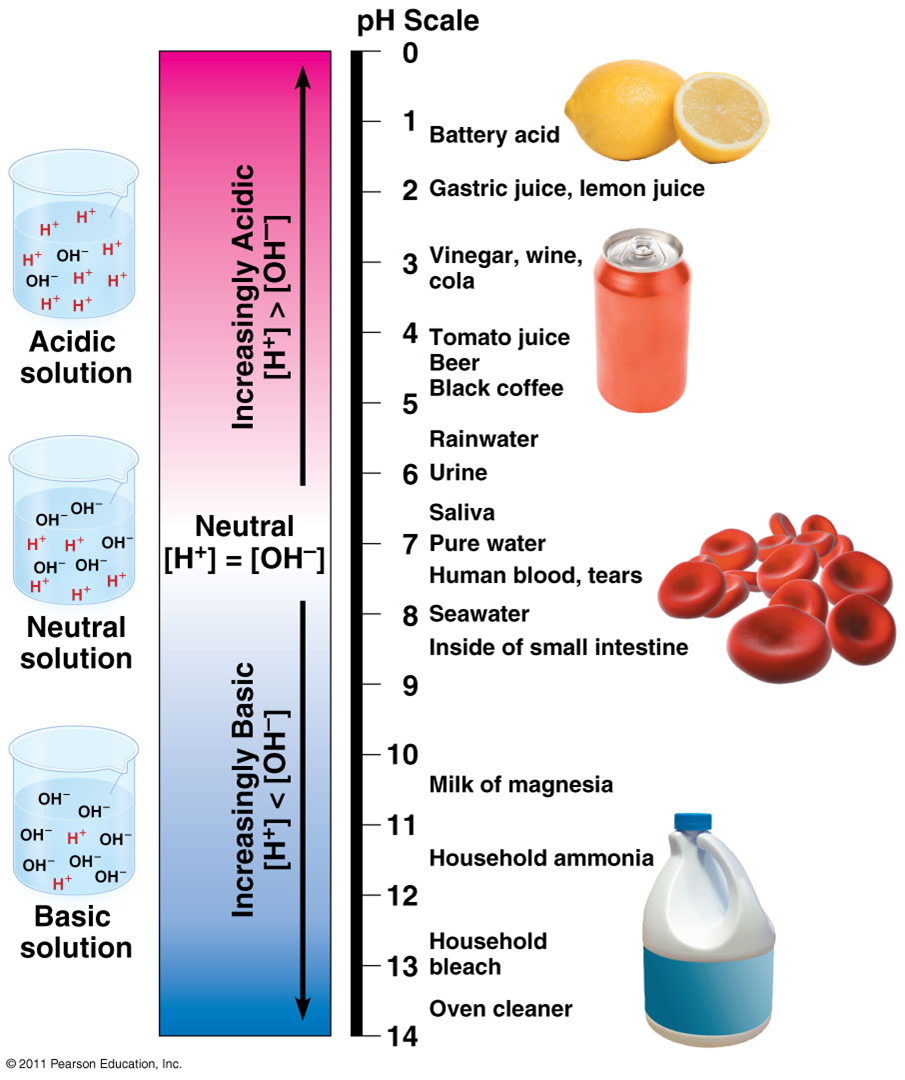
Acids and bases are chemical opposites. Acids give away hydrogen ions and taste sour, while bases accept hydrogen ions and taste bitter with a slippery feel.
Measured on a pH scale from 0 to 14,
acids score below 7,
bases score above 7,
neutral level is 7.
Buffers?
Substances that minimize changes in pH
h+ is protons
Accept H+ when it is in excess
Donate H+ when it is depleted
Example: carbonic acid/bicarbonate ion
Carbonic Acid/bicarbonate ion Buffer System
If pH increases (and hydrogen ions are depleted), carbonic acid acts a hydrogen donor:
H2CO3 → HCO3- + H+
If pH decreases (and hydrogen ions are in excess), the bicarbonate ion acts as a hydrogen ion acceptor:
H2CO3 ← HCO3- + H+
pH goes down → H+ increases → HCO3 accepts H+ → H2CO3 forms→ excess H+ decreases → pH moves towards normal

why do we care about buffers?
Carbonic acid is a buffer that contributes to pH stability in human blood
ocean acidification → 25% of carbon dioxide is absorbed by the ocean.
CHAIN:
Human made CO2 → CO2 absorbed by ocean → ocean chemistry change → fewer carbonate ions → coral have more difficulty building coral reefs → coral reefs affected
coral reefs are important ecosystems!

Fill in the blanks:
Buffers…
________ H+ when pH becomes more acidic
________ H+ when pH becomes more basic
accept
donate
more maps

What are the 7 functional groups?
hydroxyl O-H
Carbonyl C=O
carboxyl C=OOH
amino NH2
sulfhydryl SH
phosphate PO-24
methyl CO3
How many covalent bonds do carbons have?
4
Isomers?
•Have the same number of atoms of the same elements but different structures
•Different structures means different properties!
Ex]
a) structural isomers
b) cis isomer- the two x are on the same side
c) trans isomers- the two x are on opposite sides
d) enantiomers- mirror images
What are the 4 major biological molecules?
´Carbohydrates
´Lipids
´Proteins
´Nucleic Acids
polymer
a larger molecule made by joining many smaller units
ex] In carbohydrates: glucose + glucose + glucose= polysaccharide
![<ul><li><p>a larger molecule made by joining many smaller units </p></li><li><p>ex] In carbohydrates: glucose + glucose + glucose= polysaccharide </p></li></ul><p></p>](https://assets.knowt.com/user-attachments/27883540-0107-49e4-ac21-fd295e53e039.png)
monomer
a small molecular unit that can be joined to other monomers to make a larger molecule (building block)
for carbohydrates, individual sugar molecules can act as building blocks.
Ex] glucose → one sugar unit
![<ul><li><p>a small molecular unit that can be joined to other monomers to make a larger molecule (building block)</p></li><li><p>for carbohydrates, individual sugar molecules can act as building blocks.</p></li><li><p>Ex] glucose → one sugar unit</p></li></ul><p></p>](https://assets.knowt.com/user-attachments/21f59df8-f641-4aec-96f4-8556b69975c0.jpg)
dehydration synthesis
Dehydration synthesis is a reaction that joins molecules toghther while removing water
the molecules are being built toghther
small molecules called monomers, join toghther to form larger molecules called polymers, by releasing a molecule of water.
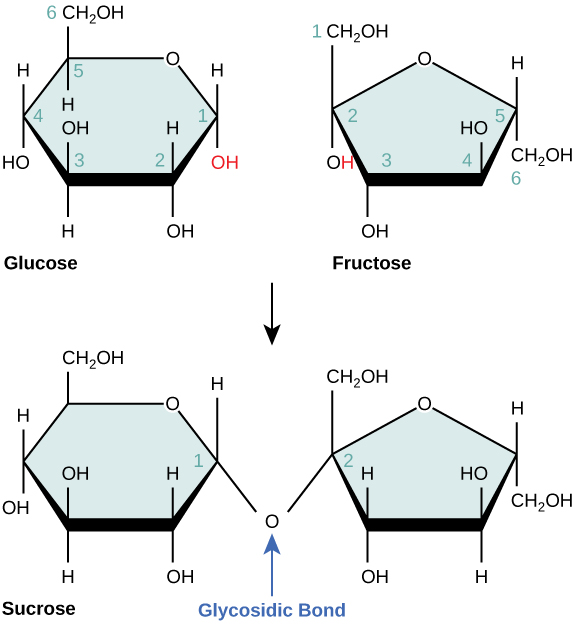
connect simple sugar molecules
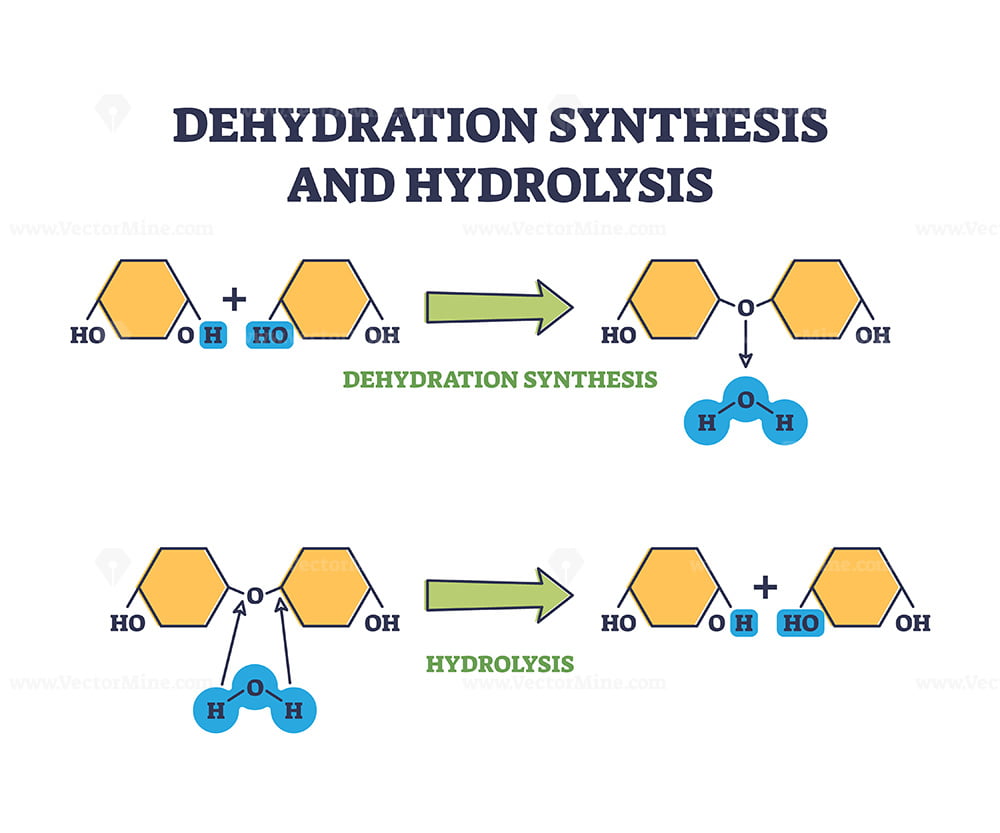
hydrolysis?
breaks a larger molecule apart by adding water
during the process, water splits into a hydrogen ion and a hydroxyl group while attach a new seperated parts of the original molecule
(water enters molecule breaks)
breaks glucose bonds holding complex CH together
Monosaccharide?
a carbohydrate made of 1 sugar unit
major nutrients of cells used for energy and building blocks for other molecules
Glucose breaks down during cellular respiration to make ATP
Ex] glucose and fructose
![<ul><li><p>a carbohydrate made of 1 sugar unit</p></li><li><p>major nutrients of cells used for energy and building blocks for other molecules</p></li><li><p>Glucose breaks down during cellular respiration to make ATP </p></li><li><p>Ex] glucose and fructose </p></li></ul><p></p>](https://assets.knowt.com/user-attachments/674bfcab-6d80-4128-bc77-87460537ce56.jpg)
Disaccharides?
2 sugars joined together
Sucrose: plants transport carbohydrates from leaves to roots
Lactose: (milk sugar)
Sucrose: One glucose unit plus one fructose unit (table sugar).
Lactose: One glucose unit plus one galactose unit (milk sugar).
Energy Source: The body breaks them down into single sugars to power cells.
Nutrient Supply: Milk sugar gives vital food and energy to baby mammals.
Plant Transport: Plants move food energy through their stems using double sugars
Oligosaccharides?
a few sugars
Cell surface glycan
Human milk oligosaccharides:
Cell-surface glycans
a molecular identification label
Cell-surface glycans are sugar groups attached to molecules on the surface of the cells
CSG ARE IMPORTANT FOR: cell to cell recongniton and communication
Sugar groups attached to molecules on the cell surface
HMOs?
found in human breast milk
evolved to feed beneficial bacteria
humans don’t make an enzyme to recognize them
supports beneficial microbes
What is a Polysaccharides?
Polysaccharides are complex carbohydrates made of long chains of simple sugar molecules linked together.
4 examples and functions of polysaccharides.
Starch: energy storage in plants
´Polymer of glucose
´How plants store sugar reserves
´Stored in plastids of plant cells
2, Glycogen: energy storage in animals
•Polymer of glucose
•How animals store sugar reserves
•In vertebrates, found mainly in liver cells and muscle cell
Cellulose: structural support in cell wall plants´Polymer of glucose
´Major structural component of the plant cell wall
´Part of “insoluble fiber” in human diet
´Cow solution?
´Termite solution?
Chitin: strutural support in fungi and arthropods
´Used to build exoskeletons of arthropods
´Fungi use to build their cell wall
Give two examples of symbiotic relationships involving carbohydrates, animals, and microbes
Humans + beneficial bacteria
microbes use HMO as food source
Cows + microbes
plants have lots of cellulose
cellulose i hard for animals to digest
microbes in the cows digestive system help break down plant material
cows obtain nutrients
Termites + Microbes
consume wood, which has cellulose
animal gets help by obtained nutrients
ALL MUTUALISM
Molecular structure of a carbohydrate
To recognize a carbohydrate by its molecular structure, look for a carbon chain bound to hydrogen and oxygen in a 1:2:1 ratio,(Cn(H2O)n), containing multiple hydroxyl groups (-OH) and an internal carbonyl group (C=O) that forms either an open chain or a ring.
Name all 8 important proteins!
Enzyme
Storage proteins
hormonal proteins
contractile and motor proteins
defensive proteins
transport proteins
receptor protein
structural protein
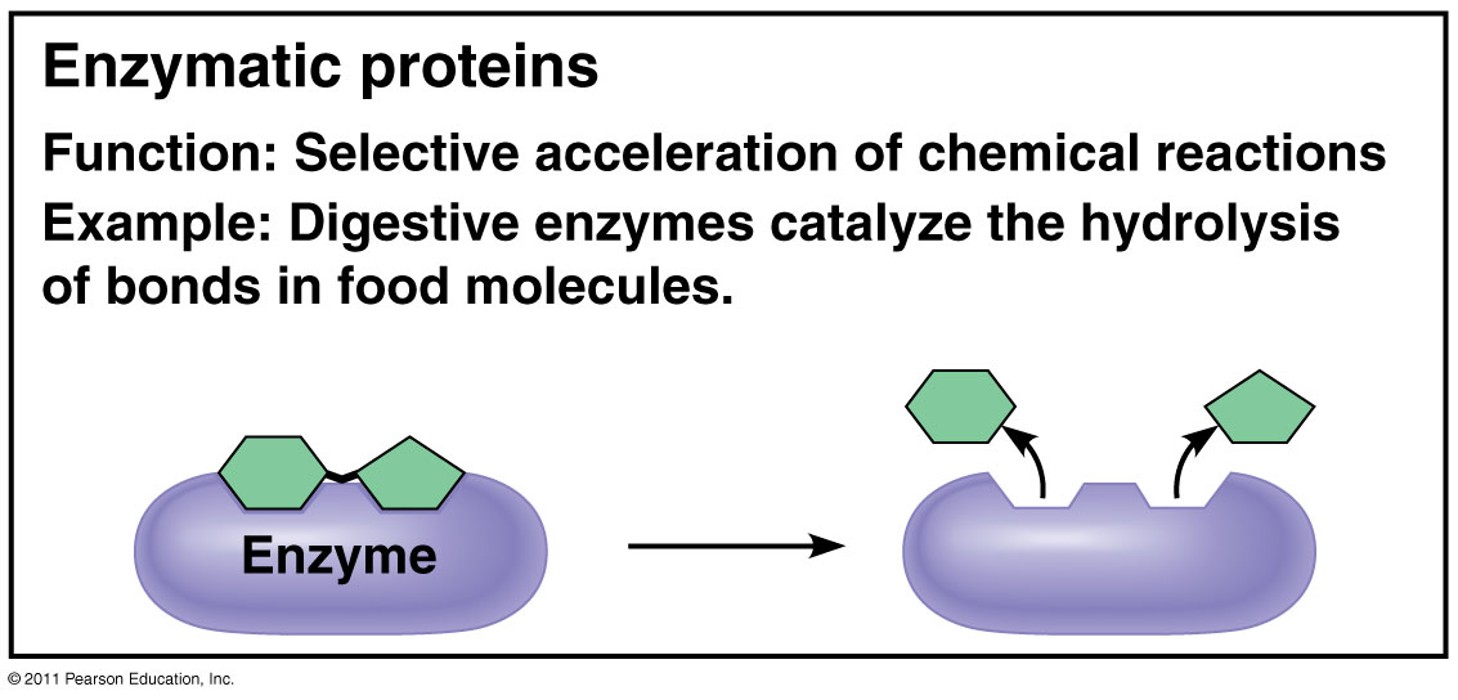
Enzymatic protein?
function: selective acceleration of chemical reactions
example: digestive enzyme catalyze the hydrolysis of bonds in food molecules.
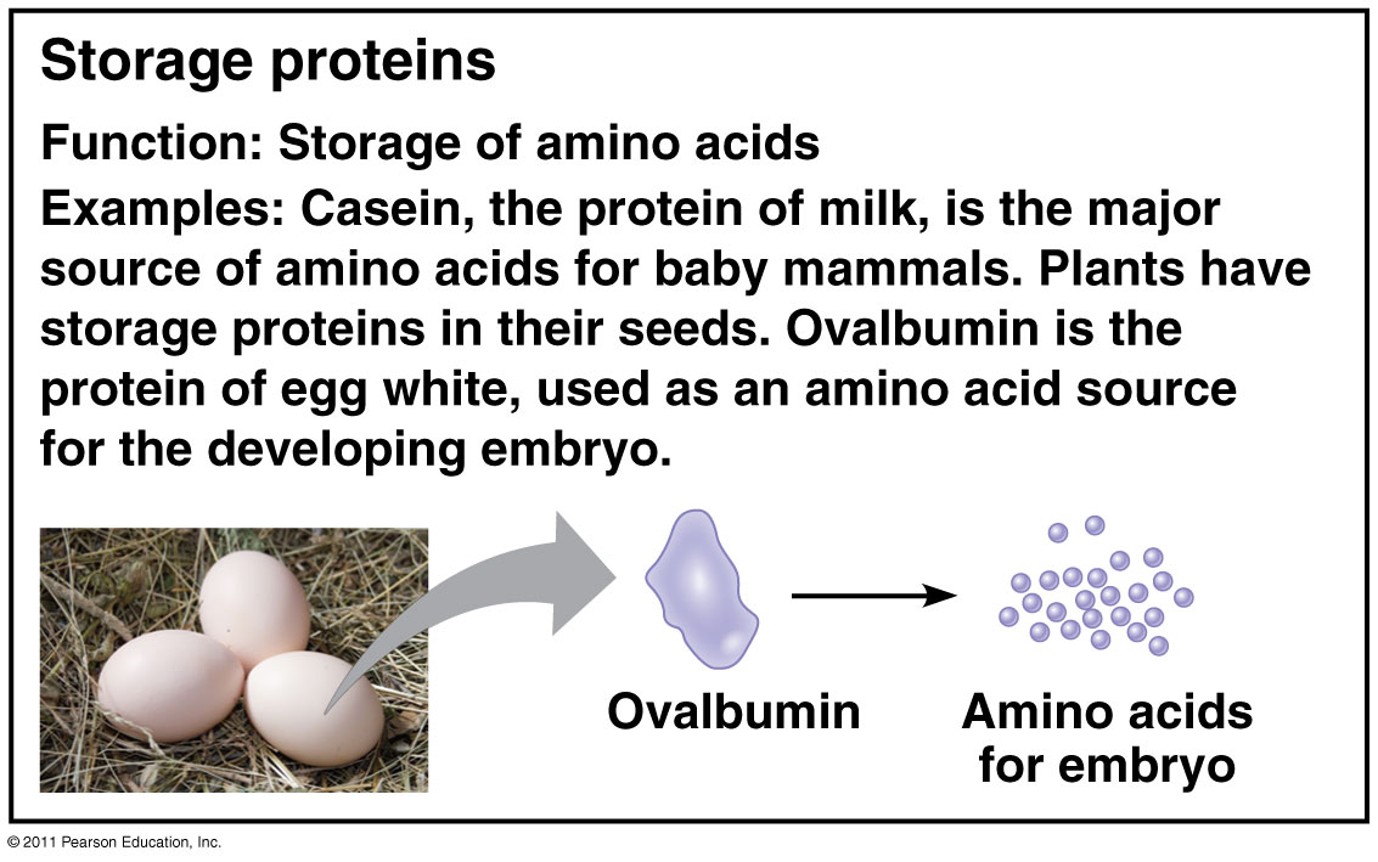
Storage proteins?
Function: Storage of amino acids
Examples: Casein, the protein oof milk, is a major source of amino acids for baby mammals. Plants have a storage protein in their seeds.
Ovalbumin is the protein of egg while, used as an amino acid source for the developing embryo
Why are things for baby plants and animals so rich in storage proteins?
Baby plants (seeds) and animals (eggs and milk) need a dense and easy-to-use source of food and building blocks to grow before they can find or make their own food. Storage proteins hold large amounts of nitrogen, carbon, and amino acids in a small space.
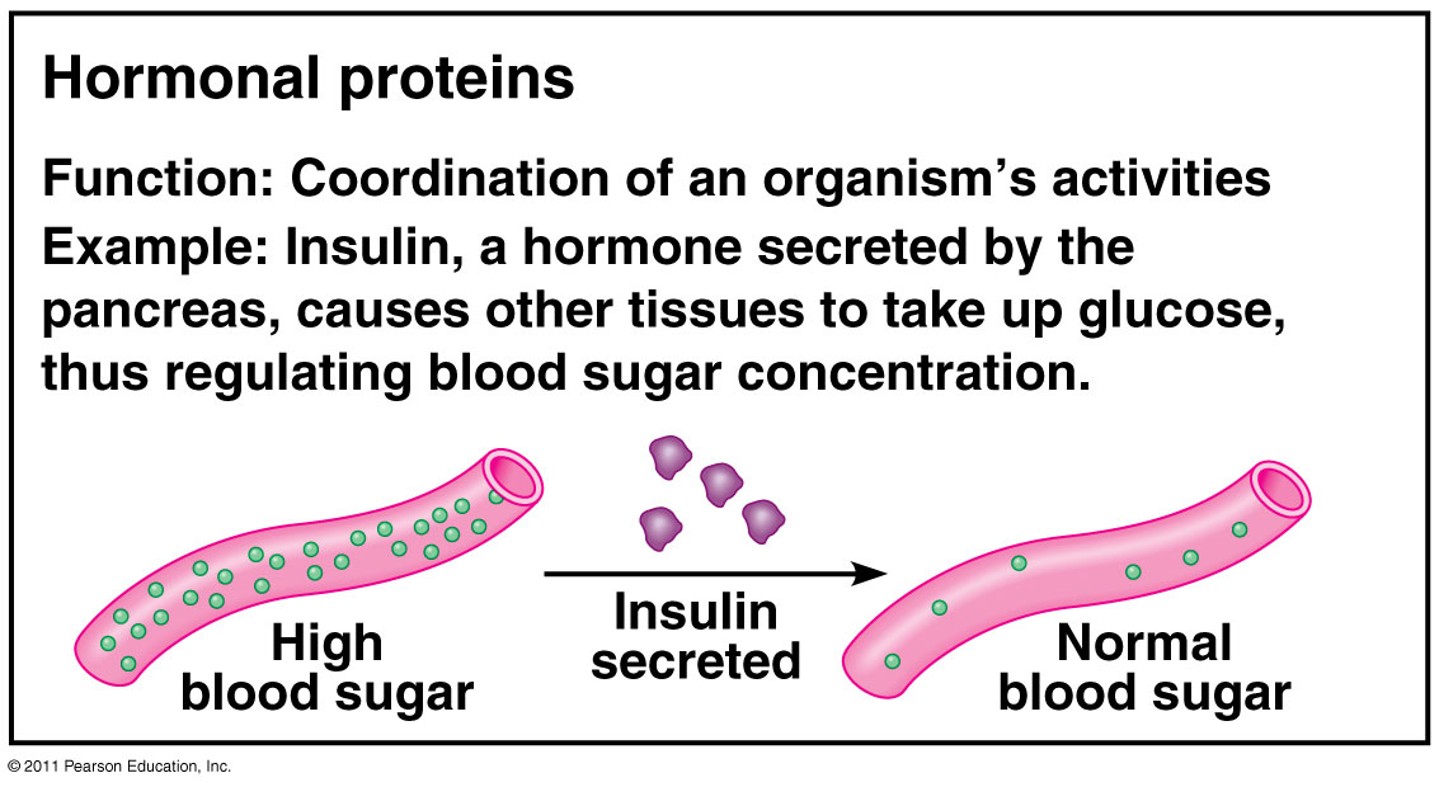
Hormonal Proteins?
Function: Coordination of an organism’s activities
Example: Insulin, a hormone secreted by the pancreas, causesother tissues to take up glucose thus regulating blood sugar concentration.
contractile and motor proteins
Function: Movement
Examples: Motor proteins are responsible for the undulations of cilia and flagella. Actin and myosin proteins are responsible for the contraction of muscles
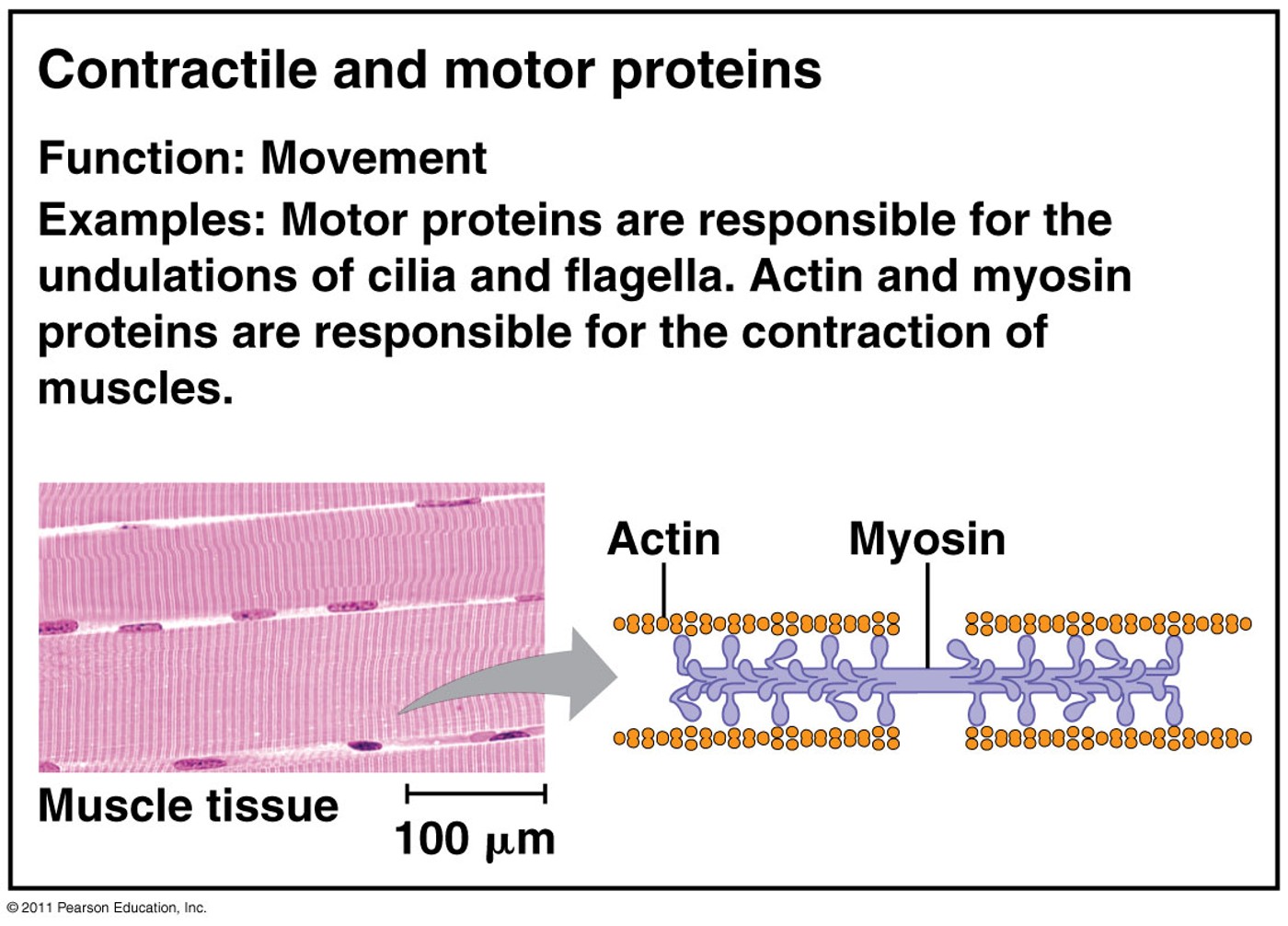
What do the actin and myosin do?
Actin and myosin are the two main protein filaments that work together to make muscles contract and move.
Thick myosin filaments pull on thin actin filaments, sliding past each other to shorten the muscle cell in a process powered by energy from ATP
Tears in muscles causes soreness after new exercise.
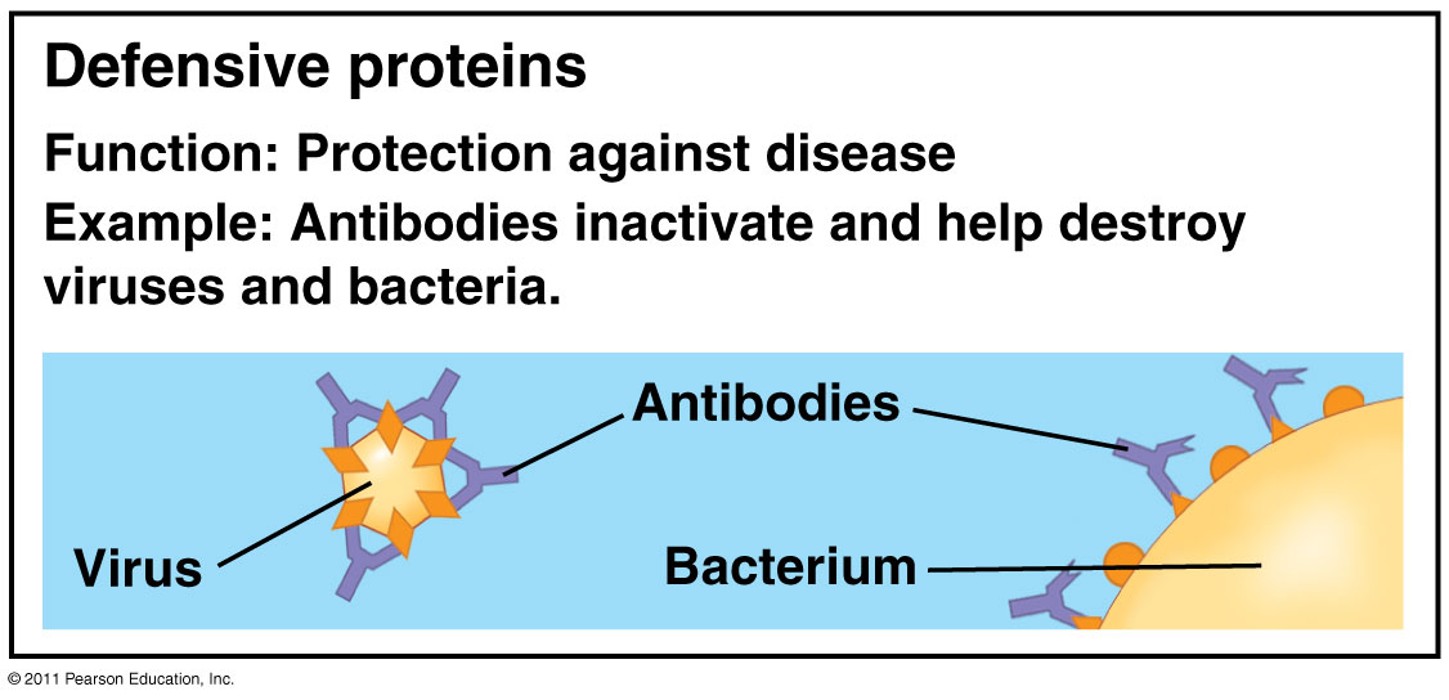
Defensive proteins?
Function: Protection against disease
Example: Antibodies inactivate and help destroy viruses and bacteria
what is an antigen?
An antigen is any substance, such as a protein or sugar, that makes your body start an immune response
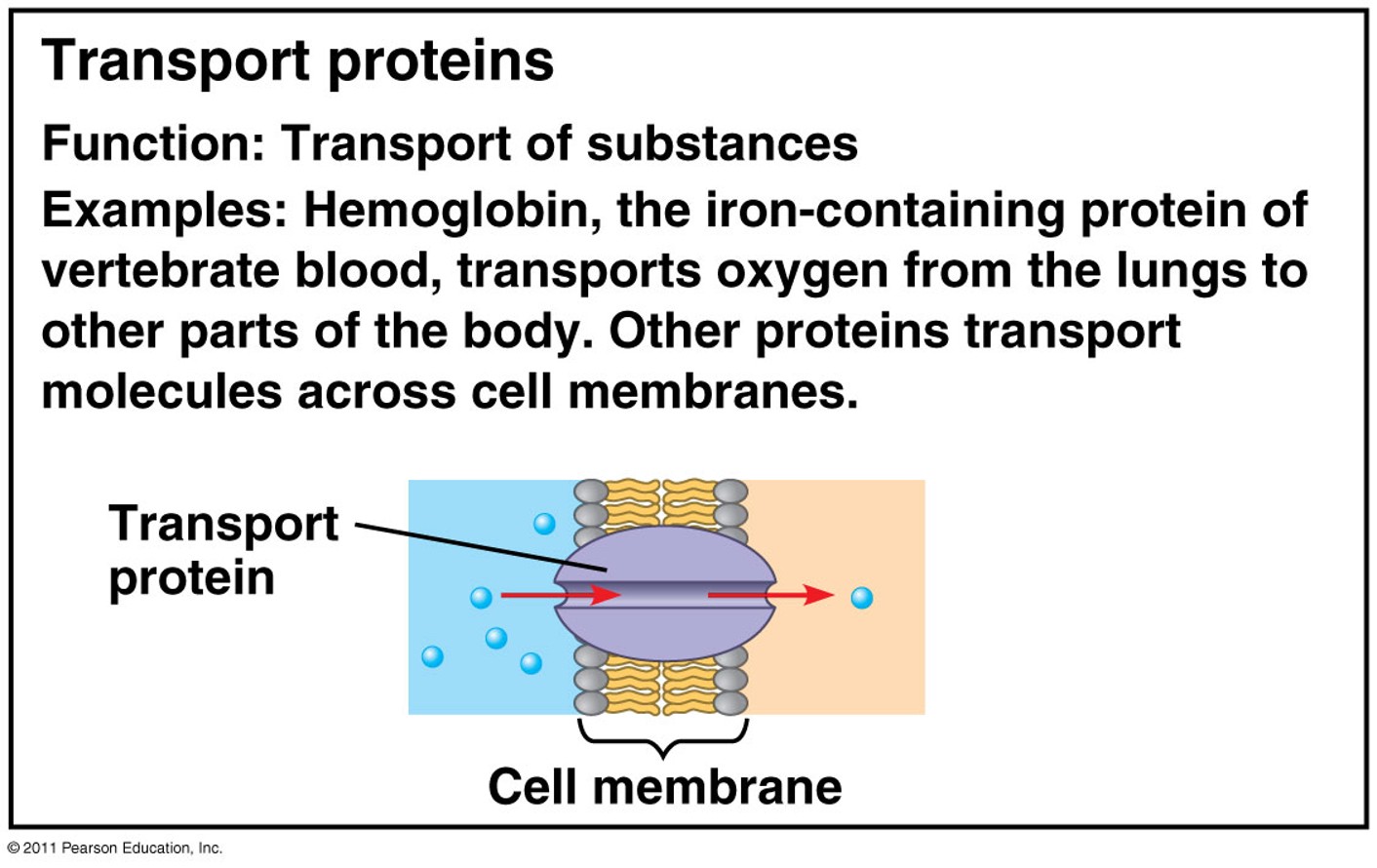
transport proteins
Function: Transport of substances
Examples: Hemoglobin, the iron-containing protein of vertebrate blood, transports oxygen from the lungs to other parts of the body. Other proteins transport molecules across cell membranes
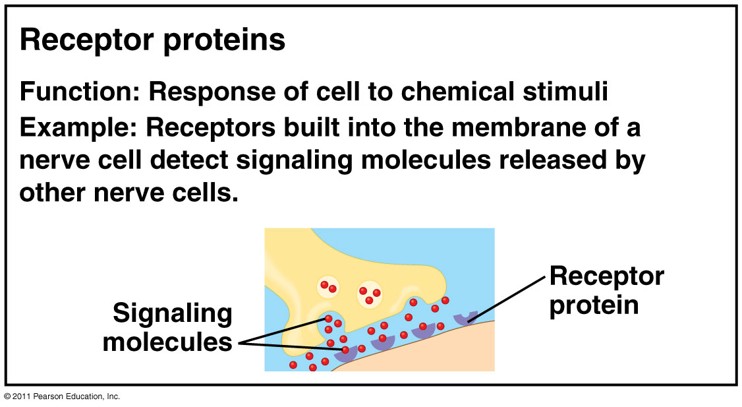
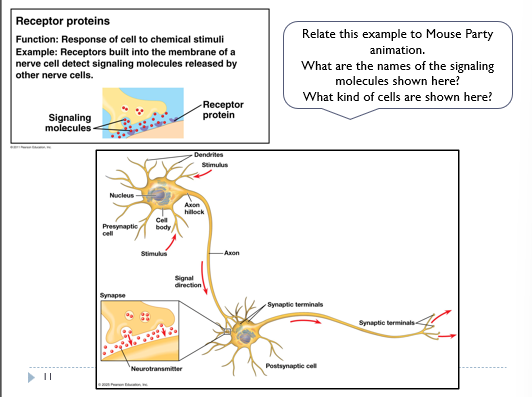
Receptor Proteins?
Type of Cells
Neurons: The cells shown in the diagrams are nerve cells (neurons).
Presynaptic Cell: The neuron transmitting the signal.
Postsynaptic Cell: The neuron receiving the signal.
Name of Signaling Molecules
Neurotransmitters: The chemical signaling molecules released into the synaptic cleft.
Relation to "Mouse Party"
Both the diagrams and the "Mouse Party" animation depict how neurons communicate at a synapse.
The signaling molecules cross the gap and bind to specific receptor proteins on the postsynaptic membrane.
The "Mouse Party" animation specifically shows how different drugs (like THC, ecstasy, or cocaine) alter this exact mechanism by blocking, mimicking, or overstimulating these receptor proteins and neurotransmitters (such as dopamine and serotonin).
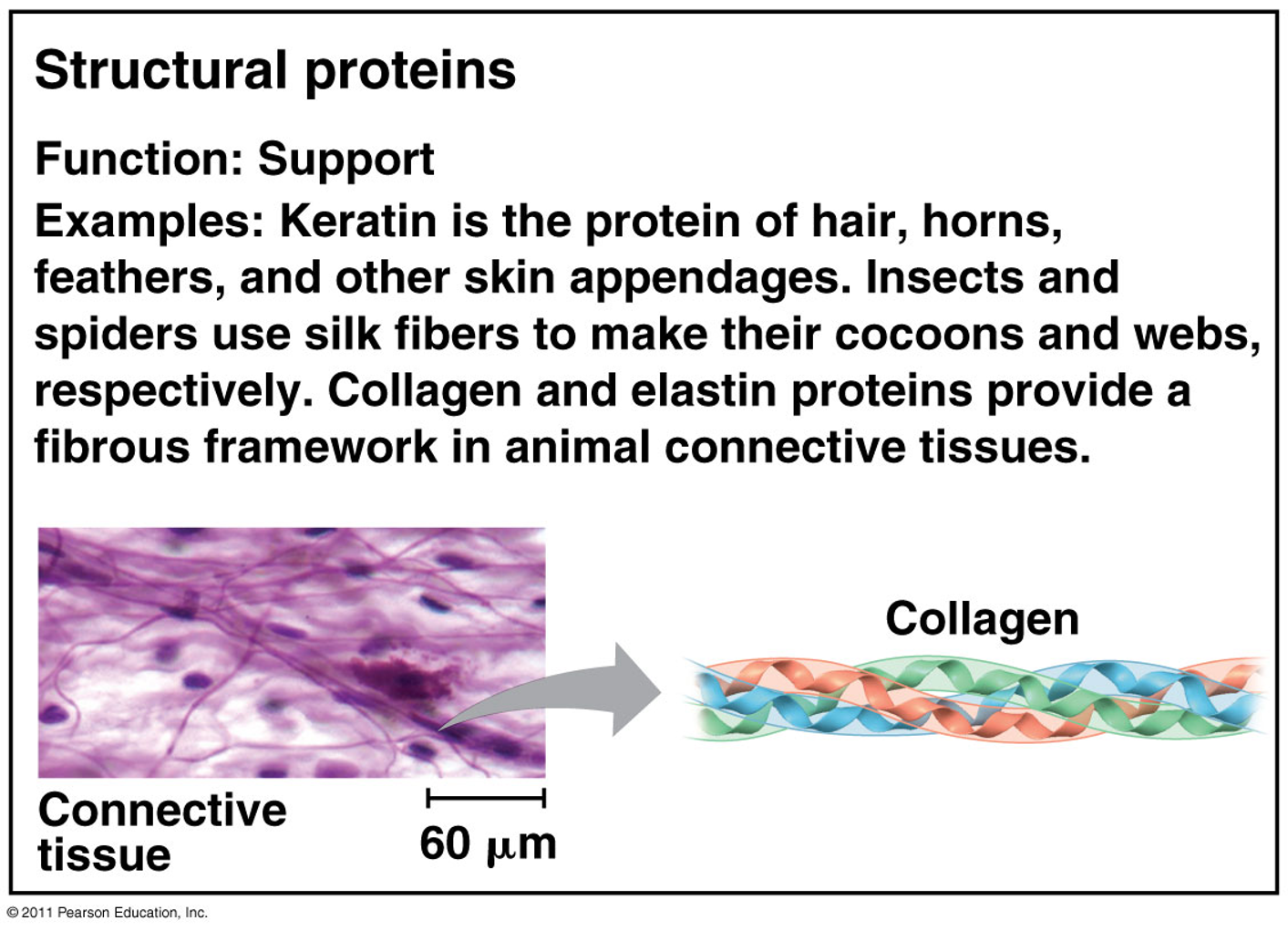
Structural proteins?
Amino Acids?
Monomers that build proteins
20 different amino acids make up all living things
BE ABLE TO DRAW
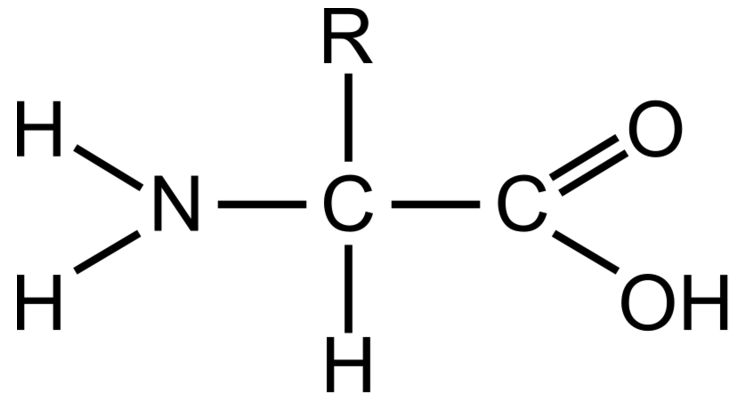
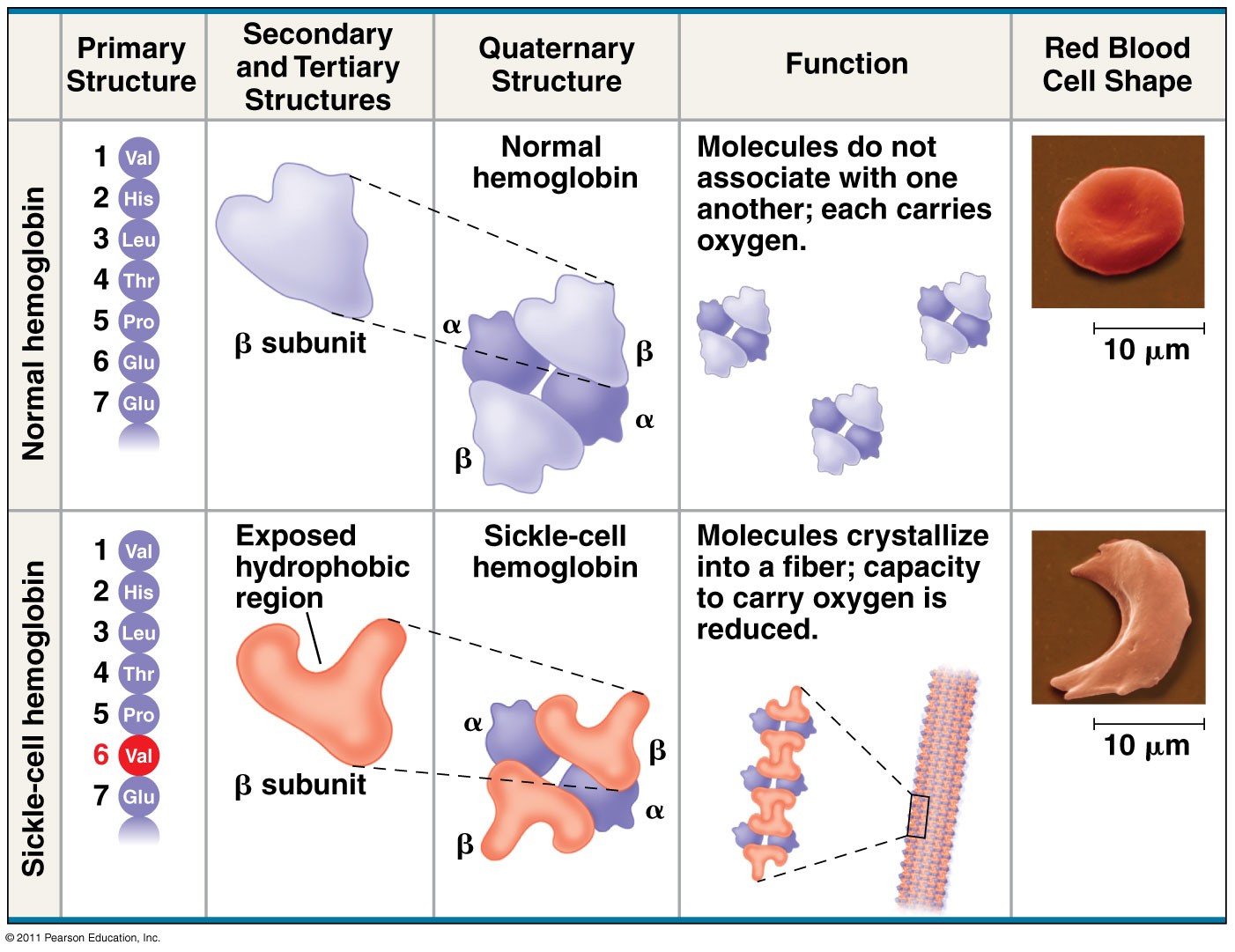
The properties of R groups….
Properties of R groups give amino acids and their proteins different properties.
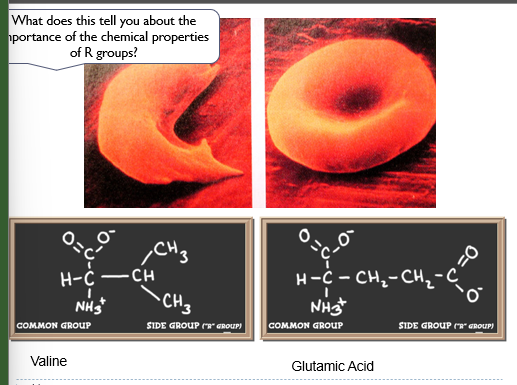
answer?
The images demonstrate that changing a single amino acid's R-group can drastically alter a protein's structure and function, leading to physiological diseases like sickle cell anemia.
Glutamic Acid: Possesses a hydrophilic (polar/charged) R-group. It interacts favorably with water on the exterior of normal hemoglobin molecules. This keeps red blood cells flexible and disc-shaped.
Valine: Possesses a hydrophobic (nonpolar) R-group. When it replaces glutamic acid, it avoids water and seeks out other hydrophobic regions.
Be able to identify a peptide bond!
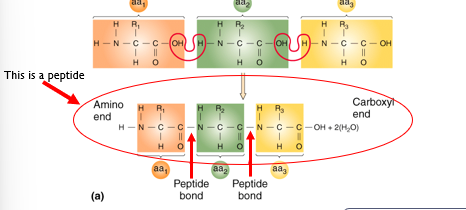
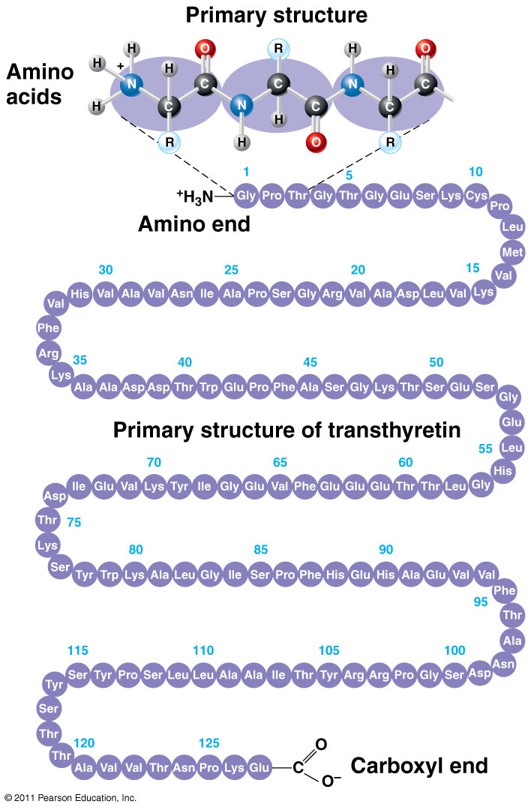
Primary Structure of a Polypeptide?
The amino acid sequence
DNA (genes) tell the cell what order to put the amino acids in
The primary structure helps to dictate the secondary and tertiary structure
Chemical nature of backbone and R-groups
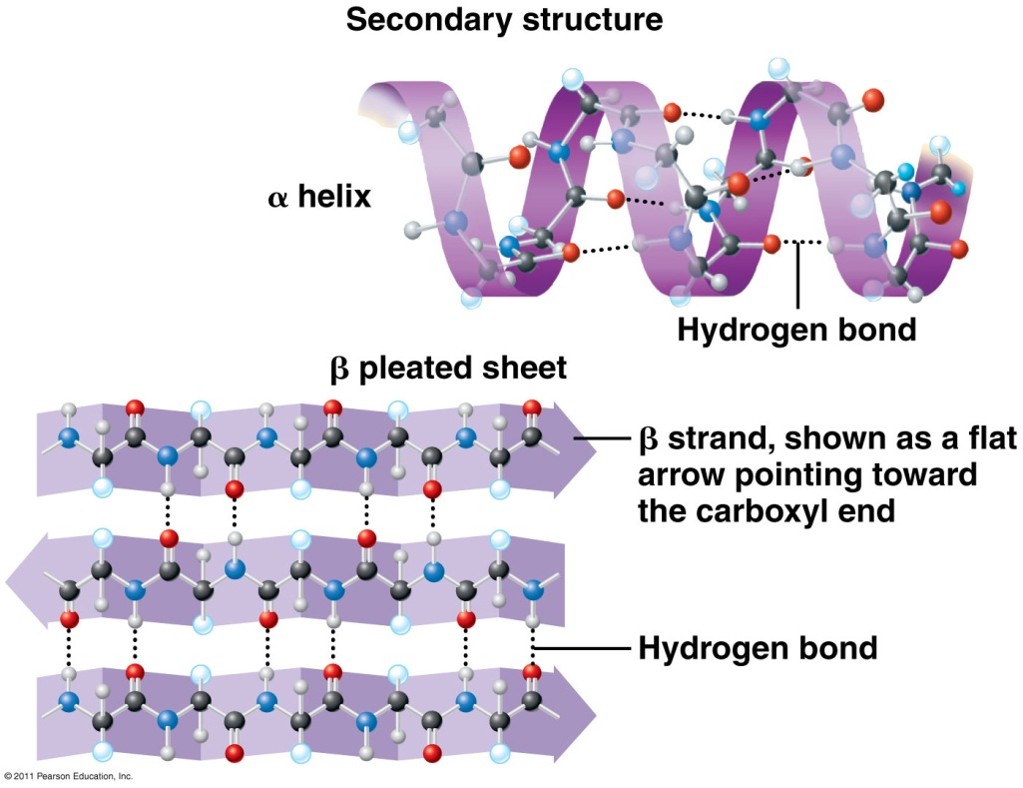
Secondary Structure of a Polypeptide?
Coils and folds
Result of hydrogen bonding within the backbone of the chain
}C=O and H-N
Alpha helix
Beta pleated sheet
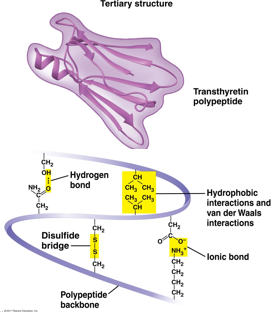
Tertiary Structure of a Polypeptide?
Overall shape that results from interactions between R groups
}Hydrogen bonds
}Disulfide bridges
}Ionic bonds
}Hydrophobic interactions
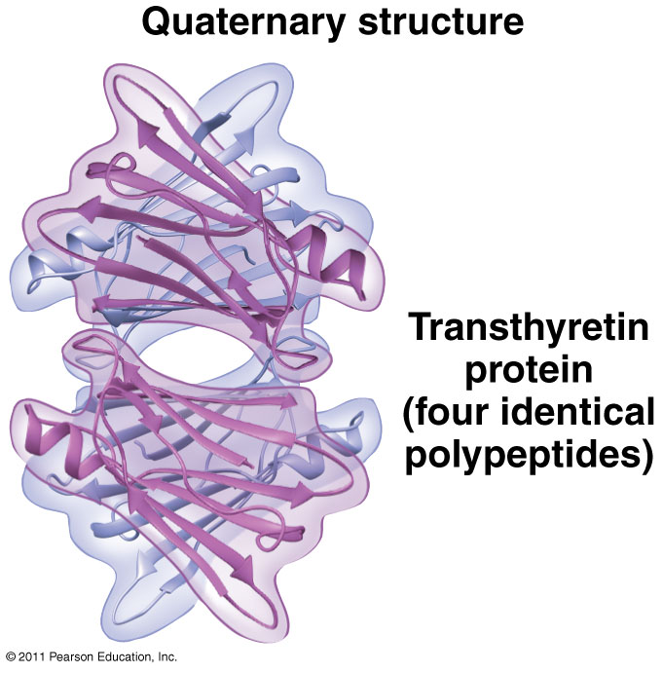
Quaternary Structure of a Polypeptide?
The interaction of two or more polypeptide chains
Not all proteins have a 4th level of structure
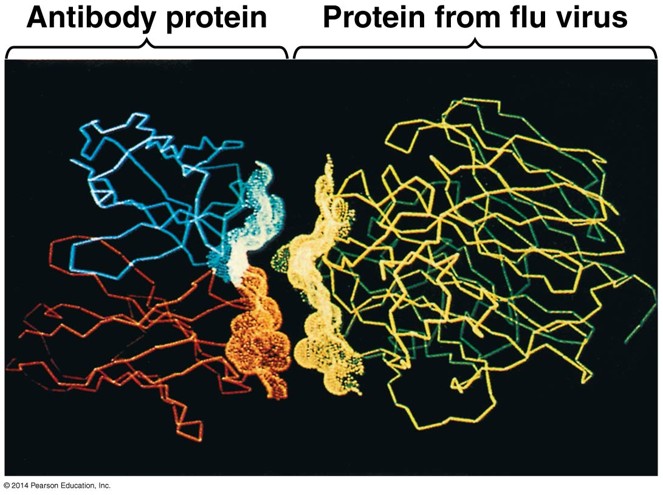
Why doe shape matter in a protein?
Functions of proteins depend on recognition and binding to other molecules
Antibodies bind to antigens on viruses/bacteria and mark them for destruction
Morphine, heroin, and other opiates mimic shape of naturally occurring endorphins
Endorphins are neuropeptides.
Fit into protein receptors and trigger a cellular, then physiological response
Why correct protein folding is important?
Correct protein folding is vital because a protein's specific three-dimensional shape determines its biological function. Without the proper shape, a protein cannot bind to its target molecules, catalyze chemical reactions, or support cellular life. Misfolded proteins lose their normal activity and can form harmful clumps linked to serious illnesses.
Central dogma?
The central dogma of molecular biology, proposed by Francis Crick in 1958, is the foundational concept explaining the unidirectional flow of genetic information within a biological system: from DNA to RNA to protein. It dictates that genetic instructions are stored, copied, and translated to build the functional molecules of life
Denaturation?
The loss of the native shape of a protein
Structure à function
} loss of shape means loss of function
Caused by any environmental factor that disrupts the interactions
}Change in pH (why buffers are important)
}Change in salt concentration
}Increase in temperature (egg white)
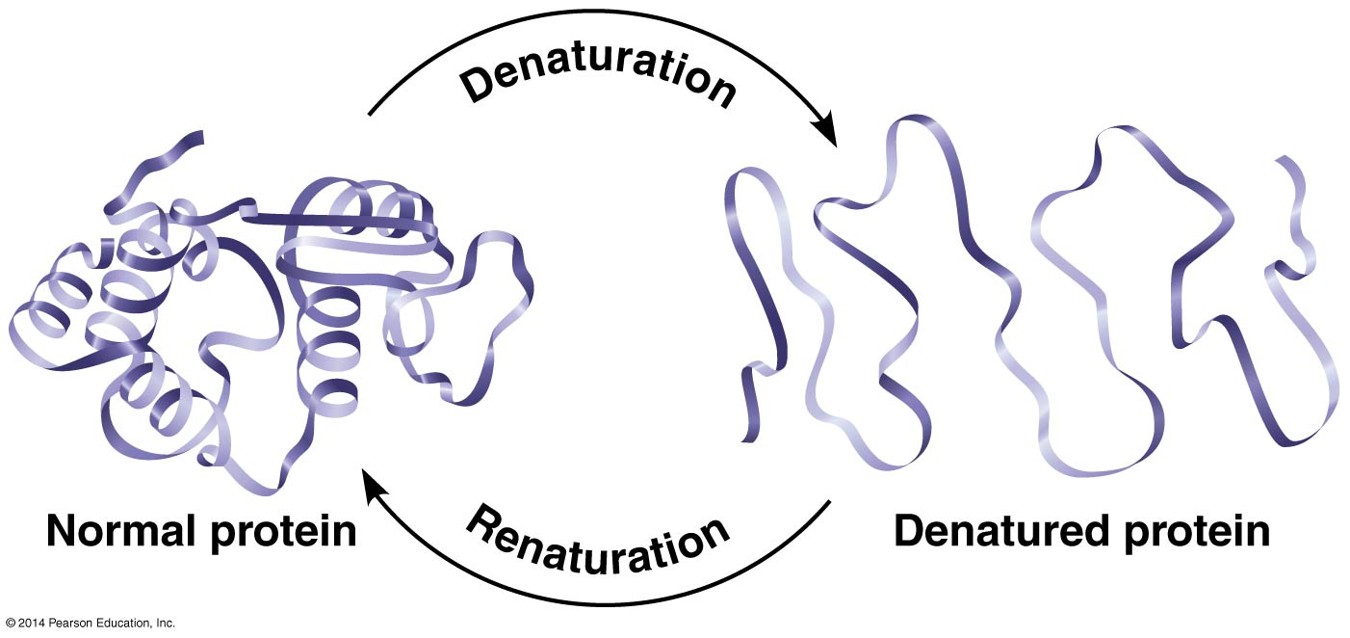
Be able to example WHY these things cause denaturation using what you know about the bonds responsible for each level or protein interaction.
}Change in pH (why buffers are important)
}Change in salt concentration
}Increase in temperature (egg white)
🧪 Change in pH
Bonds disrupted: Ionic bonds (salt bridges) and hydrogen bonds.
Why it happens: Altering H+ ion concentration changes the charges on amino acid side chains (R-groups).
The result: Repulsions occur or attractive ionic pairs are destroyed, breaking the tertiary structure.
🧂 Change in Salt Concentration
Bonds disrupted: Ionic bonds and hydrogen bonds.
Why it happens: Excess salt ions shield and compete with the charged R-groups of the protein.
The result: Normal attractive interactions between amino acids are blocked by the salt ions, causing the protein to unfold.
🔥 Increase in Temperature
Bonds disrupted: Hydrogen bonds and hydrophobic interactions.
Why it happens: Added heat increases the kinetic energy and molecular vibrations of the protein atoms.
The result: The rapid movement overcomes and breaks weak heat-sensitive bonds, though covalent peptide bonds remain intact.
Buffers minimize changes in pH by________ hydrogen ions when pH increases and _____________ hydrogen ions when pH decreases
accept
release
What kind of molecules are antibodies?
The category of molecules that antibodies fall under would be proteins, specifically defensive proteins.
Where are antibodies normally produced/ found?
Antibodies are normally produced and found in the vertebrate immune system. They are also especially found in blood and other bodily fluids.
How are antibodies used as tools in ELISA?
Antibiotics are used because they bind to an antigen. In ELISA, a primary antibody binds to a substance being tested for. A secondary antibody combined to the primary one and then carried an enzyme that produces the color change when a substrate is added.
What characteristics of antibodies make them good tools in this way?
Antibodies are useful because they are very specific. They bind to antigens and they recognize these antigens. They also make it possible to see whether a specific substance is present. The second antibody also has the enzyme that can make a color change.
What are the four levels of protein structure? How many levels do antibodies have?
The four levels of protein structure include primary, secondary, tertiary, and quaternary. Antibodies have all 4 levels.
What kind of molecule are enzymes?
Enzymes are proteins that act as biological catalysts.
What was the enzyme at ached to in this lab?
The enzyme was attached to the secondary antibody
How are enzymes used as tools in ELISA?
The enzyme caused a chemical reaction with the substrate, making a color change. The color told during the lab whether the substance that we were testing was there or not.
What substrate was used? Why?
The substrate was TMB (tetramethylbenzidine). It was used because the peroxidase reacts with TMB to produce a color change making it blue, allowing the ELISA result to be seen.
What enzyme did we use in this lab?
The enzyme was peroxidase (horseradish peroxidase, HRP).