Veterinary Radiology & Imaging Procedures: Safety, Techniques, and Equipment
 Studied by 0 people
 Call Kai
 Learn
Learn Practice Test
 Spaced Repetition
 Match
Match Flashcards
 Knowt Play
1/78

There's no tags or description
Looks like no tags are added yet.
Name | Mastery | Learn | Test | Matching | Spaced |
|---|
No study sessions yet.
79 Terms
What is the purpose of radiation safety practices in veterinary facilities?
To minimize exposure to radiation and protect both staff and patients.
What is the ALARA principle?
As Low As Reasonably Achievable; a method to minimize radiation exposure.
What does a dosimeter measure?
A person's radiation exposure.
What protective equipment must be worn when working with radiation?
Lead apron, lead gloves, thyroid shield, and lead glasses.
What is the importance of maintaining a radiology log?
To document each film taken, exposure settings, and patient information.
What is the function of the cathode in an X-ray tube?
To create electrons when heated.
How is an X-ray beam produced?
When fast-moving electrons collide with the anode, causing a release of energy in the form of photons.
What is the difference between radiopaque and radiolucent materials?
Radiopaque appears white to light gray (hard tissue), while radiolucent appears black or dark gray (soft tissue).
What does kVp stand for in X-ray terminology?
Kilovoltage peak; it indicates the strength or voltage of the X-ray beam.
What does mA represent in X-ray machine terminology?
Milliamperage; it indicates the number of X-ray beams based on time.
What is the lateral (LAT) view in X-ray positioning?
The animal is positioned on its side, and the X-ray beam passes from side to side.
What is the ventrodorsal (V-D) view in X-ray positioning?
The animal is positioned on its back, and the X-ray beam passes from the ventral area to the dorsal area.
What is the purpose of using a collimator in radiology?
To decrease X-ray beam distance and reduce scatter radiation.
What are positive contrast agents used for in radiology?
To absorb more X-rays, allowing for better visibility of structures on X-ray films.
What is an example of a positive contrast agent?
Barium sulfate, used in upper and lower GI studies.
What are negative contrast agents and give examples?
Agents that appear radiolucent; examples include air, oxygen, and carbon dioxide.
What is the significance of sharp detail in radiographic images?
It is essential for accurately visualizing internal organs and tissues.
What factors can affect radiographic detail?
Patient motion, excessive exposure time, oversized focal point, and scatter radiation.
What is the purpose of using identification markers on X-ray films?
To identify the patient and provide information about the radiographic study.
How should X-ray films be properly developed?
Using an automatic developer to ensure consistent quality.
What is the procedure for loading and unloading film from a cassette?
Carefully handle the film in a darkroom to avoid exposure to light.
What is the role of a technique chart in radiology?
To provide guidelines for selecting appropriate exposure settings based on the body part being imaged.
What should be done to maintain and clean X-ray equipment?
Clean and inspect after each use, and service regularly.
What is the importance of proper animal restraint during radiographic procedures?
To minimize movement and ensure clear images.
What is the purpose of using a caliper in radiology?
To measure the thickness of a body part in centimeters for accurate exposure settings.
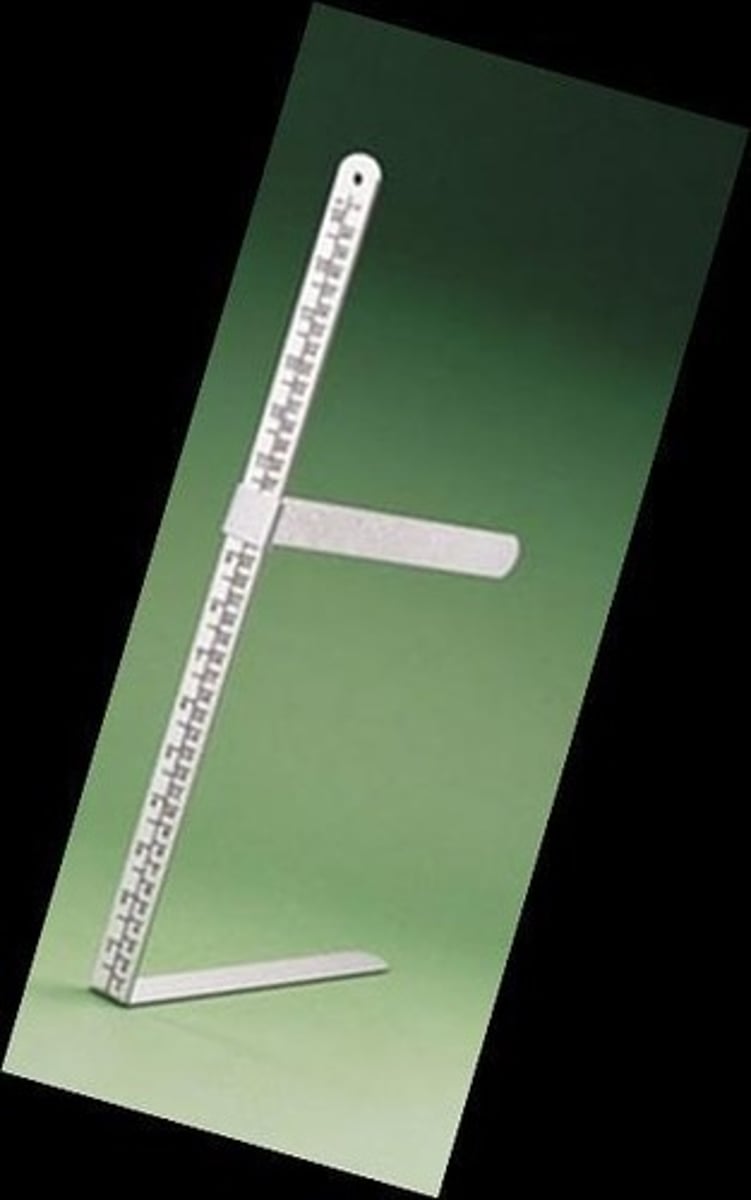
What information should be included in an X-ray log?
Patient's name, client's name, date, X-ray number, position, thickness measurement, and area exposed.
What position is most commonly used for X-ray in animals?
Right lateral recumbency
What is required for a V-D film positioning?
The patient must be placed on its back with front limbs extended parallel to each other.
How should a D-V film be positioned?
The patient should be placed on its sternum with front limbs pulled forward.
What tools can be used to keep a patient in position during X-rays?
Sandbags, trough positioners, or foam wedges.
What is the purpose of a radiology log?
To meet veterinary standards, compare techniques, and record film quality.
What information is required in a radiology log?
Date, X-ray number, client and patient names, breed, gender, age, weight, body location, thickness, view, kVp, mA, exposure time, film quality, diagnosis, and comments.
What unit of measurement should be used when measuring patients with a caliper?
Centimeters.
What is the purpose of measuring patients before X-rays?
To ensure the X-ray beam can sufficiently penetrate the tissue.
What does the caliper measure?
The thickness of the body part in centimeters.
What is a technique chart used for in radiology?
To determine machine settings based on the thickness of the area being radiographed.
What are the two techniques mentioned for X-ray positioning?
Grid technique and tabletop technique.
What does mA control in an X-ray machine?
The number of electrons generated in the cathode.
What effect does increasing mA have on exposure time?
It decreases exposure time while increasing density.
What does kVp stand for?
Kilovoltage peak.
How does increasing kVp affect the X-ray?
It increases the positive charge on the anode, causing electrons to move faster and have more penetrating power.
What are the three layers of radiographic film?
Outer protective layer, sensitive emulsion, and polyester base.
What is the difference between screen type and direct exposure film?
Screen type is more sensitive to light, while direct exposure is more sensitive to direct X-rays.
What must be done to X-rays before exposure or development?
They must be properly labeled with patient and client information.
What is the best technique for exposure time in X-rays?
Use the fastest exposure time possible.
What happens to density when mAs is doubled?
Density doubles.
What is the purpose of the moveable bar on a caliper?
To fit lightly around the area being measured.
What should be done before placing an animal on the X-ray table?
Set up all necessary items.
What is the significance of the technique chart's cm column?
It indicates the measurement used to determine kVp, mA, and exposure time.
What is the recommended practice for film identification?
Films must be permanently marked with patient and client information.
What is the role of the veterinary practice act in radiology logs?
It outlines the required information that must be included.
What is the main goal when setting the mA and timer on an X-ray machine?
To use the highest mA setting and the shortest exposure time.
What information is required for film identification?
Hospital name, address, phone number, veterinarian's name, client name, patient name, date, and directional label.
What are the steps of film processing?
Film developing, film rinsing, film fixing, and film drying.
Where must film processing occur?
In a darkroom equipped with a safe light.
How should film be stored?
In a cool, dry area, on end, not flat on its side.
What is the purpose of film cassettes?
To hold film used to take X-rays and prevent exposure to light.
What materials are intensifying screens made of?
Fluorescent crystals that emit light when exposed to X-rays.
What is the advantage of automatic film processing?
It develops film quickly and at higher quality, though it requires professional maintenance.
What is digital radiology?
A method that transfers images onto a computer disc rather than film.

What are the advantages of digital radiology?
Ease of use, high-quality images, affordability, improved cleanliness, and eliminates the need for cassettes.
How should X-rays be filed?
Stored in large protective folders or envelopes, filed by X-ray number in numeric order.
What should the label on an X-ray file include?
X-ray number, patient name, client name, veterinarian name, dates of radiographs, type of study or view, and diagnosis.
What are common radiograph artifacts and errors?
Black areas, white areas, fogging, lines, poor image detail, uneven development, streaks, clear film, and brown discoloration.
What is the purpose of ultrasound diagnostics?
To use ultrasonic sound waves to view images of internal organs and structures.
What is a transducer in ultrasound diagnostics?
A wand used to scan the area being examined, sending sound waves into soft tissues.
What is an endoscope used for?
To visually examine the interior of the body.
What are the two types of flexible endoscopes?
Fiberoptic endoscope and video endoscope.
What is computed tomography (CT)?
A technique using ionizing radiation and computer assistance to display internal body structures in cross-sectional views.
What is magnetic resonance imaging (MRI)?
A method using radio waves and a strong magnetic field to produce three-dimensional images of internal structures.
What should be done to maintain a darkroom?
Keep it clutter-free and clean, check for light leaks, and develop a cleaning regimen.
What is the role of a veterinary assistant during ultrasound diagnostics?
To prepare and restrain the patient for the procedure.
What is the importance of checking chemical tanks in automatic film processing?
To ensure proper levels for effective film development.
What should be done if a safety light is not working?
If an object appears on the film after exposure, it indicates the safety light is not functioning properly.
What is the significance of using the DICOM format in digital radiology?
It allows images to be stored on DVD and ensures compatibility across different systems.
What is the purpose of cleaning intensifying screens?
To maintain their effectiveness and prevent static electricity.
How should a veterinary assistant handle film?
Only handle film at the corners to avoid fingerprints and damage.
What should be done before bringing a patient into the ultrasound area?
Ensure the equipment is plugged in, turned on, and prepared for use.
What is the purpose of a rigid endoscope?
To visually examine internal structures, though it has limitations based on its diameter and length.