Geometry Semester 1 Review
 Call Kai
 Learn
Learn Practice Test
 Spaced Repetition
 Match
Match Flashcards
 Knowt Play
1/62

There's no tags or description
Looks like no tags are added yet.
Name | Mastery | Learn | Test | Matching | Spaced | Call with Kai | Chat |
|---|
No analytics yet
Send a link to your students to track their progress
63 Terms
Collinear
Points that lie on the same line
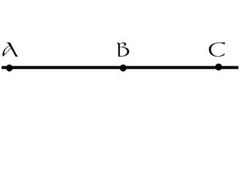
Linear Pair
A pair of adjacent angles whose noncommon sides are opposite rays.
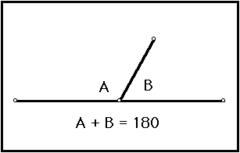
Supplementary angles
Two angles whose sum is 180 degrees
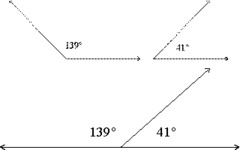
Vertical Angles
A pair of opposite congruent angles formed by intersecting lines
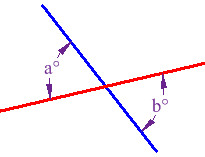
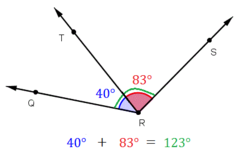
Angle addition postulate
If P is in the interior of
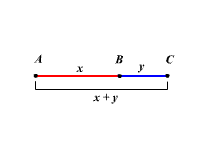
Segment addition postulate
If B is between A and C, then AB + BC = AC
Congruent
Having the same size and shape

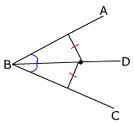
Angle bisector
a ray that divides an angle into two congruent angles
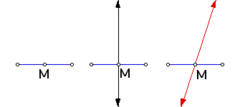
Segment bisector
a segment, ray, line, or plane that intersects a segment at its midpoint
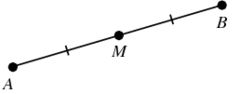
Midpoint
A point that divides a segment into two congruent segments
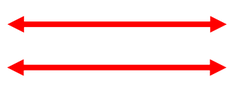
parallel lines
lines in the same plane that never intersect
conditional statements
A statement that can be written in if-then form.
hypothesis
A testable prediction, often implied by a theory
An educated guess
conclusion
A summary based on evidence or facts
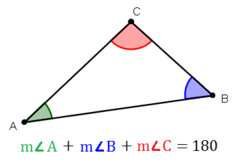
triangle sum theorem
The sum of the measures of the interior angles of a triangle is 180 degrees
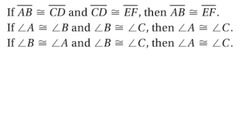
Transitive
If a=b and b=c, then a=c
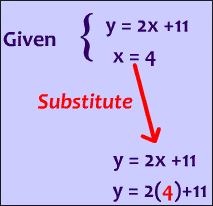
Substitution
If a=b, then a can be substituted for b in any equation or expression
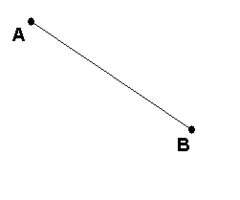
Line segment
A part of a line with two endpoints
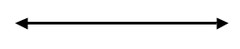
Line
1. A long thin mark on a surface. 2. A continuous extent of length, straight or curved, without breadth or thickness; the trace of a moving point. 3. Long, narrow mark or band.
transversal
a line that intersects two or more coplanar lines at different points
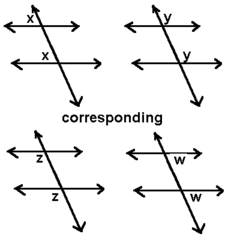
corresponding angles
Angles formed by a transversal cutting through 2 or more lines that are in the same relative position.
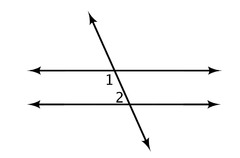
same side interior angles
two interior angles on the same side of the transversal
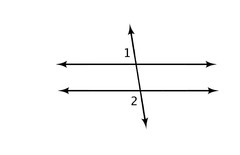
same side exterior angles
two exterior angles on the same side of the transversal
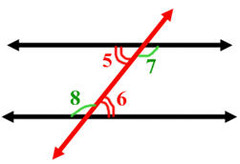
alternate interior angles
angles between 2 lines and on opposite sides of a transversal
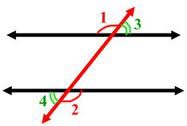
alternate exterior angles
Angles that lie outside a pair of lines and on opposite sides of a transversal.
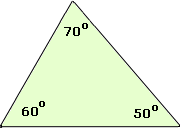
Acute triangle
A triangle that contains only angles that are less than 90 degrees.
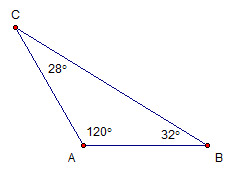
Obtuse triangle
A triangle with one angle that is greater than 90 degrees.
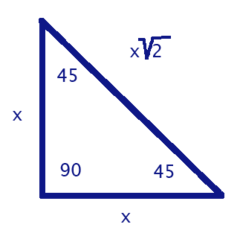
Right triangle
a triangle with one right angle
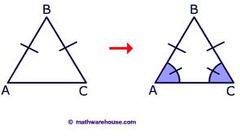
Isosceles triangle
a triangle with at least two congruent sides
Equilateral triangle
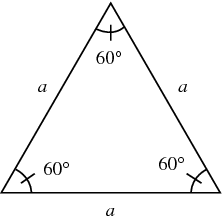
A triangle with three congruent sides
Regular triangle
All congruent sides and angles
Scalene triangle
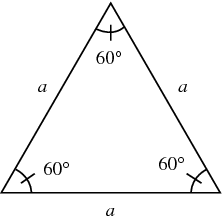
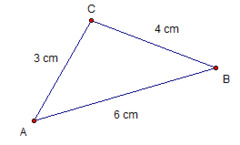
a triangle with no congruent sides
Vertex angle
The angle formed by the legs of an isosceles triangle.
slope formula

slope intercept form of a line

y-intercept
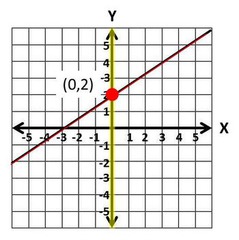
The point where the graph crosses the y-axis
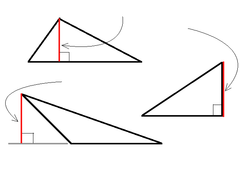
altitude of a triangle
the perpendicular segment from a vertex to the opposite side or to the line that contains the opposite side
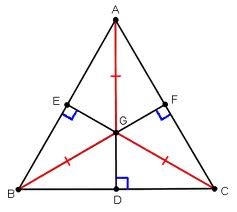
perpendicular bisector of a triangle
A line that is perpendicular to a segment at its midpoint.
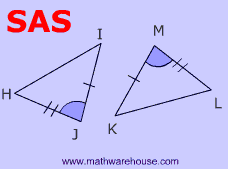
SAS
If two sides and the included angle of one triangle are congruent to two sides and the included angle of another triangle, then the triangles are congruent.
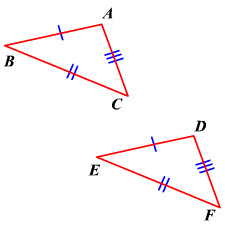
SSS
If three sides of one triangle are congruent to three sides of another triangle, then the triangles are congruent.
AAS
If two angles and a non-included side of one triangle are congruent to two angles and a non-included side of another, then the two triangles are congruent.
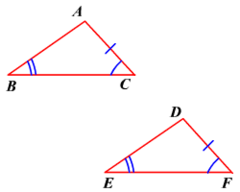
HL
If a hypotenuse and leg of one right triangle are congruent to the corresponding hypotenuse and leg of a second right triangle, then the triangles are congruent.
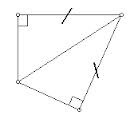
Quadrilateral
A flat shape with four straight sides. (closed)

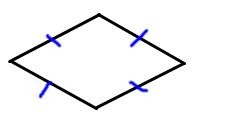
rhombus
A quadrilateral where all sides have equal length. It is a type of parallelogram.
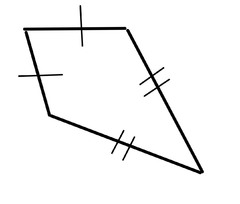
kite
A quadrilateral that has two pairs of sides that are equal in length but not all 4 are equal.
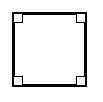
square
A quadrilateral where all sides have equal length, and every interior angle is a right angle (90 degrees). Special rectangle.
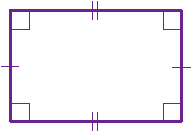
rectangle
A quadrilateral where all angles are right angles (90°). Also opposite sides are parallel and of equal length.
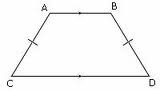
trapezoid
A quadrilateral that has a pair of opposite sides parallel.
regular polygon
A polygon is regular when all angles are equal and all sides are equal (otherwise it is "irregular").
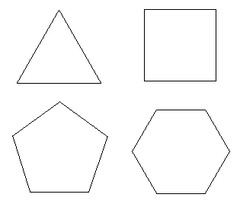
irregular polygon
A polygon that does not have all sides equal and all angles equal.
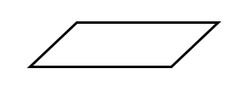
Parallelogram
A quadrilateral with two pair of parallel sides
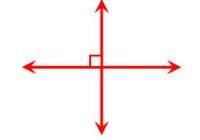
perpendicular lines
Lines that intersect to form right angles
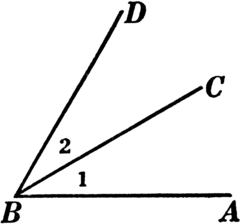
adjacent angles
Two angles that share a common side and have the same vertex
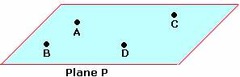
coplanar
points that lie on the same plane
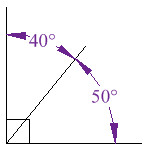
complementary angles
Two angles whose measures add to 90 degrees.
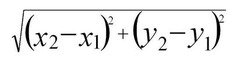
distance
How far it is from one point to another
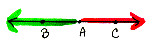
ray, opposite rays
a part of a line that starts at one endpoint and extends forever
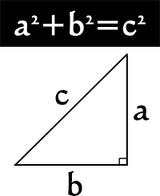
Pythagorean Theorem
In a right angled triangle: the square of the hypotenuse is equal to. the sum of the squares of the other two sides.
two column proof
contains statements and reasons organized in two columns
paragraph proof
A style of proof in which the statements and reasons are presented in paragraph form.
indirect proof
a proof in which the statement to be proved is assumed to be false and a contradiction is shown
reflexive
a=a
symmetrical
if a=b, then b=a