PNB 2XC3 Exam
 Note
Note Call Kai
 Learn
Learn Practice Test
 Spaced Repetition
 Match
Match Flashcards
 Knowt Play
1/112

Earn XP
Description and Tags
Chapter 12, 7, 15 + Notes 12 (foraging) - 18 (same sex sexual behaviour)
Name | Mastery | Learn | Test | Matching | Spaced | Call with Kai | Chat |
|---|
No analytics yet
Send a link to your students to track their progress
113 Terms
What are 3 ways animals can avoid their predators?
-Blending into the environment
-Being quiet
-Choosing safe habitats
Beach mice vs. inland mice
-Observations?
-Mice that lived on beaches had light coat pigmentation
-Pigmentation became darker in populations closer to inland areas
-Mutation in Mc1r gene plays a role in this
Gulf toadfish predator avoidance
-Research question?
-Methods?
-Results?
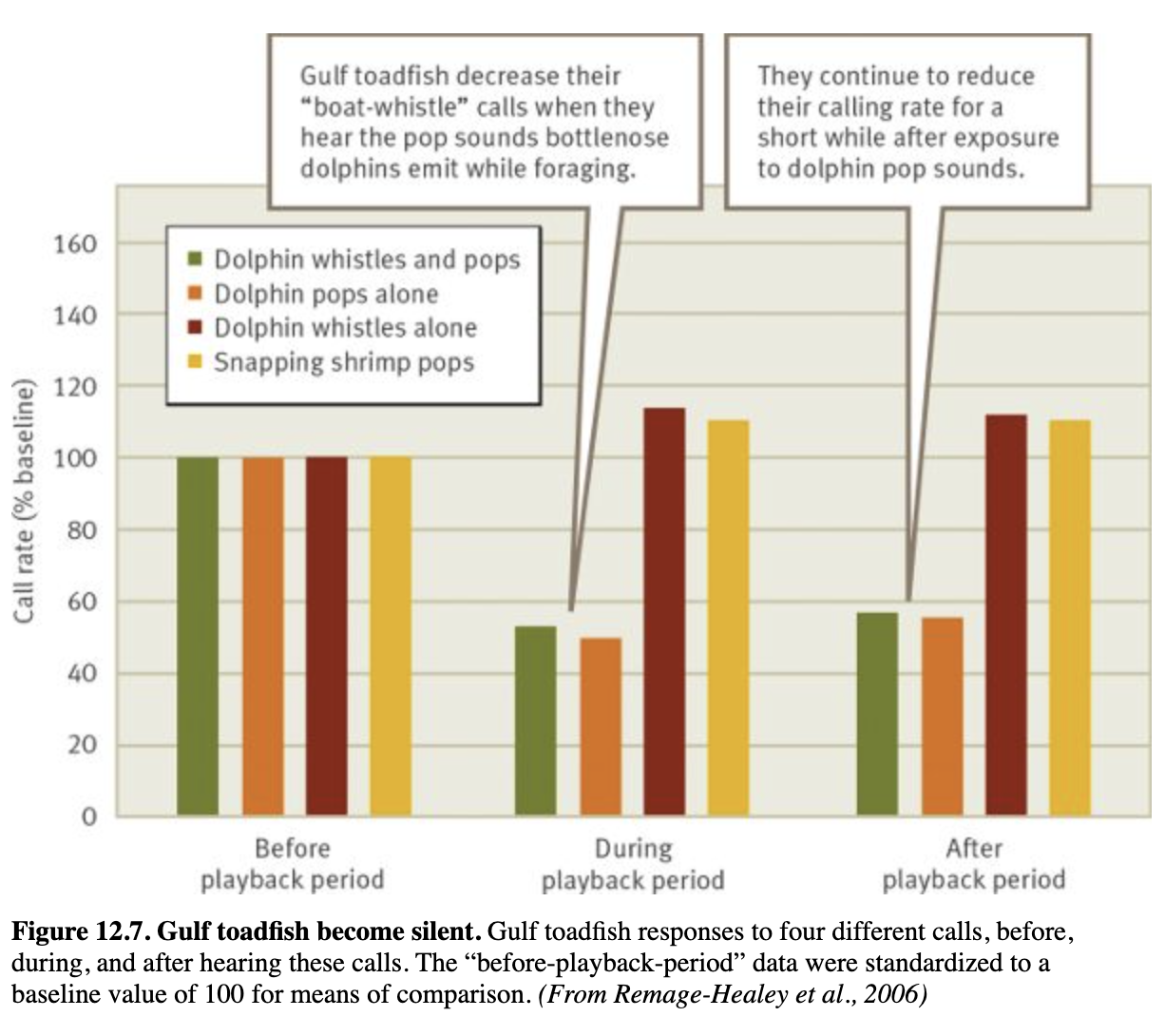
-Graph of call rate before, during, and after playback period (for popping, whistle, and snapping groups)
-Bottlenose dolphins produce whistle noises for communication and popping noises for foraging
-Question: Do toadfish listen for sounds associated with bottlenose foraging behaviour and then reduce the boat-whistle sounds they produce?
-Methods: Toadfish were exposed to either popping sounds, whistles, or snapping sounds made by shrimp as a control
-Results: Toadfish exposed to pop sounds reduced their call rates by 50% and maintained their reduced calling rate after exposure to the pops
Co-evolution
Occurs when changes to traits in species 1 lead to changes to traits in species 2, which feed back to affect traits in species 1, and so on
Evolutionary arms race
The prey evolve behaviours to help them protect themselves against predators and the predators evolve detection systems that help them find prey
Wild rabbit and predator co-evolution:
-How do wild rabbits typically detect predators?
-How did rabbits respond to the odor of foxes, cats, and ferrets?
-How did rabbits respond to the odor of spotted-tail quoll?
-Why did they respond differently to the quoll odor?
-Graph of daily activity rate (with control, cat, ferret, fox, and quoll on x-axis)
-Wild rabbits use odor cues to detect many of their predators
-When exposed to the odor of foxes, cats, and ferrets, rabbits responded by reducing their use of the area with the predator odor
-Rabbits didn’t show any antipredator responses when exposed to the odor of the spotted-tail quoll
-Rabbits share no evolutionary history with the quoll
What are 5 behaviours prey use when they encounter a predator?
-Fleeing
-Approaching the predator to obtain information
-Feigning death
-Signaling to the predator
-Fighting back
Schooling behaviour in stickleback fish
-Sticklebacks from open-water (pelagic) habitats encounter more predators and school more tightly than sticklebacks from vegetated (benthic) environments
-Fish from pelagic areas position themselves at a particular angle with respect to others within schools
Adzuki bean beetle
-Hypothesis?
-Methods?
-Results?
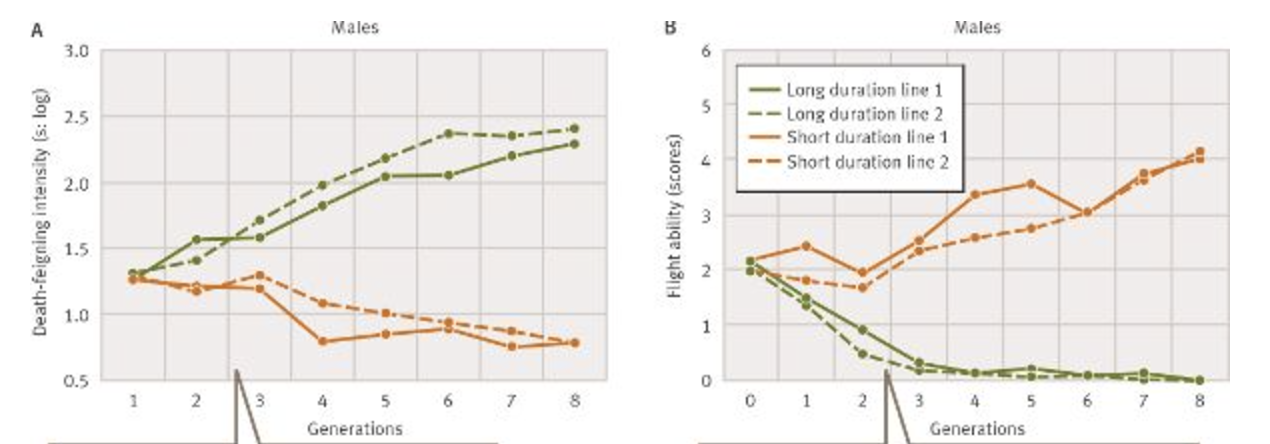
-Graphs for death feigning ability and flight ability (with generations on the x-axis)
-When a beetle is on a branch and a predator approaches, they can either fly away or fake death
-Hypothesis: a negative genetic correlation exists between the intensity of death feigning and the ability to fly (beetles that fake death for long time → poor flyers, beetles that fake death for shorter time → good flyers)
-Methods: they bred beetles in a long-duration death-feigning line and a short-duration death feigning line
-Results: long-duration DF beetles were poor flyers and short-duration (DF) beetles were good flyers
Sexual selection
Differential reproduction owing to heritable variation in the ability to obtain mates
Intrasexual selection
Members of one sex compete with each other for access to the other sex
Intersexual selection
Individuals of one sex choose which individuals of the other sex to take as mates
Cichlid fish aggression
-Research question?
-Methods?
-Results?
-Females select between males and prefer more dominant individuals as mates
-Question: Will observing a fight between males trigger action in certain areas of a female's brain?
-Methods: A female was placed in an aquarium and there was a male at each end, then the female saw a fight between the two males
-Results: When observing a preferred mate win, there was increased gene expression in both c-fos and egr-1 in reproductive areas of the brain. After watching a preferred male lose, c-fos and egr-1 gene expression was high in a brain area linked to anxiety-like behaviours
What are the main differences between gametes and sperm?
-Females produce fewer, but larger gametes → each egg is extremely valuable
-Males produce large quantities of sperm because they require much less energy to produce
Bateman’s principle
1) Females should be the choosier sex because eggs are expensive to produce and a female’s potential reproductive success is limited compared to that of a male
2) Females’ greater choosiness in mate selection should translate into greater variance in the reproductive success of males
Evolutionary models of mate choice
-Direct benefits
-Good genes
-Runaway selection
-Sensory bias
Direct benefits model
-Females prefer males with the highest positive effect on females’ fitness (those who provide them with tangible resources other than sperm)
-Females directly gain from their mate choice
-Strong evidence to support this
Good genes
Genes associated with adaptive traits inherited by offspring
Good genes models
-Propose that selection favours that females choose the males with genes best suited to their particular environment (aka indirect benefit models)
-Females gain indirectly through having superior offspring
-Limited evidence to support this
Runaway sexual selection
-Extreme male traits have evolved via genetic linkage between a male trait and female preference
-Theoretical models show that it’s possible but there’s no evidence for genetic correlations between male traits and female preferences
Sensory bias models
-Suggest that when a male trait first emerges it is preferred by females because it elicits a neurobiological response that is already in place in females
-Such a response initially is not associated with mating preferences
-The female preference trait should predate the appearance of the male trait
(aka sensory exploitation and preexisting bias model)
Sexual imprinting
Young individuals observe the behaviour and morphology of adults (usually their parents) and use these characteristics to guide their subsequent selection of mates
Learning and mate choice in Japanese quail
-Hypothesis?
-Methods?
-Results?
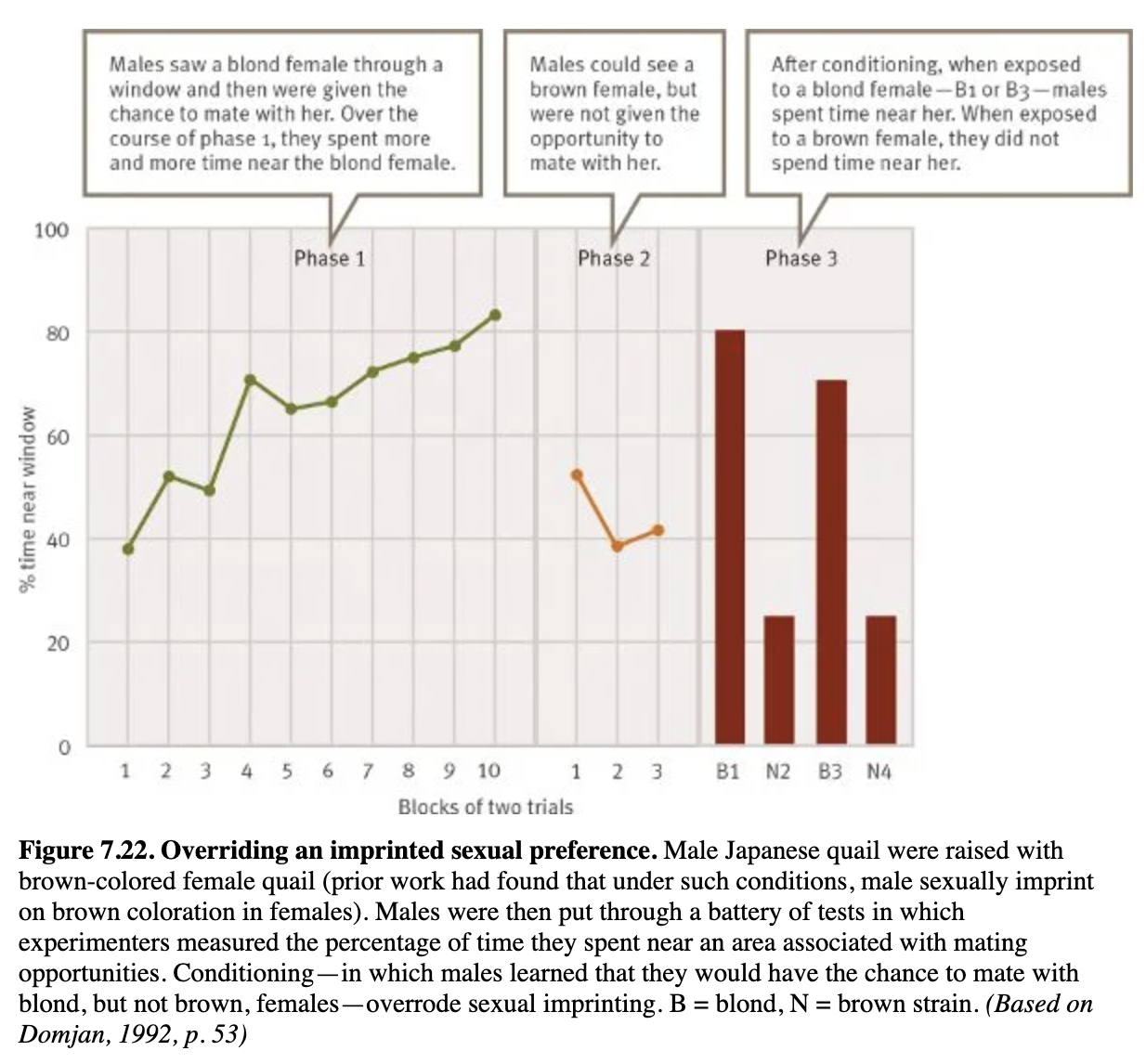
-Male Japanese quail were raised with brown-coloured female quail so they had sexually imprinted on brown colouration in females
-Hypothesis: classical conditioning at the adult stage might override the effects of sexual imprinting as a juvenile
-Methods: males were shown blond females and brown females but only given the chance to mate with blond females
-Results:
After conditioning, males spent time near a blond female when exposed to her. But when exposed to a brown female, they didn’t spend time near her.
Conditioning overrode sexual imprinting
Mate-choice copying
-A female observer is more likely to mate with the male that a female demonstrator chooses
-Possible that the inexperienced female is relying on the other female’s probable experience
Male competition by interference
Involves one male interfering with a second male who is attempting to mate with a female
Dominance hierarchies
Rank orderings of individuals in a species based on the results of pairwise aggressive interactions
What are 3 game theory models of aggression?
-The hawk-dove game
-The war of attrition model
-The sequential assessment model
The hawk-dove game
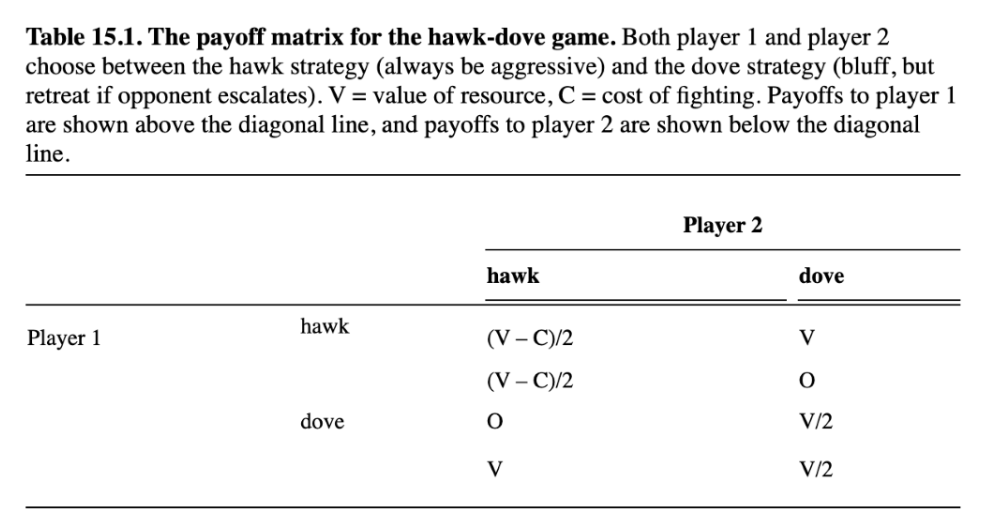
Individuals can adopt one of two behavioural strategies when contesting a resource:
1) Hawk – a player escalates and continues to escalate until either it is injured or its opponent gives up the resource
2) Dove – a player displays as if it will escalate but retreats and gives up the resource if its opponent escalates
Hawk-dove game payoff matrix
The war of attrition model
-Makes predictions about encounters that are settled by displaying aggressively but not actually fighting
-The probability that a contest lasts x units of time is equal to (2/V)e^-2x/V
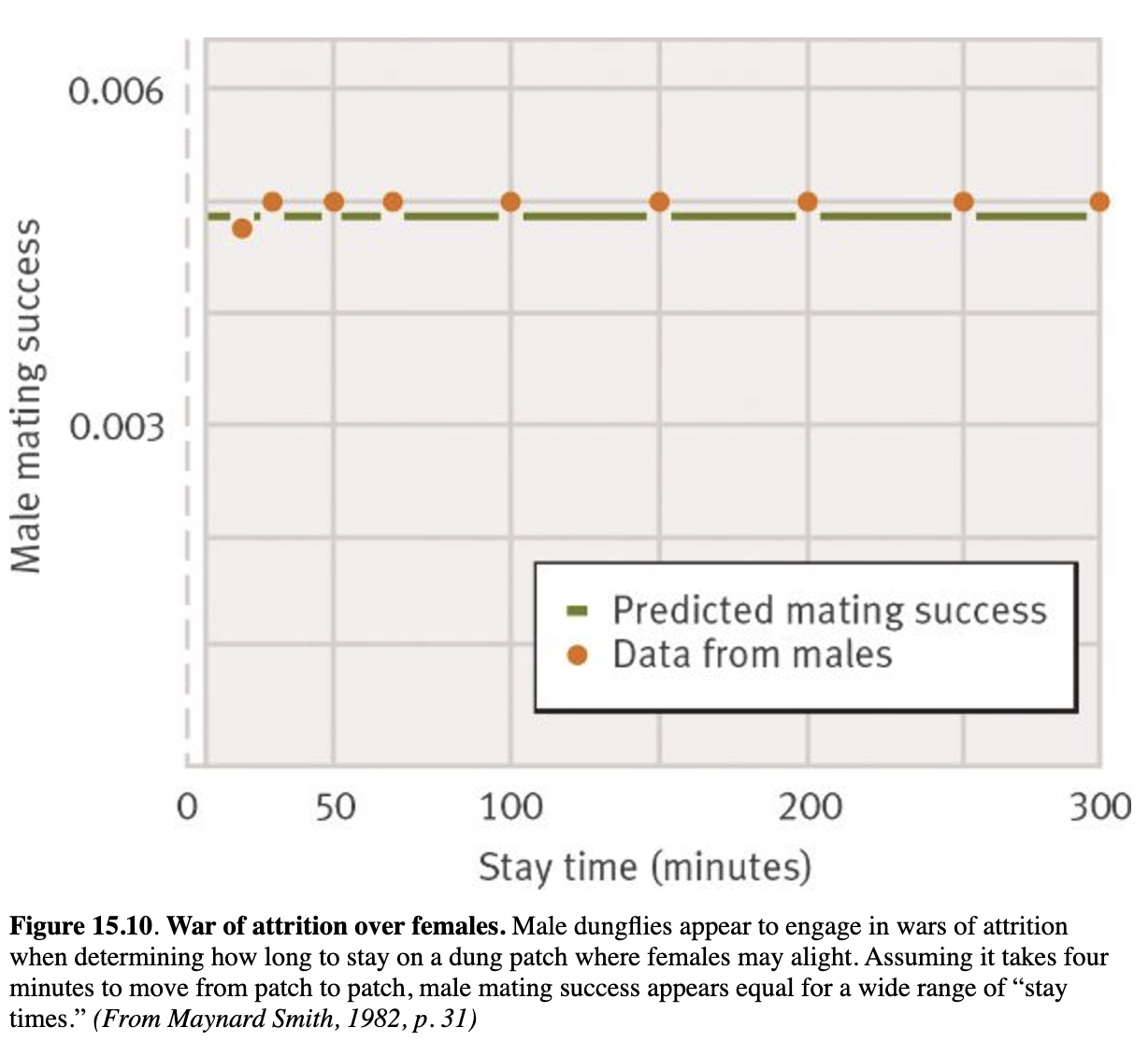
Dungflies war of attrition
When the travel time is 4 minutes, the stay times observed in dungflies result in approximately equal fitness for all males
The sequential assessment model
Used to analyze fights in which individuals continually assess one another in a series of “bouts”
Winner effects
Winning an aggressive interaction increases the probability of future wins
Loser effects
Losing an aggressive interaction increases the probability of losing future fights
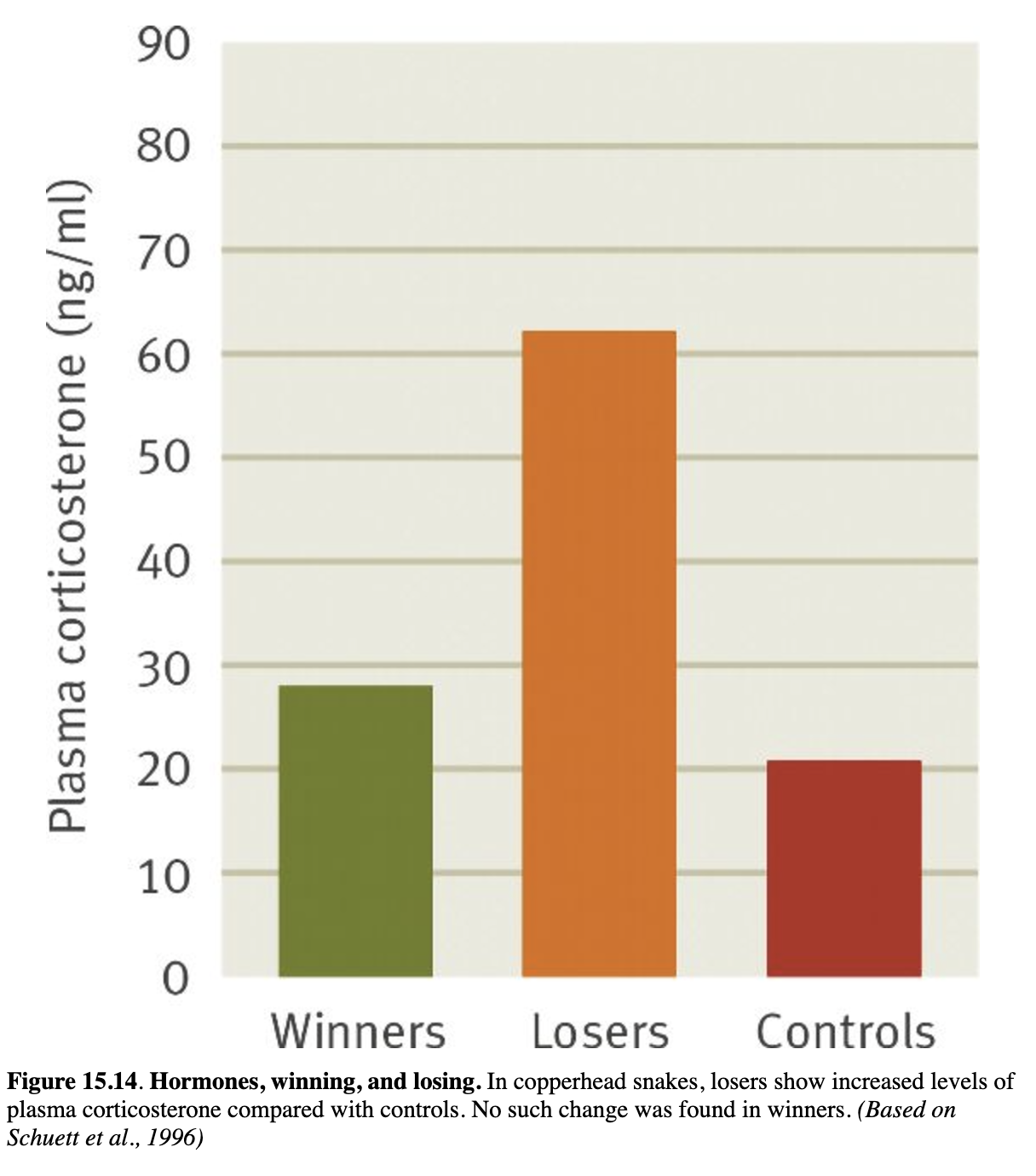
Winner and loser effects in copperhead snakes
-Methods?
-Results?
-Graph (plasma corticosterone on y-axis and winners, losers, controls on x-axis)
-Methods: winners and losers from prior fights were matched against a same-sized opponent that had no experience
-Results:
Winners were more likely to win again and losers were more likely to lose again
Plasma corticosterone levels were significantly greater in losers than in winners or controls
Audience effects
Individuals involved in aggressive interactions change their behaviour if they are watched
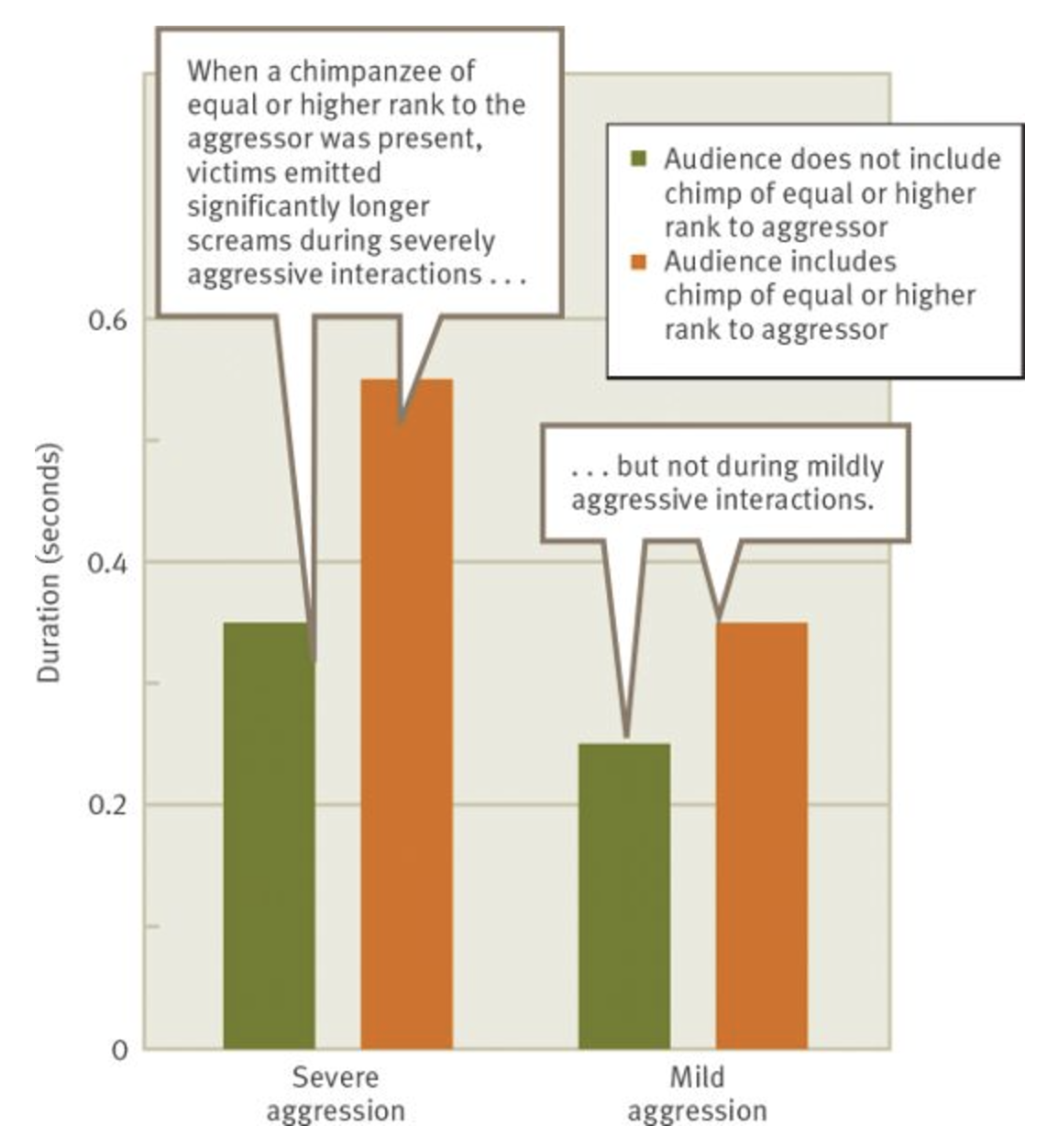
Audience effects in chimps
-Findings?
-Graph of the duration of screams for severe vs. mild aggression including audience effects (duration on y-axis, severe & mild aggression on x-axis with 4 bars total)
-Wild chimps emit screams while fighting & victim screams may function to get observers to break up fight
-When interactions involved severe aggression, victim screams were sometimes much longer and more intense when there was an audience
-Audience effect was only seen when at least one of the audience members held a rank in the hierarchy that was equal to or above the rank of the aggressor
Social network theory
Group-living animals are part of social networks, within which information flows between individuals
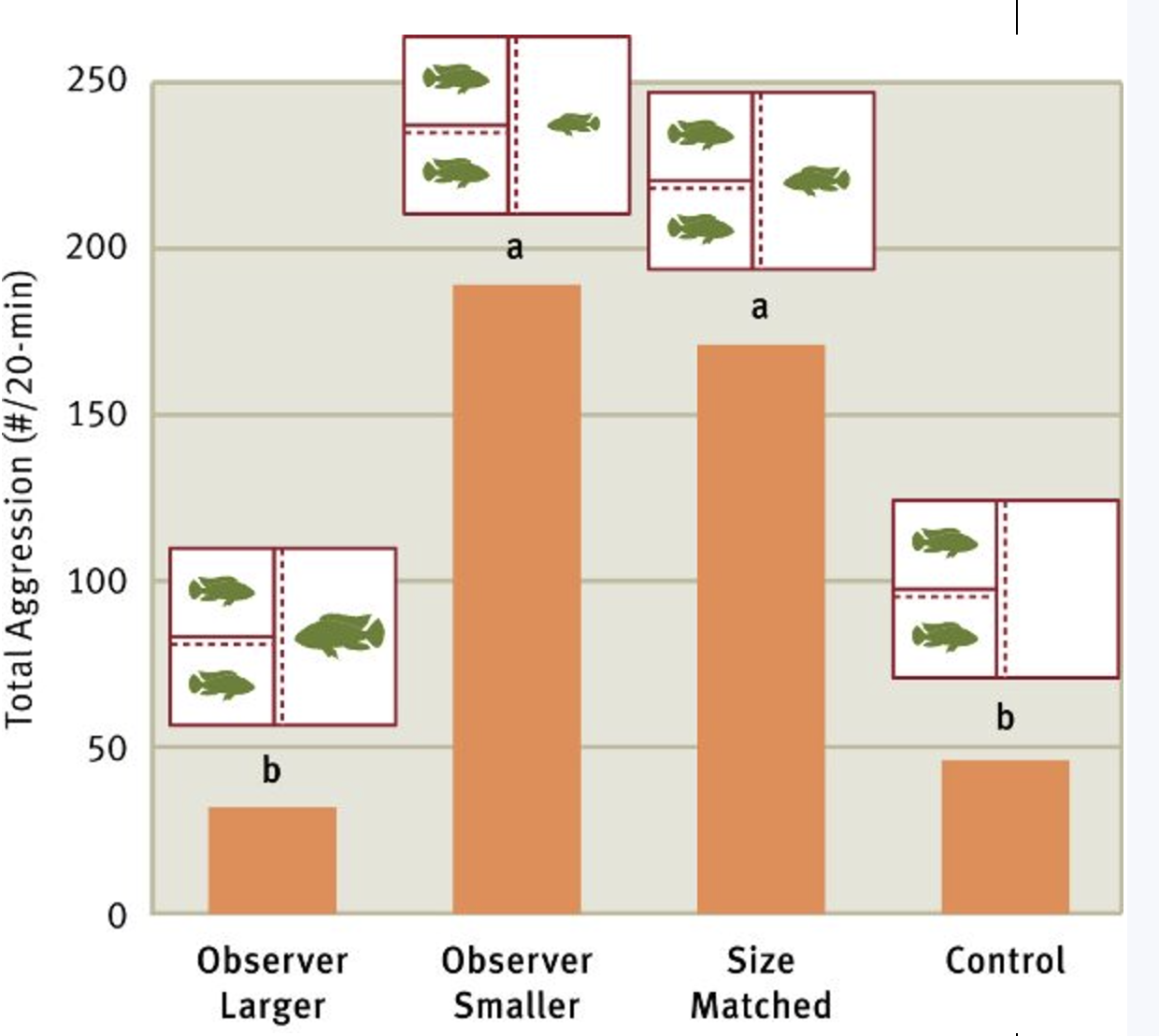
Observation of aggression in A. burtoni fish
-How is aggression affected by observation?
-How are gene expression patterns affected?
-Graph (total aggression on y-axis and observer larger, smaller, size-matched, control on x-axis)
-Males fought more intensely when watched by another male who was smaller or the same size than when they weren't being watched or when the observer male was larger than both fish involved in aggression
-c-fos and egr-1 gene expression patterns changed in similar ways in both observers and contestants who were being watched, but not in contestant who weren't being watched
What do each of the basic types of taste indicate?
-Sweet → simple carbs
-Bitter → possibly poisonous or spoiled food
-Salt → sodium in salt is an essential nutrient
-Sour → adaptive significance is unknown
-Umami → the taste of free glutamate (common amino acid indicating the presence of protein)
What are the 3 most important factors for humans with regard to eating?
-Energy content
-Nutritional content
-Cost
Modern humans’ conflict (eating and exercise)
The majority of modern people face the novel problem of higher energy intake than energy expenditure
What is the ultimate explanation for why exercise enhances physical and cognitive health?
-Animals have evolved exercising
-Lack of physical activity is unnatural and has many negative effects
What is the proximate explanation for how exercise enhances cognitive performance?
-Improved blood flow to brain
-No micro-strokes
-Increased neural survival & growth
-Anti-inflammatory effects
-Lower rates of neurodegenerative diseases
What are the benefits and costs of fat reserves in animals?
Benefits: insurance, insulation
Costs: weight, increase energy expenditure, reduced mobility
White throated sparrow fat reserves
They store more than twice as much fat in the winter compared to the fall and spring
Starling fat storage
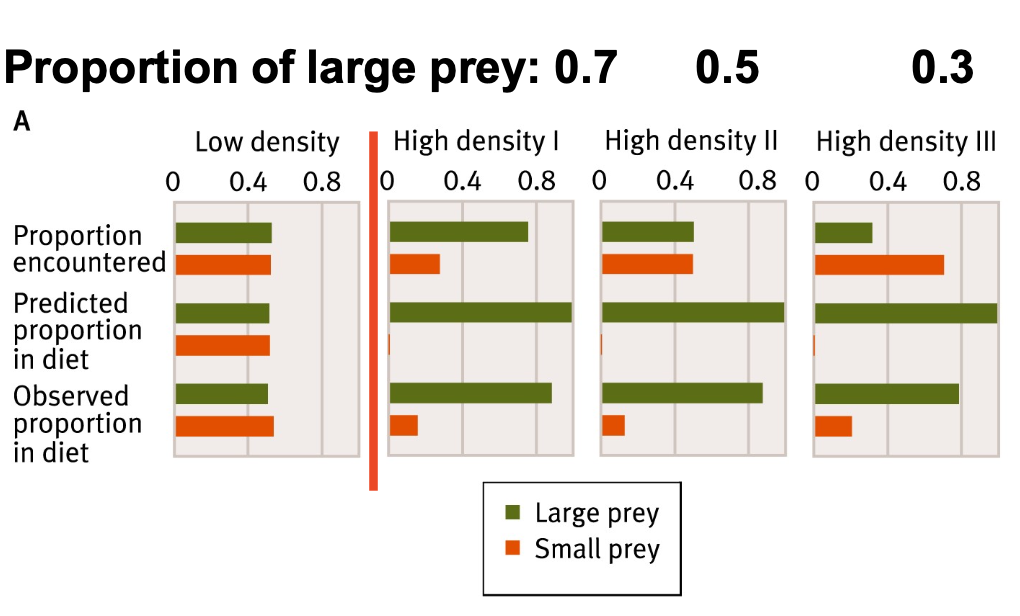
The optimal diet model
Mathematical model that allows us to predict what prey types a forager should eat based on the energy content, encounter rate, and handling time of each type
Key predictions of the optimal diet model
-If the encounter rate with the most profitable prey is above a threshold level, only this prey should be eaten
-The encounter rate with prey 2 should not affect the decision to feed on prey 2
Testing the optimal diet model with great tits (what were the results?)
The results mostly agreed with the predictions but the great tits took a small proportion of small prey even when the model predicted that they shouldn’t
The optimal patch residence time
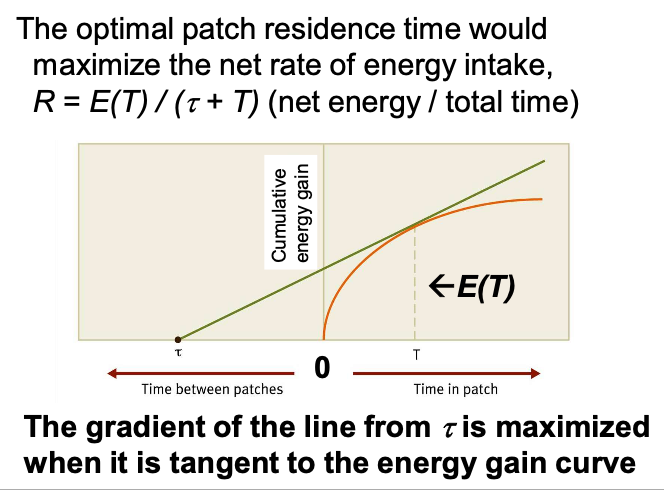
Key predictions of the marginal value theorem
-A forager should stay in the current patch until its rate of intake is equal to the average rate of intake in other patches
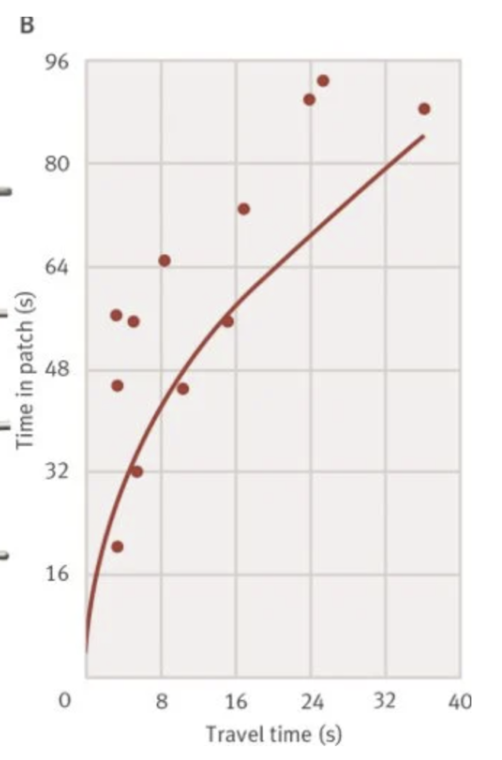
Testing the marginal value theorem in great tits
-Methods?
-Results?
-Graph (time in patch on y-axis and travel time on x axis)
-Methods: Researchers set up containers of mealworms to be different patches and travel time was measured as duration opening the containers
-Results: The amount of time birds spent in a patch matched the optimal time predicted by the marginal value theorem
The moose dilemma & solution
Dilemma: mooses need sodium but the aquatic plants that are sodium rich are energy poor
Solution: mooses must spend some of their time feeding on the sodium-rich aquatic plants
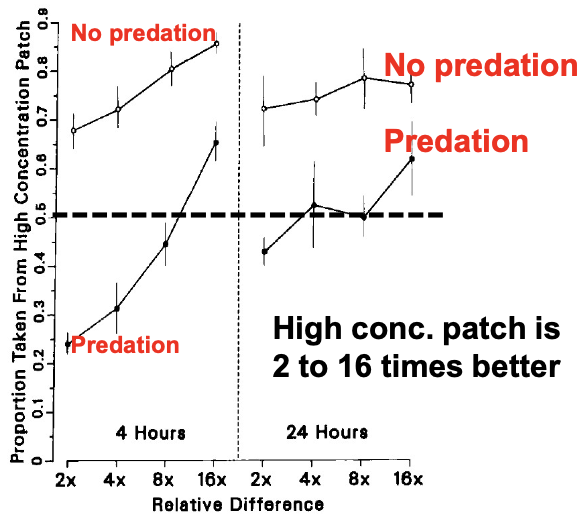
Balancing feeding and antipredatory behaviour in ants
-Methods?
-Results?
-Ants could choose between two patches containing liquid ant diet of different concentrations. The high concentration patch was either safe or had a predator.
-Ants preferred the safer, less rewarding patch as long as:
It wasn’t much worse
The predator remained active
The optimal amount of fat in birds (how do birds vary their fat reserves?)
Birds vary their fat reserves depending on expected benefits and costs:
-More fat when food is less certain
-Less fat when predation risk is higher
Optimal habitat choice in red-eyed tree frogs
-Methods?
-Results?
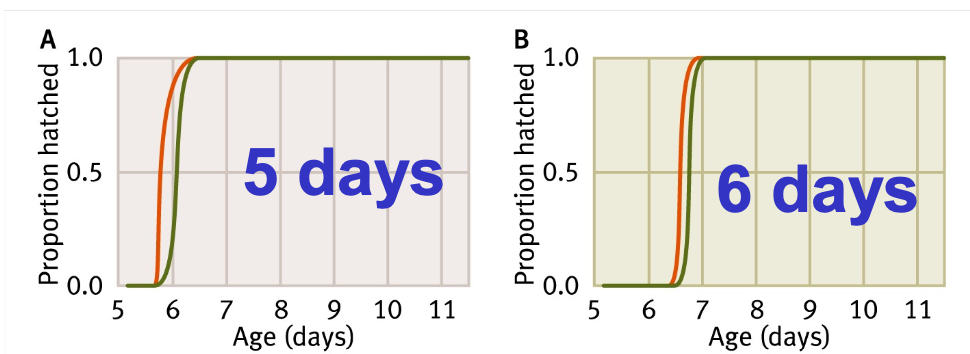
-Graph of hatching at days 5 and 6 (prop. hatched on y-axis and age in days on x-axis)
-They lay their eggs on leaves above the water and hatched tadpoles drop into the water
-Methods: they let eggs be attacked by snakes at ages 5 and 6 and monitored hatching
days
-Results: Eggs responded to predation on neighbouring eggs by hatching earlier
Parasite avoidance in tree frogs
Lion’s sex roles video clip
-Females raise young and hunt
-Before a male mates with a female that has cubs from another male, he will kill the cubs
Why do males and females look different?
Because of sexual selection
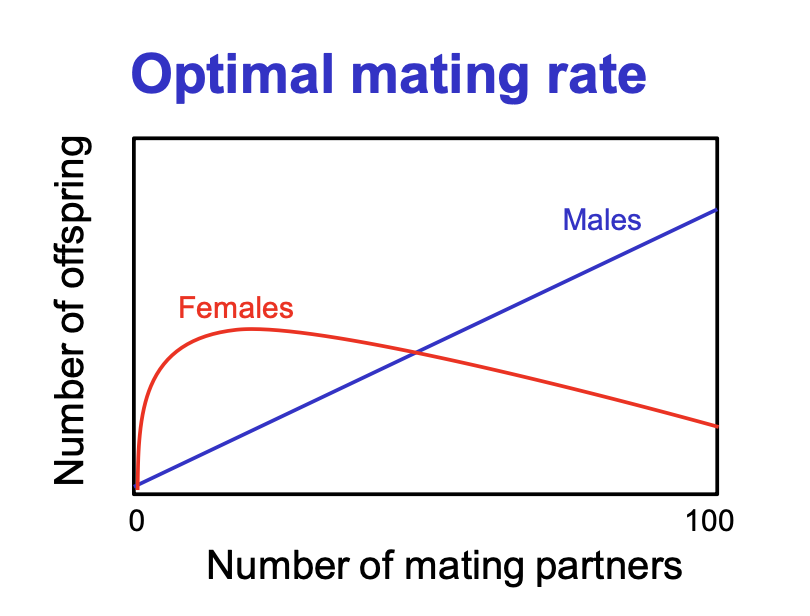
Optimal mating rates of males and females (# of offspring on y-axis and # of mating partners on x-axis)
Operational sex ratio
# of males ready to mate / # of females ready to mate
(Typically male biased)
Why is sexual selection stronger in males than females?
-Males can gain more than females from traits that increase their mating success
-Typically, males have more ornaments, so females would choose them, and weapons for male-male competition
Western grebe video
-No sexual dimorphism
-They assess partners through coordinated movement and food exchange
-Shared parental care
Test of mate choice in flies
-Females consider smell & taste, song, and body size (larger is better) when choosing males to mate with
-If the female finds the males song to be good enough, they will mate with them
Test of mate choice in pied flycatchers
-High contrast / dull males
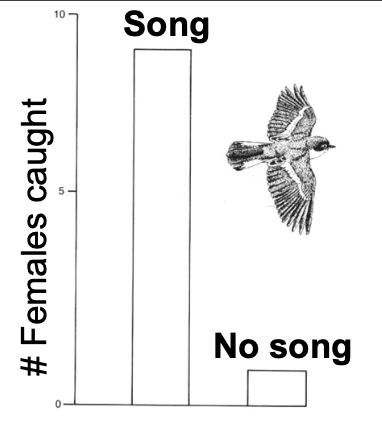
-Song / no song males (graph of # of females caught)
-Males with high contrast were chosen more than twice as much as the other males
-Male decoy paired with song playback attracted significantly more females than male decay with no song
Why do birds sing?
-To attract females
-In male-male interactions (territorial defence)
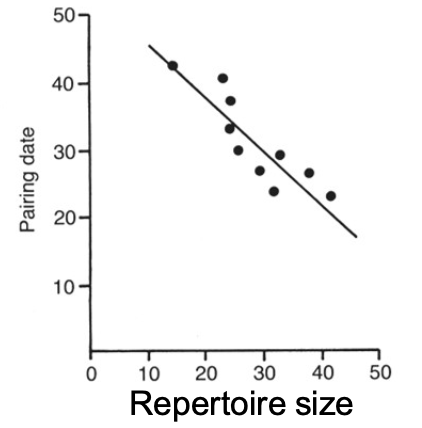
Repertoire size and pairing date in sedge warbler birds (repertoire size on x-axis and pairing date on y-axis)
Strong correlation between very early pairing date and males who sing more songs
Results of experimentally muting red-winged blackbirds
Muted males had:
-More intrusions
-More fights
-More territory losses
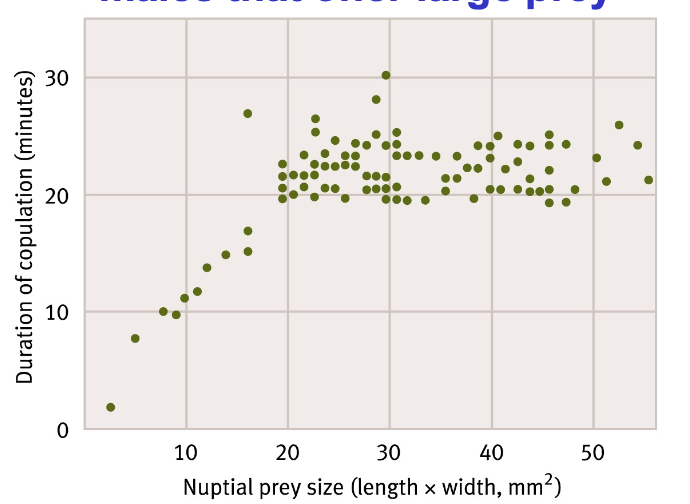
Nuptial gifts in scorpion flies
-Females reject males that don’t offer them prey
-Females prefer males that offer large prey (the larger the prey, the longer the mating time)
Direct benefits of female choice in barn swallows
Females prefer males with longer tails because they have fewer parasitic mites
Barn swallows experiment
-They compared male behaviour and reproductive success in nests where parasites were either added or removed
-Results: parasite free males are better parents (higher feeding rate) and parasite-free nests had more fledglings
What is the significance of the sage grouse lek?
-They are Canada’s most endangered species
-2012 legal battle required federal government to take more action to protect the sage grouse in Alberta
Mate choice by female pronghorn
-How do females pick males to mate with?
-How does the good gene prediction apply? (graph of expected offspring survival as a function of number of offspring sired)
-Prior to estrus, females visit several potential mates
-Small subset of males gain most copulations (these are the vigorous males that can defend their harem
-Offspring of attractive males (more offspring) survive longer
Major Histocompatibility Complex (MHC)
A set of genes involved in immune response
What are 2 explanations for MHC heterozygosity?
1) It provides better immune response
2) Preference for mates with different MHC prevents inbreeding
MHC experiment with Swiss students
Methods:
-Small group of men and women wore a t-shirt for 2 nights
-Larger group had to rate the shirts on intensity and pleasantness
Results:
-Men and women show a small preference for people with a different MHC than their own
Artificial selection experiment in stalk eyed flies
-Methods?
-Results?
-Methods: a line of males with short eye spans and a line with long eye spans were bred
-Results: evolutionary change in male eye span was correlated with evolutionary change in female preference
Sexual imprinting in snow geese
-Research question?
-Methods?
-Results?
-Question: Do snow geese prefer mates with the same colour as their parents?
-Methods: cross-fostering → they split chicks from parents of each colour between foster parents of each colour
-Results: more geese mated with geese of the same colour as their foster parent than expected by chance
*Review the Punnett squares for these*
Assortative mating
Non-random mating based on phenotypes
Positive assortative mating
The tendency to mate with others of similar phenotype
Negative assortative mating
The tendency to mate with others of distinct phenotype
What is the importance of assortative mating?
It’s a major factor causing speciation (the formation of new species)
Assortative mating in humans
-Participants found significant resemblance of facial traits between a woman’s husband and her adoptive father
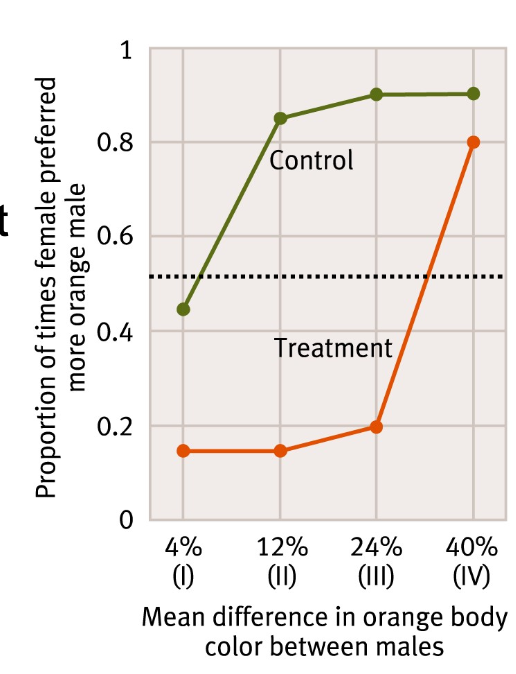
Mate-choice copying in guppies
-Methods?
-Results?
-Methods: Observer females were exposed to two males with female demonstrator placed next to the less orange male
-Results: When the differences between the males was less extreme, the observer female preferred the male the demonstrator female had chosen
Mate-choice copying in humans
Methods:
-Women and men observers rated the attractiveness of individual men’s faces
-Then the observers saw pairs of men’s faces with a woman either smiling at them or having a neutral expression and again rated their attractiveness
Results:
-Men with a woman smiling at them were more attractive to women (?)
-The opposite was true for men
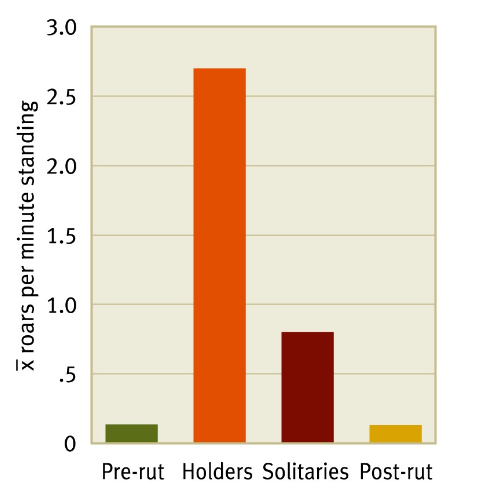
Red deer male-male competition
-Most male-male interactions are settled with one male withdrawing
-Males in possession of a harem roared much more than males without one
-Fighting is the last resort
Dunnock extra-pair copulation - video clip
-Female seeks mating with beta male
-Alpha male makes female excrete beta male’s sperm
-Female gains from cheating because both males will provide food for the offspring
Sneaking
-Occurs in many fish with external fertilization
-Sneaker male is smaller than parental male and sneaks to fertilize eggs during spawning
Satellite males
-Fish that mimic females to confuse parental males
-When parental males attempt to spawn with both apparent females, satellite males release their own sperm
Evolutionary stable strategy (ESS)
-A strategy that can not be invaded by alternative strategies
-Modified from game theory
What are the 2 most common causes of fighting?
-Access to better quality or safer food sources
-Access to females
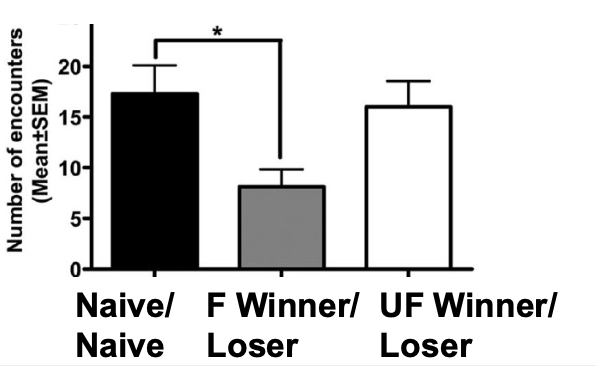
Fighting in fruit flies
-Small males didn’t escalate against large males
-Large won in 99% of the fights
-Fewer encounters between losers and familiar winners than losers and unfamiliar winners
Eavesdropper (bystander) effect
The observer of an aggressive interaction learns about the fighting ability of the individuals observed
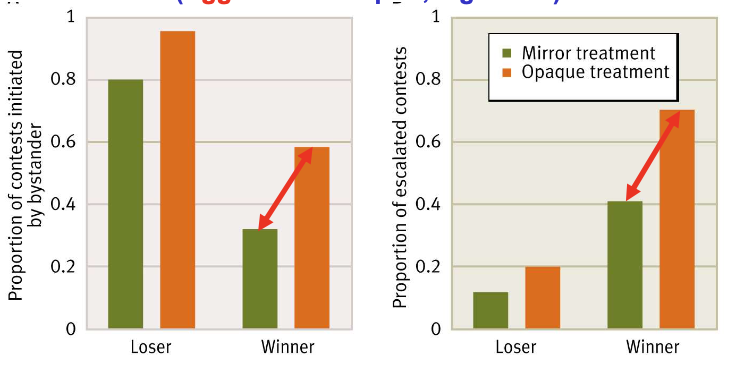
Eavesdropping on fish fights - green swordtail fish
-Methods: focal fish were either shown an aggressive interaction between a pair of fish through a 1-way mirror or the interaction occurred behind an opaque barrier
-Results: focals were less likely to initiate and escalate against winners in the 1-way mirror treatment compared to the opaque treatment
Sexual orientation
-The sex(es) that a person is sexually attracted to
-Term used for humans only (can’t be measured)
Sexual preference
Can be measured in many animals
Extended sexuality
Heterosexual sex with no direct reproductive benefits via conception
Extended sexuality in chimps
-Female chips experience sexual swelling during their estrous phase
-They solicit sex frequently during sexual swelling
What are 3 explanations for same sex sexual behaviour?
-Errors
-Used for initiating and maintaining social relationships
-Parental care by two females when there are more females that males in a population