Instrumental Exam 1
 Call Kai
 Learn
Learn Practice Test
 Spaced Repetition
 Match
Match Flashcards
 Knowt Play
1/44

There's no tags or description
Looks like no tags are added yet.
Name | Mastery | Learn | Test | Matching | Spaced | Call with Kai | Chat |
|---|
No analytics yet
Send a link to your students to track their progress
45 Terms
what is instrumental analysis
qualitative identification
determination of:
1. chemical composition and/or
2. relative concentration
calibration provides
quantitation
standard curve
external standard calibration curve- (without sample)

general steps of chemical analysis
question formulation
analytical procedure selection
sampling
sample preparation
analysis
reporting and interpretation
drawing conclusions
quality assurance
objective- test what your application can tolerate
specifications- identify range of tolerance
assesment- collect data and verify
method validation
process proving that an analytical method is acceptable for its intended purpose including:
specificity
linearity
accuracy
precicsion
range
limit of detection
limit of quantitiatoin
robustness
sensitivity
selectivity
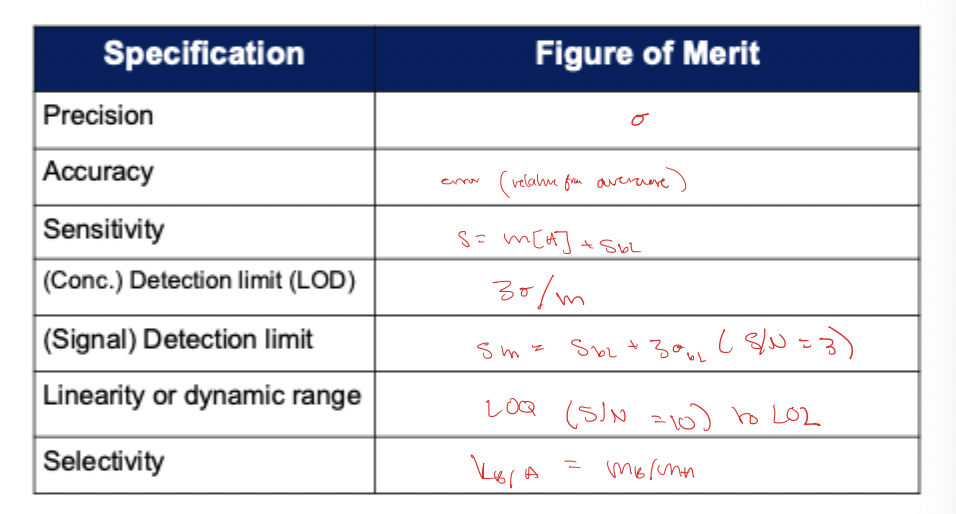
Detection Limit (LOD)
3 (std)/ slope
lowest concentration an analytical method can accurately distinguish from the background
Quantitation Limit (LOQ)
10 (std.)/ slope
with clear accuracy and reliable precision
signal detection
lowest amount of signal you can detect from the noise
y=ybl+ 3 (std)
precision vs accuracy

specificity vs selectivity
specificity is distinguishing a single analyte, while selectivity can usually distinguish more than one.
robustness
ability of an analytical method to be unaffected by small changes
analytical figures of merit
electrolysis
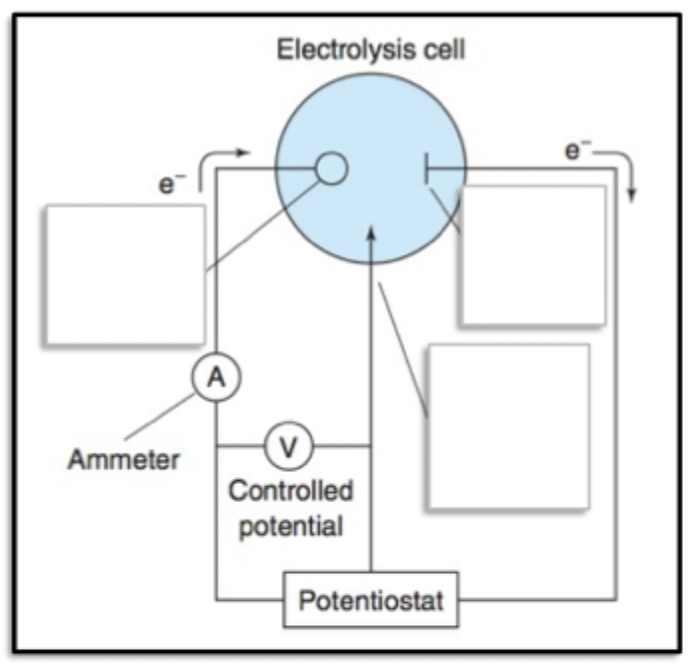
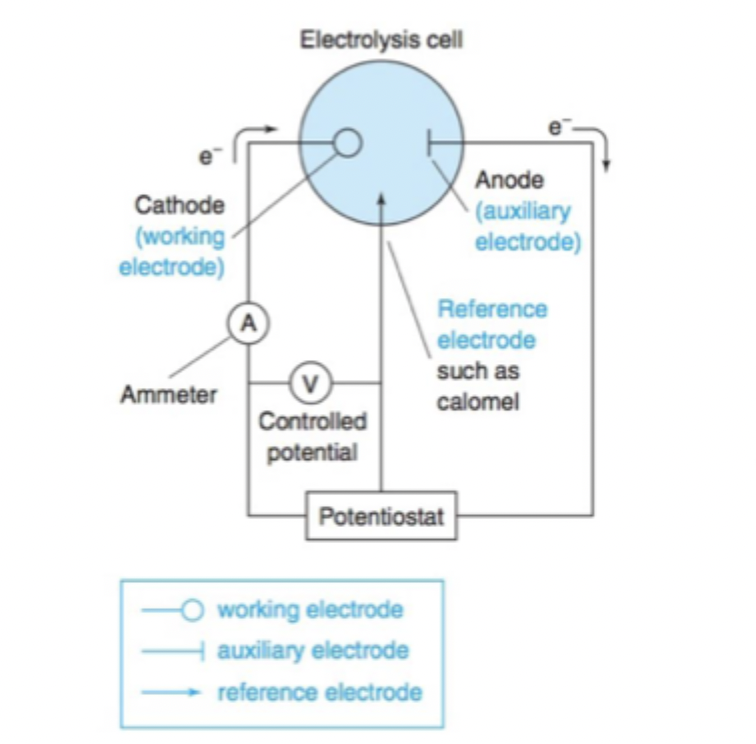
process in which a chemical reaction is forced to occur at an electrode by an applied potential
potentiometry
measurement of voltage in the absence of significant current
electrochemical reactions occur spontaneously or non spontaneously
spontaenously
working electrode vs counter electrode
working electrode- where the electrochemical reaction of interest occurs
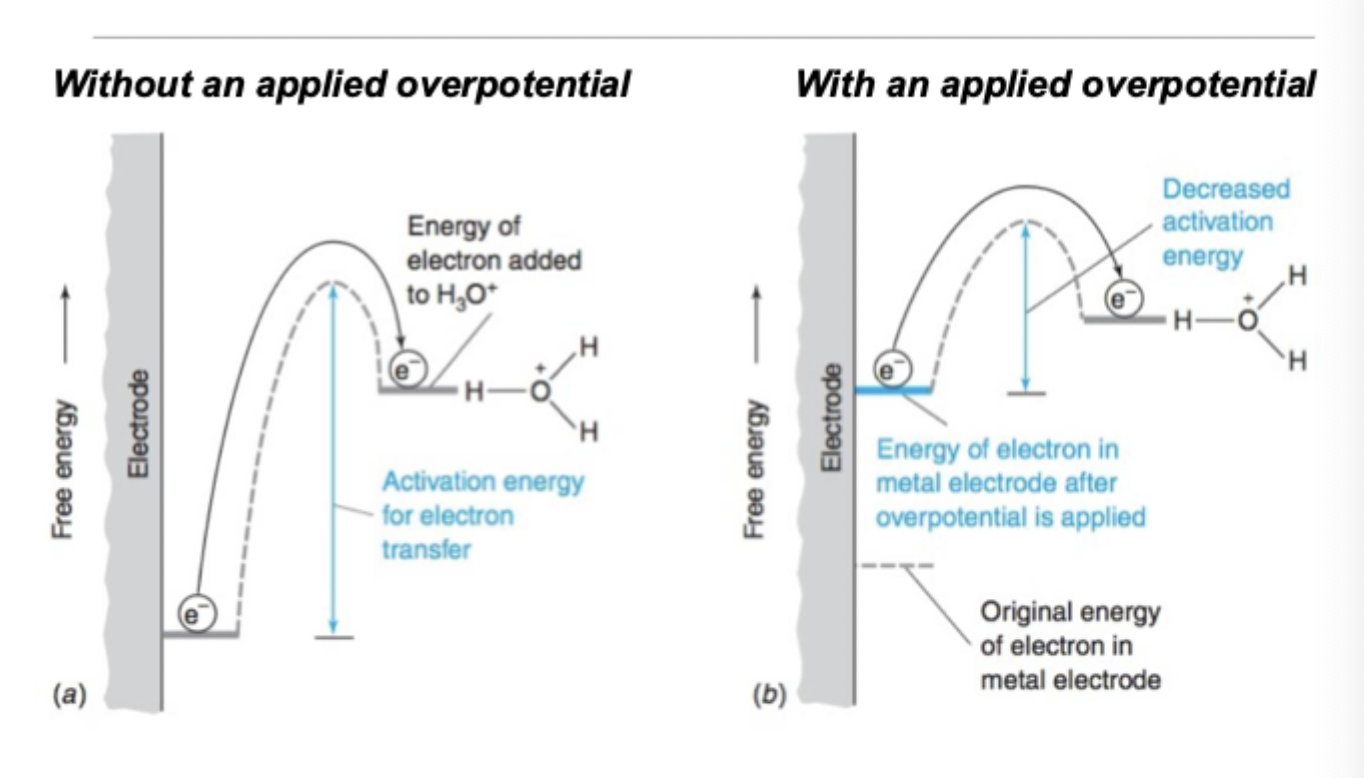
overpotential
voltage required to overcome the activation energy for a reaction at an electrode
faster you want a reaction, higher the over potential that must be applied
a greater over potential will sustain a higher current density
electric current measures the rate of
charge transfer
ohmic potential
voltage needed to overcome electrical resistance (R)
amperometry
the measurement of electric current between electrodes that are diving an electrolysis reaction
amperometric glucose sensor

amperomimic glucose sensor what does it detect
could be measured through just H202 concentration present after the use of glucose oxidase, but can be unreliable
instead, you can use a dimetylferricinium cation which is more reliable and has a positive charge attached to it
benefits of mediator molecule in amperometric glucose sensor
mediator solves o2 concetation issue in variation
transfers electron from reaction to the working electrode
current is measured p;ropritonal to neutral ferrocene- or glucose since they are equal
reduced working potnetialfrom .6v to .2v which can reduce interference
amperometric oxygen sensor
non polar o2 diffuses through small silicon holes at the base of the electrode which then reactions with a gold button cathode
a reactant has three ways to reach the surface of the electrode in amperometry
diffusion through a gradient
convention- bulk movement through sturring
migration- attraction or repulsion of a charged species
rotating disc electrode gives convention and diffusion
voltammetery
encompasses techniques which measure current undersupplied variable potential. the potential is varied using many types of profiles that provide information about a chemical reaction
three toes of voltammetry
based on waveform
linear scan
square wave
triangular- cyclic coltammetry
concentration dependent response of voltammeter is the
diffusion current
whats actually reported is the halfwave potential
the max current is given by the halfwave potential. qualitative or quantitative
qualitatively identifies
when does E1/2= Enaught
for systems where reactants and products are both aqueous
diffusion current is proportional to what
analyte concentration
with reductions actions what should you od before measuring
purge reaction with N2 so as to not reduce the water and get background noise
anodic stripping voltammeter
pre concentration or deposition
concentrate analyze by reducing onto electrode 10^(2-3)x more than in solution
quiet time
potential is held constant, but stirring is stopped to read equilibration
anodic stripping
potential is scanned to oxidize the metal back in its original sate
measure current during stripping
anodic stripping voltammeter

whats the most sensitive volumetric technique
ASV
ASV qual or quant
both!
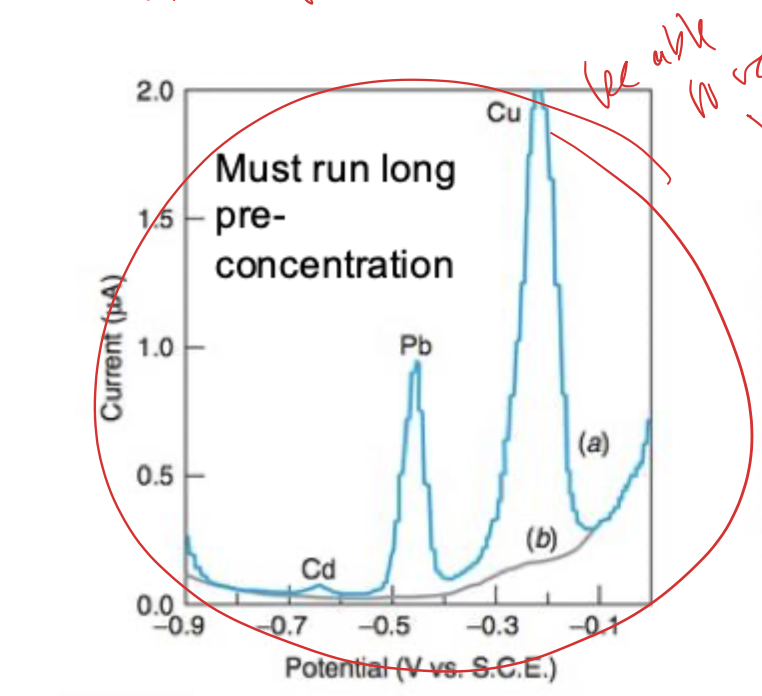
ASC
precision and accuracy
detection limits and linearity
inferences
approx 2-4 RSD/ 2-5% relative error
ppb/ppTrilion
linearity- 2 orders of magnitude
metals being analyzed must have potentials sufficiently different, can do up to 5 metals, only certain ones can be determined by ask
cyclic voltammetery
triangular waveform, repeated several times to ensure reproducibility, electrodes are stationary and planar, no stirring, signal measured is diffusion or surface controlled.
Epa-Epc=
2.22RT.nF=57/n
reaction is perfectly reversible if this is true
go back for all of CV