CIC Exam
 Call Kai
 Learn
Learn Practice Test
 Spaced Repetition
 Match
Match Flashcards
 Knowt Play
1/129

There's no tags or description
Looks like no tags are added yet.
Name | Mastery | Learn | Test | Matching | Spaced | Call with Kai | Chat |
|---|
No analytics yet
Send a link to your students to track their progress
130 Terms
Requirements for sterile storage areas?
Positive pressure, 2-4 air exchanges/hr, RH = 60%, 22-26C
What is the ceramic ring test?
Used to validate the cavitation of the ultrasonic process.
What is the Bowie-Dick Test?
a daily diagnostic procedure used to verify the performance of pre-vacuum (dynamic-air-removal) steam sterilizers, such as hospital or dental autoclaves
What is an important consideration for selecting a disinfectant for vaginal probes?
Should be effective against non-enveloped viruses (ie HPV)
What temperature is needing for hot water washing of linens?
71 C for min. 25 mins
What is the growth range for legionella?
25 to 42 C
What is the threshold for institutions to implement control measures & resample for Legionella?
When 30% of more of cultures samples are positive
What are the temperature and relative humidity requirements for an OR?
20-24 c, RH: 20-60%
What MER-V rating is required in an OR?
MER-V 14 (old) —> new is MERV-16
What are some important considerations for using HP vapour treatments?
Good for terminal cleaning esp. for environmental contamination (ie c diff), reaches all surfaces incl. fabrics & walls, must be unoccupied & contained in the room
Food poisoning incubation periods?
c. perfingens: 10-12 hours, e coli: 3-8 days, salmonella: 6-48 hours, s.aureus: 30 mins - 8 hours
What type of virus is mpox?
ds DNA, enveloped, part of orthopoxvirus family
For blood cultures, what is the goal contamination rate?
< 3%
How long after exposure to Hep C do s/s develop?
2-12 weeks post exposure
What type of virus is VZV?
Herpes family, DNA virus
What is the incubation period for fungal meningitis?
3-4 weeks
CSF characteristics for bacterial meningitis?
Dec glucose, inc proteins, neutrophil predominance
Characteristics of gram negative bacteria?
Nearly red, endotoxins, lipopolysaccharide layer of cell wall, etoh wash disrupts lipo layer and crystal violet is rinsed out of cell wall, colourless until counterstain with safranin, can have flagella
Characteristics of gram pos bacteria?
purple, produces endospores, thick peptidoglycan layer that does not allow crystal violet to be removed during etoh wash, can have flagella
Progression of disease in pertussis?
Catarrhal: onset, runny nose, fever, mild cough that gets worse. 1-2 weeks.
Paroxysmal: cough becomes paroxysmal (numerous rapid coughs). Pertussis is suspected. Usually lasts 1-6 weeks, up to 10.
Convalescent: recovering, 2-3 weeks
What is CoNS?
Part of normal flora
Staph aureus is NOT one
When is TB deemed non-infectious?
3 negative AFBs
2 weeks of tx
s/s improved
Precautions for latent TB?
None
What is the most common type of TB and so what should be done if TB is suspected?
Pulmonary most common type
Should have a CXR
What should be done if CXR in a suspected TB patient is abnormal?
AFBs & cultures x 3 at least 8 hours apart
Cultures should be done on liquid media
What is Failure Mode and Effects Analysis (FEMA)?
Systematic method for identifying failure modes in a system
Determining their effects
Prioritizing actions to mitigate/elim the failures
Facilitates sustained reductions in infections over time
PROACTIVE
What could go wrong
How to begin a case control study?
begin with identifying persons who have the outcome of interest (ie disease)
then find a control group without the outcome of interest
control group should still have the exposure (or potential for exposure)
Process vs Outcome Surveillance
Process: review of practices by HCWs to identify whether IPAC p&ps or best practices are being followed.
Outcome: tracking, analyzing, and reporting results such as HAI rates.
Process Measures
process or steps that lead to a specific outcome.
used to evaluate compliance with desired care or to monitor variation in these practices
examples:
med errors, flu vax rates, HBV immunity rates, compliance with IPAC, TST testing, MDRD, environmental cleaning, AMS, construction barriers
Outcome Measures
Indicates the result of the performance of a function or process.
Examples: BSIs, CAUTI, SSI, VAP, etc.
Structural Measures
Gives consumers a sense of the HCP’s capacity, system, and processes to provide high quality care
Ex: # of board certified MDs, pt ratios
Clinical Performance Measure
Evaluates process or outcomes of care
must be condition or procedure specific of address important functions in pt care
Ex: medication use, clinical events, sentinel events
Leprosy
Mycobacterium leprae
AKA Hansen’s disease
affects skin and peripheral nerves
cardinal signs: loss of sensation in a pale/red skin patch, thickened peripheral nerve, microscopic detection of bacilli in a slit skin smear
transmission unknown but close person to person and resp. droplets BUT for hospital settings routine practices are enough
Toxic Anterior Segment Syndrome (TASS)
HA endophthalmitis can be non infectious or infectious
OBs of TASS have been associated with breaches in MDRD.
Horizontal strategies to dec HAIs
universally applied
population based
target all pathogens
EX: HH, CHG bath, care bundles
Vertical strategies to dec HAIs
target individual pathogens that are deemed important
++ money & resources
Ex: universal screening of MRSA
What is the preferred access site for dialysis?
AV fistula
3 Standards of Care
conventional: everyday norm
contingency: adjustments to every day care but still functional
crisis: major adjustments have to be made to delivery care
What are Enhanced Barrier Precautions?
to reduce transmission of MDROs (other than c diff)
targeted glove and gown use during high contact resident activities for residents known or at risk of MDROs
Risk: wounds, indwelling devices
How many air exchanges are needed for an AIIR?
6-12
VAP bundle includes (5):
elevate HoB
DAILY sedation vacation and ax readiness to extubate
DAILY oral care with CHG
PUD prophylaxis
DVT prophylaxis
How far from a sink can water splash? (ie how far away from sinks should care activities take place)
Water can splash 3 ft from a sink
Levels of Prevention (4):
Prevents onset of disease
Early detection, intervention to halt progression of disease
Managing & treating existing disease to prevent complications
Proactive measures to dec unnecessary medical procedures, ethically acceptable alternatives
Contact transmission: direct vs indirect
direct: germs transferred person-to-person
can be vertical (mom to baby), horizontal (anything other than mom to baby), or droplet
ex: neonatal CMV
indirect: germs transferred through a contaminated object
Which percentage of CJD is familial vs sporadic and what is most common age of onset?
85% sporadic, 15% familial
other types are iatrogenically (healthcare acquired) or ingestion (bovine)
50-70 years old onset
What is Total Worker Health (TWH)?
eliminate or reduce hazards is most effective
through engineering, administrative, or as a last resort indiv level interventions
emphasize elimination or control as primary goal
addresses environmental determinants of health > focus on indiv level
What is Root Cause Analysis?
retrospective look at adverse outcomes
determines what happened, why, and what can be done to prevent in the future
used for sentinel events
REACTIVE
Why did this happen?
For a Hep B exposed employee who is not immune, what should be done?
Should start vaccine series & receive PEP
Dengue Exposed HCW Considerations:
HCWs can be exposed via blood in needlestick injury
Supportive tx only
Should only be vaxed if has been previously infected with confirmed dengue
HCW exposed to Hep C - what type of testing should the source patient have done?
HCV RNA because antibodies don’t show up for 2-3 months.
What is Just In Time Teaching
providing instruction at the moment it is needed, usually in response to a specific problem or task.
Immediate, task specific.
Addressing specific, real-time learning needs.
Ex: how to obtain a mpox swab.
Strategies to Inc HH
HH influenced by behaviour of other HCWs
Should use peer mentorship
How to create sustained behaviour change?
repetition & reinforcement
What is item analysis?
examining student’s test scores in order to assess the quality of the individual test questions and the test itself.
What is social cognitive theory?
interaction of the person, behaviour, and the environment.
instrumental in HH compliance.
Leadership Styles
charismatic: encourages behaviour via personality, persuasion, and communication.
What is Gap Analysis?
most suitable process improvement tool for comparing current processes/practices with best practice guidelines
What is an important consideration for strategic goals?
should align with long term objectives
What are components of a business plan?
formal statments of business goals, the reasons they are attainable, and the plan for reaching goals
decision making tool and cost and revenue estimates are central to any business plan.
Who is the central decision making and policy making body for IPAC in the HC setting?
IPAC committee
What is implementation science?
study of the methods/strategies that facilitate uptake of evidence based practice and research
Tries to close the know-do gap (what we know and what we do)
Involve system thinking
Pareto Chart
Pareto chart is a type of bar graph that shows:
Problems or causes (e.g., infection types, errors, compliance failures)
Ordered from most frequent to least frequent
With a cumulative line showing total impact
It is based on the 80/20 rule: About 80% of problems come from 20% of causes
You’ll often see questions like:
“Which tool helps prioritize the most common causes of infection?”
“Which graph demonstrates the 80/20 principle?”

Histogram
type of bar graph that shows the distribution of continuous data—meaning how often values fall within certain ranges.
A histogram displays:
Frequency of data
Organized into intervals (bins)
The shape of the data distribution
LOS (Days) | Number of patients |
|---|---|
0–3 | 5 |
4–7 | 18 |
8–11 | 12 |
12–15 | 6 |
16+ | 2 |
Run Chart
basic quality improvement graph that shows data over time to help identify trends, shifts, or changes in a process.
contains a median line
commonly used to track HAI rates over time
They often ask:
“Which tool shows data over time to detect trends or shifts?”

Run chart variation
a shift is indicated by 6 or more consecutive points trending in one direction on either side of the median line.
warrants investigation
Non parametric data
makes no assumptions about the dist. of the population values and can be used with discrete data, nominal or ordinal, and interval data.
main advantage: no assumption for normality required.
Correlation coefficient = r
shows whether pairs of variables are related
r measures degree (strength) of a relationship
ranges between -1 to +1
positive correlation (as x increases, y increases) or (as x decreases, y decreases)
negative correlation (as x increases, y decreases) or (as x decreases, y increases)
Normal Distribution (1, 2, and 3 SDs from the mean)
1 SD = 68% of data
2 SD = 95% of data
3SD = 99% of data
mean, median, and mode are equal
Confidence intervals in statistical significance
a CI that does not include the null value (such as 1 for RR/OR) provides evidence against the null hypothesis.
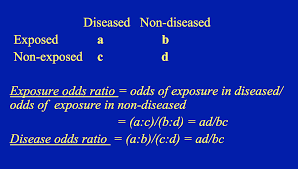
Odds Ratio Formula
Prevalence Formula
number of pts with disease / total population
x 100
Attack Rate Formula
number of cases/ at risk population
x 100
Attributable Risk Formula
number of exposed who got disease/ total number exposed
minus
number of unexposed who got disease/total not exposed
TST Readings

Laminar air flow
LAF is used to supply a steady stream of clean air
across or down a room and is used primarily in specialty type
ORs (e.g., orthopedic surgery).
It is designed to move particle-
free air ("ultraclean air") over the aseptic operating field at a
uniform speed, removing particles from its path.

Min. air exchanges per hour for OR, AIIR, Protective, Patient Rooms
OR: 15
AIIR: 12
Protective: 12
Pt Room: 4
Epi Triangle
host, agent, environment
What is SWOT Analysis?
a strategic planning framework used to evaluate a business, project, or personal goal.
stands for Strengths, Weaknesses, Opportunities, and Threats.
helps decision-makers identify competitive advantages, mitigate risks, and uncover areas for growth
What is the Plan, Do, Study, Act (PDSA) Cycle?
a structured, four-step iterative model used for continuous quality improvement and problem-solving.
t allows teams to test small-scale changes, evaluate the results, and refine processes based on real-world data before committing to broader implementation
What is the health belief model?
For a behavior change to occur, the perceived threat (susceptibility × severity) and the perceived benefits must outweigh the perceived barriers
Transtheoretical Model
aka stages of change
precontemplation, contemplation, preparation, etc

Which infections dont have a PEP protcol?
Mumps
HCV
Rubella
Surfaces contaminated with blood/bopyd fluid should be disinfected with what level of disinfectant?
Intermediate
What does an antibiogram measure
An antibiogram provides the percentage of samples for a given
organism that were sensitive to certain antibiotics and can be unit-specific or
reflect hospital-wide isolates.
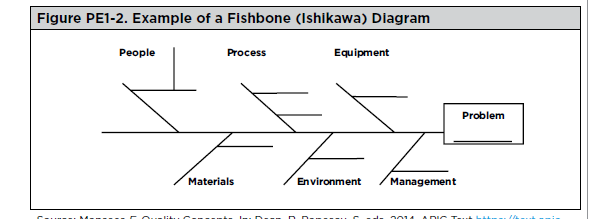
Fishbone Diagram
also called a tree diagram or Ishikawa)
allows a team to identify, explore, and graphically display all of the possible causes
related to a problem to discover the root cause.
WBC count normal range
Leukocytosis refers to an elevated white blood cell (WBC) count,
typically exceeding the normal range of 4,000 to 10,000 cells/mm3
Budding formation and a smooth, creamy colony - which organism?
Candida
Bloom’s Taxonomy
Remember
Understand
Apply
Analyze
Evaluate
Create
RUAAEC

During disaster planning, how many litres of backup water supply per person?
10 L
How long after exposure to HIV should PEP be given?
must be started within 72 hours after a recent
possible exposure to HIV.
Endo vs Ext toxins
Exotoxins can posess enzymatic activity and can be found in gram neg & pos bacteria
Endotoxins are part of outer membrane of gram negatives
What is a disadvantage of quats?
Limited spectrum of activity against certain pathogens
What is the standardized infection ratio (SIR)?
calculated by observed/expected
The Standardized Infection Ratio (SIR) is the primary summary measure used by the NHSN to track HAIs.
A SIR less than 1.0 indicates that fewer HAIs were observed than expected.
If the p-value is less than 0.05 and the 95% CI does not cross the number 1, the SIR is statistically significantly different than 1
How to calculate PPV?
PPV = TP / (TP + FP)
Precautions for pneumonic plague?
Droplet
AIIR air pressure?
An airborne infection isolation room (i.e. negative pressure room)
must maintain a negative pressure differential of at least 0.01” (i.e. −0.01”).
How long do endoscope channels need to be dried after cleaning/disinfecting?
Endoscope channels should be dried for a minimum of 10 minutes with pressure-regulated forced instrument air (or HEPA-filtered air) after completion of the cleaning and disinfection process.
This ensures thorough drying to minimize the risk of microbial contamination and biofilm formation.
Intrinsic vs extrinsic contamination
intrinsic contamination refers to the presence of pathogens in apparatus or medicine before use. Intrinsic contamination usually occurs during the manufacturing process, whereas extrinsic contamination occurs during use
special vs common cause variation
Special cause variation is variation that lies more than three standard deviations outside the mean of the sample distribution. Common cause variation represents variation within thee standard deviations of the mean and includes 99.73% of all probably events, so special cause variation represents the remaining 0.27% of all events.
Most common infection following cat bite?
pasteurella