Differences Between Physical and Chemical Properties in Chemistry
 Call Kai
 Learn
Learn Practice Test
 Spaced Repetition
 Match
Match Flashcards
 Knowt Play
1/54

There's no tags or description
Looks like no tags are added yet.
Name | Mastery | Learn | Test | Matching | Spaced | Call with Kai | Chat |
|---|
No analytics yet
Send a link to your students to track their progress
55 Terms
What are physical properties?
Characteristics that can be measured without changing the composition of the sample, such as mass, color, and volume.
What are chemical properties?
Characteristics that describe a substance's ability to react and form new substances, such as flammability and susceptibility to corrosion.
Give an example of a physical property of pure copper.
It is always a reddish-brown solid.
What happens to copper when it dissolves in dilute nitric acid?
It produces a blue solution and a brown gas.
What is malleability?
The ability of a substance to be molded into thin sheets.
What is an example of a substance that is dull and brittle?
Salt.
What is the density of pure water at 25°C?
0.998 g/cm³.
Which element has a very low density compared to zinc, chromium, and tin?
Iodine.
What is the significance of melting and boiling points?
They are unique identifiers that can provide information about the identity and purity of a compound.
What is a chemical property of hydrogen?
It has the potential to ignite and explode under the right conditions.
What occurs when zinc reacts with hydrochloric acid?
It produces hydrogen gas.
What is rust?
Iron oxide formed when iron combines with oxygen.
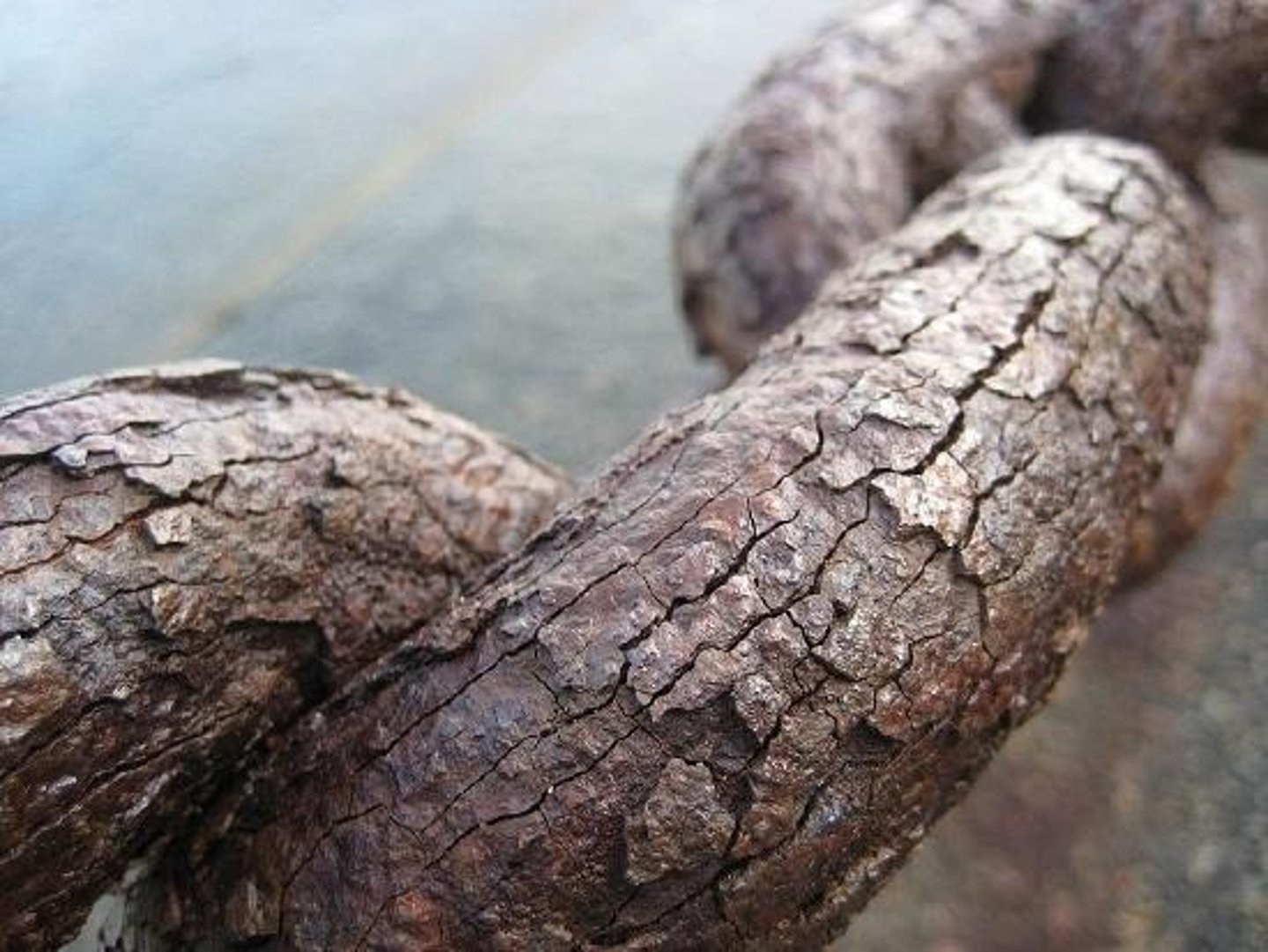
What is corrosion?
The process of deterioration of a material, often due to chemical reactions.
Which of the following is a chemical property of iron: a) Iron corrodes in moist air, b) Density = 7.874 g/cm³?
a) Iron corrodes in moist air.
Which of the following is a physical property of matter: a) corrosiveness, b) density?
b) density.
What is flammability?
A chemical property that describes a substance's ability to catch fire.
What is the difference between physical and chemical properties?
Physical properties can be observed without changing the substance, while chemical properties can only be observed during a chemical change.
What does a chemical change produce?
One or more types of matter that differ from the original matter.
What is an example of a chemical change?
The formation of rust from iron, oxygen, and water.
What is the boiling point?
The temperature at which a substance transitions from a liquid to a gas.
What is hardness in terms of physical properties?
A measure of how resistant a substance is to deformation or scratching.
What is the density of whole milk at 25°C?
1.030 g/cm³.
What does it mean for a substance to be soluble?
It means the substance can dissolve in a solvent, such as salt in water.
What is the significance of observing a chemical property?
It helps in identifying substances based on their potential chemical changes.
What is an example of a physical property that can be measured?
Color, hardness, or melting point.
How can the purity of a material be assessed?
By examining its melting and boiling points.
What are the two broad categories of matter?
Pure substances and mixtures.
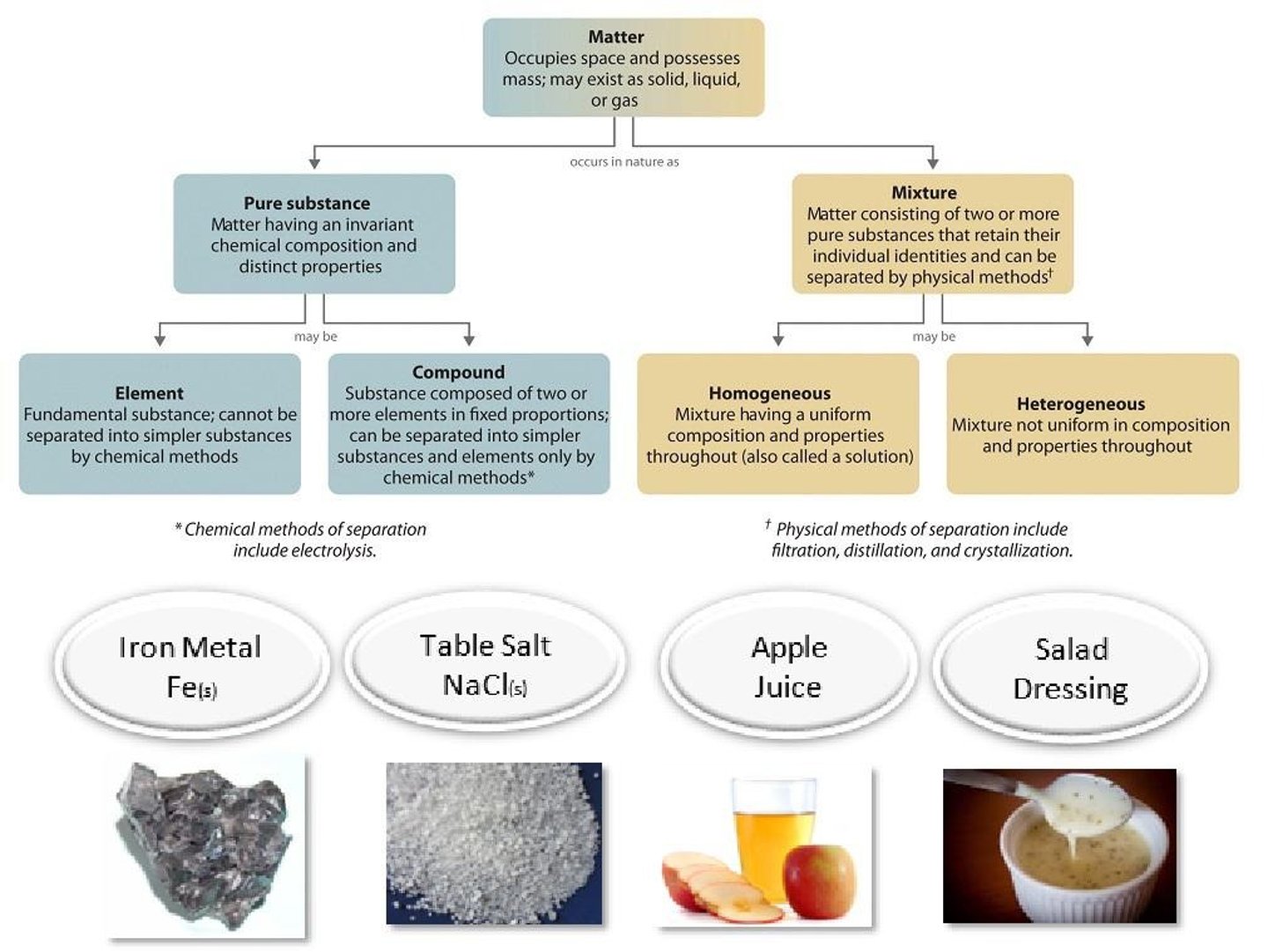
What defines a pure substance?
A pure substance has a constant composition and consistent properties throughout the sample.
What is the difference between an element and a compound?
An element cannot be broken down into simpler substances, while a compound can be broken down into elements.
Give an example of an element.
Aluminum.
Give an example of a compound.
Water (H2O).
What is a mixture?
A physical blend of two or more substances, each retaining its own identity and properties.
What is a homogeneous mixture?
A mixture with a uniform composition throughout.
What is a heterogeneous mixture?
A mixture where the composition is not uniform throughout.
What is an example of a homogeneous mixture?
Salt water.
What is an example of a heterogeneous mixture?
Vegetable soup.
What is a phase in the context of matter?
A phase is any part of a sample that has a uniform composition and properties.
How many known elements are there?
About 118 elements.
What is sodium chloride commonly known as?
Table salt.
Why is salt water not considered a pure substance?
Because its composition can vary depending on the amount of salt dissolved.
What is the classification of filtered tea?
Homogeneous mixture.
What is the classification of freshly squeezed orange juice?
Heterogeneous mixture.
What is the classification of a compact disc?
Heterogeneous mixture.
What is the classification of aluminum oxide?
Compound.
What is the classification of selenium?
Element.
How would a chemist categorize saltwater?
Homogeneous mixture (solution).
How would a chemist categorize soil?
Heterogeneous mixture.
What is the classification of water?
Compound.
What is the classification of oxygen?
Element.
What are the two types of mixtures?
Homogeneous and heterogeneous mixtures.
What is the key characteristic of a homogeneous mixture?
Its composition is uniform throughout.
What is the key characteristic of a heterogeneous mixture?
Its composition is not uniform throughout.
What happens to the properties of substances in a mixture?
Each substance retains its own properties.
What is the definition of a compound?
A substance made up of more than one type of atom bonded together.
What is the definition of an element?
A substance made up of only one type of atom.