Ortho Theory + Concepts Ortho DENT 1030
 Call Kai
 Learn
Learn Practice Test
 Spaced Repetition
 Match
Match Flashcards
 Knowt Play
1/23

There's no tags or description
Looks like no tags are added yet.
Name | Mastery | Learn | Test | Matching | Spaced | Call with Kai | Chat |
|---|
No analytics yet
Send a link to your students to track their progress
24 Terms
What is the term for when your teeth are in their most natural position?
Maximum Intercuspation (MI) or centric occlusion
What is the Universal Notation System for deciduous/primary teeth?
A - T
What is the Palmer Notation System for deciduous/primary teeth?
Quad symbols + Letter
What is the FDI Notation System for deciduous/primary teeth?
Quad’s 5-8, tooth #1-5
Define Class I (Orthognatic) Occlusion
Mesiobuccal cusp of the maxillary first molar articulates with the buccal groove of the mandibular first molar

Define Class II (Retrognatic) Occlusion
Mesiobuccal cusp of the maxillary first molar articulates mesial to the buccal groove of the mandibular first molar

Define Class III (Prognatic) Occlusion
Mesiobuccal cusp of the maxillary first molar articulates distal to the buccal groove of the mandibular first molar
What are the two divisions of Class II occlusion? Explain them
Division 1 — the maxillary incisors are proclined (buck teeth)
Division 2 — the maxillary incicors are retroclined
What are the percentages of people with Class I, II, III occlusion?
Class I — 60-65%
Class II — 25-30%
Class III — 3-5%
What are the three types of Occlusal Relationships?
Overjet, Overbite, Crossbite
What is the normal measurement for overjet?
1-3mm
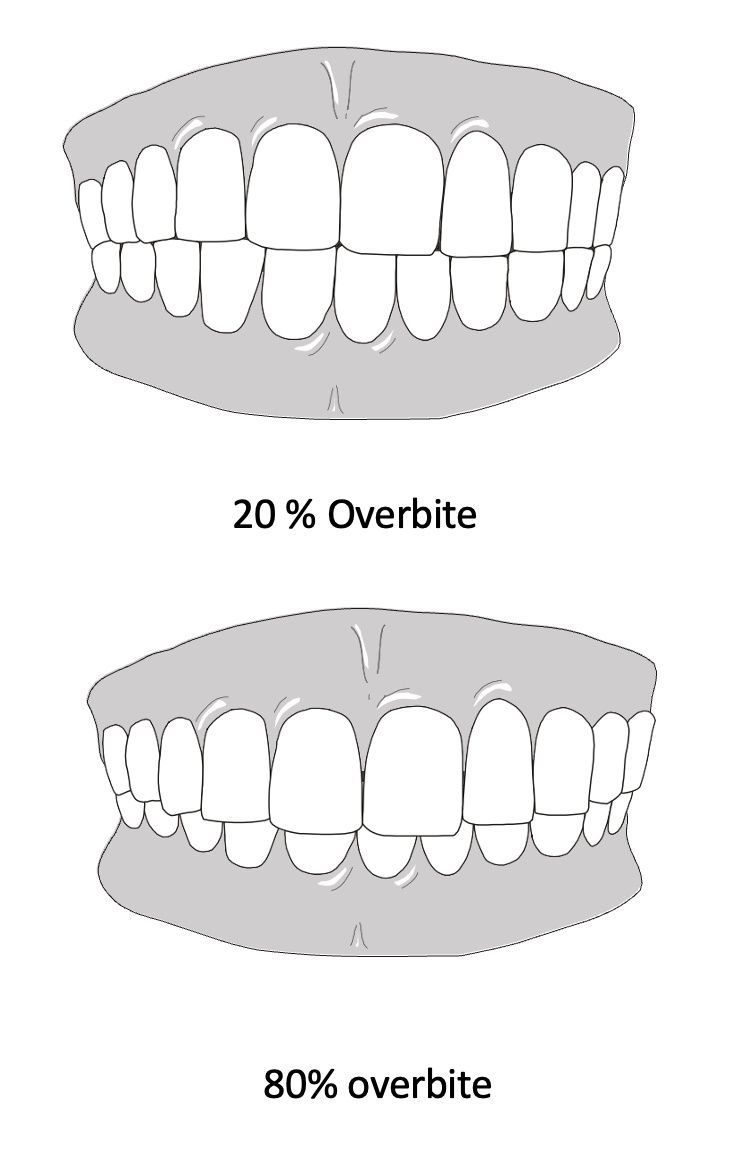
What is the normal measurement for overbite?
10-20%
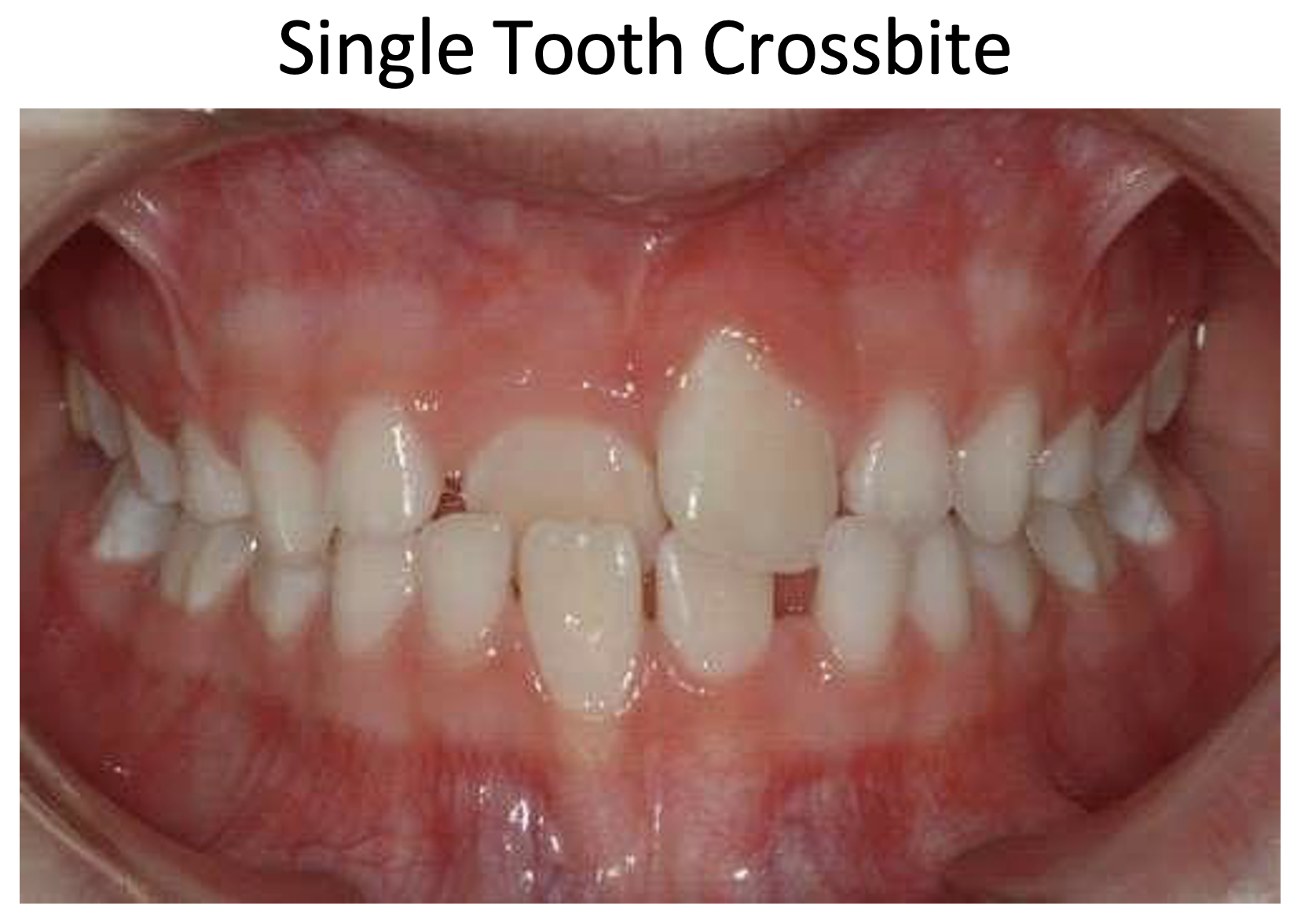
What is it called if there is a negative overjet?
Crossbite
What are the requirements of an orthodontic appliance?
Function —> Comfort —> Aesthetics
What do passive appliances do?
Hold teeth in place, no forces used
What do active appliances do?
They place mechanical forces on teeth for movement
What do myofunctional appliances do?
They retrain muscles of the face (cheek, tongue, lip) in order for proper tooth alignment, jaw growth, nasal breathing etc.
What are orthodontic wires typically made of?
Stainless steel. Remember 18-8 — 18% Chromium, 8% Nickel
What is “temper” in orthodontics? How are they classified?
The hardness and flexibility of a wire
Dead soft — highly malleable and stays in the shape you bend it
Soft — partially flexible
Hard — does not bend easily, but will bend without too much force and will keep shape
Spring Hard — wants to bend back to its orignal shape
How are tube wires measured in regards to thickness?
By their inside diameter

Whats the range of sizes of Round Wires
.012” to .060”
Whats the range of sizes of Rectangular wires?
.010x.020”- .022x.025”
How do you go from ga to inches?
Always remember 18-1 (18ga is 1mm)

True or False: The smaller the wire, the larger the guage
True