2026 AAH S2 Final
 Call Kai
 Learn
Learn Practice Test
 Spaced Repetition
 Match
Match Flashcards
 Knowt Play
1/67

There's no tags or description
Looks like no tags are added yet.
Name | Mastery | Learn | Test | Matching | Spaced | Call with Kai | Chat |
|---|
No analytics yet
Send a link to your students to track their progress
68 Terms

Ashoka’s Stambha Pillar c. 230 BCE.
Monolythic
Topped by lions, flower, and wheel'
Inscription writes of buddhism and King Ashoka

The Great Stupa, c. 250 BCE; enlarged and renovated c. 50-25 BCE, Sanchi, India.
Memorial and house of buddah’s ashes
Pradakshina > Clockwise rotation
Pilgrimage destination
Aniconic vs iconic buddhism

Prayer Hall (Cave 9), 199-100 BCE, Ajanta, India.
A plain, hemispherical stupa.

Prayer Hall (Cave 26), ca.480-520 CE, Ajanta, India.
A stupa fronted by a large, seated Buddha image.

Prayer Hall (Cave 1), ca. 470 CE, Yungang Grottos, Datong, China.
Buddhism in China

Songyue Pagoda, 523 CE, Mount Song, Henan Province, China.
Chinese Bhuddists interpretation of the the Stupa
15 tiers
Merge of Chinese and Indian architecture
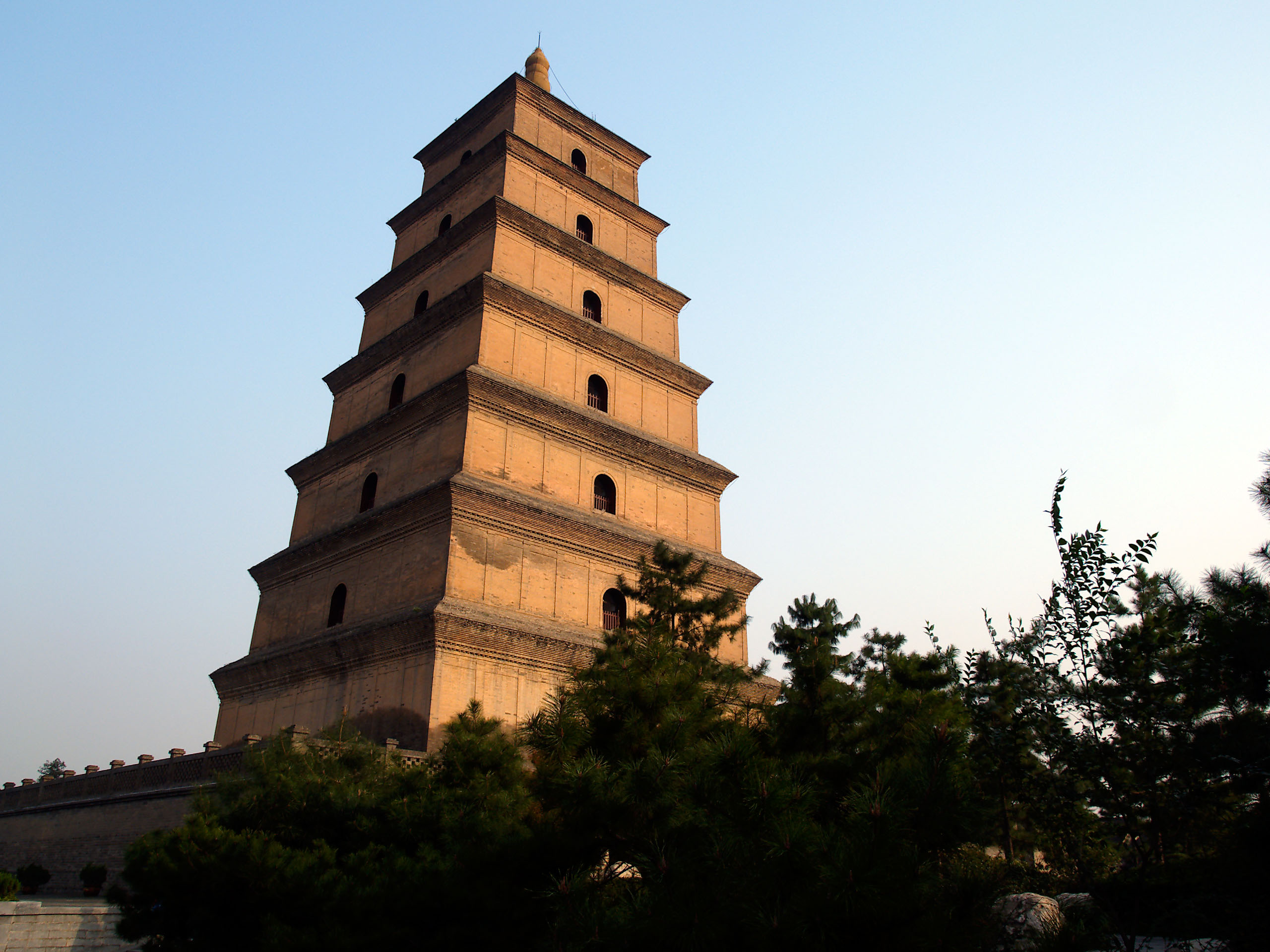
Great Wild Goose Pagoda, 652 CE, Ci’en Monastery, Xi’an, China.
Monestary complex > Housing for travelers, school for children, and space for public events

Main Buddha Hall, Foguang Monastery, 875 CE, Shanxi Province, China.
Bhudda hals replace pagoda in terms of hierarchy in Chinese Bhuddist Monestaries
Dougong > Timber bracketing structure

Horyuji, Nara, 607 CE, Japan.
Constructed from timber
Buddhism in Japan blends Buddhism with ancient Chinese Shintoism

Great Buddha Hall, Todaiji, ca. 750 CE, Nara, Japan.
Largest wooden structure in the world
Burned down and reconstructed twice
Houses large statue of Bhudda

Angkor Wat, ca.1150 CE, Cambodia
Buddhist temple in the center of the Khmer Empire
Converted from Hindu to Buddhist temple

Fontenay Abbey, 1139-47. Burgundy, France.
Latin Cross Plan

Cluny Abbey, 909-1130. Burgundy, France.
Destroyed now but was largest Abbey in Europe during its time

Abbey Church at Moissac, France, 1100-1130.
Collums feature portraits of important figures
Earliest Cloister

Cathedral of Saint James, Santiago de Compostela, Spain 1078-1122.
Pilgrimage Plan
Sound Box
Stone resulted in less windows and a darker church

Abbey church of Saint Denis, 1135-1144, Paris, France.
Christian Maurderer
One bell tower destroyed in French Revolution
Buttresses and piers allow for taller interiors to let in more light

Chartres Cathedral, 1140-1260, Chartres, France.
Right bell tower becomes “pointier” as it goes up > transition from Romanesque to gothic
Flying buttresses allow larger clerestory windows and more light
Rose Window

Notre Dame Cathedral, Paris, France, begun 1163.
Situated on island on the Seine
Roof burned down due to wooden construction
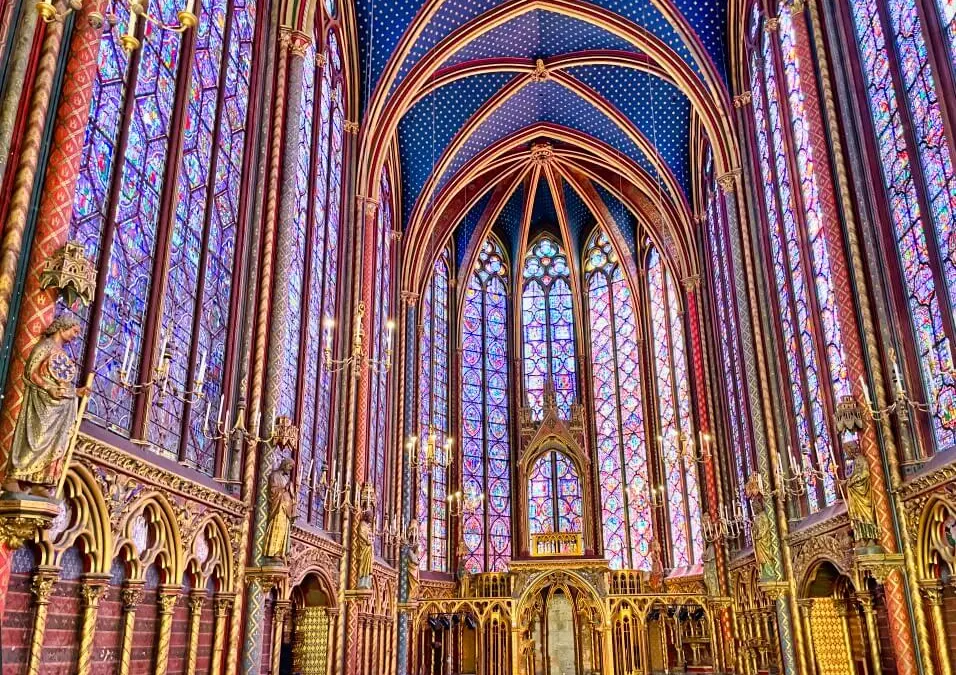
La Sainte-Chapelle, Paris, France, 1243-1248.
Sits on same island opposite of Notre Dame
Holds crown of thorns
Stained glass recounts old testament

Batammariba Houses, Tamberma Valley, Togo and Benin.
Made from earthen materials
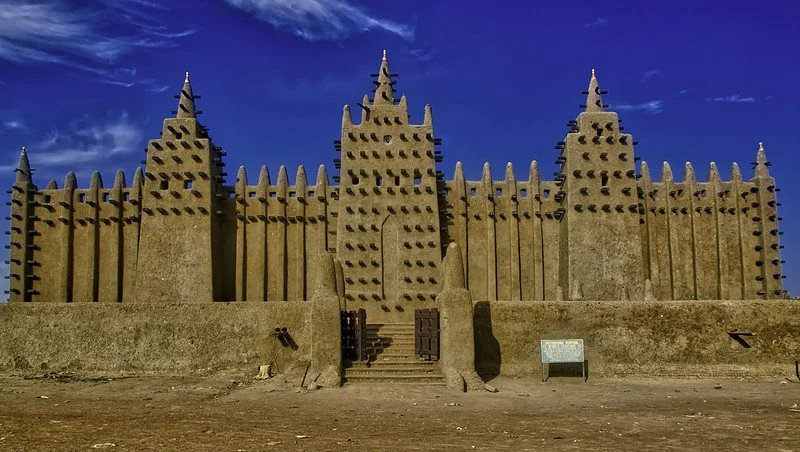
The Great Mosque, Djenné, Mali, reconstruction 1907.
Spread of Islam in Africa
Made from earthen residue when the river dries up
Replastered annually
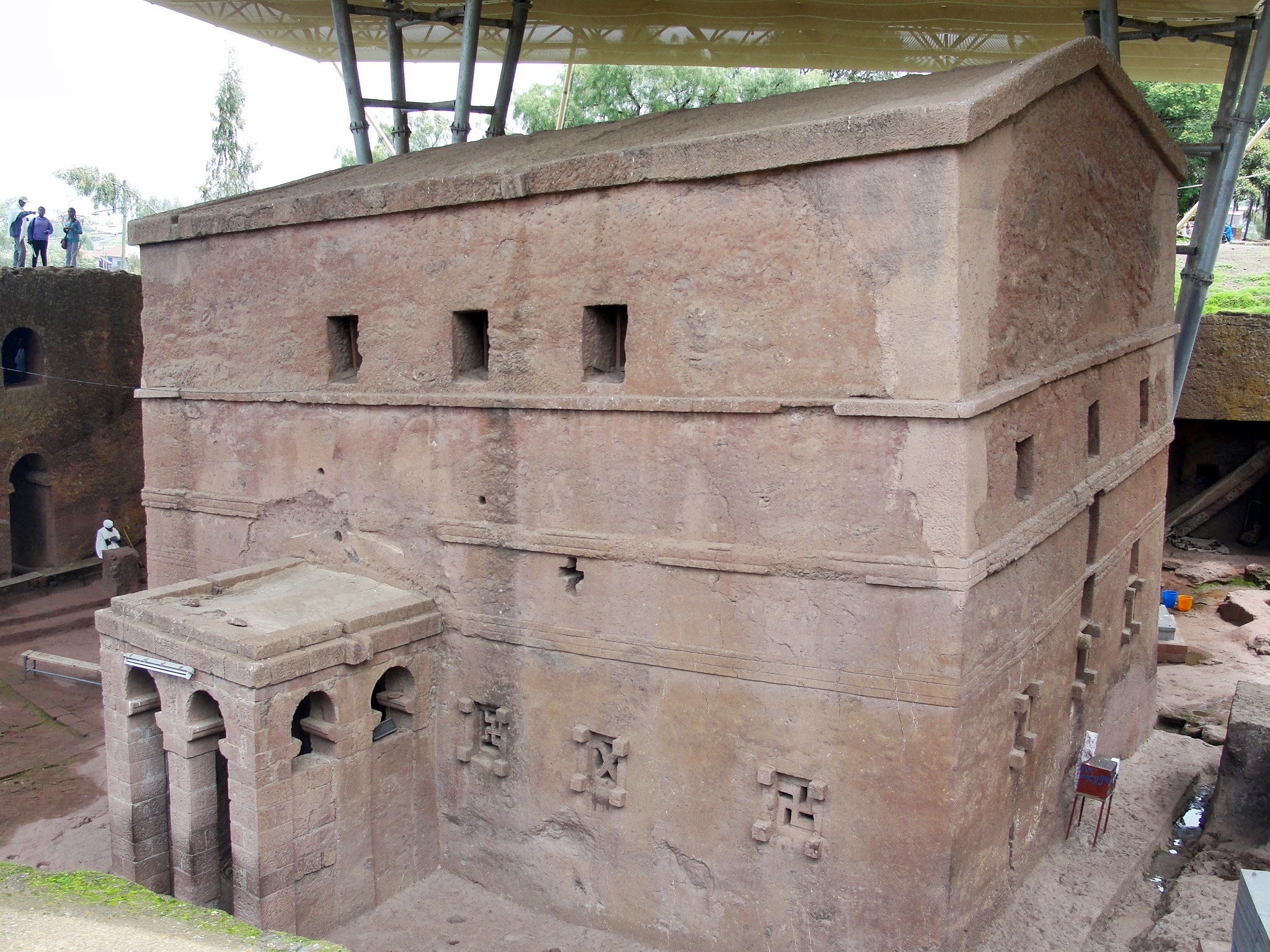
Bete Maryam (House of Mary), 11th/12th centuries.
Carved from Basalt
Interior is decorated with colorful polychrome abstract motifs
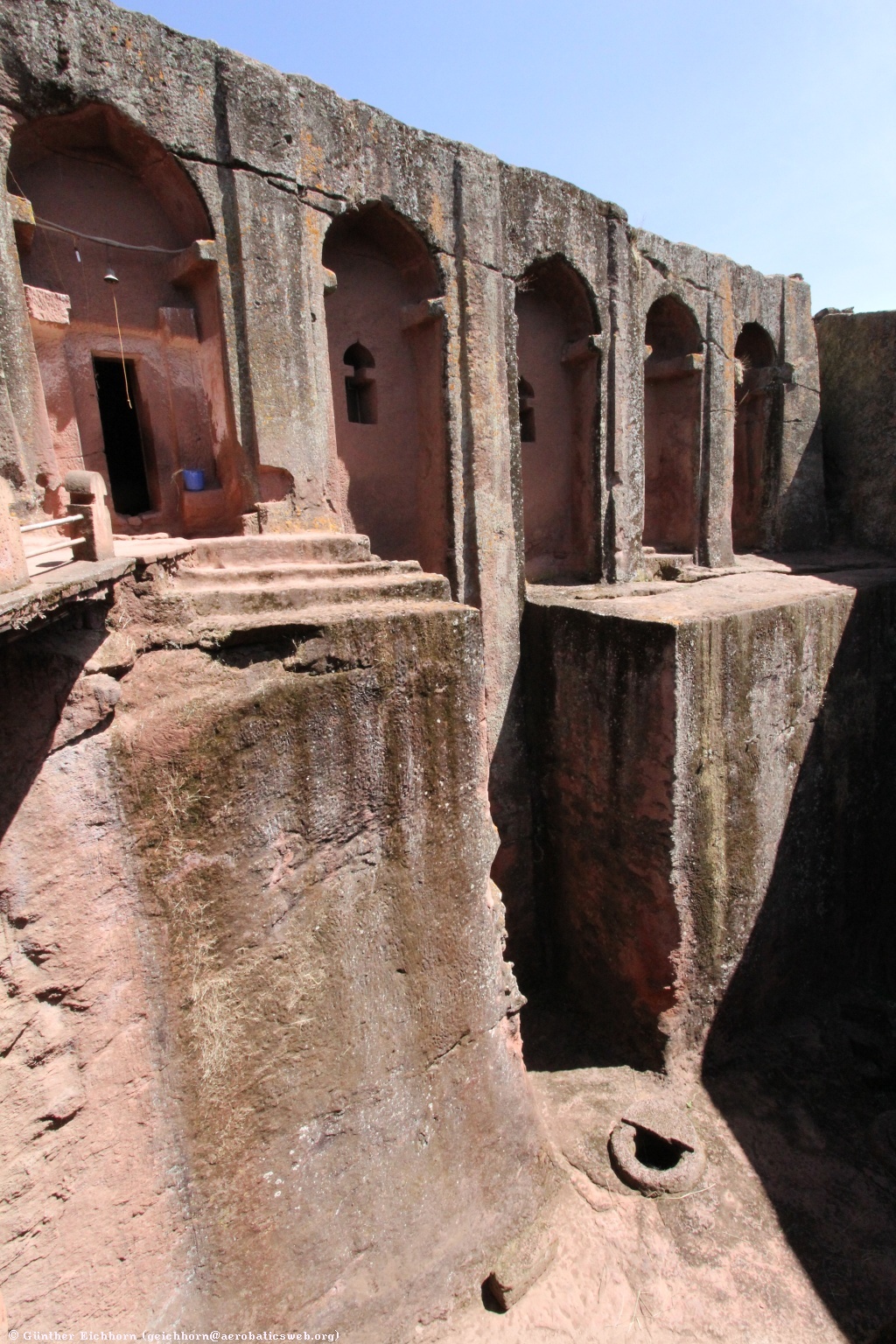
Bete Gabriel-Rafa’el (Houses of Gabriel and Raphael), 12th/13th centuries.
Built into cliff

Bete Giyorgis (House of St. George), late 12th/early13th centuries.
Cruciform structure
Devotional fixation
Church raised on plinth
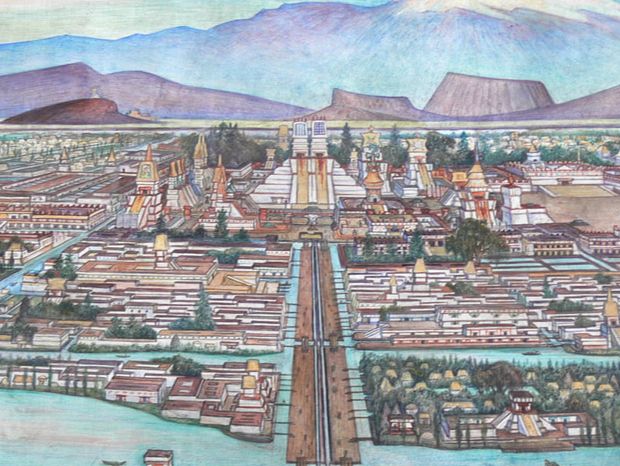
Tenochtitlan, (present-day Mexico-City), founded 1325.
Sits in middle of Lake Texocco
Sacred temple in middle of city > built on the same site which the sacred eagle was discovered > human sacrifice offered
Aqueduct carried water to the city

Giuliano da Sangallo, Wooden Model of Palazzo Strozzi, 1489-90
Wooden models for construction

Bramante, Drawing for the Basilica of St. Peter's, begun 1505, Rome

Baldassarre Peruzzi, Bird's Eye View of St. Peter's, ca. 1506-20, Rome

Antonio da Sangallo, Wooden Model of St. Peter's Basilica, 1539-46, Rome
Huge scale model
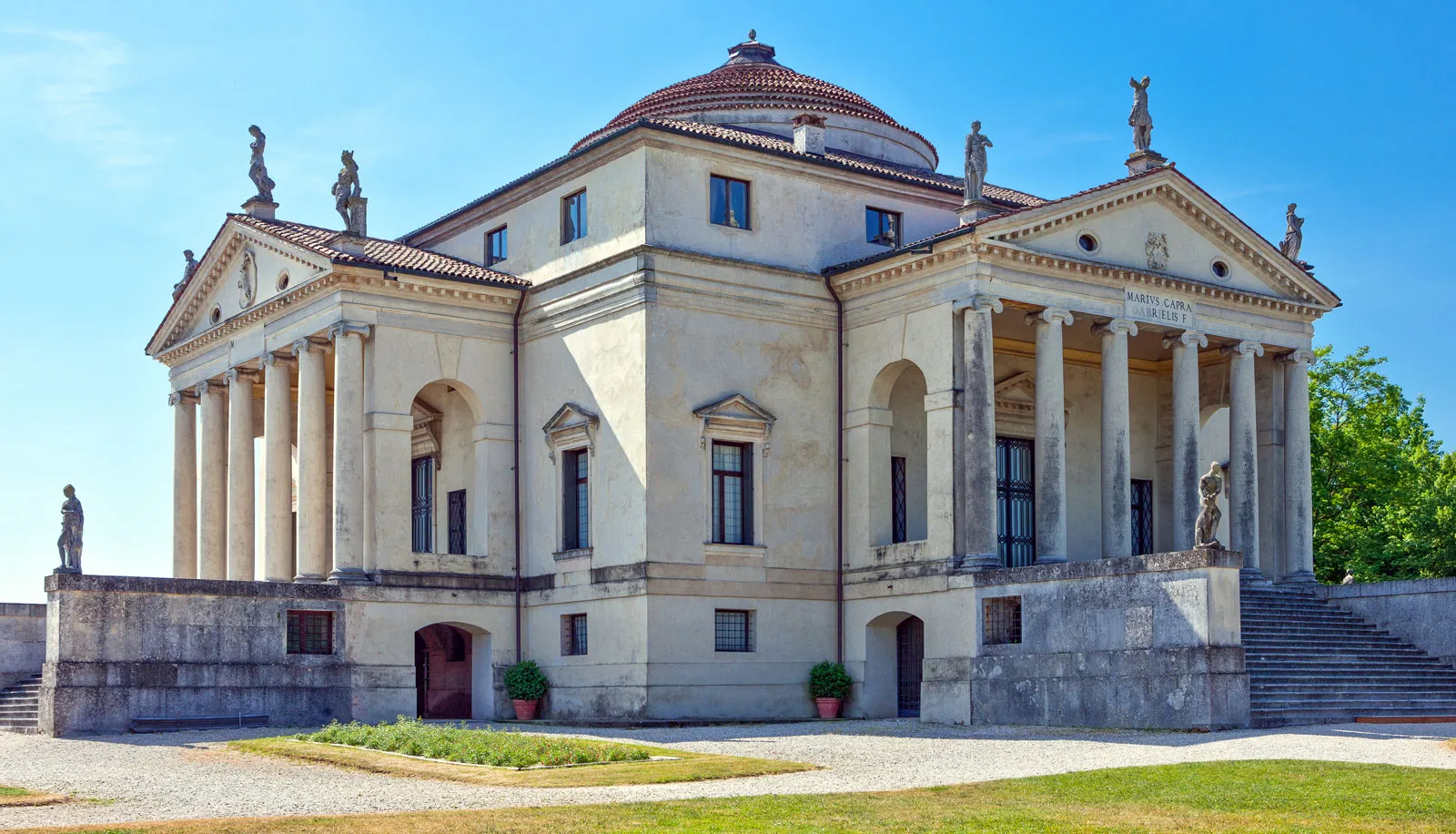
Andrea Palladio, Villa Rotonda, 1550-70, Vicenza, Italy
References classical antiquity
Every facade is the same
Stupa
a mound-like or hemispherical structure containing relics that is used as a place of meditation.
Pagoda
tiered tower with multiple eaves common to China, Japan, Korea, Vietnam and other parts of Asia. Most pagodas were built to have a religious functions, mainly Buddhist.
Dougong
A Chinese system of timber construction that utilizes joinery and interlocking brackets. The Dougong system transfers the weight of the roof evenly to the columns below.
Mandala
geometric configuration of symbols. In various spiritual traditions, mandalas may be employed for focusing attention of practitioners and adepts, as a spiritual guidance tool, for establishing a sacred space and as an aid to meditation and trance induction.
Buddha (enlightened one)
the historical Buddha was Siddharta Gautama (563-483 BCE), but the title signifies "the enlightened one."
Circumambulation
the act of moving around a sacred object or idol. Circumambulation of temples or deity images is an integral part of Hindu and Buddhist devotional practice.
Torana
Free-standing ornamental arched gateway for ceremonial purposes seen in the Hindu, Buddhist and Jain architecture of the Indian subcontinent.
Stambha
pillar or column found in India. In the context of Jain and Hindu mythology, it is believed to be a cosmic column which functions as a bond, which joins the heaven and the earth. (see Ashoka's columns)
Barays
Term describing the massive water reservoirs set up around the city of Angkor.
Devaraja (God-King)
A Sanskrit term for "Sacred Kingship," in which the king was a divine universal ruler, a God on earth whose authority over all matters was ordained by the heavens.
Laterite
an aluminum and iron rich rock found in Cambodia. At Angkor Wat, Laterite was used to encase the sand foundation core, and to line the waterways.
Quincunx
Quincunx is a geometric form. An arrangement of five objects with four at the corners of a square or rectangle and the fifth at its center. The temple towers of Angkor Wat are arranged in this pattern.
Temple Mountain
Hindu temple structure like that of Angkor Wat that has five towers, with the tallest in the center– representing the five peaks of the sacred Mount Meru.
Abbey
A grouping of buildings that constitutes the housing and other necessary structures for a society of Christian monks or nuns who were all living under a specific religious rule.
Cloister
An enclosed rectangular space in a monastery, usually an open, garden court surrounded by roofed passages on all four sides. In a monastery, the cloister connects the church to the domestic structures.
Monasticism
A communal lifestyle dedicated to spiritual devotion. A retreat from the world into a community of like-minded ascetics, committed to daily regimens of work and prayer. Nuns and monks in the middle ages encouraged literacy, learning, housed travelers, healed the sick, and assisted the poor. Religious orders became important patrons of the arts in the Romanesque period.
Pilgrimage Plan
A basilica (latin-cross) plan church with side-aisles that envelop the entire structure. This allows for the circulation of large crowds without the disruption of the liturgy. (also called “pilgrimage road architecture.”
Reliquary
Protective container for a relic. Often decorated lavishly.
Ribbed vault
A vault with projecting bands.
Flying buttress
An arch transmitting the thrust of a vault or roof from the upper part of the wall to an outer support buttress. A mass of masonry projecting from a wall to give additional support.
Groin vault
two intersecting barrel vaults.
Pinnacle
a small, steep turret-like structure crowning spires and other roof structures.
Batammariba
A population of West Africa, called “Somba” in Benin, “Tamberma” in Togo. Batammariba means "those who build the earth."
Djenné-ferey
cylindrical sunbaked bricks composed of mud, sand, rice husks, and water.
Toron
decorative and functional bundles of rodier palm sticks that protrude horizontally from walls
Minaret
a tall slender tower, typically part of a mosque, with a balcony from which a muezzin calls Muslims to prayer.
Mihrab
a niche in the wall —see entry below— of a mosque, at the point nearest to Mecca, toward which the congregation faces to pray.
Qibla Wall
a significant architectural feature within a mosque that indicates the direction Muslims face during prayer, which is toward the holy city of Mecca, Saudi Arabia.
Plinth
a base or platform that supports a pedestal, column, statue, or structure, often found as the lowest part of a building or architectural element.
Devotional fixation
an object or image that focuses a person’s attention on the holy and directs their mind and soul to prayer.
Hypogeum
a subterranean chamber carved from rock that usually serves as a temple or tomb.
Altepetl
in Mesoamerican cultures, a politically autonomous unit roughly equivalent to a city-state.
Calpulli
in Tenochtitlan, an organizational unit below a campan roughly equivalent to a neighborhood based on, which had its own temple and school
Campan
in Tenochtitlan, a larger organization unit that included multiple calpulli
Cartographic history
a map that shows not just a place but also events unfolding in space over time
Chinampas (floating gardens)
In Aztec architecture, especially in Mexico city, chinampa gardens were made of uniform size using wooden stakes and plant material
Humanism
A Renaissance cultural movement which turned away from medieval scholasticism and revived interest in ancient Greek and Roman thought. The new subjects of study introduced by Renaissance humanists today form the basis for the "humanities" taught in universities around the world.
Lantern
a small circular or polygonal structure, with windows all around the base, which sits above a larger tower or dome.