Lecture 3- Basic mechanisms of Toxicants 1
 Call Kai
 Learn
Learn Practice Test
 Spaced Repetition
 Match
Match Flashcards
 Knowt Play
1/27

There's no tags or description
Looks like no tags are added yet.
Name | Mastery | Learn | Test | Matching | Spaced | Call with Kai | Chat |
|---|
No analytics yet
Send a link to your students to track their progress
28 Terms
local effect
the site of action takes place at the point of contact
what are examples of the site of action
skin surface
mucous membrane of the eyes, nose, mouth, throat
or anywhere that along the respiratory or GI system
systemic effect
the toxic substance has been absorbed and distributed throughout the body
cumulative effect
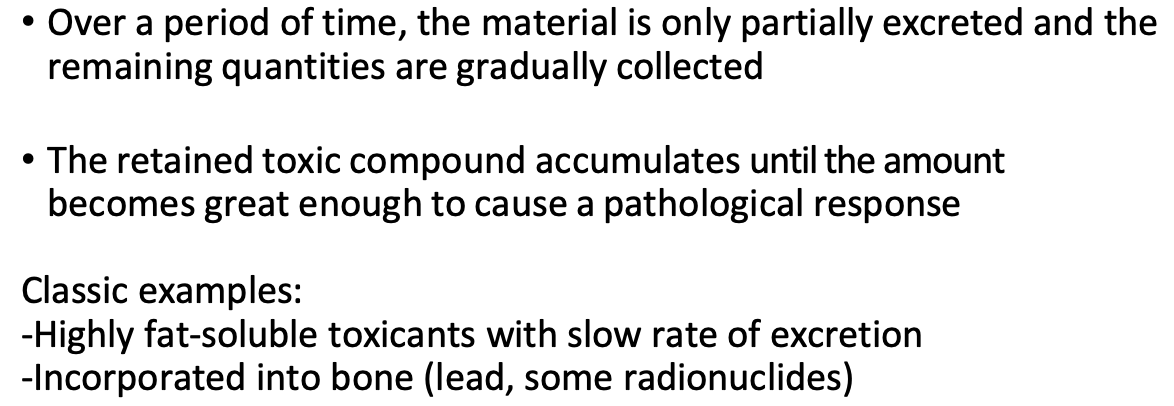
factors affecting toxicity
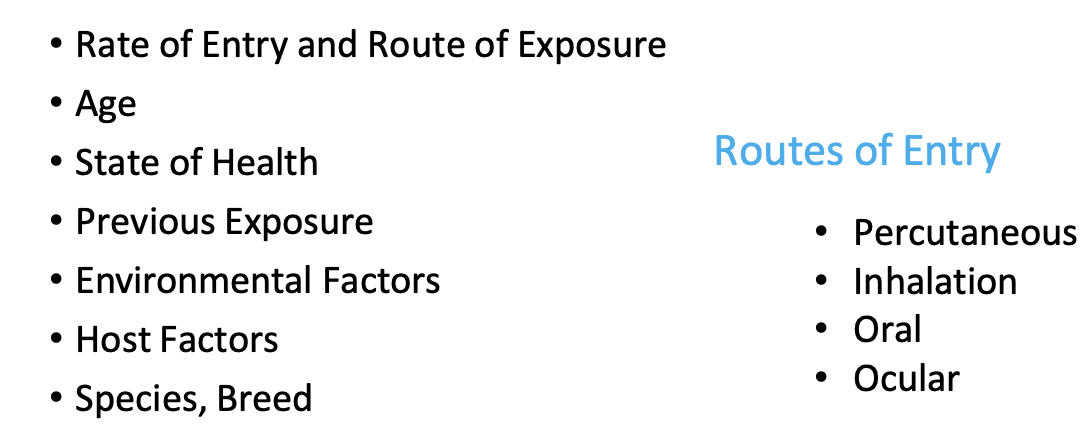
routes of entry
percutaneous
inhalation
oral
ocular
mechanisms of toxicity
1. Delivery: Site of Exposure to the Target
2. Reaction of the Ultimate Toxicant with the
Target Molecule
3. Cellular Dysfunction and Resultant Toxicity
4. Repair or Dysrepair
delivery: site of exposure to the target
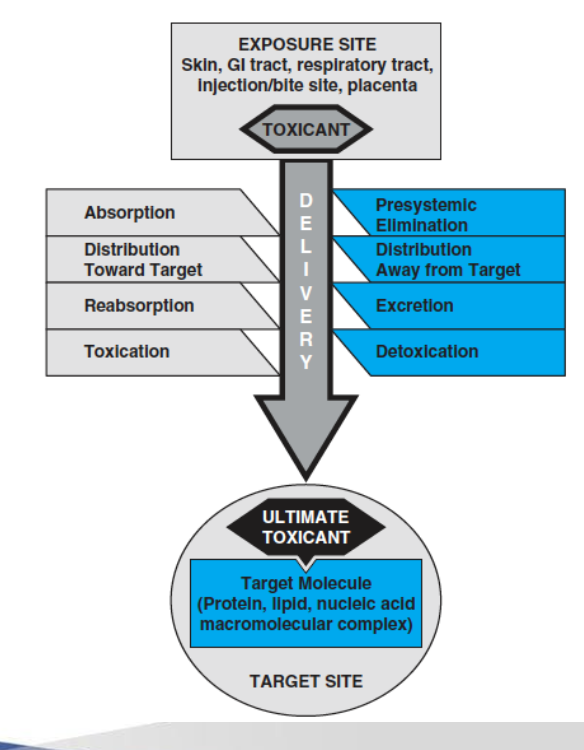
reaction of the ultimate toxicant with the target molecule
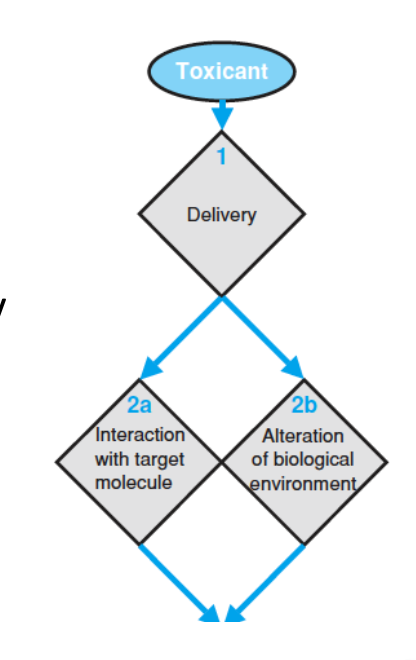
attributes of target
reactivity
accessibility
critical function
outcomes of toxicity
dysfunction
destruction
neoantigen formation
reaction types
noncovalent binding
covalent binding
hydrogen abstration
electron transfer
enzymatic reaction
categories and classification of toxicants
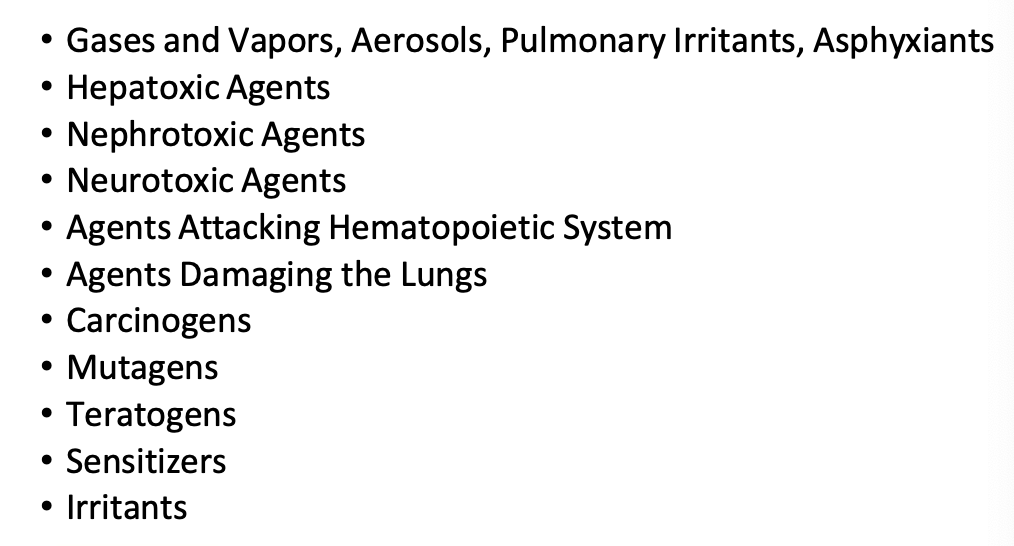
how does a chemical specifically interact with protein targets
activate or inactivate ion channels causing widespread cellular dysfunction and cause cell death and many physiological symptoms
examples
Na+, Ca2+ , K+ levels are extremely important in
-neurotransmission
-muscle contraction
-nearly every cellular function (e.g. tetrodotoxin closes voltage-gated
Na+ channels)
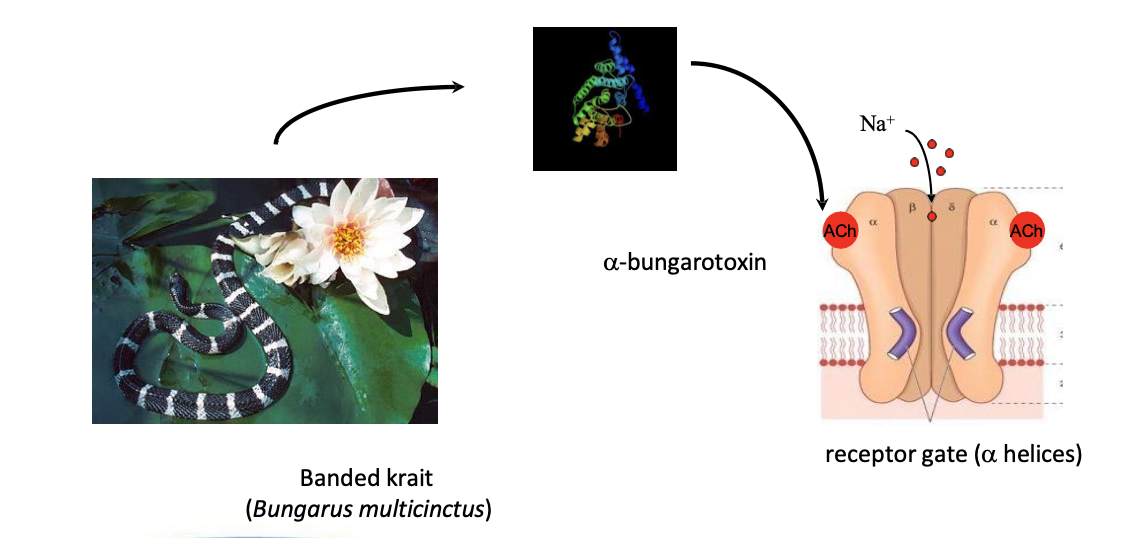
what is the active agent from kraits and what is the MOA
a bungarotoxin
blocks nicotinic AChR
what is the active agent of green mamba snakes and what is the MOA
dendrotoxins blocks K+ channels
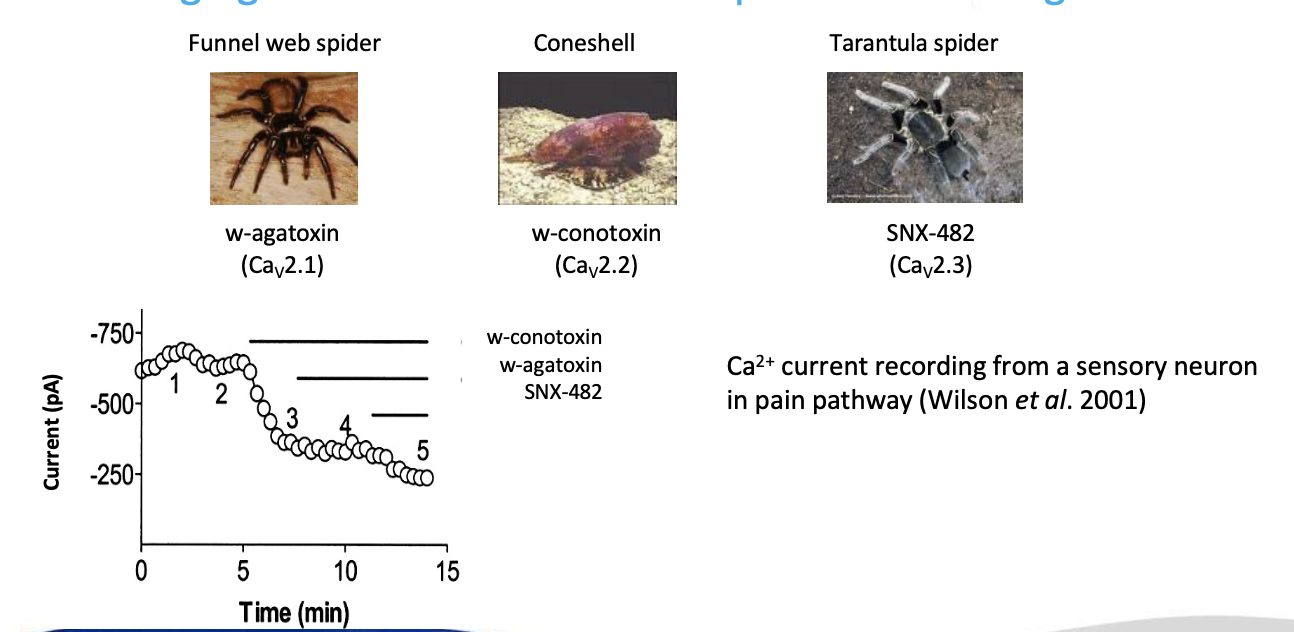
what is the active agent of funnel web spiders and what is the MOA
w- agatoxin blocks Ca v 2.1 Ca 2 channels
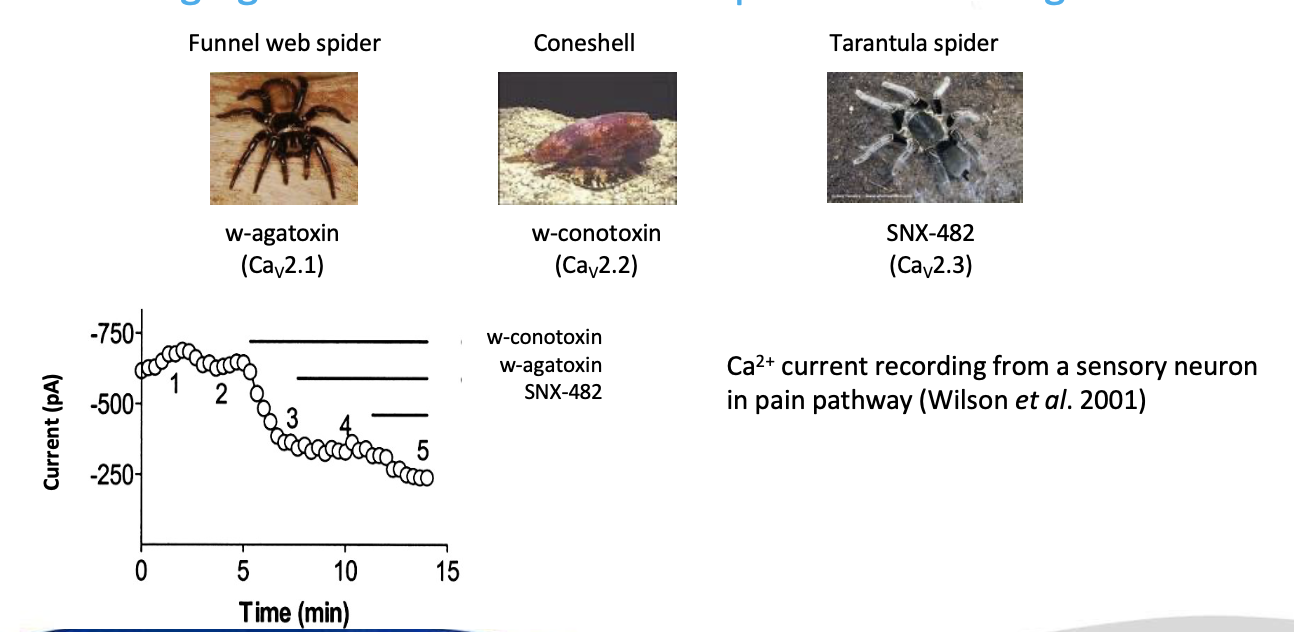
what is the active agent of coneshell and what is the MOA
w-conotoxin
blocks Cav2.2 Ca channels
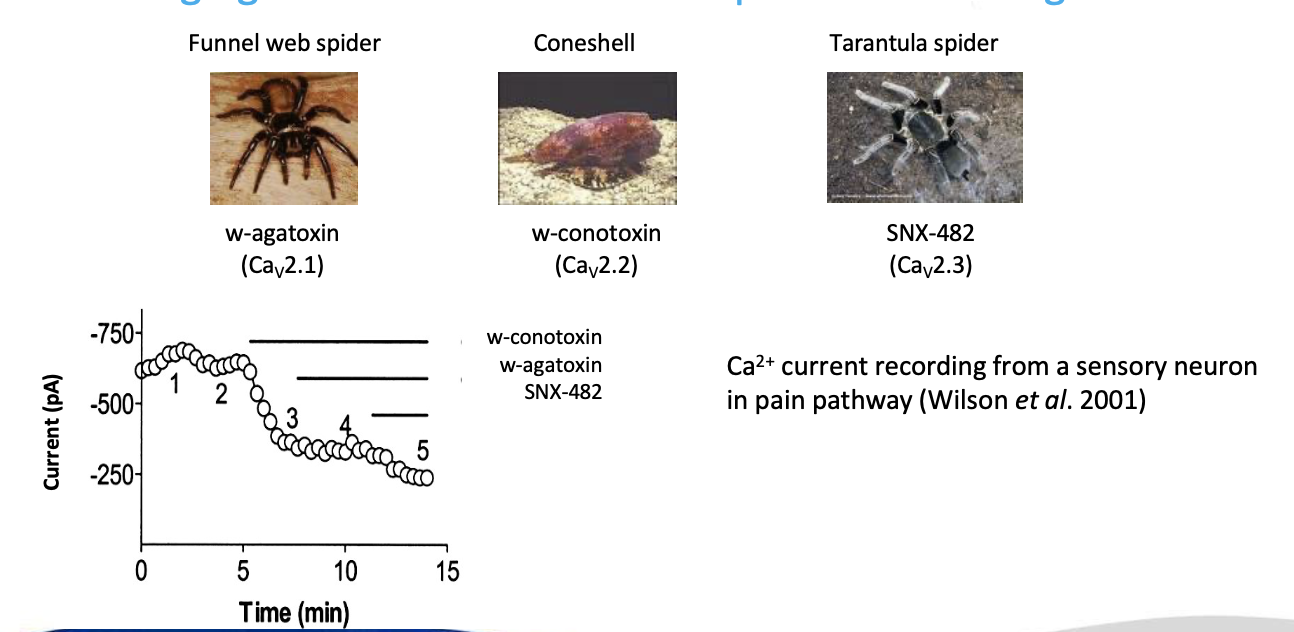
what is the active agent of tarantula spiders and what is the MOA
SNX-482
blocks Ca 2.3 Ca channels
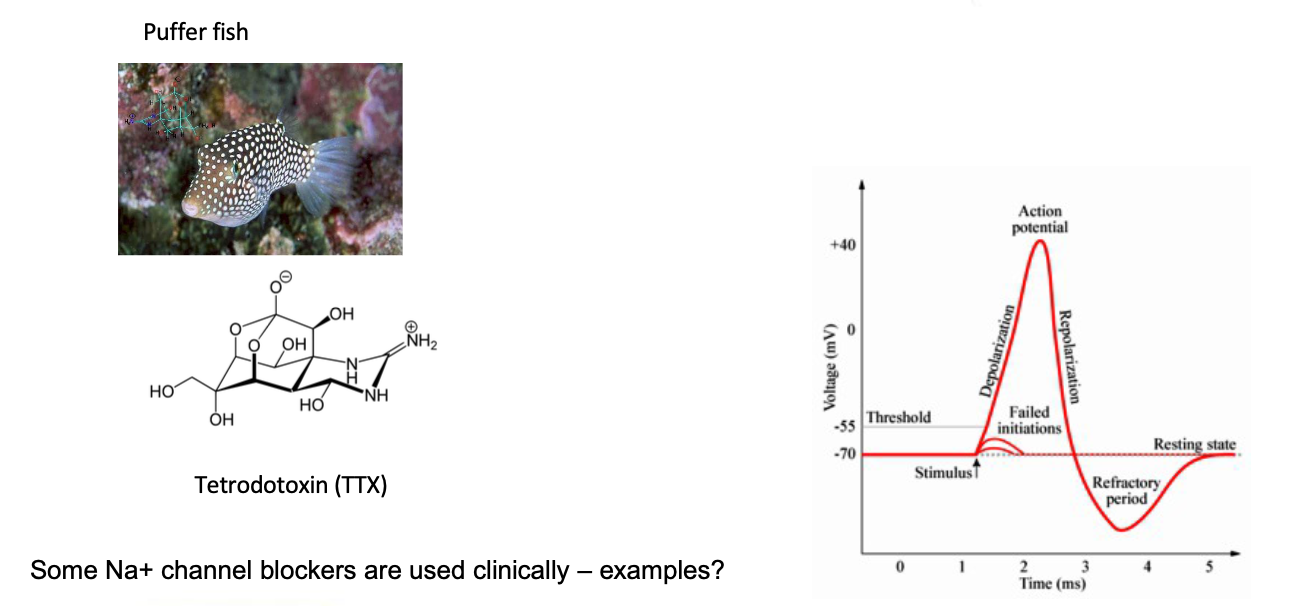
what is the active agent of puffer fish and what is the MOA
tetrodotoxin
blocks Na channels
what is the active agent of frog (dendrobates) skin and what is the MOA
alkaloids, batrachotocin, histrionicotoxin
Na channel inhibitor
nicotinic antagonist
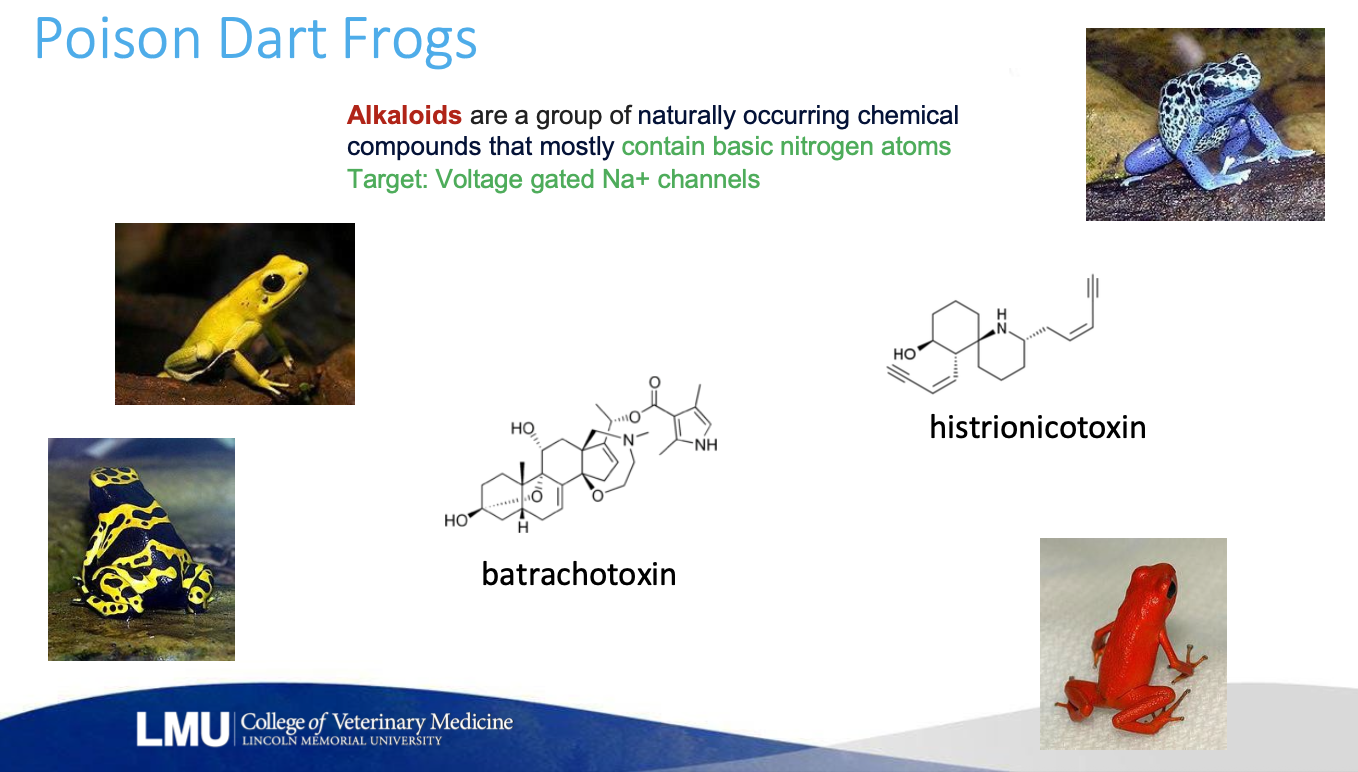
alkaloids
group of naturally occuring chemical compounds that mostly contain basic nitrogen atoms
target of alkaloids
voltage gated Na channels
what is the secondary way chemicals can specifically interact with protein targets
inhibit enzymatic processes of bioactive metabolites that alter ion channels and metabolism
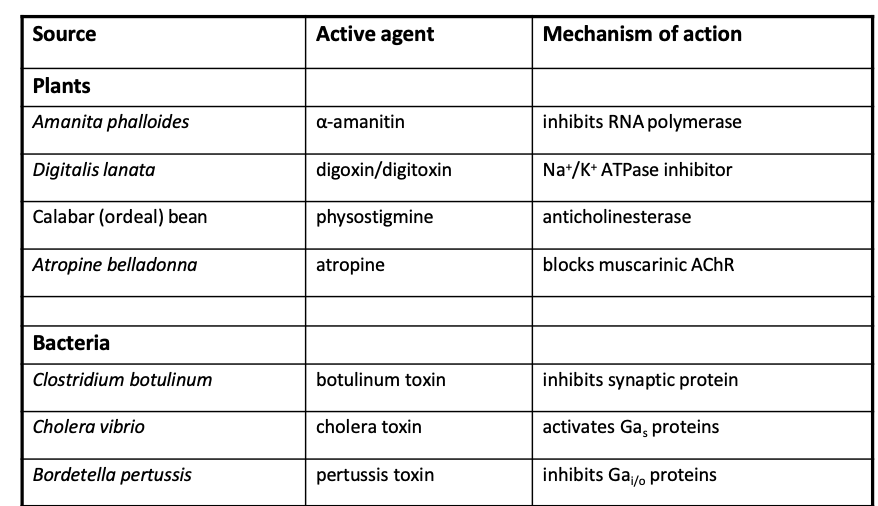
Review
what is the first line of defense against nerve gases
•Atropine- mAChR blocker- helps offset ACh excess
•Pralidoxime- reactivation of acetylcholinesterase
what are irreversible anticholinesterase
parathion and sarin
oximes
strong nucleophiles that reactive ACh- esterase