Pediatric Genitourinary Disorders
 Call Kai
 Learn
Learn Practice Test
 Spaced Repetition
 Match
Match Flashcards
 Knowt Play
1/29

There's no tags or description
Looks like no tags are added yet.
Name | Mastery | Learn | Test | Matching | Spaced | Call with Kai | Chat |
|---|
No analytics yet
Send a link to your students to track their progress
30 Terms
What are retractile testes?
out of the scrotum but can be brought back and remain
What are ascending testes?
used to be the scrotum, then become undescended
What are absent testes?
agenesis or atrophy of the testis
What are ectopic testes?
lies out of the normal path of descent
What is the transabdominal phase of testicular descent?
8-15 weeks gestation
What is the inguinoscotal phase of testicular descent?
25-35 weeks gestation
What factors discrupt descent?
Hormonal, genetic, and environmental
What is the most common congenital abnormality of the GU tract in male infants?
Cryptorchidism
What is Cryptorchidism?
Failure of one or both testes to descend into the scrotal sac → Testis is absent from its normal scrotal position
What are the risk factors for Cryptorchidism?
Prematurity, low birth weight, Maternal smoking, and Chromosomal abnormalities
What are the clinical features of Cryptorchidism?
empty scrotum, decreased scrotal rugation, inguinal fullness, hydrocele/hernia
When in cryptorchidism palpable?
Along the normal path of descent, inguinal canal
When in cryptorchidism nonpalpable?
Intra-abdominal, atrophic, absent
How is unilateral cryptorchidism evaluated?
Surveillance with testicular exam at each well-child visit
How is bilateral cryptorchidism evaluated?
Ultrasound, Serum labs (electrolytes, hormones), and Karyotype analysis
What are the potential complications of cryptorchidism?
infertility, testicular malignancy, testicular torsion, inguinal hernia
When is Orchiopexy/Orchidopexy indicated for cryptorchidism?
6 months of age if descent has not occurred; Surgery between 6 and 18 months of age
What is Enuresis?
Intermittent urinary incontinence after age 5 when toilet training should be complete
What is nocturnal enuresis?
nighttime "bedwetting"
What is diurnal enuresis?
urinary incontinence during waking hours
What is primary enuresis?
never achieved sustained nighttime dryness
What is secondary enuresis?
recurrence after at least six months of dryness
What are the risk factors for enuresis?
Family hx. delayed or absence of toilet changing, prolonged diaper use, low SES, psychosocial stressors
What are the comorbid complications of enuresis?
constipation, UTIs, ADHD, OCD
What is the difference between monosymptomatic and non-monosymptomatic enuresis?
monosymptomatic has no daytime symptoms whereas non-monosymptomatic had daytime bladder and bowel dysfunction (MC)
What is the diagnostic criteria for enuresis?
- 2+ times/week for at least 3 consecutive months
- distress/impairments
- at least 5 years old
- not attributed to physiologic effects
What is the prioritized management of enuresis?
Treat daytime symptoms and constipation BEFORE nocturnal enuresis
What is the first line treatment of enuresis?
Urotherapy through maintaining a voiding schedule and regulating fluid intake +/- enuresis alarms
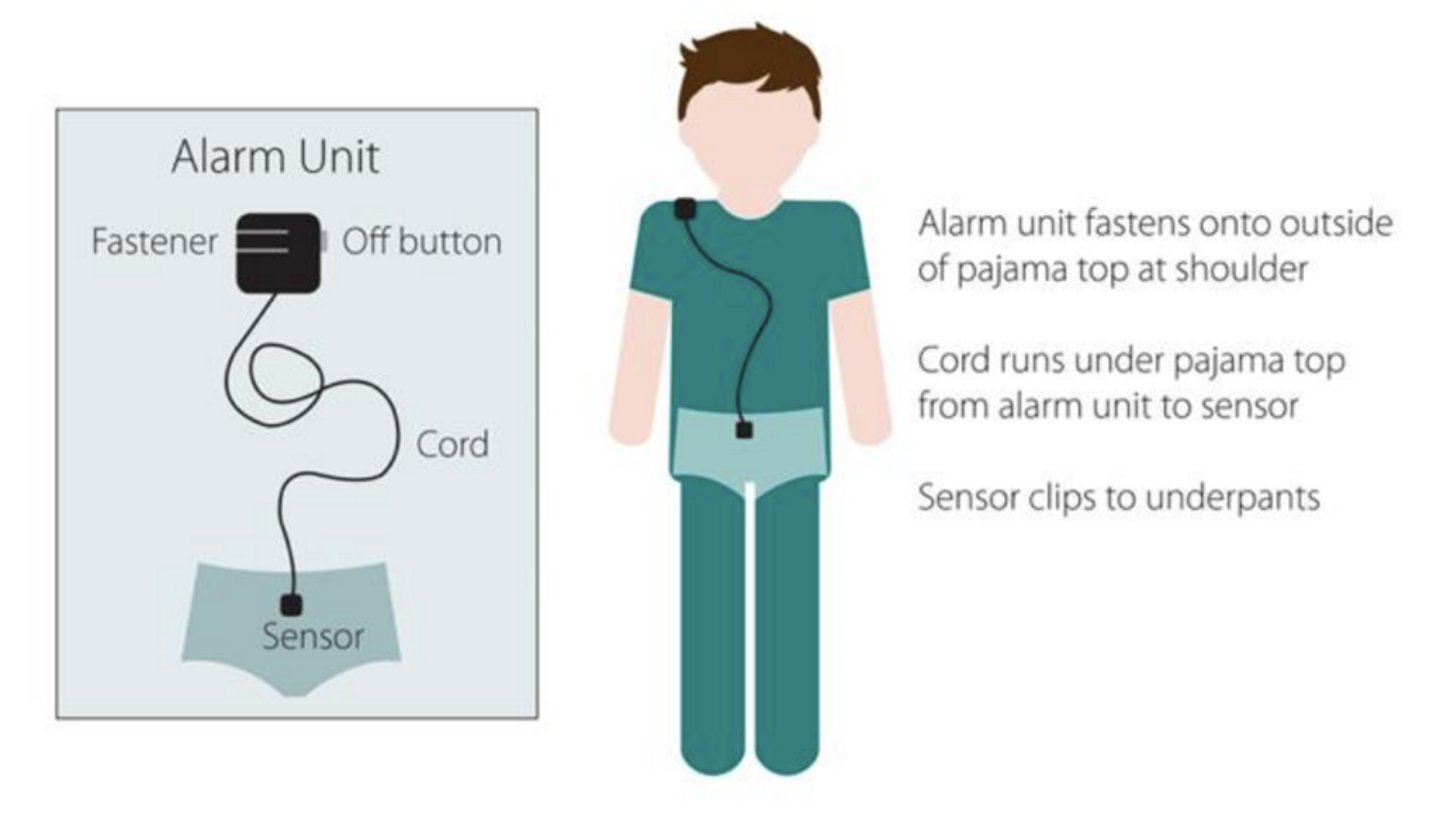
When can medication be initated for enuresis and what type is used?
Desmopressin can be started in patients > 7 y/o with previous unsuccessful attempts; can be used up to 6 months
When should enuresis prompt pediatric urologist referral?
- Daytime urinary tract symptoms or daytime incontinence
- abnormal H/P suggesting underlying cause
- failure to respond to alarms and desmopressin