(iii.) biological molecules
 Call Kai
 Learn
Learn Practice Test
 Spaced Repetition
 Match
Match Flashcards
 Knowt Play
1/41

Earn XP
Description and Tags
gen bio 01:119:115
Name | Mastery | Learn | Test | Matching | Spaced | Call with Kai | Chat |
|---|
No analytics yet
Send a link to your students to track their progress
42 Terms
organic compounds
chemical substances that contain C atoms bonded to H, O, and H
carbon
tetravalent: 4 e- in the valence shell
carbon chains
strucutral chains that are the backbones of organic molecules
interchanged based off location and function
length, double bond position, bracing, presence of rings
hydrocarbon
organic molecules of only C and H
hydrophobic (nonpolar), uncharged (nonionic)
may contain functional groups, replace one or more H
can be added to any hydrocarbon
functional groups
specific type of atoms in a molecule that can alter its chemical properties, often can dictate function
chemical groups that replace H in hydrocarbons
structure is key to molecular function
ex: estradiol vs. testosterone
hydroxyl
(-OH) one oxygen atom covalently bound to one hydrogen atom
polar, hydrophilic
acidity neutral
found in alcohols (end in “-ol)

carbonyl
(-CHO) one carbon atom double bonded to an oxygen atom
polar, hydrophilic
acidity: neutral
found in sugars

carboxyl
(R-COOH) one carbon atom that is double bonded to an oxygen atom and single bonded to a hydroxyl group
polar, hydrophilic
acidity: acidic
found in amino acids and fatty acids

amine group
(R-NH2) one nitrogen atom bound to two hydrogen atoms
polar, hydrophilic
acidity: basic
found in amino acids

phosphate
(R-PO4H2) one central phosphorus atom bonded to four oxygen atoms
polar, hydrophilic
contributes a negative charge
acidity: acidic
found in phospholipids, ATP, nucleic acids

methyl
(R-CH3) one carbon atom bonded to three hydrogen atoms
nonpolar, hydrophobic
acidity: neutral
important role in DNA methylation

DNA methylation
an epigenetic mechanism that adds a methyl group to cytosine bases in DNA, altering gene expression without changing the underlying genetic sequence
macromolecules
large molecules made up of thousands of atoms, built from smaller repeating subunits called monomers
monomers
identical or similar building blocks
polymers
produced by linking monomers
all polymers are macromolecules NOT all macromolecules are polymers
dehydration synthesis
removes a water molecule, forming a new bond
synthesizes a new polymer and results in longer polymers
enzyme: dehydrogenase
hydrolysis
adds a water molecule, breaking a bond
breaks a polymer and results in making monomers
enzyme: hydrolase
carbohydrates
(C6H12O6) made up of carbon, hydrogen, and oxygen
primary source of oxygen
ex: sugars, tend to end with “-ose” (glucose, fructose, lactose)
monosaccharides
monomer of carbohydrates, usually 2-6C
determines sweetness and whether it could be dissolved
ex: single sugars (glucose and ribose)
polysaccharides
polymer of hundreds of thousands of monosaccharides
monomers connected with glycosidic linkage
ex: sucrose (storage: starch, glycogen
structure: cellulose, chitin)
lipids
organic compounds that are insoluble in water (hydrophobic)
primarily made up of hydrocarbons, nonpolar and glycerol+fatty acids
not polymers, only macromolecule not considered a monomer
function: energy storage, structure, and signaling
families: fats, phospholipids, steroids

lipid bond
covalent bond: ester linkages (COO)
fats
most abundant lipid
energy storage: contains 9 cal/gram
structure: glycerol and fatty acids
fatty acids
unbranched hydrocarbon, 14-22 C, carboxyl group
3 ester bonds per glycerol
phospholipids
glycerol + 2 fatty acids + phosphate group
3 ester bonds per glycerol
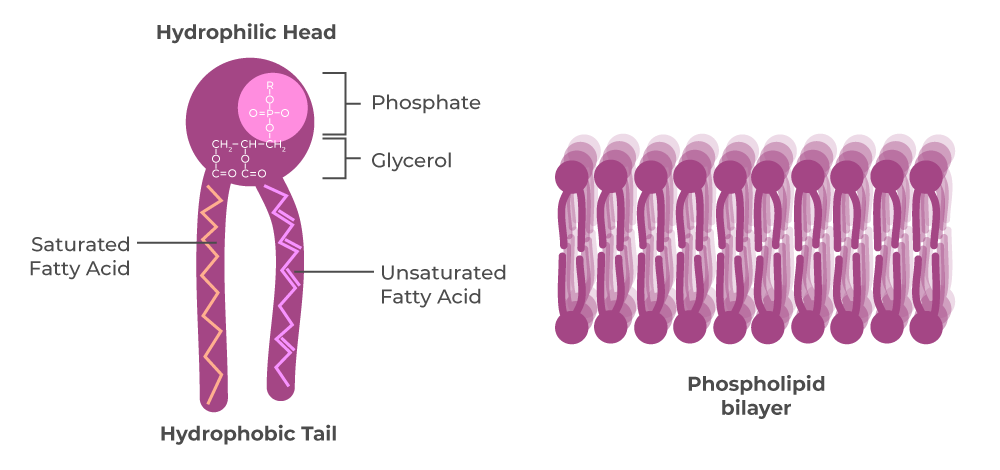
phospholipids
glycerol + 2 fatty acids + phosphate group
amphipathic
contains membrane structure
amphipathic
has both hydrophilic and hydrophobic regions
membrane structure
phosphate:head hydrophilic
fatty acid: tail hydrophobic
steroids
a large group of organic compounds with a specific ring structure
3 six C rings
ring structure
function: membrane structure and signaling
ex: cholesterol, estradiol, testosterone
how to count C-
each corner/point is a carbon
proteins
large group of organic compounds that account for 50% of the dry cell mass
monomer: amino acids
bond: peptide bonds, results in polypeptide
basic structure contains amino group, r chain, hydrogen atom, carboxyl group, central (alpha) carbon
r group - side chain - variable
function: digestion, supporting muscles/hereditary materials, transportation of nutrients, regulation and expression of dna/rna (structure, signaling/communication, enzymes, defense, transport)

protein primary structure
long polypeptide chain with amino acids
protein secondary structure
helix with hydrogen bonds and Beta strand (can become alpha helix that curls up or forms Beta bleated sheets)
protein tertiary structure
transthyretin polypeptide chain, 3d structure formed by R groups, creates multiple bonds (no restrictions)
protein quaternary structure
polypeptide chains that fold and form transthyretin protein (multiple tertiary structure)
how many amino acids in cellular life
20 amino acids
nonpolar: hydrogen side chain
polar: hydroxyl group
amino acid
central C, H, carboxyl group, amino group, R group/side chain
joined together by peptide bond

peptide bond
form between carboxyl and amino groups via dehydration synthesis, must move in a linear sequence
polypeptide
many amino acids joined together by peptide bonds in a linear sequence
not a protein until correct shape → shape determines function
side chains, backbone, amino end (N-terminus), peptide bond, carboxyl end C-terminus

denature
loss of protein’s native structure, bonds being broken and change in structure
loss of structure = loss of function
→ caused by pH, temperature, salt concentration
renaturation
folding back into protein
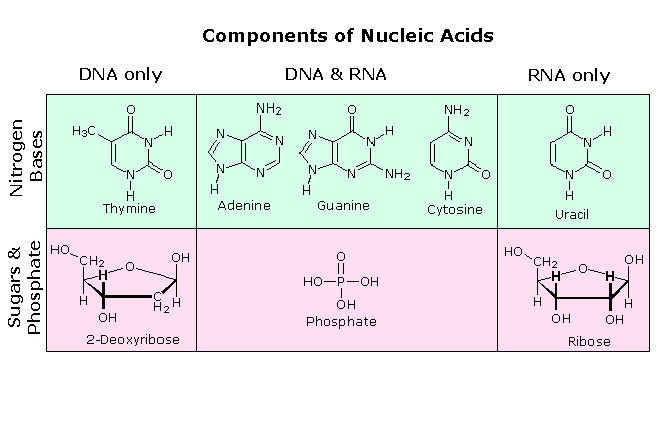
nucleic acids
monomer: nucleotides
structure: phosphate, ribose (sugar), nitrogenous base
function: store and transmit genetic information
two types: deoxyribonucleic acid and ribonucleic acid