UCONN PSYC 2400 Exam 1
 Call Kai
 Learn
Learn Practice Test
 Spaced Repetition
 Match
Match Flashcards
 Knowt Play
1/108

There's no tags or description
Looks like no tags are added yet.
Name | Mastery | Learn | Test | Matching | Spaced | Call with Kai | Chat |
|---|
No analytics yet
Send a link to your students to track their progress
109 Terms
3 Reasons for learning Child Development
1. Learn How to better raising children
2. Choosing better social policies that affect children in general
3. Understanding Human Nature
Seven themes in development study.
1. Nature & Nurture question
2. The active child
3. Continuity vs. discontinuity
4. The mechanisms of change
5. How sociocultural context affect development
6.How individual differences occur
7. Research and children's welfare
What is Nature and Nurture question?
How nature and nurture influence development. For developmentalists, Nature and Nurture are shaping development together.
What is active children?
What is the children's role in their own development. Child actively select their environment by selective attention to specific stimulus, like mom, face, animals; by actively practicing language; by playing
Is development continuously or discontinuously?
Most development changes are gradual. But some development are discontinuous.
What is the mechanisms of changes?
the mechanisms of changes in development involve GENE, LEARNING, and SLEEPING. Gene, and learning both affect the development of
effortful attention. And sleeping is important for learning.
How sociocultural context influence on development?
Researcher often use cross-culture comparisons to understand the influence of the sociocultural context
What are the main 4 factors cause individual difference?
1. genetic difference
2. different parental experience
3. different reaction to same experiences
4. different choices of environment
How can we use research to improve children's welfare?
Study show told students that learning change intelligent make them more persistent in the situation of failures.
2 important criteria for good measurement
Reliability and Validity
What is reliability?
the degree to which independent measurements of given behavior are consistent. (are people measure the same behavior in the same way?)
2 methods to increase reliability?
1. Interrater reliability (have multiple rater to measure the same thing, which lower the individual deviation)
2. Test-retest reliability (repeatedly measure the subject to see the behavior is consistent )
What is Validity?
The degree to which a test measures what it is intended to measure.
2 type of validity
1. Internal validity: how well an experiment is done, especially whether it avoids confounding
2. External validity: how well data and theories from one setting apply to another
Three context for data gathering
1. Interview & questionnaire
2. Naturalistic observation
3. Structured Observation
2 Type of interview
1. Structured interview/questionnaire: same procedure for all participants
2. Clinical interview: adjusted question based on answers
Pros: lot's of info
cons: withhold info
2 Type of observation
1. Naturalistic: no control
2.Structured: designed setting for all participant
pros: illuminate social interaction process
cons: not designed to test cause&effect
Example of correlational designs
Interviews, observations
The risks of Correlation designs
1. Direction of Causation
2. Third-variable problem
The benefits of Correlation designs.
Good for Describing the relations among variables that cannot be Controlled/manipulated(SEX,SES)
Components of Experimental Design
1. Random assignment
2. Control vs. experimental group
3. independent vs. dependent variable
* Very important for finding cause of child behavior
3 Designs for examining development
1. Cross-sectional design: different ages are studied at a single time
2. Longitudinal design: same participant examined repeatedly for long time
3. Microgenetic design: observed intensively when a change is occurring
Cross-sectional design - features
Pros
- easy to administer
- age differences useful
Cons:
- does not address stability of individual differences
-does not address pattern of development for each individual
Longitudinal design
Pros:
- show stability of individual differences
- show patterns of change with individuals
Cons:
- difficult to manage (high cost)
- danger in repeated testing
Microgenetic design
Pros
- Best examine process of change
- Short. but detailed patters of change within individuals
Cons
- Hard to detail the when & how often to measure
- Not long-term change
The relationship between nature and nurture on developmental outcomes.
All aspect of development reflects both people's nature and their nurture
Werner's study
Longitudinal study
Result: quality of home environment played a larger role in development than biological risk factors
- Most child with both birth complications and poor family Env. Dev. serious problem by 10
- However, 1/3 child become normal adult because of good rearing condition
- The Rearing condition include: P's income, education, mental health, and relationships with children
What is Resilience
Kids that developed into successful adults even when they suffer from poverty.
- Personal character
- Caregiver
What contribute to Resilience
1. The rearing condition - Parent's income, mental health, education, and relationships with children.
2. Biological factor
3. Personal factor - intelligence, responsiveness to other, sense of cable of achieve goals
4. Stable present of guardian
What factors modulate the impacts of poverty&neglect on outcome?
-Biological factor
-Personal Characteristic: intelligence, responsiveness to others, sense of capable to achieve.
-Sence of Caregiver
What is the main finding of Romanian orphanage studies?
The poor early experience(Neglect) result in a huge impact on child development.
- The later the intervention, the worse the influence on later development.
- The timing of experience influences their effects.
- Children with early intervention can catch up.
Principle of stage theories
- The approaches proposing the development involves a series of large, discontinuous, age-related phases. Jean Piaget's theory of Cognitive Development.
- It reflects a discontinuous view of development.
Ch2
Germinal Period (Blastocyst)
Time Period: 0-2 weeks
Major structural change:
1. Implants in uterus (Zygote before implantation)
2. Rapid&Methodical cell division
3. (Identical twins split)
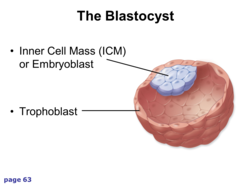
Inner Cell Mass
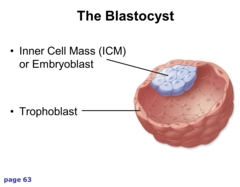
The group of cells in a blastocyst that develops into the embryo.
Embryonic Period (Embryo)
Time Period: 3-8 Weeks
Major structural change:
1. ICM become Embryo (3 structure, Top-Ectoderm, Middle-)
2. Rest of blastocyst become support system
3. Development of major organs and basic anatomy via 4 DEV process
4. Become 1 inch long

4 DEV Process
1. Cell Division
2. Migration
3. Cell Differentiation
4. Cell Death (Apoptosis): a program suicide of cell. The fail of apoptosis may related to ASD.
Hormones affect sex
3 part of Embryonic support system
1. Amniotic Sac
2. Placenta
3. Umbilical cord
Functions of Amniotic Sac 羊膜囊
Protective Buffer, protect the fetus

Functions of Placenta 胎盘
It's a material transition systems.
It's a semipermeable membrane.
- Allow material exchange like get oxygen, minerals, antibodies, and nutrients from mother and removing CO2&waste to mother
- Produce Hormones: regulate blood&uterine

Functions of Umbilical Cord脐带
A tube containing the blood vessels connecting the fetus&placenta
Fetal Period
Time Period: 9 - birth weeks
Major structural change:
1. Organs begin working
2. Brain becomes sophisticated
3. Experience senses, Sound, Taste & Touch.
4. Fetal behavior: movement, learning
Cephalocaudal development in prenatal development
The pattern of growth in which areas near the head develop earlier than areas father from the head
Two examples of fetus's behavior
1. Movement: Practice for external functions
- Hiccups, Swallowing, Thumb sucking, sleep/awake states, touch face, smell, hear
- Fetal-Breathing: practice for real breathing
2. Learning: Prenatal to postnatal CONTINUITY
- Tend to do the same behavior as they inside the embryo and outside
- Active boys suggest greater emotion regulation
Fetal learning evidence
1. Habituation: reduce responses to frequent stimulus
2. DeCasper & Spence (1986)
Newborn infants recognize rhythms presented before birth.
3. Smell preference
4. Prefer Tastes&sound patterns from womb
Environment effects before conception
Parents' experiences
3 Types of Teratogens
1. Legal Drug: Cigarettes, Alcohol
2. Illegal Drug: Marijuana, Cocaine
3. Environmental Pollutants: Lead, PCBs
Factors affect Teratogens influence
- Timing 3-8 weeks
- The amount of teratogens
Sensitive period of development
Embryonic Period 3-8 weeks
Sleeper effects
The effect of Teratogens is only obvious later at development period.
Cigarettes's effect on fetus
- Less oxygen
- Slower growth & Lower Birth Weight
- Higher risk of SIDS
- Lower IQ, hearing deficits, cancer
Alcohol's effect on fetus
Fetal Alcohol Spectrum Disorder (FASD)
- Mental Retardation
- Facial Deformity
Environmental Pollutants
- PCBs: small size, lower IQ
- Pesticides: lower IQ, poor grade
Maternal Factors
1. Age: too young-higher risk of infant mortality, too old-ASD, more genetic disease risk
2. Supply of Nutrients
3. Women's Emotional state
Father's prenatal influence
lack of research
- tobacco, drug, alcohol use
- treatment of mother
Different child birth
Survival/health vs. social integration
Holistic vs. Medical approaches
Hospital vs. home birth
Vaginal vs. Caesarean birth
6 states of arousal in the newborn
- Quiet Sleep: REM sleep-dreaming
- Active Sleep: Non-REM sleep
- Drowsing
- Alert Awake
- Active Awake
- Crying
5 Negative outcomes at birth
1. Infant Mortality
2. Low birth weight (LBW)
3. Multiple-Risk Model
4. Poverty
5 Risk & Resilience
LBW
Low Birth Weight infants:
- Premature/ small for gestational age
- More medical, neurosensory deficits, illnesses, lower IQ, lower Edu achievement
- Most is fine
- Intervention: parent contact, touch/massage, music, stimulation
2 main interventions for LBW infants
1. Touch/Massage: more weight gain, greater awake time, more movement
2. Music/singing: increase weight gain
Multiple-risk model of poverty impact on development
- Risk factors tend to occur together
- High possibility to have negative outcome when multiple risk factor
- Low SES, maternal distress, paternal criminality, maternal psychiatric disorder, marital problems
What contributes to Developmental resilience?
- Biological factor (evolution)
- Age&duration
- Personal characteristics: intelligence, responsiveness, sense of cable of achieving goals
- Responsive care from a caregiver
The birth experience of fetus
- Head squeezed: misshapen head, stimulates HORMONE production(withstand oxygen deprivation, stimulate milk production), forces amniotic fluid out of the lungs
- First breath after first cry
Hormones in fetal development
-testosterone determine the sex of the fetus
- Increase maternal blood to the uterus
APGAR scale
Appearance/Pulse/Grimace/Activity/Respiration
standard for determining the overall health of newborn (higher the better)
Ch3
How animal study help we understand human development
-
When do cells become differentiated
What is epigenetics?
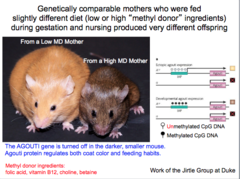
the study of how the environment affects which genes are expressed
How do we measure epigenetic change
5 relations among genotype/phenotype/environment.
1. parent's genotype - child's genotype
2. child's genotype - child's phenotype
3. child's environment - child's phenotype
4. child's phenotype - child's environment
5. child's environment - child's genotype
The influence of parents' genotype on child's genotype
1. Heredity: combination of half genes from both ancestors
2. Sex determination: Father's chromosome determinate sex by control the testosterone production
4. Diversity: several mechanisms contribute to genetic diversity
3 Mechanisms of genetic variability
1. Mutation: a change in a section of DNA
2. Random Assortment: the random combination of chromosomes in the formation of gametes
3. Crossing over: The process by which sections of DNA switch from one chromosome to the other
The influence of genotype on phenotype
- Regulator genes control the gene expression
1. Developmental changes: the regulator genes switch genes on and off in different period of developmental process
2. Dominance patterns vs. polygenic inheritance
7 types of genetic transmission of diseases
1.Dominant-Recessive Patterns
2.Polygenic inheritance
3.Sex-link inheritance
4.Chromosomal anomalies
5.Gene Anomalies
6.Regulator-gene defect
7. Unidentified genetic basis
Dominant-Recessive Patterns
Dominant: Huntington's disease
Recessive Patterns: PKU, Sickle-cell anemia
Chromosomal anomalies
Down Syndrome, Turner Syndrome, Kleinfelter syndrome
Sex-link inheritance
Male pattern baldness, Red-green color blindness, fragile-X syndrome
Gene Anomalies
Williams Syndrome
Unidentified Genetic Basis
ASD - Autism Spectrum Disorder, Dyslexia, Tourette syndrome
What is Phylogenetic continuity?
The study of the evolutionary history of life using observable characteristics of organisms (or genes) to explain similarities and differences among species.
The influence of environment on phenotype
Observable characteristics result from the interaction of environmental factors And the child's genetic makeup
- Environment on gene expression
- Parental influence on child's environment
(birth order effects, personality, resources etc.)
What is norm of reaction?
All the phenotypes can result from a given genotype in relation to all the environment in which it can survive and develop
Example of "Norm of Reaction" of the environment to phenotype relationship
With an inactive MAOA gene, those children who suffer maltreatment express more antisocial behavior as an adult. But other children with inactive MAOA gene without maltreatment grow up normally.
The influence of phenotype on environment
1. Child's nature and behavior EVOKE certain kinds of responses from others
2. Child SELECTIVELY choose their surroundings&experience to match their interests
Would judge give psychopath with genetic defect lighter sentence?
Yes.

The influence of environment on genotype
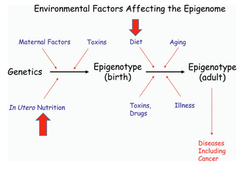
Experiences can change genetic expression vis Epigenetic mechanism.
Epigenetic Modification
epigenetic modifications, or "tags," such as DNA methylation and histone modification, alter DNA accessibility and chromatin structure, thereby regulating patterns of gene expression. Change the function of gene, by adding extra methyl group(Methylation). - usually deleterious(neglected children)
Behavior Genetics
Teases apart GENETIC & ENVIRONMENTAL contributions to the differences observed among a population.
2 premises of behavior genetics
1. The closer the relative have more similarity(GENETIC FACTOR)
2. The more similar environment result in share behavioral traits (SHARED ENVIRONMENT)
4 type of behavior genetics study design
1. Family study
2. Adoption study
3. Twin study
4. Adoptive Twin study
Twin study
Compares correlations for identical twins (Monozygotic)with same-sex fraternal twins(Dizygotic). same gene vs. different genes give the same environment.
Adoptive Twin study
Compare identical twins reared apart.
nonshared environment given the same genes.
How genetic contributions to IQ over time
Increase Familial IQ correlations as family members get older.
Heritability
A statistical estimate of the PROPORTION of VARIANCE on one trait among individuals in a group that is attributable to genetic differences among those individuals
What's the limitations of heritability estimates
- only apply to POPULATION, not individuals
- only particular group in same time
-HIGHE heritability DOES NOT imply Immutability
What is mean Heritability of depression is 60%?
60% of the variation of depression level of the population is caused by heritability. (In the case of economic recession, the heritability of depression is lower)(Heritability affect by environment, e.g. SES)
What does human share 90% of DNA with primate tells us?
Much of difference between human and primates due to REGULATORY mechanisms
Neuron structures

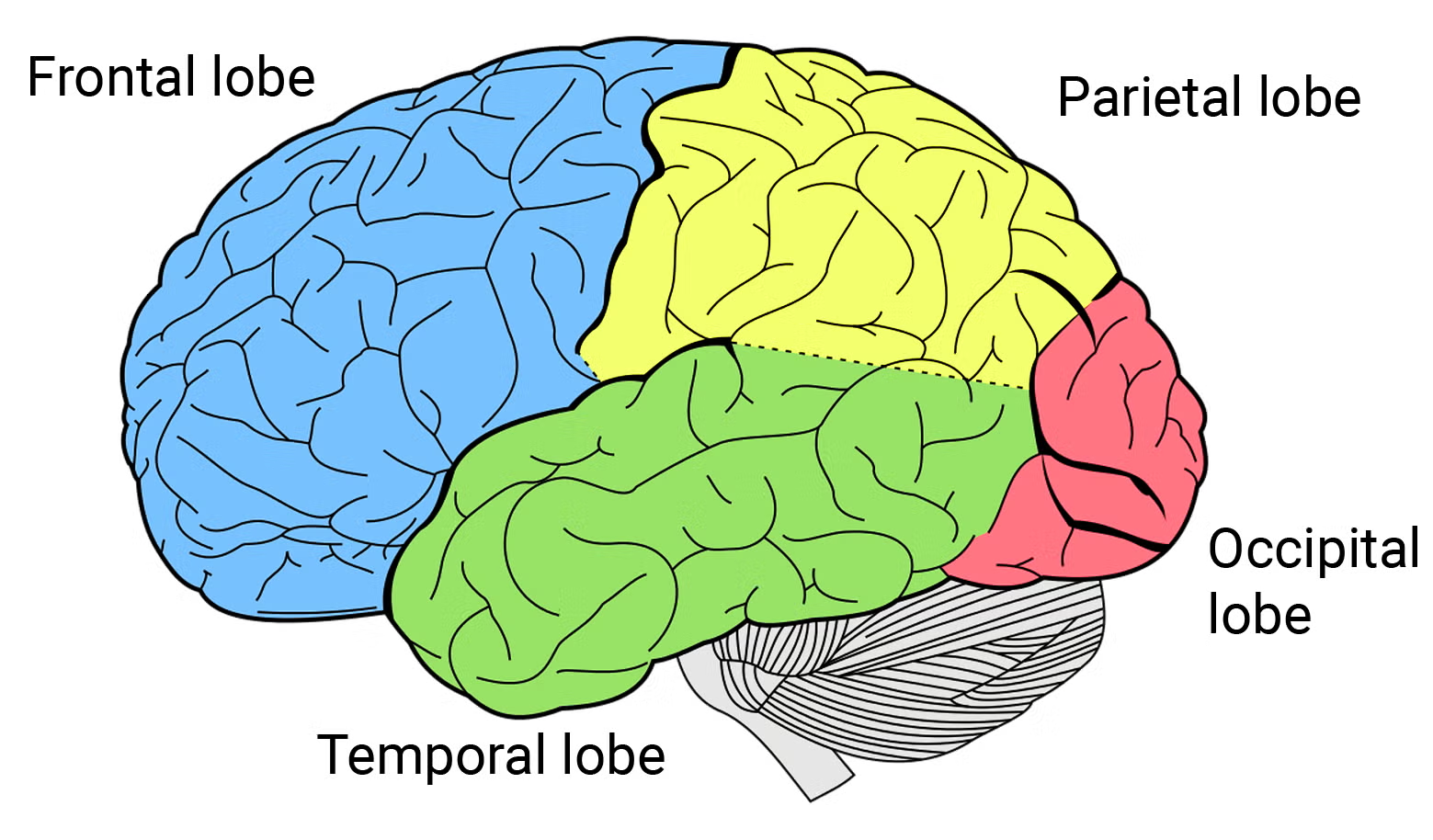
Brain lobes of the cortex and hemispheres
The brain is divided into four main lobes: the frontal (function and thinking), parietal (sensory), temporal (hearing and memory), and occipital (visual) lobes, each of which has distinct functions and is involved in various cognitive processes and behaviors.