a + p accessory structures
 Call Kai
 Learn
Learn Practice Test
 Spaced Repetition
 Match
Match Flashcards
 Knowt Play
1/51

There's no tags or description
Looks like no tags are added yet.
Name | Mastery | Learn | Test | Matching | Spaced | Call with Kai | Chat |
|---|
No analytics yet
Send a link to your students to track their progress
52 Terms
hair
keratinized squamous epithelial cells
columns - very similar to epidermal level of skin
found on most body surfaces
for humans in various amounts - regions of thick skin don’t have hair
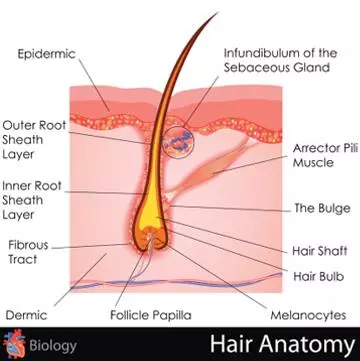
hair structure
shaft
root
follicle
hair matrix
hair shaft
above skin surface
cells that make up each shaft are dead keratinous cells

hair root
remainder of hair within skin - embedded within skin
living keratinocytes dividing currently

hair follicle
layer of epidermal tissue anchoring root into dermis
the inner root sheath and outer root sheath make up the follicle
each individual hair is embedded into the follicle
it holds the hair in place
hair matrix
region of diving cells adjacent to papilla
newer cells in the matrix push old cells up - how hair gros
active cell division taking place
arrector pili
attached to hair follicle on one side and dermal papillae on the other
smooth muscle
contract to cause piloerection
piloerection
raising of hair that causes goosebumps
when the arrector pili contracts, it causes tension of the hair follicle and the skin, which causing hair to then stand up and produce goosebumps
for other animals, piloerection allows them to appear larger and more threatening
the arrector pili is used for ______________ and ____________ in non-human mammals
thermoregulation, defense
when hairs stand up, it can trap a layer of air, providing insulation and heat retention
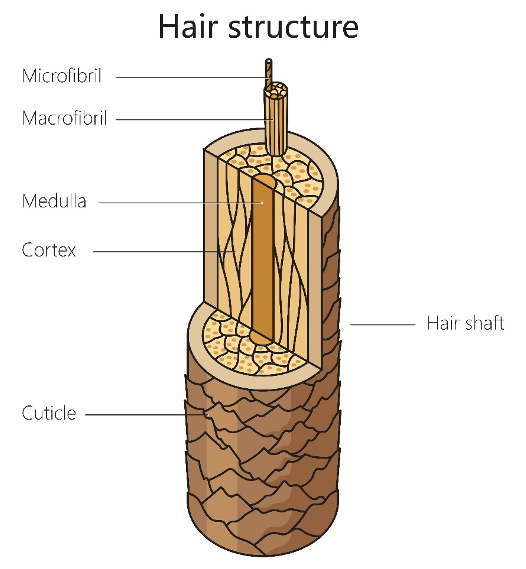
hair shaft structure:
medulla
cortex
cuticle
medulla
core of large keratinocytes and loosely arranged cells
contains soft keratin
soft keratin
found in the epidermis and medulla of hair shaft
provides durability while allowing tissue to remain flexible
cortex
several layers of compact keratinocytes
gives our hair volume
contains hard keratin
site of pigmentation (hair color)
hard keratin
found in cortex and cuticle of hair shaft
more durable - doesn’t shed the hard keratin keratinocytes like soft keratin does
good because our hair strands would quickly break down if it shed
protects underlying layers as well
cuticle
single layer of overlapping cells
keeps hair from sticking to each other
most highly keratinized region
hard keratin
split ends
damage to the cuticle and exposes underlying layers
cortex and medulla no longer protected
splitting or fraying of hair shaft
usually the ends - because of the way our hair grows, the ends of our hair are the weakest/most fragile
the ends are the oldest parts of our hair, therefore have experienced the most damage from environmental factors (UV, wind, mechanical stress)
can split ends be repaired?
no - all of the cells in the shaft are dead so they can’t repair themselves - the structure can’t be repaired
types of hair
lanugo
vellus
terminal
lanugo hair
very fine, unpigmented fetal hair
insulative purpose for developing baby in the uterus environment
falls of after birth and is replaced by vellus hair
vellus hair
fine, thin body hair
female bodies usually have more vellus hair than terminal hair
terminal hair
longer, coarser, heavily pigmented hair
eyebrows, eyelashes, and scalp hair at all ages
axillary and pubic hair (after puberty)
adult males: facial hair, some hair of trunk and limbs
terminal hair replaces ___% of vellus hair in males and ___% in women
90, 30
texture of terminal hair
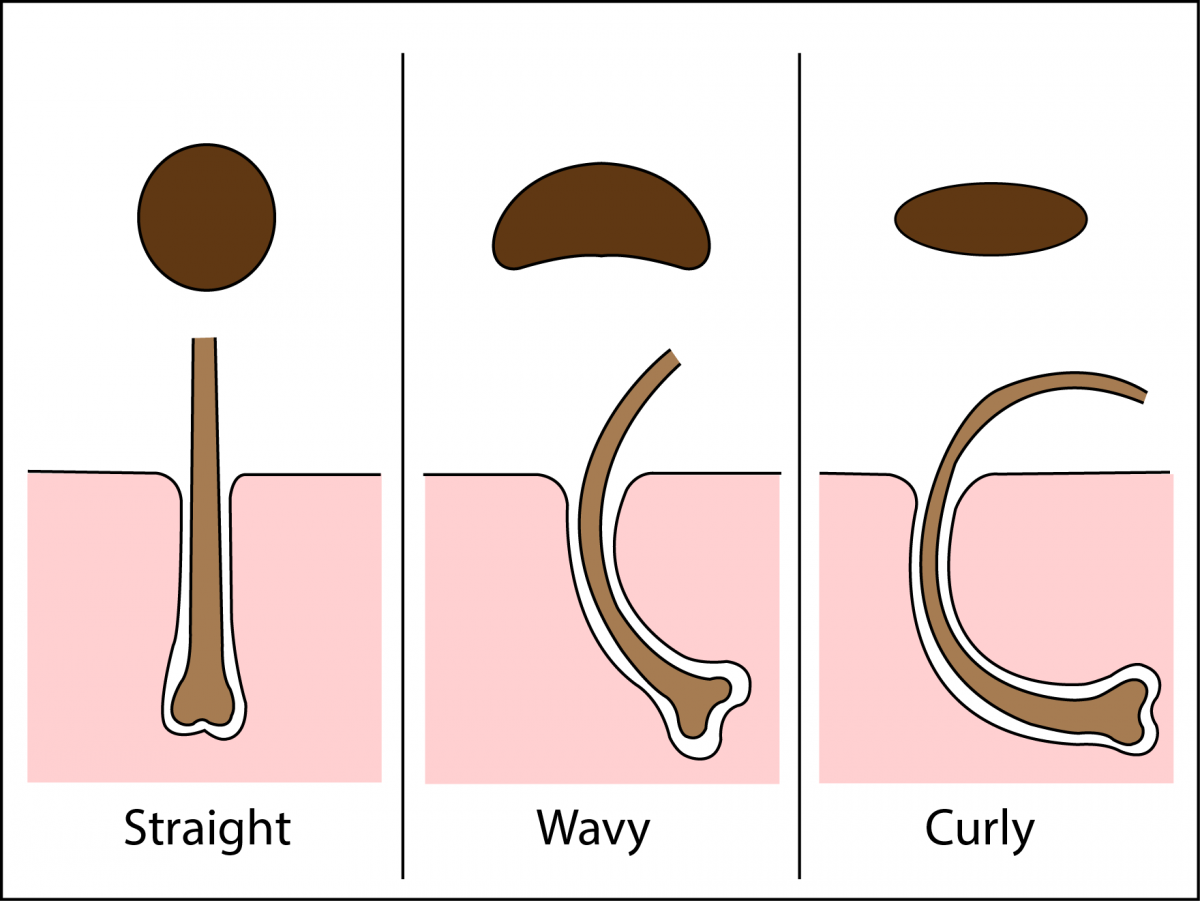
related to cross-sectional shape of hair follicle - it affects the shape the hair is (straight, wavy, curly) and the texture
flatter follicles grow curlier hair
when the hair grows from a relatively flat follicle, the hair will bend and be curlier
color of terminal hair
pigment granules in cells of cortex - result in different pigments providing color to shaft - melanin!
eumelanin or pheomelanin
more melanin = darker hair
gray and white hair have little or no melanin
shades of hair depend on the ratio of _________ and __________
eumelanin and pheomelanin
hair growth cycle
anagen
catagen
telogen
repeat
anagen
growth phase
active cell division - push old cells up causing hair growth
90% of scalp follicles are in anagen phase and remain for years
nourishment of hair follicles via blood supply enables hair growth
catagen
transition phase
see a decrease in cell division - hair growth slows down
hair follicle detaches from nourishing blood supply
telogen
resting phase
few months where no new growth is occurring
the hair is still attached on the follicles but the cells that are attached to them are starting to die off
hair is very easy to detach at this point
hair sheds 50-100 hairs everyday and then are replaced
terminal hair growth: scalp
in anagen for ~ 6 years - cell division is quick on the scalp
higher mitotic rate
terminal hair growth: eyebrows/lashes
in anagen for ~ 30 days - much shorter time, low potential for hair growth
lower mitotic rate
only capable of growing a few mm long
terminal hair growth
the duration of phases determines the rate of growth and how hair can grow in that area
growth slows ~ 50 years of age
hairs shed faster than new ones grow → thin hair, baldness
as we age, mitotic rate decreases
nails
modified epidermis
nail plate
nail bed
nail matrix
function in protection and object manipulation (holding and grabbing)

nail modified epidermis
hard keratin - our nails are much more durable and stronger than the skin because of the hard keratin (protection)
no melanocytes - translucent
nail plate
body: external
root: internal
nail bed
epidermis underlying nail plate
nail matrix
site of nail growth
active cell division is similar to hair - new cells push old cells - mitotic rate is faster in fingers than toes
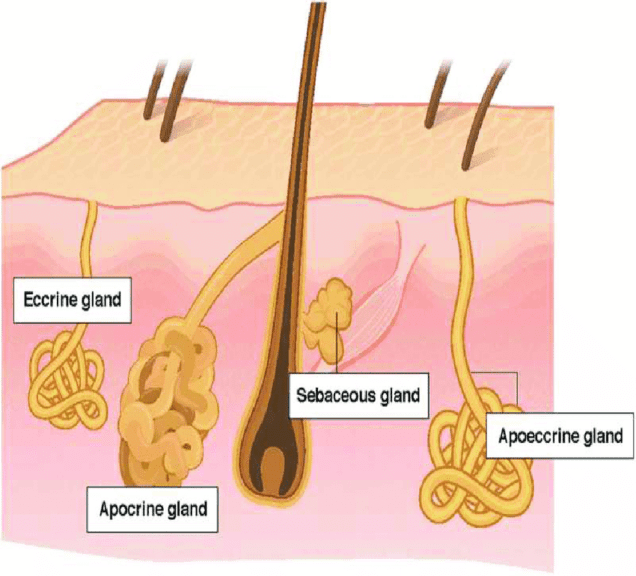
glands of the integumentary system
groups of modified epithelial cells - modified to perform different functions
located in the dermis
exocrine
sweat and sebaceous
endocrine
exocrine glands
release non-hormonal secretions
released onto surface of the skin or onto hair follicles
endocrine glands
hormonal secretion into circulatory system
sweat glands: eccrine
eccrine: most numerous type of gland
abundant throughout the body
allows for evaporative cooling
produces a water sweat that gets deposited onto the skin - cools body down (thermoregulation) - it absorbs excess body heat
sweat secreted onto skin surface via ducts

sweat from eccrine sweat gland
99% water
contains solutes, wastes, antibacterial compounds
slightly acidic
sweat glands: apocrine
only in axillary/genital regions
sweat secreted into hair follicles through ducts that lead to hair follicles
revealed along shaft of hair
sweat from apocrine sweat gland
mostly made of water but higher % of fatty acids and proteins
when bacteria break them down, it causes body odor - bacterial activity produces odor
sweat secreted by apocrine glands are nonfunctional until _________
puberty
modified sweat glands: ceruminous
found in lining of ear canal
secrete cerumen (ear wax)

cerumen
sebum (oil) and dead epithelial cells provide lubrication for ear
protection: very sticky and prevents foreign particles from entering
provides lubrication and protection
modified sweat glands: mammary
found within adipose tissue of breasts
secrete/produce milk - mostly water and proteins, lipids, carbohydrates, hormones, and antibodies, to nourish infant in postpartum lactation period
present in males and females

mammary sweat glands only develop during _________ and __________
pregnancy, lactation
function requires specific hormonal environment during pregnancy and lactation - mostly nonfunctional, especially for males
sebaceous glands
produces oil throughout the body but most numerous on the face and scalp
secretes into hair follicles
secretes sebum (oil)

sebaceous glands are largely _______ until ________
inactive, puberty
sebum from sebaceous glands
lubricates/waterproofs skin and hair
prevents it from becoming overly dry and maintains hydration
bactericidal properties
protect from being colonized by bacteria