Y10 Chemistry - Reactions and the Periodic Table
 Call Kai
 Learn
Learn Practice Test
 Spaced Repetition
 Match
Match Flashcards
 Knowt Play
1/79

Earn XP
Description and Tags
Covers the types of reactions, atoms and its structure, and the periodic table at a year 10 level.
Name | Mastery | Learn | Test | Matching | Spaced | Call with Kai | Chat |
|---|
No analytics yet
Send a link to your students to track their progress
80 Terms
Composition (or synthesis) reaction definition
A chemical reaction in which two or more reactants join together to form a single product
OR the building up of compounds by combining simpler substances
Decomposition reaction definition
A chemical reaction in which a single reactant breaks down into two or more products
OR the breakdown of compounds to form simpler substances.
Single displacement reaction definition
A chemical reaction in which one element is substituted for another in a compound.
For example, A + BC → B + AC (where A and B were swapped)
Double displacement reaction definition
A chemical reaction, where two reactants are exchanged between one another to form new compounds.
For example, AB + CD → AD + CB (where B and D swapped between one another)
Chemical reaction definition
The rearrangements of elements to form new compounds.
Reactants → Products
Quantitative data definition
The information about quantities and is numerical
Qualitative data definition
Descriptive data
Indicators of a chemical reaction
Temperature change
Colour change (though this isn’t very reliable)
Formation of precipitate (a solid that forms when two aqueous solutions are mixed together)
Fizzing/bubbling = gas produced
State symbols
(s) = solid
(l) = liquid
(aq) = aqueous
(g) = gaseous/gas
Collision theory definition
The collision theory explains what is necessary for chemical reactions to occur.
What must the reactant particles do to form products?
The reactant particles must collide with enough energy to overcome the energy barrier (successful collisions) in order to form products.
Reactant particles must also collide with the correct orientation in order to form products.
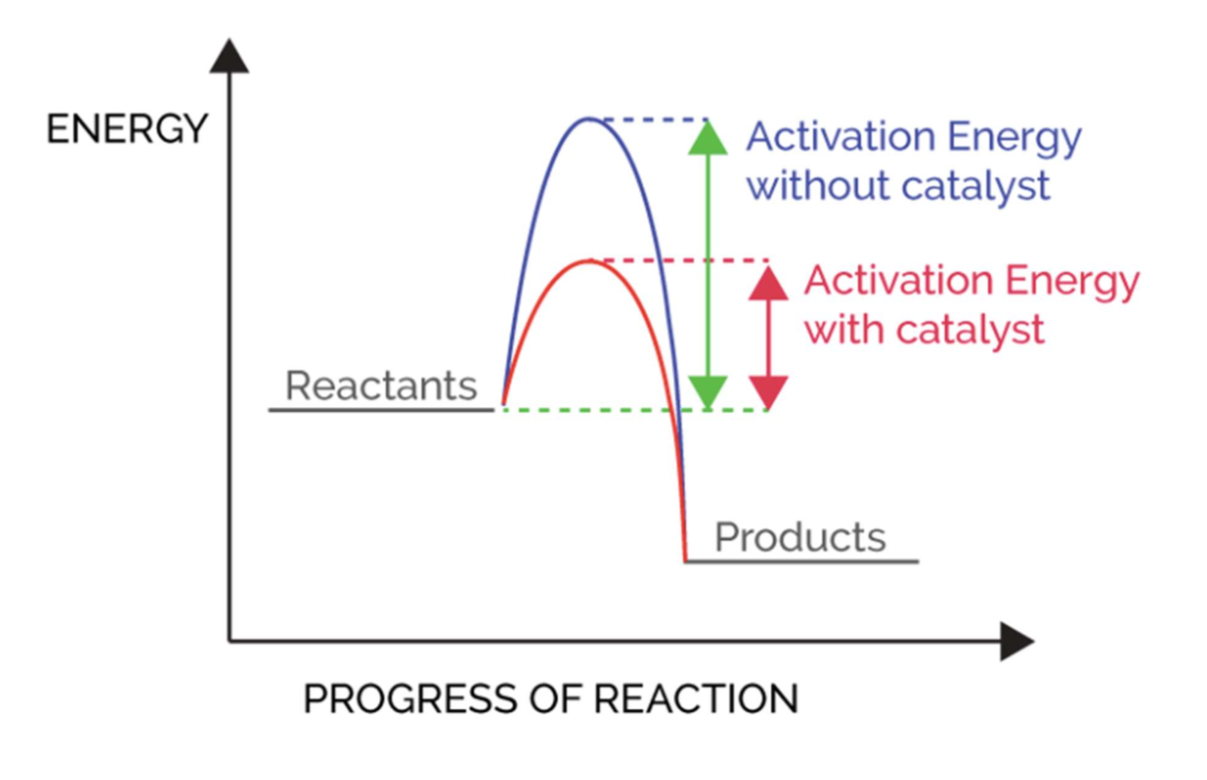
Activation energy definition
The amount of energy needed for a chemical reaction to proceed
OR the minimum amount of energy that molecules need to possess to have fruitful collision and form products.
Endothermic reaction definition
Reactions which absorb energy from the surroundings in the form of heat to form products
“Endo” means “energy enters” or “energy absorbed”
Heat is taken from the surroundings, meaning that the temperature of the surroundings will decrease (become colder)
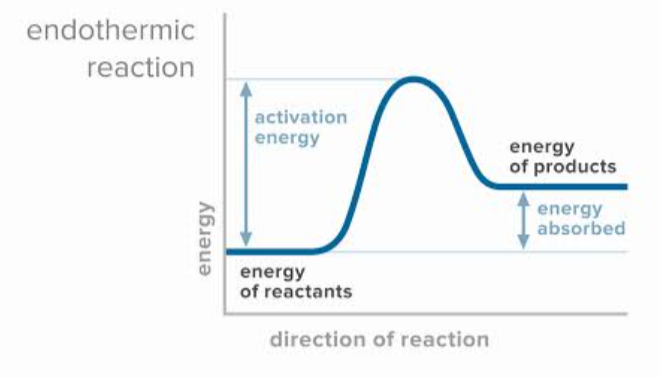
Examples of endothermic reactions
Photosynthesis, evaporating liquids, melting ice, cooking
Exothermic reaction definition
Reactions which releases energy from the surroundings in the form of light, electricity, or heat to form products
“Exo” means “energy exits” or “energy released”
Heat is released from the system into the environment, meaning that the temperature of the surroundings will increase (become hotter)
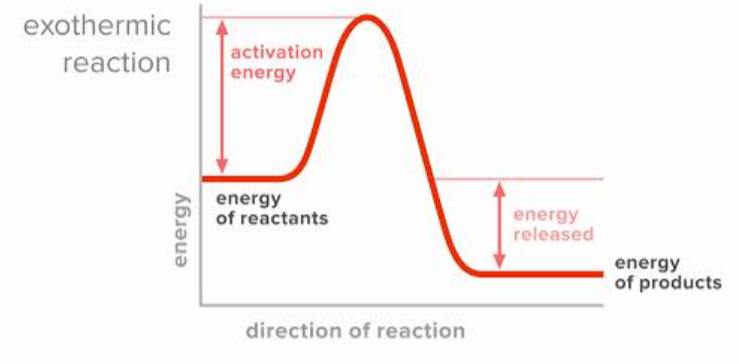
Examples of exothermic reactions
Burning a substance, respirations, explosions, ice forming
Reaction rate definition
The speed of a chemical reaction: the time it takes for the reactants to be converted to products
Slow rate of reaction definition
Takes a long amount of time for the reactants to be converted into products.
If the time was limited, there would be a small amount of reactants consumed and a small amount of products produced.
Fast rate of reaction definition
Takes a short amount of time for the reactants to be converted into products.
If the time was limited, there would be a high amount of reactants consumed and a high amount of products produced.
The factors that impact reaction rates
Temperature
Concentration
Particle size or surface area
Use of a catalyst
How temperature affects the reaction rate of a chemical reaction
If the temperature is increased, the particles have more energy (kinetic) and so they move quicker.
Increasing the temperature increases the rate of reaction because the particles collide more often (reference to collision theory) and with more energy.
For colder temperature, it slows.
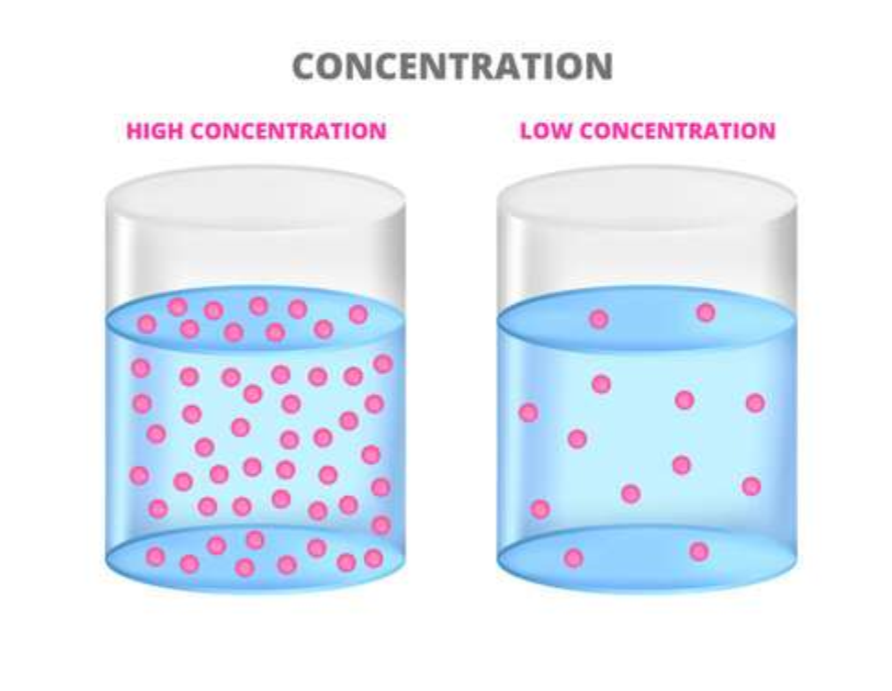
How concentration of the reactants affects the reaction rate of a chemical reaction
Concentration: the number of reactant particles per unit volume
If the concentration of reactants is increased, there are more reactant particles moving together. There will be more collisions and so the reactant rate is increased.
The higher the concentration of reactants, the faster the rate of reaction will be.
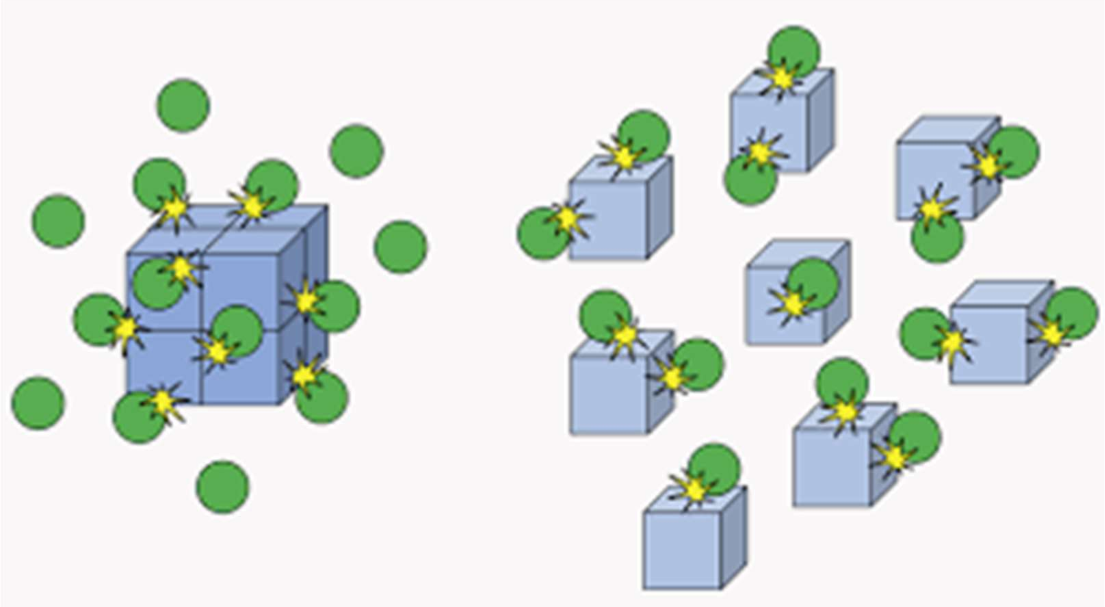
How the surface area or particle size affects the reaction rate of a chemical reaction
By decreasing the particle size of a reactant, the surface area increases as well.
Only exposed particles at the surface are able to collide with other reactant particles.
Therefore, the greater the surface area, the higher the chance of collisions, thus the faster rate of reaction.
The smaller the particle size (the larger the surface area) the faster the reaction.
How the use of a catalyst affects the reaction rate of a chemical reaction
Catalysts speed up the rate of a reaction by providing an alternative reaction pathway that lowers the activation energy.
This allows for more particles to have greater than the activation energy leading to more successful collisions and a faster rate.
Catalysts lower how much energy is required for a chemical reaction.
A catalyst does not react in the chemical reaction itself.
The maximum number of electrons that can fill the first four shells of an atom
2, 8, 8, 2
Structure of an atom
Protons and neutrons are located in the nucleus of an atom
Electrons are located beyond the nucleus
Protons definition
A subatomic particle of an atom with a positive charge, located in the nucleus of an atom
Neutron definition
A subatomic particle of an atom with a neutral charge, located in the nucleus of an atom
Electron definition
A subatomic particle of an atom with a negative charge, located around and beyond the nucleus of an atom
Valence shell definition
The outmost electron shell of an atom
Characteristics of a neutral atom
An atom where the number of protons is equal to the number of electrons
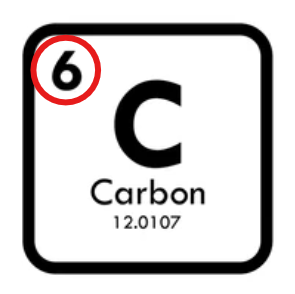
The atomic number of an element (the number of protons)
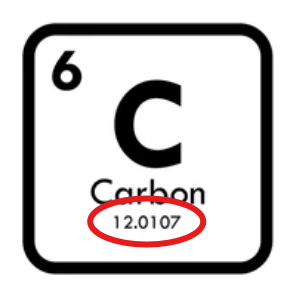
The mass number of an element (The number of protons and neutrons)
Ion definition
Ions are atoms which contain an uneven number of protons and electrons which results in an overall positive or negative charge.
The two types of ions
Cations (+)
Anions (-)
Cation definition
Cations are atoms which contain more protons than electrons, resulting in an overall positive charge.
Anion definition
Anions are atoms which contain more electrons than protons, resulting in an overall negative charge.
How do you show that the atom is an ion is word and symbol format?
Add the word ‘ion’ after the name of the element
On symbol format, add the number with either the positive or negative symbol based on the difference between the ions’ electrons and protons (strictly in that order)
Example1: Phosphorus ion with 18 electrons and 15 protons; P3- (anion)
Example2: Calcium ion with 18 electrons and 20 protons; Ca2+ (cation)
Isotope definition
Atoms with the same number of protons but with different numbers of neutrons, therefore having a different mass number
‘Valence’ definition
The outer-most
Shells definition
The major energy levels in an atom
Shell symbols
K(1), L(3), M(5), N(7)
Orbitals definition
The electrons which occupy the three-dimensional space around the nucleus
Subshell symbols
s, p, d, f
Periods in the Periodic Table definition
The horizontal rows (ranging from 1-7)
Period number suggestion about the element
The number of electron shells
Groups in the Periodic Table definition
The vertical columns (ranging from 1-18)
Group number suggestion about the element
The number of electrons in the valence shell
Atomic number suggestion about the element
Number of protons (which leads to number of electrons, in neutral atoms)
Metals location in the Periodic Table
The left side; lose electrons
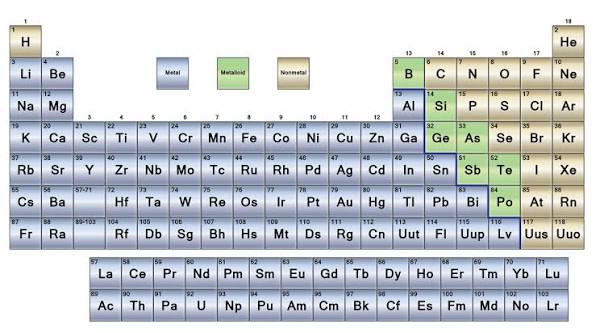
Non-metals location in the Periodic Table
The right side; gain electrons
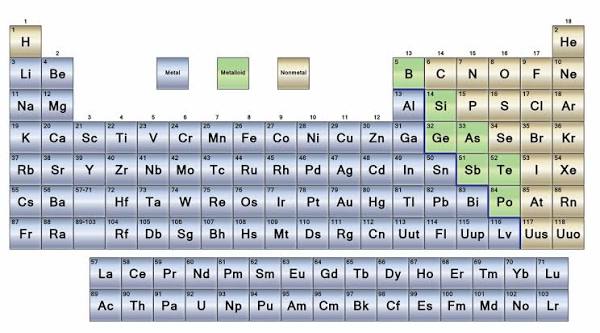
Metalloids location in the Periodic Table
Share metal and non-metal properties
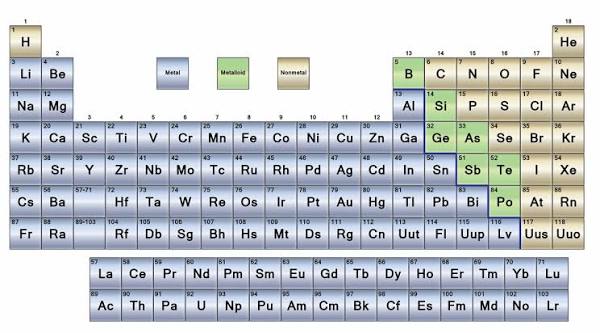
Define Electronegativity
How strongly an atom attracts electrons towards itself.
The greater the electronegativity, the greater the ability of the atom to attract electrons towards its nucleus.
Metals have low electronegativity as they have only a few loosely held valence electrons
For example: Na = 2.8.2 → the valence shell only as 1 electron, therefore its electronegativity is weaker.
Non-metals have high electronegativity
Trend in Electronegativity Down a Group of a Periodic Table
Decreases
More shells are added down a group, therefore there will be less attractive force between valence electrons and the nucleus.
Trend in Electronegativity Across a Period of a Periodic Table
Increases
The number of protons increases across a period, therefore there will be a stronger attraction between the nucleus and valence electrons, pulling the shells closer to the nucleus.
Define Ionisation
The energy required to remove a valence electron from an atom.
The greater the attraction between the valence shell and the nucleus, the more energy is required to remove the valence electrons from the atom.
Atoms are able to lose their electrons to become ions.
Trend in Ionisation Energy Down a Group of the Periodic Table
Decreasing
As the number of electron shells increase as the periodic table progresses down a group, electrons get further away from the nucleus, therefore they are less tightly held and easy to remove.
Trend in Ionisation Energy Across a Period of the Periodic Table
Increasing
The number of protons increase across a period, it causes a greater attraction between valence electrons and the nucleus, therefore it is harder to remove from the atom.
Present elements in metallic bonding
Metals
Present elements in covalent bonding
Non-metals
Present elements in ionic bonding
Metal and non-metals
Properties of metals (4)
Good conductors of heat and electricity
Malleable - can be moulded into different shapes
Ductile - can be stretch into a wire
Lustrous - can reflect light (shiny)
Properties of non-metals (3)
Poor conductors of heat and conductivity
The ones that undergo covalent bonding are mostly in a gas form so ae neither malleable or brittle or lustrous
Have relatively low melting points are they have relatively weak intermolecular forces of attraction between molecules
Why metals are malleable and ductile
Cations can roll over one another whilst the electrons keep them close together
Why non-metals are poor conductors of heat and electricity
No free moving electrons to carry a charge
Metals have low…
ionisation energy, meaning that they easily lose electrons = cation
Non-metals and high…
electronegativity, meaning they have strong ability to attract electrons, gaining lots = anion
Hyrdocarbon definition
Any chemical compound composed exclusively of the elements carbon and hyrdrogen.
Alkane definition
Hydrocarbons in which all carbon-carbon bonds are single covalent bonds.
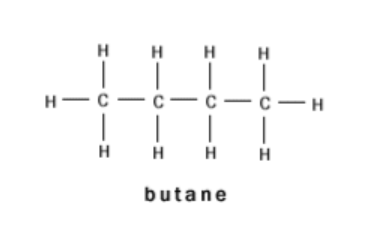
Draw a structural isomer of alkane (Butane C4H10) as a straight chain and write the formula
CH3CH2CH2CH3
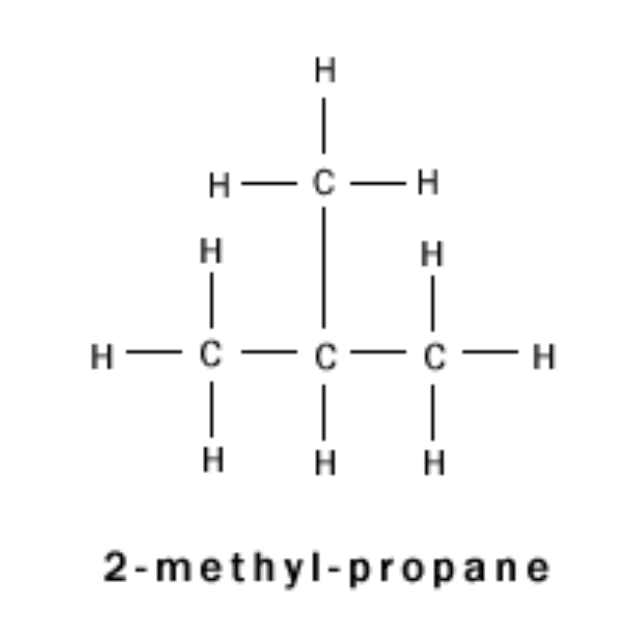
Draw a structural isomer of alkane (Butane C4H10) as a different chain and write the formula
CH3CH(CH3)CH3
Define hydrocarbons
Any chemical compound with only carbon and hydrogen. Any compound that contains carbon-hydrogen bonds is called an organic compound
What group are the Alkali metals located in and what are the key features (4)
group 1 = one valence electron
most reactive metals
reacts by losing 1 electron
reactivity increases down the group
What group are Alkali Earth metals located in and what are its key features (4)
Group 2 = 2 valence electrons
less reactive than group 1
reacts by losing 2 electrons
reactivity increases down the group
What groups are transition metals in and what are its key features (3)
Groups 3-12
most commonly found metals
react to form colourful solutions
What group are the Halogens located in and what are its key features (3)
Group 17 = 7 valence electrons
most reactive non-metals
reacts by gaining 1 electron
What group are the Noble Gases located in and what are its key features (3)
Group 18
have full outer shell = stable
inert (unreactive)
Define redox reactions
A common type of chemical reaction that involves the transfer of electrons from one chemical species to another.
How to identify whether a chemical equation is reduction or oxidisation
if the electron is on the left side, it is reduction.
if on the right, it is oxidisation
OILRIG
Name subshells and number of orbitals in it
1: 2
2: 2, 6
3: 2, 6, 10
4: 2, 6, 10, 14