55555
 Call Kai
 Learn
Learn Practice Test
 Spaced Repetition
 Match
Match Flashcards
 Knowt Play
1/47

There's no tags or description
Looks like no tags are added yet.
Name | Mastery | Learn | Test | Matching | Spaced | Call with Kai | Chat |
|---|
No analytics yet
Send a link to your students to track their progress
48 Terms
Memory
Process during which information is encoded, consolidated, stored, and retrieved
Long-Term Potentiation (LTP)
Long-lasting increase in synaptic strength following high-frequency (repeated, fast) stimulation of a synapse
Long-Term Potentiation (LTP)
Hebbian plasticity is supported by
NMDA Receptors
Ionotropic receptors also for glutamate
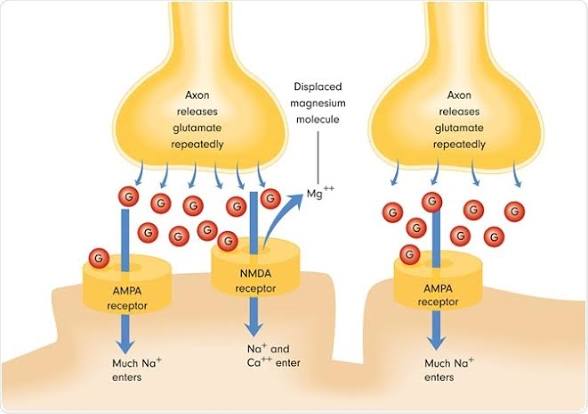
Ca2+ increases
As NMDA increases,
Magnesium (Mg2+)
Can block NMDA receptors
Long-Term Depression (LTD)
Long lasting decrease in synaptic strength following low-frequency stimulation of a synapse
Ca2+
Enter can result in removal of AMPA receptors
Learning is prevented
If LTP is prevented,
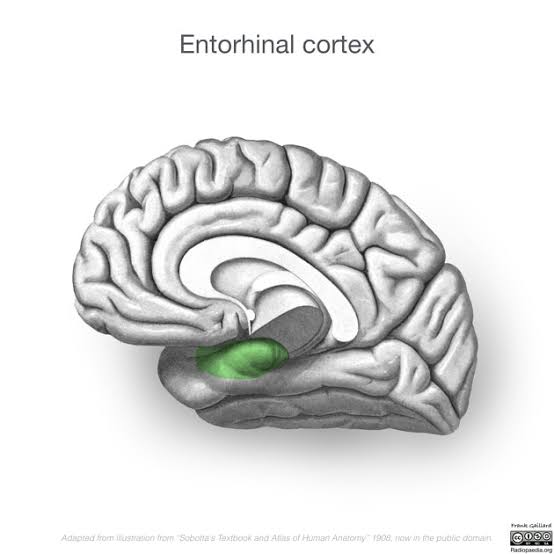
Rhinal Cortex
Structure used in object recognition
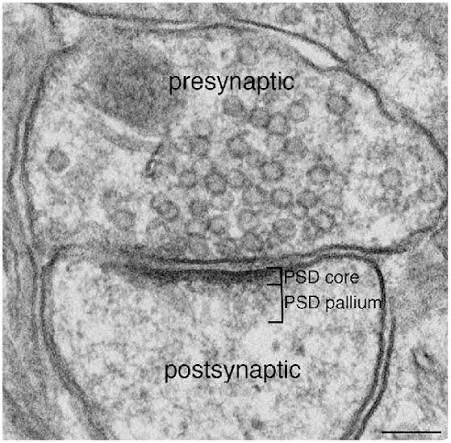
Dense Postsynaptic Membrane
Higher concentration of proteins, faster and more firmly binding of neurotransmitters
AMPA Receptors
Ionotropic receptors for glutamate (gates Na+ and K+)
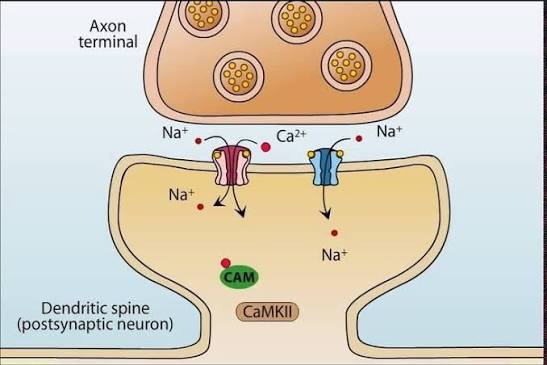
Na+ increases
As AMPA increases,
Hebbian Plasticity Theory
Increase in the synaptic strength arises from the presynaptic cell’s repeated and persistent stimulation of the postsynaptic cell
Coincidence Detection
Neurons detect events that happen closely together in time and integrate the temporally close but spatially distributed input signals
Habituation
Repeated stimulation leads to reduced neurotransmitter release and a weaker response
Sensitization
strong stimulation leads to increased serotonin release and a greater response
Morris Water Maze
Rat experiment testing spatial memory
Place Cells
Neurons that fire in the hippocampus when visiting specific regions of the environment
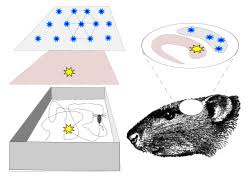
Grid Cells
Neurons that fire in the entorhinal cortex when in a repeated, hexagonal location
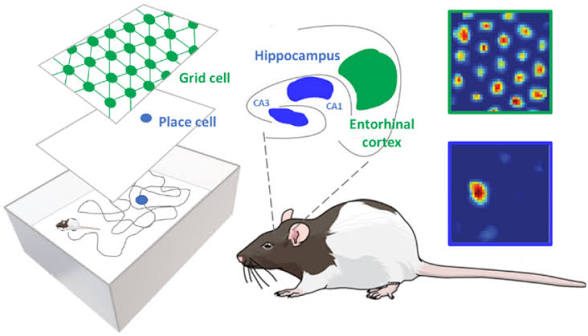
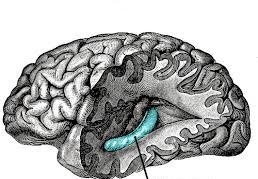
Hippocampus
Where place cells fire in
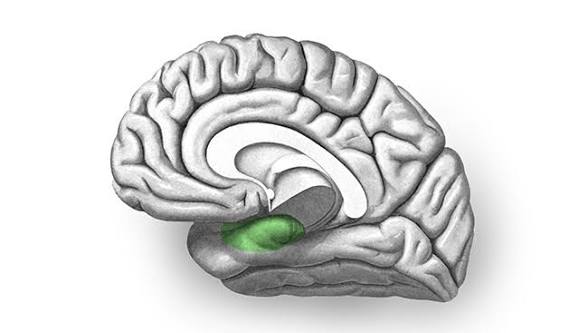
Entorhinal Cortex
Where grid cells fire in
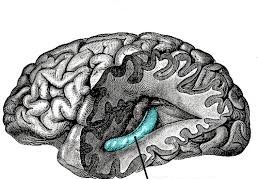
Hippocampus
Consolidates short term memory into long term memory, spatial locations
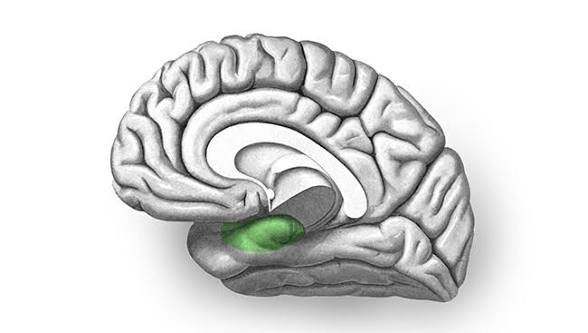
Entorhinal Cortex
Major source of neural signals to the hippocampus
Learning
Deals with how experience changes the brain; it involves neuroplasticity
Neuroplasticity
Brain’s ability to modify synaptic connections as a result of experience
Engram
Memory trace or representation in the brain of what has been learned
Equipotentially
The brain is sufficiently plastic. It has the ability to use the intact part of the brain to do what a damaged part of the brain can no longer do
Mass Action
Learning and memory are distributed across all parts of the brain; deficits are proportional to the amount of brain damage
Lashley’s Conclusion
Memories are not localized to specific areas (no engram)
Thompson’s Conclusion
Discovered the cerebellum stores the memory for Eyeblink conditioning (engram = cerebellum)
Classical Conditioning
Automatic, conditioned response is paired with specific stimuli
Eyeblink Conditioning
Example of classical conditioning researched by Thompson
Cerebellum
Mediates simple conditioning
Distributed Brain Areas
Mediates complex conditioning
Sensory Register Memory
Copy of few seconds of sensory information you’ve just sensed (large capacity)
Short-Term Memory
memory for information that lasts seconds to minutes (limited capacity)
Long-Term Memory
Permanent, enduring memory (unlimited capacity)
Consolidation
Process that stabilizes a memory trace and strengthens it into long-term storage
Explicit/Declarative Memory
Memory of information and what you know
Episodic Memory
Explicit memory of experiences and events
Semantic Memory
Explicit memory of facts and concepts
Implicit/Non-Declarative Memory
Memory of unconscious information and how you know
Amnesia
Long-term inability to retain info for longer than a few minutes
Anterograde Amnesia
Inability to form new memories after brain damage
Retrograde Amnesia
Inability to recall memories prior to brain damage
Bilateral Medial-Temporal Lobectomy (BMTL)
Removal of hippocampus, amygdala, and rhinal cortex to reduce seizure, but led to TGRA
Temporally-Graded Retrograde Amnesia (TGRA)
Inability to retrieve memories is strongest for recent events and less severe for older events