FIxed Prosth 3 midterm
 Call Kai
 Learn
Learn Practice Test
 Spaced Repetition
 Match
Match Flashcards
 Knowt Play
1/127

There's no tags or description
Looks like no tags are added yet.
Name | Mastery | Learn | Test | Matching | Spaced | Call with Kai | Chat |
|---|
No analytics yet
Send a link to your students to track their progress
128 Terms
lithium disilicate
which material MUST be bonded
true
T/F zirconia does NOT require BONDING
retentive form
cohesively (luted) retained restorations rely on ____
resin>RRGI>ZPC>PCC
rank the compressive strength of definitive cements from highest to lowest
low viscosity
NUMBER 1 criteria for good lutting cement
any metal restoration
Indication for zinc phosphate cement
low strength and high viscosity
DISADVANTAGES of POLYCARBOXYLATE cement
provisionals
INDICATIONS for POLYCARBOXYLATE cement
resin-reinforced GI
cement with compressive strength similar to RESIN but easier to clean
resin-reinforced GI
ideal cement for RETENTIVE ZIRCONIA preparations
resin reinforced GI
cement that can cause CRACKING in low strength ceramics
feldspathic porcelain, lithium disilicate, post and core
CONTRAINDICATIONS for RESIN REINFORCED GI
true
T/F RGMI CANNOT be used for LITHIUM DISILICATE
metal, metal ceramic,zirconia
which materials can be used with RMGI/resin-reinforced GI
light cure
which type of resin cement should be used for VENEERS
color stability, bond strength, working time
advantages of LIGHT CURE resin cement
10% HF for 90 sec
etching protocol for VENEER SURFACE
95% alcohol for 4 min
after etching veneer surface must be cleaned with ______ to remove contaminants
30, 37% phosphoric acid
ETCHING of ENAMEL shoould be done for ___sec with _____
increase wetability and bond strength
function of SILANE PRIMER on CERAMIC
buccal to lingual
path of insertion of veneers with BUTTJOINT
after tack curing
when placing a VENEER excess when should excess be removed
after final cure
when placing a veneer when should RETRACTION CORD be REMOVED
one
when cementing a restoration ____ retraction cord/s is/are used
tooth
the BONDING AGENT is applied to the ______
ceramic surface
the PRIMER is applied to the _____
self adhesive resin
which resin cement does NOT require bonding protocol (ie. no bond or primer)
chemical
MDP self etch adhesive doesn’t require bonding protocol because it forms a _____ bond with both the tooth and zirconia/metal
true
T/F light cure has STRONGER bond strength than self cure
less bond strength (than light cure)
disadvantage of SELF ADHESIVE resin
all ceramic with proper retention
indication for SELF ADHESIVE resin
true
T/F self adhesive resin cement requires proper retention
remove contaminants and increase bond strength
function of rinsing veneer with alcohol after etching
light chamfer
what marginal finish line should be used for CERAMIC VENEERS
limited working time, strict bonding protocol, clean up after setting
disadvantages of dual cure resin
all ceramic crowns, ceramic inlay/onlay, resin bonded FPD
indications for dual cure resin
dual cure
which resin cement must be used for restorations WITHOUT RETENTION form
true
T/F total etch has better dentin bonding strength compared to selective etch
true
T/F total etch can cause sensitivity
optional
with 3M scotchbong universal bond light curing is _____
mandatory
with IVOCLAR(Adhese Universal) bond, light cure is _______
9.6% HF, 2-3min
etch protocol for FELDSPATHIC PROCELAIN
5% HF, 1 min
etch protocol for LEUCITE-REINFORCED glass
5% HF, 20 sec
etch protocol for LITHIUM DISILICATTE
true
T/F 3M scotchbond universal can be used as both silane primer and bonding agent
immediately
when seating ceramic crown excess should be removed _____
false
T/F dual cure cements should be tack cured before cleaning
outside
ivoclean should be used _____ the mouth to clean zirconia
no more than 5 sec
zirconia intaglio surface should bee air abraided for ____
MDP ceramic primer (monobond)
which primer is used for ZIRCONIA
false
T/F zirconia should be etched before seating
one
anterior resin bridges with _____ retainer have a higher success rate
similar
5-year clinical performance of resin-bonded bridges is _____ to the performance of
conventional PFM bridges and implant-supported crowns.
interim
Resin-bonded bridges is an esthetic and conservative _____ treatment option
that can be successfully utilized in favorable clinical situations
vertical
_____ growth pattern is an indication for resin bonded bridges while waiting for implant treatment
treatment planning and selection of ceramics
what does the pre operative phase consist of
preparation and selection of materials/cement
what does the operative phase consist of
finishing/polishing and continued maintenance
what does the post-operative phase consist of
fixing color, shape, diastema, and mild misaligment
indications for veneers
endo treated, tetracycline staining, enhance existing color
when might a veneer be indicated to modify tooth color
congenital malformation, fracture, wear
when might a veneer be indicated for modifying tooth shape
enamel
best bonding is to _____
pronounced enamel defects, severe malformation, severe malalignment, poor hygiene
CONTRAINDICATIONS for veneers
interproximal
the majority of people display only _____ gingiva when smiling
true
T/F tooth display at rest decreases with increasing age
true
T/F bonding is better to glass ceramics than zirconia
feldspathic porcelain
plattinum foil and refractory die techniques are used with which ceramic material?
esthetics and translucency
main advantages of feldspatthic porcelain veneer
low strength and technique senstivity
main disadvantages of feldspathic porcelain veneer
true
T/F when bonded to ENAMEL porcelain veneers have a very high clinical success rate
exposed dentin
clinical complications of veneers are associated with a larger amount of _____
high fracture strength and esthetics
advantages of lithium disilicate veneers
wax up, invest, press
what does the pressable technique consist of
esthetics, less technique sensitive, high strength
advantages of pressable ceramics (lithium disilicate and leucite reinforced)
monolithic color, often require feldspathic layering
disadvantages of pressable ceramics (lithium disilicate and leucite reinforced)
quality of preparation
the success of a restoration depends mostly on the ____
feldspathic porcelain
best choice of veneer material for high esthetic demand
true
T/F felspathic porcelain veneers have about the same survival rate as prressable
enamel preserved
veneers have a higher sucess rate with more _____
higher success rate
less dentin exposure in veneer prep = ______
0.3-0.5mm
how much enamel is at the CERVICAL portion of the ttooth
0.6-1mm
how much enamel is at the MIDDLE portion of the tooth
1-2.1mm
how much enamel is at the INCISAL porrtion of the tooth
0.3,0.5, 0.7, 1.5-2
demension for veneer prep from cervical to incisal edge
1.5-2mm
incisal edge reduction for veneer preparation
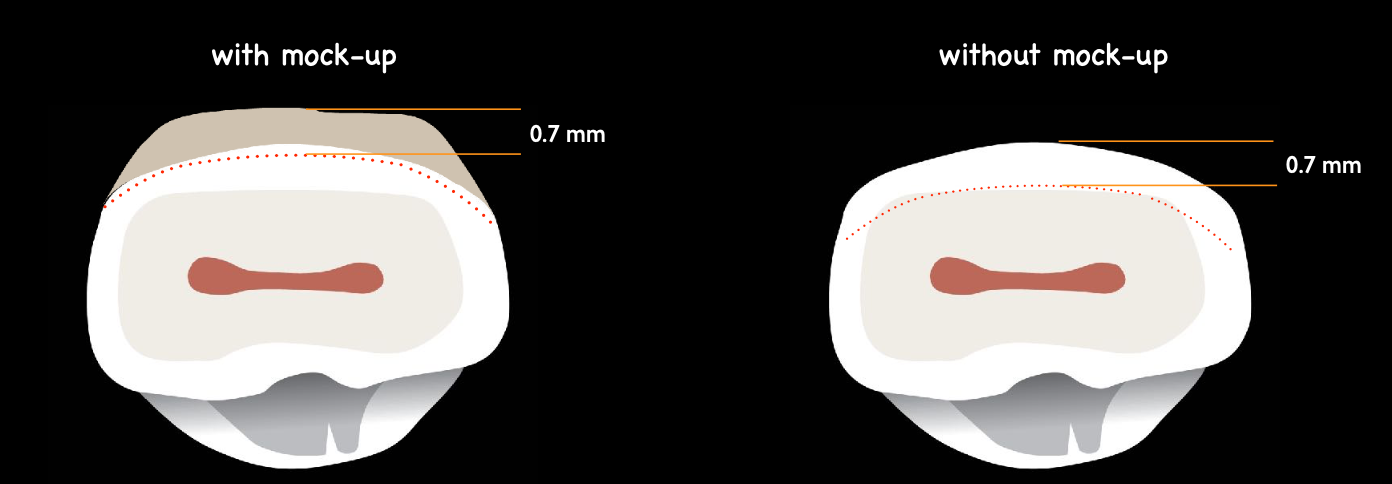
true
T/F an esthetic mockup can allow for a more conservattive prep
supra or equi gingival
which finishline (supra,equi, or sub) is recommended for veneer
reduce dentin exposure, improved impression quality, facilitates bonding procedures, hygienic
advantages of supra gingival finishline
visible tooth restoration interface
disadvantages of supra gingival finishline
contact lens effect
blending of ceramic with tooth at cervical area
none or minor tooth color change
indication for supragingival finish line
masking tooth color and closing diastema
when would a SUB gingival margin be indicated for veneers
smooth emergence profile
why would a SUB gingival finishline be used for closing diastema
at the contact area
best choice for a conservative and esthetic interproximal preparation for veneer
existing interproximal restoratiton, major color change, diastema closure
indications for extending the veneer preparation tthrough the interproximal contact area
translucency desired
incisal preparation for veneers depends on _____
butt joint
which incisal finishline is more conservative for veneers
need to worry about undercuts due to incisal-apical path of insertion
why is palatal chamfer less conservative
true
T/F there is no difference in survival rate of veneer between palatal chamfer and butt joint incisal preparation designs
butt joint
incisal prep for veneer indicated when occlusion is on tooth or ceramic