Reversible Growth Disorder II
 Call Kai
 Learn
Learn Practice Test
 Spaced Repetition
 Match
Match Flashcards
 Knowt Play
1/29

There's no tags or description
Looks like no tags are added yet.
Name | Mastery | Learn | Test | Matching | Spaced | Call with Kai | Chat |
|---|
No analytics yet
Send a link to your students to track their progress
30 Terms
function
Increase in size leads to increased in ______
False - Combination of hypertrophy and hyperplasia
(True/False) Hypertrophy of most tissues and organs results from cellular hypertrophy only.
pure hypertrophy
This is seen in organ that have lost mitotic activity
skeletal, cardiac, neurons
Tissues/organs/cells that undergo only pure hypertrophy
hypertrophy
Grossly, organ is larger and heavier than normal
size, number
Hypertrophy under microscope shows increase in the _____ of individual cells and/or a increase in the _____ of cells
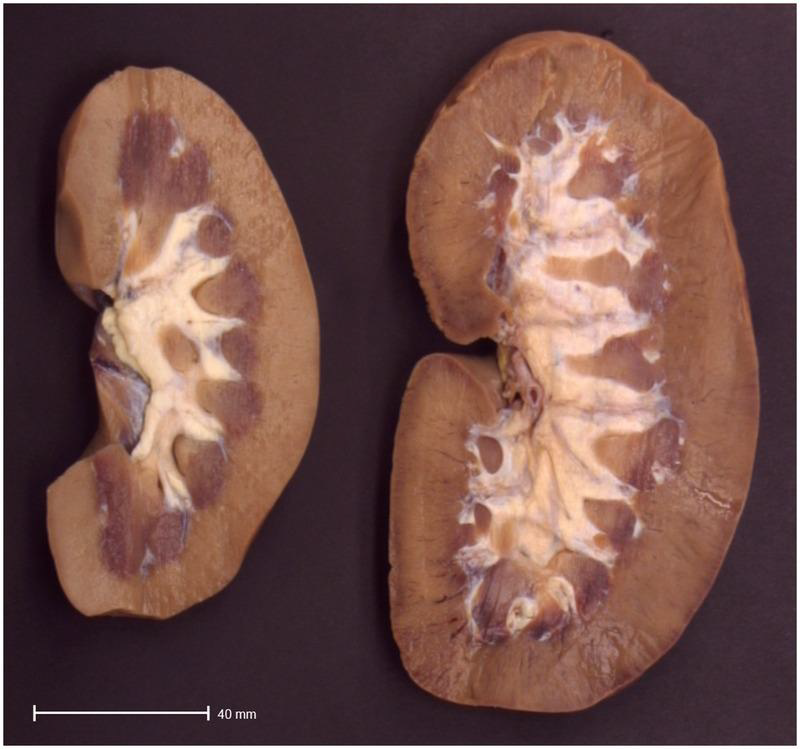
Double size of kidney upon the removal of one
Example of Compensatory Hypertrophy
compensatory hypertrophy
An increase in skeletal muscle mass like when we work out in the gym
chronic pneumonia
Another case of compensatory hypertrophy is the hypertrophy of the diaphragm of a pig due to ________
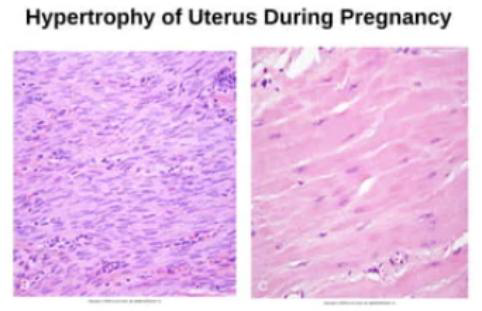
Physiological hypertrophy
Kind of hypertrophy that is hormonal characterized by the hypertrophy of uterus during pregnancy
pathological hypertrophy
Kind of hypertrophy that classifies valvular stenosis (narrowing)
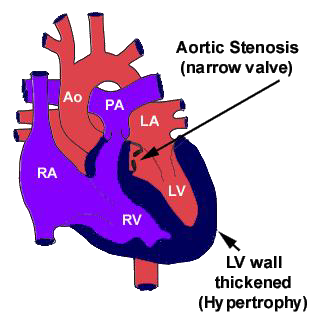
valvular stenosis
Thickening of one of the ventricles of the heart
Larger nuclear diameter
Histopath of a heart with valvular stenosis
thickening of the muscular coats of the ileum
Describe a defective ileocecal valve
hyperplasia
increase in size of an organ or tissue due to increase in the number of cells
proliferation of cells, rate of cell loss
Hyperplasia is caused by increased _______ or decreased in ________, or combination of two
mitotic activity
hyperplasia is restricted to organs or tissues, which have retained _____
Grossly
______ speaking, hyperplasia can be considered hypertrophic
gross lesions, microscopic lesions
Hyperplasia has high degree of variability for ______ and less variability for ______
acinar epithelium, glandular organ
In hyperplasia seen microscopically, there is an increase in height of the ______ and number of cells in ______
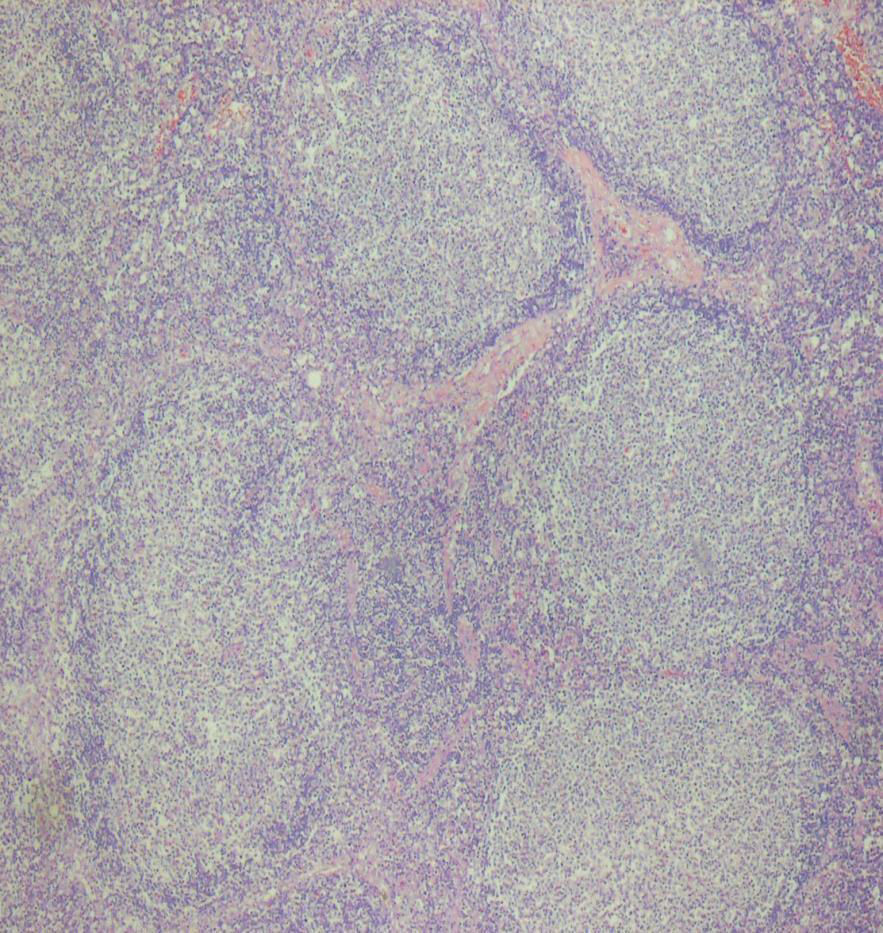
reactive hyperplasia
Lymph node enlargement due to the proliferation of lymphocytes in antigenic stimulation is what type of hyperplasia
increased keratinized layer of the epithelium
Sarcoptic mange causes an ______ due to the itchiness
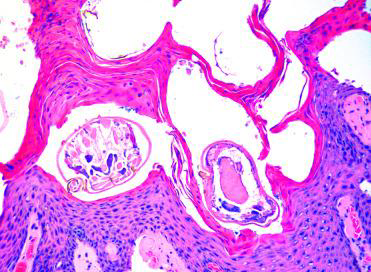
prickle cell layer (acanthosis), keratinized layer (hyperkeratosis)
In the case of a reactive hyperplasia of rabbit’s skin, the number of cells was increased in the ______ and ______.
callus formation
A reactive hyperplasia results from contact with a rough hard floor
persistent irritation
a reactive hyperplasia like increased mucous membrane epithelium is caused by
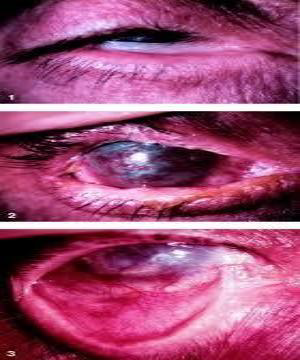
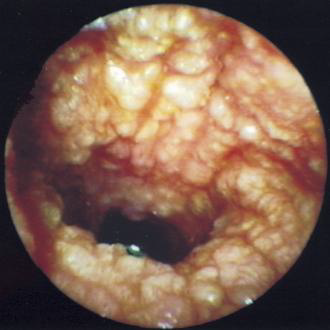
hyperplasia of the ceruminous gland
Reactive hyperplasia caused by chronic otitis externa
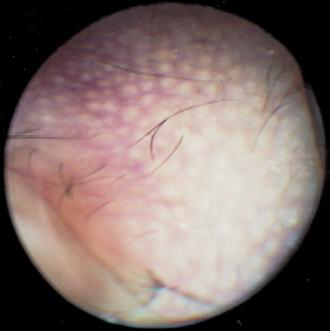
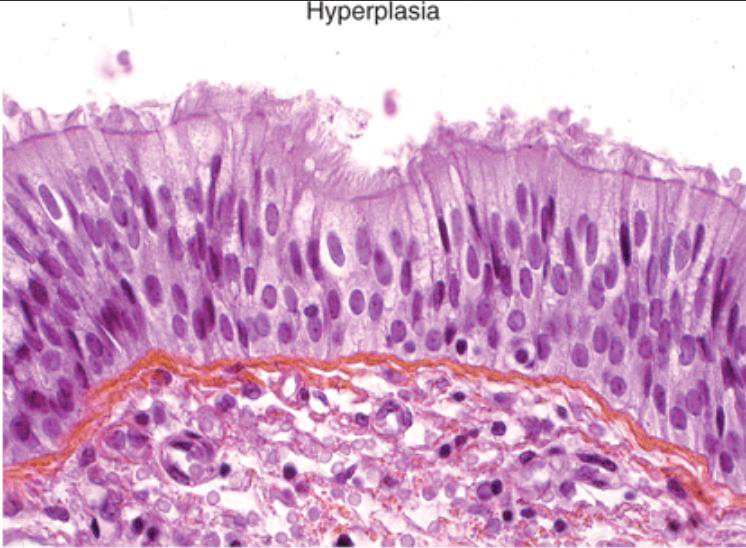
hyperplasia of bronchial epithelium
A reactive hyperplasia caused by chronic bronchitis
hyperplasia of bile ducts
A reactive hyperplasia due to cholangitis (lesion due to large gall stone obstruction)
Endocrine Hyperplasia
A type of hyperplasia that is caused by cyclical changes in mammary gland during lactation
prostate hyperplasia
An endocrine hyperplasia results from increased testosterone levels, happens usually in older men