Basics(module1)
 Call Kai
 Learn
Learn Practice Test
 Spaced Repetition
 Match
Match Flashcards
 Knowt Play
1/24

There's no tags or description
Looks like no tags are added yet.
Name | Mastery | Learn | Test | Matching | Spaced | Call with Kai | Chat |
|---|
No analytics yet
Send a link to your students to track their progress
25 Terms
human physiology
study of processes and function in living organism
order of physiology, smallest to biggest
cells → tissues → organs → organ systems
homeostasis
maintaining stable internal environment is key for optimal function
components for homeostasis
receptor, control center, effector
receptor
detects imbalance and sends signal(ex. thermoreceptors: temp is too high)
control center
receives signal and decides what to do to restore balance(ex. nervous system)
effector
receive command/info and completes action to restore balance(ex. sweat glands release fluid and blood vessels dilate)
extracellular fluid
1/3 of total body fluid; OUTSIDE cells
intracellular fluid
2/3 of total fluid; INSIDE cells`
fluid imbalance
ECF or ICF gain or lose fluid
cell membrane
maintains fluid balance, permeable barrier, selects ions & nutrients for cell function
physical characteristics of cell membrane
phospholipid bilayer(polar heads & fatty acid tails); has proteins
functions of cell membrane proteins
structure, communication(cell to cell), signaling, maintenance(ICF & ECF), identification(tells other cells what they are)
Cell junction
join plasma membranes of adjacent cells and aid& inhibit molecule movement
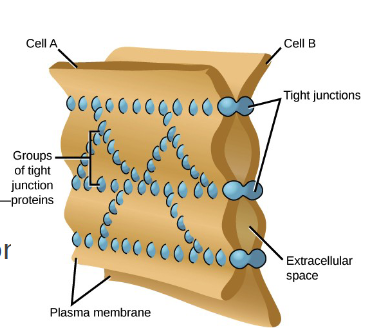
Tight junction
seals neighboring cells together like zip block
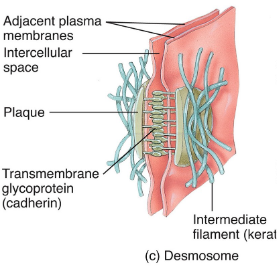
Desmosomes
anchors adjacent cells together
gap junction
connects cells by hollow cylinders

Endocytosis
plasma membrane forms vesicle to bring in substance; phagocytosis, pinocytosis, receptor mediated endocytosisp
phagosytosis
for large particles/microorganisms; in specialized cells
pinocytosis
fluid-phase/small particles endocytosis; non specific
receptor mediated endocytosis
receptors bind to specific molecules(humoral immunity naive to activated b cell)
simple diffusion
hig to low concentration; no atp
facilitated diffusion
high to low with transport protein; no atp; leakage channel(always open); voltage gated(membrane potential threshold); ligand gated(molecule bind to receptor)
filtration
high to low pressure; no atp; water and solutes; in kidneys