Comprehensive Biology: Matter, Chemical Bonds, Water, and Organic Molecules
 Call Kai
 Learn
Learn Practice Test
 Spaced Repetition
 Match
Match Flashcards
 Knowt Play
1/27

There's no tags or description
Looks like no tags are added yet.
Name | Mastery | Learn | Test | Matching | Spaced | Call with Kai | Chat |
|---|
No analytics yet
Send a link to your students to track their progress
28 Terms
What is matter?
Anything that takes up space and has mass.
What are elements?
Substances whose molecules contain only one kind of atom.
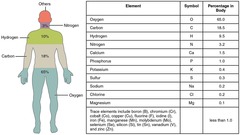
What percentage of living matter is composed of six elements?
98% (Carbon, Hydrogen, Nitrogen, Oxygen, Phosphorus, Calcium - CHNOPCa).
What are compounds?
Substances whose molecules are made of two or more different types of atoms, which change properties.
What is a mixture?
Substances composed of combinations of elements and/or compounds, with no property change.
What are the basic building blocks of all matter?
Atoms.
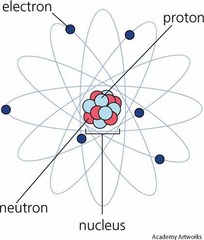
What are the three main subatomic particles in an atom?
Protons, Neutrons, Electrons.
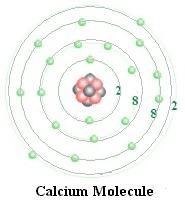
What is the 2-8-8 rule in atomic structure?
Atoms attempt to fill their outer electron shells with 2, then 8, then 8 electrons.
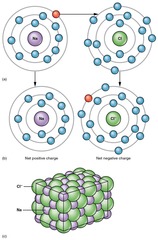
What is an ionic bond?
An attraction between oppositely charged ions.
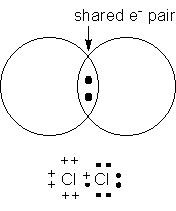
What is a covalent bond?
A bond where electrons are shared between two atoms.
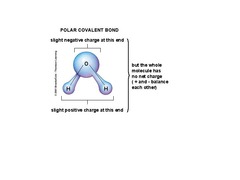
What is a polar covalent bond?
A bond with unequal sharing of electrons, exemplified by water (H2O).
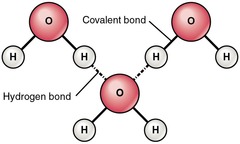
What are hydrogen bonds?
Weak bonds between polar molecules that result in unique characteristics of water.
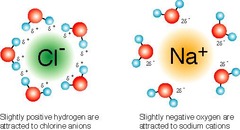
What is the universal solvent?
Water.
What is pH?
The concentration of hydrogen ions (H+) in a solution.
What is the pH scale range?
0 to 14, with 7 being neutral.
What defines an acid?
A substance with a pH lower than 7.0, indicating high H+ concentration.
What defines a base?
A substance with a pH higher than 7.0, indicating low H+ concentration.
What are macromolecules?
Very large organic molecules, such as proteins and DNA.
What are polymers?
Molecules made of a repetitive series of identical or similar subunits (monomers).
What are the four categories of carbon compounds?
Carbohydrates, Lipids, Proteins, Nucleotides and Nucleic Acids.
What is the function of carbohydrates?
Energy storage and structure.
What are lipids?
Fats and oils, phospholipids, steroids, and eicosanoids.
What are proteins composed of?
Amino acids.
What is enzyme specificity?
One enzyme catalyzes one reaction.
What are enzyme inhibitors?
Substances that can block the function of an enzyme.
What are nucleic acids made of?
Nucleotides, which include a phosphate group, nitrogen bases, and sugar.
What is the difference between DNA and RNA?
DNA is double-stranded and genetic material; RNA is single-stranded and assists in protein production.
What is ATP?
Adenosine triphosphate, the energy currency of the cell.