Zoology Lab Exam 3 - Echinoderms/Hemichordata/Chordata ID
 Call Kai
 Learn
Learn Practice Test
 Spaced Repetition
 Match
Match Flashcards
 Knowt Play
1/37

Earn XP
Description and Tags
BIOL 230 - Spring 2026 - Echinoderms/Hemichordata/Chordata
Name | Mastery | Learn | Test | Matching | Spaced | Call with Kai | Chat |
|---|
No analytics yet
Send a link to your students to track their progress
38 Terms
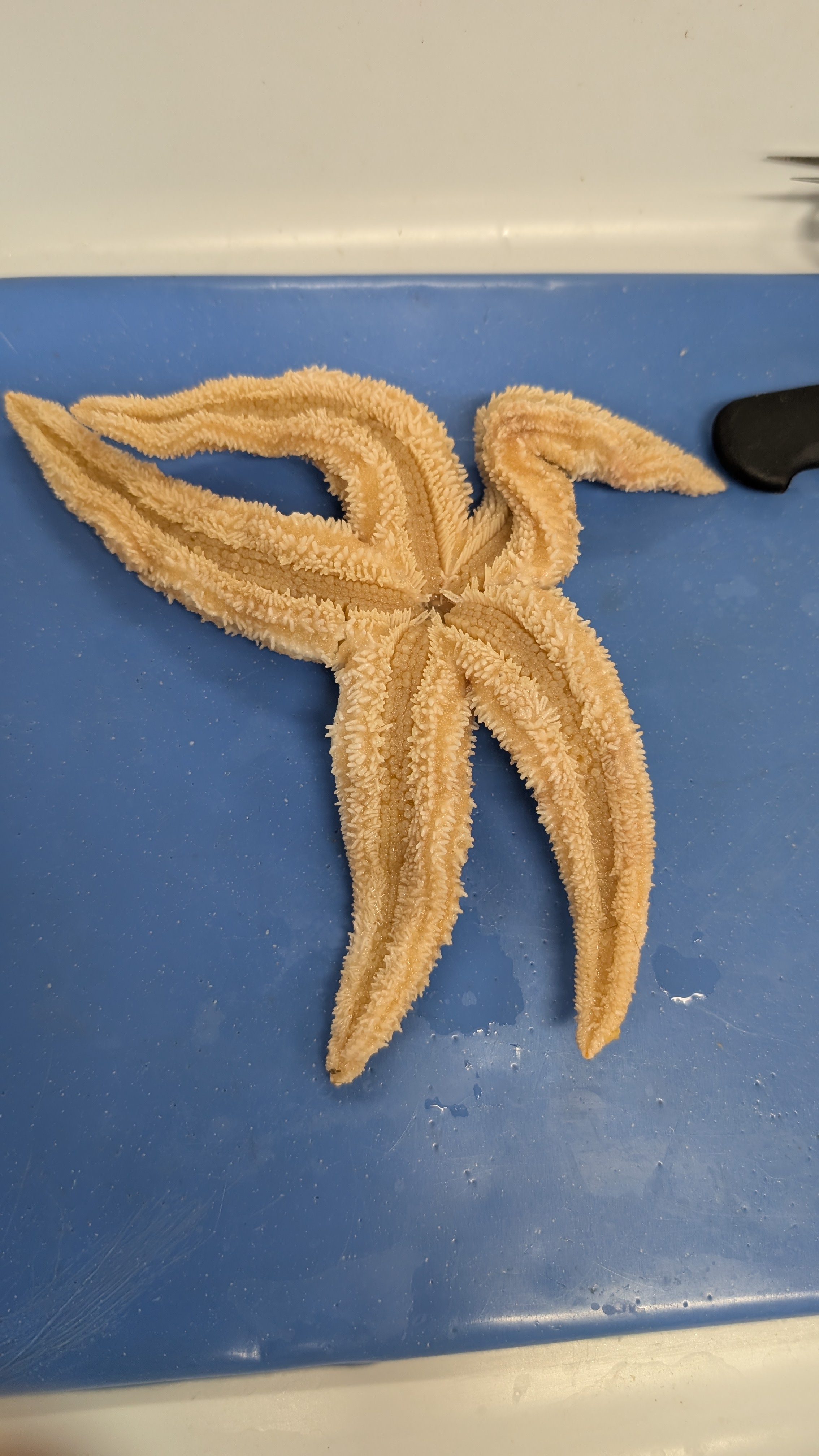
Identify
Phylum: Echinodermata
Class: Asteroidea
Sea Star dissection
Oral end - note the tube feet, the center mouth, and the ambulacral grooves
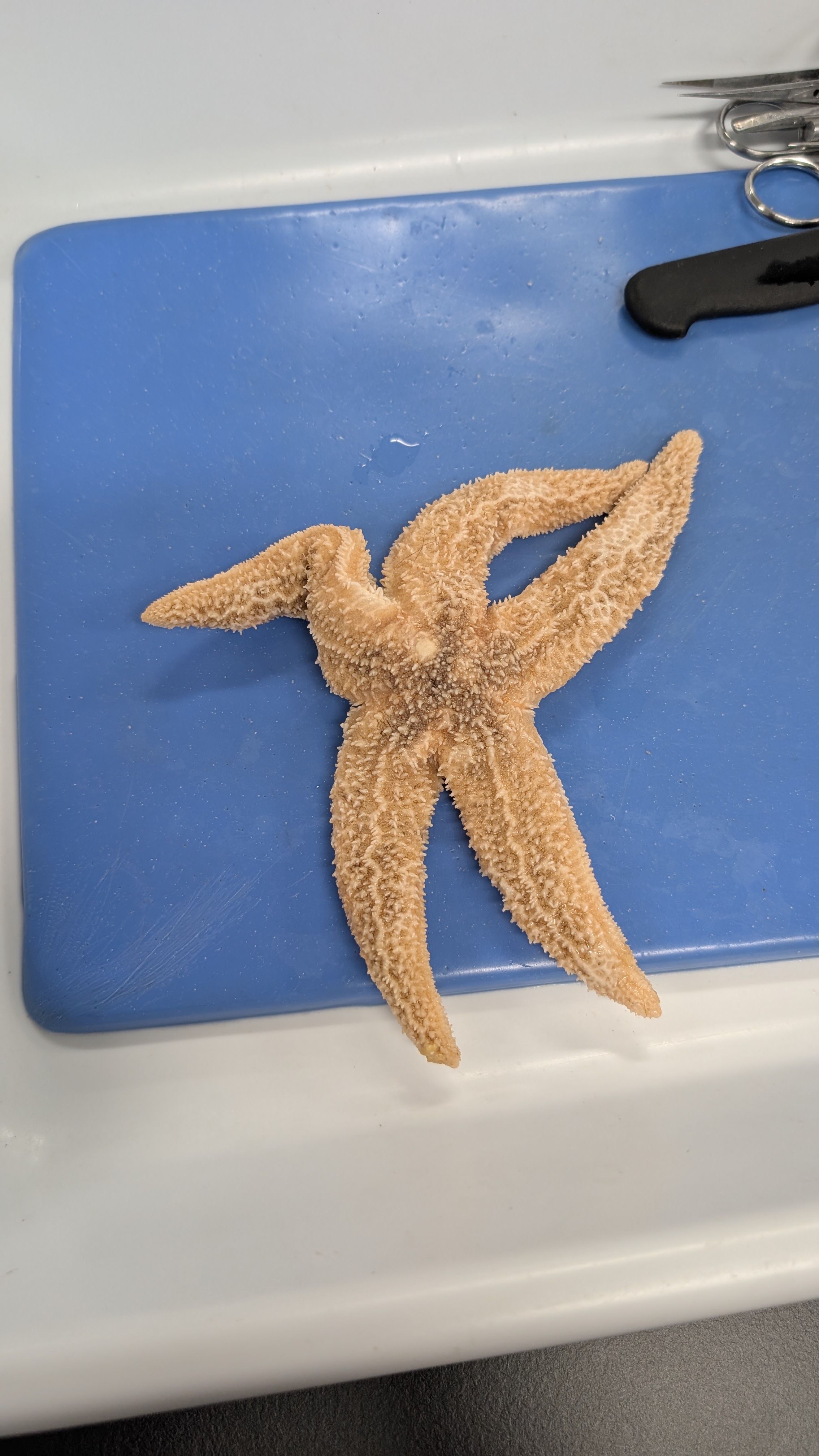
Identify
Phylum: Echinodermata
Class: Asteroidea
Aboral end - not the off center madreporite (sieve plate), the central anus, and the dermal ossicles (spine)
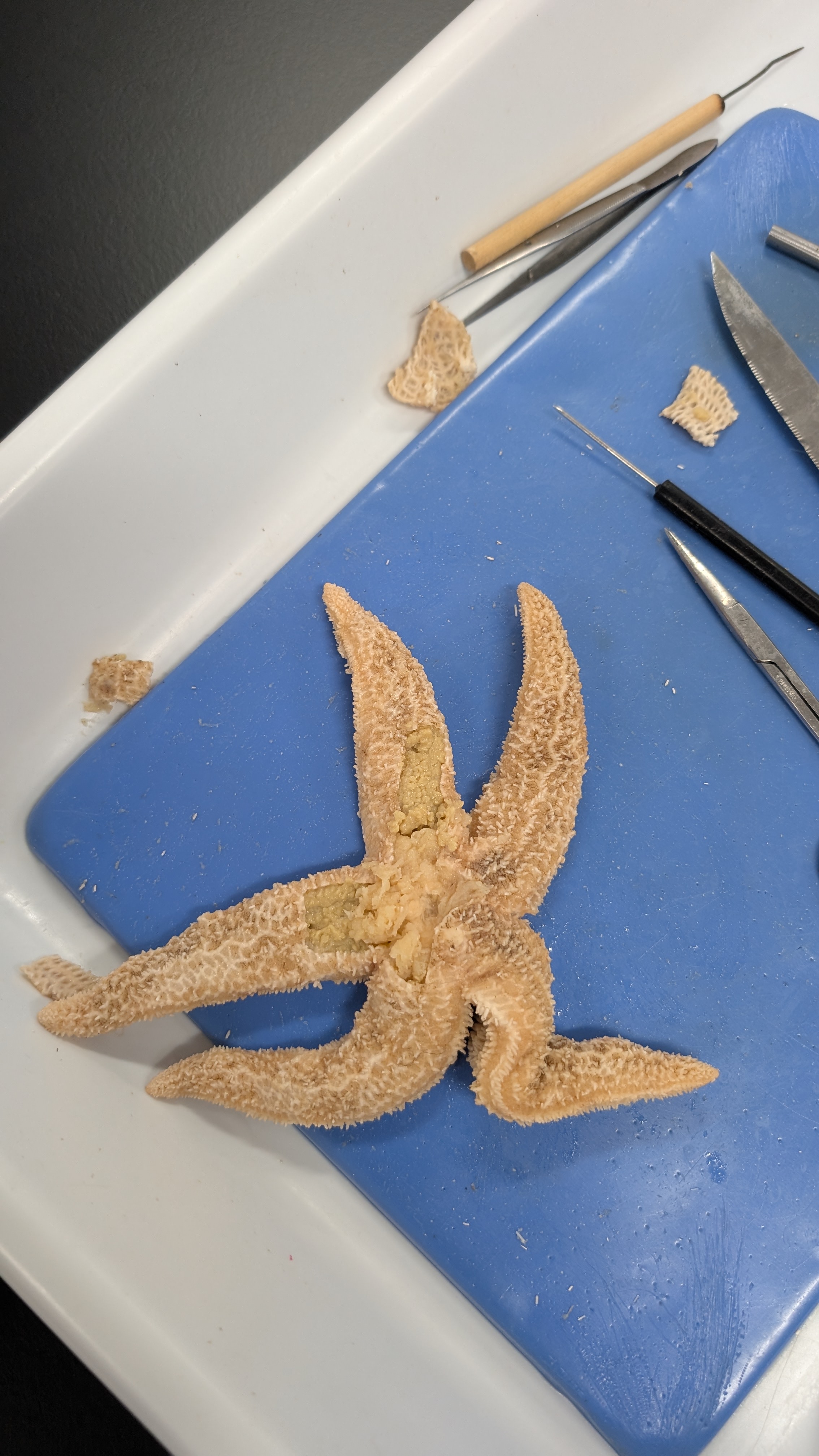
Identify
Phylum: Echinodermata
Class: Asteroidea
Note the lighter cardiac stomach, the pyloric cecum running into the arms, and the bony skin
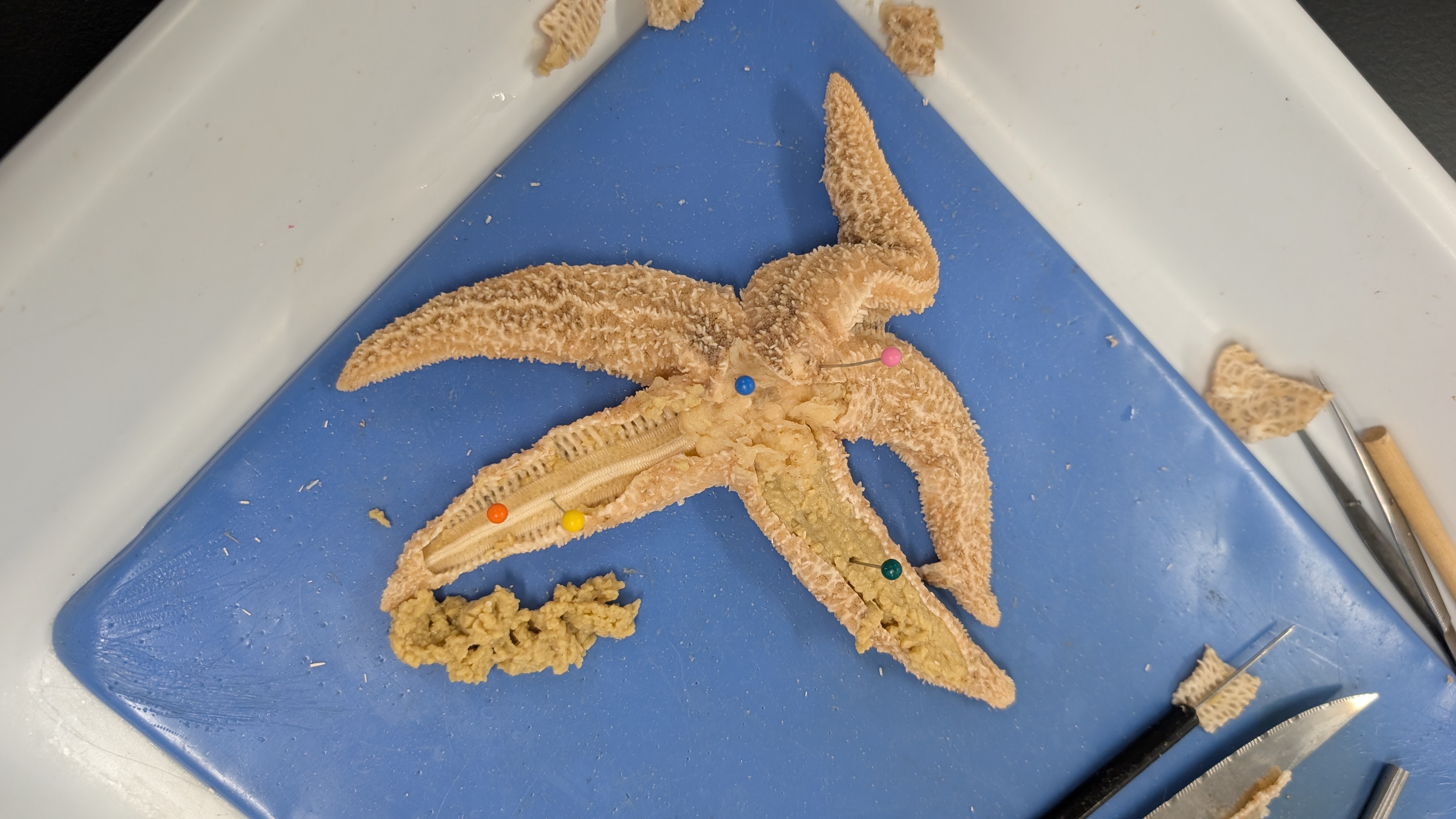
Identify
Phylum: Echinodermata
Class: Asteroidea
Pink - madreporite
Yellow - ambulacral ridge
Orange - ampulla (helps with the tube feet water)
Green - pyloric cecum
Blue - stomach
Identify
Phylum: Chordata
Subphylum: Vertebrata
Superclass: Agnatha
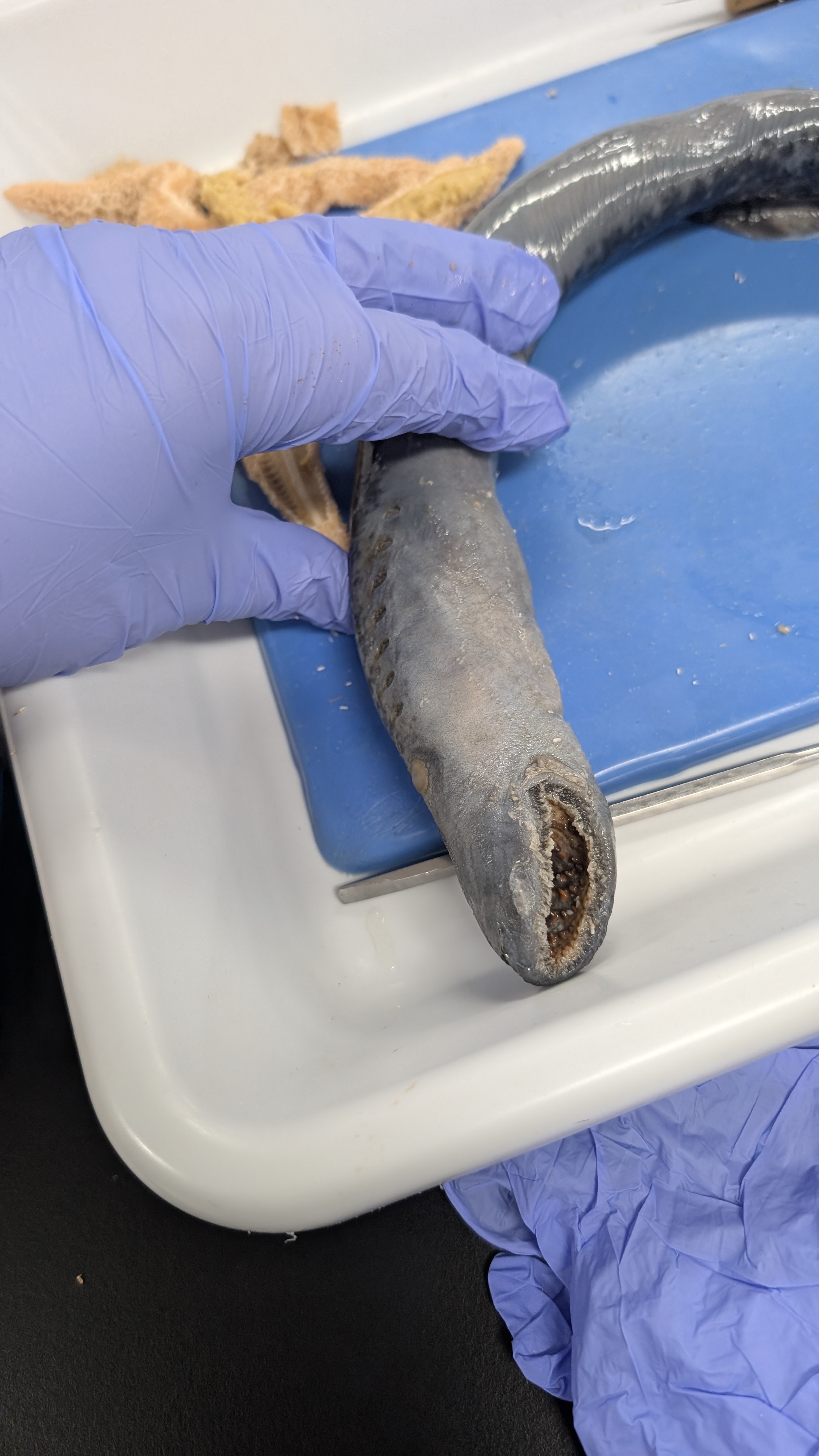
Atlantic sea lamprey dissection
Note the mouth, consisting of an oral funnel with horny teeth and sensory papillae surrounding it
Identify
Phylum: Chordata
Subphylum: Vertebrata
Superclass: Agnatha
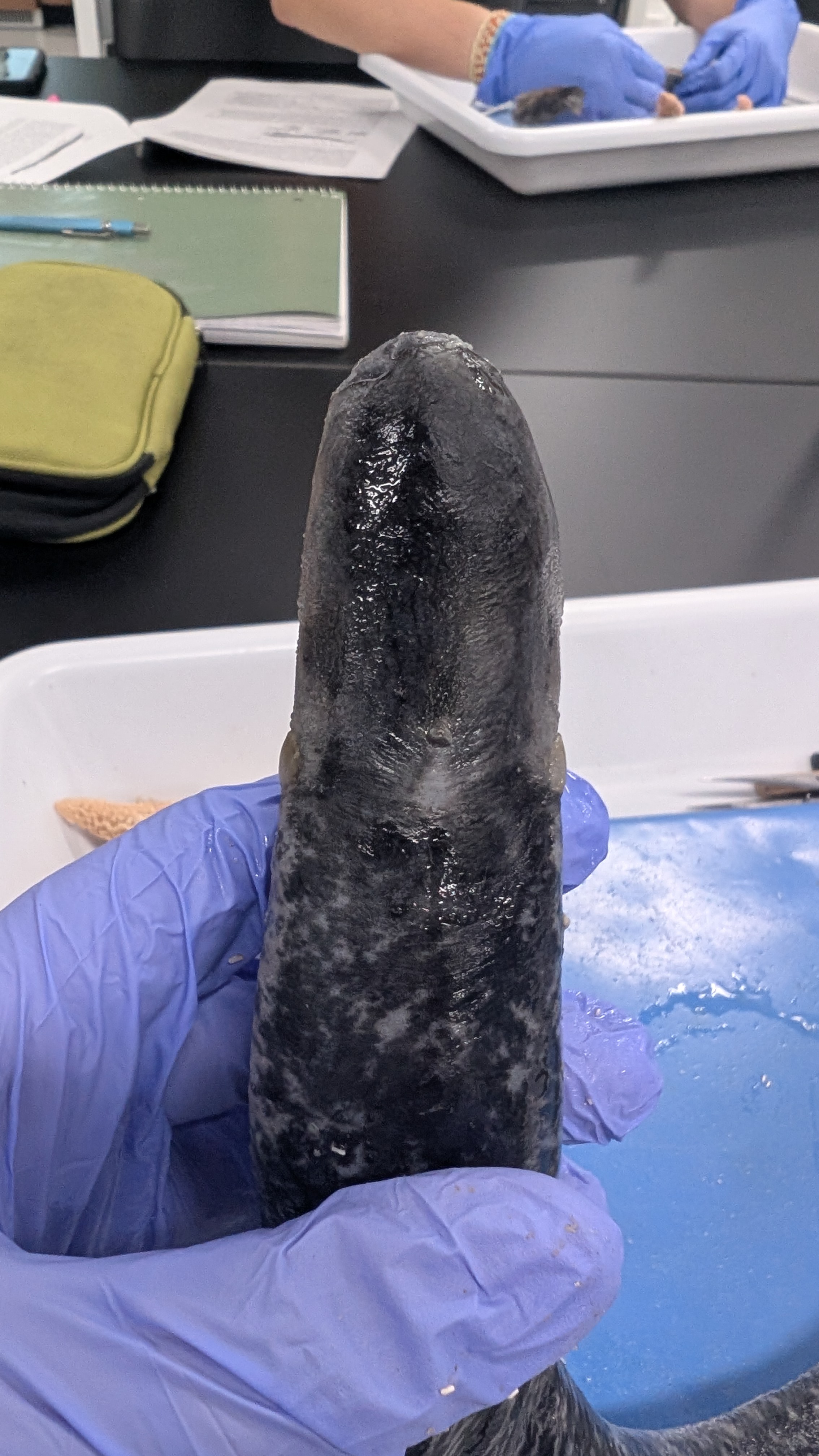
Atlantic sea lamprey dissection
Pineal body, used for sensing light as well as a singular nostril in front of it
Identify
Phylum: Chordata
Subphylum: Vertebrata
Superclass: Agnatha
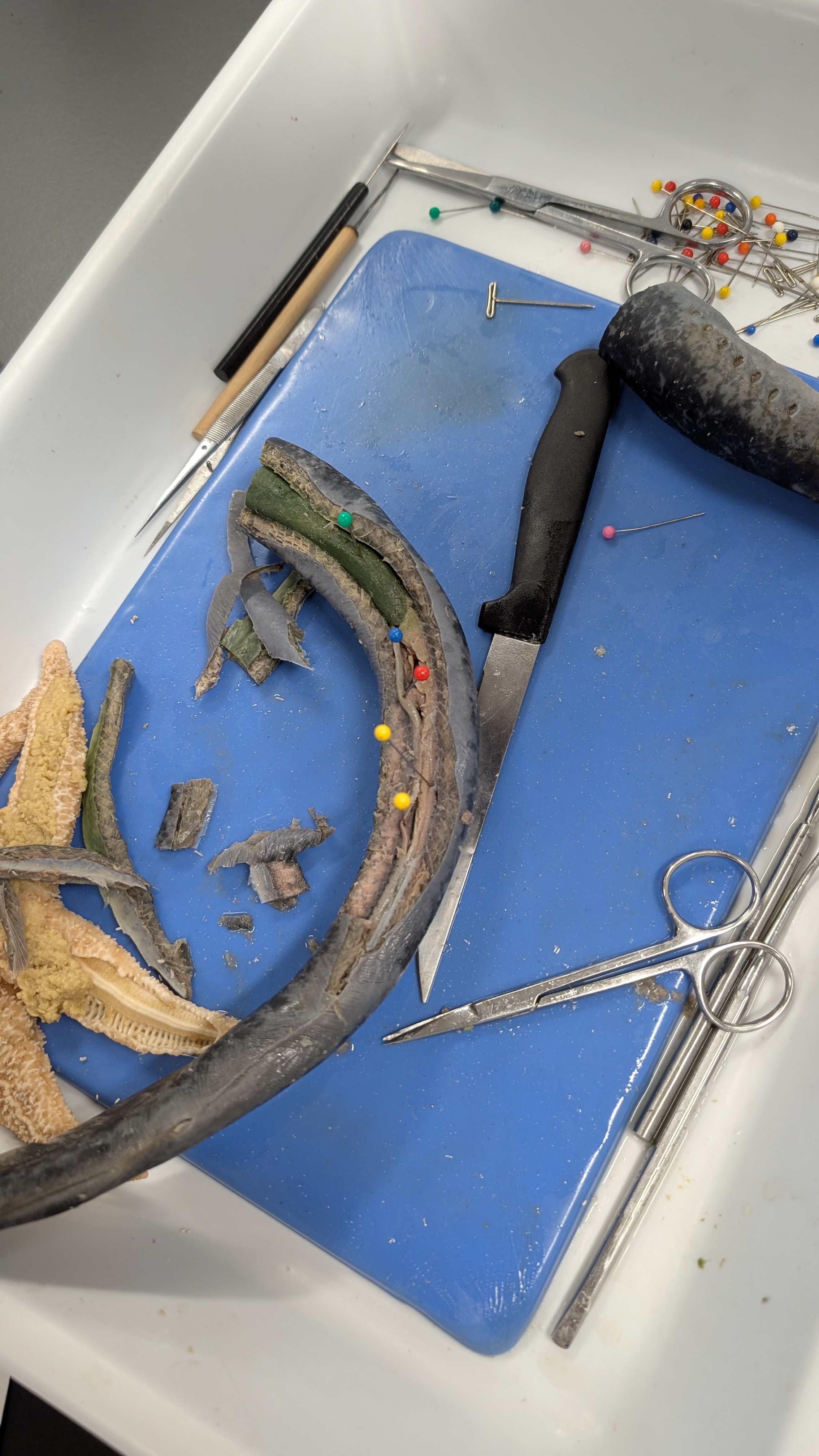
Atlantic sea lamprey dissection
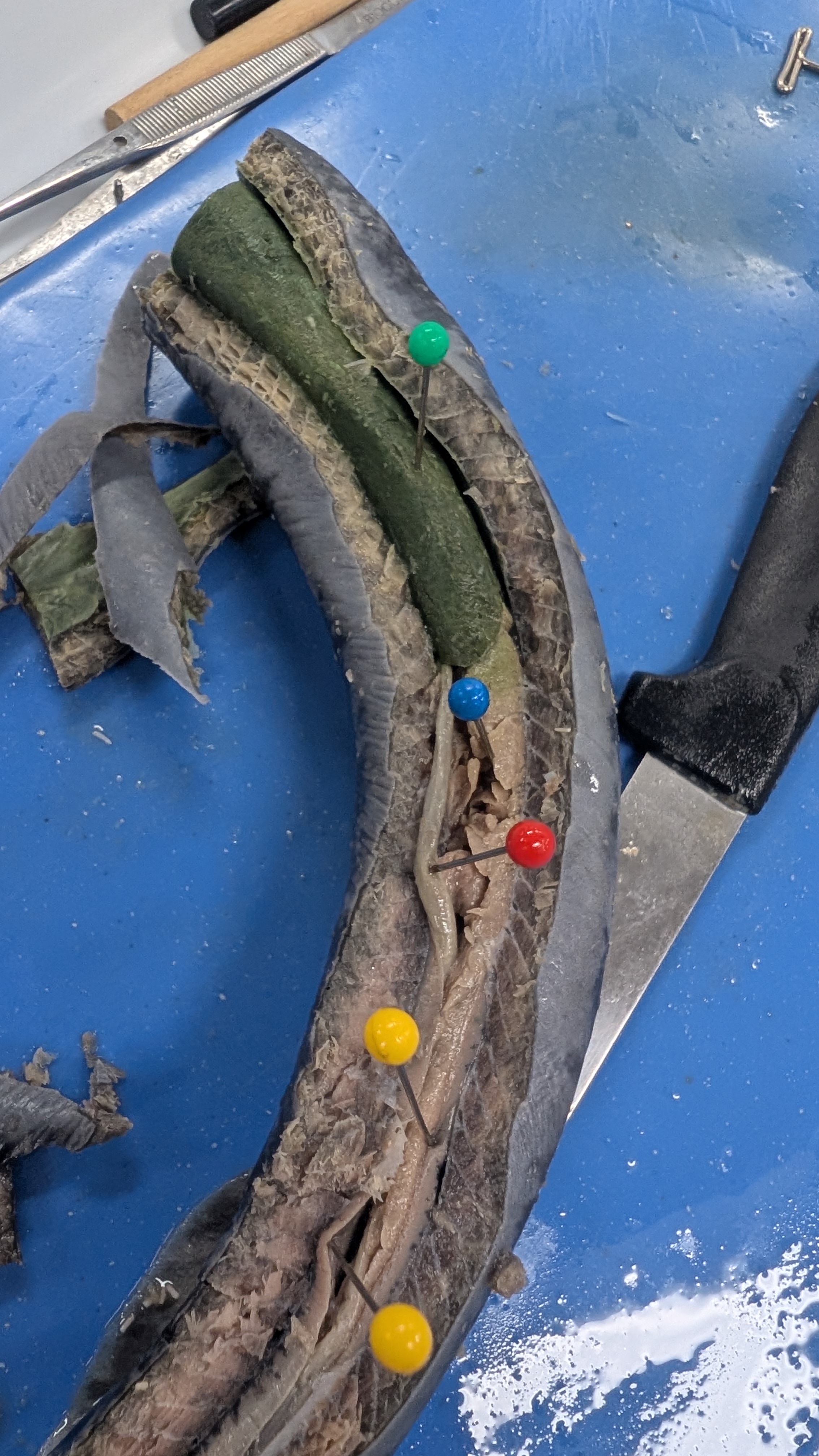
Yellow - kidneys
Blue - gonad (this is a male)
Red - intestine
Green - liver
Identify
Phylum: Chordata
Subphylum: Vertebrata
Superclass: Agnatha
Atlantic sea lamprey dissection
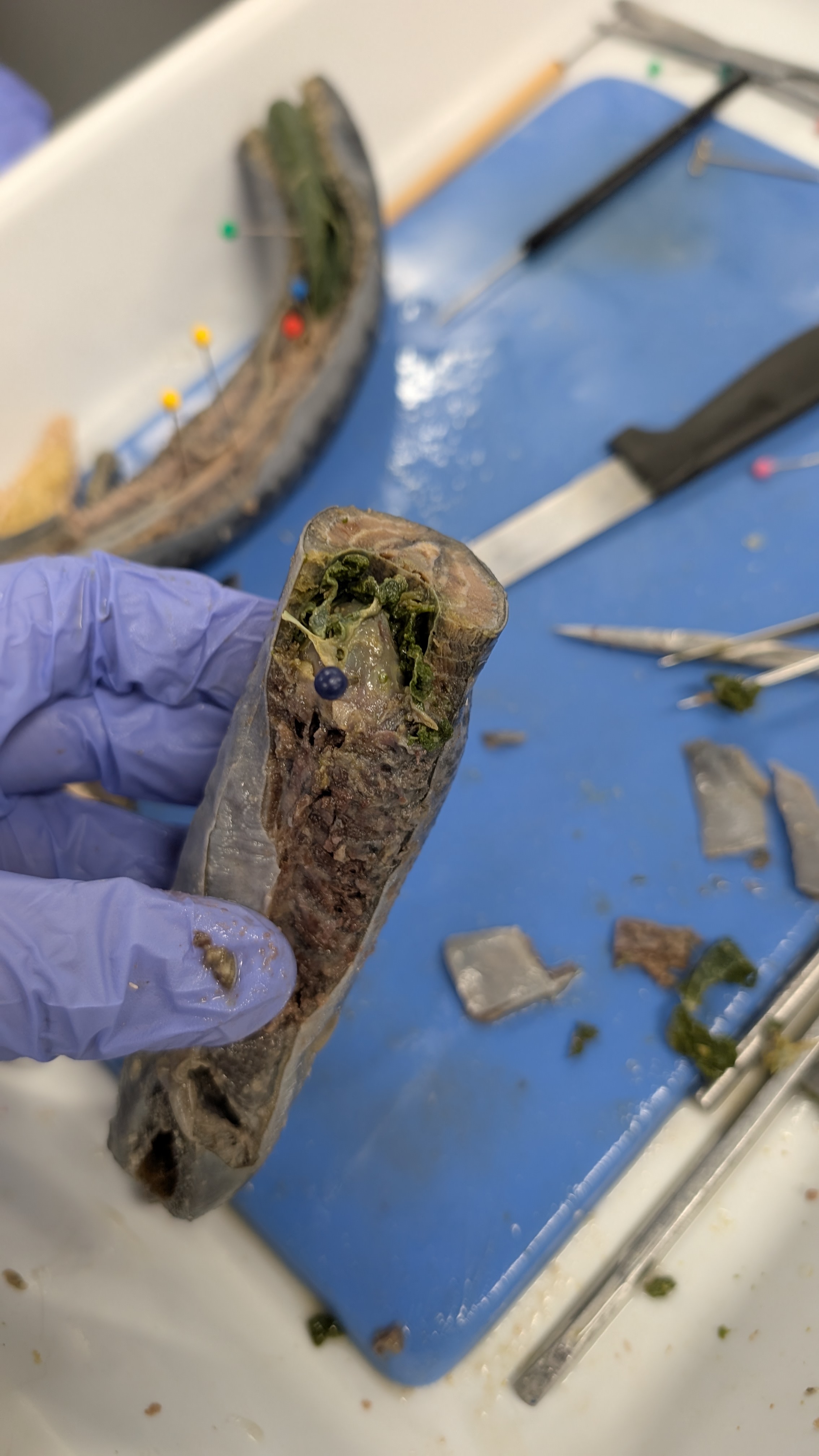
Yellow - kidneys
Blue - gonad (this is a male)
Red - intestine
Green - liver
Identify
Phylum: Chordata
Subphylum: Vertebrata
Superclass: Agnatha
Atlantic sea lamprey dissection
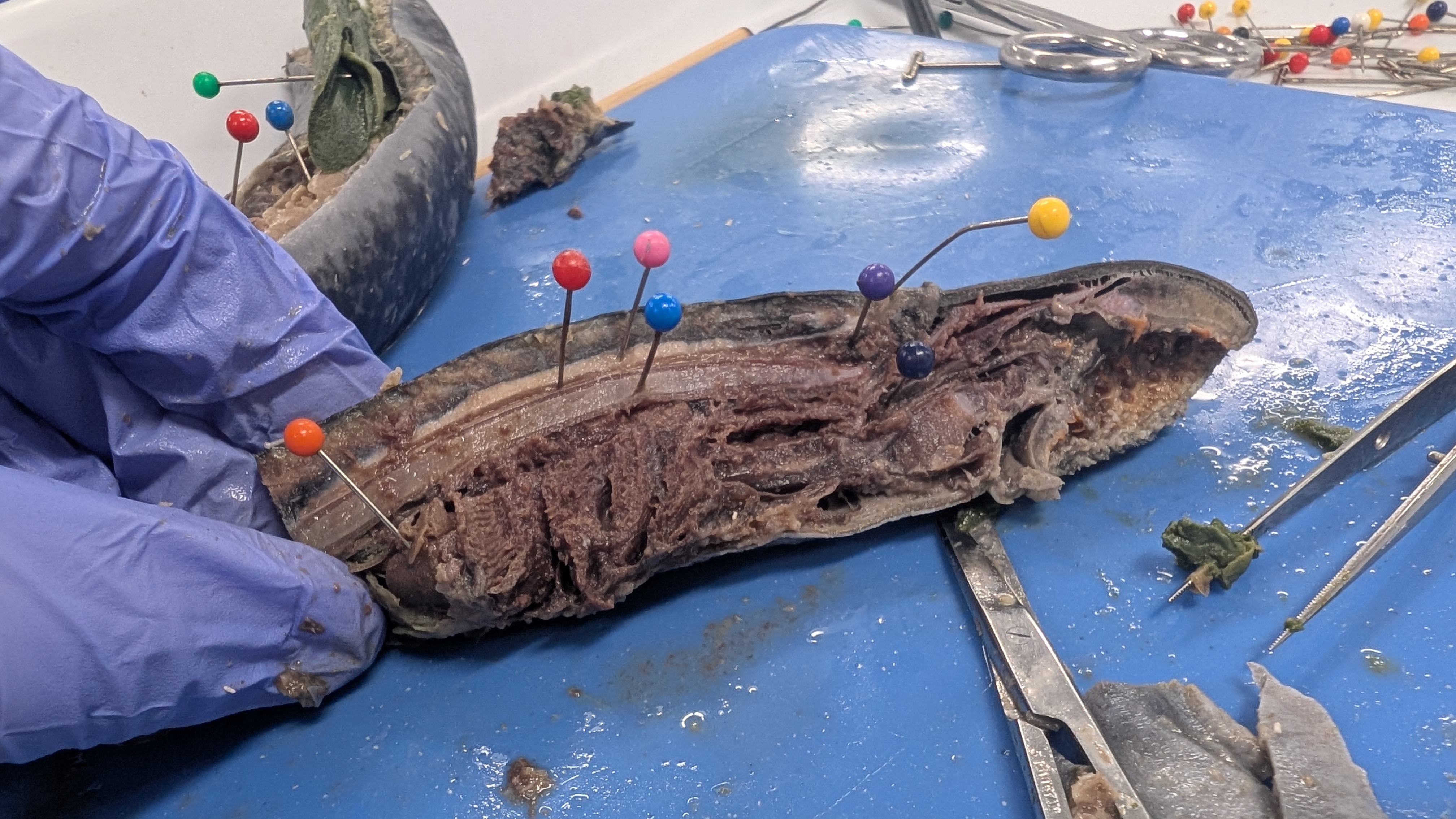
Dark blue is the heart surrounded by the pericardium
Identify
Phylum: Chordata
Subphylum: Vertebrata
Superclass: Agnatha
Atlantic sea lamprey dissection
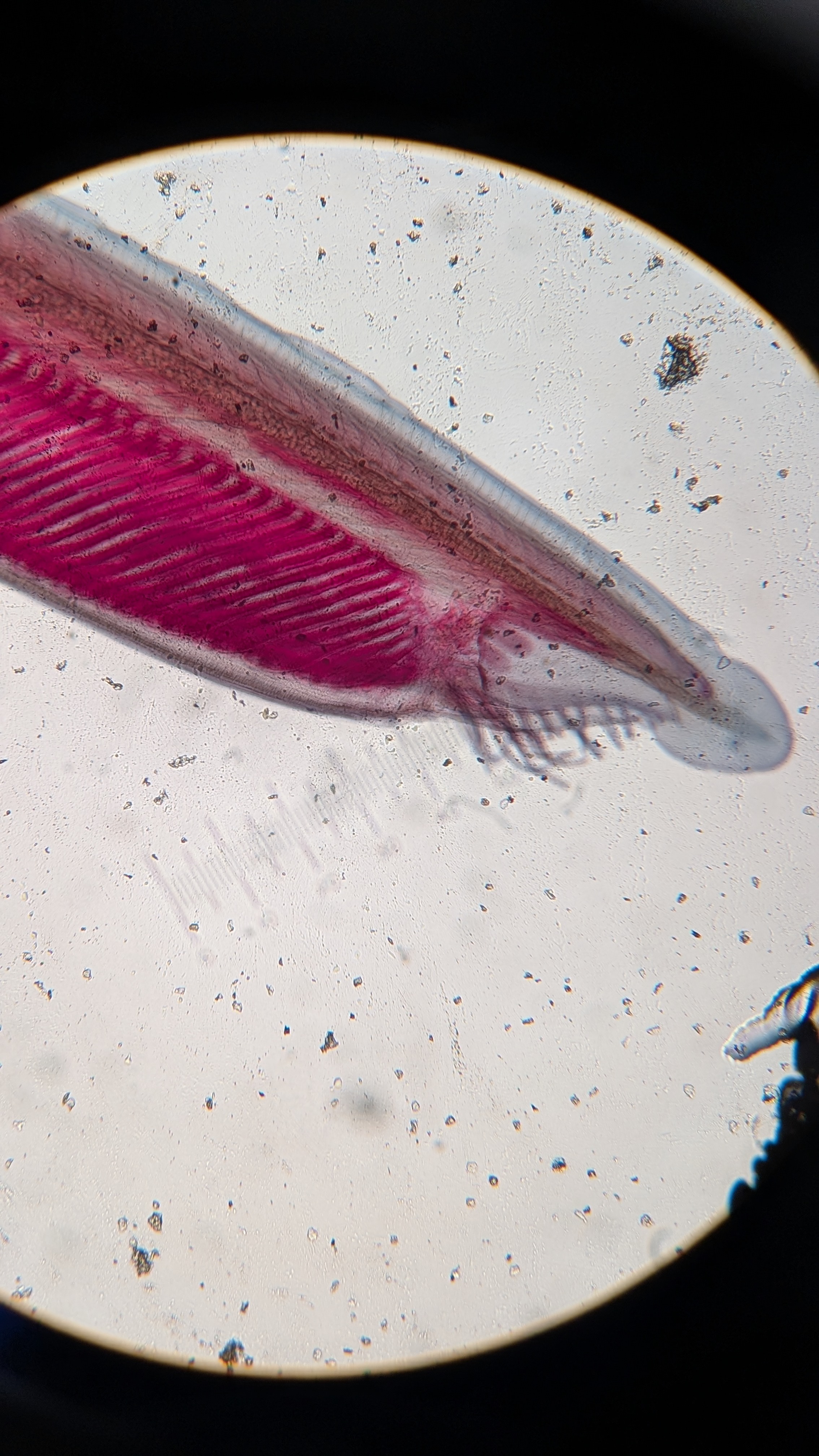
Purple - brain
Orange - heart
Dark blue - pharynx
Yellow - pineal gland
Red - Spinal cord
Pink - Myotome cord
Blue - notocord
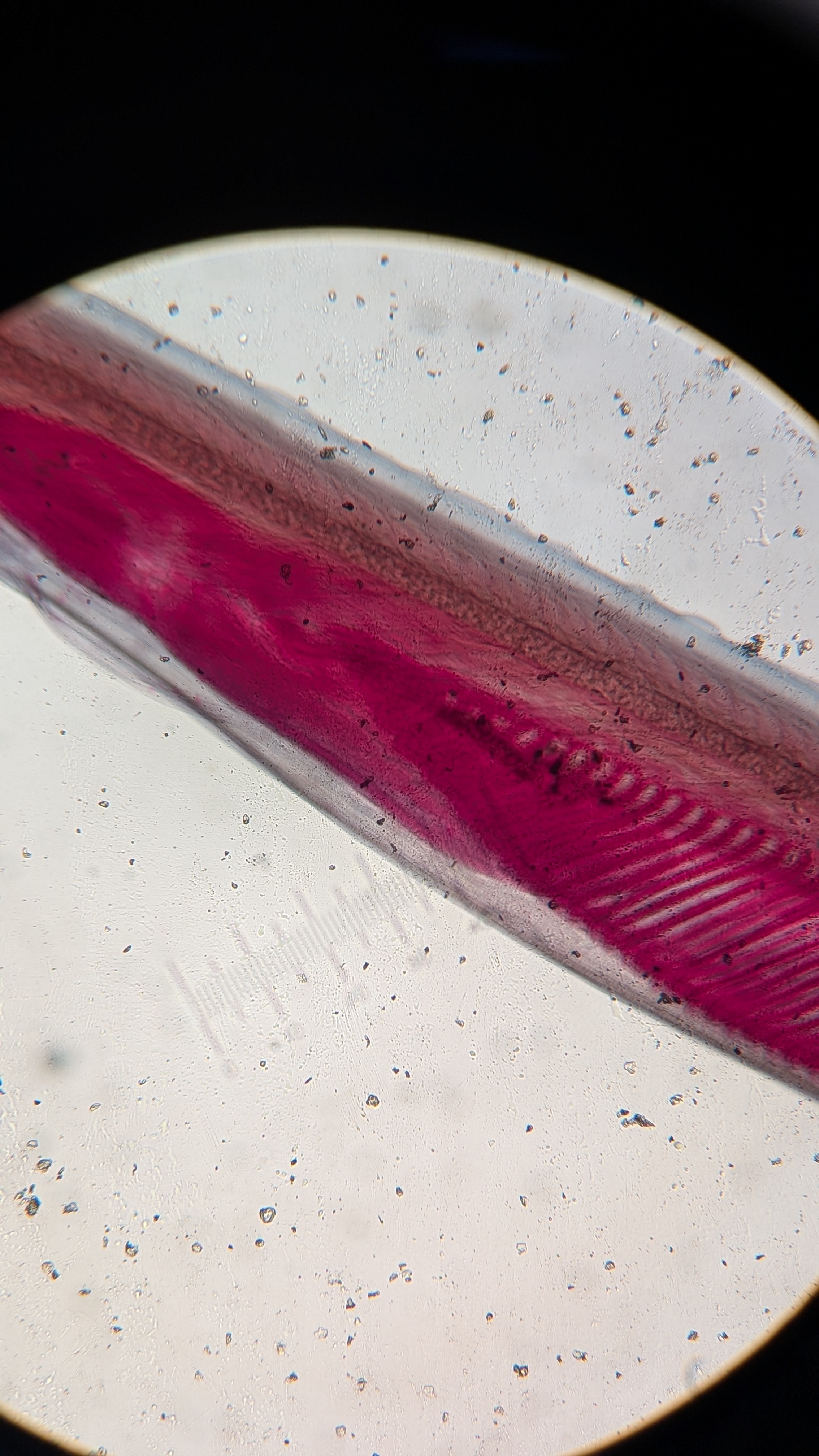
Identify
Phylum: Chordata
Subphylum: Cephalochordata
Branchiostoma aka amphioxus (lancelet)
Not the oral hood with tentacles, the rostrum, the wheel organ, the pharyngeal slits/bars, the dorsal nerve cord and the lower notochord
Identify
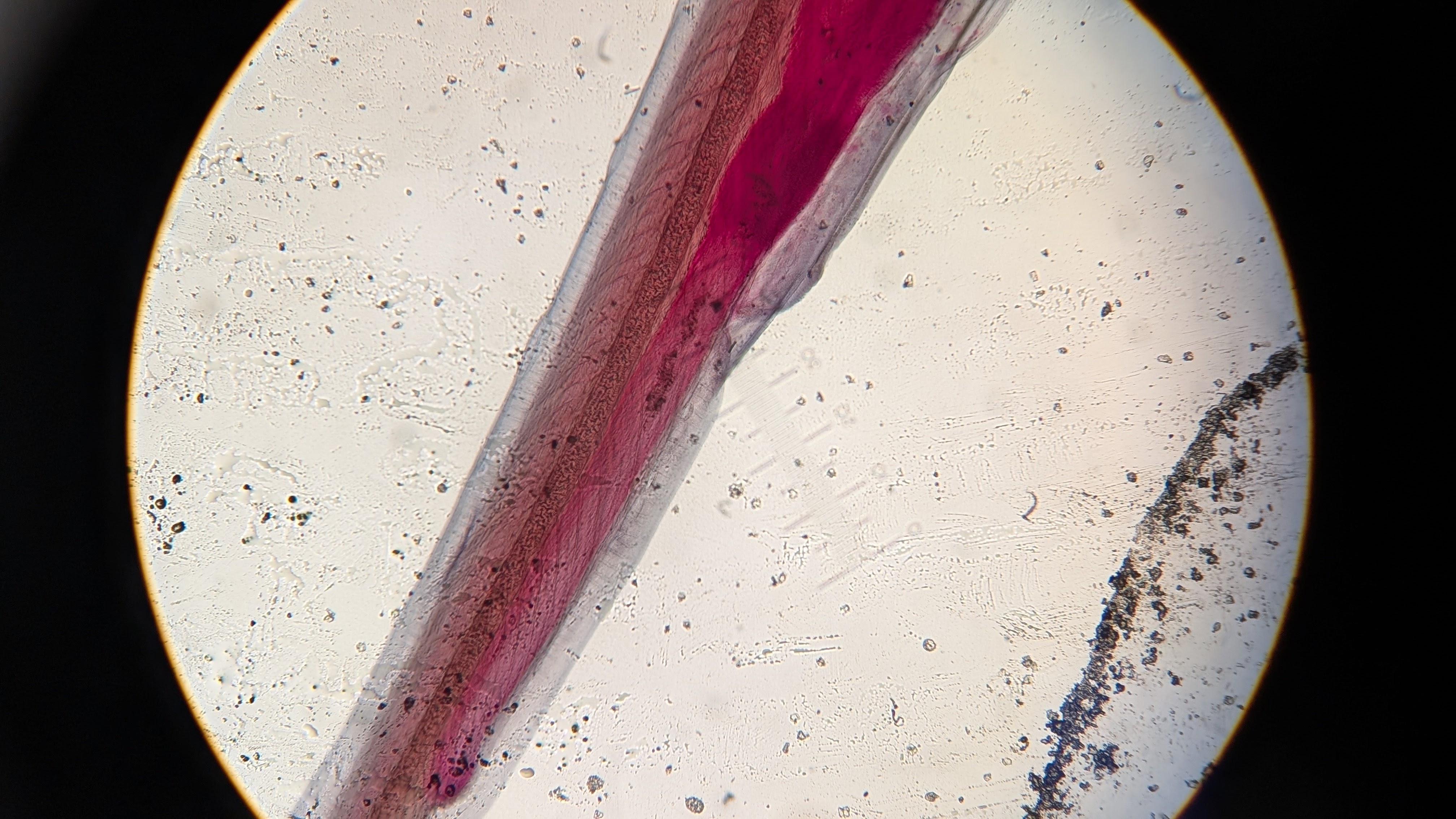
Phylum: Chordata
Subphylum: Cephalochordata
Branchiostoma aka amphioxus (lancelet)
Not the hepatic cecum, the dorsal nerve cord, and the notochord
Identify
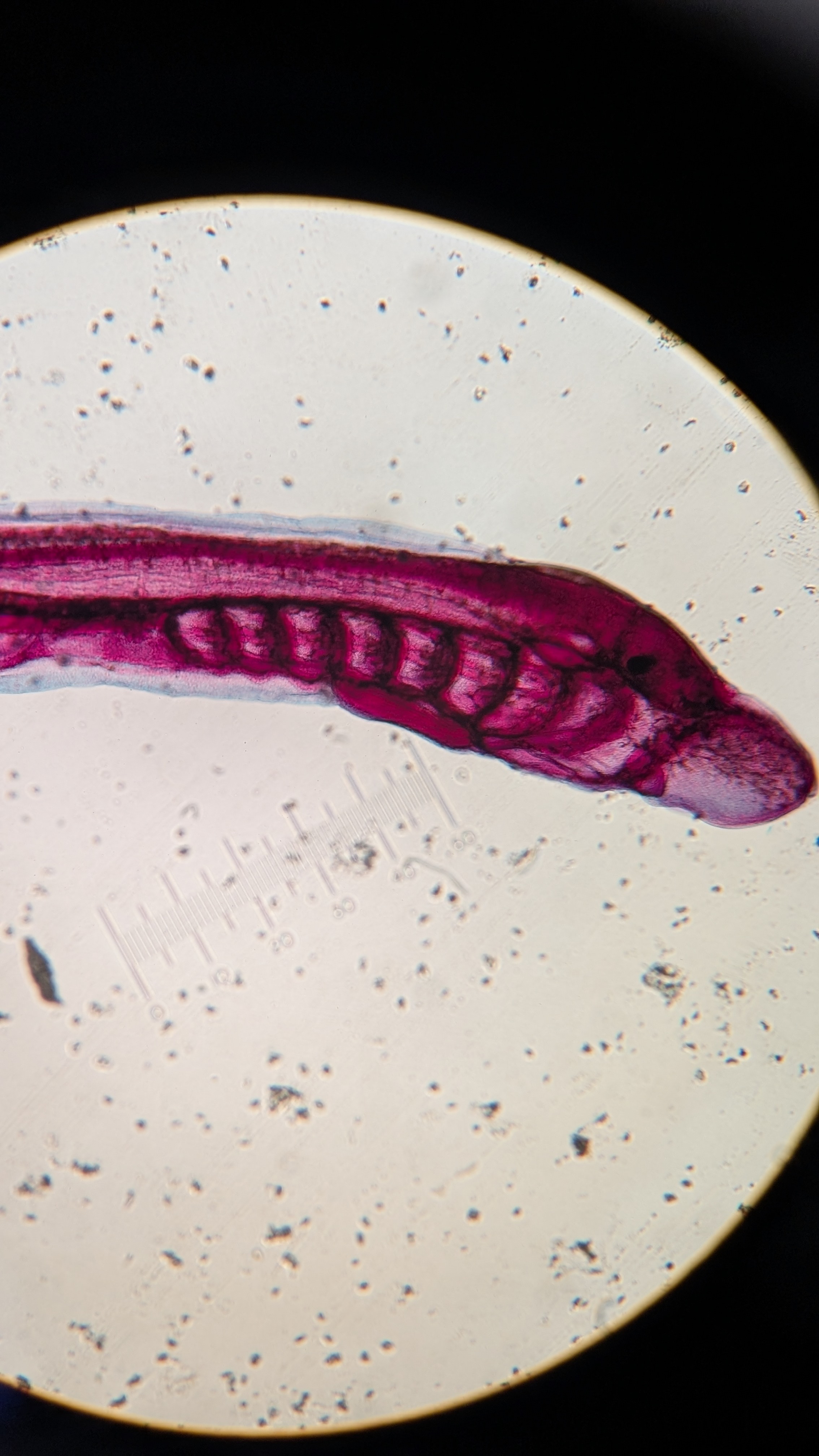
Phylum: Chordata
Subphylum: Cephalochordata
Branchiostoma aka amphioxus (lancelet)
Note the atriopore, the intestine, the anus (way at the back, the bump), and the myomere in the tail muscle
Identify
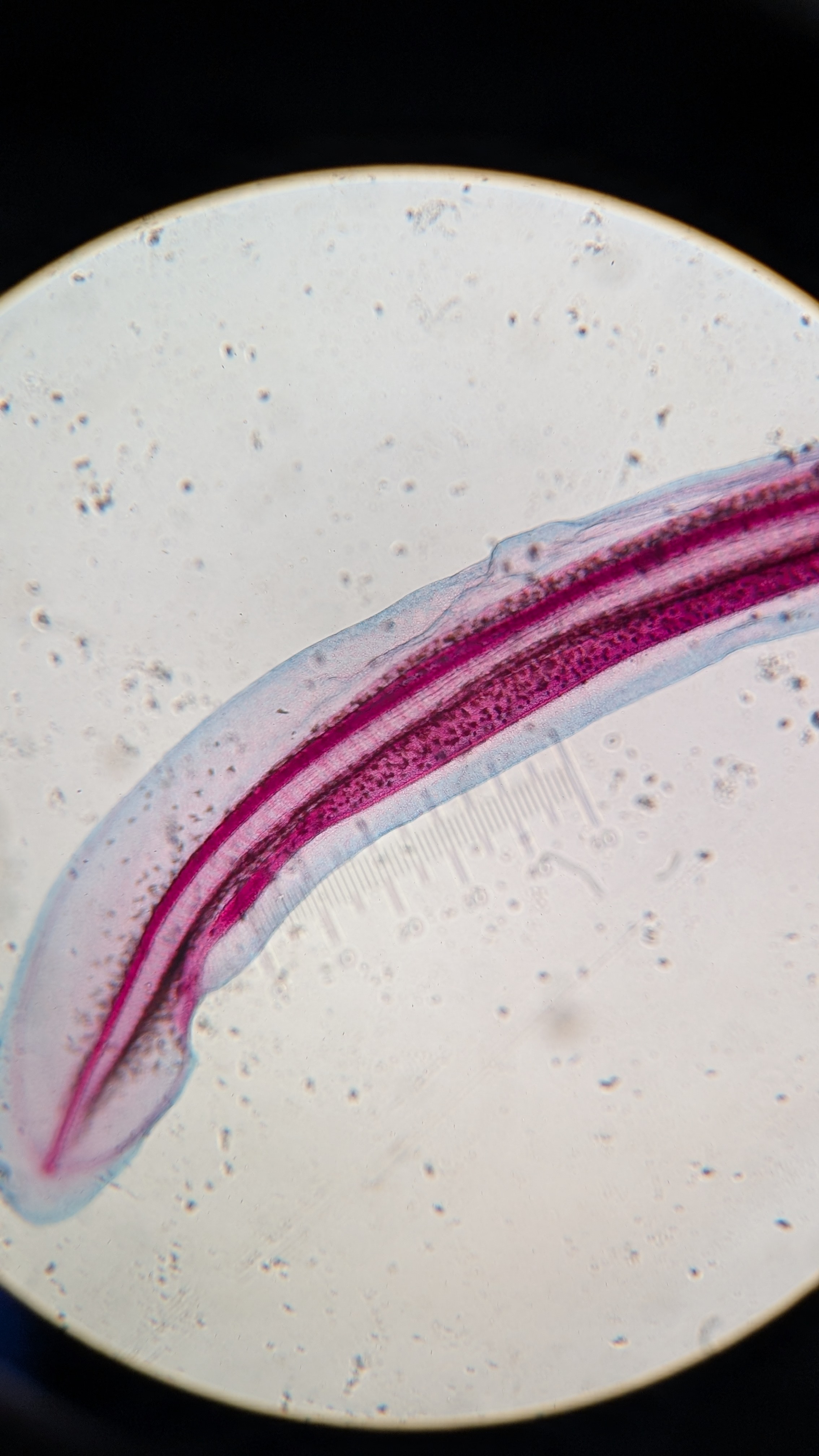
Phylum: Chordata
Subphylum: Vertebrata
Superclass: Agnatha
Atlantic sea lamprey ammocetes larva
Note the oral hood, the brain, the eye, the notocord and the dorsal aorta under it, as well as the prominent pharyngeal bar. Also note the heart which has been cut off at the end (the bump on the ventral side)
Identify
Phylum: Chordata
Subphylum: Vertebrata
Superclass: Agnatha
Atlantic sea lamprey
Note the nerve cord, the myomeres, the cloaca, the coelom, and the intestine
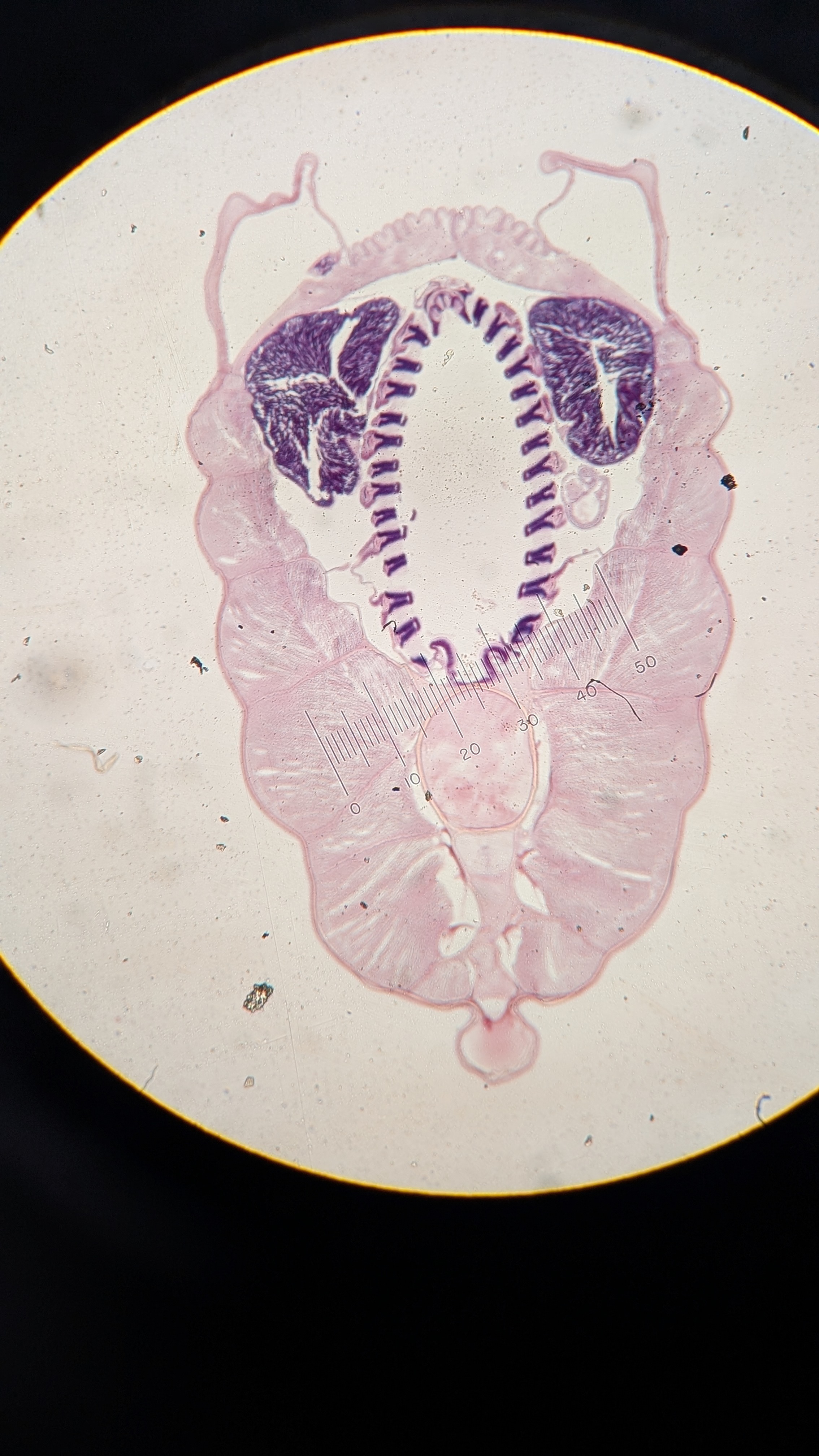
Identify
Phylum: Chordata
Subphylum: Cephalochordata
Branchiostoma aka amphioxus (lancelet)
Coming up from bottom to top but slide is flipped
Note the dorsal fin (at the bottom) and then the nerve cord and then the large notochord all surrounded by the myomere. The large purple line area is the pharynx while the filled in purple areas are gonads. The hepatic cecum is to the right over the gonad in the middle and the nephridia are closer to the notochord off to the side.
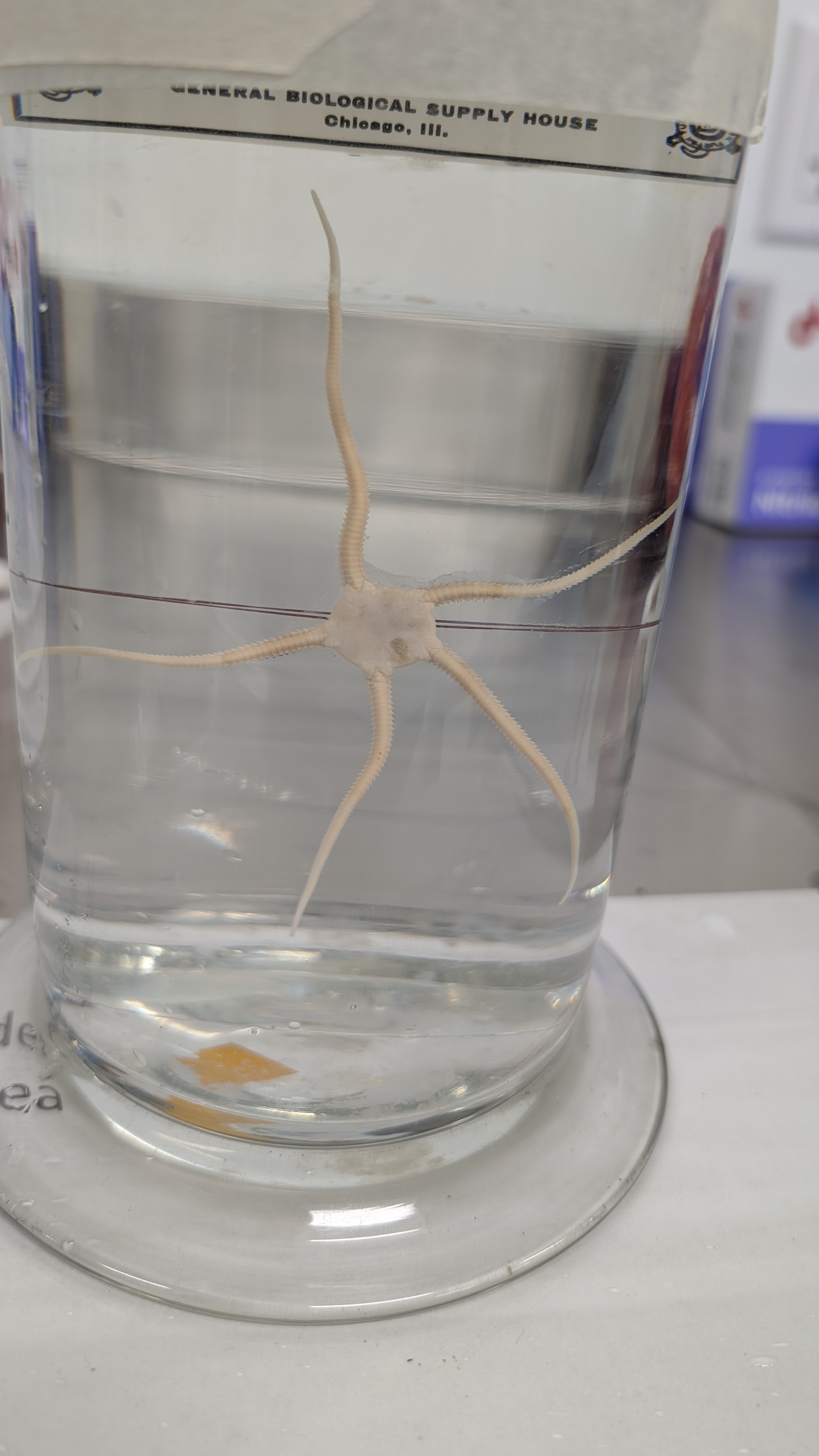
Identify
Phylum: Echinodermata
Class: Ophiuroidea
Serpent Star
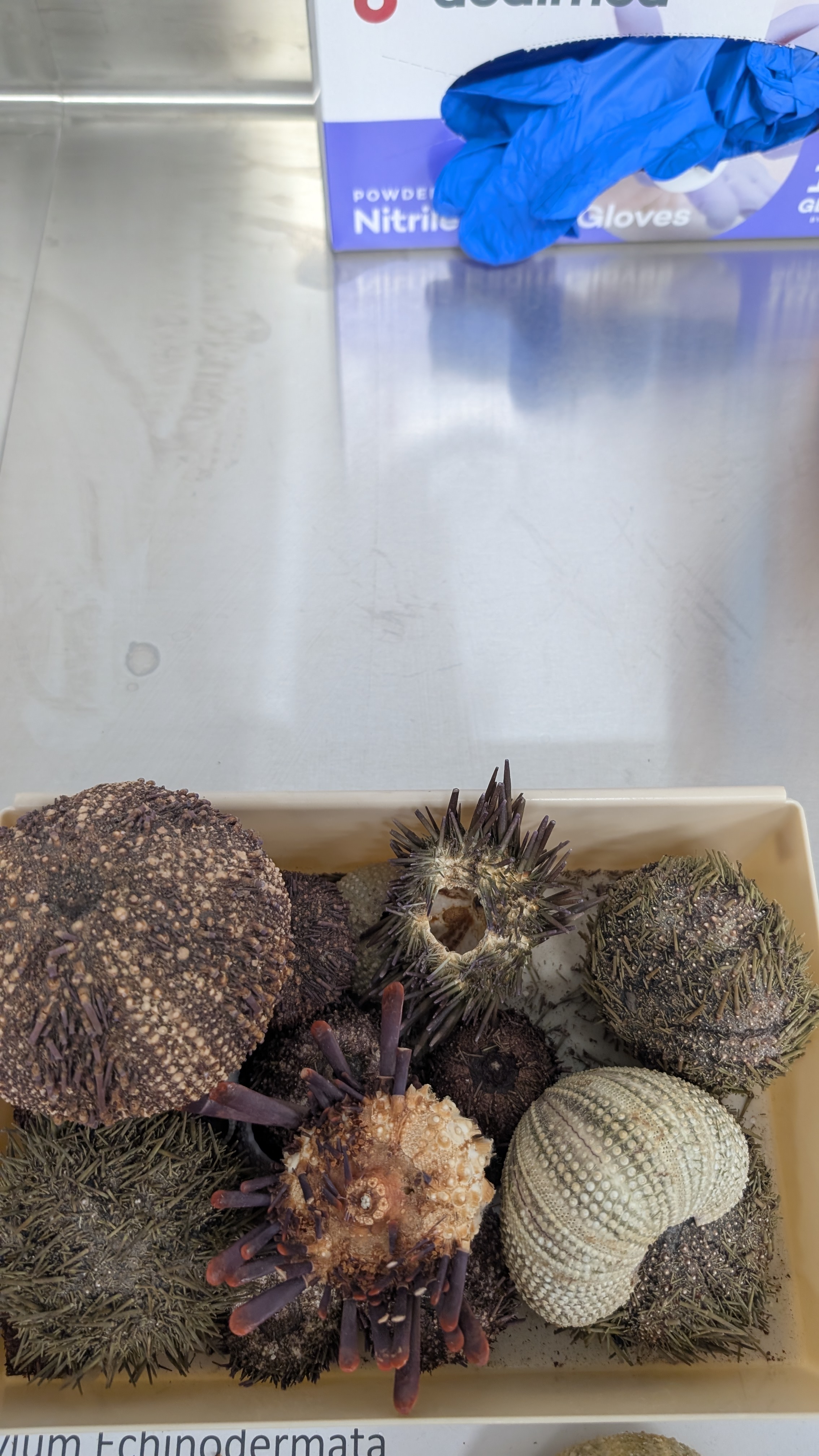
Identify
Phylum: Echinodermata
Class: Echinoidea
Assorted sea urchins
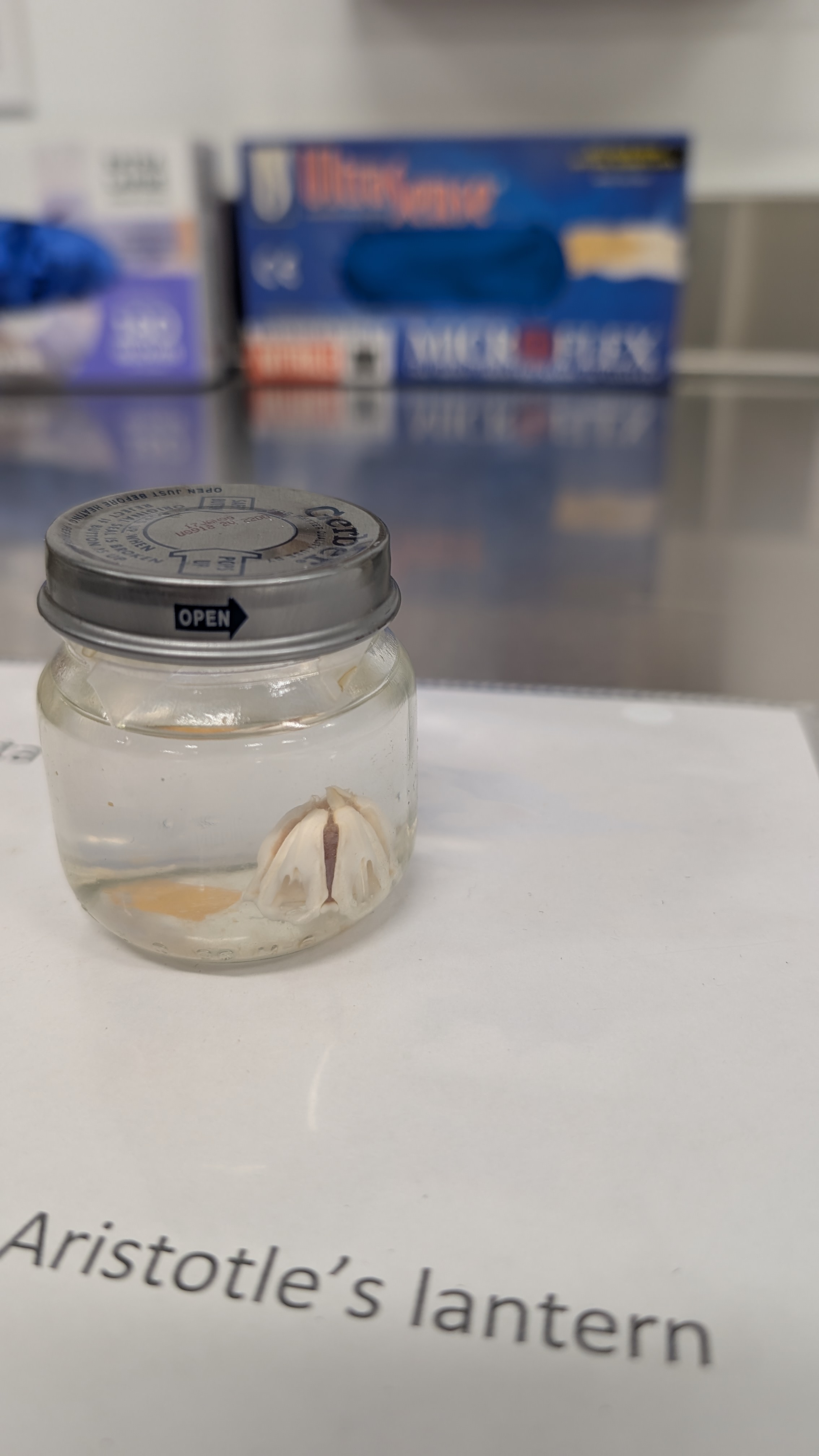
Identify
Phylum: Echinodermata
Class: Echinoidea
A sea urchin’s Aristotle’s lantern. It helps with feeding by rasping algae off various surfaces
Identify
Phylum: Echinodermata
Class: Echinoidea
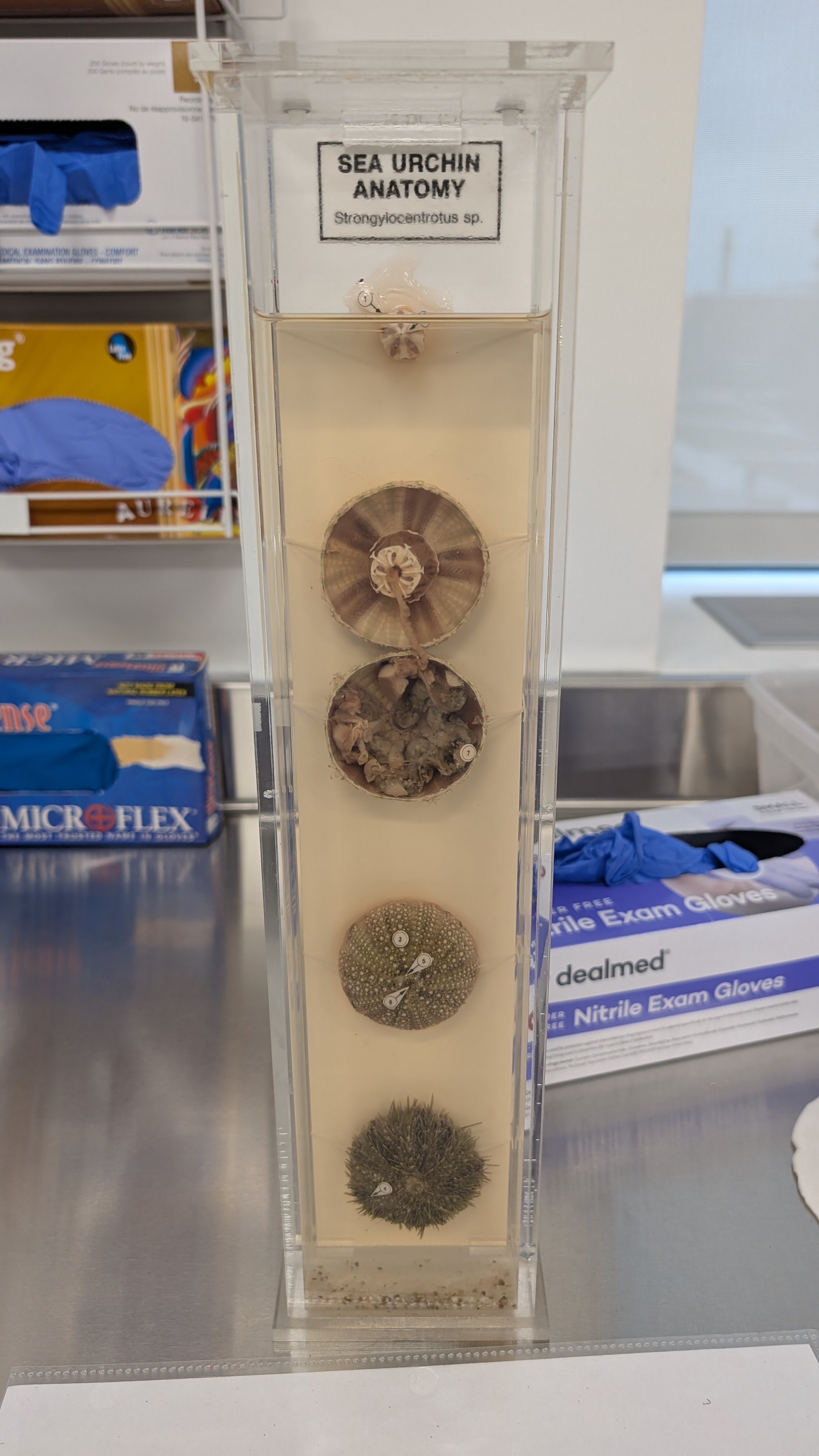
Various sea urchins - note the Aristotle’s Lantern (1) , teeth, test (2) , tube feet (3) , madreporite (4) , anus (6) , and gonad (7)
Identify
Phylum: Echinodermata
Class: Echinoidea
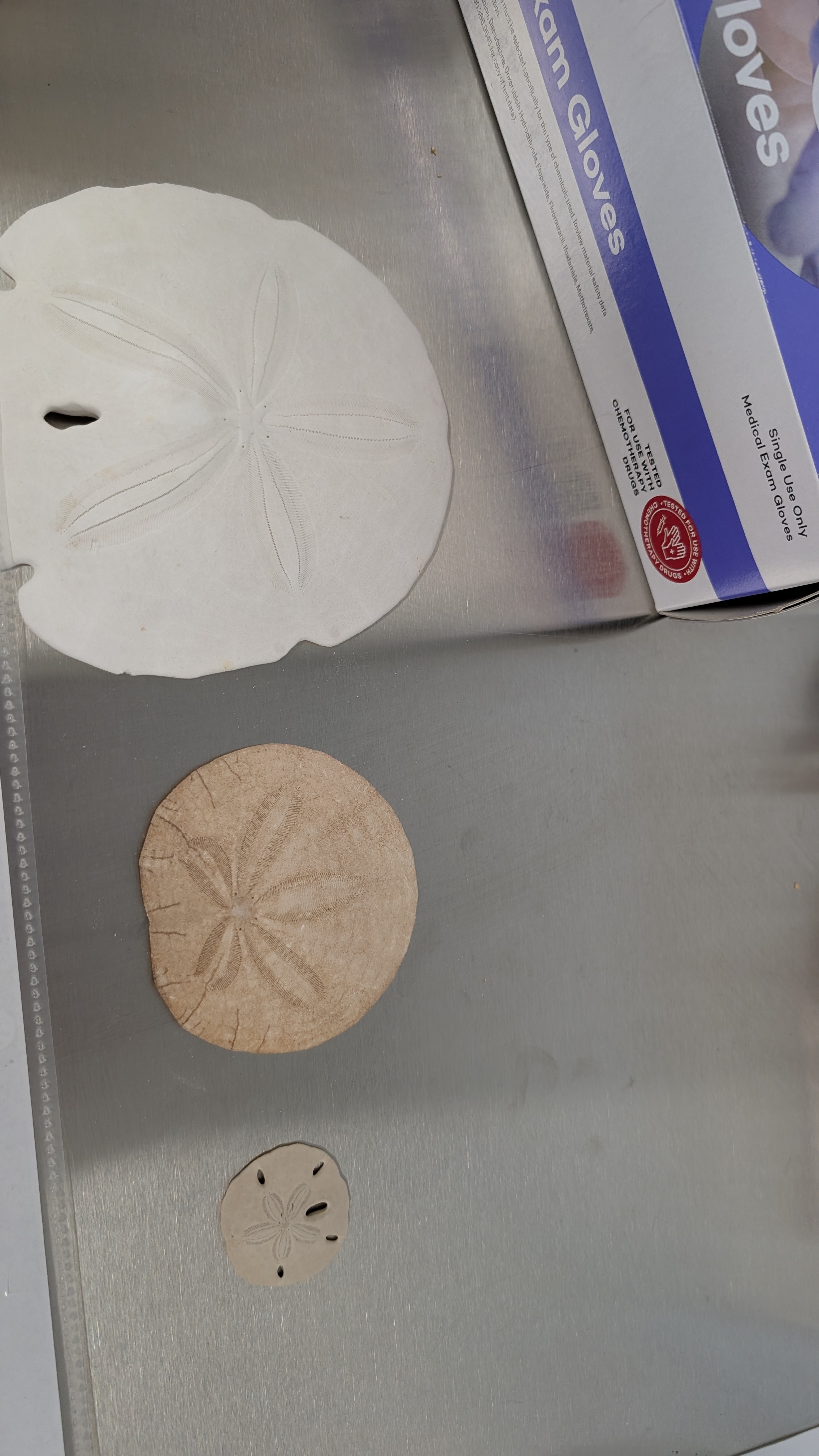
Assorted sand dollars - test is equivalent to their shell
Identify
Phylum: Echinodermata
Class: Echinoidea
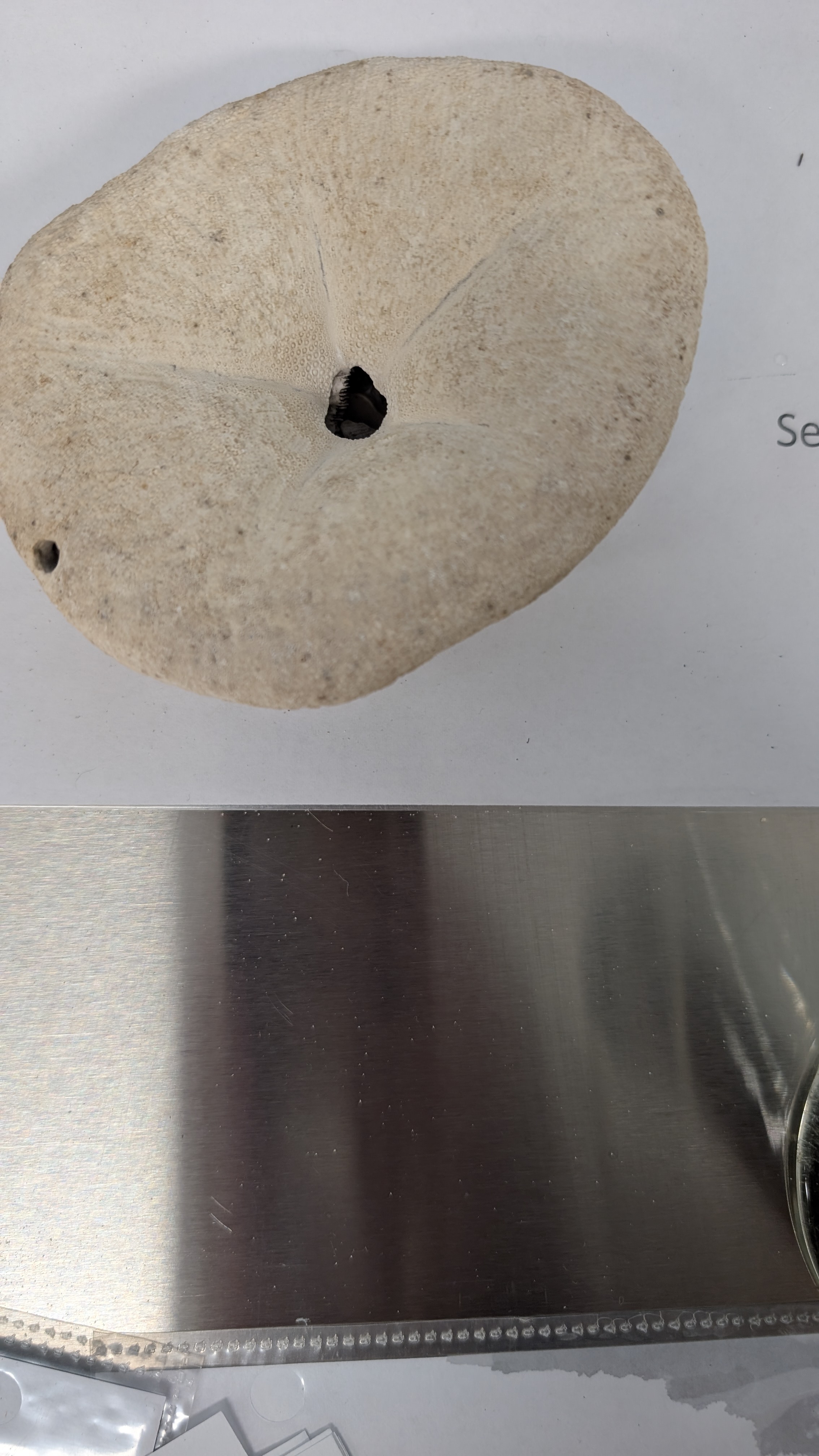
Sea biscuit
Identify
Phylum: Echinodermata
Class: Holothuroidea
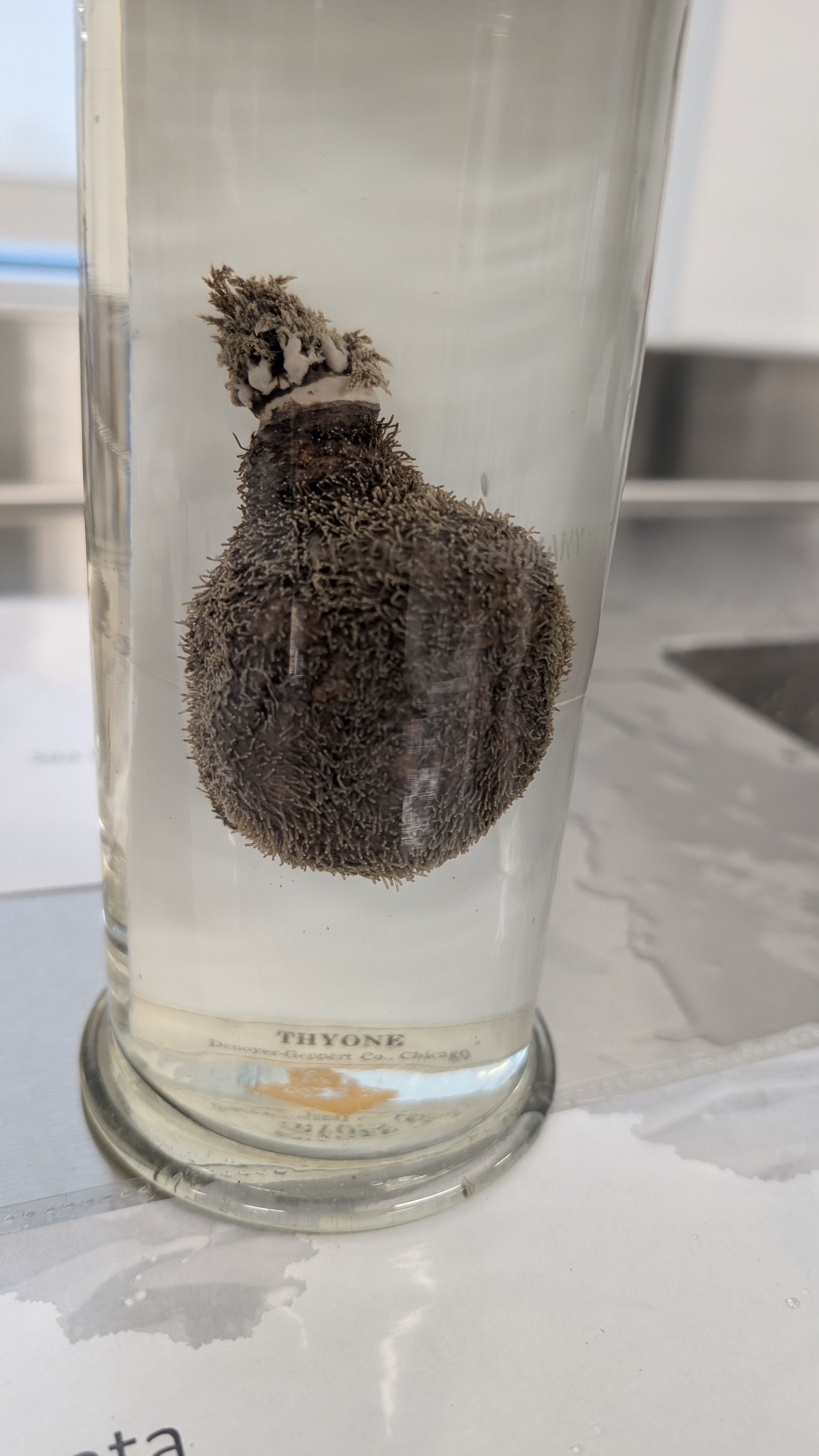
Sea cucumber
Note the body, tube feet, mouth, tentacles, and anus
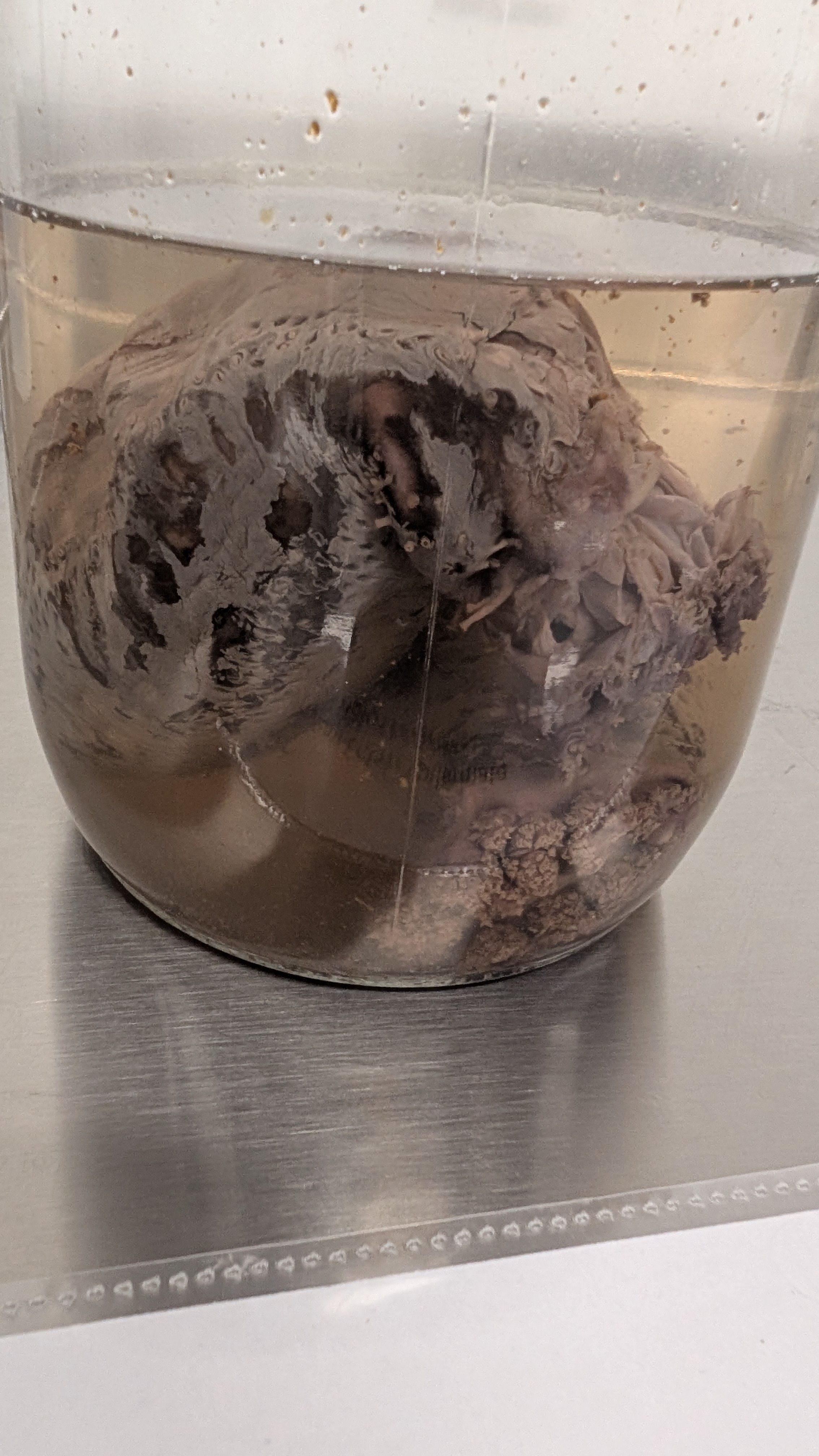
Identify
Phylum: Echinodermata
Class: Holothuroidea
Sea cucumber
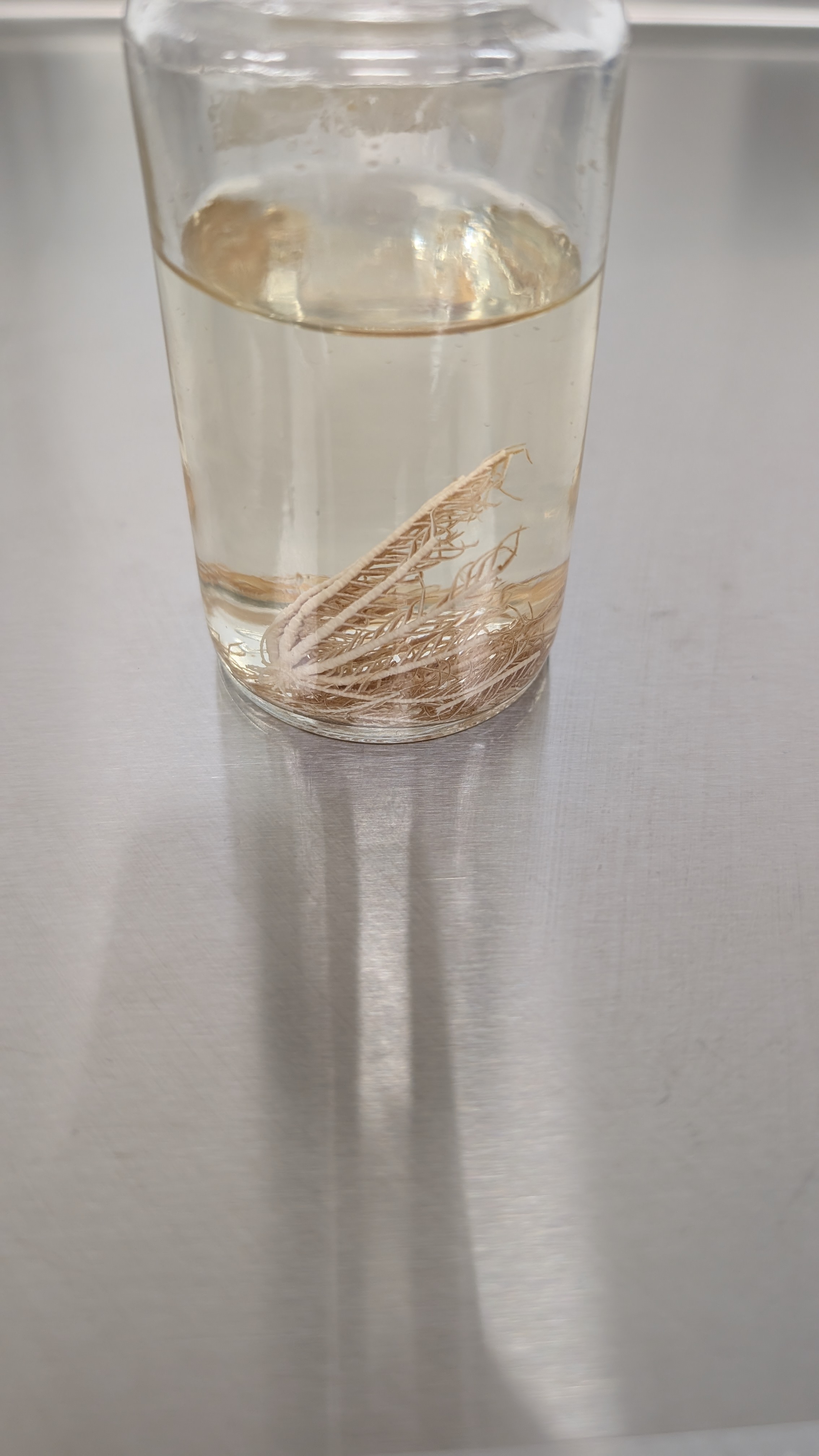
Identify
Phylum: Echinodermata
Class: Crinoidea
Feather star - note the five rays to form ten arms. Cirri erupt from the aboral surface, while a cup-like calyx is surrounded by the arms. They stand oral side up and are sessile
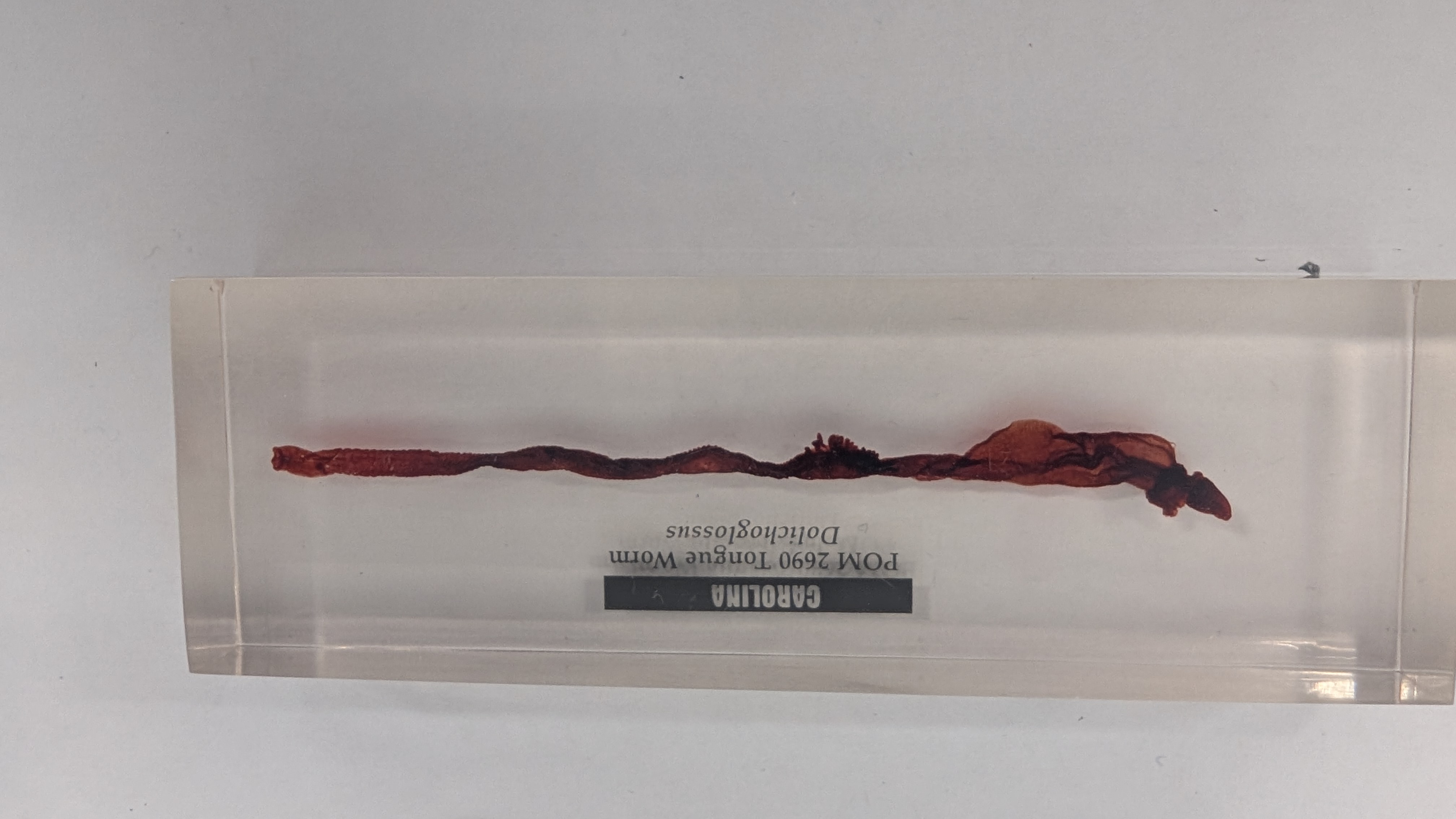
Identify
Phylum: Hemichordata
Class: Enteropneusta
Acorn worm - note the short proboscis by the bumpy side as well as the collar (the bumps) and the trunk (the long bits)
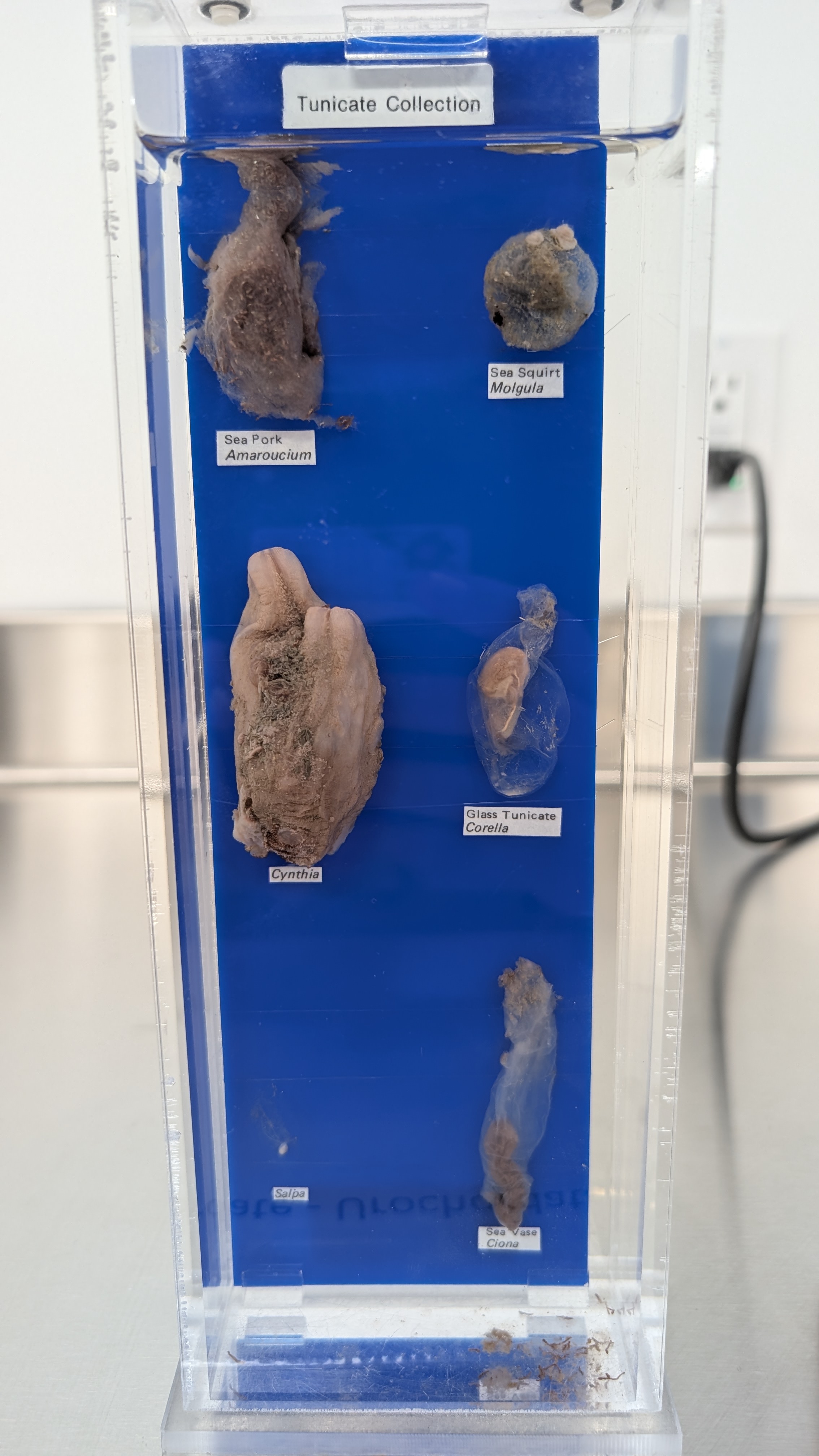
Identify
Phylum: Chordata
Subphylum: Urochordata
Various sea squirts
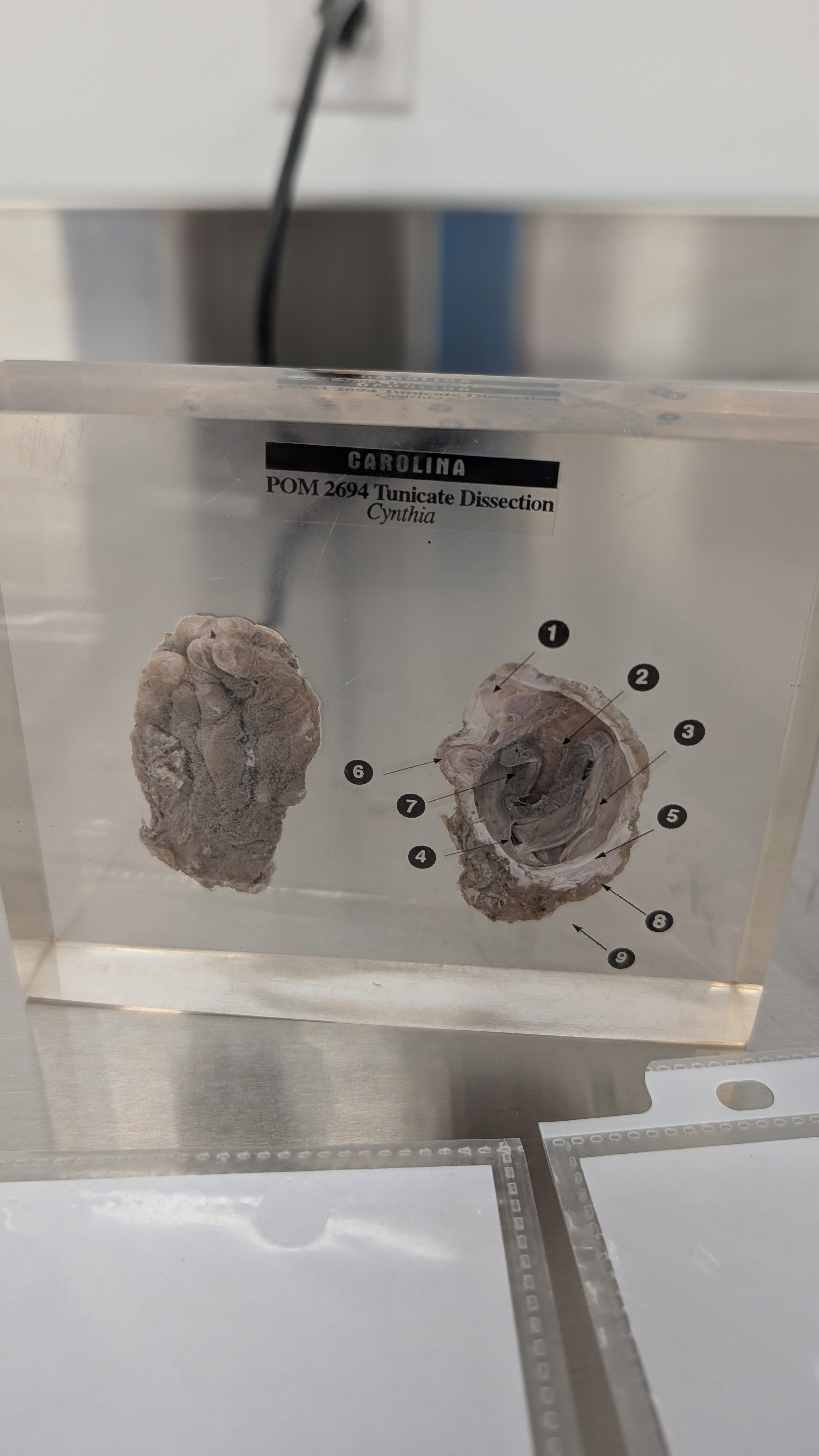
Identify
Phylum: Chordata
Subphylum: Urochordata
Cynthia - a sessile tunicate
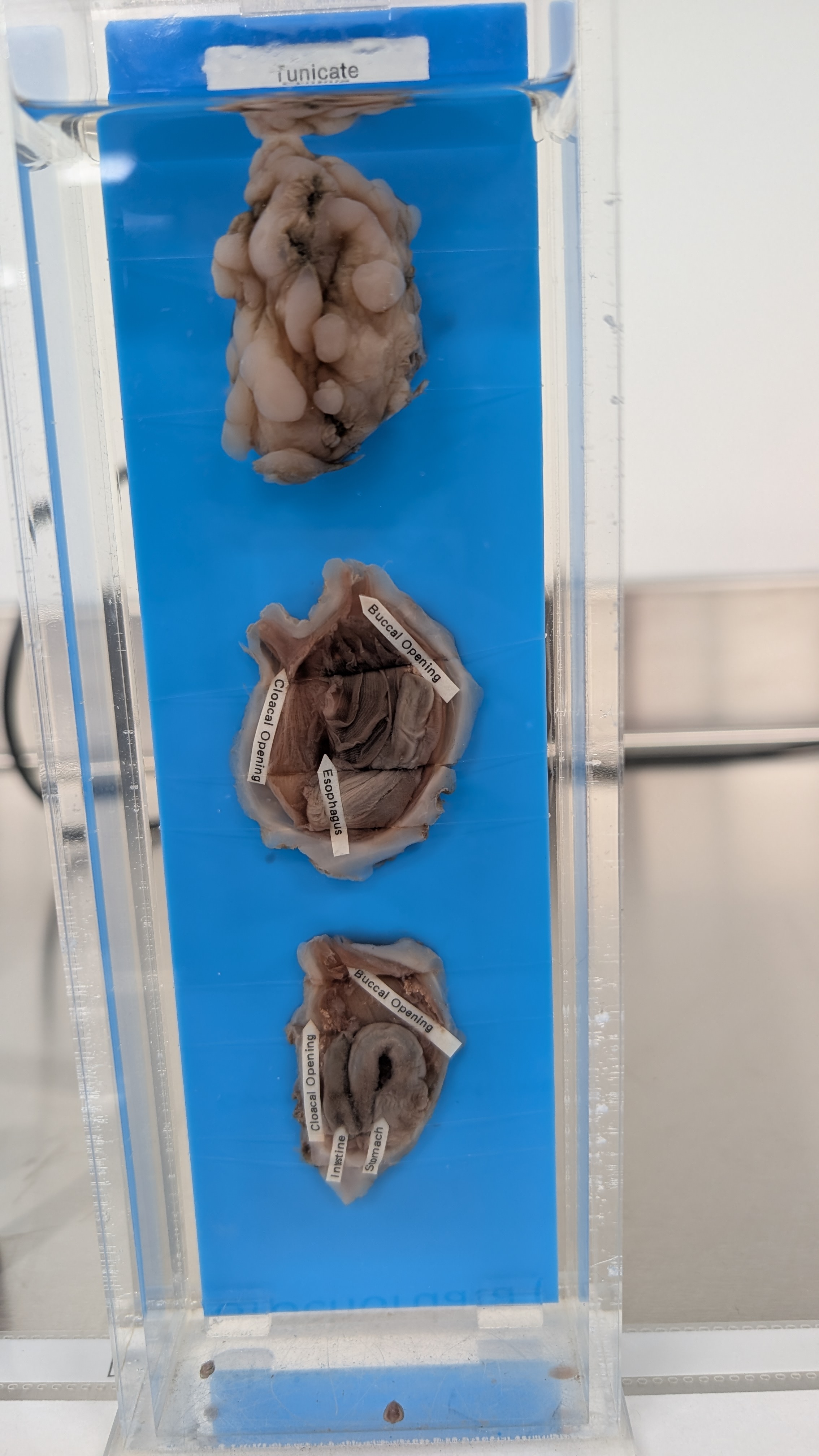
Identify
Phylum: Chordata
Subphylum: Urochordata
Cynthia - a sessile tunicate
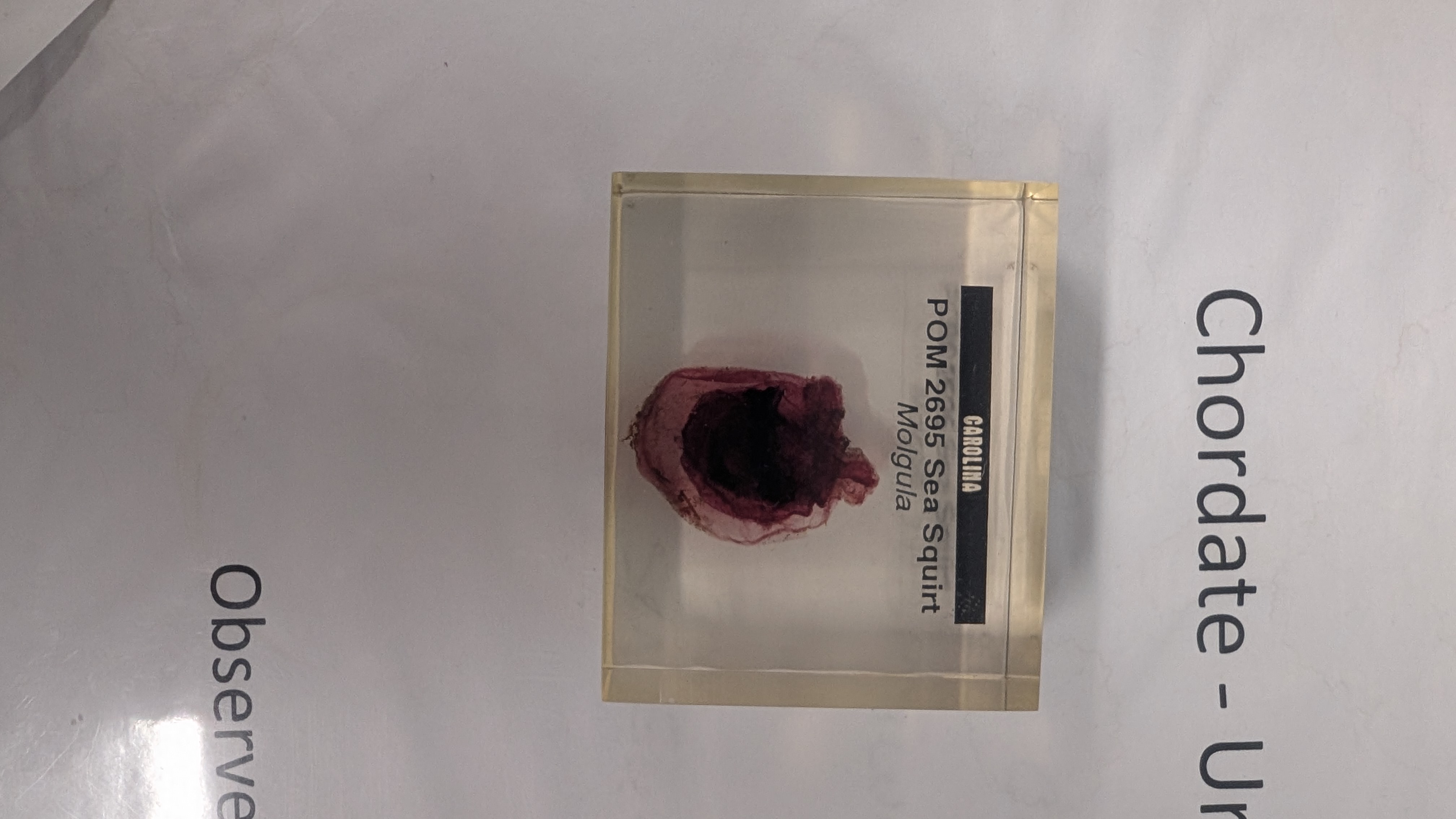
Identify
Phylum: Chordata
Subphylum: Urochordata
Molgula - Another sessile tunicate - note the incurrent and excurrent siphons
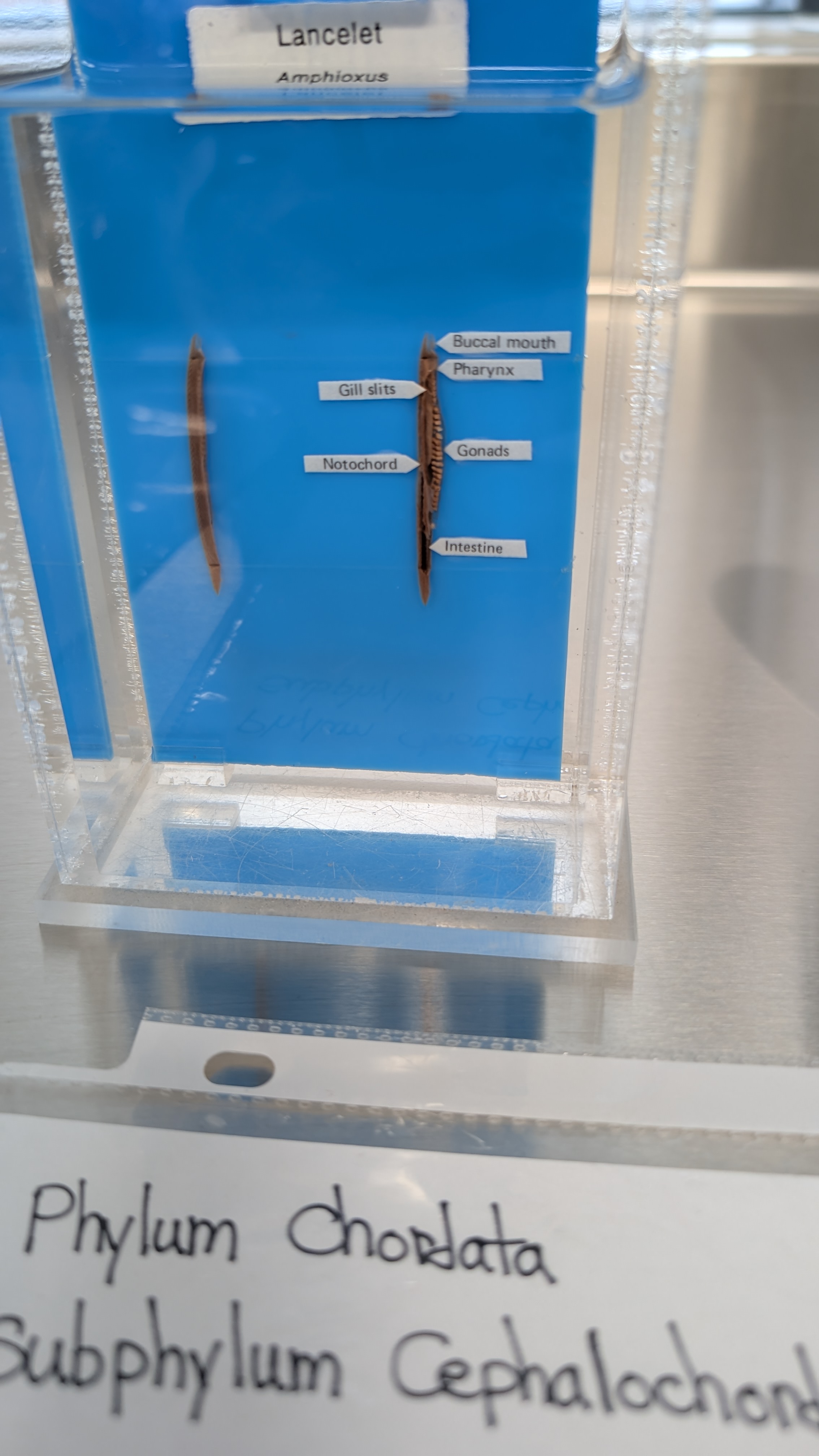
Identify
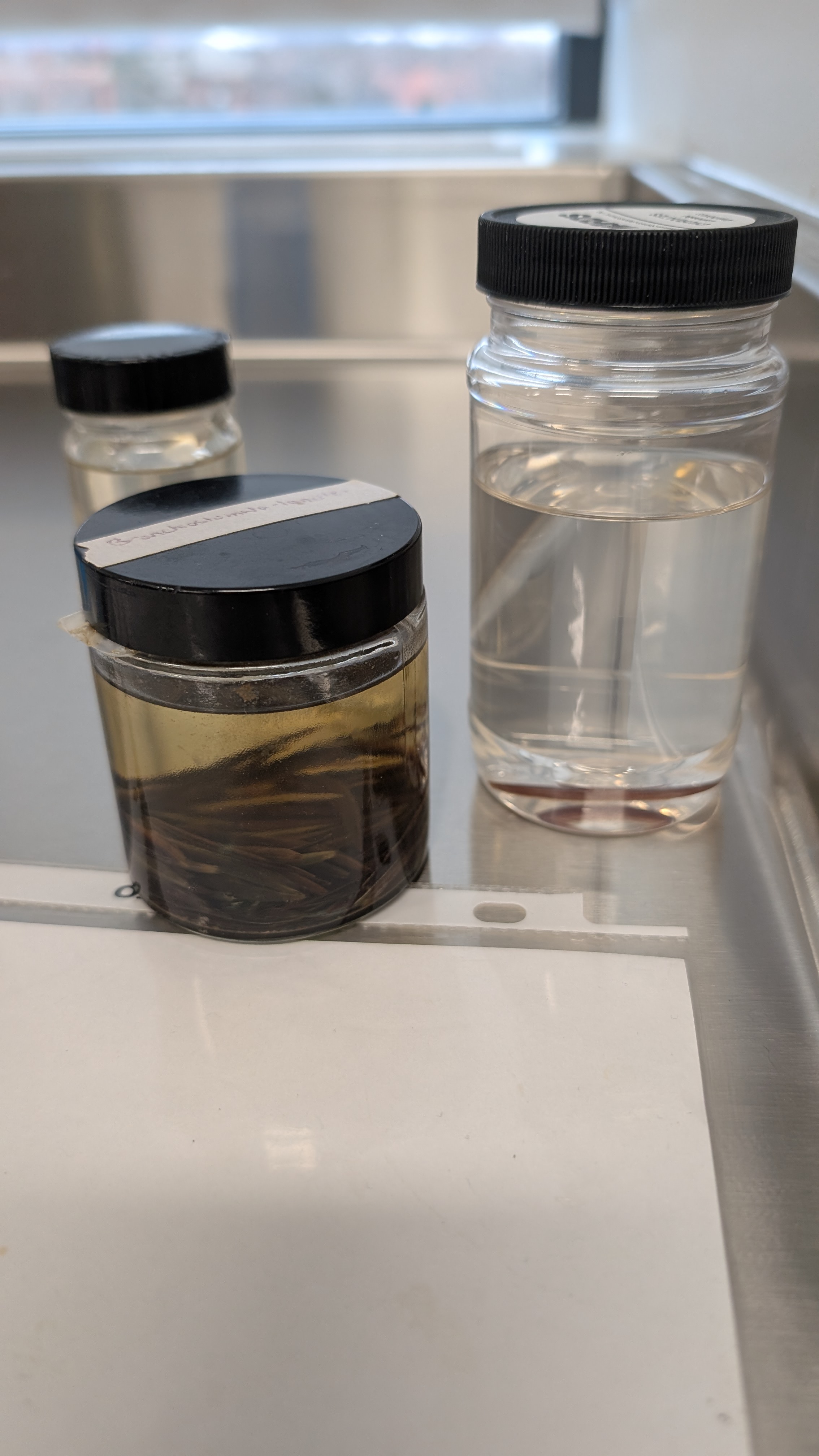
Phylum: Chordata
Subphylum: Cephalochordata
Preserved lancelets
Identify
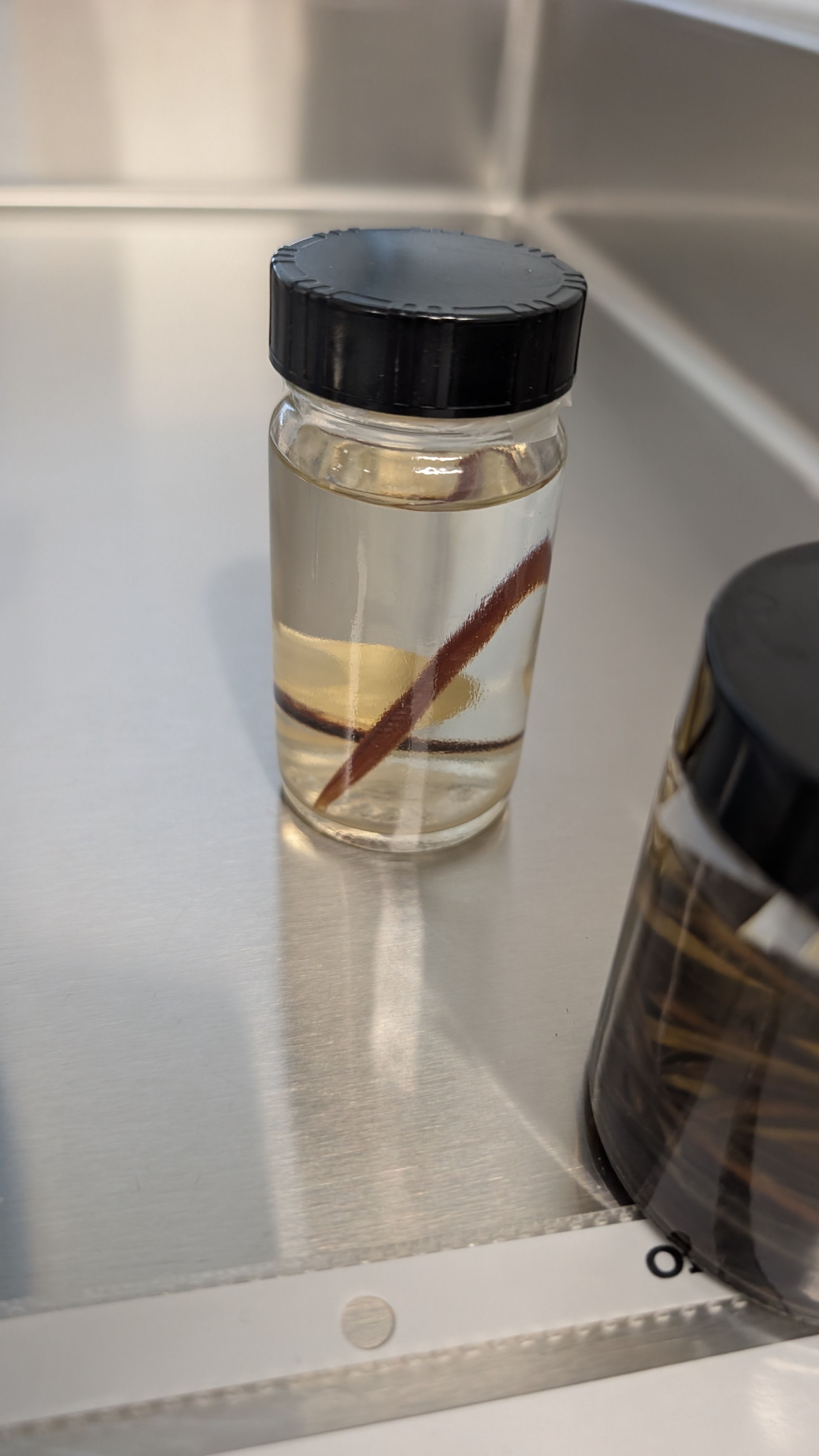
Phylum: Chordata
Subphylum: Cephalochordata
Preserved lancelets
Identify
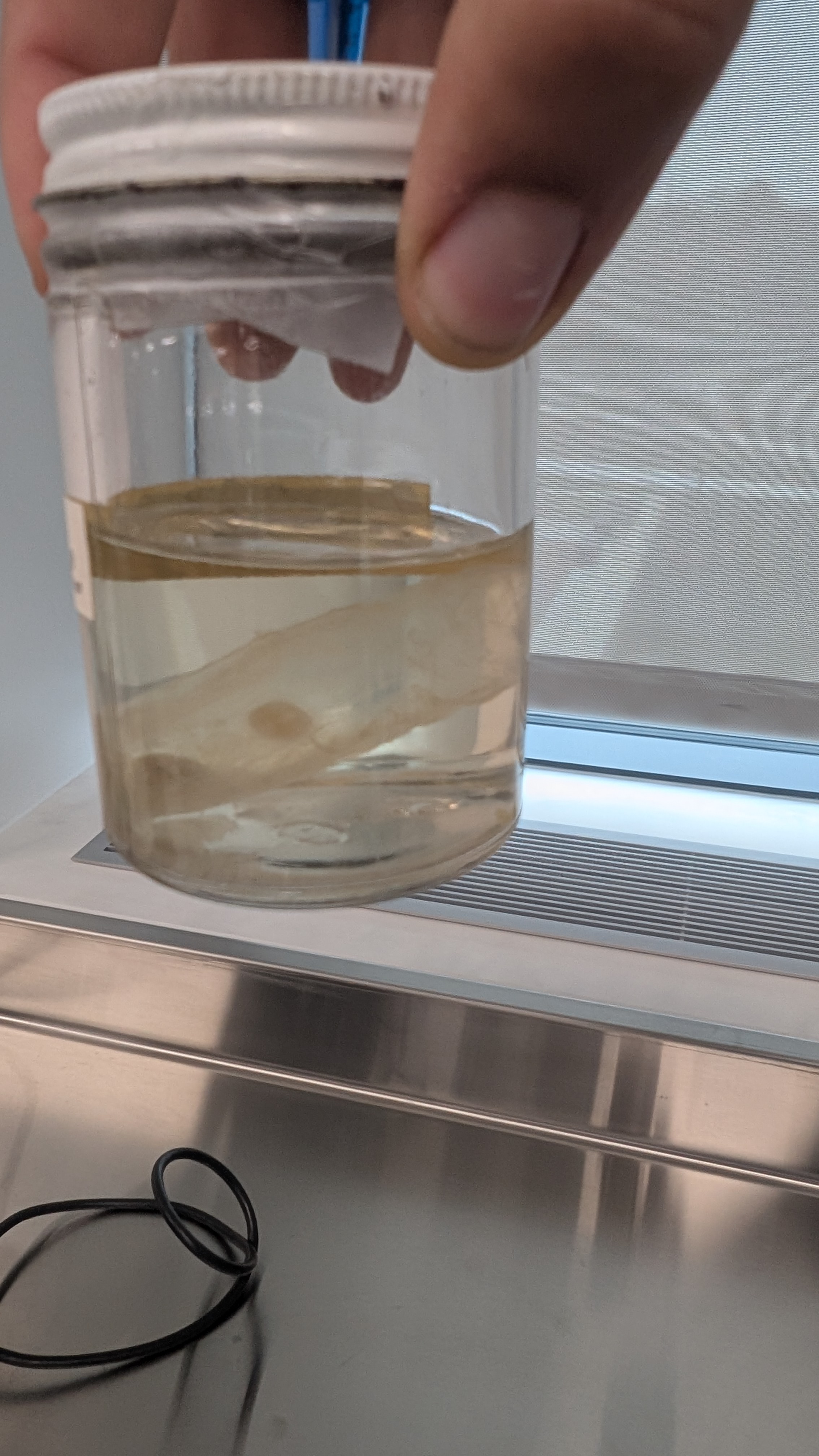
Phylum: Chordata
Subphylum: Cephalochordata
Preserved lancelet
Identify
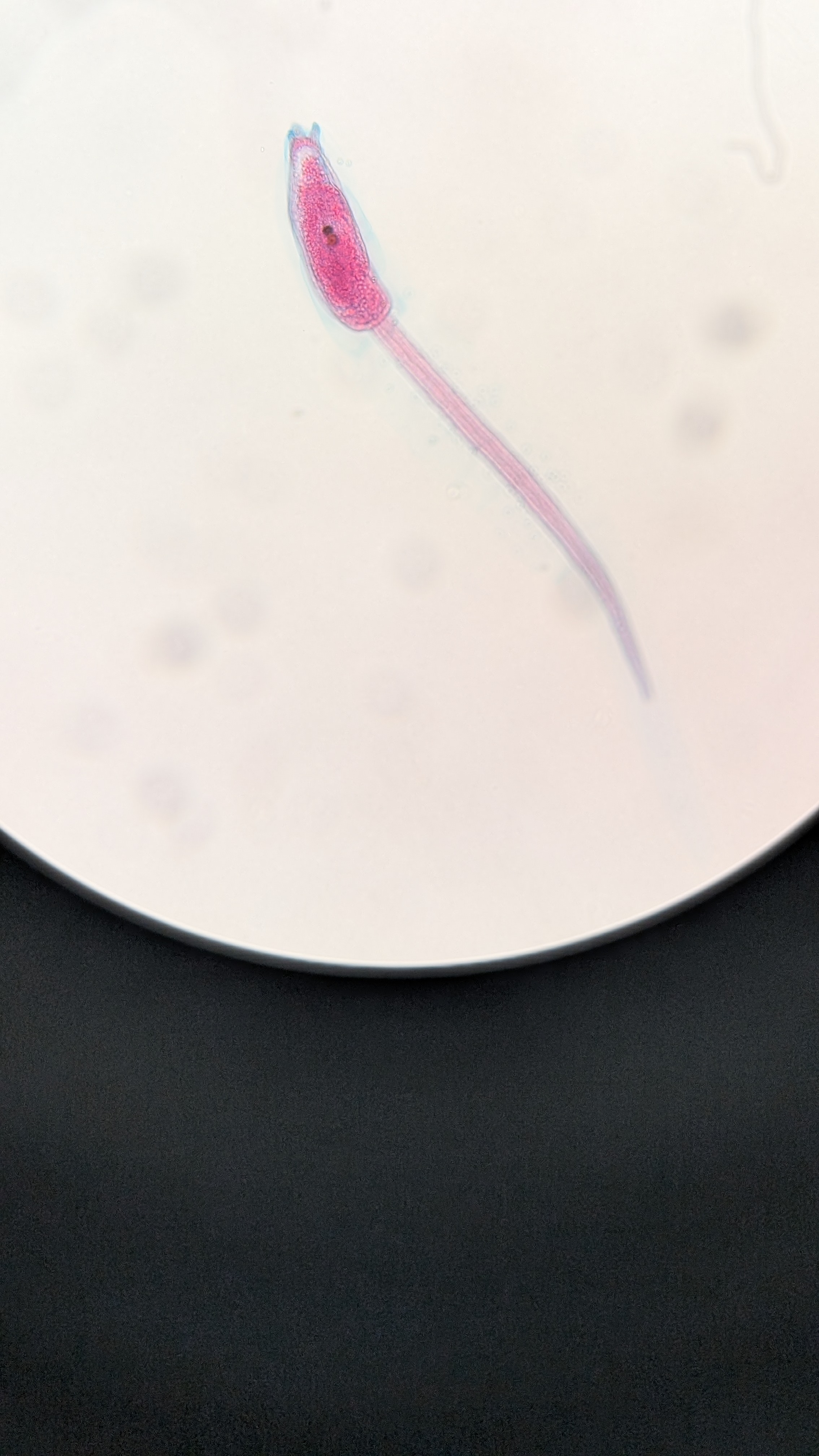
Phylum: Chordata
Subphylum: Urochordata
A salp (floating tunicate). Typically lives in large colonies in the ocean
Identify
Phylum: Chordata
Subphylum: Urochordata
Tunicate larva - has all fic chordate characteristics
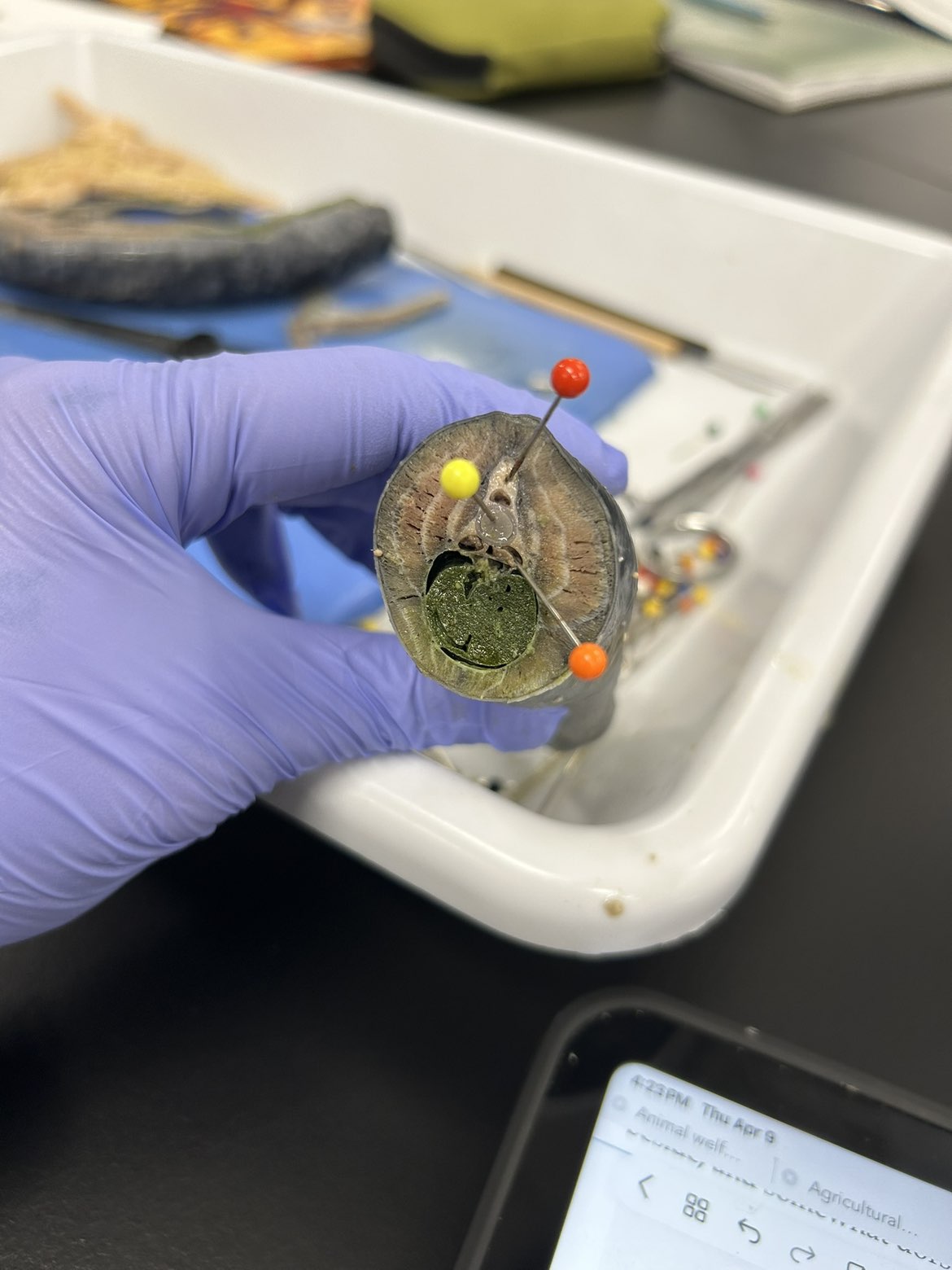
Identify
Phylum: Chordata
Subphylum: Vertebrata
Superclass: Agnatha
Atlantic sea lamprey dissection
Red - nerve cord
Yellow - notocord
Orange - vessel
Identify
Identify