Prosthetic Valve Complications
 Call Kai
 Learn
Learn Practice Test
 Spaced Repetition
 Match
Match Flashcards
 Knowt Play
1/13

There's no tags or description
Looks like no tags are added yet.
Name | Mastery | Learn | Test | Matching | Spaced | Call with Kai | Chat |
|---|
No analytics yet
Send a link to your students to track their progress
14 Terms
Structure Failure
Damage to mechanics or breakdown of tissue within valve
Due to uneven stress or blood lipids
Causes valve regurgitation and malfunction
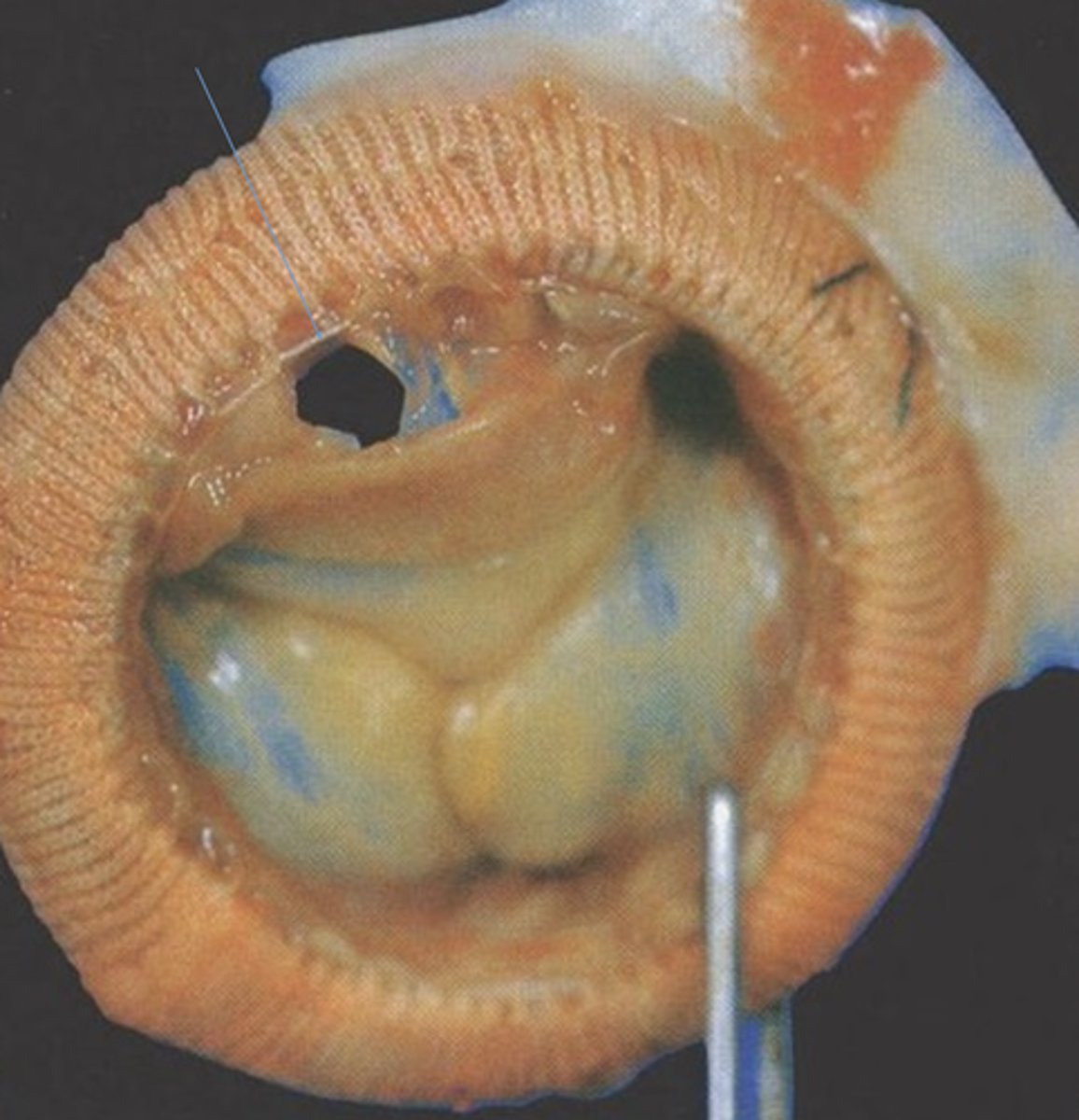
Pannus
Overgrowth of normal tissue into valve
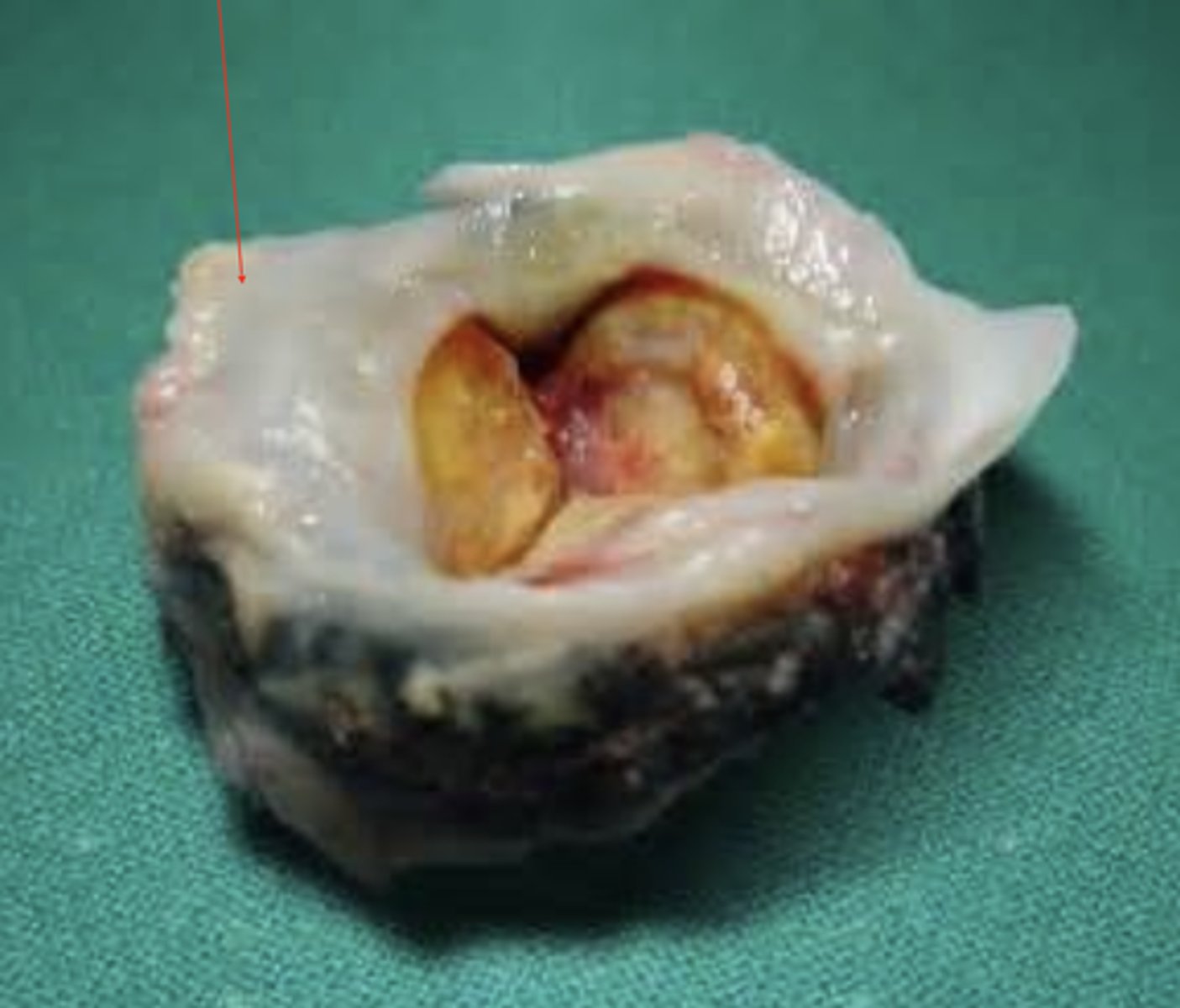
Thrombus Formation
More common in mechanical valves
Can restrict valve movement
Thromboembolism possible
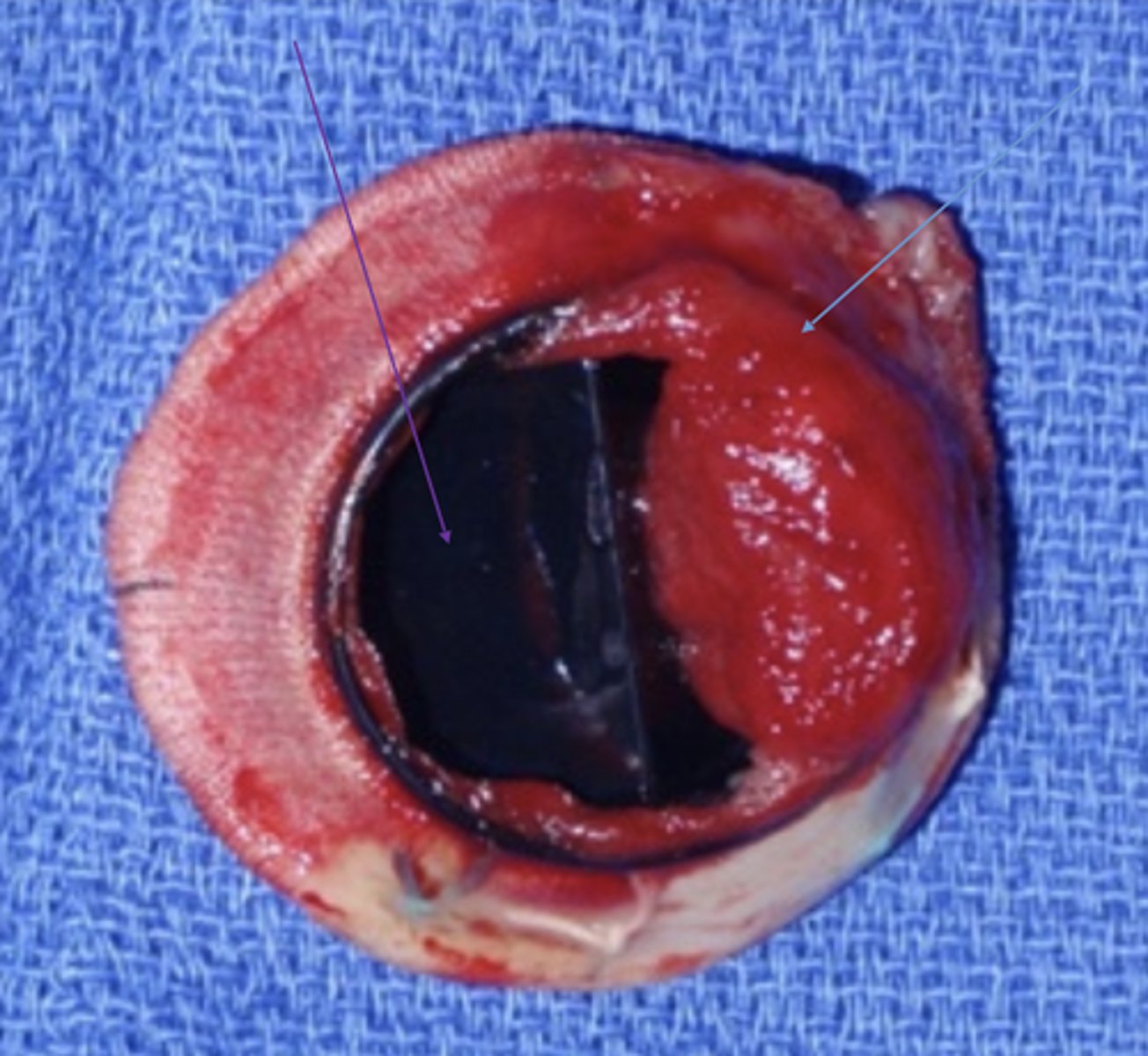
Bacterial Endocarditis in Mechanical Valves
Perivalvular origin at annulus interface
Leads to ring of bases and dehiscence
Bacterial Endocarditis in Bioprosthetic Valves
Cusp origin
Leads to abscesses, pseudoaneurysms, fistulas
Sonographic appearance of Bacterial Endocarditis
Thickened leaflets
Vegetations on leaflets or chamber walls
Leaflet deterioration = regurgitation
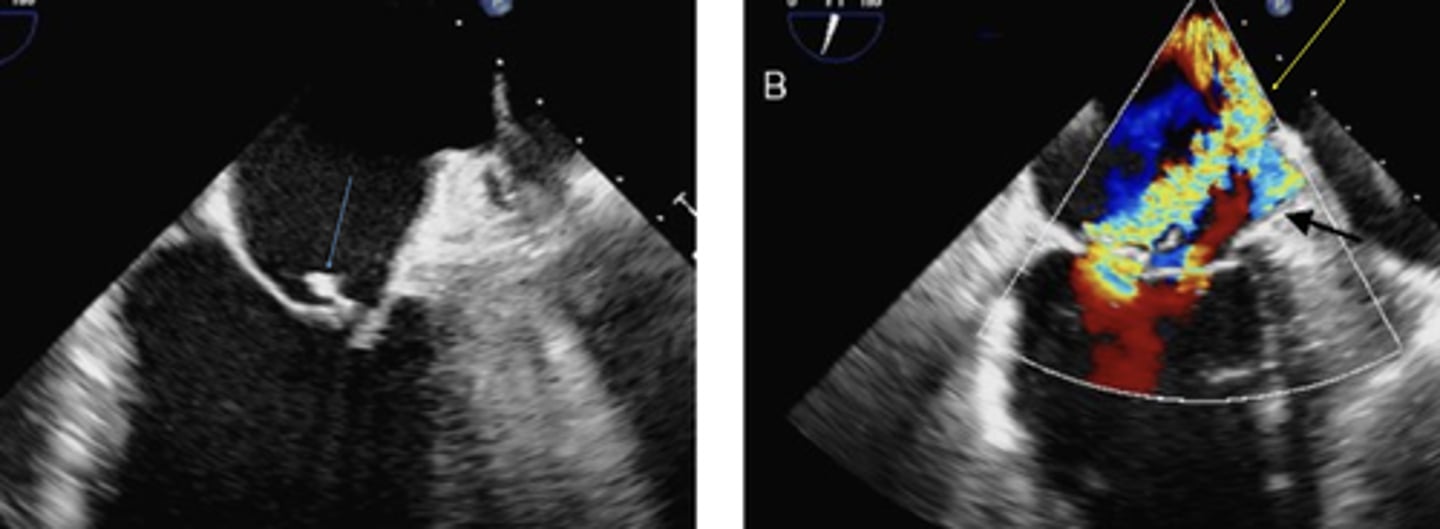
Paravalvular Leak
Leak around valve annulus - not the same as regurgitant jet
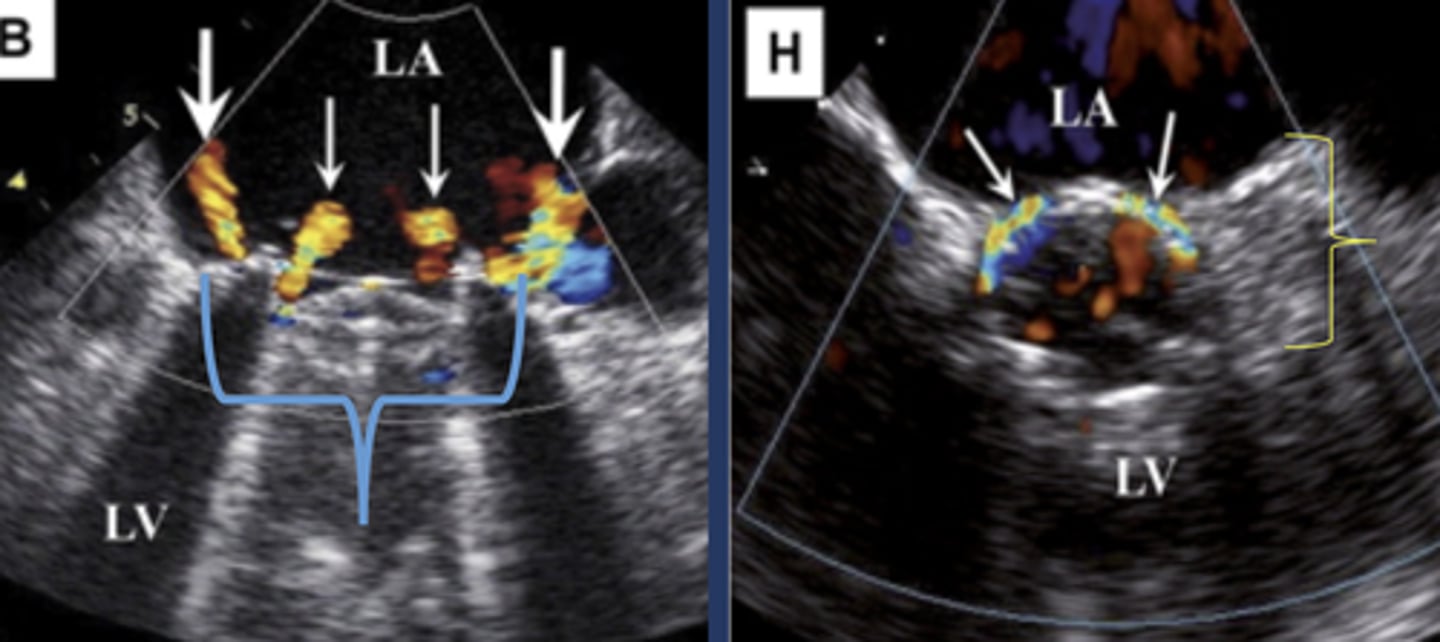
Dehiscence
Valve ring disconnects from wall
Rocking valve on 2D and M-mode
Large paravalvular leak with severe regurgitation
Poor prognosis if not treated
Abscess Formation on Valve Ring
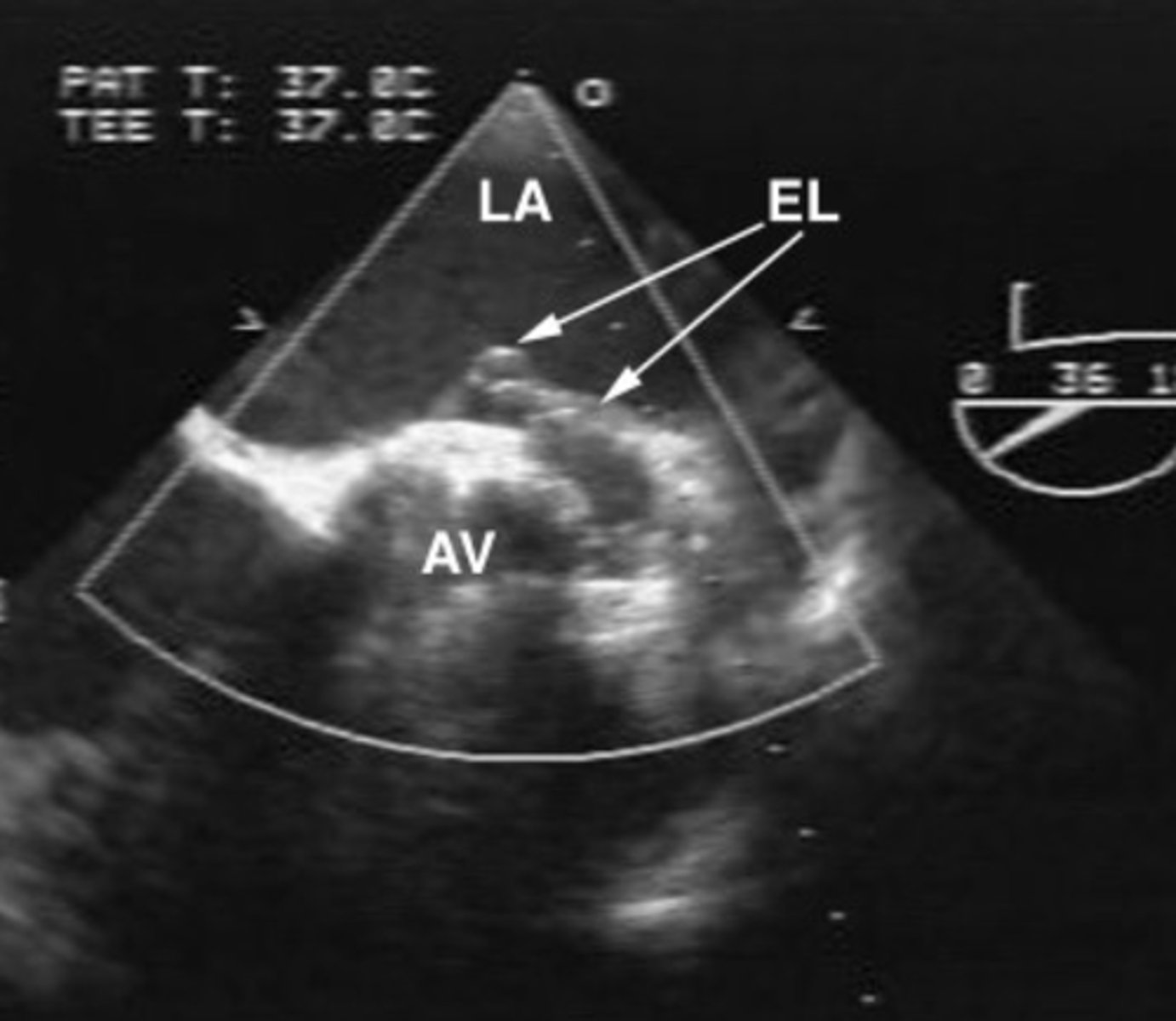
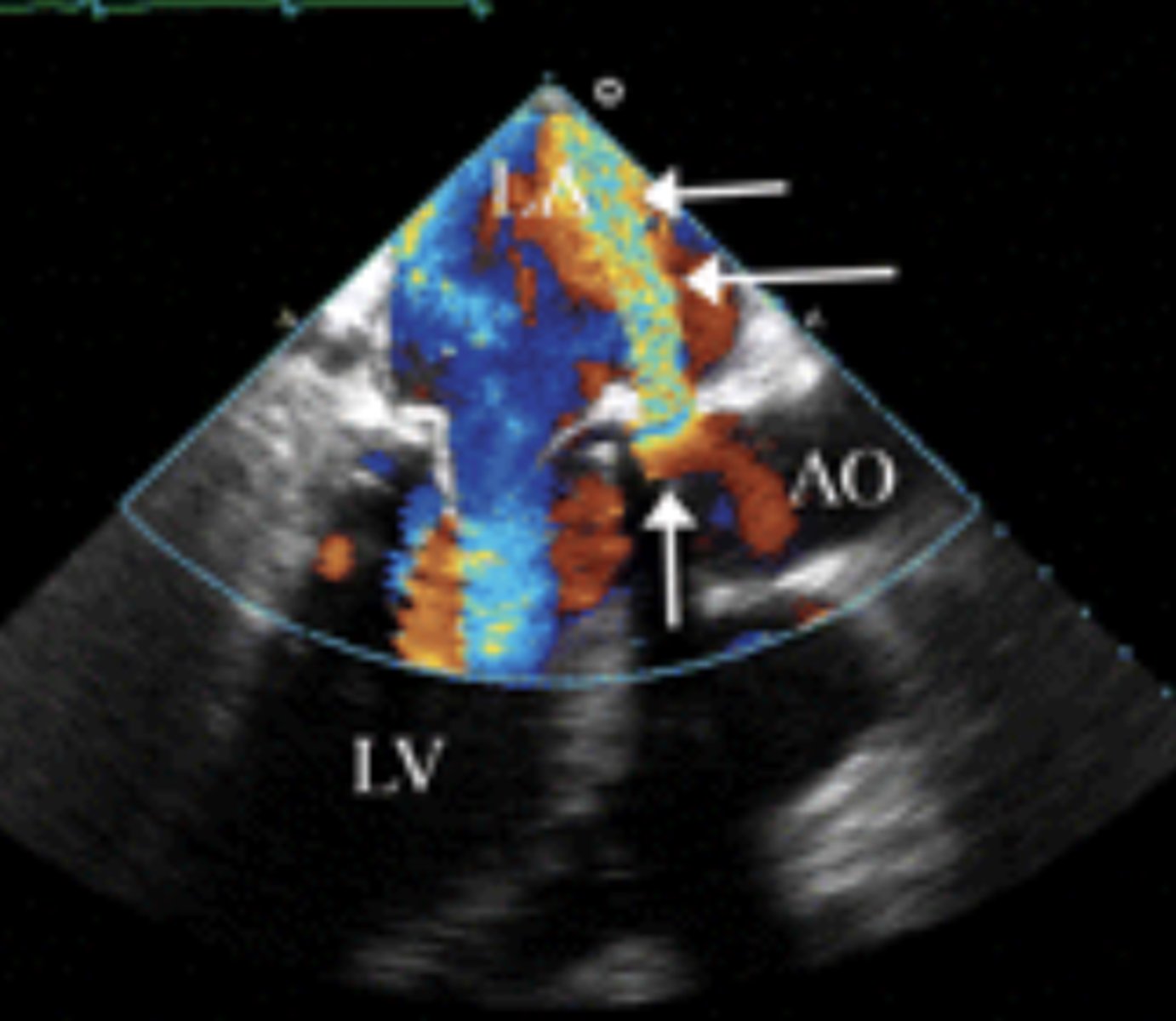
Fistula
Due to abscess formation
Common places to find fistulas
Between LV & RA
Between LV & left coronary artery
Between LA & aorta
Wall Aneurysm
Weakening of wall due to abnormal attachment of prosthetic valve
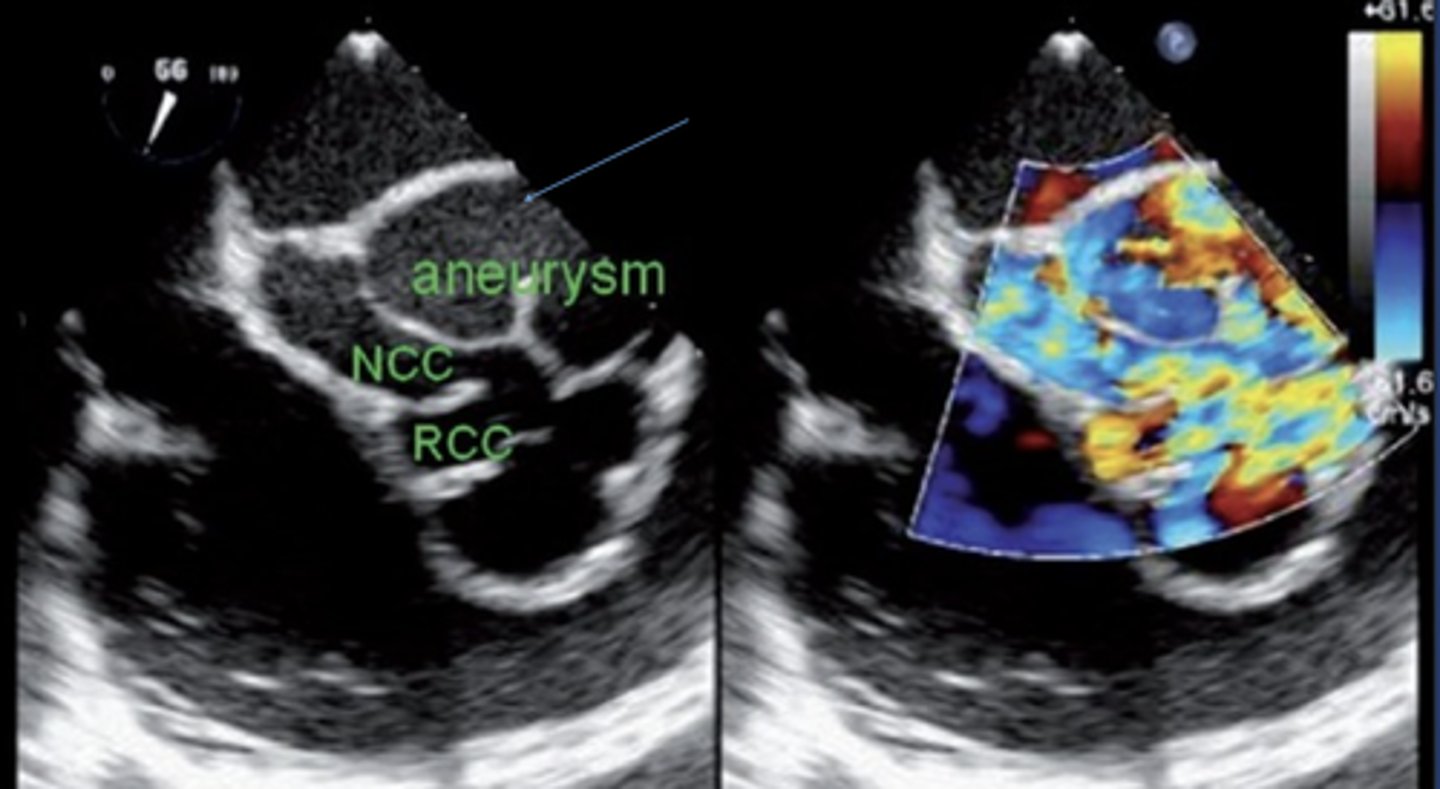
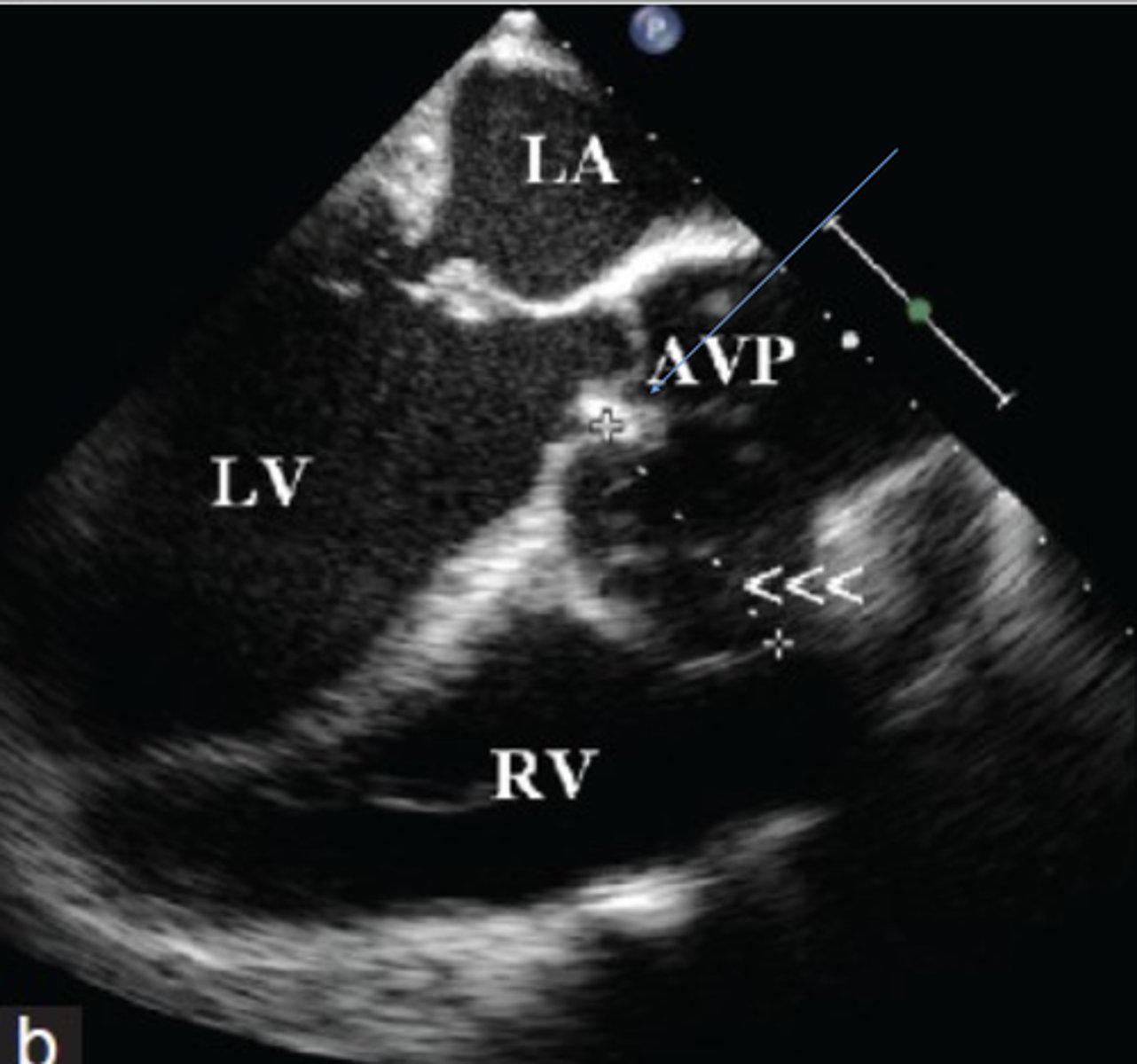
Pseudoaneurysm at Valve Attachment Site
More common with disk valves
Cystic area with neck near valve annulus
Causes of decreased cardiac output with prosthetic valves
Increased stress from paravalvular leaks or dehiscence
Arrhythmia
Size mismatch of prosthetic valve