Upper Limb Overview, Clavicle & Scapula
 Call Kai
 Learn
Learn Practice Test
 Spaced Repetition
 Match
Match Flashcards
 Knowt Play
1/44

There's no tags or description
Looks like no tags are added yet.
Name | Mastery | Learn | Test | Matching | Spaced | Call with Kai | Chat |
|---|
No analytics yet
Send a link to your students to track their progress
45 Terms
What are the 4 main characteristics of the upper limb?
Mobility
Ability to grasp
Ability to strike
Fine motor skills (manipulation)
Which part of the upper limb demonstrates the greatest ability for fine motor skills?
The hand
Which 5 joints position the hand for efficient function?
Scapulothoracic
Glenohumeral (shoulder)
Elbow
Proximal & distal radioulnar (elbow and wrist joint)
Wrist
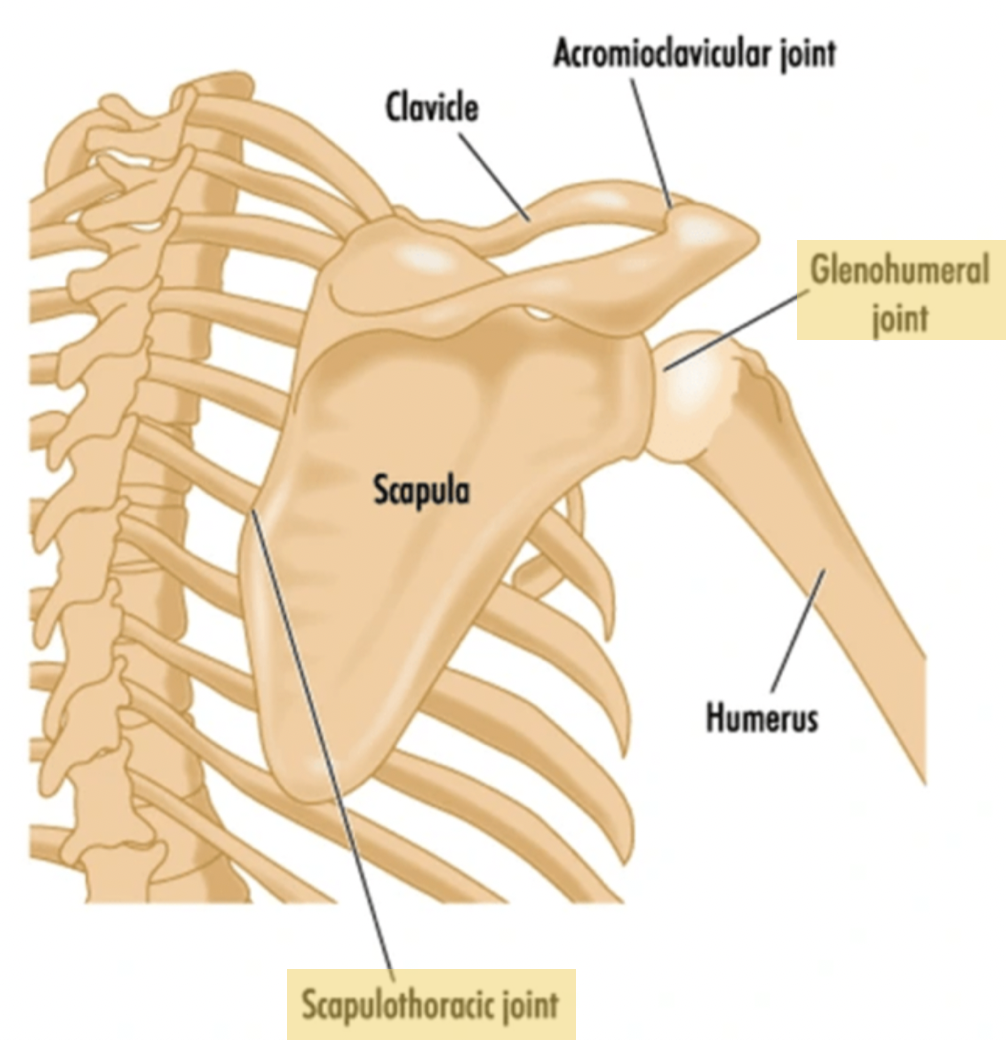
What are the four segments of the upper limb?
Shoulder
Arm (brachium)
Forearm (antebrachium)
Hand (manus)
What bones are found in the arm?
The humerus.
What bones are found in the forearm?
Radius
Ulna
What bones make up the hand?
Carpals
Metacarpals
Phalanges
What structures make up the hand?
Wrist
Palm
Dorsum of hand
Digits (including the opposable thumb)
Which sensory modalities are especially well developed in the hand?
Touch
Pain
Temperature
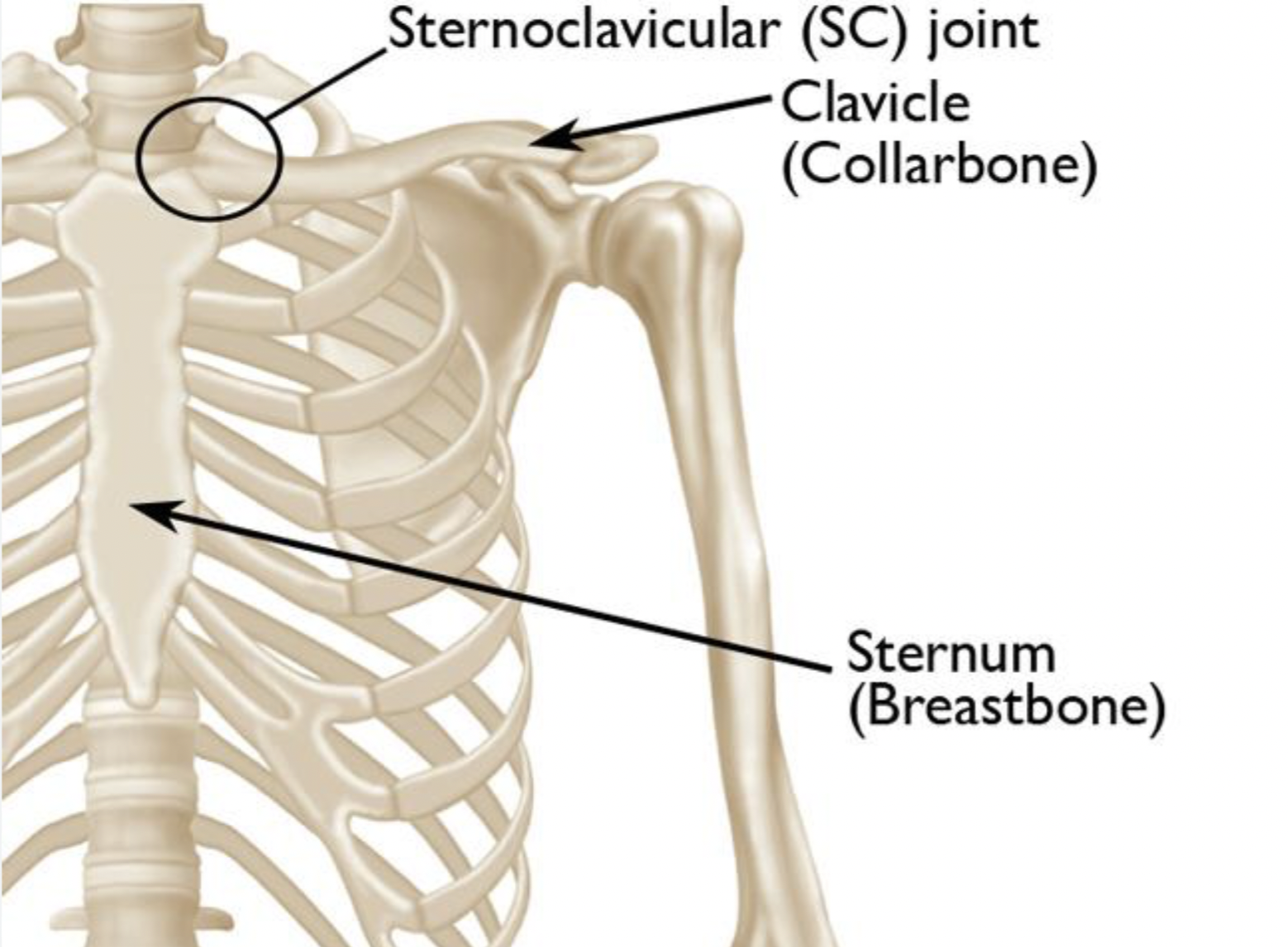
What bones form the pectoral girdle?
Two clavicles
Two scapulae
What completes the pectoral girdle anteriorly?
The manubrium of the sternum.
How does the superior appendicular skeleton articulate with the axial skeleton?
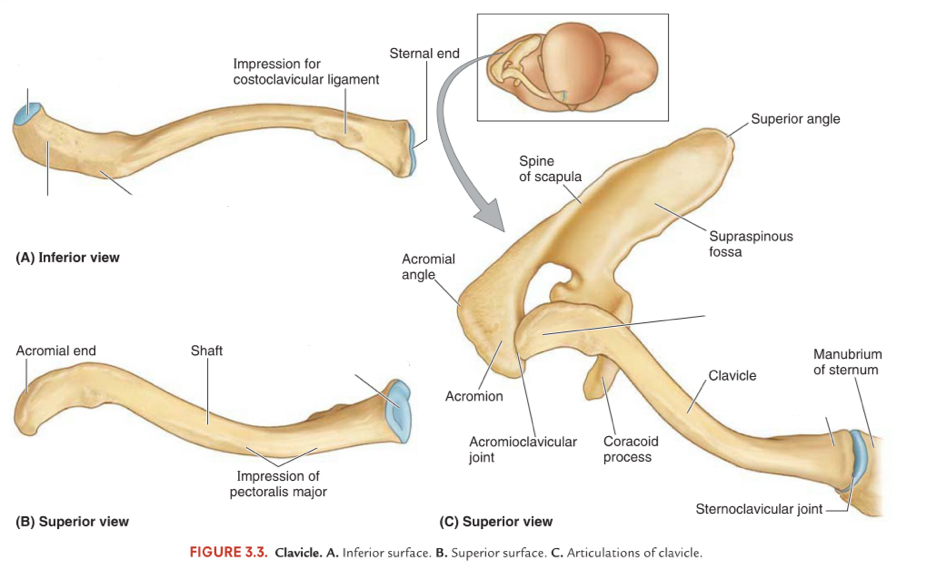
Only at the sternoclavicular (SC) joint.
Which muscles support and move the pectoral girdle?
Axio-appendicular muscles.
What is another name for the clavicle?
Collar bone.
Which joints does the clavicle form?
Sternoclavicular (SC) joint
Acromioclavicular (AC) joint
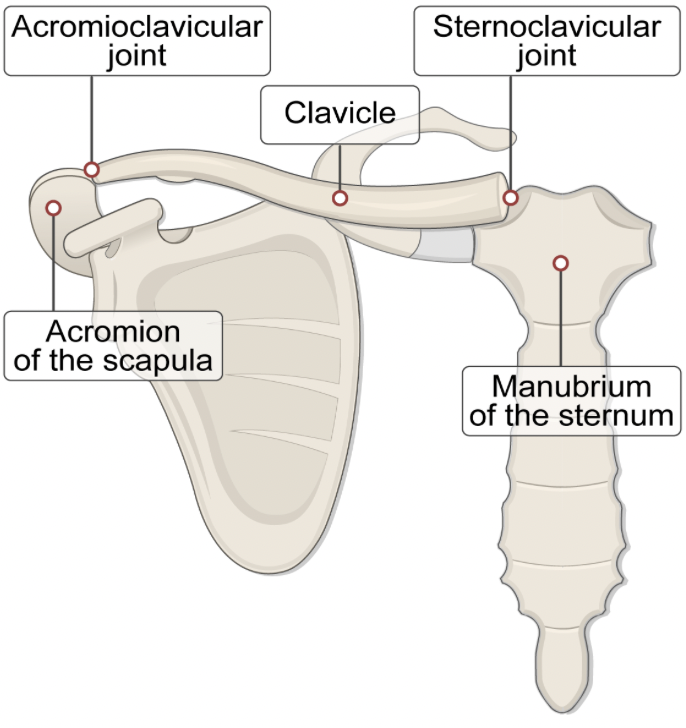
Which bones does the clavicle articulate with?
Manubrium of the sternum (medially)
Acromion of the scapula (laterally)
Describe the shape of the clavicle.
An elongated S-shaped bone:
Medial two-thirds convex anteriorly
Lateral one-third concave anteriorly
What are the three main functions of the clavicle?
Acts as a strut to hold the upper limb away from the thorax
Transmits forces from the upper limb to the axial skeleton
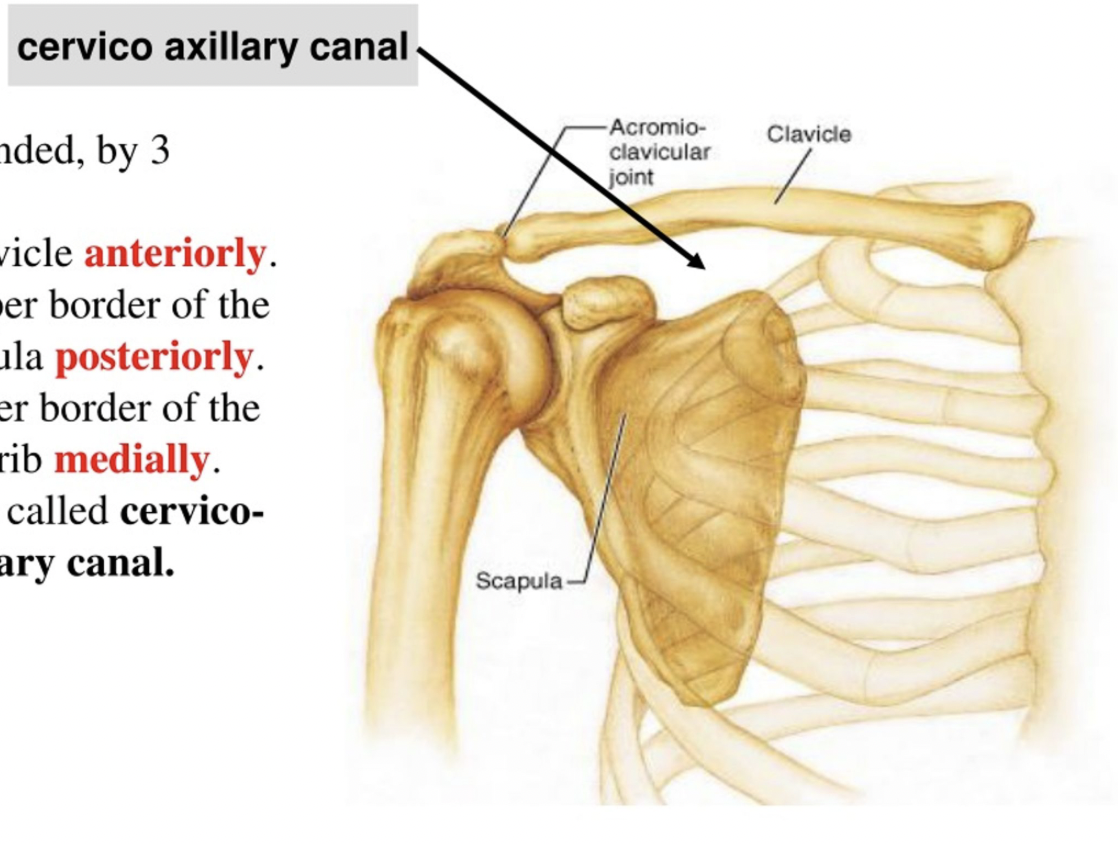
Forms part of the cervico-axillary canal
Why is the clavicle described as a strut?
It keeps the upper limb away from the thorax, allowing greater freedom of movement.
Why is the clavicle important during deep inspiration?
When fixed, it helps elevate the ribs.
What passes through the cervico-axillary canal?
The neurovascular bundle supplying the upper limb.
Why is the clavicle considered unusual for a long bone?
It has no medullary (marrow) cavity.
What type of bone tissue forms the clavicle?
Spongy (trabecular) bone surrounded by compact bone.
What type of bone is the scapula?
A triangular flat bone.
Where is the scapula located?
On the posterolateral thoracic wall, overlying ribs 2–7.
Which structure divides the posterior surface of the scapula?
The spine of the scapula.
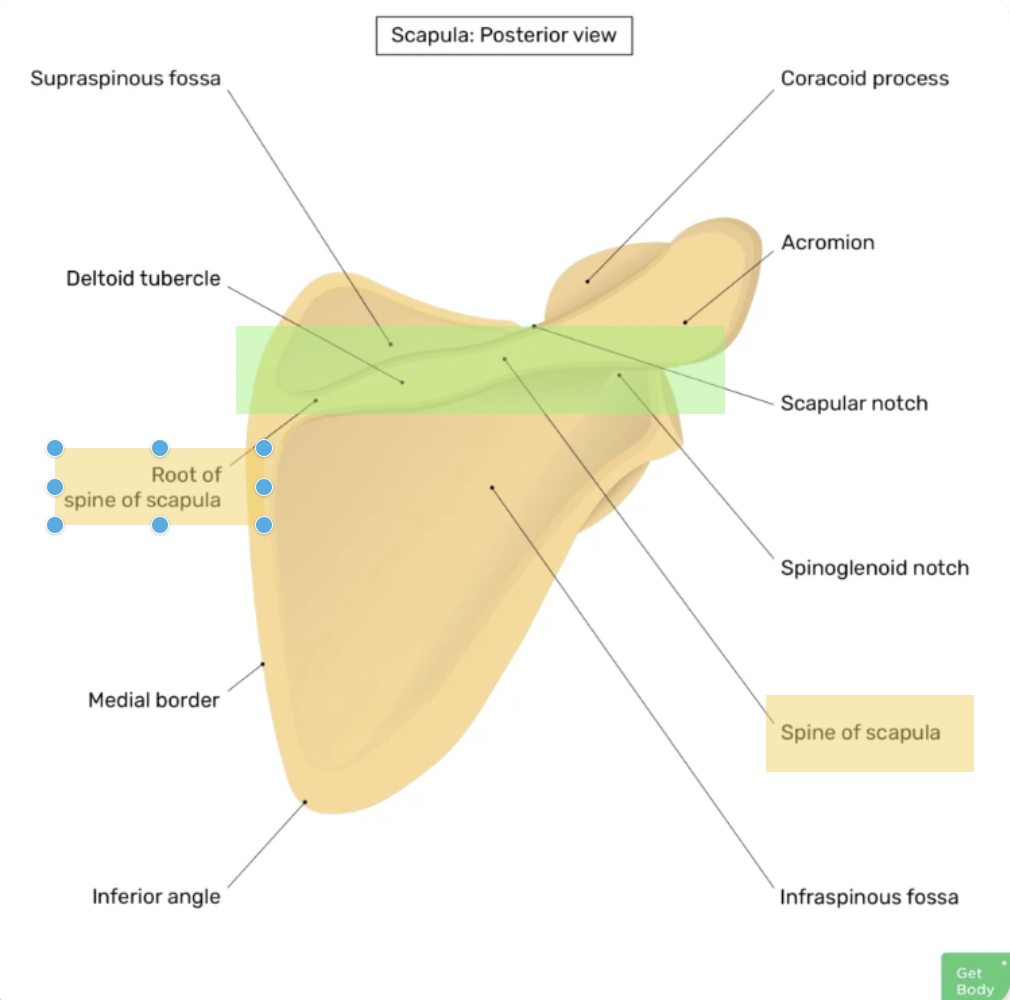
Which fossae are found on the scapula?
Supraspinous fossa
Infraspinous fossa
Subscapular fossa
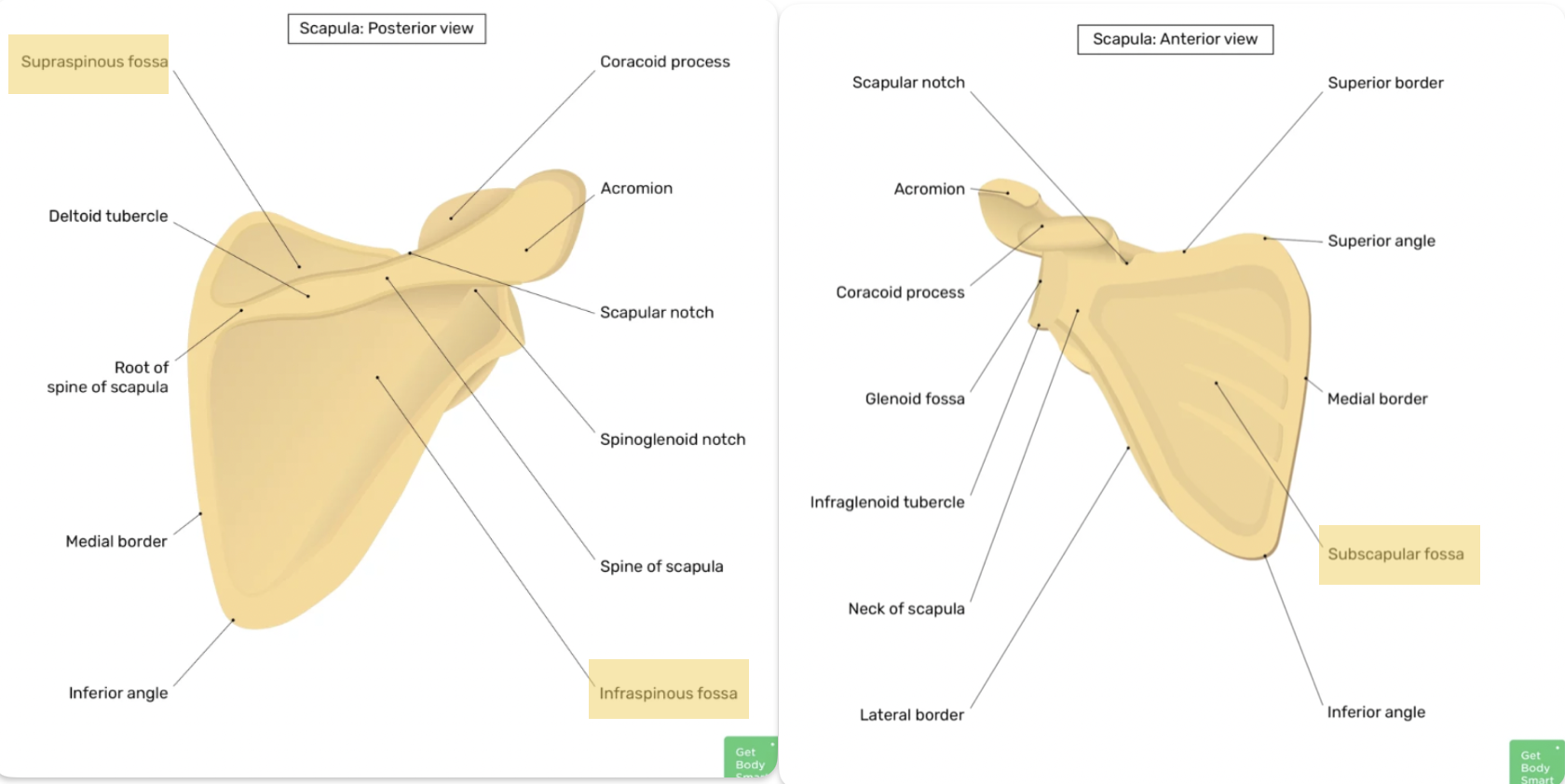
Which fossa is found on the anterior (costal) surface of the scapula?
The subscapular fossa.
Name the borders of the scapula.
Superior
Medial (vertebral)
Lateral (axillary)

Name the angles of the scapula.
Superior angle
Inferior angle
Lateral angle (head of the scapula)
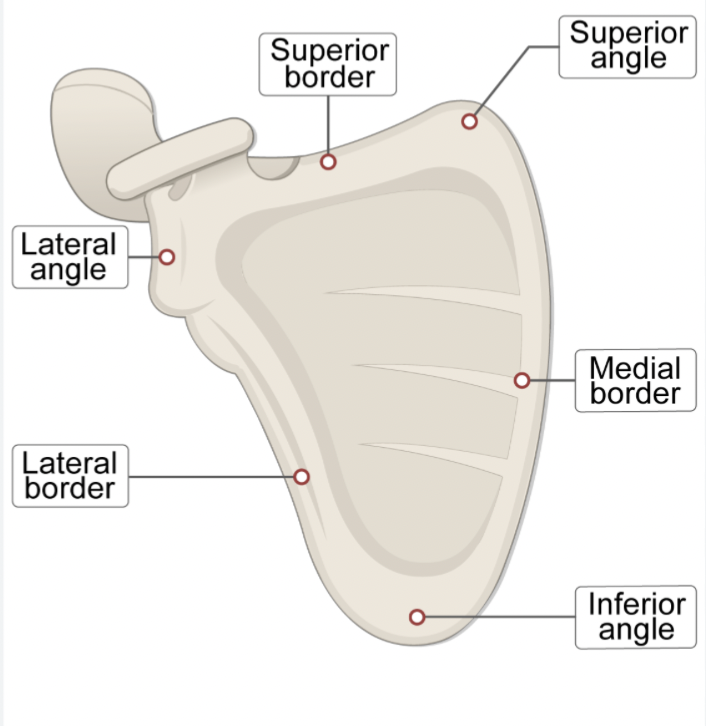
Which part of the scapula contains the glenoid cavity?
The lateral angle (head) of the scapula.
What is the neck of the scapula?
The narrowed region immediately medial to the head of the scapula.

Where is the suprascapular notch located?
On the superior border of the scapula, near the junction of the medial two-thirds and lateral one-third.

What does the spine of the scapula become laterally?
The acromion
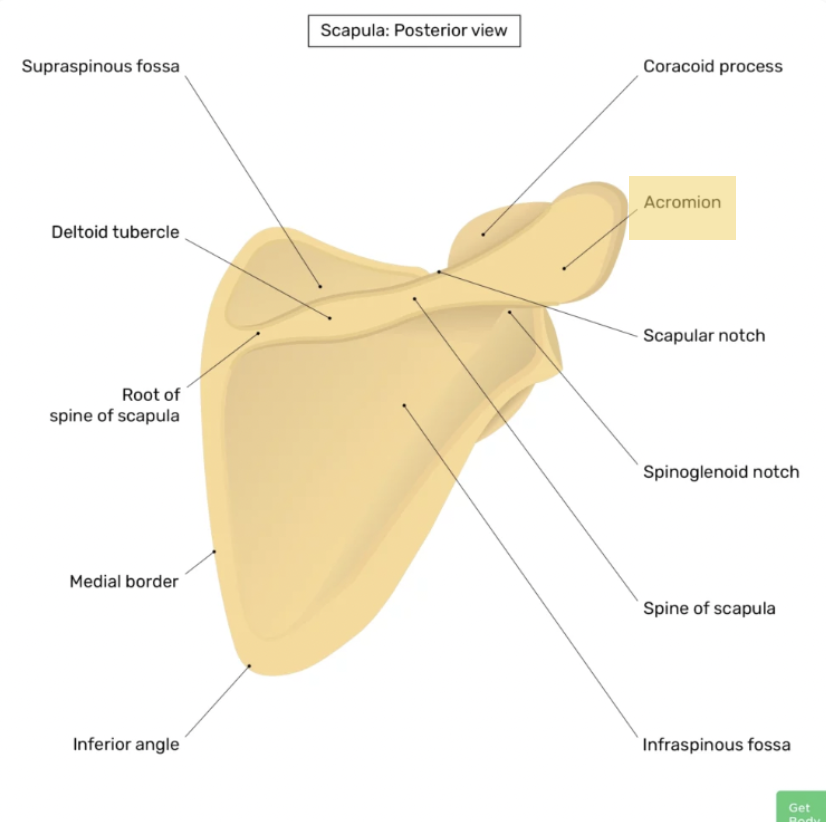
What are the functions of the acromion?
Forms the point of the shoulder
Articulates with the clavicle at the AC joint

What is the glenoid cavity?
A shallow, oval socket that articulates with the head of the humerus.

In which direction does the glenoid cavity face?
Anterolaterally
Slightly superiorly
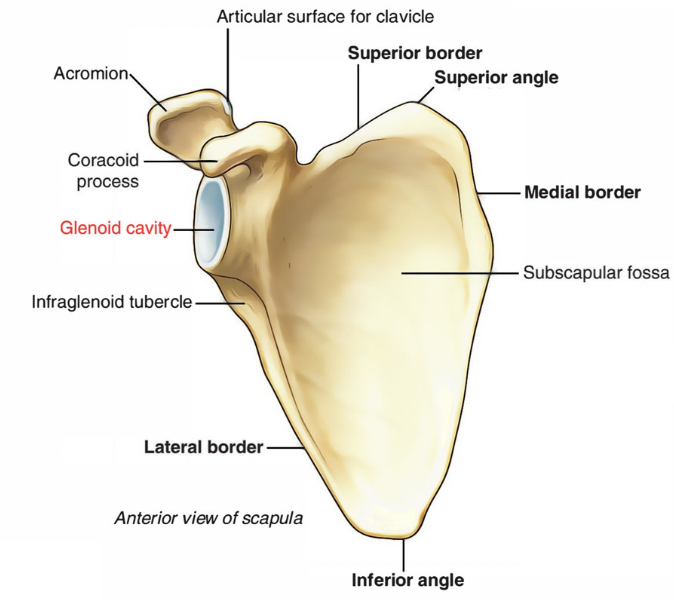
Why is the glenoid cavity important for shoulder mobility?
It is much smaller and shallower than the humeral head, allowing a large range of movement at the expense of stability.
Where is the coracoid process located?
Superior to the glenoid cavity, projecting anterolaterally
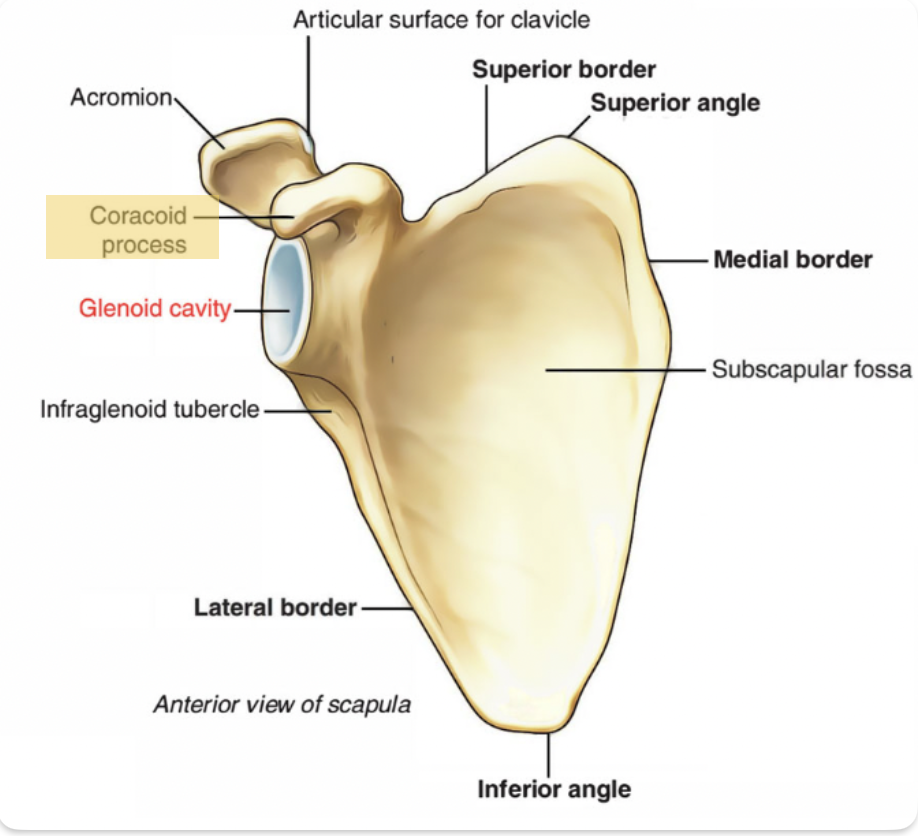
Compare the clavicle and scapula.
Clavicle | Scapula |
Long bone | Flat bone |
S-shaped | Triangular |
Connects upper limb to trunk | Provides muscle attachment and shoulder socket |
Forms SC & AC joints | Forms AC & glenohumeral joints |
Acts as a strut | Forms the mobile base of the shoulder |
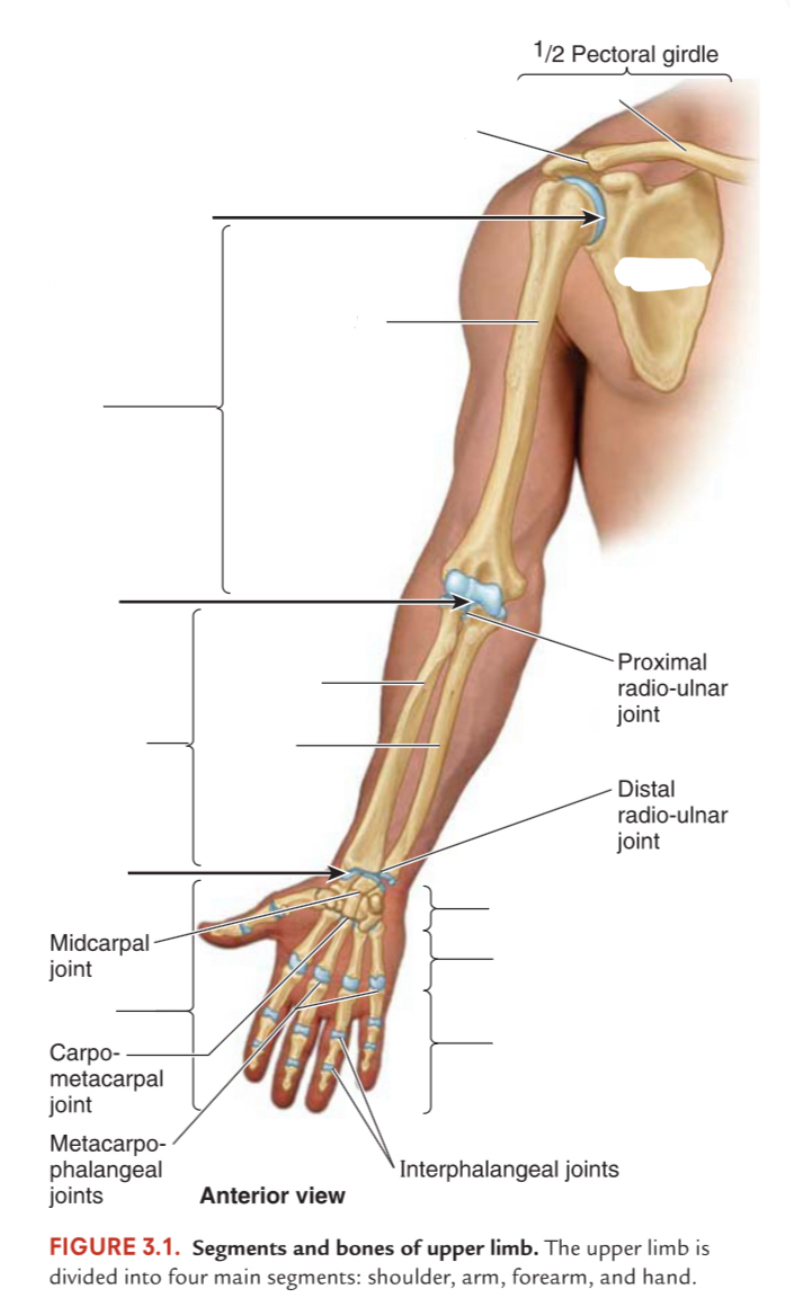
Label
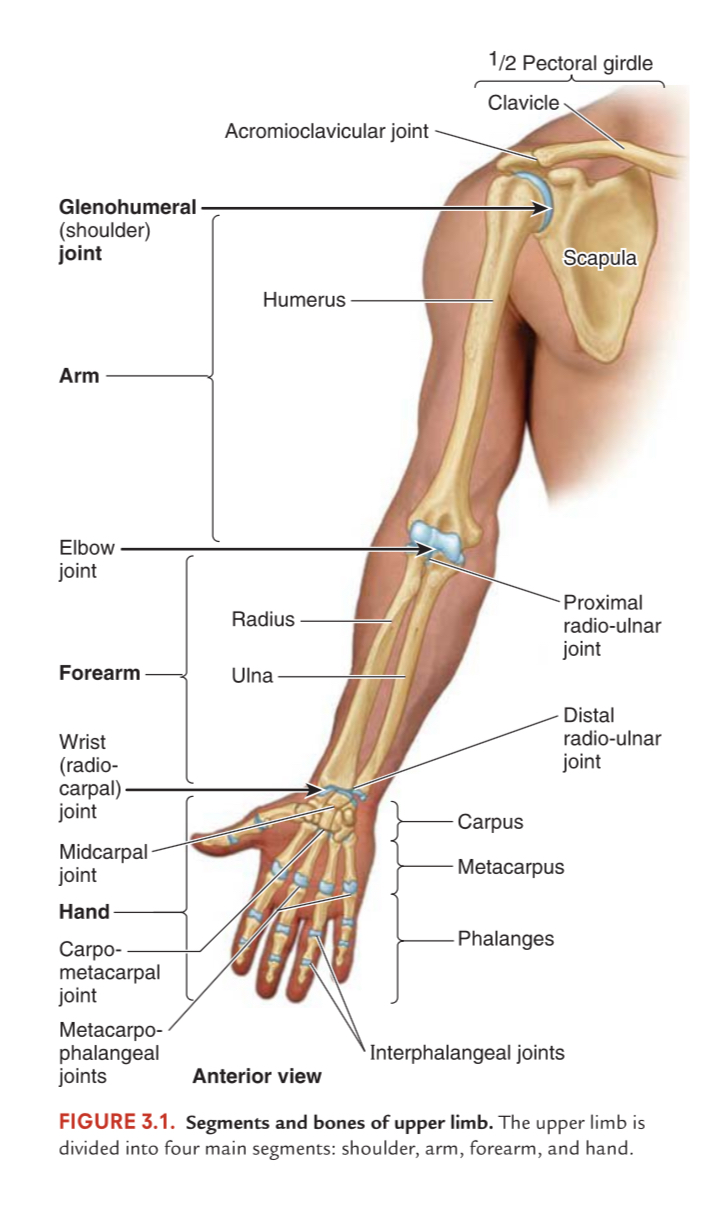
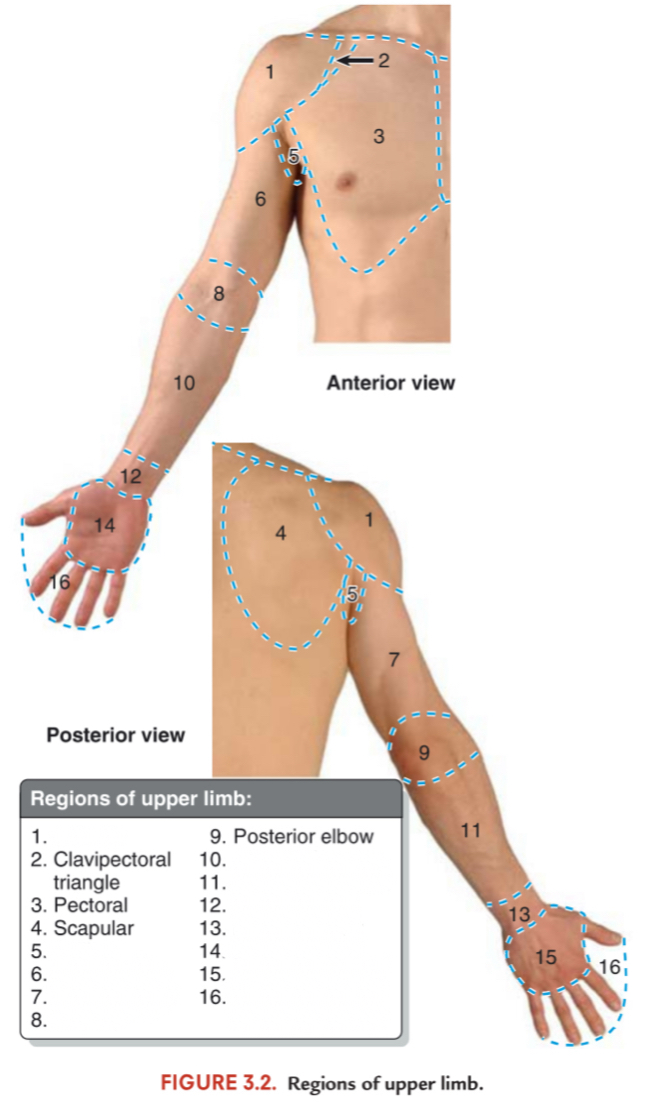
Label the numbers
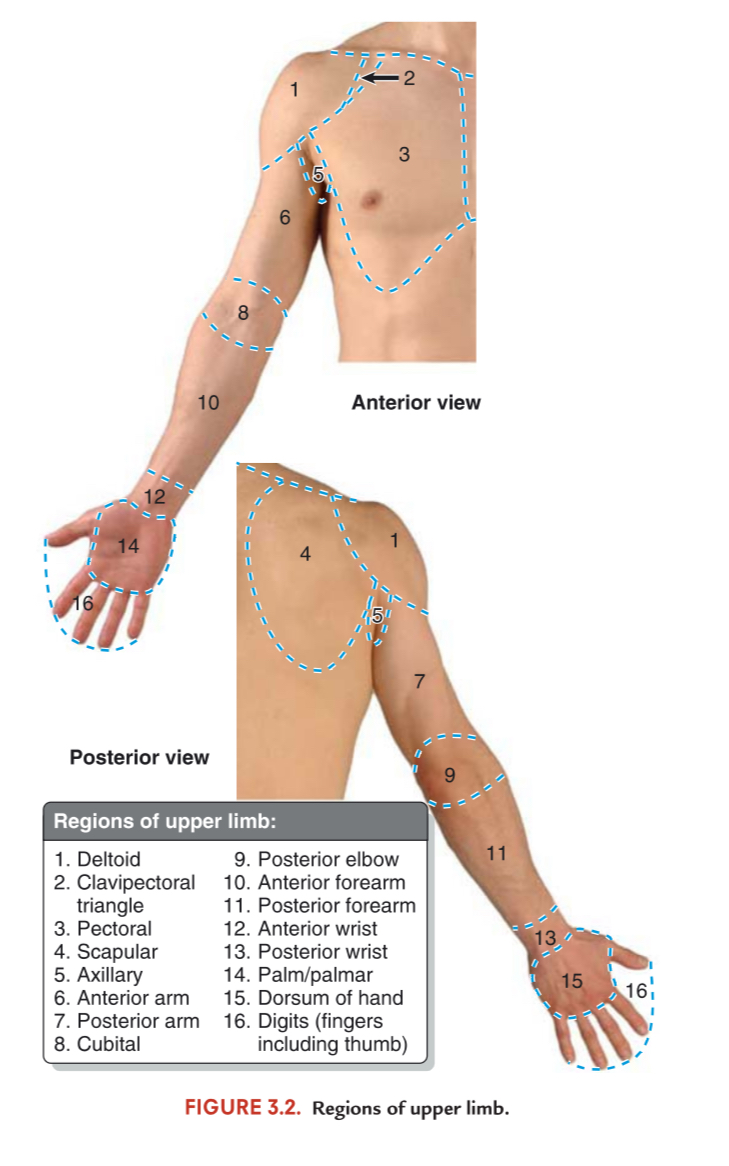
Label


Label

Match each structure with its primary role:
Clavicle
Scapula
Glenoid cavity
Acromion
Coracoid process
Spine of scapula
Structure | Primary Role |
Clavicle | Connects upper limb to trunk and acts as a strut |
Scapula | Muscle attachment and glenoid socket |
Glenoid cavity | Articulates with the humeral head |
Acromion | Forms the point of the shoulder and AC joint |
Coracoid process | Attachment site for muscles and ligaments |
Spine of scapula | Divides the posterior surface into fossae |