Chemistry of Life 2.4: Organic Compounds
 Call Kai
 Learn
Learn Practice Test
 Spaced Repetition
 Match
Match Flashcards
 Knowt Play
1/37

There's no tags or description
Looks like no tags are added yet.
Name | Mastery | Learn | Test | Matching | Spaced | Call with Kai | Chat |
|---|
No analytics yet
Send a link to your students to track their progress
38 Terms
Polymers/monomer
Molecules made of a repetitive series of identical or similar subunits called monomers
Carbohydrates
Hydrophillic organic molecule, such as sugars or starches
Source of energy to be used quickly. All carbohydrates are eventually converted to glucose and is oxidized to make ATP
Monosaccharides
Simplest carbohydrates, simple sugars
Glucose - Blood sugar
Galactose
Fructose
Disaccharides
Sugar composed of two monosaccharides
Sucrose (glucose + fructose) - sugar cane/sugar beets - table sugar
Lactose ( glucose + galactose) - milk sugar
Maltose (glucose + glucose) - starch - malt beverage or germinating grains
Oligosaccharides / Polysaccharides
Oligosaccharides - Short chains of 3 or more monosaccharides
Polysaccharides - Long chains up to thousands of monosaacharides long - glycogen, starch and cellulose all made of glucose
Glycogen
Energy storage polysaccharide made by cells of the liver, mucles, brain, uterus, and vaginia.
Long, branched glucose polymer
Starch
Corresponding energy storage polysaccharide of plants.
Celluslose
Polysaccharide that gives strength to cell wall of plant. Principle component of wood, cotton, and paper.
Proteoglycans
Macromolecules where carbohydrates are the dominant component and proteins form the smaller component. Forms gels that hold cells and tissues together form a gelatinous filler in the umbilical cord and eye, lubricates the joints of the skeletal system and cartilage
Lipids
Hydrophobic organic molecule composed only of carbon, hydrogen, and oxygen with a high ration of hydrogen to oxygen.
Less oxidized than carbohydrates, and have more calories per gram
There are five types: fatty acids, triglycerides, phospholipids, eicosanoids, and steroids
Fatty Acids
Chain of 4 - 24 carbon atoms with a carboxyl group at one end and a methyl group at the other
Saturated Fatty Acids
Palmitic acid has as much hydrogen as it can carry
No more hydrogen can be added without exceeding four covalent bonds per carbon
“saturated with hydrogen”
Unsaturated Fatty Acids
Linoleic acid, carbon atoms are joined by double covalent bonds
Potential to share one pair of electrons with another hydrogen atom instead of adjacent carbon, more hydrogen can be added
Polyunsaturated fatty acids
Multiple C=C bonds (carbon-carbon)
Essential Fatty Acids
Most fatty acids that human need can be synthesized in the human body. Those that cannot and must be obtained from diet are known as essential fatty acids
Triglyceride
Three carbon alcohol called glycerol linked to three fatty acids
Liquid at room temp aka Oils.
Fat
Primarily energy storage
Concentration in adipose tissue (connective tissue), provides thermal insulation and act as shock absorbing cushion for vital organs
Phospholipids
Have phosphate groups linked to other functional groups
Phospholipids have two fatty acid “tails” that are hydrophobic but the phosphate “head” is hydrophilic, making them known as amphipathic which help to serve as structural foundation of cell membranes
Eicosanoids
20 carbon compounds derived from a fatty acid called arachidonic acid
Function hormone like chemical signals between cells
Prostaglandins
Most functionally diverse eicosanoids - five of the carbon atoms are arranged in a ring. Found in secretions of the bovine prostate gland, produced in all tissue.
Play in inflammation, blood clotting, hormone action, labor contractions, blood vessel diameter, and more
Steroids
Lipid with 17 carbon atoms arrange in 4 rings
Cholesterol
“parent” steroid from which all other steroids are synthesized
Cortisol
Progesterone
Estrogen
Testosterone
Bile Acids
Cholesterol is needed for is needed for normal body functions. It is important for cell membranes and required for proper nervous system function. Only 15% comes from diet, the other 85% is synthesized naturally in the body mostly by the liver
Proteins
Polymer of amino acids
Proteins are amphipathic (hydrophilic and hydrophobic)
Polypeptide of more than 50 amino acids
Amino acids
Central carbon atom with amino and carboxyl group bound to it.
There are 20 amino acids that make proteins
Peptides
Any molecule made up of 2 or more amino acids joined by peptide bonds
Named for how many amino acids are in them
dipeptides - two
tripeptides - three
oligopeptides - few than 10-15 (example is oxytoxic, 9 amino acids)
polypeptides - more than 15
proteins - more than 50
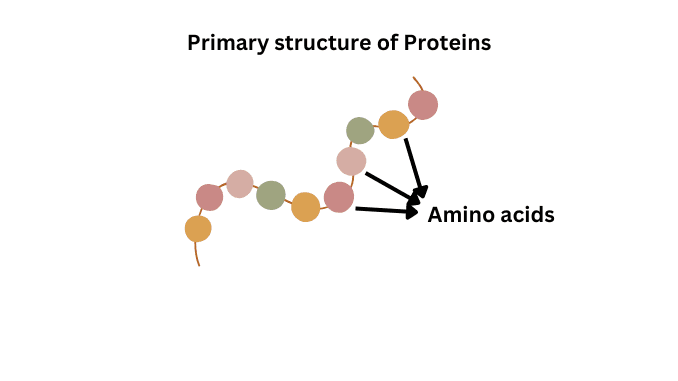
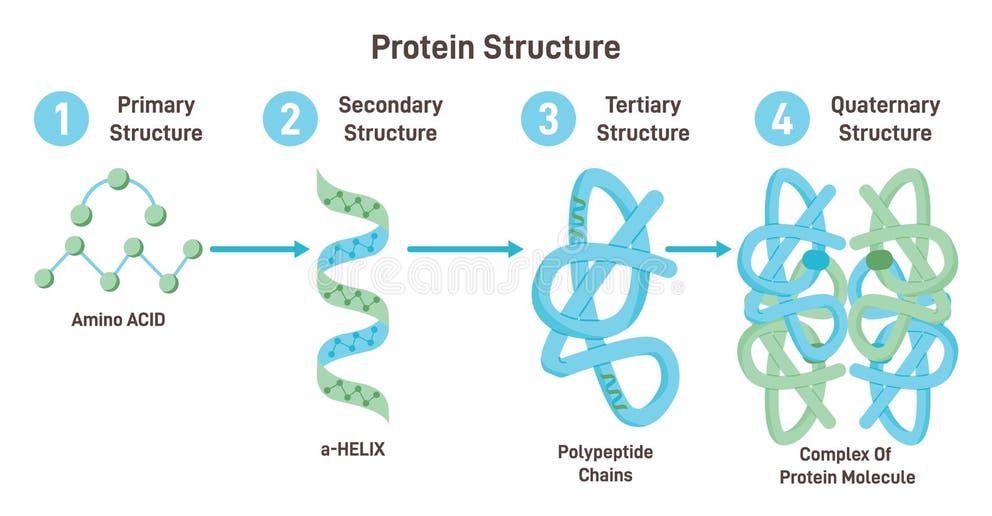
Describe a proteins primary structure
A protein’s sequence of amino acids, encoded in gene
Most basical structure
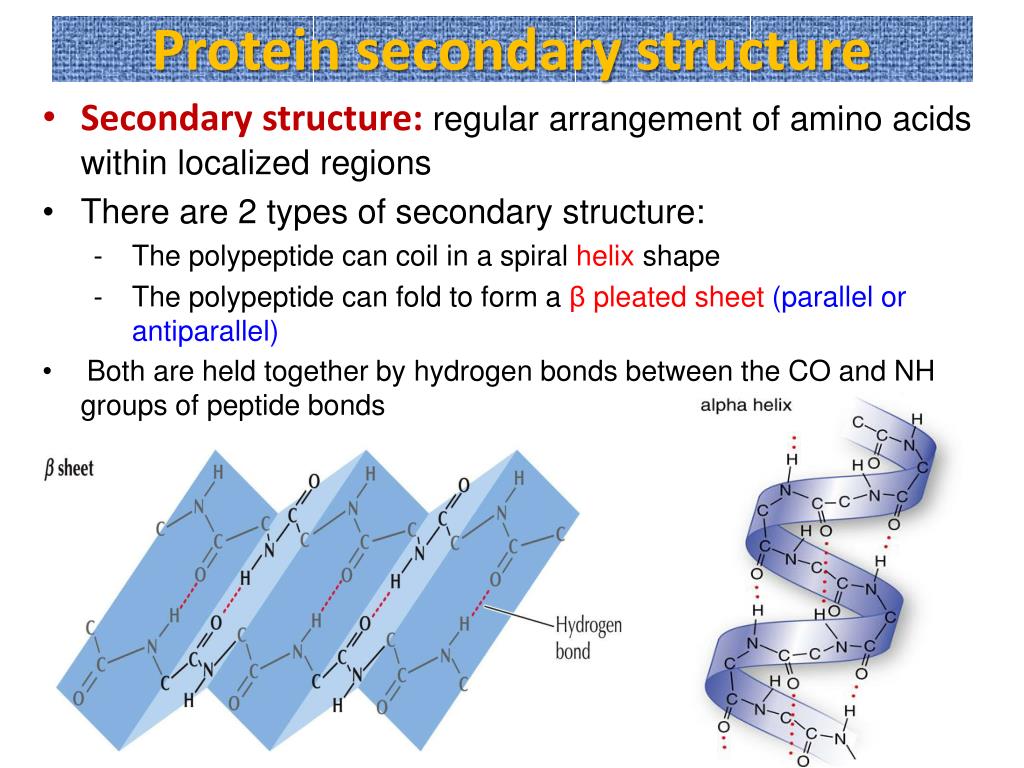
Describe a proteins secondary structure
Coiled/folded shaped held together by hydrogen bonds
Most commonly alpha helix or b sheet
Most proteins have multiple alpha and B sheet regions joined by segments of less orderly areas.
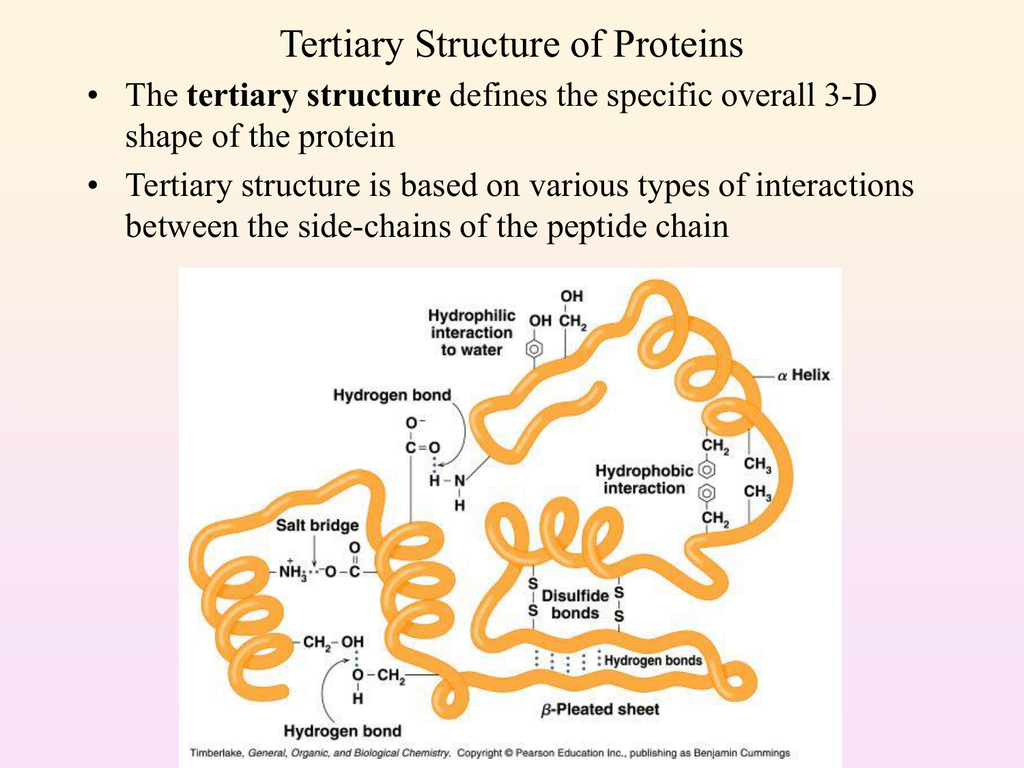
Describe a proteins tertiary structure
More folding/bending into globular and fibrous shapes
Hydrophobic radicals are avoiding water while the hydrophilic are going to it, the Van der Waals force is at play and helps the structure Globular proteins - can resemble tangled ball of yarn have a structure well suited for proteins that are in cell membranes and proeins that move freely through body fluids such as enzymes and antibodies
Fibrous proteins - slender filaments better suited in muscle contraction, provide strength to skin, hair, and tendons. Examples include myosin, keratin, and collagen
Describe a proteins quaternary structure
two or more polypeptide chains associating through noncovalent forces such as ionic bonds or hydrophilic/hydrophobic interactions
Only occurs in some proteins
Why does a protein being able to change structure matter?
Because subtle reversible changes are necessary for situations such as enzyme function, muscle contraction, open/closing of pores in the cell membrane
What is denaturation?
Drastic usually permanent changes in structure due to things like heat or pH change making the protein unable to preform their normal function
Best example is cooking an egg
Protein Functions
Structure - add structure that is needed such as keratin giving structure to bone, cartilage and skin
Communication - help with cell to cell communication - hormones are an example. Hormones or other molecules that reversibly bind to a protein is a ligand
Membrane transport - can form tunnels in cell membranes that govern what passes through the membrane and when, can also act a carrier to bind to particles and move them through membranes especially important in muscles and nerve activity
Catalyst - Metabolic pathways of the body are controlled by enzymes which are globular proteins that work as catalysts
Recognition/protection - Glycoproteins in the immune system act as recognizers - antibodies and other proteins then act as attackers and neutralize organisms that invade the body, or as clotting proteins
Movement - are the basis of movement, which is the fundamental part of life
Cell adhesion - bind cells together, examples include sperm to egg, immune cell to sick cells, and keeping tissues together
Enzymes / substrate
A protein that is a biological catalyst - allowing biochemical reactions to occur in the body at normal temperatures
A substrate is what the enzyme is acting upon
-ase is added and indicts the enzymes action
An enzyme is not consumed in the reaction it catalyzes, allowing it to be used over and over
Cofactors
2/3 of human enzymes need a nonprotein partner to help them
Inorganic cofactors include iron, copper, zinc, magnesium, and calcium
They can work by binding to the enzyme and making it fold into the shape that is needed at an activation site
Coenzymes are organic cofactors include niacin, riboflavin, and other water soluble vitamins
Metabolic Pathways
Chain of reactions with each step catalyzed by a different enzyme
A → B → C → D - A is the initial reactant, B+C are intermediates and D is the end product and each step needs a different enzyme to go off
The pathway can be turned on or off when they are needed
Nucleotides
Organiz compounds with three principle components: single or double carbon-nitrogen ring called nitrogenous bae, a monosaccharide, and one or more phosphate groups
ATP is one of the best known nucleotides
ATP - adenosine triphosphate
Most important energy transfer molecule in the body
Gains energy from exergonic reactions such as glucose oxidation and releases within seconds
Short lived molecule, usually consumed within 60 seconds of its formation.
Nucleic Acids
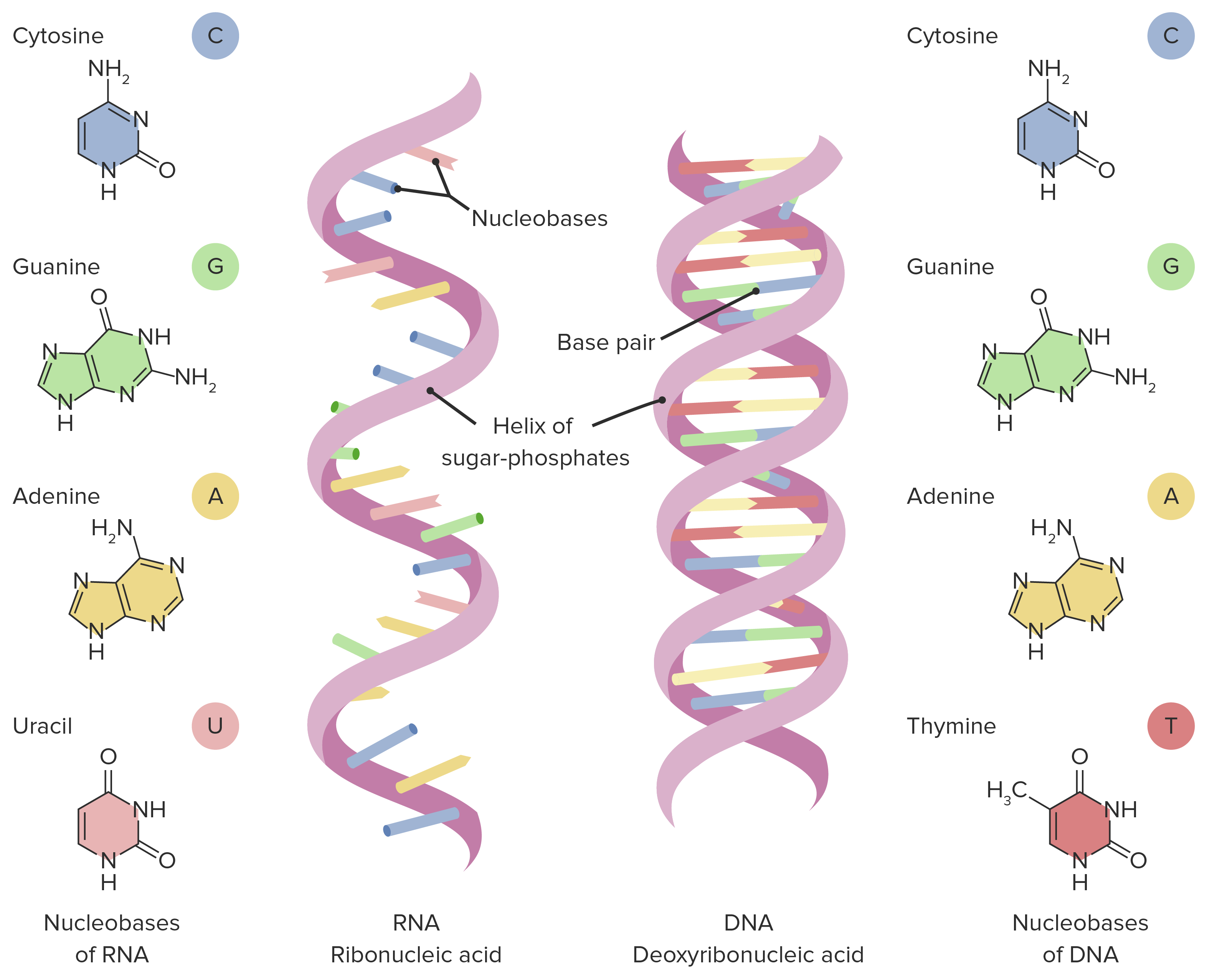
Polymers of nucleotides
DNA deoxyribonucleic acid (DNA) is the largest 100 million - 1 billion nucleotides long
RNA ribonucleic acid range from 70 to 10,000 nucleotides long