Foundations of Psychology Founders and Theories
 Call Kai
 Learn
Learn Practice Test
 Spaced Repetition
 Match
Match Flashcards
 Knowt Play
1/40

There's no tags or description
Looks like no tags are added yet.
Name | Mastery | Learn | Test | Matching | Spaced | Call with Kai | Chat |
|---|
No analytics yet
Send a link to your students to track their progress
41 Terms
Sigmund Freud
known as the father of psychoanalysis. (personality theory and form of psychotherapy that emphasizes the role of unconscious factors in behavior)

Wilhelm Wundt
Founder of of Experimental Psychology (1832-1920).
Established first Psychology Laboratory. Wanted to establish Psychology as a Science.

William James
Father of American Psychology. Studied under Wundt. Influenced by Darwin. Developed the ideas which shaped school of functionalism. Introduced concept of conscience experiences being important. Behavior has a basic functional purpose of survival.

John Watson
American psychologist who established the psychological school of behaviorism. (emphasize the study of observable behaviors, especially as they pertain to the process of learning)

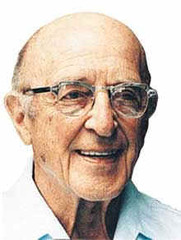
Carl Rogers
American Psychologist who was one of the founders of the humanistic approach, also a founder of psychotherapy research.emphasized the person's conscious experiences, unique potential for psychological growth and self-direction, self-determination, free will, and the importance of choice in human behavior.
B.F. Skinner
American psychologist, believed that psychology should restrict itself to studying outwardly observable behaviors that could be measured and verified in compelling experimental demonstrations. Rats and pigeons were the preferred subjects.

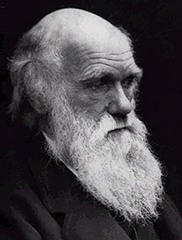
Charles Darwin
Ideas contributed to development of Evolutionary psychology, the idea that human social instinct evolved from natural selection. Concepts influenced development of Functionalism.
Ivan Pavlov
Russian psychologist known for his work in classical conditioning. Started behaviorism, demonstrated that dogs could learn to associate neutral stimulus, like the sound of the bell, with an automatic behavior (salivating because of food)

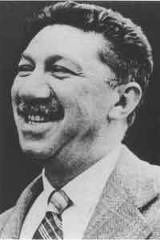
Abraham Maslow
American psychologist best know for making his hierarchy of needs. His theory of motivation emphasized the importance of psychological growth, but influences of survival needs over psychological growth.

Biological perspective
Seek to explain human behavior by way of looking at physiological influences.
biological psychology
Mood, Emotions and Behaviors explored through scientific research and clinical practice focused on internal physiological influences.
Behavioral perspective
Learning and behavior are described and explained in terms of stimulus-response relationships. Operant conditioning and rewards and punishments.
Humanistic perspective
An approach to psychology that emphasizes empathy and stresses the good in human behavior and individual ability to manage life circumstances.
Psychodynamic perspective
An approach to psychology that emphasizes systematic study of the psychological forces that underlie human behavior, feelings, and emotions and how they might relate to early experience. Focus on the unconscious influences on thoughts, feelings and behaviors. Emphasize need for insight to promote change.
Cognitive perspective
Examines internal mental processes such as problem solving, memory, and language.
cognitive psychology
The scientific study of mind and mental function, including learning, memory, attention, perception, reasoning, language, conceptual development, and decision making.
Positive psychology perspective
Positive aspects of human life, such as happiness, well-being and flourishing. Emphasizes need to focus on strengths.
cross-cultural perspective
Study of human behavior and mental processes, including both their variability and invariance, under diverse cultural conditions.
evolutionary perspective
Theoretical approach in the social and natural sciences that examines psychological structure from the basic human drive to survive.
clinical psychology
branch of psychology concerned with the assessment and treatment of mental illness and disability
developmental psychology
the scientific study of how and why human beings change over the course of their life.
educational psychology
branch of psychology that studies children in an educational setting and is concerned with teaching and learning methods, cognitive development, and aptitude assessment
counseling psychology
a specialty within professional psychology that maintains a focus on facilitating personal and interpersonal functioning across the life span. The specialty pays particular attention to emotional, social, vocational, educational, health-related, developmental, and organizational concerns.
industrial/organizational psychology
the scientific study of human behavior in the workplace and applies psychological theories and principles to organizations.
psychiatrist
a medical practitioner specializing in the diagnosis and treatment of mental illness.
psychologist
an expert or specialist in psychology.
scientific method, including the steps
How to figure things out.
question
research
hypothesis
experiment
conclusion
replicate
To make a close or exact copy. In research, being able to replicate a scientific study and come to same conclusions as previous research helps strengthen the results of the research.
theory
Well-developed set of ideas that propose an explanation for observed phenomena. Generally has substantial research to support the ideas proposed through the theory.
survey
to examine and record.
naturalistic observation
collection of data without manipulating the environment.
case study
a process or record of research in which detailed consideration is given to the development of a particular person, group, or situation over a period of time.
sample
A small part to show the whole. In research, you cannot study every single person alive, so you take a small number of people as a sample of the entire population.
random selection
To help provide validity to a research study, subjects are randomly selected for the study in hopes of obtaining enough diversity in the study to make the results applicable to the general population.
independent variable
In research, this is the experimental factor that is manipulated; the variable whose effect is being studied.
dependent variable
In research, this is the variable that is being measured by the study.
extraneous variables
undesirable variables that influence the relationship with variables in the experiment.
hypothesis
A tentative and testable statement about the relationship between two or more variables. It is an idea about how two or more variables relate.
placebo
using a fake treatment to for someone to think they are getting treatment, when in fact, they are not. Helps account for the phenomenon that if peoples thing they are getting treatment, then they tend to report being better, even though they are in reality, not getting treatment.
control group
a group that is like the experiment group, but is not given the independent variable or treatment in an experiment. Provides the experimenter a group to compare results with.
psychology
study of mind and behavior.