L1 - Microbiology: Introduction and History Flashcards
 Call Kai
 Learn
Learn Practice Test
 Spaced Repetition
 Match
Match Flashcards
 Knowt Play
1/26

Earn XP
Description and Tags
A collection of vocabulary terms and definitions covering the fundamentals of microbiology, bacterial growth, healthcare-related impacts, and historical scientific contributions.
Name | Mastery | Learn | Test | Matching | Spaced | Call with Kai | Chat |
|---|
No analytics yet
Send a link to your students to track their progress
27 Terms
Microbiology
The study of microscopic organisms, including major pathogenic groups such as Bacteria, Protozoa, Helminths, Fungi, and Viruses, as well as Algae and Prions.
Helminths
One of the major pathogenic groups studied in microbiology, consisting of parasitic worms.
Healthcare Associated Infections (HAIs)
Infections affecting 1.7million people per year in the U.S., causing 98,987 deaths and adding 35Billion dollars to healthcare costs annually. These infections occur in healthcare settings and are often preventable, commonly resulting from bacteria, viruses, or fungi.
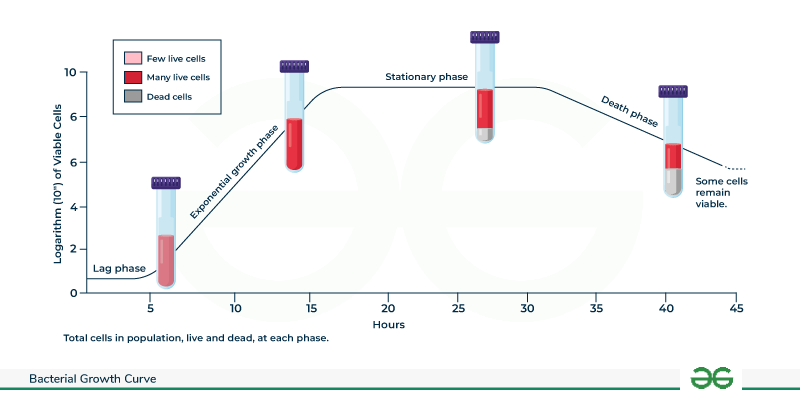
Lag phase
The initial period in a bacterial growth curve where the number of viable cells remains relatively constant as the population prepares for growth.
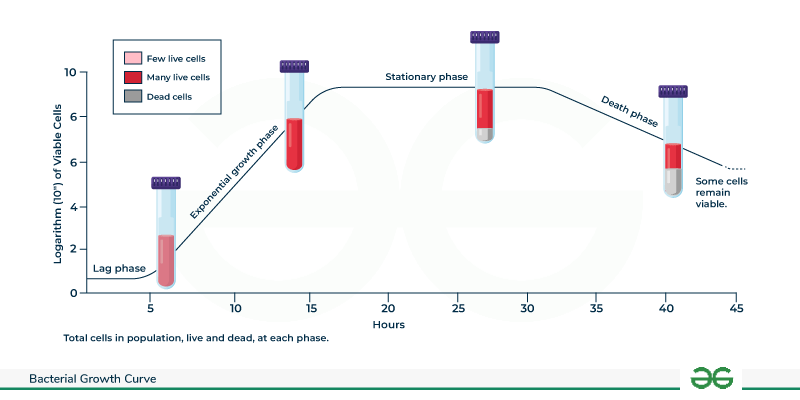
Exponential growth phase
The period in the bacterial growth curve characterized by the maximum rate of cell division.
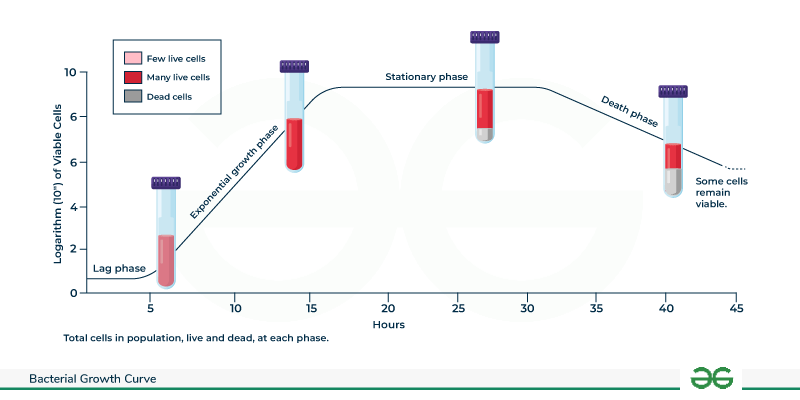
Stationary phase
The phase of bacterial growth where the number of new cells produced equals the number of cells dying, resulting in a plateau.
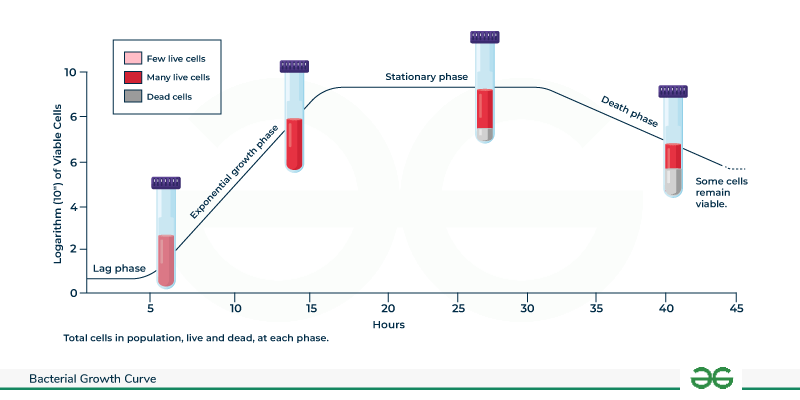
Death phase
The final phase of the bacterial growth curve where the number of viable cells decreases significantly, though some cells may remain viable.
Mesophiles
Microorganisms that are found in "moderate" environments.
Extremophiles
Microorganisms that thrive in "extreme" environments, such as those with unusual pH, salt concentrations, or temperatures.
Bioremediation
The use of microbes, such as extremophiles, to decompose dead matter or clean up environmental pollutants.
Bacterial antagonism
A symbiotic relationship where members of the gut, skin, or other microbiomes prevent the growth of harmful bacteria.
Antonie van Leeuwenhoek
The first individual to develop a microscope and describe "animalcules."
Animalcules
The term used by Antonie van Leeuwenhoek to describe the microscopic organisms he first observed.
Robert Hooke
The individual credited with the first observation of microbes in the 1600′s.
Ignaz Semmelweis
A physician who, along with Oliver Wendell Holmes, identified the transmission of disease from morgues to maternity wards and advocated for hand washing in the 1840s.
Joseph Lister
The individual who established the foundation of modern microbial controls by introducing hand washing and antiseptic agents in operating rooms.
Robert Koch
The scientist who verified the germ theory of disease using a series of proofs known as Koch's Postulates; determined that causal relationship between germs and disease and that a specific microbe causes a specific disease
Koch's Postulates
A four-step experimental process used to prove that a specific microbe is the cause of a particular disease.
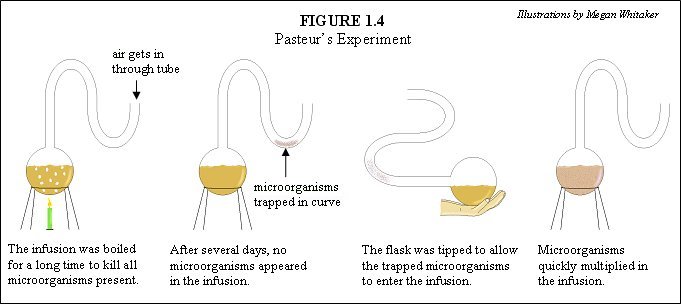
Louis Pasteur
The "Father of Microbiology" who developed pasteurization, the first Rabies Vaccination, and disproved the theory of Spontaneous Generation (Swan Neck experiment)
Spontaneous Generation
A disproven theory that living organisms could arise from non-living matter, refuted by the work of Louis Pasteur.
Hans Christian Gram
The scientist who pioneered modern staining techniques and developed the Gram Stain.
Gram Stain
A staining method involving crystal violet, iodine, alcohol wash, and safranin to differentiate bacterial types.
Ferdinand Cohn
The scientist who described endospores, providing the scientific basis for sterilization.
Endospores
Heat-tolerant structures produced by certain microbes, the discovery of which by Ferdinand Cohn led to the development of sterilization. These structures enable survival in extreme conditions and can germinate into active cells when conditions improve.
John Snow
A pioneer of epidemiology who characterized a cholera outbreak in London and implemented methods to stop the epidemic.
Epidemiology
The branch of medicine dealing with the incidence, distribution, and control of diseases, which has its origins in the work of John Snow.
Florence Nightingale
The founder of modern nursing who promoted germ theory and hygiene practices during the Crimean War and established the first secular nursing school.