Anaerobes
 Call Kai
 Learn
Learn Practice Test
 Spaced Repetition
 Match
Match Flashcards
 Knowt Play
1/103

There's no tags or description
Looks like no tags are added yet.
Name | Mastery | Learn | Test | Matching | Spaced | Call with Kai | Chat |
|---|
No analytics yet
Send a link to your students to track their progress
104 Terms
anaerobes will not grow in the presence of ____.
oxygen
most clinically significant anaerobes are part of our ____ but infections occur when they gain access to sterile body sites as a result to disruption of anatomic barrier.
normal flora
some pathogenic anaerobes are environmental (soil) and are not considered normal flora. list 2 examples.
clostridium botulinum; clostridium tetani
suspect ____ if:
polymicrobial results on gram stain-culture
gas in pus/infected tissues
foul odor (from gas) of pus/infected tissue
necrotic tissue
site of infection are where normal flora can be found (e.g., gut)
anaerobes
incidence of ____ of all genera as normal flora are in the upper respiratory tract and intestines.
anaerobes
which genus is normal flora of the skin?
cutibacterium
the following are acceptable for anaerobic ____ (source) cultures:
thoracentesis (pleural) fluid
transtracheal aspirate
bronchial washings obtained with double lumen plugged catheter
percutaneous (direct) lung aspirate/biopsy
respiratory
the following are acceptable for anaerobic ____ (source) cultures:
bile
peritoneal (ascites) fluid
abdominal
the following are acceptable for anaerobic ____ (source) cultures:
suprapubic bladder aspirate
uterine contents (use protected swab)
biopsy of endometrial tissue (with curette)
genito/urinary
the following are acceptable for anaerobic ____ (source) cultures:
tissue obtained at biopsy/autopsy
material aspirated from abscesses
decubitus ulcer (if collected from base of lesion post debridement of surface debris)
wounds
the following are acceptable for anaerobic ____ (source) cultures:
blood
bone marrow
circulatory
fluids from normally sterile sites such as joint, CSF, etc. are unacceptable for anaerobic culture. true or false?
false
which anaerobic media is described below:
anaerobic blood agar
enriched
for general growth of all anaerobes
CDC
which anaerobic media is described below:
selective and differential
used to culture and ID bacteroides fragilis
bacteroides bile esculin (BBE) agar
which anaerobic media is described below:
enriched and selective
used to grow most anaerobes
inhibits facultative anaerobic GNR (e.g., enterobacteriaceae)
phenylethyl alcohol (PEA) agar
which anaerobic media is described below:
enriched and selective
for isolation of slow growing anaerobes (e.g., prevotella, bacteroides)
laked blood enhances pigment
kanamycin-vancomycin laked sheep blood (KVLB) blood
which anaerobic media is described below:
selective
inhibits gram negatives
used to grow most gram positive
anaerobes/facultative anaerobes
columbia-colistin-naladixic agar with 5% sheep blood
which anaerobic media is described below:
differential
used to detect clostridium enzymes:
lipase positive: blue-green sheen (mother of pearl) on top agar surface
lecithinase positive: opaque zone (fats)
egg yolk agar
which anaerobic media is described below:
enrichment differential: when resazurin added
resazurin: pink presence of O2, colorless when reduced
enhance growth of anaerobes
broths with reducing agents (thioglycolate, cooked/chopped meat)
for anaerobic jars, signs that it is working properly are that the methylene blue indicator will turn from blue to ____ as well as produce heat within a few minutes (top warm).
white
what bacteria is responsible for most anaerobic infections?
bacteroides fragilis
bacteroides fragilis is major normal flora of the ____.
colon
infections by bacteroides fragilis are often mixed with other anaerobes and facultative anaerobes. true or false?
true
which bacteria usually causes infection after gaining entry into normal sterile body sites:
usually following surgery, trauma, disease
foul odor is common
“below the diaphragm” infections, mostly
bacteroides fragilis
what bacteria contains the following virulence factors:
capsules, endotoxin, succinic acid (inhibits phagocytosis), various enzymes that mediate tissue damage
most infections still require some breach of mucosal integrity to allow organisms to gain access to deeper tissue
bacteroides fragilis
bacteroides fragilis is resistant to all of the following EXCEPT:
kanamycin
vancomycin
colistin
penicillin
rifampin
rifampin
which bacteria has the following characteristics:
pleomorphic GNR with rounded ends and safety pin appearance (bipolar staining)
grows on BBE
>1mm in diameter, brown → black, circular, raised, surrounded by a grey zone (esculin hydrolysis)
some strains hydrolyze bile esculin
bacteroides fragilis
what bacteria is associated with the following information:
GNR
normal flora of the upper respiratory and GI tracts
asacchrolytic or weak fermenters; relatively bioinert
fusobacterium
which species of fusobacterium is associated with the following information:
causes severe pulmonary infections
more common
gram stain: slender with pointy ends
3 colony types:
bread crumb like, white
speckled
smooth
greening of agar with air, usually non-hemolytic, fluoresces chartreuse
fusobacterium nucleatum
which species of fusobacterium is associated with the following information:
lung and liver abscesses, arthritis
pediatric/adolescent pharyngitis
can progress to Lemierre syndrome (rare): formation of infected blood clots that can then circulate in blood, spreading infection
causes more serious infections
colony:
circular, ridged surface, translucent → opaque, green with exposure to air, some strains beta-hemolytic (small zone), fluoresces chartreuse
fusobacterium necrophorum
what bacteria is associated with the following information:
pigmented, saccharolytic GNR
ANA blood agar: dark center with grey → brown edges; circular, convex, smooth, shiny
young colonies appear tan
older colonies brown → black (may take weeks to see this pigment)
fluoresces brick red
prevotella melaninogenica
what bacteria is associated with the following information:
normal flora of the oropharynx, nose, GI and urogenital tracts
can hydrolyze esculin (black on LKV)
inhibited by 20% bile
vitamin K in media enhances its growth
in media is enriching for this organism
prevotella melaninogenica
what bacteria is associated with the following information:
GNR
asaccharolytic or weak fermenters
normal flora of oropharynx, nose, and GI and urogenital tracts
will not grow on KVLB agar (inhibited by vancomycin and bile)
colony (ANA BA): dark brown-black
brick red fluorescence under UV light
porphyromonas
most porphyromonas species display brick red fluorescence. which species does not (an exception)?
porphyromonas gingivalis
what bacteria is associated with the following:
small, gram-negative cocci
can be clusters, pairs, short chains
colony
small, almost transparent; greyish white, smooth, buttery; may show red fluorescence under UV light
veillonella
what bacterial genus is associated with the following:
some species are normal flora of the GI tract (humans and animals)
some species environmental (soil, water, dust)
large GPR
may be coccoid or filamentous
produce a variety of exotoxins
spore forming
clostridium
which of the following choices is best described below:
spores +
anaerobic growth optimal
catalase -
a. clostridia
b. bacillus
c. lactobacillus
clostridia
which of the following choices is best described below:
spores +
aerobic growth optimal
catalase + (usually)
a. clostridia
b. bacillus
c. lactobacillus
bacillus
which of the following choices is best described below:
never form spores
a. clostridia
b. bacillus
c. lactobacillus
lactobacillus
some clostridia rarely produce spore and may not survive the ethanol test. provide a species examples.
clostridium perfringes
what bacteria is associated with the following information:
obligate anaerobe
found in soil
cause of tetanus
usually diagnosed clinically due to characteristic symptoms; generally not cultured
colonies
swarming appearance
GPR
“drumstick” or “tennis racket” (due to terminal spores)
clostridium tetani
for tetanus infections, bacteria must enter the wound deep enough so that is can live aerobically. true or false?
false
symptoms of tetanus are caused by a neurotoxin known as _____.
tetanospasmin
what condition involves blocking the relaxation pathway of muscles so that muscles continually spasm and contract?
tetanus
what term refers to muscles in the neck and jaw being affected early in the disease and prevents the mouth from opening caused by tetanus?
lockjaw
tetanus is not spread person to person. true or false?
true
tetanus is vaccine preventable (TDaP, Tdap, DT, Td (toxoid); however, about 1 million cases occur worldwide with about half being ____ in developing countries.
newborns
what bacteria causes botulism?
clostridium botulinum
what refers to a neurotoxin that binds to the synapse of nerve fibers; blocks nerve impulses (opposite of toxin C. tetani)?
botulism toxin
what toxin will result in acute (flaccid/limp) paralysis and death?
botulism toxin
what bacteria is associated with the following information:
obligate anaerobe
found in soil and dust and freshwater sediment
can form spores when needed
clostridium botulinum
what bacteria on a gram stain depict oval/subterminal spores and resemble tennis rackets?
clostridium botulinum
which form of botulism is described below:
ingest food with botulism toxin
15% cases in US (home-canning a risk)
foodborne
which form of botulism is described below:
20% cases in US
cases associated with injection drug use; black tar heroin especially in CA; sharing needles
wound
which form of botulism is described below:
consume spores: bacteria germinate in intestine and produce toxin
65% of cases in US (most common)
can be rapidly fatal
infant
which form of botulism is described below:
very rare
same route as infant botulism
adult intestinal toxemia
which form of botulism is described below:
accidental overdose of botulinum toxin
iatrogenic
botulism is not spread person to person. true or false?
true
what condition is associated with the following symptoms:
blurred vision, slurred speech, difficulty swallowing, dry mouth, muscle weakness → flaccid paralysis → respiratory failure → death
botulism
which form of botulism is treated with anti-toxin (available through CDPH)?
infant
which form of botulism is treated with enemas or induced vomiting to try to remove contaminated food in the gut?
foodborne
which form of botulism is treated with surgical removal of toxin producing bacteria and followed up with antibiotics?
wound
what bacteria is found in the human intestinal tract, soil, and water and causes gas gangrene and food poisoning?
clostridium perfringes
what condition by clostridium perfringes is associated with the following:
improperly stored/cook meat products
due to exotoxin; not passed person to person
antibiotic treatment is not recommended
food poisoning
what condition by clostridium perfringes is associated with the following:
carbohydrate fermentation within a wound
hydrogen gases are formed via fermentation
gas gangrene
what condition by clostridium perfringes is associated with the following:
diabetic patient with poor circulation/vasculature (especially to feet) → not enough blood reach the tissue → tissue does not receive enough oxygen → ischemia
low oxygen environment → anaerobes
tissues that do not receive enough blood/oxygen die
gas gangrene
in addition to gas production through fermentation, what bacteria also produces exotoxins and enzymes to further interfere with blood supply → allow bacteria to spread?
clostridium perfringes
what bacteria is described below:
gram stain: box car shaped rods
colony (ANA BAP): double zone beta hemolysis
reverse CAMP positive
lecithinase positive
opaque on yolk agar
nagler test positive
one side anti-alpha toxin: no opaqueness around colony streak
one side not anti-alpha toxin: characteristic opaque around colony (lecithinase inhibited)
clostridium perfringes
for the reverse CAMP test, streptococcus agalactiae should be streaked with clostridium perfringes in a position where it will be _____ to the strep.
perpendicular
the CAMP factor made by streptococcus agalactiae interacts with which toxin of clostridium perfringes in the reverse CAMP test to create a synergistic hemolysis reaction?
alpha toxin
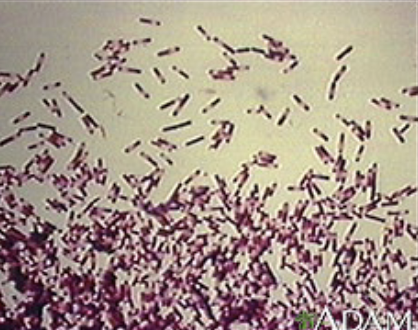
what bacteria refers to a toxin producing anaerobic gram positive rod?
clostridium difficile
what toxingenic strain of clostridium difficile refers to an enterotoxin?
toxin A
what toxingenic strain of clostridium difficile refers to an cytotoxin?
toxin B
what toxingenic strain of clostridium difficile is more potent and more likely to be associated wit severe and recurrent disease?
toxin B
what bacteria is associated with the following information:
fecal-oral transmission: requires toxin-producing strain to enter your gut (infective dose can be as low as 10 spores)
some people are colonized already and are asymptomatic
clostridium difficile
what bacteria is associated with antibiotic use (broad spectrum mostly) where most of our normal flora can be wiped out and may lead to colitis?
clostridium difficile
what bacteria is associated with the following complications:
dehydration
kidney failure
result of rapid dehydration
toxin megacolon
intestine cannot expel gas and stool → becomes distended and ruptures → gut bugs in abdominal cavity
requires emergency surgery and can be fatal
bowel perforation
due to extensive injury to intestine → peritonitis
death
clostridium difficile
which bacteria can be treated with the following methods:
fluid replacement
more antibiotics:
most common: flagyl (metronidazole), vancomycin, fidaxomicin
probiotics
replace normal gut flora
surgery
removed diseased portion of intestine
fecal microbiota transplant (FMT) / stool transplant
clostridium difficile
for the identification of clostridium difficile, EIA methods are fast, but ____ can be very low (miss true positives)?
sensitivity
for the identification of clostridium difficile, EIA methods test for both toxins A/B as well as the enzyme ____.
glutamate dehydrogenase (GDH)
for the identification of clostridium difficile, EIA methods do not differentiate between toxigenic and nontoxigenic strains. true or false?
true
NAAT/PCR methods for the identification of clostridium difficile have a very good _____ (true positives detected).
sensitivity
NAAT/PCR methods for clostridium difficile cannot pick up asymptomatic carriers. true or false?
false
formed stools are generally rejected for clostridium difficile as the _____ degrades at room temperature and may be undetectable within 2 hours (must be tested promptly or refrigerated).
toxin
on cycloserine-cefoxitin-fructose agar (CCFA) for clostridium difficile, colonies are ____ and have a ground glass appearance.
yellow
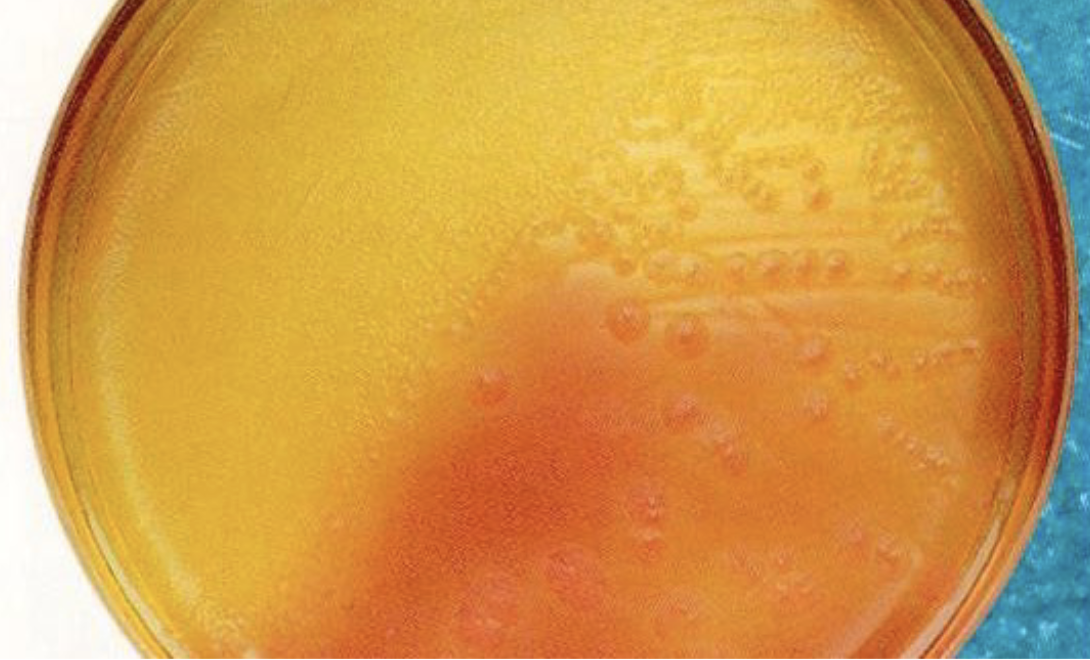
what media for clostridium difficile has the following characteristics:
yellow, ground glass colonies
smells like horse manure
fluoresces chartreuse (yellow green) when exposed to UV light
CCFA
culture followed by strain testing for the toxin is considered to be a gold standard for the testing of which bacteria?
clostridium difficile
for clostridium difficile, toxin genes do not degrade at room temperature. true or false?
false
what bacteria is also referred to as propionibacterium?
cutibacterium
what bacteria is best described below:
gram positive, pleomorphic diphtheroid-like rod
club-shaped palisades
“anaerobic diphtheroids”
non-spore forming
normal flora of skin, mouth, GI tract
common contaminant (most common in blood cultures)
associated with inflammatory process in acne (“acne vulgaris”)
opportunistic pathogen
post-op surgical site infections, endocarditis, device-related infections
cutibacterium
which species of cutibacterium is the 3rd most common cause of shunt infections (CNS infection)?
cutibacterium acnes
cutibacterium is catalase and indole ____.
positive
what bacteria is best associated with the following information:
gram variable, small, thin, curved rods
non-spore forming
motile; catalase positive; indole negative
vancomycin susceptible
organisms are found in the vagina
associated with bacterial vaginosis (BV), PID, abdominal infections
mobiluncus
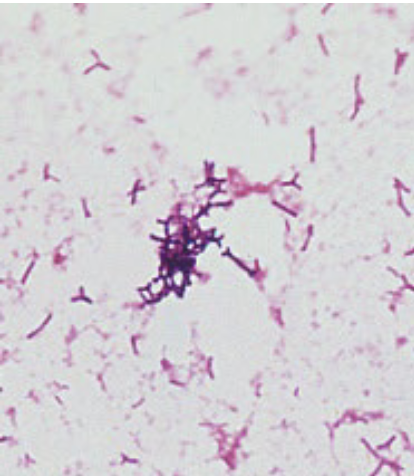
what bacteria is best associated with the following information:
gram positive diphtheroid/irregular
rods terminate in clubs or thick, bifurcated (forked) ends
“dog bones”
mostly nonpathogenic normal oral and intestinal flora
most commonly found in mixed cultures of pelvis or abdomen
used in yogurts/probiotics
bidifobacterium
what bacteria is best associated with the following information:
mostly nonpathogenic normal oral and intestinal flora
have been implicated in abdominal infections and bacteremia
gram positive pleomorphic rods-coccobacilli
pairs or short chains
eubacterium
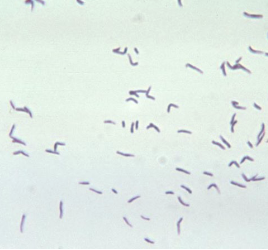
which species of eubacterium is best described below:
seagull shape, similar to campylobacter
found in oral cavity; periodontal disease
eubacterium alactolyticum
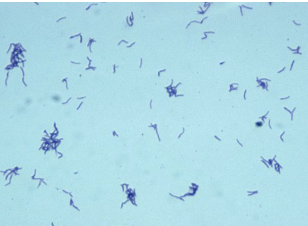
which species of eubacterium is best described below:
beading, filaments, branching, similar to actinomyces
found in oral cavity; periodontal disease
eubacterium nodatum
which species of eubacterium is best described below:
now known as eggerthella lenta
small, straight rod with rounded ends
found in GI tract: colon infections, liver, anal abscesses, bacteremia
eubacterium lentum
what bacteria is described below:
normal flora of mouth, upper respiratory tract, intestine
catalase positive
produces olive-green colonies that become black
most often found with other anaerobic and facultative anaerobic bacteria
cutaneous, respiratory, oral, female pelvic infections
peptococcus
which species of peptostreptococcus is associated with the following:
gram positive large coccobacillus, often in chains
colony: medium, grey white, opaque,
sweet fetid odor
usually larger than other anaerobic cocci
inhibited by SPS
peptostreptococcus anaerobius