Chapter 26 - Intelligence
 Call Kai
 Learn
Learn Practice Test
 Spaced Repetition
 Match
Match Flashcards
 Knowt Play
1/65

There's no tags or description
Looks like no tags are added yet.
Name | Mastery | Learn | Test | Matching | Spaced | Call with Kai | Chat |
|---|
No analytics yet
Send a link to your students to track their progress
66 Terms
Leilani Muir
at 10 years old - placed in Provincial Training School for Mental Defectives
at 13 years old - completed IQ test and scored 64 (average score should be 100)
was diagnosed as a Mental Defective Moron
at 14 years old - sterilized without her consent
due to Alberta’s 1928 Sexual Sterilization Act
Leilani Muir as an adult and what this shows
she later redid the IQ test and scored 89, which is closer to the average
tells that it is important to measure things properly, especially intelligence
because due to the sterilization, she cannot have kids now
Sir Francis Galton
believed that people who are better at taking in information would be overall smarter
created 17 sensory tests (similar to absolute thresholds)
he used Anthropometrics
but his methods of testing were completely flawed
Anthropometrics
methods of measuring physical and mental variation in humans
ex. ability to judge different colours, ability of memory
Alfred Binet
french researcher who assumed that intelligence was associated with more complex abilities like attention, memory, and comprehension
Intelligence
ability to think, understand, reason, and adapt to or overcome obstacles
Binet-Simon Test
Binet and Theodore Simon
test that identifies students who needed specialized education
used 30 tasks including defining words, making sentences out of specific words, and reproducing drawings
Mental Age
average intellectual ability score for children of a specific age
you could be 10 years old but score intellectually lower than the average, meaning your mental age could be younger
Lewis Terman of Stanford
calculated norms for each chronological age
Stanford-Binet test
an intelligence test intended to measure innate levels of intelligence
Terman vs. Binet
Binet - believed that intelligence could change over time
Terman - believed that intelligence was an innate, unchangeable characteristic
Intelligence Quotient (IQ)
used to rank a person’s intellectual ability against others
IQ score = (mental age (MA) / chronological age (CA) ) x 100
mental age - based on how intellectually you perform
chronological age - how old you actually are
a child of 8 performed like the average 10 year old. What is his mental age and IQ?
mental age would be 10
IQ = (10 / 8) x 100 = 125
problems with IQ score
a 40 year old with mental age of a 30 year old doesn’t mean they’re dumb
there needed to be another way to measure IQ of adults
so they made deviation IQs
Deviation IQs
determining intelligence based on how an individual’s scores deviate from the average of that age group
how your intelligence differs (deviates) from the average intelligence of people your age
average and standard deviation of IQ
average IQ - 100
standard deviation - 15
2 main subdivisions of the Wechsler Adult Intelligence Scale (WAIS)
General Ability Index (GAI) - examines comprehension and reasoning without examining processing speed
Cognitive Proficiency Index (CPI) - working memory and processing speed tasks
abilities allow more cognitive resources to be directed toward reasoning
General Ability Index task examples
Verbal Comprehension Index
similarities, vocabulary, info
Perceptual Reasoning INdex
block design, matrix reasoning, visual puzzles
Cognitive Proficiency Index task examples
Working memory index
Digit span, arithmetic
Perceptual Speed index
symbol search, coding
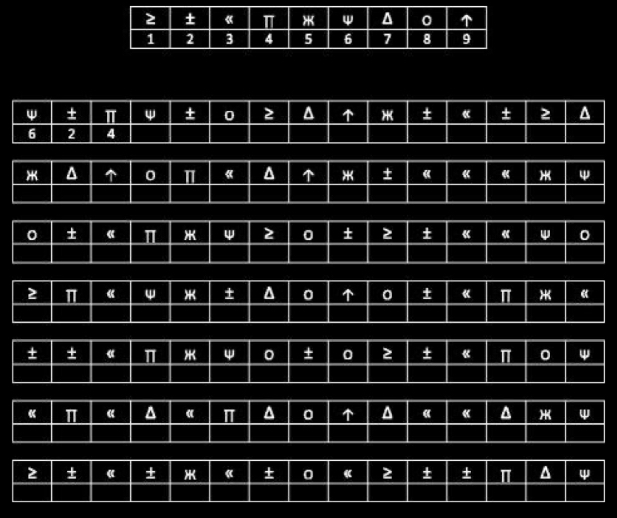
Symbol-Digit Modalities Test
example of a Coding task
sensitive to TBI and age-related deficits
what has studies found about average IQ of university students
average IQ of population is 100
university students IQ found to be nearly the same as average IQ of population
problems with WAIS
there are some cultural biases in the WAIS since it caters more towards North America
difficult when introduced to other countries, languages, and cultures
can end up testing language ability rather than cognitive ability
Raven’s Progressive Matrices
intelligence test that is based on pictures (not words) making it relatively unaffected by language or cultural background
Galton’s Intelligence tests and what they show
Galton was from a family of successful people like Charles Darwin
his intelligence tests were developed in Victorian England
British Empire had much control of parts of the world
because of his views and his environment, he blindly assumed that inherent intellectual ability ran in families which was due to “good breeding”
American Tests and racism in society
American tests were developed when racial segregation was still common
biased towards people who already went to school (Caucasians) since they were able to, as opposed to the new immigrants
Some ethnic groups were directed towards manual labour instead of going to school, due to these unfair tests classifying them as dumb
In the military, there was ethnic difference where some ethnic groups were sent in as cannon fodder
Eugenics
encouraging breeding between people with particular traits and discouraging breeding between those without these traits (ex. people with low IQs)
what did early Eugenists believe
they genuinely thought they were going to make society better
however, forced sterilization meant that weaker characteristics would be “bred out” of the population
and some were simply racist
"The Bell Curve”
by Herrstein and Murray
book that stated society consists of the cognitive elite and the less intelligent
lower IQ scores were generally found in Indigenous, Black, and Latin American descent
and were thus treated more poorly
a healthy society would be a meritocracy
problems with Racial Superiority interpretation
even unbiased tests produce race differences
due to familiarity with standardized tests, motivation to do well on tests, and discomfort with formal testing environments
stereotype threat
when negative stereotypes about a group cause group members to underperform on ability tests
influences sex differences, ethnic minorities, the elderly, and the poor
ex. a female may become self conscious to speak in front of a group of men about driving, because there is a stereotype that women are bad drivers
Stereotype threat and how it affects test results
increases arousal
(fight or flight response)
because individuals are concerned that a poor performance may reflect poorly on their group
increases self-focused thoughts
can develop:
anxiety → worse performance
disidentification → reduced motivation
increases inhibition
the tendency for people to try to inhibit negative thoughts they have
reduces the cognitive resources available for the test
Entity Theory
the belief that intelligence is a fixed characteristic and relatively difficult to change
incremental theory
the belief that intelligence can be shaped by experiences, practice, and effort
Entity vs. Incremental theory effects
kids who believed in entity theory were more likely to give up than kids who believed in incremental theory
students who were taught incremental theory had improved grades over time
Entity vs. Incremental theory and its effects on culture
asians are more likely to believe in incremental theory
North americans are more likely to believe in the entity theory
parents had lower academic standards for kids compared to other cultures
children valued education less
Factor analysis
created by Charles Spearman
statistical technique that examines correlations between variables to find clusters of related variables or “factors”
scores on tests of vocabulary, reading comprehension, and verbal reasoning correlate highly together
forms “language ability” factor
someone who is good at one subject is probably good at other subjecrs
general intelligence factor g
performance in tasks of mental ability was dependent on a general intelligence factor, g
assumes intelligence is a basic cognitive trait that is made up of the ability to learn, reason, and solve problems, regardless of their nature
correlates with perceptual decision-making speed and efficiency of nerve conduction
effects of g
having higher levels of g means
less likely to be poor
less likely to get divorced
less likely to be thrown in jail
problems with g
g does not solely correlate to having good grades, income levels, etc.
there are are other factors
Louis Thurstone
use factor analysis and found that instead of a single g, there were actually 7 different clusters of abilities that people have
word fluency
verbal comprehension
numeric abilities
spatial visualization
memory
perceptual speed
reasoning
How did Spearman alter g
noted that the 7 different clusters that Thurstone found were actually all correlated with each other
g is the correlation between these clusters of abilities
suggested that along with the general influence of g, all tasks require specific abilities, s
intelligence consists of a general ability (g) and an unknown number of specific abilities (s)
Hierarchical Model
specific skills (s) are nested within primary mental abilities (g)
this is the accepted model of intelligence today
ex. primary mental abilities (g) - being verbal or math smart
specific skills - being good at public speaking vs. writing good essays
Raymond Catell
believed g had 2 componenets
fluid intelligence (Gf)
Crystallized intelligence (Gc)
fluid intelligence (Gf)
type of intelligence used in learning new info and solving new problems not based on knowledge that you already know
easier for younger people as opposed to older people, whose cognitive capacity to learn reduce
ex. Raven’s progressive matrices
Crystallized intelligence (Gc)
type of intelligence that includes past learning and experience
vocabulary and general knowledge
fluid vs. crystallized intelligence
fluid intelligence reaches its peak before age 20, remains steady, and then decreases
crystallized intelligence continues to increase with age as long as the person is active and alert
Howard Gardener
came up with and believed that there were Multiple Intelligences
Multiple intelligences and problems with this theory
model of claiming that there are at least nine different forms of intelligence that are independent of each other
problem: this theory is unfalsifiable
you can always think up a new type of intelligence to account for the data
there was also no way to test this theory
Savant
an individual with low mental capacity in most domains but extraordinary abilities in other specific areas
art
calendar calculating
mathermatics
mechanical skills
spatial skills (map making, distance measuring)
savants are typically males (6:1 ratio male to female savants known)
Prodigious savants and Sephen wiltshire
have spectacular abilities in one area
there are < 100 prodigious savants know
steven wiltshire is an example of a savant
could draw detailed pictures of cities after twenty minute helicopter rides
Emotional intelligence (EQ)
ability to:
identify your own and other people’s emotions accurately
express your emotions clearly
regulate emotions in yourself and others
delay gratification
biologically based
frontal lobe damage impairs EQ
IQ in males vs. females
same average IQ score between males and females
but greater variability in male scores
more men who are geniuses
more men with substantial intellectual challenges
overlapping curves of male and female abilities
researchers found
small differences between males and females
larger differences within male groups and female groups
Grey Anatomy of male vs. female brains
women have 10% more white matter
frontal cortex is bulkier in women (more neurons for language-processing areas in temporal lobe)
parietal cortex (spatial skills/attention) and amygdala (emotional reactions) is large in men
but these are are very very little differences
Einstein’s brain
average human brain weighs between 1,300-1,400g
einstein’s brain was 1230g
shows that a larger brain doesn’t mean a more powerful brain
Brain Size and intelligence
humans have more cortical folds (convolutions) than other species
higher WAIS scores = more convolutions
this could explain about 25% of variability in WAIS scores
P-FIT Model of Intelligence
Fronto-Parietal Integration Theory
suggests that most of the areas related to individual differences in intelligence are in the frontal and parietal lobes of the brain
Intelligence and Heredity (in twin studies)
twin studies showed that monozygotic twins (raised together or apart) have more similar intelligence than the intelligence of other sibling relationships (raised together or apart)
the more genetic material you have in common with a person, the more likely you are to have similar IQ scores
Gene knockout studies
involve removing a specific gene and testing the effects of removing the gene by comparing animals without the gene to those that have it
transgenic animal studies
inserting genetic material in mouse chromosomes
Doogie Mice
have an altered version of the NR2B gene, which is related to learning and memory
environment (socioeconomic status) and IQ
IQ scores would probably go up or down if every child got the same early environment, but some differences would remain
enriched environments with a lot of cognitive stimulations improve intellience
poor environments are correlated with lower IQ scores
being more poor = more stress
this shows there is power of socioeconomic status
Birth Order Effects
the IQs of first-born children are, on average, about 3 points higher than second-born children and 4 points higher than third-born children
Nootropic substances
believed to beneficially affect intelligence
ex. Ritalin boosts cognitive performance by blocking reuptake of norepinephrine and dopamine
ex. Adderall
Meditation and intelligence
increases thickness and density of white-matter pathways connecting the anterior cingulate gyrus to other brain regions
related to attentional and emotional control
can slow down rate of cognitive decline and the loss of grey matter in the brain normally associated with aging
Norm
range of scores based on a sample of the population, used to base the score that an individual will get on a test