Word + Phrase Sheet Chapters 1, 2, & 3
 Call Kai
 Learn
Learn Practice Test
 Spaced Repetition
 Match
Match Flashcards
 Knowt Play
1/58

There's no tags or description
Looks like no tags are added yet.
Name | Mastery | Learn | Test | Matching | Spaced | Call with Kai | Chat |
|---|
No analytics yet
Send a link to your students to track their progress
59 Terms
Fluorescence microscopy
allows detection of proteins, DNA sequences, or molecules that have been made fluorescent by binding to antibodies that are coupled to a fluorescent molecule
Recombinant DNA technology
uses restriction enzymes to cut DNA at specific places, allowing scientists to create recombinant DNA molecules with DNA from different sources; DNA cloning is the generation of many copies of a specific DNA sequence, DNA transformation is the process of introducing DNA into cells
Amphipathic
have both hydrophobic and hydrophilic regions
Disulfide bonds
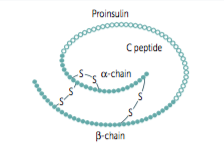
form between the sulfur atoms of two cysteine residues; form through the removal of two hydrogen ions (oxidation) and can be broken only by the addition of two hydrogens (reduction)
Molecular chaperones
proteins that aid in the proper and accurate folding of other proteins; act during protein synthesis or facilitate refolding, shielding parts of the protein from the interactions discussed until more of the protein can be made
Motifs
Certain combinations of a helices and sheets that have been identified in b many proteins; examples include the b-a-b, the hairpin loop, and the helix-turn-helix
Domain
discrete, locally folded unit of tertiary structure; proteins with multiple functions usually have a separate domain for each function
Purines vs pyrimidines
Purines: A, G
Pyrimidines: C, T, U
nucleotides linked by
a 3', 5' phosphodiester bridge (nucleotide sequences are conventionally written in the 5' to 3' direction)
Polyisoprenoids
polymers of isoprene, found in cell membranes of Archaea but not Bacteria
In vivo
experiments that involve living organisms
In vitro
done outside the living organism (ex. in a test tube)
Model organisms examples
cell cultures (e. coli, s. cerevisiae), fruit fly, roundworm, house mouse
Model organism
a species widely studied, well characterized, and easy to manipulate
Micrometer also called
micron
Omics
"study of"; Genomics is gene, Proteomics is proteins, Transcriptomics is genes transcribed in a cell, Metabolomics is metabolic reactions, Lipidomics is lipids, Ionomics is ions
Native conformation
most stable possible three-dimensional structure of a particular polypeptide (natural conformation of a protein); can be altered (denaturation) by changing conditions or by treating with certain chemical agents leads to loss of function; when denatured proteins are returned to conformation stable conditions, they may undergo renaturation (refolding), which may return function of the protein
Fibrous proteins native conformation
Extensive secondary structure with highly ordered, repetitive sections
Globular proteins native conformation
Compact structures, each with its own unique tertiary structure; most enzymes are globular proteins
units of secondary structure
alpha helix or beta pleated sheet
cell size is limited by
the requirement for surface area relative to volume, the rates at which molecules can diffuse, and the need to maintain adequate local concentrations of substances required for necessary cellular function
major limit on cell size
adequate surface area/volume ratio; cell-cell and cell-environment exchanges take place at the cell surface, cells must exchange significant amounts of wastes, sugars, etc. the volume of a cell increases with the cube of its length/radius while the surface area of the cell increases with the square of its length/radius (larger cells have proportionately smaller surface areas). Therefore, beyond a certain threshold, a large cell would not have a large enough surface area to allow for sufficient intake of nutrients and release of wastes
as size of the molecule increases,
rate of diffusion decreases
bacteria vs archaea vs eukarya
a eukaryotic cell has a true, membrane-bounded nucleus, while the genetic information of a bacterial or archaeal cell is folded into a compact structure called the nucleoid and is attached to the cell membrane; bacterial and archaeal cells usually do not contain internal membranes (with the exception of photosynthetic bacteria); nearly all eukaryotes make extensive use of internal membranes to compartmentalize specific functions and have numerous organelles
plant vs animal cell
both types have: cell membrane, nucleus, ribosomes, mitochondria, endoplasmic reticulum, golgi bodies & lysosomes plants cells have: cell wall, chloroplasts, large vacuole animal cells have: small vacuole, cilia/flagella
Bacteria vs Archaea vs Eukarya DNA
Bacterial DNA is present in the cell as a circular molecule associated with few proteins, Archaeal DNA is also circular and but complexed with proteins similar to eukaryotic histone proteins; circular DNA of bacteria or archaea is much longer than the cell itself and so must be folded and packed tightly, while Eukaryotic DNA is organized into linear molecules and complexed with large amounts of histone proteins; Eukaryotic cells have about 1000 times more DNA than bacteria (the problem of DNA packaging is solved among eukaryotes by packing the DNA into chromosomes inside the nucleus); Bacterial and archaeal cells replicate through binary fission while eukaryotic cells replicate through meiosis; no RNA procession in bacteria, but there is RNA processing in archaea and eukarya
mitochondrial matrix also includes
ribosomes involved in protein synthesis and enzymes and intermediates needed for oxidation of sugars
Peroxisomes in Animals vs Plants
In animals, they play roles in oxidative breakdown of fatty acids, especially longer-chain fatty acids (up to 22 carbon atoms); Some serious human diseases result from defects in one or more peroxisomal enzymes, normally involved in degrading long-chain fatty acids. In seeds, specialized peroxisomes called glyoxysomes help convert stored fats (lipids) into sugars (carbohydrates) during germination; Leaf peroxisomes are prominent in tissue because of their role in photorespiration
Ribosome S unit
Svedberg units, which is a measure of the particles sedimentation coefficient (how rapidly a particle sediments in an ultracentrifuge); S values of large and small subunits do not add up to the value for the complete ribosome, because S values depend on both size and shape (30S and 50S subunits add up to 70S ribosome)
Viruses, Viroids, and Prions
Acellular parasitic particles incapable of a free-living existence; have no cells, organelles, or independent metabolism; may have molecules of nucleic acid and protein
Viroids
found in some plant cells, composed only of single-stranded, circular RNA, lack a protein coat (unlike viruses), don't exist freely, transmitted when the surfaces of adjacent plant cells are damaged, suggested as evidence of the hypothetical, pre-cellular RNA Earth
Prions (TSEs)
Proteinaceous infective particles; misfolded proteins that lack genetic material and force normal proteins to change their shape; cannot be destroyed by cooking or boiling (resistant or refolds), responsible for progressive, degenerative disease of the central nervous system such as Scrapie (sheep and goats), Kuru (humans), Bovine spongiform encephalopathy/Mad cow disease (cattle), Chronic wasting disease (deer and elk), causes infected animals to rub against trees or other objects
Griffith Strep pneumoniae experiment
S-strain caused a fatal infection when introduced into mice, while R-strain or dead S-strain was unable to do so; mixture of dead S-strain and R-strain caused fatal infection, but when dead S-strain and living R-strain were mixed and used to infect mice, the mice died (many live S-strain bacteria were found in the dead mice, meaning that the R-strain had been converted into S-strain by a substance in the S-strain (transforming principle)
Hershey and Chase experiement
Hershey and Martha Chase labeled phage in two different experiments to distinguish protein from DNA; they labeled proteins with radioactive sulfur, 35S, and the DNA with radioactive phosphorus, 32P. In two separate experiments, they allowed the labeled phages to infect bacteria; once the genetic material is injected into the bacteria, the empty phage protein coats ("ghosts") were removed by agitating cells in a blender, then cells were recovered by centrifugation and radioactivity was measured in the supernatant (phage coats) and the pellet (cells at the bottom of the tube). Results showed that most of the 32P remained with the bacterial cells, but the majority of the 35S was found in the surrounding medium, therefore DNA and not protein had been injected into the bacterial cells (so DNA was the genetic material of the phage T2.)
Retroviruses
another type of RNA viruses (ex. HIV); RNA serves as a template for making complementary DNA in the cell using the enzyme reverse transcriptase. Virus binds to membrane of host cell and envelope fuses, then, inside the cell, viral reverse transcriptase catalyzes synthesis of a DNA strand complementary to the viral RNA and catalyzes the formation of a second DNA strand complementary to the first (the resulting double-stranded DN A enters the nucleus and integrates into the genome of the host
RNA retrovirus integrated viral genome is called a
provirus; transcription of the proviral DNA produces RNA transcripts that function to serve as mRNA molecules that direct synthesis of viral proteins or be packaged with viral proteins into new virus particles
RNA tumor viruses
retrovirus that causes cancer (some carry a cancer-causing oncogene in its genome, a mutated version of normal cellular genes; others cause cancer slowly through insertional mutagenesis)
Chargaff's rules
used chromatographic methods to separate and quantify the relative amounts of the four bases, found that DNA from different cells of a given species has the same percentage of each base while base composition varies among species, and for all DNA samples examined, the amount of adenine equals the amount of thymine and the amount of guanine equals the amount of cytosine
Supercoiled DNA
DNA double helix that is twisted upon itself; occurs in both linear and circular DNA molecules but is more easily studied in circular DNA; a DNA molecule can go back and forth between the supercoiled state and the nonsupercoiled (relaxed) state thanks to topioisomerases
Positive supercoil
twisted DNA that is twisted even further in the same direction
negative supercoil
twisting the DNA in the opposite direction that it is already coiled
Inducing and relaxing supercoils
Type I topoisomerases introduce transient single-strand breaks in DNA, while type II topoisomerases: introduce double-strand breaks
Denaturing and Renaturing DNA
denaturing can be induced by raising either temperature or pH, renaturing can be induced by slowly cooling below its melting temp to allow H bonds to re-form; easily monitored because single- and double-stranded DNA differ in light absorption
What happens to DNA molecule in bacterial cell
it becomes bound to small amounts of protein and localized to a region of the bacterial cell called the nucleoid, is negatively supercoiled and folded into loops
Histones
small basic proteins with high lysine and arginine content; negatively charged DNA binds stably to the positively charged proteins; the mass of histones in a chromosome is approximately equal to the mass of the DNA
Regulating active or inactive DNA in portions of chromatin
altering histones; each histone has a protruding tail that can be tagged by the addition of methyl, acetyl, phosphate, or other groups; various combinations of these tags create a histone code
Histone Methylation and Acetylation
one tagging reaction of histone; methylation can serve as a signal for activation or repression, depending on the lysine involved (tends to lead to tighter packing); acetylation of histone side chains is accomplished by histone acetyltransferases (HAT s), while the opposite function is catalyzed by histone deacetylase (HDA C); acetylation leads to looser packing & activation
Chromatin is referred to as
"open" (active) or "closed" (inactive)
heterochromatin
sections of chromatin so highly compacted that they show up as dark spots in micrographs; facultative heterochromatin can be converted to euchromatin, and vice versa, while constitutive heterochromatin is permanently compacted and it serves structural functions within chromosomes (ex. centromeres and telomeres)
euchromatin
more loosely packed, diffuse chromatin; much of chromatin in metabolically active cells is euchromatic, but in preparation for cell division all the chromatin becomes highly compacted
Centromeres
constriction of chromosomes, bound by a complex of proteins and characterized by highly repetitive DNA sequences (CEN sequences; eukaryotes have their own CEN regions, which are not very similar from one organism to the next); function is to maintain sister chromatid cohesion during mitosis and meiosis, serve as sites of kinetochores (crucial for attaching spindle microtubules)
CEN P-A
centromeric chromatin histone H3 variant
Telomeres
found at the tips of chromosomes, contain repetitive DNA sequences (all vertebrates studied so far have the same repeat sequence: TTAGGG); protect chromosome ends from degradation during each round of DNA replication (little added safety)
Tandemly repeated DNA vs interspersed repeated DNA
in tandemly repeated DNA, multiple copies are arranged next to each other in a row; 10-15% of a typical mammalian genome, while interspersed repeated DNAs have single repeats hundreds or thousands of bases in length (hundreds of thousands of copies in our genomes are similar but not identical to one another), 25-50% of mammalian genome, ex. LINEs (most abundant, long, move on their own) and SINEs (short, rely on enzymes for movement)
Nuclear localization signals (NLS)
enable proteins to be recognized and transported by the nuclear pore complex
Ran/Importin Pathway
1. Cytoplasmic protein with an NLS is recognized by a receptor protein called an importin, which binds the NLS and mediates movement of the protein.
2. The importin-protein complex is transported into the nucleus by the transporter at the center of the NPC.
3. Inside the nucleus, the importin associates with a GTP-binding protein called Ran, causing importin to release the NLS-containing protein.
4. The Ran-GTP importin complex is transported back to the cytoplasm through the NPC.
5. In the cytoplasm, the importin is released as GTP is hydrolyzed.
Nuclear Export via Ran-Independent and Ran-Dependent Pathway
VERY comparable to import; used mainly for RNA molecules; mRNA traffic out of the nucleus does not appear to require Ran but other RNA export is mediated by adaptor proteins that bind to the RNA (the adaptor proteins contain sequences called nuclear export signals (NES) which target the proteins and the bound RNAs for export; NES sequences are recognized by exportins, which mediate transport of the complexes out of the nucleus)
Maintaining a Ran-GTP Gradient
Ran-GTP is continually maintained at high levels inside the nucleus; this is done by a guanine-nucleotide exchange factor (GEF) that promotes Ran to bind GTP (the cytosol contains a GTPase activating protein (GAP) that promotes hydrolysis of GTP by Ran); high concentration of nuclear Ran-GTP promotes the release of NLS-containing cargo from importin and promotes the binding of NES-containing cargo to exportin; nuclear transport factor 2 (NTF2) shuttles Ran-GDP back into the nucleus
Archaea and eukaryotes
archaea use similar processes for copying DNA and making proteins; their DNA wraps around histone proteins, just like eukaryotic, and their internal cellular machinery for reading genes (transcription and translation) works much more like a eukaryotic cell than a bacterial cell