Med Term Quiz #15 - Ch. 19 & 20: Cancer Medicine (Oncology) & Radiation and Nuclear Medicine
 Call Kai
 Learn
Learn Practice Test
 Spaced Repetition
 Match
Match Flashcards
 Knowt Play
1/77

There's no tags or description
Looks like no tags are added yet.
Name | Mastery | Learn | Test | Matching | Spaced | Call with Kai | Chat |
|---|
No analytics yet
Send a link to your students to track their progress
78 Terms
Inflammatory
Having the features of inflammation- that is redness, swelling, and heat
Necrotic
Containing dead tissue
Diffuse
Spreading evenly throughout the affected tissue
Cauterization
Destruction of tissue by burning; ex. electrocauterization (using a needle or snare heated by electrical current), laser, dry ice, and chemicals
Core Needle Biopsy
Placement of a large-bore needle that extracts a core of tissue
Excisional Biopsy
Removal of a tumor and a margin of normal tissue; this procedure provides a specimen for diagnosis and may be curative for small noninvasive tumors
Fine Needle Aspiration
Placement of a very thin needle inside the tumor mass and extraction of cells for microscopic evaluation
Incisional Biopsy
Piece of tumor is removed for examination to establish a diagnosis; a more extensive surgical procedure or other forms of treatment, such as chemotherapy or radiation therapy, are then used to treat a bulk of the tumor
Brachytherapy
Small, sealed containers or seeds of radioactive material are inserted directly into the tumor (interstitial therapy) or into a cavity of the tumor (intracavitary therapy); implant may be temporary or permanent
External Beam Irradiation (teletherapy)
Radiation therapy applied to a tumor from a distant source (linear accelerator)
Sterotactic Radiosurgery (SRS)
Single large dose of radiation is delivered under precise, stereotactic 3D guidance; performed at multiple angles to destory vascular abnormalities and small tumors in the brain or other sites
Cancer Chemotherapy
Treatment of cancer using chemicals (drugs); standard treatment for many types of cancers
Benign Tumor
Noncancerous growth (neoplasm)
Carcinogens
Agents that cause cancer; chemicals and drugs, radiation, viruses
Carcinoma
Cancerous tumor made up of cells and epithelial origin
Chemotherapy
Treatment with drugs that kill tumor cells
Immunotherapy
Cancer treatment using immune cells and antibodies to kill tumor cells; ex. CAR-T cell therapy and checkpoint inhibitors
Malignant Tumor
Tumor having the characteristics of continuous growth, invasivness, and metastasis
Metastasis
Spread of a malignant tumor to secondary site; literally, beyond control
Morbidity
Condition of being unwell or deficient in normal function
Neoplasm
New growth; benign or malignant tumor
Palliative
Relieving but not curing symptoms
Radiation
Energy carried by a stream of particles
Radiation Therapy
Treatment of tumors using doses of radiation; radiation oncology, radiotherapy
Relapse
Recurrence of tumor after treatment
Remission
Absence of signs and symptoms of disease (tumor)
Sarcoma
Cancerous tumor derives from connective or flesh tissue
Virus
Infectious agent that reproduces by entering a host cell and using the host’s genetic material to make copies of itself
Nuclear Medicine
Medical specialty that uses radiactive substances in the diagnosis and treatment of disease
Radiolucent
Permits passage of most of the x-rays; ex. lung tissue, appears dark on x-ray
Radiopaque
Bones, substances that absorb most of the x-rays they are exposed to; appears white
Mammography
Low-dose x-rays to visualize breast tissue
Computer Tomography (CT)
Beaming x-rays at multiple angles through a section of the patient’s body; computer creates multiple cross-sectional images
Barium Sulfate
Radiopaque substance that is mixed in water and used for examination of the upper and lower GI tract
Small Bowel Follow-Through (SBFT)
Traces the passage of barium in a sequential manner as it moves through the small intestine
Double-Contrast Study
Uses both a radiopaque and a radiolucent contrast medium
Endoscopic Retrograde Cholangiopancreatography (ERCP)
Injecting contrast directly into the common bile duct
Digital Subtraction Angiography (DSA)
X-ray image of contrast-injected blood vessels is produced by taking two x-ray pictures (the first without contrast) and using a computer to subtract obscuring shadows from the second image
Hysterosalpingography
X-ray record of the endometrial cavity and fallopian tubes is obtained after injection of contrast material through the vagina and into the endocervical canal
Myelography
X-ray imaging of the spinal cord (myel/o) after injection of contrast agent into the subarachnoid space surrounding the spinal cord
Urography
The process of recording x-ray images of the urinary tract after the introduction of contrast
Interventional Radiology
Invasive procedures, usually under CT or ultrasound guidance or with fluoroscopic imaging
Fluoroscopy
The use of x-rays and a fluorescent screen to produce real-time video images
Ultrasound Imaging/Ultrasonography
High-frequency inaudible sound waves that bounce off body tissues and are then recorded to give information about the anatomy of an internal organ
Transducer/Probe
An instrument placed near or on the skin, which is covered with a thin coating of gel to ensure good transmission of sound waves
Sonogram
The record produced by ultrasound imaging
Echocardiography
Ultrasound techniques to detect heart valve and blood vessel disorders
Doppler Ultrasound
Make it possible to record blood flow velocity (speed)
Magnetic Resonance Imaging (MRI or MR)
Uses magnetic fields and radiowaves rather than x-rays
Gadolinium
Contrast agent most commonly used in MRI; enhances vessels and tissues, increases the sensitivity for lesion detection
Posteroanterior (PA) View
Most commonly requested chest x-ray view; x-rays travel from a posteriorly placed source to an anteriorly placed detector
Anteroposterior (AP) View
X-rays travel from an anteriorly placed source to a posteriorly placed detector
Lateral View
X-rays travel from a source located to the right of the patient to a detector placed to the left of the patient
Oblique View
X-rays travel in a slanting direction at an angle from the perpendicular plane; show regions or structures ordinarily hidden or superimposed in routine PA and AP views
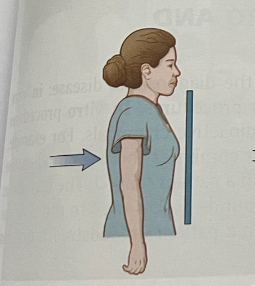
Posteroanterior (PA) View
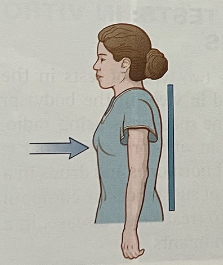
Anteroposterior (AP) View
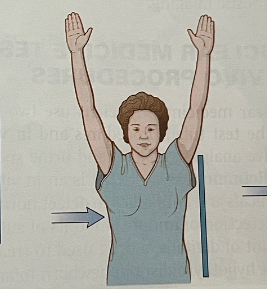
Lateral View
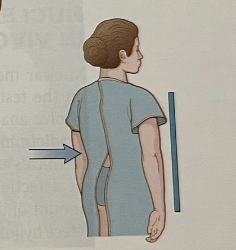
Oblique View
Decubitus
Lying down
Eversion
Turning outward
Inversion
Turning inward
Recumbent
Lying down (can be supine or prone)
Radionuclide (radioisotope)
A substance that gives off high-energy particles or rays as it disintegrates
Half-Life
The time required for a radioactive substance to lose half of its radioactivity by disintegration
Gamma Camera
A sensitive external detection instrument to determine the distribution and localization of the radiopharmaceutical in various organs, tissues, and fluids
Uptake
The rate of absorption of the radiopharmaceutical into an organ or tissue
Positron Emission Tomography (PET or PET scan)
Radionuclide technique produces images of the distribution of radioactivity in the body through emission of positrons
PET-CT Scan
Combines PET and CT techniques to produce a more accurate image than PET or CT alone
PET-MRI Scan
Combine MRI with PET scans
Single Photon Emission Computed Tomography (SPECT)
This technique involves an intravenous injection of radioactive tracer (such as Tc-99m) and the computer reconstruction of a 3D image based on the composite of many views
Ionization
Transformation of electrically neutral substances into electrically charged particles; x-rays cause ionization of particles within tissues
Is/o
Same
-graphy
Process of recording
-lucent
To shine
-opaque
Obscure
Ba
Barium
DICOM
Digital Image Communication in Medicine
PACS
Picture Archival and Communications System